Hubbry Logo
AnaspidaceaAnaspidaceaMain
Open search
Anaspidacea
Community hub
Anaspidacea
logo
8 pages, 0 posts
0 subscribers
Be the first to start a discussion here.
Anaspidacea
Anaspidacea
from Wikipedia

Anaspidacea
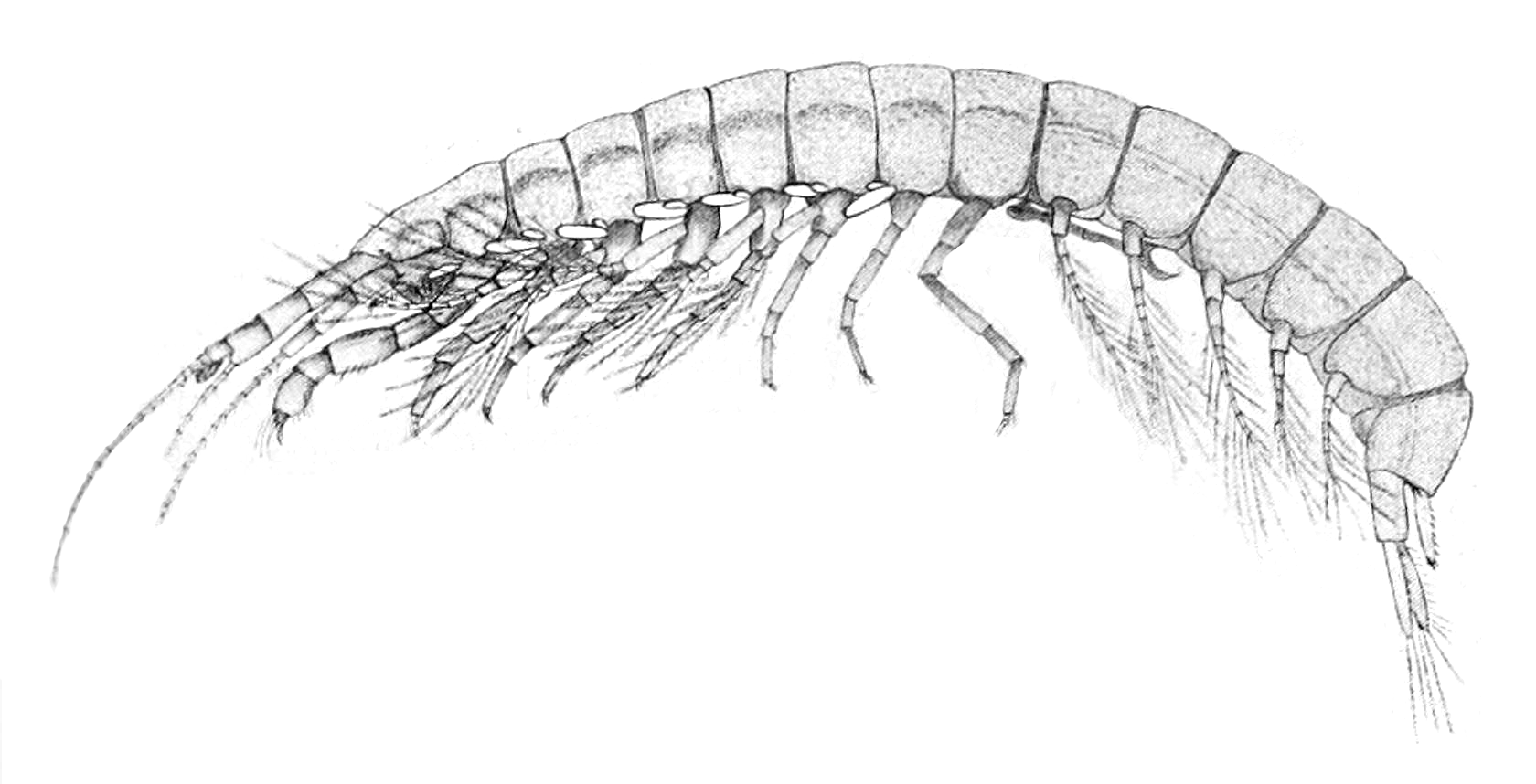
Koonunga cursor male
Scientific classification Edit this classification
Kingdom: Animalia
Phylum: Arthropoda
Class: Malacostraca
Superorder: Syncarida
Order: Anaspidacea
Calman, 1904
Families

See text

Anaspidacea is an order of crustaceans, comprising eleven genera in four families. Species in the family Anaspidesidae vary from being strict stygobionts (only living underground) to species living in lakes, streams and moorland pools, and are found only in Tasmania.[1] Koonungidae is found in Tasmania and the south-eastern part of the Australian mainland, where they live in the burrows made by crayfish and in caves.[2] The families Psammaspididae and Stygocarididae are both restricted to caves, but Stygocarididae has a much wider distribution than the other families, with Parastygocaris having species in New Zealand and South America as well as Australia; two other genera in the family are endemic to South America, and one, Stygocarella, is endemic to New Zealand.[3][4][5]

Genera

[edit]
Koonunga allambiensis

References

[edit]
Revisions and contributorsEdit on WikipediaRead on Wikipedia
from Grokipedia
Anaspidacea is an order of small, primitive crustaceans within the class , distinguished by their slender, shrimp-like bodies lacking a true , the presence of maxillipeds for feeding, and variable tail structures including a fan-like with uropods in some families. These aquatic , typically measuring less than 10 mm in length (though some reach up to 50 mm), inhabit primarily freshwater environments and represent a lineage with a rich fossil record dating back to the period. The order Anaspidacea belongs to the superorder and currently encompasses five families—Anaspidesidae, Koonungidae, Patagonaspididae, Psammaspididae, and Stygocarididae—comprising 11 genera and around 23 species worldwide. Of these, approximately 21 species occur in , with the majority being endemic to and southern mainland regions, while a smaller number are found in (Patagonian species) and . The family Anaspidesidae, recently renamed from the invalid Anaspididae due to nomenclatural conflicts, includes three genera (Anaspides, Allanaspides, and Paranaspides) and 11 species, all strictly endemic to Tasmanian freshwaters. These crustaceans exhibit short-range , with many species confined to specific lakes, streams, or habitats, underscoring their vulnerability to environmental changes. Biologically, anaspidaceans feature compound eyes that may be sessile, stalked, or absent in cave-dwelling (stygobiontic) forms, along with thoracic pereopods adapted for walking and paddle-like exopods for . They undergo direct development without a free larval stage, with separate sexes and embryos brooded in a marsupium on the female's thoracic limbs; life cycles remain poorly studied, but adults are detritivores or predators of small organisms like and fungi. In Anaspides species, locomotion involves a combination of walking on elongated thoracopods and occasional via pleopod beating, reflecting adaptations to both benthic and pelagic microhabitats. As a basal malacostracan group, Anaspidacea occupies a key phylogenetic position, often placed near Euphausiacea in molecular analyses, highlighting their importance in understanding early crustacean evolution.

Taxonomy

Families and Genera

The order Anaspidacea was established by Calman in 1904 within the superorder of the subclass to include primitive, carapace-lacking crustaceans formerly classified among fossil forms. The current classification recognizes four families, 11 genera, and approximately 70 extant species worldwide (with about 21 in ), following nomenclatural adjustments including the 2017 elevation of Anaspidesidae from taxa previously in Anaspididae; some synonymies have been resolved in recent revisions, and a 2014 phylogenetic study proposed six families based on morphology, but consensus retains four. The family Anaspidesidae (derived from the type genus Anaspides, a replacement name for the preoccupied Anaspis) reflects "anaspis," meaning "shieldless," alluding to the group's diagnostic lack of a ; similar etymological roots apply to related family names emphasizing primitive or habitat-specific traits, such as Psammaspididae from "psammos" () for interstitial forms. The families and their constituent genera are detailed below, with species counts reflecting recent descriptions and synonymies as of 2025 (e.g., the 2023 description of Anaspides driesseni based on morphological and molecular distinguishing it from A. swaini). Note that while Anaspidesidae, Koonungidae, and Psammaspididae are endemic to (primarily ), Stygocarididae is cosmopolitan within the order's range and includes additional genera (e.g., Argentostygocaris, Patagonaspilla) and approximately 50 species in and .
FamilyGenera and Species Counts
AnaspidesidaeAllanaspides (2 species); Anaspides (9 species, including the 2023 addition A. driesseni); Paranaspides (1 species) — total 12 species, all endemic to Tasmania
KoonungidaeKoonunga (1 species) — total 1 species, southeastern Australia and Tasmania
PsammaspididaePsammaspides (1 species) — total 1 species, Tasmania
StygocarididaeAustralian genera: Australostygocaris (1 species); Nixtalimon (1 species); Oncostygocaris (1 species); Parastygocaris (2 species); Stygocaris (3 species); Stygocarella (2 species) — total ~10 Australian species; additional ~50 species in 5+ genera elsewhere
Recent updates include the description of Anaspides driesseni in 2023, highlighting ongoing taxonomic refinements.

Phylogenetic Position

Anaspidacea is recognized as a basal order within , with recent phylogenomic analyses placing it as sister to Euphausiacea in a that includes Decapoda and Bathynellacea, rendering traditional (Anaspidacea + Bathynellacea) . This placement is supported by analyses of hundreds of orthologs, though earlier studies using 18S rRNA positioned it as sister to Bathynellacea within ; mitogenomic data also suggest potential polyphyly requiring further resolution. Key synapomorphies uniting Anaspidacea include the absence of a , biramous thoracic limbs adapted for both locomotion and respiration, and non-segmented uropods forming a simple tail fan. These features represent primitive conditions within , contrasting with the fused and specialized appendages in more advanced orders. For instance, in relation to (e.g., ), Anaspidacea lacks the brood pouch and has less differentiated pereopods, while compared to (e.g., Decapoda), it exhibits unspecialized biramous pleopods without the complex gill structures or chelae typical of those groups. Early classifications debated subordinal divisions within Anaspidacea, proposing Anaspidinea for epigean forms (e.g., Anaspides) and Stygocaridinea for stygobitic taxa (e.g., Psammaspides), based on and minor morphological differences in antennal scale and pleopod setation. However, recent molecular evidence from COI and 16S rRNA sequences rejects these divisions, supporting the of Anaspidacea as a unified order without subordinal splits, as demonstrated in phylogenies of Tasmanian Anaspididae that recover all genera as a cohesive . This consensus emphasizes shared morphological synapomorphies like the structure of the mandibular palp across both surface and subterranean lineages.

Description

External Morphology

Anaspidacean crustaceans exhibit a slender, elongated, and cylindrical , typically lacking a , which distinguishes them from many other malacostracans. The body consists of the head followed by eight free thoracic segments, a six-segmented (pleon), and a terminal . This structure measures up to 60 mm in length for some species in the family, such as Anaspides tasmaniae reaching up to 40 mm, though most taxa are smaller, ranging from 10 to 15 mm, with some forms under 10 mm. The appendages are predominantly biramous, reflecting a primitive malacostracan condition adapted for locomotion, respiration, and feeding. Antennules and antennae are biramous, with the antennules featuring a three-jointed peduncle bearing two flagella, while the antennae lack a scale and contribute to sensory functions. Thoracic limbs, numbering eight pairs including maxillipeds, are mostly biramous and segmented into approximately eight articles, facilitating both walking and manipulation of . Abdominal pleopods are biramous in the anterior pairs (typically 1–4) for and respiration, with the posterior pair often uniramous or reduced; variation exists among families. The is acute, adorned with setae that, together with non-segmented biramous uropods, form a fan-like caudal structure for propulsion. External features vary notably between epigean and stygobitic species, reflecting adaptations to light and habitat. Epigean forms, such as Anaspides tasmaniae, possess stalked compound eyes and body pigmentation for surface environments, whereas stygobionts in cave systems often lack eyes entirely and exhibit depigmentation, enhancing their translucent appearance in aphotic conditions. These traits underscore the order's relictual diversity across Australian freshwater and subterranean habitats.

Internal Anatomy

The digestive system of Anaspidacea follows a basic malacostracan plan, consisting of a straight gut divided into (stomodaeum), , and (proctodaeum). The includes a short leading to the , which is partitioned into anterior cardiac and posterior pyloric regions equipped with cuticular folds and setae for filtering and initial , but lacking the complex and muscular gastric mill characteristic of many higher crustaceans such as decapods. Approximately 30 long, slender, unbranched glandular caeca () branch from the for enzymatic digestion and nutrient absorption, while two small unpaired dorsal caeca extend into the ; the is a simple tube terminating at the anal opening on the . The is of the open type typical for malacostracans, featuring a tubular dorsal heart that extends from the first thoracomere through the and into the anterior up to the fourth pleomere, enclosed within a . The heart receives via a single pair of ostia located in the third thoracic segment and propels it anteriorly and posteriorly through arterial vessels and open sinuses, with no specialized accessory hearts. Respiration is achieved through branchial gills, primarily in the form of thin, lamellate epipodites arising from the coxae of thoracic appendages on somites 2–7, supplemented by exopodites and an internal lacunary network for ; the respiratory pigment is , dissolved in the . The comprises a supraesophageal formed by fused protocerebrum (with well-developed optic lobes in eyed ), deutocerebrum, and tritocerebrum, connected ventrally to a subesophageal and a double ventral nerve cord bearing segmental ganglia. The ventral cord includes eight distinct thoracic ganglia and six abdominal (pleonal) ganglia, with lateral nerves innervating the appendages and commissures linking the cord's branches. In eyeless forms, such as cave-dwelling in genera like Micraspides and Allanaspides, the nervous system exhibits reductions, particularly in the protocerebrum's visual centers, reflecting to aphotic environments. Reproductive anatomy features paired gonads extending longitudinally along the , with evident in the antennal scales, where males typically possess larger or more elaborate structures on the second antennae. In males, the elongate testes span from the fifth thoracomere to the posterior pleomeres, giving rise to simple vasa deferentia that open via gonopores on the eighth thoracomere; spermatozoa are filiform, with globular heads and long flagella. In females, the ovaries vary in extent but generally occupy similar positions, with paired oviducts opening at the bases of the sixth thoracic appendages (thoracopods), and a located on the seventh sternite for storage; eggs are fertilized internally and laid individually on substrates such as aquatic vegetation or stones, without a brood pouch, though some species may exhibit rudimentary ovigerous setae on pleopods for temporary attachment. Sensory structures include statocysts housed in sacs at the base of the antennules, each containing a statolith and approximately 23 club-shaped sensory setae that detect and equilibrium for balance. Chemoreceptors, primarily in the form of aesthetasc sensilla, are distributed on the antennules and other appendages, enabling detection of chemical cues in the aquatic environment. Eyed species possess pedunculate compound eyes with corneal cells and crystalline cones for vision, while eyeless taxa lack these but retain other sensory modalities; additional structures like nucal and dorsal organs of uncertain function may contribute to sensory integration.

Distribution and Habitat

Geographic Distribution

Anaspidacea display a characteristic Gondwanan relict distribution pattern, with extant species restricted to freshwater and subterranean habitats across (including , Victoria, and ), , and southern ( and ). This disjunct range reflects ancient continental fragmentation, with no verified records from or , aligning with vicariance events during the breakup approximately 100–80 million years ago. Family-level distributions vary in scope, underscoring regional within this broader pattern. Anaspidesidae and Koonungidae are endemic to southeastern and , with Anaspidesidae confined exclusively to Tasmanian freshwater systems. Psammaspididae occur primarily in Tasmanian caves and habitats, though isolated populations extend to . In contrast, Stygocarididae exhibit a wider transcontinental range, with genera such as Stygocaris documented in Victoria (), South Island (), and southern . Representative species illustrate these patterns at finer scales. Anaspides tasmaniae, the type species of Anaspidesidae, inhabits highland lakes, streams, and pools across Tasmania's central and western regions, such as subalpine areas near . Similarly, Parastygocaris species of Stygocarididae are stygobitic endemics restricted to cave systems in Patagonia, including sites in southern and .

Ecological Habitats

Anaspidacea species primarily occupy freshwater habitats across Gondwanan regions, with epigean forms inhabiting cool streams, lakes, and moorland pools, while hypogean taxa are restricted to caves, aquifers, and interstitial spaces. Some members of the family Koonungidae also utilize burrows and hyporheic zones as refugia. These environments are typically oligotrophic, with low nutrient levels and tannin-stained waters that contribute to their clarity and stability. Water conditions in these habitats are generally cool to cold, ranging from 4–15°C in surface waters of the Tasmanian highlands, though sites may reach 15–18°C with reduced variability. levels are neutral to acidic, often around 4–7, reflecting the peaty, influences, while dissolved oxygen can be low in hypogean settings (28–46% saturation), necessitating physiological tolerances to hypoxia. Hypogean Anaspidacea exhibit notable adaptations to subterranean life, including eyelessness and , which reduce energy expenditure in perpetual darkness and prevent unnecessary metabolic costs. For instance, stygobitic in the genus Koonunga lack functional eyes and show minimal body pigmentation, traits that have evolved independently in multiple lineages. Epigean forms, by contrast, retain stalked eyes and coloration. Koonungidae demonstrate burrowing capabilities, allowing them to aestivate in mud during seasonal drying of streams and pools, thus persisting in intermittent habitats. These crustaceans face significant threats from habitat alteration, including loss due to hydroelectric inundation and extraction in Tasmanian highlands, which has fragmented populations of species like Allanaspides hickmani by up to 94%. from sediments and nutrients, exacerbated by climate-driven changes such as warmer temperatures and reduced flows, further endangers oligotrophic systems, potentially leading to oxygen depletion and peat loss. In their ecosystems, Anaspidacea serve as detritivores, consuming organic , bacterial films, and , thereby contributing to nutrient cycling in low-productivity food webs. They also act as prey for larger aquatic predators, including fish and amphibians, supporting trophic dynamics in these isolated freshwater communities.

Biology

Reproduction and Development

Anaspidacea exhibit and are dioecious, with distinct male and female individuals. Mating behaviors have not been directly observed in most species, though precopulatory associations appear rare based on field studies of epigean forms. Breeding is typically seasonal, concentrated in spring and summer for surface-dwelling species such as Anaspides tasmaniae, aligning with warmer water temperatures and increased food availability in Tasmanian habitats. Females deposit eggs externally on submerged substrates like , bark, , or pool bottoms, without forming a brood pouch or providing ; this contrasts with brooding strategies in related malacostracan groups. Eggs are large, approximately 1 mm in diameter, and laid singly or in small clusters, with females producing modest clutches estimated at 10–50 eggs per breeding event in known . Development is direct, lacking free-swimming larval stages common in many crustaceans, and proceeds through holoblastic cleavage, , and formation of an egg-nauplius stage within the . Eggs laid in autumn or winter often enter developmental , resuming growth in spring and hatching after 32–60 weeks total, depending on and ; hatching yields miniature adults (2–3 mm long) with most appendages formed, though lacking a rostrum and featuring sessile eyes that pedunculate post-hatch. Iteroparity prevails, with females capable of multiple breeding cycles. Post-hatching growth involves successive ecdyses, typically 5–10 molts to reach after 1–3 years, influenced by cool, stable aquatic environments. Longevity reaches 3–5 years in species like A. tasmaniae, with females growing faster and achieving larger sizes than males. Internal reproductive structures, including ovaries and spermathecae, support annual or biennial breeding rhythms. Recent genetic analyses, including sequencing, have uncovered cryptic within the genus Anaspides, revealing at least three distinct lineages masquerading as a single morphospecies (A. tasmaniae), driven by isolation in Tasmania's diverse freshwater systems; a 2023 description further identified Anaspides driesseni as a new cryptic entity from coastal tarns. These findings highlight ongoing evolutionary divergence in and development amid fragmented habitats.

Feeding and Behavior

Anaspidaceans exhibit omnivorous detritivorous feeding habits, primarily consuming , , microbes, and small particles from the substratum. Larger species, such as Anaspides tasmaniae, also display opportunistic carnivory, preying on smaller like worms, tadpoles, or scavenging dead . This generalist diet allows them to exploit varied resources in freshwater environments, from surface streams to subterranean aquifers. Feeding mechanisms involve scraping and brushing food from rocks and sediments using modified mouthparts and anterior thoracic limbs, which act to gather and manipulate particles. Many species possess a filter-feeding apparatus formed by the exopods and setae on thoracic appendages, enabling the capture of suspended microbes and fine from water currents generated by limb movements. In hypogean forms, such as those in the family Koonungidae, these appendages and feeding structures are often reduced, reflecting adaptations to nutrient-scarce cave environments with limited particulate food. Locomotion primarily consists of crawling along substrata using coordinated thoracic legs, facilitating over rocks and sediments. occurs via metachronal beating of pleopods on the , though anaspidaceans are not proficient swimmers and prefer benthic activity. Rapid backward escapes are executed by flexing the and deploying the tail fan, composed of the and uropods, to propel the animal away from threats. Anaspidaceans display limited , typically living solitarily or in loose, non-structured aggregations within suitable microhabitats, without evidence of hierarchical societies or cooperative interactions. Sensory emphasizes chemoreception for detecting food and environmental cues, particularly in dark hypogean habitats where visual input is absent; epigean species show diurnal activity influenced by and chemical gradients in their aquatic environments.

Evolutionary History

Fossil Record

The fossil record of Anaspidacea primarily spans the and eras, with the earliest known representatives appearing in the period. Paleocaridaceans, such as Palaeocaris typus and Gampsonyx fimbriatus (now reclassified as Uronectes fimbriatus), were initially recognized as a distinct order but have been synonymized with Anaspidacea based on cladistic analyses that highlight shared morphological traits like biramous appendages and lack of a . These early forms are documented from Euramerican lagerstätten, including the Mississippian Heath in and the Permian Irati Formation in , where they exhibit a diversity of body sizes and appendage configurations suggestive of carnivorous or scavenging lifestyles. Fossils of Anaspidacea are predominantly preserved in lacustrine and fluvial deposits, often as articulated exoskeletons in fine-grained shales or concretions, indicating rapid burial in low-oxygen environments that favored exceptional preservation. The total known diversity is limited, comprising two genera and two , reflecting a relictual compared to the more diverse Paleozoic syncarids overall. Transitional forms, such as those in the genus Palaeocaris, display primitive malacostracan features like undivided thoracic segments and styli on uropods, which align with inferred marine ancestry while occurring exclusively in continental freshwater settings, marking an early shift to inland habitats. Mesozoic occurrences are rarer but include Triassic specimens from Australian deposits that closely resemble extant Stygocarididae in carapace structure and appendage segmentation, suggesting continuity in hypogean adaptations. Additional records from the Early Cretaceous Koonwarra Formation in Victoria, Australia, preserve anaspidacean-like syncarids in amber-like resin, further illustrating their persistence in temperate freshwater ecosystems. However, the post-Paleozoic record remains sparse, with no documented fossils from the Cenozoic era, highlighting a significant gap that underscores the group's status as living fossils among modern representatives.

Biogeography and Evolution

Anaspidacea represent a basal lineage within the , originating from syncarid ancestors that were primarily marine or brackish-water dwellers. These early forms, such as Squillites spinosus from the Upper Mississippian (approximately 330 million years ago), began adapting to freshwater environments during the period, around 300 million years ago, as evidenced by their association with non-marine sedimentary deposits and accompanying freshwater . This transition marked a significant evolutionary shift for the group, establishing them as one of the oldest known freshwater malacostracan clades, with relictual distributions persisting to the present day. The diversification of Anaspidacea is closely tied to the breakup of the supercontinent , beginning around 180 million years ago, which promoted vicariant and resulted in disjunct distributions across southern continents. For instance, the Stygocaris exhibits a classic Gondwanan pattern, with species occurring in southeastern (Victoria), , and , reflecting isolation following the separation of these landmasses. This relictual radiation underscores the group's ancient origins, with post-Gondwanan vicariance explaining much of the current biogeographic disjunctions rather than long-distance dispersal. Genetic studies since 2000 have revealed extensive within Anaspidacea, particularly in the Anaspidesidae, indicating that morphological has led to significant underestimation of . Mitochondrial DNA analyses identified at least three cryptic lineages within the Anaspides morphotype, with divergence events dating back to the Palaeocene (around 55 million years ago), independent of morphological evolution. More recent phylogeographic work using ddRAD sequencing and COI data on Anaspides richardsoni has uncovered 12 allopatric lineages, rendering the species paraphyletic and suggesting multiple incipient cryptic shaped by Pleistocene glaciations. As an ancient lineage with narrow endemic distributions, primarily in Tasmanian freshwater systems, Anaspidacea face heightened vulnerability to environmental threats, including , which could disrupt refugia and established over millions of years. Past glacial cycles already influenced recolonization patterns, and ongoing warming may exacerbate habitat loss in highland tarns and streams, necessitating targeted conservation of distinct lineages beyond taxonomic boundaries. Future research should prioritize expanded molecular phylogenies, incorporating mitogenomes and nuclear loci, to resolve family-level relationships and inform strategies amid these pressures.

References

Add your contribution
Related Hubs
User Avatar
No comments yet.