


Community hub
0 subscribers8 pages, 0 posts
Recent from talks
All channels
Be the first to start a discussion here.
Be the first to start a discussion here.
Be the first to start a discussion here.
Be the first to start a discussion here.
Contribute something
Welcome to the community hub built to collect knowledge and have discussions related to Pilates.
Nothing was collected or created yet.
Pilates
View on Wikipediafrom Wikipedia
Not found
Pilates
View on Grokipediafrom Grokipedia
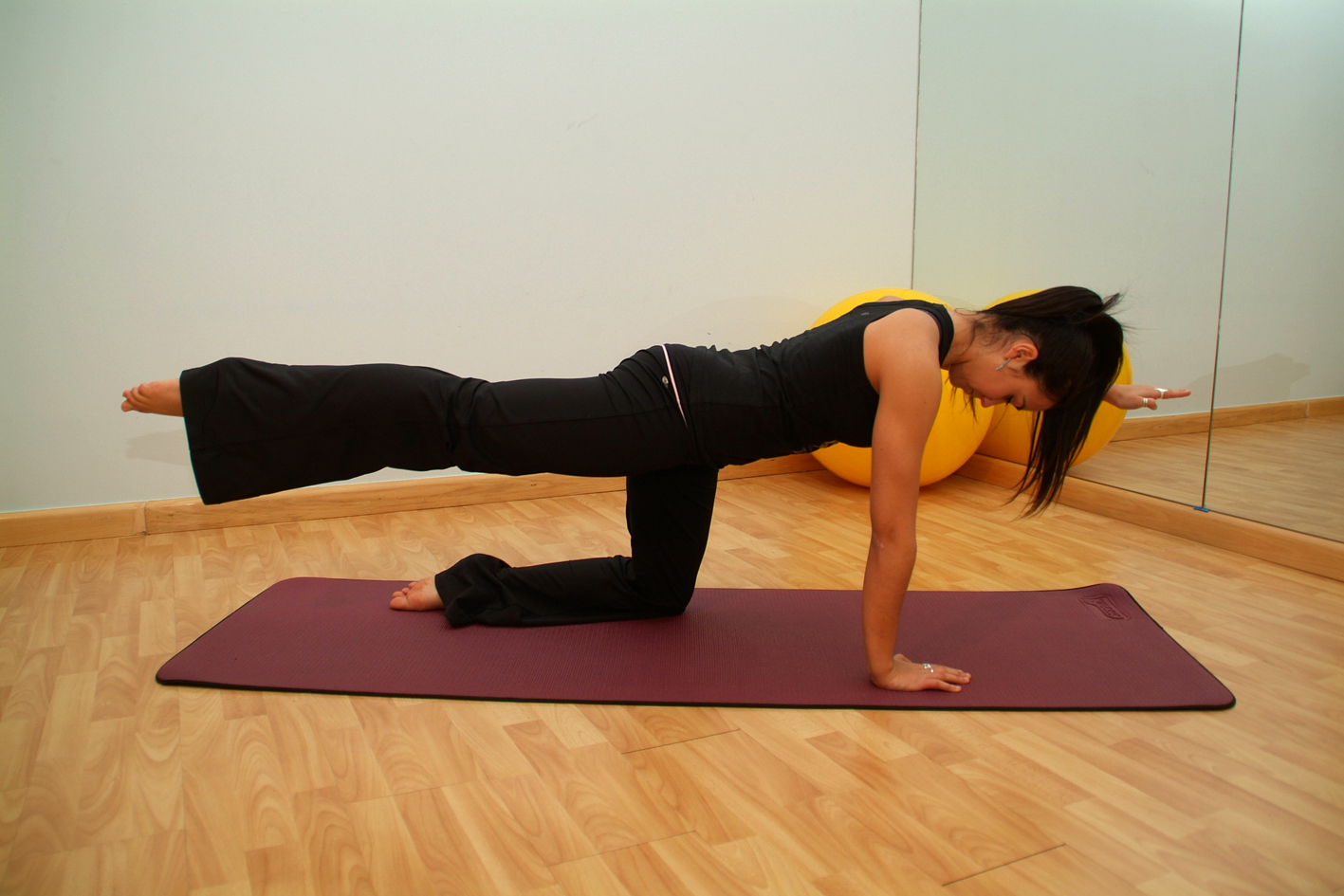
Pilates is a mind-body exercise system originally known as Contrology, developed by German-born Joseph Pilates in the early 20th century, emphasizing controlled movements, precise breathing, and core engagement to enhance strength, flexibility, posture, balance, and overall body awareness. It is primarily an anaerobic exercise focusing on muscular strength, endurance, and resistance using body weight or equipment, similar to weightlifting or yoga, and does not significantly elevate heart rate for prolonged periods like aerobic activities such as running or swimming.[1] The method utilizes approximately 50 repetitive exercises, often performed on a mat or specialized apparatus like the reformer, which employs springs for resistance, making it adaptable for rehabilitation, athletic training, or general fitness.[2] Originally designed to address Pilates' own childhood ailments including asthma and rickets, the practice integrates influences from gymnastics, yoga, martial arts, and Western anatomy to promote efficient movement patterns and muscular integration.[1]
Joseph Hubertus Pilates, born in 1883 near Düsseldorf, Germany, overcame his frail health through dedicated self-study in various physical disciplines such as bodybuilding, wrestling, and diving, which informed the creation of his method.[3] During World War I internment on the Isle of Man, he refined his techniques by rigging hospital beds with springs to aid recovering soldiers, laying the groundwork for apparatus-based exercises that emphasized spinal alignment and controlled motion.[4] In 1926, Pilates emigrated to New York City with his wife Clara, a nurse, and opened a studio near the New York City Ballet, where the method gained prominence among dancers for injury prevention and rehabilitation.[2]
A widely taught modern framework for the central principles of Pilates includes six key elements: concentration, control, centering (focusing on the core or "powerhouse"), precision, breath, and flow, which together foster mindful movement and neuromuscular coordination.[5] Benefits supported by clinical research include improved core stability, reduced low back pain, enhanced flexibility, and better postural alignment, particularly in populations such as the elderly, postpartum individuals, and those with chronic conditions.[6] While evidence from randomized controlled trials remains limited due to methodological challenges, Pilates is widely recognized as a low-impact, versatile practice that complements cardiovascular and strength training for holistic health.[1]