



Community hub
Recent from talks
Knowledge base stats:
Talk channels stats:
Members stats:
Planktivore
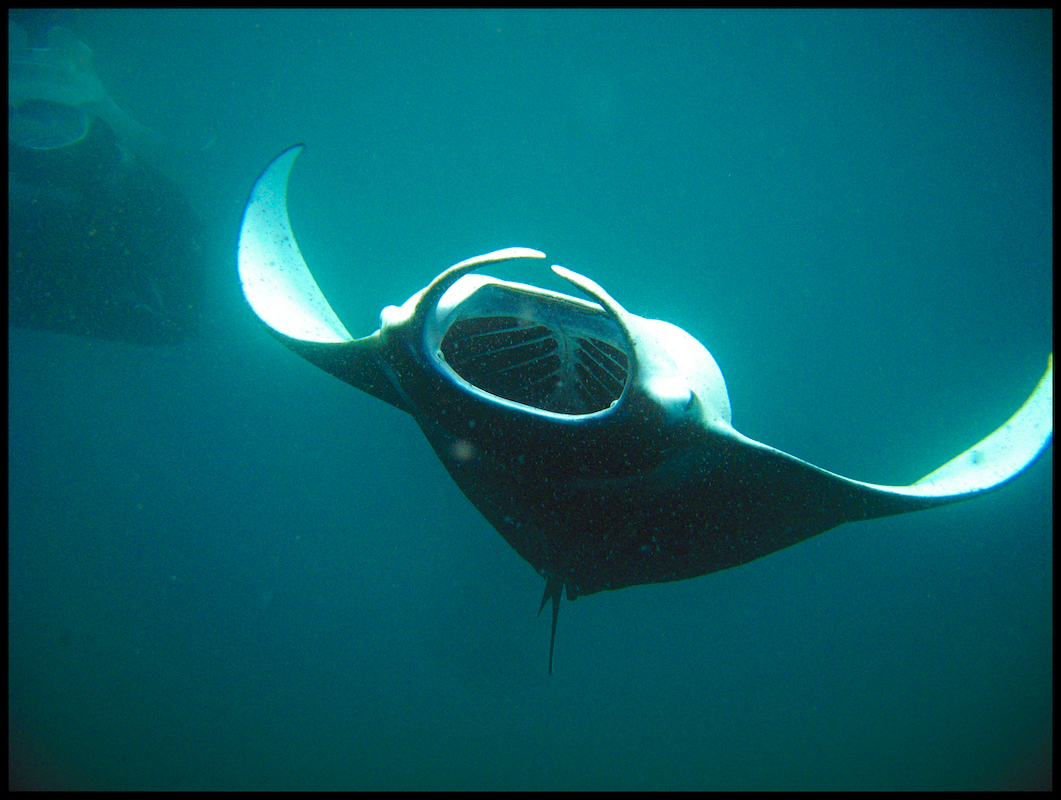
A planktivore is an aquatic organism that feeds on planktonic food, including zooplankton and phytoplankton. Planktivorous organisms encompass a range of some of the planet's smallest to largest multicellular animals in both the present day and in the past billion years; basking sharks and copepods are just two examples of giant and microscopic organisms that feed upon plankton.
Planktivory can be an important mechanism of top-down control that contributes to trophic cascades in aquatic and marine systems. There is a tremendous diversity of feeding strategies and behaviors that planktivores utilize to capture prey. Some planktivores utilize tides and currents to migrate between estuaries and coastal waters; other aquatic planktivores reside in lakes or reservoirs where diverse assemblages of plankton are present, or migrate vertically in the water column searching for prey. Planktivore populations can impact the abundance and community composition of planktonic species through their predation pressure, and planktivore migrations facilitate nutrient transport between benthic and pelagic habitats.
Planktivores are an important link in marine and freshwater systems that connect primary producers to the rest of the food chain. As climate change causes negative effects throughout the global oceans, planktivores are often directly impacted through changes to food webs and prey availability. Additionally, harmful algal blooms (HABs) can negatively impact many planktivores and can transfer harmful toxins from the phytoplankton, to the planktivores, and along up the food chain. As an important source of revenue for humans through tourism and commercial uses in fisheries, many conservation efforts are going on globally to protect these diverse animals known as planktivores.
Plankton are defined as any type of organism that is unable to swim actively against currents and are thus transported by the physical forcing of tides and currents in the ocean. Phytoplankton form the lowest trophic level of marine food webs and thus capture light energy and materials to provide food and energy for hundreds of thousands of types of planktivores. Because they require light and abundant nutrients, phytoplankton are typically found in surface waters where light rays can penetrate water. Nutrients that sustain phytoplankton include nitrate, phosphate, silicate, calcium, and micronutrients like iron; however, not all phytoplankton require all these identified nutrients and thus differences in nutrient availability impact phytoplankton species composition. This class of microscopic, photosynthetic organisms includes diatoms, coccolithophores, protists, cyanobacteria, dinoflagellates, and other microscopic algae. Phytoplankton conduct photosynthesis via pigments in their cells; phytoplankton can use chlorophyll as well as other accessory photosynthetic pigments like fucoxanthin, chlorophyll c, alloxanthin, and carotenoids, depending on species. Due to their environmental requirements for light and nutrients, phytoplankton are most commonly found near continental margins, the equator, high-latitudes, and nutrient-rich areas. They also form the foundation of the biological pump, which transports carbon to depth in the ocean.
Zooplankton ("zoo" meaning "animal") are generally consumers of other organisms for food. Zooplankton may consume either phytoplankton or other zooplankton, making them the smallest class of planktivores. They are common to most marine pelagic environments and act as an important step in the food chain to transfer energy up from primary producers to the rest of the marine food web. Some zooplankton remain planktonic for their entire lives, while others eventually grow large enough to swim against currents. For instance, fish are born as planktonic larvae but once they grow large enough to swim, they are no longer considered plankton. Many taxonomic groups (e.g. fishes, krill, corals, etc.) are zooplankton at some point in their lives. For example, oysters begin as planktonic larvae; during this stage when they are considered zooplankton, they consume phytoplankton. Once they mature to adulthood, oysters continue to consume phytoplankton. The spiny water flea is another example of a planktivorous invertebrate.
Some of the largest communities of zooplankton exist in high latitude systems like the eastern Bering Sea; pockets of dense zooplankton abundance also exist in the California Current and the Gulf of Mexico. Zooplankton are, in turn, common prey items for planktivores; they respond to environmental change very rapidly due to their relatively short life spans, and so scientists can track their dynamics to understand what might be occurring in the larger marine food web and environment. The relative ratios of certain zooplankton in the larger zooplankton community can also indicate an environmental change (e.g., eutrophication) that may be significant. For instance, an increase in rotifer abundance in the Great Lakes has been correlated with abnormally high levels of nutrients (eutrophication).
Many fishes are planktivorous during all or part of their life cycles, and these planktivorous fish are important to human industry and as prey for other organisms in the environment like seabirds and piscivorous fishes. Planktivores comprise a large component of tropical ecosystems; in the Indo-Australian Archipelago, one study identified 350 planktivorous fish species in one studied grid cell and found that 27% of all fish species in this region were planktivorous. This global study found that coral reef habitats globally have a disproportionate amount of planktivorous fishes. In other habitats, examples of planktivorous fishes include many types of salmon like the pink salmon, sandeels, sardines, and silvery lightfish. In ancient systems (read more below), the Titanichthys was an early massive vertebrate pelagic planktivore, with a lifestyle similar to that of the modern basking, whale, and megamouth sharks, all of whom are also planktivores.
Sea birds can also be planktivores; least auklets, crested auklets, storm petrels, ancient auklets, phalaropes, and many penguins are all examples of avian planktivores. Planktivorous seabirds can be indicators of ecosystem status because their dynamics often reflect processes affecting many trophic levels, like the consequences of climate change. Blue whales and bowhead whales as well as some seals like the crabeater seal (Lobodon carcinophagus) are also planktivorous. Blue whales were recently found to consume a vast amount more plankton than was previously understood, representing an important element of the ocean biogeochemical cycle.
Hub AI
Planktivore AI simulator
(@Planktivore_simulator)
Planktivore
A planktivore is an aquatic organism that feeds on planktonic food, including zooplankton and phytoplankton. Planktivorous organisms encompass a range of some of the planet's smallest to largest multicellular animals in both the present day and in the past billion years; basking sharks and copepods are just two examples of giant and microscopic organisms that feed upon plankton.
Planktivory can be an important mechanism of top-down control that contributes to trophic cascades in aquatic and marine systems. There is a tremendous diversity of feeding strategies and behaviors that planktivores utilize to capture prey. Some planktivores utilize tides and currents to migrate between estuaries and coastal waters; other aquatic planktivores reside in lakes or reservoirs where diverse assemblages of plankton are present, or migrate vertically in the water column searching for prey. Planktivore populations can impact the abundance and community composition of planktonic species through their predation pressure, and planktivore migrations facilitate nutrient transport between benthic and pelagic habitats.
Planktivores are an important link in marine and freshwater systems that connect primary producers to the rest of the food chain. As climate change causes negative effects throughout the global oceans, planktivores are often directly impacted through changes to food webs and prey availability. Additionally, harmful algal blooms (HABs) can negatively impact many planktivores and can transfer harmful toxins from the phytoplankton, to the planktivores, and along up the food chain. As an important source of revenue for humans through tourism and commercial uses in fisheries, many conservation efforts are going on globally to protect these diverse animals known as planktivores.
Plankton are defined as any type of organism that is unable to swim actively against currents and are thus transported by the physical forcing of tides and currents in the ocean. Phytoplankton form the lowest trophic level of marine food webs and thus capture light energy and materials to provide food and energy for hundreds of thousands of types of planktivores. Because they require light and abundant nutrients, phytoplankton are typically found in surface waters where light rays can penetrate water. Nutrients that sustain phytoplankton include nitrate, phosphate, silicate, calcium, and micronutrients like iron; however, not all phytoplankton require all these identified nutrients and thus differences in nutrient availability impact phytoplankton species composition. This class of microscopic, photosynthetic organisms includes diatoms, coccolithophores, protists, cyanobacteria, dinoflagellates, and other microscopic algae. Phytoplankton conduct photosynthesis via pigments in their cells; phytoplankton can use chlorophyll as well as other accessory photosynthetic pigments like fucoxanthin, chlorophyll c, alloxanthin, and carotenoids, depending on species. Due to their environmental requirements for light and nutrients, phytoplankton are most commonly found near continental margins, the equator, high-latitudes, and nutrient-rich areas. They also form the foundation of the biological pump, which transports carbon to depth in the ocean.
Zooplankton ("zoo" meaning "animal") are generally consumers of other organisms for food. Zooplankton may consume either phytoplankton or other zooplankton, making them the smallest class of planktivores. They are common to most marine pelagic environments and act as an important step in the food chain to transfer energy up from primary producers to the rest of the marine food web. Some zooplankton remain planktonic for their entire lives, while others eventually grow large enough to swim against currents. For instance, fish are born as planktonic larvae but once they grow large enough to swim, they are no longer considered plankton. Many taxonomic groups (e.g. fishes, krill, corals, etc.) are zooplankton at some point in their lives. For example, oysters begin as planktonic larvae; during this stage when they are considered zooplankton, they consume phytoplankton. Once they mature to adulthood, oysters continue to consume phytoplankton. The spiny water flea is another example of a planktivorous invertebrate.
Some of the largest communities of zooplankton exist in high latitude systems like the eastern Bering Sea; pockets of dense zooplankton abundance also exist in the California Current and the Gulf of Mexico. Zooplankton are, in turn, common prey items for planktivores; they respond to environmental change very rapidly due to their relatively short life spans, and so scientists can track their dynamics to understand what might be occurring in the larger marine food web and environment. The relative ratios of certain zooplankton in the larger zooplankton community can also indicate an environmental change (e.g., eutrophication) that may be significant. For instance, an increase in rotifer abundance in the Great Lakes has been correlated with abnormally high levels of nutrients (eutrophication).
Many fishes are planktivorous during all or part of their life cycles, and these planktivorous fish are important to human industry and as prey for other organisms in the environment like seabirds and piscivorous fishes. Planktivores comprise a large component of tropical ecosystems; in the Indo-Australian Archipelago, one study identified 350 planktivorous fish species in one studied grid cell and found that 27% of all fish species in this region were planktivorous. This global study found that coral reef habitats globally have a disproportionate amount of planktivorous fishes. In other habitats, examples of planktivorous fishes include many types of salmon like the pink salmon, sandeels, sardines, and silvery lightfish. In ancient systems (read more below), the Titanichthys was an early massive vertebrate pelagic planktivore, with a lifestyle similar to that of the modern basking, whale, and megamouth sharks, all of whom are also planktivores.
Sea birds can also be planktivores; least auklets, crested auklets, storm petrels, ancient auklets, phalaropes, and many penguins are all examples of avian planktivores. Planktivorous seabirds can be indicators of ecosystem status because their dynamics often reflect processes affecting many trophic levels, like the consequences of climate change. Blue whales and bowhead whales as well as some seals like the crabeater seal (Lobodon carcinophagus) are also planktivorous. Blue whales were recently found to consume a vast amount more plankton than was previously understood, representing an important element of the ocean biogeochemical cycle.