Hubbry Logo
Poker AlicePoker AliceMain
Open search
Poker Alice
Community hub
Poker Alice
logo
8 pages, 0 posts
0 subscribers
Be the first to start a discussion here.
Poker Alice
Poker Alice
from Wikipedia

Alice Ivers Duffield Tubbs Huckert (17 February 1851 – 27 February 1930), better known as Poker Alice, Poker Alice Ivers, or Poker Alice Tubbs, was an English-born American gambler, brothel owner, and rancher who became known for playing poker[1][2] and faro[3][4] in the Wild West.

Key Information

Born in Devonshire to Irish parents, Ivers moved with her family to Virginia at the age of 12. As an adult, she moved to Leadville, Colorado, where she met her first husband Frank Duffield. He got her interested in poker, but was killed a few years after they married. She made a name for herself by winning money from poker games in places like Silver City, New Mexico, and worked at a saloon in Creede, Colorado, which was owned by Jesse James' killer Robert Ford.[5]

Early life

[edit]

Alice Ivers was born in Devonshire on 17 February 1851,[6] the daughter of Irish immigrants.[7] Her family moved to Virginia when she was 12. As a young woman, she went to boarding school in Virginia to become a refined lady. In her late teens, her family moved to Leadville, Colorado.[8]

Personal life

[edit]
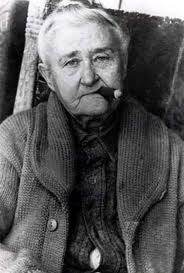
Poker Alice, early photo

It was in Leadville that Ivers met Frank Duffield, whom she married[6] at a young age. Frank was a mining engineer who played poker in his spare time.[7] After just a few years of marriage, Frank was killed in an accident[7] while resetting a dynamite charge in a Leadville mine.[9] Ivers was known for splurging her winnings, such as when she won a lot of money in Silver City, New Mexico, only to spend it all in New York City. After all of her big wins, she would travel to New York and spend her money on clothes. She was very keen on keeping up with the latest fashion and would buy dresses to wear at poker games, partly as a business investment to distract her opponents.[9]

Ivers met her next husband Warren G. Tubbs around 1890,[6] when they were both dealers at Bedrock Tom's saloon in Deadwood, South Dakota.[8] A drunken miner tried to attack Warren with a knife, causing her to threaten the miner with her .38 firearm.[10] After this incident, she started a romance with Warren and they were soon married.[8] Some sources report they had had seven children together.[11][12] Other sources report they did not have any children together, but that she brought a daughter and a son into the marriage, giving Warren two stepchildren.[13] Her son, George, would take on the Tubbs name. In 1934, George was saved from a train after he was found lying on the tracks. Two women were able to pull him to safety just in time to save his life. At the time of the incident, he was 65 years old, putting his birth around 1868.[14]

Warren was a painter by trade, and it was speculated that he contracted tuberculosis through his work. For the last years of his life, Ivers tried to help him regain his health. A few months before he died, she moved him to a ranch on the Moreau River, 100 miles (160 km) from Sturgis, South Dakota, where he died on 31 December 1909.[15][16][17] To secure a proper burial and funeral, Ivers wrapped his body in blankets, placed him in their lumber wagon, and traveled to Sturgis with her team of horses. It took her four days to travel along the snow-covered trails to Sturgis, where she was able to arrange a funeral for Warren. In order to pay the funeral costs, she traveled to Rapid City, South Dakota, where she worked as a bartender at Black Nell's resort.[18]

Her third husband was George Huckert,[10] who worked on her homestead and took care of the sheep.[19] He was constantly proposing to her, and she eventually came to owe him $1,008 but married him instead, figuring that it would be cheaper than paying his back wages.[10] Huckert died on 12 October 1924.[20]

Poker career

[edit]

After the death of her first husband, Ivers started to play poker seriously.[7] She was in a tough financial position. After failing in a few different jobs including teaching, she turned to poker to support herself financially.[19] She would make money by gambling and working as a dealer. She made a name for herself by winning money from poker games.[7] By the time she was given the nickname "Poker Alice",[8] she was drawing in large crowds to watch her play and men were constantly challenging her to play. Saloon owners liked that she was a respectable woman who kept to her values, including her refusal to play poker on Sundays.[10]

As Ivers' reputation grew, so did the amount of money she was making. Some nights she would make $6,000,[10] an incredibly large sum of money at the time. She claimed that she won $250,000, which would now be worth more than $3 million.[citation needed] She used her good looks to distract men at the poker table. She always had the newest dresses,[9] and even in her 50s was considered a very attractive woman. She was also very good at counting cards and figuring odds, which helped her at the table.[21]

Alice was known to have always carried a gun with her, preferably her .38, and frequently smoked cigars.[22]

Resort and jail time

[edit]

After Warren's death, Ivers eventually purchased a building on the south side of Bear Butte Creek, between the city of Sturgis and Fort Meade, where the current Sturgis City Park now stands.[23] Poker Alice's resort, as it was commonly known, gained notoriety in 1913 due to a confrontation between soldiers of Troop K stationed at Fort Meade and Ivers herself.[24]

Trouble had initially developed between the soldiers and Ivers in the early part of July 1913, a little over a week before the shooting. Later that week, the trouble was rekindled, and finally once again on 14 July.[25] Around 10:30 pm, five soldiers of Troop K, accompanied by a number of members of the South Dakota guard that had recently been stationed at Fort Meade, went to Ivers' resort for the intention of starting a "rough house". After the soldiers were refused admittance, they began throwing stones through the windows of Ivers' resort and cutting telephone and electric wires. In response, Ivers opened fire, landing five shots. One struck Private Fred Koetzle of Troop K in the head, and he died from the wound at around midnight.[26] Another soldier, 22-year-old Joseph C. Miner, was also shot, the bullet passing three inches above his heart. While he was initially expected to also die from his wounds, he later recovered.[27] Three other individuals were also struck, including a civilian.[28]

Immediately following the shooting, police, the sheriff and his deputies arrived at the scene. Ivers, along with six of her girls, were placed under arrest and sent to the county jail.[29] No charges were filed by State's Attorney Gray of Meade County against Ivers for the shooting and subsequent death of Koetzle. After investigating the facts of that night, it was determined that Ivers was justified in the shooting, as she was defending or attempting to defend her personal property. However, she was charged with keeping a house of "ill fame" and her six girls (Jennie Palmer, Bessie Brundidge, Ann Carr, Birdie Harris, Mabel Smith, and Edith Brown) were convicted of frequenting a house of "ill fame".[30]

Two years later, another confrontation at Poker Alice's resort led to the shooting of several soldiers and one civilian. Private Cadwell was shot in the abdominal region, Private Wood in the neck, and an unnamed civilian in the arm. The incident was written off as a "booze" fight.[31] Ivers continued to have run-ins with the law, culminating in the 1920s. In 1924, her resort was raided for bootlegging.[32] The following year, her resort was raided, possibly for the last time, and she was charged and convicted of operating a house of prostitution.[33]

In 1928, facing time in the state penitentiary for her convictions of bootlegging and running a house of prostitution, Ivers' community came together to petition the governor to grant her a pardon. The claim made was that Ivers was in poor health, and confinement to prison could be fatal for her. Hundreds signed the petition.[34] On 20 December 1928, the pardon was granted by Governor William J. Bulow.[35] After being pardoned, Ivers appears to have retired and no future run-ins with the law would be reported.[citation needed]

Death

[edit]

On 6 February 1930, Ivers underwent a gallbladder operation in Rapid City, South Dakota. There was a general fear that recovery would be difficult due to her advanced age, but it appeared just two days later that she was recovering speedily and she was expected to be able to return home before long.[36] Her recovery continued, but doctors warned that there was no surety she was out of danger.[37] She died on 27 February.[38]

Funeral services were held for Ivers on 1 March 1930 at the St. Aloysius Cemetery in Sturgis, South Dakota, where she was buried. Father Columban of the Catholic Church gave a sermon at her grave.[39] When her will was read, it was revealed that she had disinherited her relatives for ignoring her in her declining years, and had instead divided her estate among her friends.[40][41]

Legacy

[edit]

References

[edit]
[edit]
Revisions and contributorsEdit on WikipediaRead on Wikipedia
from Grokipedia
Alice Ivers Tubbs Huckert (February 17, 1851 – February 27, 1930), better known as Poker Alice, was an English-born American professional gambler who gained fame for her poker prowess across mining boomtowns of the late 19th-century American West. Born in Sudbury, England, to a schoolmaster father, Ivers immigrated with her family to the United States as a child, settling initially in Colorado where she received a proper education before marrying Frank Duffield, a mining engineer who introduced her to card games including poker. Following Duffield's death in a mining accident in Leadville, Colorado, she turned to gambling for livelihood, dealing faro and playing poker in saloons across towns like Silver City, New Mexico; Creede, Colorado; and Deadwood, South Dakota, earning a reputation for her conservative yet skilled play, refusal to cheat, and distinctive habits of smoking cigars and carrying a .32 caliber revolver. Over her decades-long career, Poker Alice claimed to have won more than $250,000 at the tables—equivalent to several million dollars today—through high-stakes games against men, often breaking the bank in faro layouts and funding her elegant lifestyle without reliance on ill-gotten gains. She later married Warren Tubbs, with whom she had several children and briefly ran a ranch, and subsequently George Huckert, a South Dakota farmer; after Tubbs's death from tuberculosis, she operated the Poker Alice Resort, a combination brothel, roadhouse, and illegal liquor establishment near Sturgis, South Dakota, where she once faced brief jail time for bootlegging during World War I prohibition enforcement.

Early Life and Background

Birth and English Origins

Alice Ivers, later known as Poker Alice, was born on February 17, 1851, in , . Her father worked as a local , while her mother managed the household; accounts describe her as the couple's only daughter. The family resided in a middle-class environment, where Ivers received a formal emphasizing and propriety, reflecting her father's profession. Biographical details of her English upbringing remain sparse, with primary records elusive; some secondary sources alternatively place her birth in Devonshire, though Sudbury aligns with Ivers' own reported origins and local historical claims. Raised in a strict Protestant , she was instilled with values of industriousness and rectitude, which contrasted sharply with her later frontier lifestyle. Her early years in thus represented a conventional Victorian childhood, marked by educational opportunities unavailable to many of her contemporaries.

Immigration to the United States

Alice Ivers, born on February 17, 1851, in Sudbury, , emigrated to the with her family at approximately age twelve, around 1863, amid broader mid-19th-century Irish and British migration waves seeking economic improvement and escape from limited prospects in rural . Her father, a of Irish descent, led the household in pursuit of better opportunities, though specific motivations beyond general familial ambition remain undocumented in primary records. The family settled in , a growing Southern city with established communities for British immigrants, where Ivers attended a for young ladies, gaining skills in , , and academics suited to middle-class aspirations. This education contrasted with the era's typical immigrant experiences, underscoring the Ivers' emphasis on refinement despite relocation challenges, including the looming U.S. Civil War tensions in post-1863. Biographical accounts vary on her exact age at immigration, with some placing it in her late teens rather than early , potentially reflecting inconsistencies in self-reported details or family oral histories rather than verified manifests. No passenger records or official immigration documents have been publicly confirmed for the Ivers family, limiting precision to secondary recollections.

Entry into Gambling

First Marriage and Widowhood

Alice Ivers, having immigrated to the and settled in mining towns, met Frank Duffield, a , in , where she married him around 1871 at the age of 20. The couple frequented local halls, where Duffield played poker, and Ivers observed and learned the game alongside him. Duffield's death occurred a few years into the marriage, when he was killed in a in Leadville, leaving Ivers widowed without children or financial support. With limited options in the economy, she began playing poker professionally to sustain herself, leveraging the skills acquired during her marriage. This transition marked her entry into as a primary , though accounts of her early wins vary and lack precise documentation beyond anecdotal reports from contemporaries.

Initial Poker Involvement

Alice Ivers Duffield first encountered poker through her husband, Frank Duffield, a miner who frequented saloons in , where the couple resided after moving from . She initially watched him play, absorbing the game's rules and tactics without participating. Before long, her led her to join tables herself, though her involvement remained casual during the marriage. The death of Frank in a left Alice widowed and without means of support, prompting her to pursue poker professionally to sustain herself. Relocating to mining camps and towns such as , she honed her skills, favoring poker over other games like faro, which she also dealt when necessary. Her early successes, including substantial winnings, established her reputation and the nickname "Poker Alice" among gamblers.

Professional Poker Career

Skill Development and Mobility

Alice Ivers initially acquired her skills in the early 1870s by observing her husband, Frank Duffield, participate in poker and faro games at saloons in . She rapidly mastered the rules and strategies of both games, transitioning from spectator to active player and dealer, with a particular preference for poker due to its emphasis on over chance. Her prior at an elite in equipped her with strong foundational abilities in and logic, which she applied to calculating odds, , and probabilistic decision-making at the tables. Following Duffield's death in a circa 1875–1880, Ivers entered professional gambling to sustain herself, dealing faro and playing poker in mining town establishments where she honed her expertise through repeated high-stakes play. She developed proficiency in recognizing bluffs and manipulating cards deftly with her long fingers, while maintaining a reputation for fair play by avoiding despite awareness of common deceptions used by others. This period marked her evolution into a sought-after figure, as her consistent winnings and composure under pressure distinguished her in male-dominated venues. Ivers demonstrated remarkable career mobility by itinerantly following mining booms across from the late 1870s through the early 1900s, relocating via to capitalize on transient economic opportunities in gambling halls. Key stops included Alamosa, Central City, Georgetown, Trinidad, and Creede in (notably dealing at Bob Ford's saloon in Creede after 1892); , where she reportedly won $6,000 at the Gold Dust Gambling House; and Deadwood and Sturgis in (arriving in Deadwood around 1890 and settling longer-term in Sturgis by the early 1900s). This pattern of movement—typically from one depleted camp to emerging ones—enabled her to sustain earnings amid fluctuating frontier economies, adapting to local saloon cultures while building her notoriety as "Poker Alice."

Notable Games and Earnings

Alice Ivers, known as Poker Alice, reportedly amassed significant winnings over her decades-long career as a professional gambler, with estimates varying based on her own accounts and contemporary reports. She claimed to have won more than $250,000 from and faro games throughout her life, a substantial sum equivalent to millions in modern terms, though much of it was reportedly reinvested in games or given away to those in need. These figures stem primarily from her personal recollections rather than audited records, reflecting the informal nature of where precise tracking was rare. One documented instance of her success occurred during a trip to , with her third husband, Warren Huckert, where she won $6,000 in a single session—a considerable fortune at the time that bolstered her reputation for high-stakes play. Alice frequently participated in games across mining towns like , and , often at tables with prospectors and locals wagering gold dust, currency, or claims, but specific hands or opponents beyond general anecdotes remain unverified in historical accounts. Her strategy emphasized skill over chance, avoiding cheating—a point she emphasized in interviews—and focusing on games like poker where observation and bluffing yielded edges. Despite the lack of detailed ledgers, her earnings enabled business ventures, including houses and a , underscoring her financial acumen amid the volatility of saloon play. Alice's net gains were tempered by losses and generosity, as she noted that nearly $250,000 passed through her hands, with portions lost back to the tables or distributed to down-on-their-luck players, aligning with the transient economics of Wild West .

Persona and Public Image

Alice Ivers, widely known as Poker Alice, projected a that juxtaposed refined with the grit of . She favored elegant dresses and large hats trimmed with feathers and fresh flowers, even as she smoked large black cigars at the card table, a habit she adopted over time to assert presence in male-dominated saloons. This striking contrast contributed to her allure, drawing crowds eager to witness a who could match and exceed men's in poker while maintaining an air of . Her public image emphasized moral steadfastness amid vice; she refused to gamble on Sundays, a rooted in her upbringing, which saloon proprietors valued as it aligned with community observances and burnished her reputation as a principled figure rather than a mere rogue. Alice carried a .38 for , reinforcing her image as a tough, independent operator unafraid of confrontation in rough towns. Accounts describe her as sharp-witted and composed, with a poker face that masked emotions effectively, allowing her to amass winnings, including reportedly $6,000 in a single night during high-stakes games. Commonly attributed quotes, such as "Praise the Lord and place your bets. I'll take your money with no regrets," encapsulated her confident, unapologetic demeanor toward gambling's perils and rewards. In later years, she quipped, "At my age I suppose I should be knitting. But I'd rather play poker with 4 or 5 good players than eat," highlighting her enduring passion for the game over conventional domesticity. This blend of ladylike poise, cigar-chomping bravado, and ethical boundaries solidified Poker Alice's legendary status as one of the Old West's most memorable female gamblers, celebrated in for defying gender norms without forsaking personal decorum.

Personal Relationships and Family

Second Marriage to George Tubbs

Alice Ivers met Warren Tubbs, her second husband, in , during the 1890s while both were involved in the local gambling scene; Tubbs worked as a house painter by trade but also dealt cards and played poker, though Alice reportedly bested him regularly at the tables. The couple married around 1896, as indicated by the 1900 U.S. Census showing them wed for approximately four years. Their union marked a shift toward greater domestic stability for Alice, who reduced her professional to support the household alongside Tubbs's painting income; they resided primarily in the Black Hills region, including periods near , where Tubbs raised sheep on a . Biographies claim the couple had seven children, though contemporary records list none in their household, suggesting possible discrepancies or children born later or not cohabiting. A notable incident during their time in Deadwood involved Alice shooting a drunken miner who attempted to knife Tubbs while he dealt cards, an act that reportedly deepened their bond and contributed to their decision to marry. Tubbs developed tuberculosis, exacerbated by a harsh winter blizzard, and died on January 3, 1910. Alice preserved his body in the snow until she could afford transport, driving a team 48 miles to Sturgis and pawning her wedding ring to cover burial costs at the local Catholic cemetery. This event, verified in period accounts, underscored the couple's frontier hardships and Alice's resourcefulness.

Third Marriage to Warren Huckert

Following the death of her second husband, Warren Tubbs, from in 1910, Alice Ivers acquired a homestead near , and employed George Huckert as a caretaker to manage sheep ranching and property maintenance. Huckert, who had filed homestead patents for nearby land in , developed strong affections for Ivers and proposed marriage on multiple occasions. Ivers married Huckert circa 1917, at approximately age 65, primarily to offset substantial back wages owed to him—reportedly over $1,000—which she viewed as a financially pragmatic resolution rather than outright payment. The union, her third, produced no children and marked a temporary shift from her pursuits toward life. The couple cohabited on the homestead for seven years, a phase Ivers characterized in later accounts as the most contented of her life, though limited documentation exists on their daily affairs or Huckert's background beyond his ranching role. Huckert died on October 12, 1924, at age 68 or 69, leaving Ivers widowed for the third time. Thereafter, Ivers reverted to operating her and in Sturgis while occasionally playing poker, sustaining herself until her own death in 1930.

Children and Domestic Life

Alice Ivers had no documented children from her three marriages, despite persistent legends attributing seven offspring—four sons and three daughters—to her union with second husband Warren Tubbs; these claims lack primary evidence such as census records or vital statistics and are considered mythical embellishments in historical accounts. Her domestic life centered on ranch management in South Dakota's region following her marriage to Tubbs around 1890. The couple settled on a homestead near Sturgis, where Tubbs earned as a house painter, and Alice supplemented the through intermittent poker games while adopting a more sedentary routine away from full-time circuits. After Tubbs' death from on an unspecified date in 1909, Alice independently oversaw the ranch operations, hiring ranch hand George Huckert in 1912; she later married Huckert circa 1913, reportedly to settle accrued wages of $1,008 rather than pay cash, after which he assisted with property upkeep until his death in 1925. This phase marked a shift toward self-reliant domesticity, blending her gambling persona with practical land stewardship.

Business Enterprises

Gambling House Operations

In 1910, Alice Ivers Tubbs, known as Poker Alice, established Poker's Palace, a roadhouse saloon situated between Sturgis and in , which functioned primarily as a gambling venue amid the onset of . The operation catered to military personnel from nearby and local patrons, offering poker games alongside other card-based wagering such as faro, reflecting Alice's longstanding expertise in these formats from her earlier career. Alice personally oversaw the gambling activities, often dealing hands herself to ensure fair play and draw crowds, while enforcing house rules with her characteristic armed presence to maintain order. The saloon's gambling operations emphasized high-stakes poker sessions, where Alice's reputation as a skilled player contributed to its profitability, reportedly generating steady income despite periodic raids by authorities enforcing anti-gambling and laws. Patrons wagered on games conducted at dedicated tables in the main hall, with Alice limiting play to Sundays in deference to her religious observance of the , a practice that paradoxically heightened during those restricted hours. Operations continued through the and into the , with Alice managing staffing of dealers and croupiers, though specific employee numbers remain undocumented in contemporary accounts. The venue's remote location facilitated discreet gambling, but it faced closures and fines, underscoring the precarious legal environment for such establishments in reform-era .

Brothel Ownership and Management

In 1910, following the death of her husband Warren Tubbs, Alice Ivers—known as Poker Alice—purchased an old house near Fort Meade, South Dakota, between Sturgis and the military post, and established a combined gambling house and brothel catering primarily to soldiers. She financed expansions with a $2,000 bank loan, which she repaid within a year, bolstered by events like the Grand Army of the Republic encampment that drew crowds. The establishment, sometimes referred to as Poker's Palace, featured gambling downstairs and prostitution upstairs, with Alice managing operations while explicitly avoiding prostitution herself, positioning her role as a business owner leveraging her gambling reputation. Alice enforced strict policies, such as prohibiting and whoring on Sundays, aligning with her professed Christian beliefs, though the operated continuously while the saloon portion closed observantly. She employed at least six prostitutes, as evidenced during a 1913 disturbance when unruly soldiers caused chaos; Alice fired a to disperse them, accidentally killing one and wounding another, leading to the temporary shutdown of the after police arrested her and the women. She was acquitted, with the shooting ruled accidental amid the near-riot conditions, and the saloon was permanently closed thereafter, but the persisted. During Prohibition starting in 1919, the venue functioned as a with bootlegged liquor sales supplementing income, drawing repeated legal scrutiny. Alice faced multiple arrests and fines for operating a disorderly house, bootlegging, and -related charges, including a for keeping a house of ; she paid fines routinely but received a sentence later mitigated by a gubernatorial at age 75 around 1926, with her final arrest in 1928 also resulting in due to advanced age. The brothel continued under her management until her death in 1930, after which the building was repurposed.

Arrests for Bootlegging and Gambling

In the 1920s, during national , Alice Ivers Tubbs, known as Poker Alice, operated a resort near , that catered to soldiers from nearby by providing illegal alcohol and opportunities, leading to repeated conflicts with . In 1924, authorities raided the establishment and discovered substantial quantities of bootleg liquor, resulting in her arrest and conviction for bootlegging. Tubbs continued these activities despite the risks, reflecting the widespread defiance of in frontier regions where enforcement was inconsistent. Her operations often blended bootlegging with , as she hosted poker games alongside service to attract patrons. By 1928, at age 77, Tubbs faced escalated consequences when convicted on bootlegging charges, sentencing her to the state penitentiary; however, a highlighting her historical contributions to the area and declining health prompted Governor William J. Bulow to issue a , citing reluctance to incarcerate an elderly figure. Arrests tied specifically to gambling were less distinctly documented but occurred amid her vice enterprises, with fines imposed for unlicensed games at her venues, particularly as tightened regulations on frontier-style wagering in the early . These incidents underscored her persistent involvement in poker hosting, which authorities viewed as integral to her disorderly operations rather than isolated infractions. In the early , Alice Ivers established a near Fort Meade Army Post in , operating it alongside activities in a two-story house along Creek. On one occasion in , a violent altercation erupted at the premises during a gathering of soldiers, resulting in the death of one serviceman and injury to another; Ivers, along with six female employees, was arrested amid the chaos, and authorities shuttered the establishment. She was acquitted of responsibility for the shooting, with the incident ruled accidental and attributable to the soldiers' near-riotous conduct rather than any fault on her part. Throughout her later decades, Ivers faced repeated arrests for operating a disorderly house and maintaining a , charges typically tied to and related vices at her Sturgis property, dubbed Poker's Palace. These legal actions often stemmed from complaints by military authorities at nearby , leading to fines that she paid to resume operations without significant interruption. Despite the frequency of such prosecutions—spanning into her sixties and beyond—Ivers persisted in her enterprises, reflecting a pattern of minimal deterrence through monetary penalties rather than incarceration. By the mid-1920s, cumulative convictions for running a house of ill fame culminated in a sentence to the . At approximately age 75, however, she received a gubernatorial , allowing her release and effectively ending major punitive measures against her activities. No detailed courtroom defenses from Ivers herself are recorded in primary accounts, though her consistent payment of fines and the pardon suggest pragmatic resolutions over adversarial litigation.

Broader Criticisms of Vice Involvement

Poker Alice's involvement in , management, and bootlegging drew broader societal criticisms rooted in evolving morality, particularly as shifted from lawless camps to more structured communities influenced by reforms. Critics, including religious leaders and temperance advocates, viewed such enterprises as emblematic of moral decay, fostering addiction, family disruption, and violence in towns like Deadwood and . Her operations, which combined saloons with upstairs , were condemned for perpetuating —a increasingly targeted by groups and purity campaigns that equated it with the exploitation of vulnerable women and the erosion of social order. As a female proprietor in these vices, Alice faced amplified scrutiny for defying gender norms; was a male preserve, and her cigar-smoking, gun-toting persona challenged Victorian ideals of , positioning her as a disruptive influence on community values. Bootlegging alcohol to soldiers at during (1920–1933) intensified condemnations, aligning her with lawlessness amid a national moral crusade that framed alcohol as a destroyer of homes and productivity—evident in her repeated fines and 1926 prison sentence at age 75 for maintaining a "disorderly house." This era's anti-vice movements, backed by federal enforcement, highlighted operators like Alice as obstacles to civic progress, though frontier economic reliance on such businesses muted some local backlash until stricter laws prevailed. Her professed devout —closing her on Sundays and teaching —further fueled critiques of , as contemporaries juxtaposed her against profiting from , including incidents like the 1912 shooting of a disruptive in , which underscored the volatile environment her establishments allegedly nurtured. While Alice defended her actions as economic necessities for a supporting dependents, detractors argued they exemplified how vice proprietors prioritized personal gain over communal welfare, contributing to cycles of and in South Dakota's region through the .

Final Years and Death

Later Residence and Activities

In the years following the death of her third husband, Warren G. Huckert, from around 1916, Poker Alice settled permanently in the area, operating her brothel and gambling establishment known as Poker's Palace, situated between Sturgis and . This residence served as her base during the , where she managed the property despite increasing regulatory pressures from , which began in 1920. Alice's activities centered on maintaining her vice-oriented business, including bootlegging alcohol through an on-site to serve patrons, particularly soldiers from nearby . She faced repeated arrests—documented instances include charges for operating a disorderly house and public drunkenness in the mid-1920s—but consistently paid fines without closing the establishment, asserting it offered the only respectable outlet for military personnel in the isolated region. Her involvement persisted sporadically, though age-related losses mounted, contrasting her earlier prowess; she dressed in men's attire for practicality during these operations. By the late , Alice's routine included overseeing the brothel's daily affairs amid declining health, with no evidence of diversification into other ventures like or modest retirement, as some anecdotal accounts suggest but lack primary corroboration. Her steadfast operation of Poker's Palace underscored her adaptation to frontier economics, even as societal shifts curtailed such enterprises.

Health Decline and Passing

In the years following her 1920s arrests for bootlegging and related activities, Alice Ivers—known as Poker Alice—experienced a marked decline in health, suffering from severe pain throughout her body attributed to gallstones by attending physicians. Despite her resilience, the condition worsened, leading to the recommendation of surgical intervention for her at age 79. She underwent the procedure in , but succumbed to postoperative complications on February 27, 1930. Alice was buried in Sturgis's Catholic cemetery, where her gravestone, per her prior instructions, reads "Alice Huckert Tubbs" to honor her preferred marital name.

Legacy and Historical Assessment

Contributions to Frontier Gambling Culture

Alice Ivers, professionally known as Poker Alice, advanced frontier culture through her proficiency as a dealer and player in male-dominated saloons across Western boomtowns. After her first husband's death in a , she supported herself by dealing faro, poker, and in locales such as Leadville, Central City, and Georgetown, where her rapid mastery of the games made her a sought-after attraction that increased at gambling halls. Her strategic play and reputed lifetime winnings exceeding $250,000—achieved without cheating—exemplified disciplined professionalism amid widespread card sharping, reinforcing ideals of fair competition in an era rife with dishonesty. In towns like , and , Alice's presence as a high-stakes poker player drew challengers from afar, elevating the social and economic vibrancy of saloon gambling scenes. A notable example includes her winning $6,000 in one night at the Gold Dust Gambling House in , which highlighted the potential for substantial earnings through skill rather than vice alone. By carrying a for and adhering to a of honest play—famously encapsulated in her quip, "Praise the Lord and place your bets. I’ll take your money with no regrets"—she contributed to the cultural archetype of the armed, independent gambler, influencing the frontier's blend of risk, bravado, and integrity. Alice further shaped gambling institutions by establishing her own "Poker's Palace" saloon between Sturgis and Fort Meade, South Dakota, during Prohibition, where she offered poker alongside liquor and companionship, sustaining the saloon's role as a multifaceted community nexus. Her success as a woman in this arena challenged prevailing gender barriers, demonstrating that females could thrive professionally in poker and dealing, thereby broadening participation and perceptions of gambling as a path to autonomy in the rugged West.

Myths, Facts, and Debunking

Numerous legends have accrued around Alice Ivers, known as Poker Alice, fueled by late-19th and early-20th-century newspaper sensationalism and the scarcity of primary documents like diaries or letters, which allowed embellishments to proliferate in popular accounts. Her fame, which surged notably after 1927, often transformed verifiable frontier hardships into heroic or moralistic tales, such as portraying her as an unerring or rigidly pious figure inconsistent with her documented vices. Historians, drawing on census data, marriage records, and court documents, have clarified that while she was a skilled gambler who supported herself through poker in mining boomtowns like Leadville and Creede, many specifics of her exploits remain unverified or exaggerated. A common myth posits Alice as a finishing-school prodigy with innate mathematical genius for , stemming from vague claims of elite in or . In reality, as the daughter of a , she received a solid but not exceptional before immigrating to the U.S. around age 12; her poker proficiency derived from practical experience after her first husband's death in a 1875 , not formal training. Similarly, her birth details are muddled: popular lore varies between , 1851, in Sudbury, (her own claim), 1853 in Devonshire, or even , with no baptismal or immigration records conclusively verifying any version due to incomplete 19th-century documentation. Exaggerations of her gambling success include claims she amassed $250,000 in winnings without ever cheating, a figure she reportedly touted in interviews but which lacks corroboration beyond anecdotal press reports. Factually, she earned a living dealing faro and playing poker in saloons, often moving between towns as booms busted, but economic pressures led her to operate brothels in and , from around 1910—contradicting myths of her as a "pure" gambler averse to vice. Court convictions for and bootlegging in the affirm this diversification, undertaken as a pragmatic necessity after her second husband Warren Tubbs's death from in 1917, not the blizzard-dramatized demise of some tales. Stories of moral inconsistencies, such as refusing Sunday poker due to Catholic scruples while permitting brothel operations, appear in folklore but misalign with evidence of her selective piety—she closed businesses on Sundays in some accounts yet faced repeated arrests for gambling and liquor violations, reflecting frontier pragmatism over dogma. Her sole documented killing, often mythologized as slaying a gambler to protect Tubbs, actually occurred on July 20, 1913, when she fatally shot U.S. Army private Fred Koetzle outside her Sturgis brothel after he pelted it with rocks and threatened staff; acquitted on self-defense grounds, the incident underscores her armed vigilance rather than chivalric intervention. No evidence supports additional killings or the seven children attributed to her first marriage with Frank Duffield, likely inflated from the couple's childless union. These debunkings, grounded in archival research, reveal a resilient opportunist shaped by widowhood and economic volatility, not the infallible legend of dime novels.

Cultural Representations and Influence

Poker Alice has been depicted in various media, often romanticizing her as a cigar-smoking, card-sharp icon. In 1987, a made-for-television titled Poker Alice, starring in the lead role, portrayed her as a disowned gambler who wins a in a high-stakes train game, blending elements of her real-life independence with fictional drama. The film, directed by Arthur Allan Seidelman and written by , emphasized her skill at poker and defiance of societal norms for women, though it took liberties with historical details for narrative appeal. Literature on Poker Alice frequently separates verifiable biography from embellished legends, contributing to her enduring mystique in Wild West narratives. A 2018 biography, Poker Alice Tubbs: The Straight Story by Liz Morton Duckworth, draws on primary records to chronicle her gambling career across boomtowns like Leadville and Deadwood, highlighting her refusal to cheat and her Victorian-era poise amid rough saloons. Earlier accounts, including short stories and journalistic pieces, have amplified tales of her winnings—estimated at over $200,000 lifetime—and confrontations, such as shooting a cheating player, though many lack corroboration and blend fact with folklore. Her influence extends to modern perceptions of women in poker, positioning her as a pioneer who challenged barriers in a male-dominated . Historians credit her with elevating female participation in frontier , inspiring later generations of players and symbolizing in an when women rarely entered saloons unescorted. This legacy appears in poker media, where she is hailed as one of the earliest professional women gamblers, her story underscoring skill over luck in high-stakes environments. While cultural portrayals often exaggerate her exploits for entertainment, they underscore her role in broadening 's appeal beyond stereotypes of passive femininity.

References

Add your contribution
Related Hubs
User Avatar
No comments yet.