Hubbry Logo
PoxviridaePoxviridaeMain
Open search
Poxviridae
Community hub
Poxviridae
logo
8 pages, 0 posts
0 subscribers
Be the first to start a discussion here.
Poxviridae
Poxviridae
from Wikipedia

Poxviridae
Virus classification Edit this classification
(unranked): Virus
Realm: Varidnaviria
Kingdom: Bamfordvirae
Phylum: Nucleocytoviricota
Class: Pokkesviricetes
Order: Chitovirales
Family: Poxviridae
Subfamilies

See text

Poxviridae is a family of double-stranded DNA viruses. Vertebrates and arthropods serve as natural hosts. The family contains 22 genera that are assigned to two subfamilies: Chordopoxvirinae and Entomopoxvirinae. Entomopoxvirinae infect insects and Chordopoxvirinae infect vertebrates. Diseases associated with this family include smallpox.[1][2]

Four genera of poxviruses can infect humans: Orthopoxvirus, Parapoxvirus, Yatapoxvirus, Molluscipoxvirus. Orthopoxvirus: smallpox virus (variola), vaccinia virus, cowpox virus, Mpox virus; Parapoxvirus: orf virus, pseudocowpox, bovine papular stomatitis virus; Yatapoxvirus: tanapox virus, yaba monkey tumor virus; Molluscipoxvirus: molluscum contagiosum virus (MCV).[3] The most common are vaccinia (seen on the Indian subcontinent)[citation needed] and molluscum contagiosum, but Mpox infections are rising (seen in west and central African rainforest countries). The similarly named disease chickenpox is not a true poxvirus and is caused by the herpesvirus, varicella zoster. Parapoxvirus and orthopoxvirus genera are zoonotic.

Etymology

[edit]

The name of the family, Poxviridae, is a legacy of the original grouping of viruses associated with diseases that produced poxes on the skin. Modern viral classification is based on phenotypic characteristics; morphology, nucleic acid type, mode of replication, host organisms, and the type of disease they cause. The smallpox virus remains the most notable member of the family.[citation needed]

History

[edit]
A) Electron micrograph of poxvirus particles in synovium of a big brown bat, northwestern United States. B) Negative staining of poxvirus particles in cell culture supernatant. Scale bar = 100 nm.

Diseases caused by pox viruses, especially smallpox, have been known about for centuries. One of the earliest suspected cases is that of Egyptian pharaoh Ramses V who is thought to have died from smallpox circa 1150 years BCE.[4][5] Smallpox was thought to have been transferred to Europe around the early 8th century and then to the Americas in the early 16th century, resulting in the deaths of 3.2 million Aztecs within two years of introduction. This death toll can be attributed to the indigenous population's complete lack of exposure to the virus over millennia.[citation needed]

A century after Edward Jenner showed that the less potent cowpox could be used to effectively vaccinate against the more deadly smallpox, a worldwide effort to vaccinate everyone against smallpox began with the ultimate goal to rid the world of the plague-like epidemic.[citation needed] The last case of endemic smallpox occurred in Somalia in 1977. Extensive searches over two years detected no further cases, and in 1979 the World Health Organization (WHO) declared the disease officially eradicated.[citation needed]

In 1986, all virus samples were destroyed or transferred to two approved WHO reference labs: at the headquarters of the federal Centers for Disease Control and Prevention (the C.D.C.) in Atlanta, Georgia (the United States) and at the Institute of Virus Preparations in Moscow.[6] After the September 11 attacks in 2001, the American and UK governments have had increased concern over the use of smallpox, or a smallpox-like disease, in bioterrorism. However, several poxviruses including vaccinia virus, myxoma virus, tanapox virus and raccoon pox virus are currently being investigated for their therapeutic potential in various human cancers in preclinical and clinical studies.[7][8][9]

Microbiology

[edit]

Structure

[edit]
Poxviridae virion

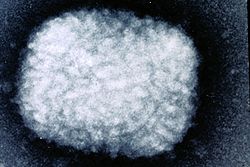
Poxviridae viral particles (virions) are generally enveloped (external enveloped virion), though the intracellular mature virion form of the virus, which contains different envelope, is also infectious. They vary in their shape depending upon the species but are generally shaped like a brick or as an oval form similar to a rounded brick because they are wrapped by the endoplasmic reticulum. The virion is exceptionally large, its size is around 200 nm in diameter and 300 nm in length and carries its genome in a single, linear, double-stranded segment of DNA.[10] By comparison, rhinoviruses are 1/10 as large as a typical Poxviridae virion.[11] On the outer surface membrane it has randomly arranged tubules.

Genome

[edit]

Phylogenetic analysis of 26 different chordopoxvirus genomes has shown that the central region of the genome is conserved and contains ~90 genes.[12] The termini in contrast are not conserved between species. Of this group Avipoxvirus is the most divergent. The next most divergent is Molluscipoxvirus. Capripoxvirus, Leporipoxvirus, Suipoxvirus and Yatapoxvirus genera cluster together: Capripoxvirus and Suipoxvirus share a common ancestor and are distinct from the genus Orthopoxvirus. Within the Othopoxvirus genus Cowpox virus strain Brighton Red, Ectromelia virus and Mpox virus do not group closely with any other member. Variola virus and Camelpox virus form a subgroup. Vaccinia virus is most closely related to CPV-GRI-90.[citation needed]

The GC-content of family member genomes differ considerably.[13] Avipoxvirus, capripoxvirus, cervidpoxvirus, orthopoxvirus, suipoxvirus, yatapoxvirus and one Entomopox genus (Betaentomopoxvirus) along with several other unclassified Entomopoxviruses have a low G+C content while others - Molluscipoxvirus, Orthopoxvirus, Parapoxvirus and some unclassified Chordopoxvirus - have a relatively high G+C content. The reasons for these differences are not known.[citation needed]

Replication

[edit]
Poxviridae replication cycle

Replication of the poxvirus involves several stages.[14] The replication can be divided into early, intermediate and late phase. The virus first binds to a receptor on the host cell surface; the receptors for the poxvirus are thought to be glycosaminoglycans.[citation needed] After binding to the receptor, the virus enters the cell where it uncoats.[citation needed] Uncoating of the virus is a two step process.[citation needed] Firstly the outer membrane is removed as the particle enters the cell; secondly the virus particle (without the outer membrane) fuses with the cellular membrane to release the core into the cytoplasm.[citation needed] The pox viral genes are expressed in two phases.[citation needed] The early genes encode the non-structural protein, including proteins necessary for replication of the viral genome, and are expressed before the genome is replicated.[citation needed] The late genes are expressed after the genome has been replicated and encode the structural proteins to make the virus particle.[citation needed] The assembly of the virus particle occurs in five stages of maturation that lead to the final exocytosis of the new enveloped virion.[citation needed] After the genome has been replicated, the immature virion assembles the A5 protein to create the intracellular mature virion.[citation needed] The protein aligns and the brick-shaped envelope of the intracellular enveloped virion.[citation needed] These particles are then fused to the cell plasma to form the cell-associated enveloped virion, which encounters the microtubules and prepares to exit the cell as an extracellular enveloped virion.[citation needed] The assembly of the virus particle occurs in the cytoplasm of the cell and is a complex process that is currently being researched to understand each stage in more depth.[citation needed] Considering the fact that this virus is large and complex, replication is relatively quick taking approximately 12 hours until the host cell dies by the release of viruses.[citation needed]

The replication of poxvirus is unusual for a virus with double-stranded DNA genome because it occurs in the cytoplasm,[15] although this is typical of other large DNA viruses.[16] Poxvirus encodes its own machinery for genome transcription, a DNA dependent RNA polymerase,[17] which makes replication in the cytoplasm possible. Most double-stranded DNA viruses require the host cell's DNA-dependent RNA polymerase to perform transcription. These host polymerases are found in the nucleus, and therefore most double-stranded DNA viruses carry out a part of their infection cycle within the host cell's nucleus.[citation needed]

The intermediate phase of replication is critical because, on that stage, the virus affects the host's normal function and modifies it more optimally to itself. For example, the virus can inhibit host apoptosis and block the antiviral state. On the replication, poxviruses have their enzymes for example vaccinia virus has decapping enzymes D9 and D10. Decapping enzymes that belong to the Nudix hydrolase superfamily those it used to remove mRNA 5'cap from viral and host mRNA. By removing 5'cap from the mRNA the virus reduces the accumulation of viral dsRNA and inhibit immune response.

Evolution

[edit]
Phylogenetic tree of Poxviridae and distribution of cGAMP nucleases across member species and genera

The ancestor of the poxviruses is not known but structural studies suggest it may have been an adenovirus or a species related to both the poxviruses and the adenoviruses.[18]

Based on the genome organisation and DNA replication mechanism a phylogenetic relationships may exist between the rudiviruses (Rudiviridae) and the large eukaryal DNA viruses: the African swine fever virus (Asfarviridae), Chlorella viruses (Phycodnaviridae) and poxviruses (Poxviridae).[19]

The mutation rate in poxvirus genomes has been estimated to be 0.9–1.2 x 10⁻⁶ substitutions per site per year.[20] A second estimate puts this rate at 0.5–7 × 10⁻⁶ nucleotide substitutions per site per year.[21] A third estimate places the rate at 4–6 × 10⁻⁶.[22]

The last common ancestor of the extant poxviruses that infect vertebrates existed 0.5 million years ago. The genus Avipoxvirus diverged from the ancestor 249 ± 69 thousand years ago. The ancestor of the genus Orthopoxvirus was next to diverge from the other clades at 0.3 million years ago. A second estimate of this divergence time places this event at 166,000 ± 43,000 years ago.[21] The division of the Orthopoxvirus into the extant genera occurred ~14,000 years ago. The genus Leporipoxvirus diverged ~137,000 ± 35,000 years ago. This was followed by the ancestor of the genus Yatapoxvirus. The last common ancestor of the Capripoxvirus and Suipoxvirus diverged 111,000 ± 29,000 years ago.[citation needed]

An isolate from a fish – salmon gill poxvirus – appears to be the earliest branch in the Chordopoxvirinae.[23] A new systematic has been proposed recently after findings of a new squirrel poxvirus in Berlin, Germany.[24]

Smallpox

[edit]

The date of the appearance of smallpox is not settled. It most likely evolved from a rodent virus between 68,000 and 16,000 years ago.[25][26] The wide range of dates is due to the different records used to calibrate the molecular clock. One clade was the variola major strains (the more clinically severe form of smallpox) which spread from Asia between 400 and 1,600 years ago. A second clade included both alastrim minor (a phenotypically mild smallpox) described from the American continents and isolates from West Africa which diverged from an ancestral strain between 1,400 and 6,300 years before present. This clade further diverged into two subclades at least 800 years ago.[citation needed]

A second estimate has placed the separation of variola from Taterapox at 3000–4000 years ago.[22] This is consistent with archaeological and historical evidence regarding the appearance of smallpox as a human disease which suggests a relatively recent origin. However, if the mutation rate is assumed to be similar to that of the herpesviruses the divergence date between variola from Taterapox has been estimated to be 50,000 years ago.[22] While this is consistent with the other published estimates it suggests that the archaeological and historical evidence is very incomplete. Better estimates of mutation rates in these viruses are needed.[citation needed]

Taxonomy

[edit]

The species in the subfamily Chordopoxvirinae infect vertebrates and those in the subfamily Entomopoxvirinae infect insects.

The following subfamilies and genera are recognized (-virinae denotes subfamily and -virus denotes genus):[2]

Subfamily: Chordopoxvirinae

Subfamily: Entomopoxvirinae

Vaccinia virus

[edit]

The prototypical poxvirus is vaccinia virus, known for its role in the eradication of smallpox. The vaccinia virus is an effective tool for foreign protein expression, as it elicits a strong host immune-response. The vaccinia virus enters cells primarily by cell fusion, although currently the receptor responsible is unknown.[citation needed]

Vaccinia contains three classes of genes: early, intermediate and late. These genes are transcribed by viral RNA polymerase and associated transcription factors. Vaccinia replicates its genome in the cytoplasm of infected cells, and after late-stage gene expression undergoes virion morphogenesis, which produces intracellular mature virions contained within an envelope membrane. The origin of the envelope membrane is still unknown. The intracellular mature virions are then transported to the Golgi apparatus where it is wrapped with an additional two membranes, becoming the intracellular enveloped virus. This is transported along cytoskeletal microtubules to reach the cell periphery, where it fuses with the plasma membrane to become the cell-associated enveloped virus. This triggers actin tails on cell surfaces or is released as external enveloped virion.[citation needed]

See also

[edit]

References

[edit]
[edit]
Revisions and contributorsEdit on WikipediaRead on Wikipedia
from Grokipedia
is a family of large, enveloped, double-stranded DNA viruses with brick-shaped or ovoid virions measuring 220–450 nm in length, 140–260 nm in width, and containing genomes of 130–360 kilobase pairs that encode numerous proteins including enzymes for replication. Unlike most DNA viruses, poxviruses replicate entirely within the host cell cytoplasm, forming discrete viral factories where uncoating, early gene transcription by virion-packaged RNA polymerase, DNA synthesis, intermediate and late gene expression, and virion assembly occur in a temporally regulated cycle. The family divides into two subfamilies: Chordopoxvirinae, comprising 18 genera that infect vertebrates and include human pathogens such as orthopoxviruses (e.g., Variola major causing smallpox and monkeypox virus), parapoxviruses, yatapoxviruses, and molluscipoxviruses; and Entomopoxvirinae, with four genera infecting insects and other invertebrates. Poxviruses have shaped medical history through diseases like eradicated smallpox and ongoing zoonotic threats, while serving as vectors in recombinant vaccines due to their large capacity for foreign gene insertion and host range properties.

Introduction

Definition and Characteristics

Poxviridae constitutes a family of large, enveloped double-stranded DNA viruses distinguished by their cytoplasmic replication cycle, a trait atypical among DNA viruses which predominantly utilize the host nucleus. Virions exhibit a complex architecture, featuring an external lipid envelope surrounding a core that encapsulates the genome along with lateral bodies containing enzymes essential for early transcription. This family encompasses pathogens affecting vertebrates and insects, with genomes encoding up to 300 proteins that facilitate independent replication machinery, immune evasion, and host interaction. Morphologically, poxvirus particles are brick-shaped or ovoid, measuring approximately 220–450 nm in length, 140–260 nm in width, and 140–260 nm in thickness, rendering them visible under light microscopy in some preparations. The virions demonstrate ether resistance, preserving infectivity under lipid solvent exposure, and display extensive serological cross-reactivity across genera due to conserved structural proteins. Internal structure includes a biconcave core with the linear dsDNA genome, covalently closed at termini via hairpin loops, spanning 128–375 kilobase pairs with inverted terminal repeats facilitating recombination and genome resolution. Replication initiates post-entry via fusion or endocytosis, with uncoating releasing the core to transcribe early genes in the cytoplasm using packaged RNA polymerase, followed by DNA synthesis via viral polymerases and accessory factors, culminating in assembly at cytoplasmic factories and envelopment by Golgi-derived membranes. This self-contained cytosolic lifecycle, encoding over 100 non-essential genes for host adaptation, underscores the family's evolutionary divergence from nuclear-replicating herpesviruses despite shared dsDNA nature.

Etymology

The name Poxviridae derives from the English word "pox", referring to the characteristic pustular skin lesions (pocks) produced by viruses in this family, combined with the taxonomic suffix "-viridae", which denotes a virus family. The root "pox" traces to Old English poc or pocc, meaning "pustule", and evolved through Middle English pocke to describe blister-like eruptions associated with diseases such as smallpox. This nomenclature reflects the family's historical association with vertebrate pox diseases featuring such lesions, as established in early virological classifications.

Taxonomy and Classification

Subfamilies and Genera

The family Poxviridae is divided into two subfamilies, Chordopoxvirinae and Entomopoxvirinae, primarily distinguished by host specificity, with Chordopoxvirinae infecting vertebrate chordates (including mammals, birds, reptiles, and fish) and Entomopoxvirinae infecting insects from four orders (Orthoptera, Coleoptera, Lepidoptera, and Diptera). This classification reflects fundamental differences in viral-host interactions, genome organization, and virion morphology, as established by the International Committee on Taxonomy of Viruses (ICTV). The subfamily Chordopoxvirinae encompasses 18 genera, reflecting a broad range of vertebrate hosts and associated diseases, such as smallpox in humans caused by Variola virus in the genus Orthopoxvirus. These genera include:
  • Avipoxvirus (avian hosts, e.g., fowlpox virus)
  • Capripoxvirus (ruminants, e.g., sheeppox virus)
  • Centapoxvirus
  • Cervidpoxvirus (deer)
  • Crocodylidpoxvirus (crocodilians)
  • Leporipoxvirus (lagomorphs, e.g., myxoma virus)
  • Macropopoxvirus (marsupials)
  • Molluscipoxvirus (molluscum contagiosum virus in humans)
  • Mustelpoxvirus (mustelids, e.g., skunkpox virus)
  • Orthopoxvirus (mammals, including vaccinia and monkeypox viruses)
  • Oryzopoxvirus (rodents)
  • Parapoxvirus (e.g., orf virus in sheep)
  • Pteropopoxvirus (bats)
  • Salmonpoxvirus (salmonids)
  • Sciuripoxvirus (squirrels)
  • Suipoxvirus (swinepox virus)
  • Vespertilionpoxvirus (bats)
  • Yatapoxvirus (primates, e.g., tanapox virus)
Genera within Chordopoxvirinae are further defined by phylogenetic analyses of core genes like DNA polymerase and RNA polymerase subunits, alongside host adaptation and virion surface protein profiles. The subfamily Entomopoxvirinae includes four genera, all restricted to insect hosts, with virions exhibiting distinct occlusion body morphologies (e.g., spindle-shaped in Betaentomopoxvirus). These are:
  • Alphaentomopoxvirus (primarily Coleoptera and Lepidoptera)
  • Betaentomopoxvirus (Orthoptera and Coleoptera)
  • Deltaentomopoxvirus (Nematocera)
  • Gammaentomopoxvirus (Hymenoptera)
One species, Diachasmimorpha entomopoxvirus, remains unassigned to a within this . Entomopoxviruses generally cause chronic infections with lower pathogenicity compared to chordopoxviruses, often forming crystalline for environmental persistence. The 2023 ICTV update maintains this structure, incorporating genomic sequencing data from diverse isolates to refine boundaries without altering the subfamilial division.

Phylogenetic Relationships

Phylogenetic relationships within the Poxviridae family are determined through comparative analyses of conserved core genes, such as DNA polymerase and RNA polymerase subunits, and whole-genome sequences from up to 26 representative viruses. These analyses employ methods including neighbor-joining, maximum parsimony, and maximum-likelihood trees constructed from concatenated alignments of 25 to 92 orthologous proteins, revealing a monophyletic family structure. The family divides into two primary subfamilies: Chordopoxvirinae, comprising viruses that infect vertebrates across 18 genera, and Entomopoxvirinae, with viruses infecting insects in 4 genera, the latter serving as the outgroup in chordopoxvirus phylogenies. Within Chordopoxvirinae, genera cluster based on host specificity, gene content, and sequence divergence; for instance, Orthopoxvirus forms a tight clade encompassing human pathogens like variola virus, while Molluscipoxvirus represents the most basal and divergent lineage. Other groupings include a cluster of Yatapoxvirus, Leporipoxvirus, and Suipoxvirus, distinct from Orthopoxvirus and Avipoxvirus. Genome organization supports these relationships, with a highly conserved central region of approximately 90 genes in chordopoxviruses reducing to 49 when including entomopoxviruses, and variable terminal regions prone to gene gain, loss, and duplication that drive adaptive evolution, particularly in Orthopoxvirus lineages. Poxviridae as a whole clusters within the nucleocytoplasmic large DNA viruses (NCLDVs), sister to families like Asfarviridae. Despite their double-stranded DNA nature suggesting slow evolution, patterns of horizontal gene transfer and positive selection on immune evasion genes underscore dynamic phylogenetic divergence.

Viral Structure and Morphology

Virion Architecture

The virions of the Poxviridae family exhibit a complex architecture characterized by a brick-shaped or ovoid morphology, with dimensions ranging from 220 to 450 nm in length and 140 to 260 nm in height. These particles are bounded by a lipid envelope derived during intracellular maturation, enclosing an asymmetric internal structure that includes a nucleoprotein core, lateral bodies, and associated membranes. The mature virion (MV) form, prevalent in orthopoxviruses like vaccinia, measures approximately 360 × 270 × 250 nm and contains over 80 proteins, enabling cytoplasmic replication independent of host nuclear machinery. At the core, a biconcave, dumbbell-shaped nucleoprotein structure houses the linear double-stranded DNA genome, typically 130 to 380 kilobase pairs in length, along with viral RNA polymerase and transcription factors essential for early gene expression. This core is enveloped by a proteinaceous shell and flanked by two lateral bodies—dense, protein-rich structures of unclear function but implicated in host interaction and evasion. Enclosing these components is a single lipid bilayer membrane, acquired from modified host-derived crescents during assembly, embedded with about 20 viral proteins that facilitate attachment, entry, and stability. Surface features include short, 10-nm-wide tubules visible via negative-stain electron microscopy, contributing to the virion's textured appearance and potentially aiding in environmental resistance. Extracellular enveloped virions (EEV), a subset produced by some poxviruses, acquire an additional double lipid envelope from host Golgi or endosomes, enhancing but comprising a minor fraction of progeny. Cryo-electron reveals palisade-like protein lattices on the core surface, underscoring the intricate, non-icosahedral symmetry that distinguishes poxvirions from simpler viral architectures.

Size, Shape, and Envelopment

Poxviridae virions are enveloped double-stranded DNA viruses characterized by a complex morphology, typically appearing brick-shaped or ovoid under electron microscopy. The overall dimensions range from 220–450 nm in length, 140–260 nm in width, and 140–260 nm in thickness, making them among the largest known viruses. These measurements are derived from electron micrographs of purified virions, with orthopoxviruses such as vaccinia virus measuring approximately 240 nm by 300 nm. The brick-shaped form predominates in genera like Orthopoxvirus, featuring a flattened rectangular or barrel-like profile, while some subfamilies exhibit more ovoid contours. Surface features include short tubules or globular units, approximately 10–20 nm in length, arranged on the lipoprotein envelope. This envelope, acquired during intracellular maturation, consists of a lipid bilayer derived from modified host cell membranes embedded with viral glycoproteins essential for attachment and entry. Envelopment in poxviruses occurs in two forms: the intracellular mature virion (IMV), which possesses a single envelope, and the extracellular enveloped virion (EEV), featuring an additional outer membrane that enhances dissemination. The envelope's lipid composition and embedded proteins, visualized via negative staining and cryo-electron microscopy, confer stability and host interaction capabilities, distinguishing poxvirions from simpler naked viruses. Variations in size and shape across genera reflect adaptations to diverse hosts, confirmed through standardized electron microscopy protocols.

Genome Organization

Structure and Size

The genomes of Poxviridae viruses consist of a single linear molecule of double-stranded DNA (dsDNA) with covalently closed hairpin termini formed by short, inverted repeats at each end. These termini enable circularization during replication and protect against exonucleolytic degradation. The linear genome is flanked by inverted terminal repeat (ITR) sequences of variable length, typically ranging from less than 1 kb to over 12 kb, which often contain genes involved in replication, transcription, and immunomodulation. Genome sizes vary widely across the family, spanning approximately 130 to 375 kilobase pairs (kbp), reflecting differences in host range and evolutionary divergence among subfamilies. For instance, chordopoxviruses (infecting vertebrates) generally have smaller genomes around 130–200 kbp, as seen in parapoxviruses (∼130 kbp) and orthopoxviruses (∼190–200 kbp), while entomopoxviruses (infecting insects) exhibit larger genomes up to 350–375 kbp. The smallest fully sequenced poxvirus genome, from Yatapoxvirus yabapoxvirus, measures 134,721 base pairs. This size variability correlates with gene content, with larger genomes accommodating more open reading frames (130–328), though the core conserved region remains relatively stable at about 100 kbp across species.

Key Genetic Features

The genomes of Poxviridae are linear, double-stranded DNA molecules ranging in size from approximately 130 kilobase pairs (kbp) in smaller members like parapoxviruses to over 360 kbp in entomopoxviruses, encoding 150 to more than 300 open reading frames depending on the species. These genomes feature covalently closed hairpin loops at both termini, formed by inverted and complementary sequences that are AT-rich and incompletely base-paired, which facilitate resolution during replication and protect against exonucleases. Flanking the central coding region are inverted terminal repeats (ITRs) of variable length (0.1 to over 12 kbp), often containing direct repeat arrays that include genes involved in immune evasion, virulence, and recombination. Genes are distributed on both strands throughout the genome, with a conserved central core of essential genes for replication (e.g., DNA polymerase, RNA polymerase subunits) flanked by more variable terminal genes encoding host-range factors, immunomodulators, and structural proteins. This organization enables cytoplasmic replication independent of host nuclear machinery, a hallmark of poxviruses, with high gene density in conserved regions but interspersed non-coding sequences and pseudogenes in expanded genomes. The AT bias (often >70%) in terminal regions contrasts with more balanced central composition, influencing transcription and mutation rates.

Replication Cycle

Entry and Uncoating

Poxviruses initiate infection by attaching to host cell surfaces via multiple viral glycoproteins. In vaccinia virus, a prototypical orthopoxvirus, attachment involves proteins A27 and H3 binding heparan sulfate glycosaminoglycans, D8 interacting with chondroitin sulfate, and A26 engaging laminin. These interactions facilitate close apposition of the viral envelope to the plasma membrane or endosomal membrane, with entry pathways varying by cell type: direct fusion at the plasma membrane in some permissive cells or uptake via macropinocytosis followed by endosomal fusion in others. Membrane fusion requires a conserved entry-fusion complex (EFC) of at least 11 non-glycosylated, transmembrane viral proteins, including A16, A21, A28, G3, G9, H2, J5, L1, L5, and O3, which assemble into a multiprotein structure essential for destabilizing lipid bilayers. Fusion proceeds via a two-step biochemical mechanism: initial hemifusion with lipid mixing, followed by pore expansion that permits the rigid viral core—encapsulating the genome, transcriptase, and lateral bodies—to penetrate the cytoplasm. This pH-independent process releases uncoating-competent cores, distinguishing poxviruses from many enveloped viruses reliant on endosomal acidification. Uncoating follows in two sequential stages, enabling stepwise genome access. Primary uncoating occurs concurrently with fusion, stripping the outer envelope and liberating cores into the cytosol, where the intact core acts as a factory for early transcription by viral RNA polymerase. This stage supports synthesis of early mRNAs without full genome exposure, as evidenced by inhibitor studies blocking subsequent steps. Secondary uncoating, delayed by 1-2 hours post-infection, requires early viral protein synthesis and breaches the core's proteinaceous wall to release DNA for replication. The D5 protein, an AAA+ ATPase with helicase-primase functions, is indispensable, coordinating core rupture alongside redundant early factors like 68k-ankyrin repeat protein, M2, and C5. Host ubiquitin-proteasome machinery further aids disassembly, with impairments in these components halting DNA synthesis despite intact early transcription. Across Poxviridae genera, this process exhibits conservation, though host range influences efficiency, as restrictive cells often fail post-entry uncoating.

Transcription, Translation, and Assembly

Poxviruses carry out transcription exclusively in the host cell cytoplasm using a virally encoded multisubunit DNA-dependent RNA polymerase (vRNAP) and associated transcription factors packaged within the virion core. Upon uncoating, this machinery initiates early gene expression from double-stranded DNA templates, generating uncapped mRNAs with a distinctive 5'-poly(A) leader that promotes efficient translation even under conditions of impaired host cap-dependent initiation. Transcription proceeds in three temporal phases—early, intermediate, and late—regulated by viral factors and coupled to DNA replication, with early transcripts encoding enzymes for genome replication and immune evasion. Transcription and translation are spatially linked within cytoplasmic viral factories, where nascent viral mRNAs are immediately translated by host ribosomes, enhancing coordination of viral gene expression and minimizing reliance on host nuclear processes. Poxviruses manipulate host translation machinery to prioritize viral protein synthesis, including phosphorylation of the ribosomal protein RACK1 at specific sites to boost viral mRNA recruitment and customization of ribosomes via incorporation of non-essential ribosomal proteins from both subunits, rendering the virus dependent on these modified ribosomes for replication. Late-phase translation produces structural proteins essential for virion assembly. Virion assembly occurs concurrently in these cytoplasmic factories, initiating with viral proteins inducing rupture and wrapping of endoplasmic reticulum-derived membranes to form open crescents that close around replicated viral DNA cores, yielding spherical immature virions (IVs). IVs undergo intraviral morphogenesis, involving core wall formation and nucleoid condensation, to produce mature virions (MVs) with a characteristic biconcave core structure; a subset of MVs acquires additional double envelopes from Golgi-derived membranes to form wrapped virions (WVs) or extracellular enveloped virions (EEVs) capable of systemic spread. This multi-stage process, driven by late viral proteins, ensures production of infectious particles independent of host nuclear functions.

Evolution and Phylogeny

Ancient Origins

The Poxviridae family exhibits deep evolutionary roots, evidenced by its division into two subfamilies: Entomopoxvirinae, which primarily infects insects, and Chordopoxvirinae, which targets vertebrates. This host partitioning suggests an ancient origin, with Entomopoxvirinae demonstrating patterns of coevolution with insect lineages potentially extending to the common ancestors of bilaterian metazoans, implying divergence timescales on the order of hundreds of millions of years. The limited conservation of gene order between the subfamilies further underscores significant evolutionary divergence over extended periods. Within Chordopoxvirinae, molecular clock analyses calibrated using conserved genes under stabilizing selection estimate the radiation of major genera from a shared ancestor between 111,000 and 249,000 years ago. Specifically, Avipoxvirus is inferred to have diverged approximately 249,000 ± 69,000 years ago, followed by Orthopoxvirus around 166,000 ± 43,000 years ago, Leporipoxvirus at 137,000 ± 35,000 years ago, and the Capripoxvirus-Suipoxvirus lineage at 111,000 ± 29,000 years ago. These estimates align with a slow substitution rate of 0.5–7 × 10^{-6} nucleotides per site per year, characteristic of double-stranded DNA viruses with proofreading mechanisms. Host range expansions, including transfers from insect to vertebrate lineages, have been recurrent in poxvirus history, contributing to the family's adaptability and the acquisition of host-derived genes that modulate virulence and replication. Such dynamics, combined with the ancient host associations, position Poxviridae as one of the older viral families, with origins potentially linked to the broader Nucleo-Cytoplasmic Large DNA Virus clade predating modern eukaryotic divergences.

Host Adaptation and Speciation

Poxviridae viruses demonstrate host adaptation through the acquisition and functional diversification of genes that modulate host immune responses, enabling replication in diverse cellular environments. Chordopoxvirinae primarily infect vertebrates, while Entomopoxvirinae target , reflecting ancient divergences tied to host class-specific barriers such as signaling and pathways. Host range factors (HRFs), including E3L (inhibiting PKR and dsRNA sensors in 25 species), C7L (modulating in 24 species), and K3L (antagonizing PKR), allow circumvention of species-specific restrictions, with virus (CPXV) possessing up to 27 such homologs to support its broad mammalian . Gene gains, often via horizontal transfer from hosts, further enhance adaptation; for instance, chordopoxviruses acquired serpins to inhibit , while entomopoxviruses incorporated lepidopteran-derived inhibitors. Speciation in Poxviridae arises from host-driven selective pressures, including gene duplications, losses, and recombinations that narrow or expand host specificity. Orthopoxvirus clades, such as those of variola virus (VARV) and camelpox virus, diverged 3,000–68,000 years ago, with VARV's human restriction linked to inactivation of genes like K1L, reducing broad-range capabilities inherited from ancestors like CPXV. Myxoma virus (MYXV) exemplifies rapid post-jump adaptation, evolving at 9.6 × 10⁻⁶ substitutions/site/year after switching to European rabbits, attenuating virulence via mutations in immune modulators. "Genomic accordions"—tandem duplications enabling transient gene amplification (e.g., K3L copies expanding to 15 in vaccinia virus under PKR pressure)—facilitate quick evasion of host defenses despite low baseline mutation rates, promoting lineage divergence during cross-species transmissions like monkeypox virus (MPXV) from rodents. Phylogenetic analyses reveal that poxvirus genera often align with host taxa but include evidence of host jumps, challenging strict co-speciation models; for example, North American orthopoxviruses form sister clades to Old World lineages, suggesting historical range expansions. While HRF abundance correlates with cellular tropism rather than overall host spectrum—evident in the lack of direct proportionality between gene diversity and known host counts—positive selection on acquired genes (21% in orthopox-specific families versus 9% elsewhere) underscores adaptive speciation. Zoonotic events, such as MPXV clade divergences (e.g., clades I and II differing in human lethality at ~10% and milder rates), highlight ongoing adaptation via gene content variation across 83 recognized species in 22 genera.

Associated Diseases and Pathogenesis

Human Diseases

Poxviridae viruses cause a range of human diseases, primarily through orthopoxviruses leading to systemic infections and other genera causing localized cutaneous lesions. The most historically significant is smallpox, caused by Variola virus, which resulted in high mortality rates of approximately 30% and was eradicated globally in 1980 following intensive vaccination campaigns, with the last natural case occurring in 1977. Currently, mpox (formerly monkeypox), caused by Monkeypox virus, represents an emerging zoonotic threat, with symptoms including fever, lymphadenopathy, and a characteristic rash; the 2022 global outbreak reported over 80,000 cases, predominantly among men who have sex with men (MSM), with case fatality rates varying from 1% in clade II to up to 10% in clade I strains in endemic African regions. Molluscum contagiosum, induced by Molluscum contagiosum virus of the Molluscipoxvirus genus, manifests as benign, self-limiting pearly papules on the skin, typically resolving within 6-12 months in immunocompetent individuals but persisting longer in those with immunosuppression such as HIV; it spreads via direct skin-to-skin contact or fomites and affects up to 5-10% of children worldwide. Zoonotic parapoxviruses like Orf virus cause localized vesicular lesions following contact with infected sheep or goats, with an incubation period of 3-7 days and rare systemic complications; human cases are sporadic and self-resolve in 4-6 weeks. Less common infections include tanapox from Tanapox virus (Yatapoxvirus genus), endemic to and characterized by mild fever and single nodular skin lesions with a 1-2 week incubation; documented cases remain rare, with only isolated reports outside , such as one in in 2022. Cowpox and milker's nodules from related parapoxviruses occasionally infect humans via animal reservoirs, producing similar localized pustules, but these are uncommon and typically mild in healthy adults. Pathogenesis across these diseases involves cytoplasmic replication in host cells, evasion of innate immunity via viral inhibitors, and lesion formation from cytopathic effects, with severity influenced by host immune status and viral .

Veterinary and Zoonotic Diseases

Poxviridae members cause significant diseases in livestock, particularly capripoxviruses responsible for sheeppox and goatpox in small ruminants, and lumpy skin disease (LSD) in cattle. Sheeppox and goatpox lead to high morbidity rates, with outbreaks showing up to 51.6% flock morbidity, 2% mortality, and 3.9% case fatality, resulting in economic losses from reduced animal sales, lower offspring numbers, and diminished herd value. These diseases manifest as fever, respiratory distress, and skin nodules, severely impacting trade and intensive production in affected regions like Africa, Asia, and the Middle East. LSD, caused by a capripoxvirus, produces characteristic skin lumps, fever, and reduced milk yield in cattle, with recent outbreaks reported in Europe including Italy on June 21, 2025, Spain in October 2025 prompting export bans, France with multiple cases near the Spanish border in October 2025, and Japan in November 2024. Other veterinary poxvirus infections include contagious ecthyma (orf), a parapoxvirus disease primarily affecting sheep and goats, characterized by proliferative lesions on the mouth, lips, and teats that hinder feeding and nursing. Orf spreads through direct contact or fomites, with young animals most susceptible via abrasions, and can persist in scabs for months. Cowpox, an orthopoxvirus, rarely affects cattle with mild udder and teat lesions but has been documented in domestic cats, zoo animals, and wild rodents as reservoirs. Additional poxviruses impact swine (swinepox) and poultry, though less economically devastating than capripox or parapox diseases. Several poxviruses exhibit zoonotic potential, transmitting from animals to humans via direct contact, abrasions, or fomites, often causing localized skin lesions without systemic spread in immunocompetent individuals. Orf virus frequently infects humans handling infected sheep or goats, leading to papulovesicular lesions on hands that resolve in 4-6 weeks but may recur or complicate in immunocompromised persons. Transmission occurs through skin trauma during shearing, milking, or lambing, with humans as dead-end hosts. Cowpox spills over primarily from cats or rodents to humans, manifesting as pustular skin efflorescences that can ulcerate and scab, occasionally involving eyes or leading to generalized infection in vulnerable individuals. Parapoxviruses like pseudocowpox and bovine papular stomatitis cause milker's nodules or similar occupational zoonoses in dairy workers via udder contact. These zoonoses underscore the occupational risks in veterinary settings, though human cases remain self-limiting and rare compared to animal burdens.

Epidemiology and Transmission

Modes of Spread

Poxviridae viruses demonstrate genus-specific transmission patterns, predominantly involving direct contact with infected hosts or materials, with some capable of or vector-mediated spread. Orthopoxviruses, including Variola major (causing ) and , transmit primarily through direct physical contact with vesicular or pustular skin lesions, scabs, or contaminated s such as bedding and clothing; respiratory droplet transmission occurs via prolonged close contact, facilitating human-to-human chains, as evidenced by historical outbreaks and recent epidemics. Zoonotic spillover for orthopoxviruses arises from handling infected or , with initial human infections often linked to preparation or animal exposure in endemic regions. Environmental stability of the brick-shaped virions enhances persistence, contributing to nosocomial and community spread in unvaccinated populations. Parapoxviruses, such as orf virus (Orf virus) and pseudocowpox virus, spread zoonotically via cutaneous abrasions during direct contact with infected sheep, goats, cattle, or their exudates, typically during shearing, milking, or slaughter; human-to-human transmission is rare and undocumented in controlled studies, limiting outbreaks to occupational settings among farmers and veterinarians. Lesion-derived virions remain viable on fomites like knives or hides, amplifying risk in meat processing without protective barriers. Yatapoxviruses, exemplified by tanapox virus and yaba monkey tumor poxvirus, involve arthropod vectors such as biting flies or mosquitoes for primate-to-primate and occasional zoonotic transmission in equatorial Africa, alongside direct contact with lesions; human cases manifest as localized skin tumors without efficient person-to-person spread. Unlike orthopoxviruses, yatapoxviruses lack robust aerosol capability, confining epidemics to vector-prevalent ecologies. Certain poxviruses, including some capripoxviruses affecting livestock, exhibit indirect transmission via contaminated pastures or aerosols in confined animal housing, underscoring veterinary containment's role in preventing spillover. Across genera, incubation periods of 5–21 days and prodromal viremia enable asymptomatic shedding, complicating early detection and control.

Historical and Recent Outbreaks

Smallpox, caused by the Variola major and Variola minor viruses, has been documented for at least 3,000 years, with evidence from ancient Egyptian mummies dating to around 1100 BCE showing pockmark scars indicative of infection. Major epidemics ravaged populations worldwide; for instance, in London from 1664 onward, smallpox accounted for over 320,000 deaths, often exhibiting strong seasonality with peaks in cooler months. In the 20th century alone, the disease killed an estimated 300 million people globally, with mortality rates for Variola major reaching 30% in unvaccinated populations. The last naturally occurring case was reported in Somalia on October 26, 1977, following intensified vaccination campaigns, leading to the World Health Organization's declaration of eradication in 1980. Other historical outbreaks involved zoonotic orthopoxviruses like , which sporadically affected humans and livestock in from the , typically causing localized pustular lesions rather than widespread epidemics. Equination with horsepox material was practiced in the 19th century as an alternative to cowpox inoculation for prevention, though horsepox itself did not cause significant human outbreaks. Recent outbreaks have primarily involved monkeypox virus (Monkeypox virus), an orthopoxvirus endemic to Central and West Africa. A global multi-country outbreak of clade IIb monkeypox began in May 2022, with initial cases detected in the United Kingdom on May 6, 2022, linked to travel from Nigeria; by October 26, 2022, it had resulted in 75,348 confirmed cases and 193 deaths across 109 countries/territories, predominantly among men who have sex with men, though transmission occurred via close contact including respiratory droplets and fomites. The case-fatality rate remained below 0.2% in this outbreak, lower than historical African strains (up to 10%), attributed to better medical care and partial cross-immunity from prior smallpox vaccination. Clade I monkeypox outbreaks escalated in Africa from 2023, with sporadic imported cases in non-endemic areas like the United States, including six travel-related instances reported as of October 2025. Cowpox continues to cause isolated zoonotic spillovers, including lethal infections in zoo animals and immunocompromised humans in Europe. No novel human outbreaks of other poxviruses, such as camelpox or buffalopox, have been widely reported outside endemic animal reservoirs in recent decades.

Prevention, Control, and Therapeutics

Vaccination Strategies

Vaccination against poxviruses has primarily targeted , with the smallpox vaccine serving as the foundational strategy that led to global eradication of Variola major and Variola minor by 1980 through the World Health Organization's intensified campaign starting in 1967. Initial efforts employed mass campaigns in endemic regions, transitioning to targeted surveillance-containment approaches, including ring vaccination around confirmed cases to isolate and vaccinate contacts, which proved decisive in interrupting transmission. The vaccine, derived from live vaccinia virus—a closely related orthopoxvirus—provided cross-protection via robust humoral and cellular immunity, with efficacy exceeding 95% in preventing severe disease when administered before exposure. Innovations like the heat-stable, lyophilized vaccine formulation and the enabled efficient, single-dose intradermal administration, conserving resources in resource-limited settings. Post-eradication, vaccination strategies shifted to preparedness for potential bioterrorism or zoonotic threats from related orthopoxviruses like monkeypox virus (mpox). The U.S. Strategic National Stockpile maintains millions of doses of second-generation vaccines such as ACAM2000, a replication-competent vaccinia strain approved for active-duty military and high-risk individuals, though it carries risks including myocarditis, pericarditis, and inadvertent inoculation at rates of approximately 1 in 175 to 1 in 1,000 recipients. Third-generation vaccines like JYNNEOS (modified vaccinia Ankara, non-replicating) offer safer profiles for broader use, administered as two subcutaneous doses 28 days apart, with demonstrated effectiveness of 66-89% against mpox in real-world studies during the 2022 clade IIb outbreak. Dose-sparing intradermal regimens, using one-fifth the volume, have been authorized to extend supplies during outbreaks, maintaining immunogenicity comparable to standard dosing. Pre-exposure vaccination targets high-risk groups such as laboratory workers and healthcare personnel, while post-exposure prophylaxis within 4 days of contact can prevent or mitigate disease, emphasizing rapid surveillance and ring vaccination to contain clusters. For capripoxviruses affecting livestock, vaccination strategies focus on live attenuated strains of sheeppox virus or goatpox virus to control outbreaks in endemic regions like Africa and Asia, providing protection lasting 2-5 years and reducing morbidity in sheep and goats where mortality can reach 90% in naive populations. Routine immunization in flocks and herds, combined with movement controls, forms the core of prevention, though inactivated vaccines offer shorter-term immunity (about 1 year) for scenarios requiring minimal viral replication risk. In camels, camelpox vaccines—either live or inactivated—target young animals in endemic areas, averting economic losses from skin lesions and secondary infections, with host-specific formulations ensuring no cross-species transmission concerns. Challenges include vaccine stability in field conditions and the need for cold-chain logistics, underscoring the causal role of sustained immunity in breaking zoonotic cycles without over-reliance on culling.

Antiviral Treatments and Challenges

Tecovirimat, also known as TPOXX or ST-246, is an antiviral drug approved by the U.S. FDA in July 2018 for the treatment of smallpox caused by Variola major in adults and children, operating by inhibiting the viral protein VP37 to block envelope formation and virion release. It has been stockpiled by governments for orthopoxvirus preparedness and deployed under expanded access protocols for human monkeypox virus (mpox) infections, where it is recommended as the first-line antiviral for severe cases requiring more than supportive care, despite randomized trials in 2024 showing no significant reduction in lesion resolution time compared to placebo. Brincidofovir, conjugate of , received FDA approval in June 2021 treatment and demonstrates and animal model efficacy against orthopoxviruses by targeting viral , offering an oral alternative to intravenous options but limited by potential observed in clinical use . itself, an acyclic nucleotide analog inhibiting , shows activity against poxviruses in preclinical studies and has been used off-label intravenously for orthopox infections, though its nephrotoxicity necessitates probenecid co-administration and hydration protocols. No antivirals are specifically FDA-approved as of October , with treatments relying on these smallpox-era agents under compassionate use or emergency authorizations in regions like the , , and . Development of broad-spectrum antivirals for Poxviridae faces challenges from the viruses' large double-stranded DNA genomes (up to 230 kb), which encode numerous immune evasion proteins that dismantle host antiviral responses, including mitochondrial signaling pathways, complicating host-directed therapies. Cytoplasmic replication independent of host nuclear machinery reduces susceptibility to many DNA polymerase inhibitors, while the rarity of human outbreaks limits large-scale clinical trials, relying instead on animal models like rabbitpox or ectromelia that imperfectly recapitulate human disease. Pharmacokinetic barriers, such as poor tissue penetration for intracellular viruses, and toxicity profiles further hinder progress, with calls for combination regimens (e.g., tecovirimat plus antiretrovirals for severe mpox) to address resistance risks and incomplete efficacy. Ongoing research targets novel orthopoxvirus proteins like topoisomerases, but biosecurity restrictions on live virus handling and underinvestment in rare-disease antivirals perpetuate gaps in therapeutic options beyond vaccination.

History of Research

Early Discoveries

In 1796, conducted experiments demonstrating that material derived from lesions inoculated into humans conferred immunity to , establishing the principle of and highlighting the protective of , a member of the genus within Poxviridae, though its sub-bacterial nature remained unrecognized at the time. This empirical observation spurred systematic study of pox agents, with early 20th-century filtration experiments by researchers including Thomas Rivers confirming that vaccinia and variola passed through porcelain filters that retained bacteria, proving their filterable, ultramicroscopic character and classifying them among the first recognized animal viruses. Light microscopy advanced identification of viral elements in infected tissues. In 1893, Giuseppe Guarnieri described cytoplasmic inclusion bodies in variola-infected cells, later termed Guarnieri bodies. Building on this, Erich Paschen in 1906 visualized discrete "elementary bodies" in smears of smallpox vesicle fluid stained with Giemsa, measuring approximately 0.2–0.3 μm, and argued they represented the etiological agent rather than mere cellular debris or bacteria, a claim substantiated by their consistent association with pox lesions across species. These Paschen bodies provided the first presumptive morphological evidence of poxvirus particles, though resolution limits of light microscopy precluded detailed virion architecture. The introduction of transmission electron microscopy (TEM) in the late 1930s enabled unprecedented structural resolution. In 1939, Helmut Ruska and colleagues first imaged using early TEM on collodion-mounted preparations, revealing brick- or ovoid-shaped particles approximately 200–400 nm in length, confirming the elementary bodies as mature virions and distinguishing poxviruses from smaller viruses by their large, complex morphology. These observations, among the earliest TEM applications to any , facilitated purification efforts and laid the foundation for biochemical analyses, including demonstrations in the 1940s that poxviruses replicate in the host , unlike most DNA viruses.

Key Scientific Milestones

In 1796, Edward Jenner conducted experiments demonstrating that exposure to cowpox virus conferred immunity to smallpox, establishing the principle of vaccination and revealing immunological cross-reactivity among poxviruses. This breakthrough utilized vaccinia virus, a member of the Orthopoxvirus genus within Poxviridae, to protect against the related variola virus. In 1798, Jenner published his observations in An Inquiry into the Causes and Effects of the Variolae Vaccinae, providing the scientific foundation for systematic immunization against poxvirus-induced diseases and influencing the development of virology and immunology. In 1913, Emanuel Steinhardt and Rebecca Lambert achieved the first serial propagation of an animal virus, vaccinia, in vitro using minced embryonic tissue, enabling controlled laboratory studies of poxvirus replication and host interactions. By the late 1930s, transmission electron microscopy first revealed the ultrastructure of poxvirus particles, such as vaccinia, displaying their characteristic brick-shaped or ovoid morphology measuring 200–400 nm in length, which distinguished them from smaller viruses and facilitated taxonomic classification. In 1980, the World Health Organization certified the global eradication of smallpox following a vaccination campaign employing vaccinia virus, representing the first successful elimination of a human infectious disease and underscoring the efficacy of poxvirus-based vaccines. This achievement relied on prior research into poxvirus antigens and immunity, conducted since the mid-20th century.

Biosecurity and Controversies

Laboratory Stocks and Retention Debates

The only officially acknowledged laboratory stocks of live Variola major and Variola minor viruses, members of the genus Orthopoxvirus within Poxviridae, are stored under WHO-approved biosafety level 4 conditions at two designated repositories: the Centers for Disease Control and Prevention (CDC) in , Georgia, (holding approximately 451 vials), and the State Centre of and (VECTOR) in Koltsovo, Novosibirsk Oblast, (holding about 120 vials). These stocks consist of frozen samples collected prior to smallpox eradication in 1980, with access strictly limited to approved research under WHO oversight via the Advisory Committee on Variola Virus Research (ACVVR). Post-eradication, the WHO World Health Assembly (WHA) initially mandated destruction by December 1990 through Resolution WHA41.8, but deferred this in 1993 (WHA46.35) and multiple subsequent sessions to enable research on diagnostics, vaccines, and antivirals, citing needs unmet by surrogate models. The ACVVR, established in 1999, reviews proposals biannually; as of its October 2023 meeting, it endorsed ongoing retention for studies on poxvirus pathogenesis, antiviral efficacy (e.g., tecovirimat and brincidofovir), and vaccine improvements like modified vaccinia Ankara (MVA). In May 2024, the WHA again postponed a final decision, reflecting unresolved tensions amid geopolitical strains, including Russia's 2022 invasion of Ukraine, which prompted calls for enhanced inspections at VECTOR. Retention advocates, including CDC and VECTOR scientists, emphasize empirical necessities: live virus is irreplaceable for validating countermeasures against bioterrorism scenarios, as animal models (e.g., nonhuman primates) inadequately replicate human smallpox dynamics, and regulatory bodies like the FDA require pathogen-specific challenge data for licensure. They note that since 1980, research has yielded insights into poxvirus immune evasion and yielded drugs like tecovirimat, approved in 2018 partly via variola data. Critics, including some biosecurity experts, argue destruction would eliminate containment risks—such as lab accidents (e.g., 1978 Birmingham smallpox escape) or theft—given synthetic biology advances enabling de novo variola reconstruction from sequenced genomes, rendering stocks symbolically obsolete while unknown clandestine stocks may persist. Post-2024 U.S. withdrawal from WHO funding has raised concerns over weakened global oversight, potentially complicating inspections and transfer protocols. The debate underscores causal trade-offs: retention supports preparedness against engineered threats but heightens accident probabilities in finite high-containment facilities, with no verified breaches since enhanced protocols post-eradication. As of 2025, WHO continues ACVVR operations, with a call for new experts issued in March to assess research needs amid evolving synthetic risks.

Synthetic Recreation and Dual-Use Risks

In 2017, researchers at the University of Alberta synthesized an infectious horsepox virus (HPXV), an orthopoxvirus closely related to the extinct variola virus that causes smallpox, using chemically synthesized DNA fragments ordered from commercial providers at a cost of approximately $100,000. The process involved assembling ten large DNA fragments (10–30 kb each) based on the HPXV genome sequence and bootstrapping the virus in cells, demonstrating that large double-stranded DNA viruses like poxviruses could be recreated de novo without natural templates. This work, partially funded by Tonix Pharmaceuticals to develop a potential smallpox vaccine candidate (TNX-801), highlighted advances in synthetic biology but underscored technical feasibility for recreating variola, whose genome sequence has been publicly available since 1990. The horsepox synthesis raised immediate biosecurity alarms, as the methodology could theoretically enable non-state or rogue programs to engineer variola or modified poxviruses, bypassing natural reservoirs or official held only in the United States and . Experts noted that while poxvirus genomes are complex (~200 kb) and require specialized assembly techniques, commercial and reverse genetics tools have lowered barriers, with risks amplified by inadequate screening of dual-use DNA orders. No verified synthesis of variola has occurred publicly, but the shifted risk assessments, prompting the Organization's 2016 advisory on synthetic biology's implications for smallpox re-emergence. Dual-use research of concern (DURC) frameworks classify such poxvirus synthetic efforts as high-risk, given their potential for beneficial development alongside weaponization, such as enhancing transmissibility or through genetic modifications. Historical Soviet bioweapons programs engineered chimeric poxviruses, illustrating misuse precedents, while modern concerns include unregulated gain-of-function experiments that could yield strains. Oversight gaps persist, as U.S. policies emphasize institutional review but lack robust international for synthetic DNA, with calls for expanded synthesis screening to mitigate proliferation. Recent outbreaks (2022–2025) have indirectly heightened scrutiny, revealing vulnerabilities in poxvirus immunity and response capacities that synthetic recreation could exploit.

References

Add your contribution
Related Hubs
User Avatar
No comments yet.