


Community hub
Recent from talks
Contribute something
Nothing was collected or created yet.
Prostate massage
View on Wikipedia | This article needs additional citations for verification. (November 2023) |

Prostate massage is the massage or stimulation of the male prostate gland for medical purposes or sexual stimulation.
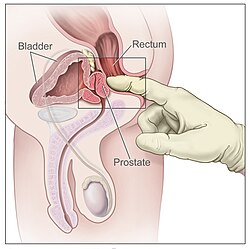
The prostate takes part in the sexual response cycle and is essential for the production of semen. Due to its proximity to the anterior rectal wall, it can be stimulated from the anterior wall of the rectum or externally via the perineum.
Medical uses
[edit]Digital rectal examination
[edit]Prostate massage is part of the digital rectal examination (DRE) routinely given to males by urologists to look for nodules of prostate cancer and to obtain an expressed prostatic secretion (EPS) specimen for microscopy and microbiological culture to screen for prostatitis.
Therapy for prostatitis
[edit]In the late 1990s, a small number of doctors tried prostate massage in conjunction with antibiotics for the treatment of chronic bacterial prostatitis with uncertain results.[1][2] In recent trials, however, prostate massage was not shown to improve outcomes compared to antibiotics alone.[3] As a consequence of these findings, prostate massage is not officially sanctioned in medicine for the treatment of any medical disorder today. Prostatic massage should never be performed on patients with acute prostatitis, because the infection can spread elsewhere in the body if massage is performed.[4]
History
[edit]Once the most popular therapeutic maneuver used to treat prostatitis, it was abandoned as primary therapy in the 1960s.[5]
In the late 1990s, the ineffectiveness of drug treatments for chronic prostatitis led to a brief resurgence of interest in prostate massage.[1][2] In a recent trial, however, prostate massage was not shown to improve outcomes compared to antibiotics alone.[3]
The practice is still used in some parts of China.[6]
Risks
[edit]Vigorous prostate massage has been documented to have injurious consequences: periprostatic hemorrhage,[7] cellulitis, septicaemia, possible disturbance and metastasis of prostate cancer to other parts of the body, and hemorrhoidal flare-up, and rectal fissures.[8][9]
Electroejaculation
[edit]Electroejaculation is a procedure in which nerves are stimulated via an electric probe, which is inserted into the rectum adjacent to the prostate. The stimulus voltage stimulates nearby nerves, resulting in contraction of the pelvic muscles and ejaculation. It is most commonly encountered in animal husbandry for collecting semen samples for testing or breeding. Some devices are used under general anesthesia on humans who have certain types of anejaculation.[10] Electroejaculation may also be used for posthumous sperm retrieval in humans.[11] Electroejaculation is a different procedure from manual prostate massage.
As a sexual practice
[edit] | This section needs additional citations for verification. (July 2015) |
General
[edit].png)

Prostate massage is also used as an erotic massage for sexual stimulation, often to reach orgasm. The prostate is sometimes referred to as the "male G-spot"[12] or "P-spot".[13] Some males can achieve orgasm through stimulation of the prostate gland, such as prostate massage or receptive anal intercourse, and males who report the sensation of prostate stimulation often give descriptions similar to females' accounts of G-spot stimulation.[14][15] Prostate stimulation can sometimes produce a strong, powerful orgasm.[14] However, all male orgasms, including those by penile stimulation, involve muscular contractions in the prostate gland.[16] It is possible for some males to achieve orgasms through prostate stimulation alone.[14][17] Stimulation may be achieved by use of one or more fingers or by using sex toys designed to bring pressure to the anterior wall of the rectum at the location of the gland.
Prostate massage may be practiced between sexual partners, either as a discrete activity or during other sexual acts, stimulating the penis for example. The increasing availability (online via the Internet) of purpose-designed, safe, and hygienic sex toys and devices aimed at prostate stimulation may encourage sexual experimentation and incorporation into sex play. The use of a finger for anal penetration and prostate stimulation can enhance a male's orgasm or vary the sensations experienced during sexual arousal. The finger of the prostate massager is introduced into the rectum through the anus and the prostate gland is gently massaged via the anterior (front) wall of the rectum. In some individuals or for some massagers the correct location of the prostate may be slightly too deep or the finger too short to reach easily. Prostate massage can be performed individually or with the help of a partner.
Prostate massage may also be used in long-term orgasm denial play, for the purpose of relieving the immediate need for orgasm without impacting general feelings of arousal. For this purpose, it is often referred to as milking.
There are safety matters relating to prostate stimulation and anal penetration. It is strongly recommended that plenty of lubricant be used with prostate massagers to prevent rectal lining damage. A smaller instrument or finger may be introduced gradually to minimize the discomfort that some may feel. Massagers may be used with or without a condom; however, because of the bacteria found in the rectum, if a condom is not used, it is crucial to clean the tool with soap before use in another orifice or by a partner. Receiving anal stimulation may cause feelings of having to defecate; prostate stimulation in particular may cause the feeling of having to urinate.[18] More often than not, this is just a sensation that the stimulation causes and may take some getting used to.[19]
Equipment
[edit]
A prostate massager, or prostate stimulator, is a device for massaging the prostate gland.[20] The shape of a prostate massager is similar to a finger since prostate massages are traditionally given digitally (for example, via fingering). They usually have a slightly curved head to effectively massage the prostate.[21] Lubricant is usually necessary before inserting anything into the anus and helps to avoid injury to the rectal mucosa (lining). Caution should be exercised when a prostate massager is used because of the sensitivity of the prostate. Correct use involves a medium to light repetitive massage, or circular motion—the device being used to administer the massage should not be used too vigorously or without care, since this may lead to injury.
Prostate massage equipment ranges from dildos to butt plugs. When used in sexual practice, prostate massagers are commonly referred to as "prostate toys", "prostate sex toys", and "anal toys". These prostate massagers are inserted into the rectum through the anus and are intended to stimulate the prostate by simple massaging or vibrating. They are used during foreplay by many couples.
Prostate dildos are similar to vaginal dildos, but they tend to be more curved, slimmer, and with a softer texture. Some of the new prostate dildos on the market are driven by batteries and offer vibration at the tip, the speed or intensity of which may be changed depending on the subject's personal preference. Certain devices incorporate app-based remote control, allowing vibration settings to be adjusted through a smartphone, including models manufactured by Lovense.[22] Unlike vaginal dildos, the anal prostate massager has a flared end to prevent it from being fully inserted and 'lost' inside the rectum.
Some males prefer butt plugs, which are easy to use, and can be inserted freely and left in place while the male's hands are free for other sexual activities such as masturbation. Anal plugs also come in various shapes, sizes, and designs and are not commonly intended to stimulate the prostate. Newer, more angled models (second generation) of prostate massagers have been developed to provide a more direct and thorough prostate gland massage. These new devices feature a more curved shape and are slightly longer than the originals. They commonly have a narrow neck and a flared end to avoid losing them in the rectum. While many massagers rely upon the body's natural muscular contractions of the anal sphincter and anal wall to stimulate the prostate, some of the newer models come with vibrators built into them to increase sexual pleasure.
See also
[edit]References
[edit]- ^ a b Nickel JC, Downey J, Feliciano AE, Hennenfent B (1999). "Repetitive prostatic massage therapy for chronic refractory prostatitis: the Philippine experience". Techniques in Urology. 5 (3): 146–51. PMID 10527258.
- ^ a b Shoskes DA, Zeitlin SI (1999). "Use of prostatic massage in combination with antibiotics in the treatment of chronic prostatitis". Prostate Cancer and Prostatic Diseases. 2 (3): 159–162. doi:10.1038/sj.pcan.4500308. PMID 12496826.
- ^ a b Ateya A, Fayez A, Hani R, Zohdy W, Gabbar MA, Shamloul R (2006). "Evaluation of prostatic massage in treatment of chronic prostatitis". Urology. 67 (4): 674–8. doi:10.1016/j.urology.2005.10.021. PMID 16566972.
- ^ Nickel JC (November 1999). "Prostatitis: evolving management strategies". The Urologic Clinics of North America. 26 (4): 737–51. doi:10.1016/S0094-0143(05)70215-9. PMID 10584615.
- ^ Nickel JC, Alexander R, Anderson R, Krieger J, Moon T, Neal D, Schaeffer A, Shoskes D (1999). "Prostatitis unplugged? Prostatic massage revisited". Tech Urol. 5 (1): 1–7. PMID 10374787.
- ^ Yang J, Liu L, Xie HW, Ginsberg DA (2008). "Chinese urologists' practice patterns of diagnosing and treating chronic prostatitis: a questionnaire survey". Urology. 72 (3): 548–51. doi:10.1016/j.urology.2008.03.061. PMID 18597833.
- ^ Buse S, Warzinek T, Hobi C, Ackerman D (2003). "Prostate massage with unwanted consequences. Case report". Der Urologe. Ausg. A (in German and English). 42 (1): 78–9. doi:10.1007/s00120-002-0189-z. PMID 14655640. S2CID 13104100.
- ^ "Prostatitis Prostate Massage or Drainage". Prostatitis Network. Retrieved 1 October 2009.
- ^ "Medical Tests for Prostate Problems". NKUDIC. Archived from the original on 26 August 2014. Retrieved 24 October 2014.
- ^ "Electroejaculation". Cornell Urology. Archived from the original on 10 May 2014. Retrieved 24 October 2014.
- ^ Shefi, Shai; Raviv, Gil; Eisenberg, Michael L.; Weissenberg, Ruth; Jalalian, Liza; Levron, Jacob; Band, Gili; Turek, Paul J.; Madgar, Igael (1 November 2006). "Posthumous sperm retrieval: analysis of time interval to harvest sperm". Human Reproduction. 21 (11): 2890–2893. doi:10.1093/humrep/del232. ISSN 0268-1161. PMID 16959804.
- ^ Levin, R. J. (2018). "Prostate-induced orgasms: A concise review illustrated with a highly relevant case study". Clinical Anatomy. 31 (1): 81–85. doi:10.1002/ca.23006. PMID 29265651.
- ^ Saleh, Naveed (3 October 2014). "Hitting the P-Spot". The Red-Light District. Psychology Today.
- ^ a b c Rosenthal, Martha (2012). Human Sexuality: From Cells to Society. Cengage Learning. pp. 133–135. ISBN 978-0-618-75571-4.
- ^ Ladas, Alice Kahn; Whipple, Beverly; Perry, John D. (1982). The G spot and other recent discoveries about human sexuality (1st ed.). New York: Holt, Rinehart, and Winston. p. 55. ISBN 978-0-03-061831-4.
Men report that the orgasm they experience as a result of stimulation of the prostate gland is more like the pushing-down feeling reported by women in connection with the stimulation of the G spot.
- ^ Blesi, Michelle (15 June 2021). Medical Assisting: Administrative & Clinical Competencies. Cengage Learning. p. 390. ISBN 978-0-357-50294-5. Retrieved 13 September 2021.
- ^ Wibowo, Erik; Wassersug, Richard J. (2016). "Multiple Orgasms in Men—What We Know So Far". Sexual Medicine Reviews. 4 (2): 136–148. doi:10.1016/j.sxmr.2015.12.004. PMID 27872023 – via ResearchGate.
- ^ Thompson, Zahra (31 March 2016). "How to Give a Mind-Blowingly Hot Prostate Massage". SELF. Retrieved 20 June 2025.
- ^ "The male hot spot: Massaging the prostate". Go Ask Alice!. Columbia University. Retrieved 11 September 2021.
- ^ "Prostate Massager Guide: 6 Tips for Using a Prostate Massager". MasterClass. Retrieved 22 June 2024.
- ^ "How To Use A Prostate Massager?". Space Coast Daily. Retrieved 22 June 2024.
- ^ "Prostate Vibrators: What They Are". WebMD.
Prostate massage
View on GrokipediaAnatomy and Physiology
Prostate Gland Structure
The prostate gland is a pyramid-shaped, fibromuscular organ approximately the size of a walnut, located in the male pelvis inferior to the urinary bladder and anterior to the rectum, where it surrounds the proximal portion of the urethra as it exits the bladder neck.[17] This positioning allows the gland to contribute directly to the male reproductive system by secreting a milky, alkaline fluid that forms part of semen, aiding in sperm motility and liquefaction.[18] The prostate is enveloped by a thin capsule of connective tissue containing smooth muscle fibers, which helps maintain its structure and facilitate fluid expulsion during ejaculation.[18] Anatomically, the prostate is divided into distinct zones based on their histological and functional characteristics: the peripheral zone, which constitutes about 70% of the glandular tissue and is located posteriorly and laterally around the distal urethra; the central zone, comprising roughly 25% of the gland at its base and surrounding the ejaculatory ducts; and the transition zone, a smaller region of glandular tissue immediately adjacent to the urethra that is prone to age-related enlargement.[17] Posteriorly, the prostate lies in close proximity to the rectum, separated only by the thin Denonvilliers' fascia, which provides a barrier while allowing palpation through the rectal wall for clinical examination.[17] In terms of reproductive function, the prostate produces approximately 20-30% of the total semen volume, consisting of enzymes, citric acid, zinc, and other substances that nourish and protect sperm.[19] It also secretes prostate-specific antigen (PSA), a serine protease that liquefies the seminal coagulum to facilitate sperm movement.[18] In healthy adults, the prostate typically weighs 20-30 grams, with dimensions of about 4 cm in length, 3 cm in width, and 2 cm in thickness at the base, though it may enlarge with age due to benign prostatic hyperplasia (BPH), potentially doubling or tripling in size in affected individuals.[20][21]Stimulation Mechanisms
Prostate massage stimulates the prostate gland, which is situated anterior to the rectum, through rhythmic pressure applied via rectal access. This mechanical action primarily engages the gland's smooth muscle layers, promoting the expression of prostatic secretions into the urethra. The process helps alleviate potential congestion by facilitating the drainage of accumulated fluids, as the massage induces peristaltic-like contractions that propel secretions outward. Direct prostate stimulation activates these contractions, which can mechanically expel prostatic secretion (and sometimes sperm) into the urethra, mimicking or triggering the full ejaculatory reflex.[22][13] The stimulation activates key neural pathways in the pelvic region, involving both parasympathetic and sympathetic nerves. Parasympathetic innervation, originating from sacral segments S2-S4, promotes glandular secretion and smooth muscle relaxation in the prostate, while sympathetic fibers from thoracolumbar levels T10-L2 trigger contractions of the prostate's smooth musculature to aid in fluid expulsion. These pathways overlap with pelvic nerves and the spinal ejaculation center, leading to emission through the urethra. These pathways synchronize to elicit coordinated responses, including increased glandular activity and potential propagation of sensory signals to higher brain centers.[23][24][13] Physiologically, prostate massage enhances local blood flow to the gland by dilating vascular structures through mechanical pressure and neural mediation, which supports tissue oxygenation and may reduce stagnation. It also induces relaxation of surrounding prostate muscles post-contraction, contributing to overall pelvic tension relief. Additionally, the stimulation can trigger the release of endorphins and other pleasure-associated hormones via afferent nerve signals to the central nervous system, fostering sensations of well-being.[6][13] Unlike penile stimulation, which primarily targets somatic nerves for localized genital sensations, prostate massage engages autonomic pathways to the internal glands, often producing deeper, more intense, and diffuse full-body effects that radiate through the pelvis and beyond. A common physiological indicator of accurate stimulation is a strong sensation of needing to urinate, resulting from the prostate's close proximity to the bladder and urethra; this is frequently reported during effective erotic stimulation and serves as a guide to correct targeting. This distinction arises from the prostate's rich innervation by visceral afferents, leading to prolonged or multiple waves of response rather than a singular peak.[2]Historical Context
Ancient Origins
While general massage and rectal manipulation techniques were used in ancient medical practices for various ailments, including urinary issues, there is no documented evidence of specific prostate massage prior to the modern era. Ancient Egyptian medical papyri, such as the Edwin Smith Papyrus from around 1550 BCE, describe treatments for lower abdominal conditions using oils and enemas, but not targeted prostate stimulation.[25] In ancient Persia, Unani and traditional medicine texts from the medieval period (not 2000 BCE) reference manual therapies for urinary tract issues, but without specific mention of prostate massage.[26] Ancient Greek and Roman physicians, including Hippocrates (5th century BCE) and Galen (129–216 CE), discussed urinary disorders and identified the prostate gland—first described by Herophilus of Chalcedon (c. 335–280 BCE) during dissections—but did not document massage techniques for the prostate. These societies employed general massage within humoral theory to address fluid imbalances and vitality, often in bathing rituals.[27][28] During the Middle Ages, such general techniques persisted in folk medicine across Europe, Asia, and Islamic traditions, influencing later developments, but specific prostate massage practices are not recorded until the 19th century.[29]20th-Century Developments
In the early 20th century, prostate massage emerged as a standard therapeutic intervention for prostatitis, primarily through digital rectal techniques employed by urologists to express prostatic secretions and alleviate congestion. This method gained prominence around the 1890s and was widely adopted as the primary treatment for chronic prostatitis, reflecting the limited pharmacological options available at the time.[30][31] During the 1920s to 1950s, prostate massage reached its peak as the cornerstone of therapy for chronic prostatitis, often performed repetitively to drain glandular fluids and reduce symptoms like pelvic pain and urinary issues, before the widespread availability of effective antibiotics. Urologists integrated it into routine practice, sometimes combining it with other supportive measures, as it was considered the most reliable non-surgical approach for managing non-acute cases. However, by the late 1960s, its use as a primary treatment declined sharply due to the advent of antibiotics, which offered safer and more targeted relief from bacterial infections, alongside concerns over potential risks like bacteremia from the procedure.[32][33] Interest in prostate massage revived in the late 1990s for treating chronic non-bacterial prostatitis, now classified as chronic prostatitis/chronic pelvic pain syndrome (CP/CPPS), with small-scale studies demonstrating symptom relief when combined with antibiotics or other therapies. For instance, a 1999 study reported that up to 40% of patients experienced lasting improvements in pain and urinary symptoms following repeated massages, prompting its reconsideration as an adjunctive option despite earlier abandonment.[33][34] As of 2025, prostate massage maintains limited mainstream adoption in urology, primarily explored in alternative or integrative approaches for refractory CP/CPPS cases, with growing attention to at-home devices that enable self-administration to minimize infection risks and improve accessibility. While not endorsed as first-line therapy in major guidelines due to inconsistent evidence from randomized trials, it continues to be investigated for its potential in symptom management and diagnostic fluid collection.[35][36]Medical Applications
Diagnostic Procedures
Prostate massage in a diagnostic context primarily involves the digital rectal examination (DRE), a standard procedure performed by a healthcare professional to assess the prostate gland's size, shape, consistency, and any abnormalities such as nodules or induration that may indicate prostate cancer or benign prostatic hyperplasia (BPH). During the DRE, a gloved, lubricated finger is inserted into the rectum to gently palpate the prostate, allowing detection of palpable tumors or enlargements that affect the gland's texture.[37] This method is particularly useful for identifying clinically significant abnormalities in symptomatic patients or during routine screening.[38] The integration of DRE with prostate-specific antigen (PSA) testing enhances diagnostic accuracy, as the combination improves sensitivity and specificity compared to either test alone; for instance, DRE can detect approximately 20-30% of prostate cancers that might be missed by PSA screening in certain cohorts.[39] However, prostate massage, including vigorous techniques used to express prostatic secretions, can temporarily elevate serum PSA levels by up to 70% in some patients, peaking within 30-60 minutes and returning to baseline after 24-48 hours, necessitating a waiting period before PSA testing to avoid false positives.[40][41] Guidelines from the American Urological Association (AUA) recommend discussing DRE alongside PSA for men opting into screening, particularly those aged 55-69 at average risk, with repeat evaluations every two to four years based on shared decision-making.[37] In the evaluation of prostatitis, diagnostic prostate massage extends beyond gentle palpation to involve rhythmic stroking of the prostate to obtain expressed prostatic secretions (EPS) for microbiological analysis, as part of protocols like the Meares-Stamey test, which helps differentiate bacterial from non-bacterial forms by examining post-massage urine or fluid for leukocytes and pathogens.[4] This technique, performed similarly to DRE but with firmer pressure, has shown utility in confirming infection when more than 20 leukocytes per high-power field are observed in the sample, though it is less commonly used today due to advances in urine culture methods.[42] The AUA and other bodies note that while DRE remains conditionally recommended for cancer detection with moderate sensitivity (around 28-53%) for palpable lesions, its overall role is adjunctive to PSA and imaging in modern protocols.[38]Therapeutic Interventions
Prostate massage has been employed as a therapeutic intervention for chronic prostatitis, including both bacterial (NIH category II) and non-bacterial (NIH category III) forms, with the aim of reducing inflammation through drainage of prostatic secretions and relief of pelvic congestion. The volume of expressed prostatic secretion (EPS) obtained during massage is typically small, ranging from 0.3 to 2 ml in medical studies. There is limited scientific evidence specifically addressing optimal abstinence days for maximum fluid volume during prostate massage for drainage purposes, as prostatic fluid is continuously produced and no standard optimal abstinence period is established for maximizing it in medical drainage contexts. For related seminal vesicle fluid replenishment (relevant to overall semen volume), studies recommend at least 3 days of abstinence before procedures like prostate MRI to allow full volume recovery post-ejaculation.[22][43] A randomized controlled trial involving 81 patients demonstrated that adding prostatic massage to antibiotic therapy did not significantly enhance symptom resolution or bacterial clearance compared to antibiotics alone, with overall complete improvement rates of 52% in category II and 29% in category IIIA cases. Despite this, historical reviews indicate that massage was a standard treatment until the late 20th century, based on anecdotal evidence suggesting potential benefits in symptom alleviation for chronic pelvic pain syndrome (CP/CPPS), though prospective data remain limited. A retrospective analysis of 25 men with CP/CPPS using an at-home prostate massage device reported a significant reduction in Chronic Prostatitis Symptom Index (CPSI) scores from 16.67 to 11.48 (p=0.0127), with 40% noting very good improvement after use ranging from 4 to over 24 weeks.[44][33][35] Users of prostate massagers have reported various health benefits, including relief from chronic prostatitis symptoms, reduced pain, improved antibiotic absorption through enhanced circulation, increased circulation, muscle relaxation, and general body relief. These reports are supported by clinical observations and patient experiences in studies, where enhanced pelvic circulation is noted to aid in reducing inflammation and improving overall comfort, though larger randomized trials are needed to confirm efficacy.[1][6][36][45][35] In the management of benign prostatic hyperplasia (BPH), prostate massage provides temporary relief from lower urinary tract symptoms (LUTS) by facilitating ductal drainage and reducing prostatic congestion, serving as an adjunct rather than a curative measure. The same retrospective study of 90 men with BPH-related LUTS using the at-home device showed a marked CPSI score decrease from 11.61 to 6.63 (p=0.0001), with 46.7% reporting very good symptom improvement, though adverse effects like rectal soreness occurred in 8.6% of users. Current urological guidelines, such as those from the American Urological Association, do not endorse prostate massage as a primary therapy for BPH, emphasizing pharmacotherapies like alpha-blockers instead, due to insufficient high-quality evidence for long-term efficacy.[35][46] Emerging applications include potential benefits for erectile dysfunction through enhanced pelvic circulation and muscle relaxation. In some cases, prostate massage has been anecdotally reported to provide temporary relief for erectile dysfunction symptoms potentially linked to prostatic congestion, though high-quality evidence is lacking and it is not a standard treatment. Evidence is preliminary and derived from small cohorts. A 2025 case series of three patients with ED (due to prostatectomy, aging, or diabetes) treated with friction prostate massage combined with pelvic floor exercises for one month showed significant increases in International Index of Erectile Function (IIEF-15) scores and Erection Hardness Score (EHS), alongside improved penile blood flow metrics via ultrasound, with the greatest gains in the post-prostatectomy case. Larger trials are needed to substantiate these findings.[47][6] Therapeutic protocols typically involve sessions performed by urologists or trained healthcare professionals to ensure safety, with a lubricated gloved finger inserted rectally to apply gentle, rhythmic pressure to the prostate for drainage. Recommended frequency is two to three sessions per week for the initial month in chronic prostatitis cases, tapering as symptoms improve, while each session lasts longer than a standard digital rectal exam, often 5-10 minutes to achieve adequate expression of prostatic fluid. Overlap with diagnostic procedures may occur in initial evaluations, but therapeutic use focuses on repeated interventions for ongoing symptom management.[48][49]Electroejaculation Techniques
Electroejaculation is a specialized medical technique employed to retrieve semen from individuals experiencing anejaculation, primarily in fertility preservation contexts. The procedure utilizes a rectal probe to deliver controlled electrical stimulation directly to the prostate gland and surrounding nerves, mimicking the neural signals required for ejaculation. This method is particularly indicated when voluntary ejaculation is impaired due to neurological deficits, enabling the collection of viable sperm for assisted reproductive technologies. The procedure is conducted under general anesthesia or sedation to ensure patient comfort and safety. Initially, a urethral catheter is inserted to empty the bladder and neutralize its acidity, protecting sperm viability. A lubricated rectal probe, approximately 2-3 cm in diameter, is then gently advanced into the rectum and positioned adjacent to the prostate. Mild electrical currents, typically ranging from 12 to 24 volts in alternating current pulses of 1-2 seconds, are applied in progressive cycles, increasing intensity as needed to elicit antegrade or retrograde ejaculation. The resulting ejaculate is collected via the catheter, centrifuged, and examined for sperm concentration and motility.[50][51] Electroejaculation is indicated for anejaculation stemming from spinal cord injuries (particularly those at or above T10), diabetic neuropathy, multiple sclerosis, or retrograde ejaculation. It serves as a reliable alternative for men unresponsive to penile vibratory stimulation, with success rates in semen retrieval averaging 80-97% among eligible patients, though sperm quality may vary and often requires processing for use in IVF or ICSI.[50][52][53] Key equipment includes the Seager electroejaculator, a FDA-cleared device comprising a rectal probe with embedded electrodes and a control unit that delivers precise voltage while monitoring intrarectal temperature to avoid thermal injury. Post-procedure, the semen undergoes laboratory processing to select motile spermatozoa suitable for cryopreservation or immediate application in assisted reproduction, such as ICSI for optimal fertilization outcomes.[54]00033-9/fulltext) Furthermore, sequential use with penile vibratory stimulation—applying vibration first followed by electrical stimulation if needed—has demonstrated improved semen volume and motility yields in up to 90% of combined cases for spinal cord injury patients.[55][56]Risks and Safety Considerations
Potential Complications
Prostate massage carries risks of infection, particularly when performed vigorously or in patients with underlying bacterial prostatitis, as it can facilitate the spread of pathogens from the prostate into the bloodstream, leading to bacteremia or sepsis. In cases of acute bacterial prostatitis, manipulation of the inflamed gland may precipitate septic shock, with documented instances in immunocompromised individuals such as posttransplantation patients, where massage triggered systemic infection within hours, resulting in fever, hypotension, and multi-organ involvement. Similar complications have been reported in HIV-positive patients, underscoring the heightened vulnerability in those with impaired immune function. Although specific incidence rates for sepsis directly attributable to prostate massage are not well-quantified in large-scale studies, clinical guidelines highlight it as a notable risk in acute settings, estimated to occur in a small but significant proportion of vigorous procedures. Physical injuries associated with prostate massage include rectal tears, exacerbation of hemorrhoids, and periprostatic hemorrhage, often resulting from excessive force or inadequate lubrication during the procedure. In non-professional or erotic contexts, such as self-administered prostate stimulation using dildos or similar devices, anal pain after the procedure is common and may be caused by insufficient lubrication leading to mucosal tears or abrasions, excessive size or force causing trauma, irritation of preexisting anal fissures or hemorrhoids, muscle spasms from tension or improper technique. Less common causes include infection or a flare-up of prostatitis. In erotic or self-administered contexts, anecdotal reports also note temporary post-stimulation effects such as soreness, fatigue, or mild cramping, which may overlap with minor complications if technique is improper; persistent or severe symptoms warrant medical evaluation. Excessive or improper prostate stimulation can lead to nerve damage or inflammation in the pelvic region, which may cause temporary erectile dysfunction or related issues. Anecdotal reports from online forums describe using percussion massage guns on the perineum for external prostate stimulation, with some users claiming effects through loose-fitting clothing or underwear, though direct contact is often implied for greater intensity. These practices are not medically recommended; high-intensity percussion devices applied to sensitive areas like the perineum can cause bruising, soft tissue injury, nerve damage, vascular injury, pain, swelling, or more severe complications due to the delicate nature of nerves, blood vessels, and tissues in the region. Professional sources advise against using massage guns on areas rich in nerves and vessels, such as the groin or perineum, due to risks of serious injury.[57][58] Case reports describe severe outcomes such as massive periprostatic bleeding leading to pulmonary embolism following routine massage, emphasizing the potential for vascular disruption around the prostate. Rectal bleeding has been noted as a direct consequence of overly aggressive stimulation, which can compromise the rectal lining and increase susceptibility to secondary infections. Such injuries can occur, particularly in non-professional settings, though precise incidence data remain limited due to underreporting.[36] Additional effects may include transient elevation of prostate-specific antigen (PSA) levels, which can confound diagnostic testing for prostate conditions. Studies show that prostatic massage can falsely increase serum PSA concentrations above 4 ng/mL in up to 6-11% of men, with levels typically normalizing within days to weeks but potentially lasting longer. Pain or discomfort during or after the procedure is common, especially in those with preexisting prostate inflammation. In patients with spinal cord injuries, massage may provoke autonomic dysreflexia, a potentially life-threatening hypertensive crisis triggered by noxious stimuli below the injury level. To mitigate these risks, individuals should consult a physician before engaging in prostate massage, especially if they have prostate issues, pain, urinary symptoms, or other health concerns. Prostate massage is not a substitute for professional medical treatment. Preparation should include washing hands and the anal area, trimming nails short, using plenty of water-based lubricant, considering gloves for hygiene, and emptying bowels beforehand if possible. Practitioners should employ generous amounts of compatible lubricant to reduce friction and tissue trauma, start with gentle pressure and smaller insertions (such as fingers) to allow sphincter relaxation, proceed slowly while monitoring for discomfort, choose appropriately sized and shaped tools with flared bases, maintain relaxation through controlled breathing, and stop immediately if bleeding, severe pain, discomfort, or other adverse symptoms occur. Use sterile gloves to prevent introducing contaminants, clean devices thoroughly after use, and limit vigor, particularly in patients with known prostate pathology. Avoiding massage altogether in acute infections or abscesses further minimizes complications, with professional oversight recommended for therapeutic applications.[36]Contraindications and Precautions
Prostate massage is contraindicated in individuals with acute bacterial prostatitis, as manipulation can exacerbate inflammation and increase the risk of bacteremia or sepsis. It should be avoided entirely in cases of active infections, symptomatic hemorrhoids, or other acute anal or prostate conditions unless under medical supervision.[59] Similarly, it should be avoided following a recent prostate biopsy to prevent bleeding, infection, or disruption of healing tissues.[60] Undiagnosed rectal bleeding represents an absolute contraindication, as the procedure may worsen underlying conditions or lead to further hemorrhage.[36] Active infections, such as epididymitis, also preclude prostate massage due to the potential for spreading pathogens.[48] Individuals considering prostate massage should consult a physician first, particularly with prostate issues, pain, urinary symptoms, or other medical conditions. Prostate massage is not a substitute for professional medical treatment. Relative contraindications include hemorrhoids, anal fissures, and anticoagulation therapy, where the risk of bleeding is heightened; physician clearance is essential prior to proceeding.[36] In these cases, the procedure may be modified or deferred to minimize complications.[59] Precautions emphasize starting with gentle pressure and continuously monitoring for pain or discomfort to avoid injury.[48] Additional measures include using generous compatible lubricant, progressing gradually after initial relaxation of the sphincter, selecting properly designed devices, and ensuring thorough hygiene. Professional training is crucial, particularly when using devices, to ensure proper technique and hygiene.[36] According to the 2025 American Urological Association guidelines on male chronic pelvic pain, prostate massage should be limited to supervised clinical settings for diagnostic purposes when uncertainty exists between chronic bacterial prostatitis and chronic prostatitis/chronic pelvic pain syndrome, with informed consent obtained regarding potential temporary side effects such as soreness.[61]Sexual and Wellness Practices
Erotic Stimulation Methods
Prostate massage for erotic purposes typically involves manual stimulation of the prostate gland (commonly referred to as the "male G-spot"), often through anal insertion, to achieve heightened sexual pleasure. For safety, particularly among beginners, it is recommended to consult a healthcare professional before attempting prostate massage, especially if there are any prostate issues, pain, or urinary symptoms. Preparation includes thoroughly washing the hands and anal area, trimming fingernails short to avoid scratching the delicate rectal tissue, optionally using latex gloves for enhanced hygiene, emptying the bowels beforehand if possible to minimize discomfort, and applying generous amounts of water-based lubricant to prevent irritation or injury. Beginners should start slowly with external perineum massage (the area between the anus and scrotum) to promote relaxation before progressing to internal stimulation. For internal massage, adopt a comfortable position such as lying on the back with knees raised toward the chest or lying on the side, insert a well-lubricated finger approximately 2-3 inches into the anus toward the belly button until the walnut-sized prostate gland is felt as a firm bulge. Gentle techniques include a "come-hither" motion curling the finger upward or applying light pressure; proceed gradually, communicate with a partner if involved, and stop immediately if any pain, bleeding, or significant discomfort occurs. Use of toys should involve body-safe, flared-base prostate massagers, starting with smaller sizes. Prostate massage is not a substitute for medical treatment, and it should be avoided in cases of hemorrhoids, active infections, or other contraindications.[3][2][7] One common technique is the insertion of a lubricated finger into the anus, followed by a "come-hither" motion where the finger curls upward toward the navel to gently press and stroke the walnut-sized prostate gland located about 2-3 inches inside the rectum.[3][62] This method aims to induce a prostate orgasm, characterized by intense pressure, a sense of fullness, euphoria, and an intense, full-body experience that many men report as more powerful and prolonged than traditional penile stimulation.[2] Combining prostate massage with simultaneous penile stimulation, such as stroking the penis, can amplify sensations and facilitate orgasm, as the dual input enhances overall arousal.[7] To enhance orgasmic intensity, practitioners frequently combine prostate stimulation with techniques such as edging and breathwork. Edging involves repeatedly bringing stimulation (to the penis and/or prostate) to the brink of orgasm, then pausing or reducing intensity to build sexual tension over multiple cycles, resulting in stronger, more prolonged climaxes. Kegel exercises, which strengthen the pelvic floor muscles through repeated contractions and relaxations, are also reported to improve ejaculation control and may enhance orgasm intensity.[63][64] Combining Kegel exercises with edging and prostate stimulation (internal via the anus or external via the perineum) may amplify effects for some individuals, though experiences are subjective and evidence is limited to clinical reviews and expert consensus rather than large-scale trials. While edging through penile stimulation is generally external, less invasive, and rarely associated with discomfort when performed gently and during sufficient arousal, prostate edging via anal insertion can lead to discomfort or pain in some cases. Potential causes include the prostate gland's sensitivity, improper technique such as excessive pressure or incorrect angle, inadequate relaxation of the anal sphincter, insufficient lubrication, or underlying conditions like prostatitis. With appropriate preparation—such as adequate relaxation, generous lubrication, gradual insertion, and correct application of pressure—prostate stimulation is frequently experienced as pleasurable, though individual responses vary significantly based on anatomy and personal sensitivity.[2][3] Breathwork typically entails deep diaphragmatic breathing, often synchronized with stimulation, to heighten arousal, improve bodily control, and increase energy flow. Prostate stimulation often employs rhythmic "come hither" pressure to "milk" the gland, which can produce particularly intense orgasms, sometimes without ejaculation or with heightened full-body sensations. During such stimulation, a common sign of effective prostate contact is a strong sensation of needing to urinate due to the gland's proximity to the bladder and urethra; this is frequently reported as an indicator of correct stimulation.[7][3][2] In some sexual practices, after the initial leakage of prostate fluid (prostatic secretion), individuals may attempt to continue milking the gland without triggering orgasm. The volume of expressed prostatic secretion (EPS) from massage is typically small, ranging from 0.3-2 ml in medical studies. Expressed prostatic secretion obtained through direct prostate massage is typically relatively pure, consisting primarily of prostatic fluid with minimal contamination from sperm or seminal vesicle secretions.[22] Pure prostatic fluid cannot be isolated through oral stimulation methods alone, such as fellatio or anilingus, as these lack the targeted internal pressure required to express the secretion separately from other components of semen during ejaculation. No reliable scientific sources support the achievement of pure prostatic fluid expression via oral stimulation without direct prostate massage. There is limited scientific evidence specifically addressing optimal abstinence days for maximum fluid volume during prostate milking (prostate massage for drainage). Prostate fluid is continuously produced, and no standard "optimal" abstinence period is established for maximizing it in non-medical contexts. For related seminal vesicle fluid replenishment (relevant to overall semen volume), studies recommend at least 3 days of abstinence before procedures like prostate MRI to allow full volume recovery post-ejaculation. Anecdotal reports from sexual health communities suggest 3-7 days for noticeably more fluid during prostate play, but this lacks strong clinical support. This technique is primarily anecdotal and discussed in sexual wellness communities and sex education sources, with no specific reliable medical guidelines or evidence-based tips for doing so. General suggestions from sex education sources include reducing the intensity of stimulation, slowing movements, taking brief pauses, practicing deep breathing to remain below the point of no return, and attentively listening to one's body to prevent discomfort or unintended orgasm. These methods are primarily intended to maximize the strength and duration of orgasms rather than to achieve rapid ejaculation and typically require extended sessions of 20–60 minutes or longer for optimal effect. Practitioners should use generous amounts of lubricant, prioritize relaxation, proceed gradually without forcing, and consult a physician if they have any prostate health concerns or experience pain or unusual symptoms.[3][62][2][7] Beginners seeking prostate orgasms through massage are commonly advised in online communities dedicated to prostate play to follow the preparation and safety steps outlined above, prioritize physical and mental relaxation, sufficient arousal, and patience. Many report that achieving a full prostate orgasm—often termed a "Super-O" in such communities—typically requires weeks to months of regular practice and frequently occurs without ejaculation. In these communities, prostate orgasms are often described as highly intense, frequently surpassing the intensity of penile orgasms. Common user reports include full-body waves of pleasure, quivering or spasming, overwhelming sensations sometimes considered "too intense to bear," the capacity for multiple orgasms without a refractory period, and "super" orgasms that feel out-of-body or exponentially stronger (e.g., 10 times or more). However, experiences vary considerably; some find them qualitatively different rather than always superior, with intensity typically building over time through repeated sessions and practice.[65] Prostate orgasms often require practice and are not enjoyed or achievable by all men. Key recommendations include using ample lubrication, starting with external perineum massage or gentle finger insertion, engaging in deep breathing, avoiding rushing or forcing contractions, and focusing on pleasurable sensations rather than expecting instant results. Users emphasize stopping immediately if pain occurs, maintaining proper hygiene, and consulting a physician for any concerns. These tips align with broader sex education guidance on gradual exploration and body awareness.[3][62][2] While manual finger stimulation is accessible, it can present practical challenges, particularly for solo practice. Users may experience hand or arm fatigue during extended sessions, and achieving comfortable positions for self-stimulation, such as lying on one's back or in a doggy-style pose, can be awkward and require adjustment. Additionally, fingers may offer limited control over intensity and sustained pressure compared to specialized devices.[66][67] For solo prostate massage without using fingers, practitioners commonly use purpose-designed prostate massager toys. These devices are curved to reach the prostate gland (a walnut-sized structure about 2-3 inches inside the anus, toward the belly button) and feature a flared base or handle for safety to prevent the toy from becoming lost inside the rectum. Body-safe silicone toys are recommended. Options include non-vibrating models that enable hands-free stimulation through pelvic muscle contractions or vibrating models that facilitate easier stimulation with less manual effort. Beginner tips for using such toys include adopting a relaxed position (such as lying on the back with knees bent or on the side), applying plenty of water-based lubricant to the toy and anus, beginning with external perineum massage to relax the area, inserting slowly and gently while breathing deeply to relax the sphincter muscles, angling the toy toward the navel to locate the prostate (felt as a firm bump), applying gentle pressure or rocking motions (with vibration often aiding beginners by providing stimulation without much movement), proceeding slowly and stopping if sharp pain occurs (mild pressure is normal), and thoroughly cleaning the toy before and after use with soap and water or toy cleaner (optionally using condoms on toys for easier cleanup). Additional safety steps include consulting a doctor prior to use if prostate concerns exist, ensuring overall hygiene, and following the general preparation guidelines for prostate massage. These practices may enhance pleasure and potentially offer relief from certain prostate issues, though individuals should consult a doctor for any medical concerns.[3][62][2] Sensations from prostate stimulation are frequently described as deeper and more diffuse than penile climaxes. Prostate stimulation can induce orgasms often described as more intense, diffuse, and full-body compared to those from penile stimulation, associated with more pelvic muscle contractions (typically 12 versus 4-8 in penile orgasms).[13] These contractions can manifest as muscle tremors or shaking, with practitioners commonly reporting full-body shaking, leg trembling, twitching, or convulsions during intense stimulation or orgasm. Anecdotal reports from online communities describe these as normal physiological responses arising from strong involuntary muscle contractions, autonomic nervous system activation, and overwhelming pleasurable sensations. Such tremors differ from painful pelvic floor spasms, which involve discomfort and may indicate underlying issues requiring medical attention. These orgasms often include intense pressure, a sense of fullness, euphoria, and building arousal leading to waves of pleasure without the need for ejaculation, with some experiencing non-ejaculatory climaxes. A common accompanying sensation is the urge to urinate, which many practitioners interpret as a sign of effective prostate stimulation due to the gland's anatomical proximity to the bladder and urethra. Prostate stimulation often results in softer or fluctuating erections compared to direct penile stimulation due to the involvement of different neural pathways. This phenomenon is particularly common during intense stimulation using anal vibrators, where temporary loss of erection is a normal and common reaction, as the pleasure shifts focus to the prostate rather than the penis, and pelvic floor muscles relax. The effect is temporary, and erection generally returns afterward. This dynamic is particularly evident in receptive anal intercourse, where the prostate is stimulated during penetration, often leading to orgasms attributable to prostate stimulation. Such orgasms are frequently non-ejaculatory, resulting in little to no refractory period and enabling continued pleasure, penetration, and sensation without significant interruption. When ejaculation accompanies the orgasm, a standard refractory period typically ensues, which can lead to temporary loss of erection, reduced pleasure, or discomfort with ongoing stimulation. In general, prostate orgasms are associated with shorter refractory periods than penile orgasms and can facilitate multiple orgasms.[2][62][68] Human sexuality is diverse, and consensual sexual activities take varied forms. It is normal for some individuals to enjoy receptive anal intercourse with trans women partners while manually stimulating the partner's penis and experiencing multiple orgasms from the resulting prostate stimulation. Many individuals attracted to trans women report pleasurable experiences from combining anal penetration (providing prostate stimulation to the receptive partner) with manual stimulation of the penis, which can contribute to non-ejaculatory repeated climaxes and multiple orgasms due to the prostate's role in facilitating such responses with minimal refractory period. These experiences are subjective, vary widely, and depend on individual anatomy, preferences, and communication.[69][68] In some cases, moderate prostatic stimulation or the use of a vibrating plug may help maintain or improve erection, particularly in individuals with mild erectile dysfunction or when combined with other sexual acts, although intense stimulation more frequently leads to loss.[70][71] However, direct prostate stimulation can also activate its contractions, which mechanically expel prostatic secretion (and sometimes sperm) into the urethra, mimicking or triggering the full ejaculatory reflex through overlapping nervous pathways with pelvic nerves and the spinal center, leading to emission through the urethra. In some accounts, when ejaculation occurs during prostate orgasm or milking, it may involve forceful, high-pressure shooting of semen, sometimes described as more intense or distant than typical penile ejaculation, while the release sensation can mimic urination pressure or flow.[13] Some individuals report the possibility of multiple orgasms through sustained prostate massage, as the stimulation can build and release tension repeatedly without the refractory period associated with ejaculation.[68] A 2024 survey of nearly 16,000 respondents found that around 50% of men with prostates had tried anal masturbation involving prostate stimulation, with many reporting more frequent and enjoyable orgasms compared to other forms of stimulation, though experiences varied widely.[72] Surveys among gay and bisexual men indicate that the prostate is viewed as a key pleasure center for all participants who engage in receptive anal intercourse, compared to about 57% of those who do not, highlighting its role as a primary source of pleasure for some but not universally.[73] Despite this prevalence, prostate stimulation during masturbation remains relatively less common than other forms of self-stimulation due to societal stigma surrounding anal play, which has historically limited open discussion and acceptance.[72][3] Cultural attitudes toward prostate stimulation and anal play vary globally. In Turkey, male anal pleasure and prostate stimulation (such as via masturbation or massage) are often viewed as taboo, especially among heterosexual men, due to cultural associations with homosexuality, perceived loss of masculinity, and broader societal taboos around non-traditional sexuality. Online discussions on platforms like Ekşi Sözlük commonly describe anal masturbation as taboo for straight men, though some users acknowledge its potential for intense pleasure and prostate health benefits. Educational sexual health sites promote prostate massage positively for pleasure and wellness, indicating gradual openness despite persistent stigma.[74][75] Despite such reports of profound sensations, non-ejaculatory climaxes, and multiple orgasms associated with prostate stimulation, scientific studies specifically on prostate orgasms (orgasms induced by prostate stimulation) are limited in the PubMed literature. Research on prostate stimulation and orgasm is primarily physiological and sexological rather than strictly psychological, with dedicated psychological studies on attitudes, effects, or mechanisms remaining sparse. A 2018 concise review highlights that the current medical literature does not precisely describe the activation mechanisms of prostate orgasms, with discussion focused on prostate anatomy, physiology, reproductive role, and stimulation for sexual pleasure, primarily illustrated by a highly relevant case study rather than large-scale empirical data. Direct evidence on prostate stimulation for orgasm remains scarce and mostly anecdotal or case-based.[12] Related research on patients following radical prostatectomy documents alterations in orgasmic function, including dry orgasms (absence of ejaculate due to removal of the prostate and seminal vesicles), weakened or altered sensation, orgasm-associated pain (dysorgasmia), urinary incontinence during orgasm (climacturia), and in some cases changes potentially allowing for shorter refractory periods, providing context on the prostate's physiological role in orgasm but not directly equivalent to stimulation in healthy individuals.[76][77] There is no reliable medical evidence indicating that moderate prostate stimulation negatively affects erectile function the following day. Anecdotal reports from practitioners of prostate play frequently describe improved erection quality or stronger morning erections after sessions. While some sources suggest that prostate massage may provide temporary symptomatic relief for erectile dysfunction, potentially by clearing prostatic ducts, this evidence is limited and largely anecdotal. Excessive or vigorous stimulation carries risks of inflammation or nerve irritation, which could potentially lead to transient erectile difficulties.[6][78][5][48] In partner-based scenarios, effective prostate massage relies on clear communication regarding pressure, pace, and comfort levels to ensure mutual enjoyment and avoid discomfort, with partners often starting slowly and adjusting based on feedback.[79] For solo practice, external perineal massage—applying firm, circular pressure to the area between the anus and scrotum—offers an accessible alternative that indirectly stimulates the prostate externally through the perineum, potentially leading to pleasure or orgasm without requiring an erection or direct penile stimulation. This is often called external prostate massage or P-spot stimulation. Results vary by individual, and it may take practice to achieve noticeable effects.[2][80][81] A step-by-step guide for perineal massage (solo or partnered) includes:- Prepare by relaxing in a comfortable position (e.g., lying down or on all fours), washing hands, trimming nails, and applying lubricant to the perineum for comfort.
- Locate the perineum (the area between the scrotum and anus).
- Apply pressure using the pads of the index and middle fingers to gently but firmly press upward into the perineum, as if reaching toward the prostate.
- Massage using circular motions, strokes toward the scrotum, or back-and-forth rubbing; start lightly and increase pressure or speed based on feedback, experimenting with 8-10 strokes clockwise followed by counterclockwise.
- Build sensation over several minutes; sensations may initially resemble a need to urinate before shifting to pleasure, and vibration (e.g., from a toy pressed externally) can enhance the experience.
- Optionally combine with other stimulation, though it is possible hands-free and without erection.
Devices and Tools
Prostate massagers, also known as P-spot toys, are specialized devices designed for targeted stimulation of the prostate gland in non-medical contexts such as sexual pleasure and self-care. For beginners interested in solo prostate massage without using fingers, purpose-designed prostate massagers are recommended. These toys are curved to reach the prostate—a walnut-sized gland located about 2-3 inches inside the anus, towards the belly button—and typically feature a flared base or handle for safety to prevent over-insertion. Common types include non-vibrating massagers like the Aneros series (e.g., the Eupho, the smallest model with an insertable length of 10 cm, a head size of approximately 1.9 cm, and a maximum diameter of 2.6 cm, recommended for precise stimulation; Helix Syn, frequently recommended for beginners due to its ergonomic shape enabling hands-free use via pelvic floor muscle contractions; and Progasm models), which facilitate internal movement without manual effort; vibrating prostate massagers such as the Lelo Loki, Nexus Revo, or Aneros Vice 2, offering adjustable vibration patterns for easier stimulation; and anal plugs like the Fun Factory Bootie or Lovehoney Butt Tingler, which provide sustained pressure. These devices often incorporate dual stimulation elements, such as perineum tabs or cock rings (e.g., Nexus Simul8), to enhance overall sensation. Materials prioritize body-safe, non-porous options to minimize infection risk, including medical-grade silicone for flexibility and comfort, borosilicate glass for smooth insertion and temperature play, and stainless steel for durability and weight-based pressure.[85][86] Anecdotal user reports from online forums describe using percussion massage guns (percussive massage devices) applied to the perineum to achieve external prostate stimulation and orgasms, with some noting it can work through loose-fitting clothing or underwear, though direct contact is often implied for better intensity. This practice is not medically recommended; authoritative sources discuss external perineum massage generally (e.g., with fingers) but warn of risks like injury or nerve damage from high-intensity devices like massage guns. Proceed with caution and consult a healthcare professional.[87][88][48] When selecting a prostate massager, key criteria include size, with beginner models typically featuring 1-1.5 inches in diameter and 3-4 inches in insertable length to accommodate the prostate's location about 2-3 inches inside the rectum, while advanced options may reach 2 inches in diameter for intensified stimulation. Ergonomics are crucial, favoring curved tips for precise prostate contact, flared bases for safety to prevent over-insertion, and hands-free designs that leverage pelvic floor contractions for movement without manual effort. In 2025 models, app-controlled features have become prevalent, allowing remote vibration adjustments and pattern customization via Bluetooth (e.g., Lelo Hugo 2 or Lovense Edge 2), enabling partnered play or personalized sessions. Users should verify FDA-compliant or body-safe certifications to ensure hypoallergenic properties and ease of sterilization.[85][89] As of early 2026 in Japan, several prostate massagers are particularly popular and recommended in rankings, reviews, and on sales platforms such as Amazon.co.jp and Hotpowers.jp. These include the Aneros Helix Syn Trident, widely regarded as a top choice for beginners to advanced users due to its ergonomic design and prominence on the official Aneros Japan site; the Enemagra series (e.g., Enemagra Crystal), frequently recommended for beginners for its non-vibrating design focused on precise prostate stimulation; the NEXUS Revo series (e.g., Revo Intense), praised for its rotary and vibrating features and highlighted as a leading option in recent reviews; and the LELO Hugo 2, which receives high ratings in 2026 user reviews on Amazon Japan for its app-controlled vibration and premium quality.[90][91][92] Proper usage emphasizes safety and comfort to maximize pleasure while reducing risks. Water-based lubricants are essential for smooth insertion and to prevent tissue irritation, applied generously to both the device and anus; silicone-based lubes may be used with glass or steel toys but avoided with silicone devices to prevent material degradation. For solo prostate massage without fingers, beginners should select body-safe silicone toys with a flared base, such as non-vibrating hands-free models like the Aneros series. Start in a relaxed position, prioritizing comfort and minimal strain for extended sessions: lying on your back with knees bent and feet flat on the bed, with pillows under the knees or lower buttocks to support and slightly lift the hips, allowing free movement and reducing pressure—this is a top beginner-friendly position for extended sessions; or lying on your side with the lower leg straight and the upper leg bent toward the chest, often cited as the most comfortable for longer durations and promoting deep relaxation. These positions are particularly suitable for hands-free devices relying on pelvic floor movements. Begin with deep breathing and light pelvic floor (PC) muscle contractions, as relaxation is essential for success. Begin with external perineum massage to relax the area. Insert slowly and gently, breathing deeply to relax the sphincter muscles. Angle the toy towards the navel to locate the prostate (feel for a firm bump). Apply gentle pressure or rocking motions; vibration can help beginners by providing stimulation without much movement. Go slow, stop if there's pain (mild pressure is normal, sharp pain is not). Gradually insert over 10-15 minutes as sphincter muscles loosen, experimenting with gentle rocking rather than thrusting. For external stimulation, perineum vibrators can be used optionally to enhance pleasure. Clean the toy thoroughly before and after use with soap and water or toy cleaner; using condoms on toys can facilitate easier cleanup if desired. Benefits may include enhanced pleasure or relief from certain prostate issues, but consult a doctor for medical concerns. Users are advised to stop if any pain or unusual symptoms arise, seeking medical attention if necessary.[93][85][81][2][94][95] Online communities such as Reddit's r/ProstatePlay feature numerous user-generated step-by-step guides and personal accounts describing techniques for achieving a prostate orgasm, commonly referred to as the "Super O," using toys including prostate massagers, dildos, and devices like the Njoy Pure Wand. These anecdotal, community-reported practices typically emphasize thorough preparation with mindset relaxation and mental focus; cleanliness of the body and toy combined with generous use of lubricant; initial use of fingers to locate the prostate and familiarize oneself with the sensations; slow, gradual toy insertion accompanied by deep breathing to relax the sphincter; targeted stimulation via applied pressure, rocking, or circular motions; breathing and relaxation techniques to reduce tension; edging by repeatedly approaching but not reaching climax to build intensity; and patience, as many users indicate that attaining the first Super O often requires multiple sessions over time. Contributors consistently warn to proceed slowly to prevent injury, apply ample lubrication, and listen closely to one's body, stopping immediately upon any discomfort. These approaches remain unverified by medical research and vary individually.[96] User reports in online communities, including Reddit's r/ProstatePlay and r/aneros as well as Aneros forums, describe passive leakage of pre-ejaculate or prostatic fluid during extended wear of non-vibrating prostate massagers (e.g., Aneros Helix, Peridise, HIH 950) while sitting, often at a desk or during work activities. This phenomenon can produce wet spots on underwear, sometimes requiring a change. Users note that using minimal lubrication helps reduce lube-related leakage, though ongoing stimulation from the device may still induce fluid release. Reports of similar leakage in reclining positions are less common but implied in descriptions of relaxed postures. These experiences are anecdotal and vary among individuals.[97][98][99] Commonly recommended positions for prostate stimulation using an anal vibrator include:- On the back with knees bent or legs raised toward the chest: This position allows easy insertion, precise angling toward the prostate (typically 2-4 inches inside, directed toward the belly button), and hands-free control for vibration adjustments. Erections may feel weaker in this supine position primarily due to gravity and lack of mechanical support: the penis points upward, so blood must be pumped against gravity to fill erectile tissue, potentially reducing rigidity, and there is no surface pressing against the penis for extra stimulation or support, unlike in prone (on stomach) positions where the penis is compressed, often making erections feel harder. Prostate stimulation itself can also produce softer or fluctuating erections compared to direct penile stimulation, as it involves different neural pathways. This may be exacerbated by intense anal vibrator use, leading to temporary erection loss due to pelvic floor relaxation and shift in arousal focus.[70]
- On the side in a fetal position: This position is comfortable for prolonged sessions, enables hip rocking to adjust pressure, and provides good prostate access.
- On the stomach (face down): This position permits grinding or pressing the vibrator against the prostate for added pressure and can facilitate firmer erections through compression of the penis against the surface, providing mechanical support and additional stimulation.
- On all fours (doggy style): This position offers deeper access and strong stimulation, especially useful for curved vibrators.