Hubbry Logo
WatsuWatsuMain
Open search
Watsu
Community hub
Watsu
logo
8 pages, 0 posts
0 subscribers
Be the first to start a discussion here.
Watsu
Watsu
from Wikipedia

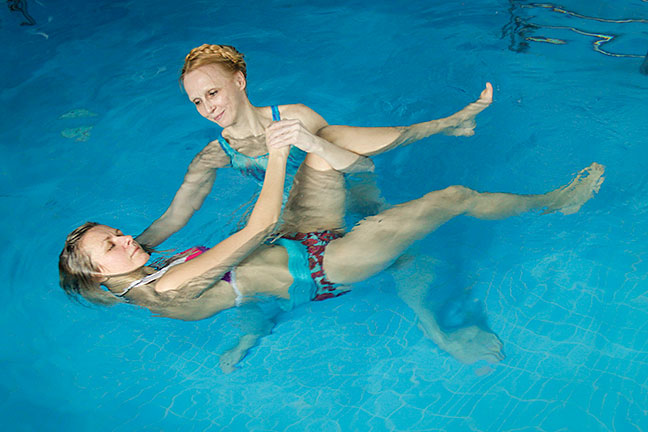
Watsu is a form of aquatic bodywork used for deep relaxation and passive aquatic therapy. Watsu is characterized by one-on-one sessions in which a practitioner or therapist gently cradles, moves, stretches, and massages a receiver in chest-deep warm water.

Watsu, originally developed by Harold Dull at Harbin Hot Springs, California, in the early 1980s, combines elements of muscle stretching, joint mobilization, massage, Shiatsu, and dance, performed in chest-deep warm water (around 35°C = 95°F). The receiver is continuously supported by a practitioner or therapist while being backfloated, rhythmically cradled, moved, stretched, and massaged.[1][2][3][4]

History and origins

[edit]

In the early 1980s Harold Dull adapted Zen Shiatsu for use in warm water pools at Harbin Hot Springs in northern California, with emphasis on connecting with the breathing patterns of the receiver and establishing a meditative state during sessions. Dull observed that people receiving Watsu treatments entered a deep relaxation state, with strong physical and emotional effects. In the early years, massage therapists were the main practitioners of Watsu, offering sessions as a new category of aquatic therapy called aquatic bodywork. By the late 1980s and early 1990s, physical therapists and other healthcare providers began applying Watsu to treat diverse orthopedic and neurologic conditions. While Watsu's roots in Shiatsu and the close physical contact led to some early resistance among those trained in conventional healthcare, Watsu is now practiced in spas, clinics, and hospitals, and utilized as an aquatic rehabilitation technique.[2][4]

Technique

[edit]

Watsu is performed in one-on-one pool sessions in chest-deep warm water. During a session, a provider (practitioner or therapist) gently cradles, moves, stretches, and massages a receiver (client or patient). A typical session consists of a progression of breath coordination, movement patterns in different positions, and massage. Movement patterns including gentle cradling and rocking, more dynamic stretching and mobilization, stillness, and specific mobilization techniques focused on the needs or condition of the receiver. A session may last anywhere from a few minutes to longer than an hour. During a session, the provider continually monitors the state of the receiver, mindful of subtle changes in muscle tension and respiration, and responsive to adapt the treatment accordingly.[2][3][4]

Opening

[edit]

Before starting a pool session, the provider meets with the receiver to fill out paperwork, answer questions, review referrals and records, and discuss needs, expectations, and health condition. The receiver is fitted with floats around the upper shins or lower thighs to prevent the legs from sinking. The session starts with the receiver seated or crouched at the pool edge. The provider faces the receiver, coordinates breathing, and then gently draws the receiver into a back floating position called "first position".[2][3][4]

First position techniques

[edit]

In "first position", the receiver floats facing upward while the provider supports the receiver's head in the crook of one arm and maintains gentle traction of the spine from the base of the skull (occiput) to the base of the spine (sacrum). The provider gently sways from leg to leg ("horse to horse stance") or forcefully moves in deep lunges in alternating directions ("warrior to warrior stance"), producing rocking and wave patterns in the receiver. Typical Watsu moves use turbulent drag to produce traction and softly stretch the limbs and torso. Movements include slow rocking, arm and leg stretches, trunk rotations and stretches, and various oscillation and pulsing patterns. Moves are repeated on both sides for balance.[2][3]

Basic Watsu moves include the following: [4]

  • Water Breath Dance – stillness and gentle motion coordinated with up and down shifts in buoyancy as the receiver breathes;
  • Slow Offering – gentle pulling alternately headward by the base of the skull (occiput) and footward by the base of the spine (sacrum), to produce traction of the spine along with centripetal side force;
  • Free Spine – gentle oscillation of the spine;
  • One Leg Offering – gentle pulling alternately headward by the base of the skull (occiput) and footward by one leg, to produce a complex pattern of turbulent drag, with leg, torso, and spine stretches;
  • Two Leg Offering – gentle pulling alternately headward by the base of the skull (occiput) and footward by both legs, to produce a complex pattern of turbulent drag, with leg, torso, and spine stretches;
  • Accordion – drawing both knees toward and away from the chest in coordination with the breath, while maintaining neck traction;
  • Rotating Accordion – adding a spiraling rotation to the accordion action of moving both knees toward and away from the chest, while maintaining support of the occiput and allowing the head more freedom to roll;
  • Near Leg Rotation – opening and closing the near leg toward and away from the chest to produce an oscillating spine and hip rotation;
  • Far Leg Rotation – opening and closing the far leg toward and away from the chest to produce an oscillating spine and hip rotation.

Other positions and techniques

[edit]

Other positions and techniques have been developed to produce specific effects and to address specific parts of the body. For example, a "head pull" permits gentle traction and mobilization of the neck, "seaweed position" permits mobilization and rotation of the spine and hips, and "full saddle" permits stretching and massage of the side body and limbs.[2][3][4]

Adapting Watsu for special needs

[edit]

A specialized set of techniques have been developed to adapt Watsu for receivers with special needs. For clients with severe spasticity, the usual turbulent drag is not sufficient to stretch the body. Additional manual pressure is applied to sustain gentle, prolonged stretches, for example attaining trunk rotation by pressing the opposite shoulder while pulling the knees. Head pillows and other additional floats are often used for specific therapeutic techniques, similar to how rings or floats are used for the Bad Ragaz Ring Method for aquatic rehabilitation.[5]

Training and certification

[edit]

The Worldwide Aquatic Bodywork Association (WABA) oversees training programs for certification in Watsu and related aquatic bodywork forms (WaterDance, Healing Dance, Aquatic Integration...). WABA also maintains an official registry of certified practitioners and instructors, classes, and training institutes. Training consists of basic and advanced coursework, as well as logged practice and demonstration of mastery. Certification levels include "Provider", "Practitioner", "Therapist", "Assistant", and "Instructor".[2][3][4][6][7]

Health effects

[edit]

Physiological effects

[edit]

During a Watsu session, the recipient's heart and respiration rates decrease, depth of respiration increases, muscle tone decreases, and recipients report a deep state of relaxation. Robert Scaer suggested that deep relaxation of Watsu balances the autonomic nervous system (ANS), decreasing sympathetic response and increasing parasympathetic response, with far-reaching benefits. Compressive forces of hydrostatic pressure combine with deep relaxation to enhance functioning of the lymphatic system and reduce swelling in cases of edema. For orthopedic impairments, combined effects of relaxation, warm water, and gentle movement decreases muscle spasm, provides pain relief, improves soft tissue mobility, and increases range of motion. The rhythmic rocking motions combined with repeated trunk rotation and elongation relaxes muscles and improves mobility.[2][3][8]

Psychological effects

[edit]

Many patients and clinicians report psychological benefits for stress reduction and resolving past traumas.[2][8]

Applications

[edit]

Watsu is offered along with other forms for bodywork and massage at spas, recreation facilities, and retreat centers, and offered as a form of aquatic therapy at clinics, hospitals, and healthcare centers.[3]

General use

[edit]

For healthy people, Watsu is used for relaxation, muscle stretching, and "nurturing connection".[3]

Orthopedic and neurologic rehabilitation

[edit]

For physical rehabilitation, Watsu is used by aquatic therapists to improve function and increase quality of life. Watsu has been applied for treatment of patients with orthopedic and neurologic impairment, in particular for limitations in range of motion from soft tissue restrictions, muscle spasm (hypertonicity), and pain. By improving soft tissue mobility and decreasing spasm, patients can respond better to functional activities. For severe cases, short periods of Watsu can be alternated with short periods of functional activities.[2][9]

Watsu has been proposed as a therapy for fibromyalgia syndrome,[10] and for rehabilitating patients after a stroke.[11]

Little research has been done on Watsu. Various extrapolations concerning therapeutic effects have been made from research in established areas of therapy, in particular proprioceptive neuromuscular facilitation (PNF) and sensory integration.[2]

Psychological rehabilitation

[edit]

For psychological rehabilitation, Watsu has been used to improve psychological function by calming the nervous system, enhancing relaxation, increasing body awareness and decreasing general anxiety. Watsu is sometimes recommended as an adjunct therapy to help process trauma, in conjunction with a psychotherapist.[2][8][3]

Precautions

[edit]

As with all aquatic activities, Watsu has inherent risks. The Watsu provider needs to constantly observe and analyze each movement for safety, especially in case of injury or illness where movement could cause harm, e.g., osteoporosis, acute rheumatoid arthritis, and ligamentous instability. Slow and smooth movement, without sudden loading of the joints, is generally advisable. Motion sickness, with dizziness, nausea, or disorientation from excess vestibular system stimulation can occasionally result and therapists are advised to watch for signs of overstimulation.[2]

See also

[edit]

References

[edit]
Revisions and contributorsEdit on WikipediaRead on Wikipedia
from Grokipedia
Watsu, also known as Water Shiatsu, is a form of aquatic bodywork therapy that combines elements of Zen with the supportive properties of warm water to facilitate deep relaxation, gentle stretching, and energy flow along the body's meridians. Performed in pools heated to approximately 35°C (95°F), it involves a trained practitioner cradling and moving the recipient in a weightless float, applying rhythmic pressures, joint mobilizations, and flowing movements inspired by and shiatsu techniques. This holistic approach emphasizes physical and emotional release without the constraints of gravity, making it accessible for individuals of all ages, including those with mobility limitations or chronic conditions. The therapy originated in 1980 at Harbin Hot Springs in , where poet and massage therapist Harold Dull began experimenting by floating his Zen students in the natural warm mineral waters while applying traditional shiatsu holds and stretches. Dull, influenced by the Zen developed by Shizuto Masunaga in during the , adapted these land-based practices to the aquatic environment, creating Watsu as the world's first recognized form of aquatic bodywork. Over the following decades, it spread internationally, reaching in the early and evolving into certified programs through organizations like the Worldwide Aquatic Bodywork Association (WABA), which standardizes practitioner education and promotes ethical standards. Watsu's techniques prioritize safety and intuition, with sessions typically lasting 45 to 60 minutes and focusing on passive support to encourage surrender and release of tension. Key elements include spiral and wave-like movements to unwind the spine, on meridian points to balance vital energy, and breath synchronization between practitioner and recipient to enhance mental calm. It is widely applied in therapeutic settings for rehabilitation, stress reduction, and wellness, with from clinical surveys indicating benefits such as physical relaxation, relief, improved mobility and flexibility, and enhanced . Systematic reviews further support its efficacy in reducing , improving physical function, and alleviating mental health issues like anxiety, particularly for conditions including , , and musculoskeletal disorders.

History

Origins

Watsu was invented in 1980 by Harold Dull, an American poet and practitioner of Zen Shiatsu, while he was teaching at Harbin Hot Springs in northern California. Dull, who had studied Zen Shiatsu directly with its founder Shizuto Masunaga in Japan, began experimenting with the technique in the resort's natural warm mineral pools. This innovation arose intuitively from his immersion in the hot springs environment, where the water's buoyancy inspired him to adapt land-based bodywork for an aquatic setting. The initial development of Watsu involved blending Zen Shiatsu principles—such as meridians, stretches, and energy balancing—with the supportive properties of warm water, typically maintained at 35–36°C to promote relaxation and effortless movement. Dull's first sessions were informal, conducted with friends and fellow practitioners in the pools, where he explored techniques like cradling the body, gentle stretching along the spine, and applying shiatsu pressure points while the recipient floated weightlessly. These early experiments highlighted water's role in enhancing mobility and reducing physical tension, drawing on Dull's personal affinity for water immersion as a meditative and healing medium. Key influences on Watsu's creation included the Japanese tradition of Zen Shiatsu, which emphasizes holistic energy flow, combined with the serene, geothermal setting of Harbin Hot Springs that encouraged spontaneous adaptation. Dull's background as a also shaped the intuitive, flowing nature of the practice from the outset. He documented these origins through unpublished writings and poems that captured the sensory and philosophical inspirations behind the method.

Development and global spread

In the late 1980s, Harold Dull formalized Watsu through structured sessions that integrated Zen Shiatsu principles with aquatic floating, transitioning from informal experiments at Harbin Hot Springs to organized workshops that emphasized deep relaxation and energy balancing. These early workshops, beginning around 1980 and expanding in the decade, established Watsu as a distinct modality, with Dull teaching its core techniques to practitioners worldwide. Dull founded the Worldwide Aquatic Bodywork Association (WABA) to standardize training, certification, and ethical practices for Watsu and related forms, promoting its global adoption as a therapeutic tool. By 1990, Dull introduced Watsu to through initial teachings in , laying the groundwork for international expansion. During the and , Watsu proliferated with the development of derivative forms, such as (also known as WATA or WasserTanzen) in 1987 by Arjana C. Brunschwiler and Peter Schröter in , which extended Watsu's principles into underwater movement therapy. Training centers emerged across , , and Asia, supported by WABA's oversight, enabling certified instructors to offer sessions in diverse settings. Key milestones included the integration of Watsu into and rehabilitation centers globally, with the first international symposium on Watsu and aquatic disciplines held in 2006 to foster collaboration among practitioners. In the 2010s and up to 2025, Watsu saw increased integration with scientific research, highlighted by a 2020 systematic review and that analyzed its applications for pain relief, physical function, and , confirming low-to-moderate beneficial effects. Harold Dull passed away on July 31, 2019, after which Watsu's development continued through WABA and global practitioners. Post-COVID-19 adaptations included blended online and in-person training programs to enhance global accessibility, as coordinated by organizations like the of Watsu. WABA's digital resources, including online publications and event listings, further supported practitioner development amid travel restrictions. Watsu gained prominence in , with facilities incorporating it for holistic recovery experiences. In 2025, Fluidra promoted Watsu within commercial pools, emphasizing its role in stress reduction and physical rehabilitation through warm-water environments. In August 2025, the Aquatic Wellness Foundation took over ownership of the Watsu practitioner registry, partnering with WABA to sustain and support.

Principles and Technique

Core principles

Watsu, often described as "Water ," is a form of passive aquatic bodywork that integrates elements of massage, gentle , and yoga-like movements performed in chest-deep warm water. Developed as the world's first aquatic bodywork modality, it emphasizes a holistic approach to supporting the receiver's body through water's natural properties, fostering physical and energetic balance without active participation from the recipient. At its core, Watsu relies on to provide weightless support, allowing the therapist to guide the receiver's body effortlessly and access deeper tissues with minimal strain. This principle leverages water's ability to counteract , reducing loads and enabling fluid, passive movements that promote flexibility and relaxation. Continuous physical contact between therapist and receiver forms another foundational element, creating a supportive cradle that enhances trust and non-verbal communication, often guided by and presence to attune to the receiver's needs. The practice also cultivates an "unwinding" response, where the body spontaneously releases tension through gentle manipulations, quieting the and amplifying parasympathetic rest. Philosophically, Watsu draws from Eastern traditions like Zen Shiatsu, which views the body through meridians and vital energy (ki), integrated with Western principles that harness water's therapeutic effects for holistic healing. This synthesis prioritizes the whole person, emphasizing intuitive connection over structured intervention to facilitate emotional and energetic flow. Sessions occur in a quiet pool environment with thermoneutral water at 35–36°C to maintain comfort and prevent , typically lasting in a one-on-one format. Unlike land-based therapies, Watsu utilizes hydrostatic pressure and water's to offer gentler support and deeper tissue access, as the medium distributes weight evenly and resists movements subtly, bypassing gravitational limitations.

Session techniques and positions

A standard Watsu session begins with the client entering the warm, chest-deep (typically 35°C or 95°F), often starting seated against the pool wall with legs extended or spread for stability. The practitioner gently guides the client into a floating position, cradling the head and shoulders to foster immediate trust and relaxation, while synchronizing with the client's breath to encourage release of tension and alignment of the spine. This opening phase establishes a secure connection, allowing the client to surrender to and the practitioner's supportive hold. The first primary position is side-floating, where the client is supported laterally with the head resting on the practitioner's hand or , the body aligned parallel to the surface, and the sinking slightly for . In this position, the practitioner applies point pressure along meridians, particularly on the side body, while incorporating gentle rocking motions synchronized with the client's to promote rhythmic flow. Spinal unwinding techniques follow, involving wave-like undulations from the head through the to release restrictions, all while maintaining continuous physical support to ensure safety and comfort. Transitions then occur to other positions, adapting fluidly to the water's support. In back-floating, the client lies supine with the head cradled and spine lengthened, enabling deeper stretches such as hip rotations (e.g., gently bending and circling the hips at 90 degrees) and leg pulls to elongate the lower body and mobilize joints. The prone position involves turning the client face-down using smooth water currents, focusing on back work through pressure and mobilization along the spine and posterior meridians. Finally, an upright position against the wall allows for targeted releases in the neck and shoulders, with the practitioner providing chair-like support while applying acupressure and subtle extensions. Throughout the session, core movements emphasize continuous flowing support, where the practitioner uses their body and the water's to the client without interruption, applying to key meridians for energetic balance. Intuitive adaptations respond to the client's feedback, such as adjusting pressure or pace based on subtle cues like or , ensuring the experience remains personalized yet grounded in structured technique. A typical session lasts 45 to 60 minutes, progressing from initial cradling through position-based work to a gradual slowdown for integration. The ending involves grounding techniques, such as aligning the body with gentle tractions and returning the client to the wall for seated reorientation, allowing time for emergence from deep relaxation before exiting the water.

Adaptations for diverse needs

Watsu techniques can be modified to accommodate individuals with physical disabilities by incorporating flotation devices such as noodles or belts to provide additional buoyancy and support, allowing for reduced while emphasizing passive holding and gentle stretches to minimize strain on affected joints and muscles. For conditions like , practitioners adapt sessions to focus on supported cradling and slow, rhythmic movements that enhance gross motor performance without requiring active participation from the recipient, as demonstrated in studies comparing Watsu to simple immersion protocols. Similarly, for , particularly , adaptations involve limiting dynamic elements and prioritizing and joint mobilization in warm water to alleviate pain and improve functional health status, outperforming conventional in health-related metrics. In addressing neurological issues, such as post-stroke , Watsu adaptations include slower pacing to promote sensory integration and reduce , with the practitioner's continuous support facilitating improved ambulatory function and muscle control through passive mobilization. These modifications leverage the water's hydrostatic pressure to aid motor relearning, as evidenced by clinical trials showing significant reductions in involuntary movements and enhancements in neuromuscular coordination among patients. For pediatric populations, sessions are shortened to 20-30 minutes to match spans, incorporating playful elements like gentle rocking or bubble play integrated into standard positions to foster engagement and development in children with disabilities. In geriatric adaptations, emphasis is placed on ultra-gentle support to preserve mobility and prevent falls, with extended holding phases to address age-related frailty, though specific protocols highlight the therapy's suitability across all ages for relaxation and flexibility gains. Pregnancy-specific modifications in Watsu avoid prolonged positioning to prevent vena cava compression, instead prioritizing side-lying or semi-upright cradles that target low back relief through sustained pelvic stretches and emotional attunement via nurturing touch. These adjustments, often applied in the third trimester, significantly reduce stress and pain while enhancing mental health-related , as shown in controlled pilot studies with no reported adverse effects. Recent applications in the 2020s for neurodiverse individuals, including those on the autism spectrum, involve tailored Watsu protocols per Worldwide Aquatic Bodywork Association (WABA) guidelines that emphasize individualized sensory pacing and holistic presence to improve , with case reports documenting enhanced emotional regulation and in adults. Such adaptations highlight Watsu's versatility in creating inclusive aquatic experiences for .

Professional Practice

Training programs

Training programs for Watsu practitioners are structured through the Worldwide Aquatic Bodywork Association (WABA), which oversees standardized curricula delivered by approved schools and instructors globally. Basic training begins with introductory workshops, such as the 16-hour Basic Watsu module, which introduces core principles like free flow and body mechanics in water, along with fundamental techniques including floating, cradling, and gentle stretches, while emphasizing protocols. This leads into the full Watsu 1 , totaling 50 hours, where participants practice basic sequences and transitions in a supportive aquatic environment. Advanced levels build sequentially, with Watsu 2 (50 hours) focusing on expanded positions and flows, and Watsu 3 (50-54 hours) advancing to free-flow improvisations and clinical adaptations, requiring prerequisites of prior levels and demonstrated proficiency through session logs. Full practitioner demands 500 hours or more, incorporating 150 hours of core Watsu training, 150 hours of WABA-approved electives, 100 hours of and , 100 hours in or related massage modalities, supervised practice of at least 20 sessions, and CPR . Curriculum elements emphasize hands-on practice in warm-water pools, the of (e.g., viewing the body through five elements), client assessment via deep listening and adaptation, ethics in bodywork, and integration of modalities like Zen . WABA-approved providers operate worldwide, including schools in the United States (e.g., through registered instructors on the official registry), (e.g., in and ), and (e.g., Okinawa Watsu Center in ). Post-2020, some programs have incorporated hybrid models, such as blended online and in-person components for and courses, enhancing global access. Prerequisites for entry-level training include no prior experience, though bodywork background is recommended for advanced levels to support session delivery. Achieving full proficiency typically spans 1-3 years, depending on the pace of sequential and supervised practice requirements.

Certification and standards

The Worldwide Aquatic Bodywork Association (WABA) serves as the primary certifying body for Watsu practitioners, establishing global standards for , ethical , and professional competency. To achieve Practitioner , candidates must complete a minimum of 500 hours of WABA-approved , including core Watsu levels (typically 150 hours across Watsu I, II, and III), 100 hours of and , 100 hours of or equivalent , 150 hours of aquatic bodywork electives or audits, documentation of 20 practice sessions and 6 professional sessions, CPR , and a Demonstration of Proficiency (DOP) exam conducted under instructor supervision. This process often spans 2-3 years and culminates in peer-reviewed assessments to ensure technical proficiency and safety. Advancing to Instructor certification requires prior Practitioner status, an additional approximately 300 hours of specialized training (including elective advanced classes, teaching assistantships, and mentorship under senior instructors), submission of a teaching portfolio, and WABA approval through application guidelines that involve recommendation letters and observed instruction sessions. Instructors must demonstrate expertise in curriculum delivery, often via recorded demonstrations and peer evaluations, to qualify for leading WABA-accredited courses. WABA's standards are enshrined in a comprehensive Code of Ethics that mandates from clients at all stages of a session, adherence to the practitioner's defined (avoiding diagnoses or treatments beyond qualifications), and referral to medical professionals for contraindications or complex needs. The code further prohibits sexual or exploitative behavior, emphasizes client privacy and autonomy in attire choices, and requires ongoing , including 50 hours of every 36 months to maintain certification and address evolving safety protocols. Internationally, WABA certifications are recognized by and associations, facilitating cross-border practice while aligning with local regulations; for instance, in clinical settings, practitioners may need additional healthcare licensing or physician oversight, whereas spa environments typically require only general bodywork credentials for wellness applications. Renewal involves annual membership fees to WABA (approximately $50-100), submission of supervision logs tracking client sessions and CE hours, and biennial updates to protocols, with non-compliance risking certification suspension.

Health Effects

Physiological effects

Watsu has been associated with significant reductions in , particularly in conditions such as and , through mechanisms including hydrostatic pressure that supports decompression and promotes endorphin release for muscle relaxation. A of randomized controlled trials demonstrated a moderate beneficial effect on (Hedges’s g = -0.71, 95% CI -0.91 to -0.51), applicable to both acute and chronic presentations. Improved joint and flexibility are commonly reported outcomes, enhancing overall mobility in orthopedic conditions and neuromuscular disorders like . A practitioner survey confirmed increased mobility and flexibility as frequent effects, supported by empirical studies showing significant enhancements in lower limb flexibility (t = 6.012, p = 0.000) among children with following Watsu sessions. Circulatory improvements, including enhanced blood flow and reduced , are facilitated by the thermoneutral water environment (approximately 35°C) and hydrostatic , which aids venous return and distribution. In pregnant individuals, Watsu has shown potential to alleviate , with short-term pain reductions (VAS decrease of -8 to -11 mm, p < 0.05) linked to improved circulation. Recent evidence from warm immersion studies, including a 2024 randomized controlled trial, supports and increased peripheral blood flow as key physiological responses. The evidence base for these effects draws from meta-analyses confirming moderate benefits for physical function (Hedges’s g = -0.76, 95% CI -1.08 to -0.44) in acute and chronic conditions, including , with physiological mechanisms such as decreased levels contributing to relaxation and reduced . However, the overall quality of evidence remains low to moderate, necessitating further high-quality randomized controlled trials. A 2020 study on cardiovascular modulation reported improved (pNN50 increase, p = 0.031) in children with , underscoring potential benefits in vulnerable populations.

Psychological effects

Watsu facilitates stress reduction and improved mood through its nurturing touch and the sensory deprivation-like effects of warm immersion, which promote parasympathetic activation and emotional calm. A involving 60 participants demonstrated that a single 20-minute Watsu session significantly enhanced mood scores ( change: -6, IQR -14 to -2; p=0.003) compared to a control group receiving a . A 2021 international survey of 123 Watsu practitioners confirmed these effects, with stress reduction reported frequently ( frequency: 8.0/10) and highly effective ( effectiveness: 9.0/10), alongside improvements in psychological health. In cases of anxiety, a clinical on a with temporomandibular disorder showed substantial reductions in state anxiety (from 50 to 32 on the STAI) and trait anxiety (from 64 to 34) following ten weekly sessions. Enhanced body awareness is a key psychological benefit of Watsu, arising from increased during passive support and movement in water, which fosters a deeper connection to internal sensations and facilitates emotional release. The aforementioned 2024 randomized controlled study reported a significant overall increase in body awareness (Awareness of Body Categories scale total score change: median 0.3, IQR 0–0.8; p=0.014), with particularly notable gains in lower leg awareness (p=0.007), suggesting Watsu's role in heightening perceptual sensitivity without verbal intervention. Practitioners in the 2021 survey echoed this, noting frequent emotional effects that support mental processing through non-directive touch. For trauma support, Watsu enables non-verbal unwinding and processing in a safe aquatic environment, reducing and aiding PTSD symptom resolution by leveraging for gentle boundary exploration. A of a 17-year-old male with PTSD, anxiety, and depression involved 21 sessions of Watsu-integrated aquatic exercises over seven weeks, resulting in positive reductions in PTSD severity and anxiety symptoms at post-test, with sustained effects at one-month follow-up, though no change in depression. This aligns with broader practitioner observations of trauma through the therapy's supportive holding, which mirrors early attachment experiences. Watsu yields improvements in for individuals with chronic illnesses, boosting overall via enhanced emotional regulation and reduced psychological distress. The 2021 practitioner survey indicated frequent quality-of-life enhancements (median frequency: 8.0/10; median effectiveness: 9.0/10), particularly in psychological domains, based on aggregated clinical experiences. In the temporomandibular disorder case report, quality-of-life scores on the WHOQOL-Bref improved across psychological facets (from 12 to 14), correlating with normalized psychiatric symptom levels on the GHQ-12, underscoring Watsu's capacity to elevate in targeted populations. Recent insights emphasize Watsu's integration with practices to cultivate long-term resilience, where the therapy's immersive stillness serves as an accessible prelude to , strengthening emotional self-regulation and preventing stress recurrence. A 2018 non-randomized study on mindfulness-based programs in the German Armed Forces found that incorporating Watsu increased participant engagement, with preliminary benefits including improved sleep quality and reduced stress, though no significant effects on PTSD symptoms.

Applications

Wellness and relaxation

Watsu sessions are commonly integrated into and wellness centers worldwide, where they serve as a key modality for and holistic relaxation. Performed in warm pools, these sessions leverage the of water to facilitate gentle stretches and , promoting a profound sense of calm and release from daily tensions. Resorts and spas, such as those featuring outdoor pools, offer Watsu as part of comprehensive wellness packages to enhance guest recovery and rejuvenation. In community and personal settings, Watsu fosters bonding and self-care when shared among family members or friends, allowing participants to exchange supportive holds and movements in private pools or natural waters. This informal practice emphasizes mutual trust and emotional connection, often extending its benefits to everyday relationships. Additionally, Watsu is incorporated into and retreats, where it complements breathwork and to deepen participants' sense of presence and . As a preventive health measure, regular Watsu sessions help mitigate burnout by reducing and improving overall sleep quality, with participants reporting enhanced rest and vitality after consistent exposure to its relaxing effects. These benefits make Watsu a favored element in corporate wellness initiatives, where tailored trainings and on-site sessions support employee resilience and work-life balance. Watsu's global accessibility has expanded through its availability in diverse settings, including natural hot springs, public pools, and adapted home environments with shallow warm water setups. This versatility has contributed to its inclusion in , which saw significant growth by , with retreats offering Watsu amid rising demand for immersive, restorative experiences. Online instructional courses for Watsu-related techniques, such as Aquasoma, provide training for basic sessions in heated pools with a partner.

Rehabilitation and therapy

Watsu has been integrated into professional therapeutic settings as a complementary approach to rehabilitation, leveraging the of warm water to facilitate gentle movement and support recovery in patients with various medical conditions. This form of aquatic bodywork, involving cradling, , and by a trained practitioner, allows for reduced gravitational load on the body, enabling exercises that might otherwise be painful or impossible on land. Clinical applications emphasize its role in enhancing mobility without exacerbating injury, often as part of broader protocols in hospitals and outpatient clinics. In orthopedic rehabilitation, Watsu utilizes water's to offload weight from joints, promoting and pain reduction. This approach aligns with survey data from Watsu therapists indicating frequent use for , , and myofascial issues, where increased joint mobility is a commonly reported outcome. Neurologic applications of Watsu aid recovery from conditions like and through subtle neuro-muscular stimulation provided by rhythmic movements in water. In hemiparetic patients, 40 sessions of Watsu over eight weeks significantly reduced , as measured by the Tardieu Scale, and improved ambulatory function via the Rivermead Visual Assessment, enabling better gait patterns and balance. For individuals with Parkinson's, adding Watsu to land-based in a enhanced sleep quality () and overall (Nottingham Health Profile), with notable improvements in fatigue and daily functioning after nine weeks. These effects stem from the therapy's capacity to calm involuntary movements and promote neural relaxation without high-impact strain. For managing chronic conditions such as and , Watsu demonstrates benefits in flexibility and symptom relief, as evidenced by a 2021 international survey of practitioners and supporting studies. The survey, involving 191 Watsu providers, reported consistent gains in flexibility and mobility for these populations, alongside reduction and improved , with applications tailored to address and muscle tension. A pilot study on patients found Watsu superior to Aix in enhancing physical function, vitality, and social functioning on the Short-Form-36 health survey after sessions, attributing improvements to holistic water-based support. In , Watsu sessions have been shown to mitigate , positively impacting , , and depression, positioning it as a valuable adjunct in symptom management. Watsu's multidisciplinary integration involves collaboration with physiotherapists in and settings, where it complements conventional land-based exercises for holistic patient care. Therapists often incorporate Watsu into treatment plans for conditions like and neurologic impairments, with protocols adapted for team-based delivery to optimize outcomes. Pediatric applications target developmental delays, particularly in children with ; a crossover study of 23 children showed Aquatic Watsu significantly boosted gross motor performance (GMFM-88 scores) and after 10 weeks of twice-weekly sessions, outperforming simple immersion by reducing upper body and enhancing functional skills. This collaborative use underscores Watsu's versatility in specialized rehab environments, including adaptations for younger patients with neuromotor challenges.

Safety Considerations

Precautions

Practitioners of Watsu are responsible for continuously monitoring client comfort throughout sessions by observing expressions, color, muscle tension, and verbal feedback, adjusting techniques accordingly to ensure and . They must also maintain pool through regular cleaning to remove contaminants like and enforce pre- and post-session showers using non-soap cleansers, followed by thorough drying and moisturizing to prevent issues. Ensuring proper water temperature between 33°C and 35°C is essential to promote relaxation without causing , with practitioners providing insulating covers like dive skins if the temperature drops below 32°C. Session protocols begin with obtaining , where practitioners explain the session's focus on comfort, head support above water, and the client's right to modify or terminate at any time. Gradual immersion is facilitated by guiding clients to lean against the pool wall, focusing on breath synchronization to build trust and surrender to before full engagement. Immediate response to distress signals, such as expressions of pain or discomfort, requires practitioners to halt movements and address the issue promptly, prioritizing client . Environmental safety measures include using pools with depths of 90–120 cm, ideally reaching two-thirds the height of the practitioner for chest-high support, to allow secure holding without submersion risks. Non-slip surfaces around pool edges prevent accidents during entry and exit, and sessions are typically limited to one-on-one or small groups to maintain focused and avoid overcrowding. Screening for contagious conditions and rigorous are emphasized to mitigate transmission risks in shared aquatic environments. General risks in Watsu include or from water movement and temperature transitions, which practitioners mitigate by using slow, breath-timed motions and allowing time for acclimation. Over-relaxation may lead to temporary disorientation upon exiting the pool, so clients are advised to move slowly and hydrate afterward. Forceful movements are strictly avoided, with all techniques emphasizing gentle, flowing support to prevent strain or injury.

Contraindications

Watsu, as a form of aquatic bodywork, carries specific contraindications due to the risks associated with immersion in warm water, physical manipulation, and potential exposure to pool environments. Individuals with acute conditions such as open wounds, active , incontinence, urinary tract infections, fever exceeding 100°F (37.8°C), or recent should avoid Watsu sessions, as these increase the likelihood of , spread, or physical strain on tissues. Cardiovascular issues, including uncontrolled , cardiac failure, or other serious heart conditions, represent absolute contraindications, since the hydrostatic pressure of water can alter circulation and exacerbate hemodynamic instability. Respiratory conditions like acute exacerbations or severe allergies to pool chemicals, such as , are also contraindicated, as exposure may trigger airway irritation, , or allergic reactions in sensitive individuals. Watsu may be beneficial during , including advanced stages, for relieving and promoting relaxation in uncomplicated cases; medical clearance is recommended, particularly for those with complications. Other contraindications include uncontrolled , due to risks in water, and hydrophobia (fear of water), which could intensify during supported floating; participants with these conditions should consult a physician prior to any session. Recent 2024 guidelines from the CDC's Model Aquatic Health Code classify therapy pools, commonly used for Watsu, as increased-risk venues for immunocompromised individuals, recommending avoidance or strict physician oversight to mitigate infection risks from potential microbial exposure.

References

Add your contribution
Related Hubs
User Avatar
No comments yet.