


Community hub
Recent from talks
Contribute something
Nothing was collected or created yet.
Anacamptis pyramidalis
View on Wikipedia
| Anacamptis pyramidalis | |
|---|---|

| |
Scientific classification 
| |
| Kingdom: | Plantae |
| Clade: | Tracheophytes |
| Clade: | Angiosperms |
| Clade: | Monocots |
| Order: | Asparagales |
| Family: | Orchidaceae |
| Subfamily: | Orchidoideae |
| Genus: | Anacamptis |
| Species: | A. pyramidalis
|
| Binomial name | |
| Anacamptis pyramidalis | |
| Synonyms | |
| |

Anacamptis pyramidalis, the pyramidal orchid,[1] is a perennial herbaceous plant belonging to the genus Anacamptis of the family Orchidaceae. The scientific name Anacamptis derives from Greek ανακάμτειν 'anakamptein' meaning 'bend forward', while the Latin name pyramidalis refers to the pyramidal form of the inflorescence.
Description
[edit]
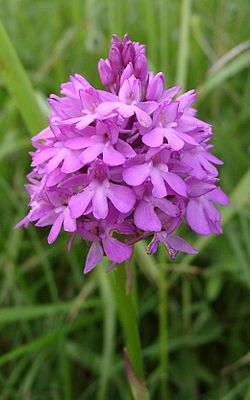
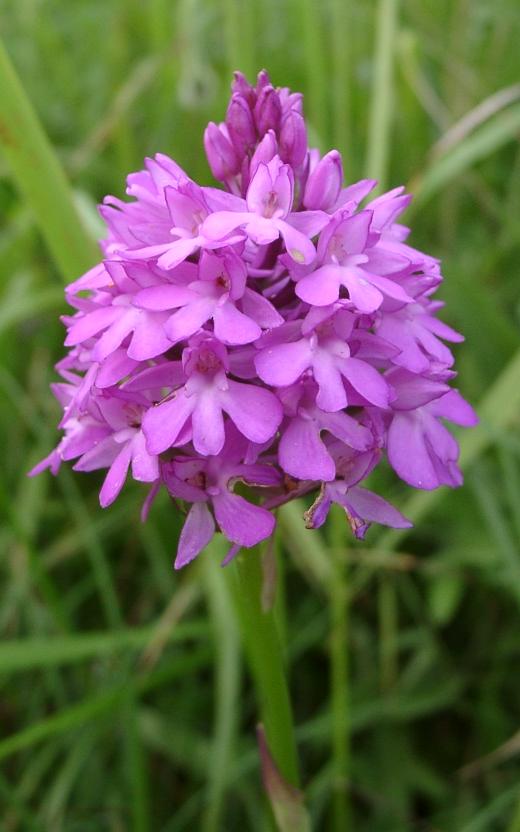
This hardy plant reaches on average 10–25 centimetres (3.9–9.8 in) of height, with a maximum of 60 centimetres (24 in). The stem is erect and unbranched. The basal leaves are linear-lanceolate with parallel venation, up to 25 centimetres (9.8 in) long, the cauline ones are shorter and barely visible on the stem. The arrangement of hermaphroditic flowers in a compact pyramidal shape is very distinctive and gives the orchid its common name. The colour of the flower varies from pink to purple, or rarely white, and the scent is described as "foxy". The flowers have six tepals, being three small sepals and three petals. Two small petals are on the sides, while the third and lower (labellum) is large and trilobate. At the back of the flower there is a tubular spur of about 1.5 centimetres (0.59 in) long, while the labellum bears two lateral small flaps. The flowering period extends from April through July.
Habitat and distribution
[edit]Anacamptis pyramidalis requires a sunny spot on diverse soils: loamy or clay. It can even grow on very alkaline soil. It can be found on meadows, in grassland, sand dunes, maquis as well as dry and well exposed slopes, at an altitude of 0–1,600 metres or more (0–5,250 ft approx.) above sea level.[2][3]
In the UK, Anacamptis pyramidalis is a very successful coloniser of disturbed soil, and can grow in a wide variety of locations, including road verges, reservoirs, quarries and airfields.[4]
This orchid is native to southwestern Eurasia, from western Europe through the Mediterranean region eastwards to Iran. In Germany, it is rare and was declared Orchid of the Year in 1990 to heighten awareness of this plant. This orchid is especially common on the Isle of Wight in the South of England, and was designated the county plant in 2008. On the Isle of Wight, it favours growth in chalky or sandstone-rich soil,[5] and thus can easily be found on the Downland and cliffs to the west and south of the island.[6][7]
Ecology
[edit]The flowers are pollinated by butterflies and moths. To ensure the fertilization, their morphology is well adapted to the proboscis of Lepidoptera, especially Euphydryas, Melanargia, Melitaea, Pieris and Zygaena species. The mechanism by which its pairs of pollinia attach themselves to an insect's proboscis was discovered by Charles Darwin and described in his book on the Fertilisation of Orchids.[8]
Anacamptis pyramidalis has been suggested to form mycorrhizal relationships with Rhizoctonia, Fusarium and Papulaspora species.[9][10]
Gallery
[edit] |
 |
 |
 |
 |
 |
Varieties
[edit]There are some notable varieties, which are sometimes treated as subspecies – and as they seem to be limited to certain regions, this may be correct:[citation needed]
- Anacamptis pyramidalis var. tanayensis (Chenevard) Soó in Keller – Tanay Pyramidal Orchid - Flowers darker and smaller. Fribourg and Valais cantons (Switzerland).
- Anacamptis pyramidalis var. urvilleana (Sommier & Caruana Gatto) Schlechter – Maltese Pyramidal Orchid, an endemic orchid from Malta with smaller and paler flowers flowering four–six weeks before Anacamptis pyramidalis.[11]
- Anacamptis pyramidalis var. sanguinea (Druce) Kreutz – Western Irish Pyramidal Orchid. -Inflorescence rounder, plant smaller overall. County Galway to County Kerry (Ireland)
The variety alba can be found anywhere in the Pyramidal Orchid's range; its flowers are white.
Medicinal uses
[edit] | This article needs additional citations for verification. (June 2020) |
The dried and ground tuber (from various species of Orchis and Anacamptis) can be made into a fine white powder, called salep. This is a very nutritious[dubious – discuss] sweet starchlike substance. It is used in drinks, cereals and in making bread. In Turkey it is used in ice-creams.[12] It was also used medicinally in diets for children and convalescents.
Culture
[edit]The pyramidal orchid was voted the County flower of the Isle of Wight in 2002 following a poll by the wild flora conservation charity Plantlife.[13]
References
[edit]- ^ BSBI List 2007 (xls). Botanical Society of Britain and Ireland. Archived from the original (xls) on 2015-06-26. Retrieved 2014-10-17.
- ^ Pakistan Journal of Botany - Studies on the morphology, anatomy and ecology of Anacamptis pyramidalis (L.) in Turkey
- ^ Plants for a Future - Anacamptis pyramidalis
- ^ "Plant Life - Pyramidal Orchid". Archived from the original on 2018-06-12. Retrieved 2018-11-08.
- ^ "Pyramidal orchid". Plantlife. Retrieved 17 June 2020.
- ^ "Isle of Wight Downs IPA". Plantlife. Retrieved 26 June 2020.
- ^ "Isle of Wight Biodiversity Action Plan, Maritime Cliffs and Slopes Habitat Action Plan" (PDF). iow.gov.uk. December 2007. Retrieved 26 June 2020.
- ^ Darwin 1862, pp. 20–24, 37
- ^ Applied ecology and environmental research - In Vitro Symbiotic Germination Potentials of Some Anacamptis, Dactylorhiza, Orchis and Ophrys Terrestrial Orchid Species
- ^ Turkish Journal of Botany - Diversity of endophytic fungi from various Aegean and Mediterranean orchids (saleps)
- ^ Mifsud, Stephen (2016). "Taxonomic notes on Anacamptis pyramidalis var. urvilleana (Orchidaceae), a good endemic orchid from Malta". Journal Europäischer Orchideen. 48 (1): 19–28.
- ^ Eng Soon Teoh Orchids as Aphrodisiac, Medicine or Food (2019), p. 46, at Google Books
- ^ Plantlife website County Flowers page Archived 2015-04-30 at the Wayback Machine
- Darwin, Charles (1862), On the various contrivances by which British and foreign orchids are fertilised by insects, and on the good effects of intercrossing, London: John Murray, retrieved 2009-07-30
External links
[edit] Media related to Anacamptis pyramidalis at Wikimedia Commons
 Data related to pyramidal orchid (Anacamptis pyramidalis) at Wikispecies
- "Anacamptis pyramidalis". The Encyclopedia of Life.
- Den virtuella floran - Distribution
- Comprehensive profile for Anacamptis pyramidalis from the website MaltaWildPlants.com
- Biolib


Anacamptis pyramidalis
View on GrokipediaTaxonomy
Etymology
The genus name Anacamptis derives from the Greek verb anakamptein, meaning "to bend backwards," a reference to the curving bracts at the base of the flower or the bending pollinia.[4][5] The specific epithet pyramidalis originates from the Latin adjective pyramidalis, meaning "pyramidal," which describes the conical or pyramidal arrangement of the inflorescence.[3] The species was first named by Carl Linnaeus as Orchis pyramidalis in his Species Plantarum (volume 2, page 940) published in 1753, establishing its binomial nomenclature within the orchid genus Orchis at the time.[6] It was subsequently transferred to the genus Anacamptis by Louis Claude Richard in 1817.[7]Classification and synonyms
Anacamptis pyramidalis is classified within the kingdom Plantae, phylum Tracheophyta, class Liliopsida, order Asparagales, family Orchidaceae, subfamily Orchidoideae, tribe Orchideae, subtribe Orchidinae, and genus Anacamptis.[8] The species was originally described by Carl Linnaeus as Orchis pyramidalis in his Species Plantarum in 1753, based on specimens from sandy and chalky habitats in regions including Switzerland, Belgium, England, and France.[2] Key synonyms include Orchis pyramidalis L. (the basionym) and Aceras pyramidale (L.) Rchb.f., the latter reflecting an earlier generic placement.[8] Additionally, infraspecific taxa such as Anacamptis pyramidalis subsp. brachystachys (d'Urv.) H.Kretzschmar, Eccarius & H.Dietrich have been recognized, often distinguished by shorter inflorescences.[9] Recent taxonomic revisions have transferred the species from the genus Orchis to Anacamptis, a change initially proposed by Louis Claude Marie Richard in 1817 and later supported by molecular phylogenetic studies demonstrating its closer affinity to genera like Neotinea, as well as morphological differences such as cauline sheathing leaves and a loose galea structure.[2] These revisions, informed by nuclear ITS sequence analyses, underscore the polyphyletic nature of the traditional Orchis s.l.Description
Morphology
Anacamptis pyramidalis is a perennial herbaceous geophyte, functioning as a terrestrial orchid with an overall habit adapted to nutrient storage via underground structures. It features an erect, slender, unbranched stem that is typically pale green and grows 10–25 cm tall, though it can reach up to 60 cm in height under optimal conditions.[8][10] The root system consists of tuberous roots, characteristic of many orchids, with paired, ovoid to roundish tubers measuring approximately 1–5 cm in length and width, serving as primary organs for nutrient and water storage.[8][10] These tubers are undivided and enable the plant's perennial nature by supporting regrowth each season. Vegetatively, the plant produces a basal rosette of linear-lanceolate leaves, which are acute, glabrous, and pale green, ranging from 5–25 cm in length and 0.5–2 cm in width.[8][10] The number of leaves varies from 2–14, arranged in a loose spiral; upper cauline leaves are progressively reduced in size and sheathe the stem.[10]Flowering
The inflorescence of Anacamptis pyramidalis forms a dense, conical spike that is distinctly pyramidal in shape initially, often containing 20 to 100 flowers arranged closely together along a central axis that can reach 3 to 7 cm in height.[11][12] As the blooming progresses, the inflorescence elongates and becomes more cylindrical.[11] This structure emerges from the rosette of leaves on a stem typically 10 to 60 cm tall.[10] Each flower measures approximately 8 to 12 mm across and consists of six tepals—three sepals and three petals—that are pink to purple in coloration, though white forms occur rarely.[10][13] The labellum, or lip, is the most prominent feature: it is large, flat, and trilobate, with three roughly equal lobes that are oblong to ovoid and bear two parallel lamellae at the base for guidance.[10][11] At the rear of the flower extends a slender, tubular nectar spur, approximately 1.5 cm long and 1 to 2 mm in diameter, which is horizontal or slightly descending.[10][13] Flowering occurs from April to July, varying by geographic region and local climate; for instance, it blooms from March to June in Mediterranean areas and May to July in northern Europe.[14][11] The phenology is acropetal, with flowers opening sequentially from the base of the spike upward over several weeks, ensuring prolonged availability for pollinators.[13] The flowers produce a pleasant vanilla-like scent during the day, which intensifies in the morning to draw in diurnal visitors, though it may shift to a more musky or spicy note later.[14][13] This diurnal fragrance emission aligns with the plant's reproductive strategy in open habitats.[14]Reproduction and ecology
Pollination
Anacamptis pyramidalis is primarily pollinated by species within the order Lepidoptera, including various butterflies and moths that are attracted to the flower's deceptive nectar-mimicking signals. Key pollinators include butterflies such as Pieris napi (green-veined white) and Aporia crataegi (black-veined white), as well as nymphalid butterflies like Melitaea athalia and Melitaea cinxia, and moths from families including Noctuidae and Zygaenidae, such as Zygaena minos (migrant burnet moth). These insects visit the flowers seeking nectar, but the orchid offers none, employing a food-deceptive strategy to ensure pollination occurs. Observations in southern Italy have also recorded occasional visits by dipterans like Billaea lata (a tachinid fly), though Lepidoptera remain the dominant vectors.[15][16] The pollination mechanism involves the attachment of pollinia—compact masses of pollen grains—to the insect's proboscis via a sticky viscidium produced by the rostellum, a specialized extension of the stigma. When a pollinator probes the long spur of the flower (12-16 mm in length), the rostellum snaps, adhering the pollinium to the proboscis; the pollinia then twist or bend over approximately 30 seconds to reorient for deposition on the stigma of another flower. This process was first detailed by Charles Darwin in his seminal study on orchid fertilization, where he described Orchis pyramidalis (now A. pyramidalis) as highly adapted for lepidopteran pollination, with the rostellum ensuring precise transfer and minimizing pollen wastage. The reconfiguration time of the pollinia exceeds typical visit durations, effectively preventing self-pollination on the same flower and promoting transfer to conspecific plants.[17][18] The flowers exhibit diurnal and nocturnal scent variation to optimize pollinator interactions: a vanilla-like aroma during the day attracts butterflies, while in the evening, when dew-dampened, the scent shifts to a goat-like or musky odor that repels moths, deterring feeding without effective pollination. This temporal strategy aligns with the activity patterns of diurnal butterflies and nocturnal moths, enhancing cross-pollination efficiency. Although data on genetic self-incompatibility in A. pyramidalis remain limited, the species relies on these mechanical and olfactory mechanisms to favor outcrossing, thereby maintaining genetic diversity and avoiding inbreeding depression common in deceptive orchids.[19][2][18]Symbiotic associations
Anacamptis pyramidalis, like other orchids, forms obligatory mycorrhizal associations essential for seed germination and early seedling development, as its dust-like seeds lack endosperm and require fungal partners to supply initial nutrients. Studies have identified compatible mycorrhizal fungi including genera from Ceratobasidiaceae (such as Rhizoctonia-like species), Tulasnellaceae, and Ascomycetes like Fusarium and Papulaspora, isolated from roots and tubers in natural populations.[20][21] In vitro experiments demonstrate high germination success with Rhizoctonia sp. (56%) and Fusarium sp. (34%), highlighting species-specific compatibility that promotes protocorm formation and initial growth.[22] These symbiotic fungi play a critical role in nutrient uptake, facilitating a bidirectional exchange where the orchid provides photosynthetic carbohydrates (such as sugars) to the fungus, while the fungus delivers minerals, nitrogen, phosphorus, and water—essential in nutrient-poor environments.[20] During the protocorm stage, the relationship is often mycoheterotrophic, with fungi supplying carbon compounds to support early development before the plant becomes autotrophic.[23] This exchange enhances the orchid's resilience, particularly in early life stages when root systems are underdeveloped. For propagation purposes, A. pyramidalis seeds exhibit low viability without fungal inoculation, as asymbiotic methods yield poor results; adding compatible mycorrhizal inoculum significantly boosts germination rates in restored habitats.[24] This dependence underscores the importance of conserving fungal partners in ex situ and in situ efforts to maintain population viability. In calcareous soil ecosystems, A. pyramidalis contributes to broader orchid-fungus networks by associating with low-abundance soil fungi enriched in the rhizosphere, promoting niche diversification and coexistence among co-occurring orchid species through shared or specialized mycorrhizal partnerships.[20] These networks support fungal diversity, with up to 17 operational taxonomic units detected per root system, fostering ecosystem stability in grassland habitats.[23]Distribution and habitat
Geographic range
Anacamptis pyramidalis is native to southwestern Eurasia, encompassing much of Europe from the United Kingdom eastward to Iran, the Mediterranean basin, North Africa including Algeria, Morocco, and Tunisia, and western Asia such as Cyprus, Lebanon-Syria, and Turkey.[25] The species extends across western, central, and southern Europe, reaching north to the Baltic islands and east to central Ukraine, but it is absent from northern Scandinavia and much of northern Scotland.[2][26] The orchid is particularly abundant in the Mediterranean and sub-Mediterranean regions, where it thrives in suitable habitats, and in the British Isles, including widespread occurrences in England and Wales with notable populations on the Isle of Wight, its county flower.[2][27] In Central Europe, it is present but rare, as exemplified by its limited distribution in Germany.[28] Anacamptis pyramidalis occupies an altitudinal range from sea level to approximately 1,900 meters above sea level.[2] No introduced populations beyond its native range are recorded.[25]Habitat preferences
Anacamptis pyramidalis thrives in a variety of open, grassy habitats across its Euro-Mediterranean range, including chalk downlands, coastal dunes, meadows, scrublands, roadside verges, old quarries, and railway embankments.[29][30] These environments are typically short grasslands or grazing meadows.[31] The species prefers well-drained soils ranging from loamy to clayey textures, with a strong affinity for neutral to alkaline (calcareous) substrates; soil pH in natural sites often falls between 6.77 and 7.54.[29][32] It can also tolerate sandy soils but avoids waterlogged conditions.[29] Anacamptis pyramidalis requires full sun exposure for optimal growth and is intolerant of shade.[29] Moisture levels in its preferred habitats are dry to moderately moist, supporting its adaptation to semi-arid or seasonally variable conditions.[29] This orchid is closely associated with oligotrophic, low-nitrogen environments, such as nutrient-poor grasslands, where it exhibits low tolerance to fertilizers and eutrophication.[4][33] Such conditions maintain the competitive balance in its sparse, open habitats.[34]Variation
Subspecies and varieties
Anacamptis pyramidalis exhibits considerable infraspecific variation, leading to the recognition of several varieties, though taxonomic treatments differ among authorities, with some elevating certain forms to subspecies status based on morphological, cytological, and phenological differences.[8] The typical variety, var. pyramidalis, represents the nominate form and is widespread across Europe, from the Mediterranean to northern Iran, characterized by its standard pyramidal inflorescence and pink to purple flowers.[9] One distinct variant is var. urvilleana, endemic to Malta, featuring shorter inflorescences (typically 4–8 cm), smaller flowers with pale pink to white coloration, and an earlier flowering period from late February to mid-April, distinguishing it from the mainland form; this variety is diploid (2n=36), unlike the tetraploid (2n=72) typical variety, supporting arguments for its recognition at varietal or even subspecific level.[35][36] Var. dunensis is accepted for plants in coastal dune habitats from the Netherlands to northwest France and the Channel Islands, adapted to sandy, calcareous soils.[37] In Switzerland, var. tanayensis has been described from the region around Tanay, noted for its distinct bract features, including longer bracts relative to the flowers, and dark purple coloration, though it is often considered a synonym of var. pyramidalis in modern checklists.[38][39] Regional color variants include var. sanguinea, an Irish form primarily from the Hebrides and northern Ireland, with deeper red flowers and a more compact habit.[12] Additionally, var. alba (or albiflora) is a white-flowered mutant reported across the species' range, resulting from a recessive genetic trait and occurring sporadically without geographic restriction.[40] Taxonomic debates persist, particularly regarding the elevation of variants like urvilleana to subspecies due to consistent differences in ploidy, morphology, and ecology, while others such as tanayensis and sanguinea are frequently subsumed under var. pyramidalis owing to overlapping traits and lack of reproductive isolation.[36][8]Morphological variations
Anacamptis pyramidalis exhibits a wide spectrum of flower colors within its populations, ranging from pale pink to deep purple, with occasional carmine hues and rare white forms known as the alba variant, which arise from genetic mutations affecting pigmentation. These color variations can occur across individuals in the same locality, contributing to the species' phenotypic diversity without delineating taxonomic boundaries.[41] Plant size in A. pyramidalis shows considerable intraspecific variation, with heights typically ranging from 10 cm in nutrient-poor conditions to up to 60 cm or more in optimal environments, and recorded extremes reaching 65.5 cm in certain Turkish populations. This plasticity in stature reflects adaptive responses to local growth factors, allowing shorter, more compact plants in challenging sites compared to taller specimens elsewhere. Leaf morphology also varies, with 2–14 leaves per plant; the longest leaves measure 65–230 mm in length and 6–22 mm in width, while the shortest range from 45–180 mm long and 5–19 mm wide, showing differences across populations that enhance overall form diversity.[41][12][2] The inflorescence of A. pyramidalis displays variability in density and structure, typically bearing 20–100 flowers in a dense, initially pyramidal spike that may become more oblong with plant age or in denser stands. Spur length further contributes to morphological diversity, varying from 8–21 mm across individuals, with means around 14 mm, and differences noted in lip shape and overall flower form between populations. Such non-taxonomic variations, including brief overlaps with named varieties like f. fumeauxiana, underscore the species' phenotypic flexibility.[41][12][42]Conservation
Status
Anacamptis pyramidalis is assessed as Least Concern at the European level by the IUCN due to its wide distribution across much of temperate Europe and into western Asia.[2] The species has not been globally evaluated, but its extensive range supports this status. Regionally, it is classified as Near Threatened in Switzerland, where populations face habitat pressures in fragmented areas.[43] In Bulgaria, the species is legally protected under national law to prevent overcollection.[44] Similarly, in Germany, it is rare and protected, having been designated as Orchid of the Year in 1990 by the German Orchid Society to raise conservation awareness.[45] Population trends for A. pyramidalis are generally stable within its core European range, reflecting its adaptability to various grasslands and dunes.[46] However, local declines have been observed in fragmented habitats, such as coastal dunes and calcareous grasslands, due to habitat loss and isolation.[47] Legally, A. pyramidalis falls under Appendix II of the CITES convention, which regulates international trade in wild orchids to prevent overexploitation.[48] Additionally, national legislation in several European countries, including Switzerland, Bulgaria, and Germany, prohibits collection and disturbance to safeguard local populations.[43][44][45] The endemic variety A. pyramidalis var. urvilleana in Malta is assessed separately as Vulnerable, highlighting localized risks.[49]Threats
Anacamptis pyramidalis faces significant threats from habitat loss driven by agricultural intensification, urbanization, and natural succession in grasslands. In regions like the UK and parts of Europe, conversion of calcareous grasslands to arable land or intensive grazing has fragmented populations, with only about 2% of semi-natural grasslands remaining as high-diversity habitats by 2011. Urban development and woodland planting have further reduced suitable open habitats, leading to localized declines, such as slight contractions in eastern Scotland. Succession to scrub or woodland in unmanaged grasslands exacerbates this, as the species prefers open, low-nutrient conditions that become overshadowed by competitive vegetation.[50][51] Nitrogen pollution through atmospheric deposition and fertilizer runoff contributes to eutrophication, favoring taller, competitive grasses that outcompete A. pyramidalis in its preferred low-nitrogen calcareous grasslands. Studies in Britain show a significant negative correlation between nitrogen levels and the species' presence, with probability of occurrence declining even at low deposition rates below the critical load of 20 kg N ha⁻¹ yr⁻¹. This eutrophication alters community composition, reducing orchid abundance in affected sites across lowland calcareous grasslands.[52] Overcollection for salep production poses a severe threat to tuber populations in the eastern Mediterranean, where tubers are harvested to produce a traditional beverage and tonic. In north-western Greece and Turkey, A. pyramidalis is among the targeted species, with annual harvests estimated at 30–120 million tubers in Turkey alone, often before seed set, limiting regeneration and causing population declines. This unsustainable practice, driven by rising demand for organic products, has led to documented reductions in wild stands, particularly in accessible areas.[53] Climate change impacts A. pyramidalis through altered phenology and increased drought stress, especially in southern ranges. Flowering times have advanced by approximately 3–7.7 days over recent decades in central Europe, linked to warming temperatures, potentially disrupting pollinator synchronization in deceptive species like this orchid. In southern populations, such as those in the Italian Alps, warming has driven upward range shifts and local extinctions at lower elevations, with 37% of resurveyed sites showing losses due to drought and habitat alteration. For variants like A. pyramidalis var. urvilleana in Malta, additional risks include fires and land reclamation, which threaten small subpopulations in coastal areas.[54][47][55]Cultivation and uses
Cultivation
Anacamptis pyramidalis, commonly known as the pyramidal orchid, can be cultivated in gardens or conservation settings to mimic its native chalk grassland environments, though it is considered moderately challenging due to its dependence on specific soil conditions and symbiotic fungi. Successful growth requires replicating the plant's preference for alkaline, low-nutrient substrates and avoiding interventions that disrupt its natural associations.[14][56] The plant thrives in deep, well-drained soils that are neutral to alkaline, with a pH range of 7 to 8, ideally composed of gritty, humus-rich mixes low in nutrients to emulate calcareous grasslands. Suitable substrates include sandy loam or loamy soils amended with chalk or limestone grit, avoiding heavy clay unless well-drained; high fertility can inhibit growth by favoring competing vegetation.[57][14][12] It prefers full sun exposure for optimal flowering, though it tolerates partial shade in cultivation; position plants in open lawns, borders, or rockeries where they receive at least six hours of direct sunlight daily. The species is hardy to USDA zone 6, tolerating temperatures down to -23°C (-10°F), making it suitable for temperate climates with winter protection in exposed sites.[14][58][59] Propagation is primarily achieved through division of tubers immediately after flowering or in early spring, when offsets can be separated and replanted at a depth of 8 cm in prepared soil; dormant tubers should be planted in autumn or early spring, with tips buried about 2 cm deep to encourage establishment. Seed sowing is possible but requires inoculation with compatible mycorrhizal fungi, such as those from the genus Tulasnella, often sourced from soil around wild plants, as the seeds are dust-like and germinate slowly over years in sterile or low-nutrient media. Ex-situ studies have shown improved germination and growth when mycorrhizae are applied to substrates like peat-sand mixes, enhancing protocorm development without synthetic hormones.[57][2][14][60] Ongoing care involves minimal intervention to preserve the plant's mycorrhizal partnerships: water sparingly to keep soil moist but not waterlogged, allowing it to dry between sessions, and refrain from fertilizers or fungicides, which can harm symbiotic fungi. Companion planting with native grasses in un-mown lawns promotes a natural appearance and reduces competition, with foliage left uncut until it dies back in late summer to support tuber replenishment.[14][61][58]Medicinal and culinary uses
The tubers of Anacamptis pyramidalis are harvested, dried, and ground into a fine powder called salep, a starch-rich substance valued for its nutritive properties in traditional preparations.[62] This powder is commonly used to make a hot beverage by infusing it with milk, serving as a restorative drink in various cultures.[63] In culinary applications, salep acts as a natural stabilizer due to its high mucilage content, imparting elasticity and resistance to melting; it is a key ingredient in Turkish dondurma ice cream, enhancing texture without eggs.[64] Medicinally, salep from A. pyramidalis tubers exhibits demulcent properties, forming a soothing jelly that alleviates gastrointestinal irritations such as diarrhea and indigestion when prepared in a 1:50 ratio with water.[19] In Turkish folk medicine, infusions of the dried powder (1-2 cups daily with milk for 1-2 weeks) are employed to treat colds, flu, coughs, and as a general tonic and body warmer.[62] Its antioxidant and enzyme-inhibitory effects, including inhibition of α-amylase and α-glucosidase, support potential antidiabetic applications, though clinical evidence remains limited.[62] Historically, orchid tubers like those of A. pyramidalis were used in ancient Greek medicine as documented by Theophrastus (c. 372–288 BCE) for their tonic qualities, and in Ottoman traditions as an aphrodisiac and restorative beverage to strengthen the body and stimulate vitality.[63][65] Due to its nutritive profile, salep has been incorporated into diets for children and convalescents, boiled with water and flavored similarly to arrowroot for easy digestibility.[19] However, the reliance on wild harvesting for salep production poses sustainability challenges, as overcollection threatens A. pyramidalis populations across Europe and the Mediterranean, leading to protections in many regions to prevent extinction.[62]Cultural significance
Anacamptis pyramidalis, commonly known as the pyramidal orchid, holds notable cultural significance in various European traditions, particularly as a symbol of regional identity and natural heritage. In the United Kingdom, it was selected as the county flower of the Isle of Wight in 2002 through a public poll organized by the conservation charity Plantlife, highlighting its prominence in local flora and its association with the island's coastal grasslands.[66] This designation underscores its role in fostering community pride and environmental awareness in southern England. In European folklore, the pyramidal orchid has been linked to themes of fertility and vitality, with its tubers traditionally used as an aphrodisiac in decoctions across regions such as Bosnia-Herzegovina, Turkey, and Bulgaria. These uses, documented in ethnobotanical records and herbal traditions, reflect broader orchid symbolism in Mediterranean and Balkan cultures, where the plant's distinctive form evoked notions of strength and reproduction. Additionally, it appears in historical herbal texts as a component of salep, a spiced preparation valued for its purported restorative properties in Greek and Turkish customs. Contemporary appreciation of A. pyramidalis extends to its emblematic status in conservation efforts and botanical representation. It serves as an indicator species for chalk grasslands in British ecosystems, symbolizing the fragility of these habitats amid habitat loss and climate pressures.[1] In Mediterranean contexts, such as Cyprus, the orchid inspires local biodiversity initiatives, promoting awareness of endemic flora through educational programs and habitat protection campaigns.[67] Its striking pyramidal inflorescence has also been a subject in botanical art, capturing the plant's aesthetic appeal in illustrations that aid in public engagement with native wildflowers.Media
Gallery
The gallery below showcases selected photographs of Anacamptis pyramidalis, highlighting its characteristic features and habitats from credible botanical sources.- Typical pink-purple inflorescence in habitat: A dense, conical spike of vibrant pink-purple flowers rising from basal rosettes in a calcareous grassland setting, captured in the UK. [68]
- White variant (alba): An all-white form of the inflorescence, lacking the usual pigmentation, photographed in coastal grassland in Italy. [69]
- Close-up of flower spur and labellum: Detailed view of a single flower revealing the elongated tubular spur (approximately 1.5 cm long) and the three-lobed labellum with central white flaps, from a European specimen. [70]
- Habitat association with grasslands: A colony of plants emerging from short turf on chalky slopes, illustrating their preference for open, calcareous meadows in the Mediterranean region. [26]
- Regional variant (urvilleana in Malta): The endemic Maltese subspecies showing a compact inflorescence in garigue habitat, with slightly narrower leaves adapted to rocky, disturbed ground. [71]
Identification aids
Anacamptis pyramidalis is readily identifiable in the field by its dense, conical inflorescence that forms a distinctive pyramidal spike when young, containing up to 100 small, pinkish-purple flowers that open progressively from the base. The flowers feature a trilobate lip, typically 6-8 mm long with three rounded lobes, and a long, slender spur measuring 12-15 mm in length, which is slightly curved and points downward. These characteristics, particularly the compact spike density and spur proportions, help distinguish it from related species.[12][11][72] Common confusions arise with other pink-flowered terrestrial orchids, such as the bee orchid (Ophrys apifera), which has a looser inflorescence and a lip mimicking a bee's body rather than a trilobate structure, or species formerly in Orchis like the green-winged orchid (Anacamptis morio), which exhibits a sparser spike and shorter, more rounded spur. In Mediterranean regions, it may be mistaken for the pink butterfly orchid (Anacamptis papilionacea), which has a more expansive, butterfly-like lip with deeper lobes and a less dense, elongated inflorescence. Habitat preferences also aid differentiation: A. pyramidalis favors calcareous grasslands and dunes.[68][12][3]| Feature | Anacamptis pyramidalis | Anacamptis morio (Green-winged Orchid) | Anacamptis papilionacea (Pink Butterfly Orchid) | Ophrys apifera (Bee Orchid) |
|---|---|---|---|---|
| Flower Shape | Trilobate lip, hooded petals | Three-lobed lip with green veins | Broad, deeply lobed butterfly-like lip | Bee-mimicking lip with fuzzy segments |
| Inflorescence | Dense pyramidal spike (young), 3-7 cm | Loose, cylindrical spike, 5-15 flowers | Elongated, lax spike, fewer flowers | Short, few-flowered spike |
| Spur Length | 12-15 mm, slender and curved | 5-11 mm, straight | 8-12 mm, thicker | Absent |
| Leaf Arrangement | Basal rosette, keeled, grey-green | Basal rosette, unspotted, upright | Basal rosette, broader, often spotted | Basal rosette, lanceolate |
| Habitat | Calcareous grassland, dunes | Neutral to acidic meadows | Mediterranean scrub, rocky slopes | Calcareous grassland, verges |