Hubbry Logo
search
logo
2014159

Pyrolytic carbon

logo
Community Hub0 Subscribers
Read side by side
from Wikipedia
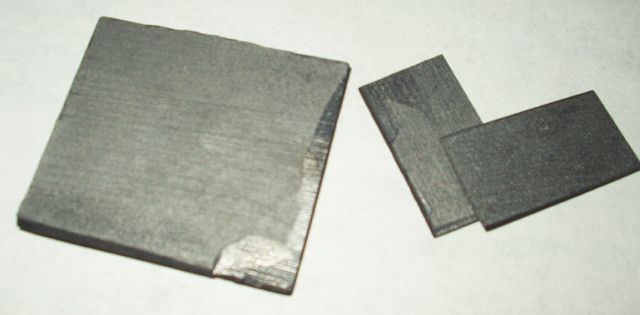
Sheets of pyrolytic carbon

Pyrolytic carbon is a material similar to graphite, but with some covalent bonding between its graphene sheets as a result of imperfections in its production.

Pyrolytic carbon is man-made and is thought not to be found in nature.[1] Generally it is produced by heating a hydrocarbon nearly to its decomposition temperature, and permitting the graphite to crystalize (pyrolysis).

One method is to heat synthetic fibers in a vacuum, producing carbon fibers.

It is used in high temperature applications such as missile nose cones, rocket motors, heat shields, laboratory furnaces, in graphite-reinforced plastic, coating nuclear fuel particles, and in biomedical prostheses.

It was developed in the late 1950s as an extension of the work on refractory vapor deposition of metals.[2]

Physical properties

[edit]

Pyrolytic graphite samples usually have a single cleavage plane, similar to mica, because the graphene sheets crystallize in a planar order, as opposed to[clarification needed] pyrolytic carbon, which forms microscopic randomly oriented zones. Because of this, pyrolytic graphite exhibits several unusual anisotropic properties. It is more thermally conductive along the cleavage plane than pyrolytic carbon, making it one of the best planar thermal conductors available.

Pyrolytic graphite forms mosaic crystals with controlled mosaicities up to a few degrees.

Pyrolytic graphite is also more diamagnetic (χ = −4×10⁻⁴) against the cleavage plane, exhibiting the greatest diamagnetism (by weight) of any room-temperature diamagnet. In comparison[dubiousdiscuss], pyrolytic graphite has a relative permeability of 0.9996, whereas bismuth has a relative permeability of 0.9998 (table).

Magnetic levitation

[edit]
Pyrolytic graphite levitating over permanent magnets

Few materials can be made to magnetically levitate stably above the magnetic field from a permanent magnet. Although magnetic repulsion is obviously and easily achieved between any two magnets, the shape of the field causes the upper magnet to push off sideways, rather than remaining supported, rendering stable levitation impossible for magnetic objects (see Earnshaw's theorem). Strongly diamagnetic materials, however, can levitate above powerful magnets.

With the easy availability of rare-earth permanent magnets developed in the 1970s and 1980s, the strong diamagnetism of pyrolytic graphite makes it a convenient demonstration material for this effect.

In 2012, a research group in Japan demonstrated that pyrolytic graphite can respond to laser light or sufficiently powerful natural sunlight by spinning or moving in the direction of the field gradient.[3][4] The carbon's magnetic susceptibility weakens upon sufficient illumination, leading to an unbalanced magnetization of the material and movement when using a specific geometry.

Recently, it has been suggested that pyrolytic carbon may possibly be the explanation for the mysterious 'spokes' in Saturn's rings. Due to the process of Chemical Vapor Deposition methane gas at high temperatures (1400K) may have been converted to pyrolytic carbon. The abundant silicates in Saturn's B ring may have acted as a substrate for the pyrolytic carbon to be deposited on. Since pyrolytic carbon is highly diamagnetic the silicate grains coated in pyrolytic carbon can levitate above and below the ring plane due to Saturn's equatorial magnetic field. When sunlight hits these pyrolytic carbon-coated grains they lose electrons due to the photoelectric effect and become paramagnetic and are pulled back to the main ring structure as they are now attracted to Saturn's equatorial magnetic field. The visibility of the 'spokes' is dependent on the angle of the sunlight hitting the rings and the angle the observer is observing the rings. ( Reference https://arxiv.org/abs/2303.07197 ).

Applications

[edit]

Biomedical applications

[edit]

Because blood clots do not easily form on it, it is often advisable to line a blood-contacting prosthesis with this material in order to reduce the risk of thrombosis. For example, it finds use in artificial hearts and artificial heart valves. Blood vessel stents, by contrast, are often lined with a polymer that has heparin as a pendant group, relying on drug action to prevent clotting. This is at least partly because of pyrolytic carbon's brittleness and the large amount of permanent deformation, which a stent undergoes during expansion.

Pyrolytic carbon is also in medical use to coat anatomically correct orthopedic implants, a.k.a. replacement joints. In this application it is currently marketed under the name "PyroCarbon". These implants have been approved by the U.S. Food and Drug Administration for use in the hand for metacarpophalangeal (knuckle) replacements. They are produced by two companies: Tornier (BioProfile) and Ascension Orthopedics.[7] On September 23, 2011, Integra LifeSciences acquired Ascension Orthopedics. The company's pyrolytic carbon implants have been used to treat patients with different forms of osteoarthritis.[8][9] In January 2021, Integra LifeSciences sold its orthopedics company to Smith+Nephew for $240 million.[10]

The FDA has also approved PyroCarbon interphalangeal joint replacements under the Humanitarian Device Exemption.[11]

Footnotes

[edit]
Revisions and contributorsEdit on WikipediaRead on Wikipedia
from Grokipedia
Pyrolytic carbon is a synthetic carbon material produced through the chemical vapor deposition (CVD) of gaseous hydrocarbons, such as methane, onto substrates at temperatures ranging from 1000 to 2500 K, forming a turbostratic structure of disordered graphene layers with partial covalent bonding between them, distinguishing it from ideal graphite.[1][2] This process yields thin coatings, typically 1–10 μm thick, with microstructures that can appear as "cone-in-cone" or concentric spheres, resulting in highly anisotropic properties.[1] Pyrolytic carbon is classified into several microstructural types based on deposition conditions and texture, including isotropic, laminar (layered), rough laminar, smooth laminar, and columnar or granular forms, each influencing its mechanical and thermal behavior.[1] Mechanically, it exhibits exceptional strength and durability, with an elastic modulus of 17–28 GPa, flexural strength of 276–552 MPa, hardness of 150–250 diamond pyramid hardness (DPH), and high fatigue resistance, while its density is approximately 1.9–2.2 g/cm³.[3] Thermally, it demonstrates low conductivity in certain directions and can be graphitized at temperatures above 3000°C, accompanied by 12–15% shrinkage perpendicular to the deposition planes.[3] Its biocompatibility, hemocompatibility, and low friction coefficient (around 0.15) further enhance its utility, as it closely matches the stiffness of bone (Young's modulus ~18–20 GPa) without eliciting adverse biological responses.[3] The material's production often occurs in fluidized, tumbling, or stationary beds at 1200–2200°C, allowing precise control over deposition to achieve desired isotropy or anisotropy, and it can be alloyed with silicon or boron to improve strength.[3] Pyrolytic carbon occurs rarely in nature, such as in thermally altered coal deposits, but is predominantly manufactured for industrial use.[1] Key applications leverage its durability and inertness, including coatings for nuclear fuel particles to contain fission products, and biomedical implants such as mechanical heart valves—millions of which have been implanted worldwide since the late 1960s with excellent long-term performance[4]—and orthopedic joint replacements approved by regulatory bodies like the FDA.[3] Emerging uses, as of 2025, extend to advanced materials like 3D architected structures for energy storage, thermal management, and biomedical scaffolds, capitalizing on its electrical conductivity and lightweight nature.[5][6]

Definition and Production

Definition

Pyrolytic carbon is a synthetic form of carbon material produced through the pyrolysis of hydrocarbon gases at elevated temperatures, typically above 1000°C, which exhibits turbostratic structure but can be graphitized at temperatures above 2400°C. This process results in the formation of turbostratic graphite-like layers, where graphene sheets are stacked in a disordered manner with rotational misalignments between adjacent planes, and imperfections during deposition introduce covalent cross-links between these sheets, enhancing structural rigidity.[7][8] The material's microstructure consists of mosaic-like crystals, comprising small domains of aligned graphene layers with misorientations up to a few degrees, which contribute to its overall anisotropic character. This layered arrangement resembles that of graphite, featuring predominantly sp²-hybridized carbon atoms in hexagonal networks, but the imperfect interlayer alignment and cross-linking distinguish it by imparting greater mechanical strength and resistance to shear compared to ideal graphite.[7][8] In contrast to isotropic graphite, which can be fully graphitized through high-temperature treatment to achieve ordered stacking, or diamond with its rigid tetrahedral covalent network, pyrolytic carbon maintains high anisotropy due to its turbostratic disorder and is primarily synthesized via chemical vapor deposition (CVD) processes rather than bulk graphitization methods. This production approach yields a dense, adherent coating rather than a bulk solid, setting it apart from other carbon allotropes.[7] Pyrolytic carbon was first developed in the late 1950s as part of efforts to create refractory coatings through vapor deposition techniques for metal processing and nuclear applications, with significant advancements occurring through collaborations such as those between the French Atomic Energy Commission (CEA) and General Atomics in the early 1960s.[2][9]

Production Methods

Pyrolytic carbon is primarily produced through chemical vapor deposition (CVD), a process involving the thermal decomposition of hydrocarbon precursors such as methane, acetylene, propylene, or ethanol at temperatures ranging from 900 to 2200°C under vacuum or inert atmospheres like argon or nitrogen.[10][11][12] In this method, the hydrocarbon gas is introduced into a reactor where it pyrolyzes near the substrate, releasing carbon species that deposit as a thin, anisotropic layer on heated surfaces, forming coatings or freestanding structures with controlled density and texture.[10][13] The CVD process begins with gas-phase pyrolysis of the precursor at elevated temperatures, leading to nucleation of reactive carbon intermediates, followed by their physical adsorption and surface diffusion on the substrate to build layered deposits.[10][14] Deposition occurs via heterogeneous reactions on the substrate, with the rate influenced by factors like gas flow and residence time; for instance, short residence times favor highly textured structures from ethanol precursors.[15] Control of the deposition rate—typically through precursor concentration and temperature gradients—allows tailoring of the mosaic-like microstructure, where slower rates promote more ordered, laminar growth.[16][17] Variations in CVD setups adapt the method for specific applications. Fluidized bed CVD (FBCVD) is commonly used for coating spherical nuclear fuel particles, where precursor gases like acetylene or acetylene/propylene mixtures fluidize the bed at 1250–1450°C, ensuring uniform pyrolytic carbon layers around kernels for TRISO fuel.[18][19] In contrast, hot-wall reactors facilitate the production of uniform thin films by maintaining consistent wall and substrate temperatures, often at 2000–2200°C and low pressures of 1–10 torr, ideal for planar or complex geometries.[2][14] Other configurations, such as isothermal or thermal gradient reactors, further modulate layer thickness and isotropy based on precursor type.[11] Key production parameters significantly affect the material's quality. Temperatures of 1000–2000°C yield high-density pyrolytic carbon with desired anisotropy, while substrates like graphite mandrels are heated to serve as bases for biomedical components such as heart valve leaflets.[11][12][20] Hydrocarbon selection influences purity and structure—methane produces more isotropic deposits, whereas propylene enhances laminar alignment—and operating pressures of 10–100 torr (or 1–10 kPa) balance deposition uniformity with gas-phase reactions.[21][17][11] Challenges in pyrolytic carbon production include achieving uniform thickness on non-planar substrates and preventing contamination from precursor impurities or reactor residues, which can introduce defects like porosity or unwanted silicon inclusions.[11][14][22] Precise control of gas composition and flow mitigates these issues, though extended deposition times risk cracking from thermal stresses.[11][18]

Properties

Physical Properties

Pyrolytic carbon is highly anisotropic due to its turbostratic layered structure, with properties varying significantly between the basal (in-plane) and c-axis (perpendicular) directions. This anisotropy arises from the oriented deposition process, leading to preferential alignment of graphene-like sheets.[23] The density of pyrolytic carbon typically ranges from 1.9 to 2.2 g/cm³, depending on deposition conditions and post-treatment, with higher values achieved in dense coatings.[24] Thermal conductivity is markedly directional, reaching up to 1700 W/m·K along the basal planes for high-quality material, while perpendicular conductivity is much lower at approximately 3.5 W/m·K. Thermal expansion coefficients reflect this anisotropy, with positive values in-plane (around 0.5 × 10⁻⁶ /K) and along the c-axis (around 6.5 × 10⁻⁶ /K) in highly textured forms, contributing to dimensional stability in applications.[25][26] Mechanical properties are also orientation-dependent, with compressive strength up to 300 MPa parallel to the basal planes and tensile strength ranging from 50 to 100 MPa in that direction; perpendicular values are lower, and hardness varies accordingly due to the layered microstructure.[27][24] Electrical conductivity is high in-plane, on the order of 10⁴–10⁵ S/m, exhibiting metallic behavior, whereas perpendicular to the planes it shows semiconducting characteristics with conductivity around 10–100 S/m.[25] Pyrolytic carbon displays strong diamagnetism, with volume magnetic susceptibility χ ≈ −4 × 10⁻⁴ (SI units) perpendicular to the basal planes and relative permeability ≈ 0.9996; it exhibits the greatest diamagnetism by weight of any room-temperature solid.[28][29]

Chemical Properties

Pyrolytic carbon is composed primarily of sp²-hybridized carbon atoms, typically achieving a purity of 95–99%, with advanced deposition processes yielding variants exceeding 99.999% elemental carbon content. Trace impurities, such as hydrogen or residual elements from hydrocarbon precursors, are present at low levels, often below 1%, and can include metals that influence material performance. The atomic structure features turbostratic disorder, characterized by misaligned graphene-like sheets with rotational offsets, which inhibits full graphitization and maintains a disordered arrangement even under high-temperature annealing.[30][31] This material exhibits high chemical stability, remaining inert to most acids and bases at room temperature, which enables its use in corrosive environments without significant degradation. Oxidation in air commences notably above 500–600°C, transitioning to active reaction regimes between 600°C and 800°C where edge sites and pore diffusion play key roles. In inert atmospheres or vacuum, pyrolytic carbon demonstrates exceptional thermal stability, enduring temperatures up to 2500–3000°C without decomposition.[32][33][31] The low reactivity of pyrolytic carbon stems from covalent carbon-carbon cross-links that bridge adjacent graphene sheets, contrasting with the weaker van der Waals forces in ideal graphite and rendering the material non-graphitizable. These inter-layer bonds reduce susceptibility to chemical attack, providing superior corrosion resistance relative to amorphous carbon, particularly in oxidative or aggressive chemical settings.[7] Control of purity is essential for optimizing chemical properties, with metallic impurities maintained below 1% to prevent catalytic enhancement of oxidation rates; even trace metals can accelerate degradation in oxidizing conditions, underscoring the need for precise deposition parameters to minimize such contaminants.[34]

Unique Phenomena

Magnetic Levitation

Pyrolytic carbon exhibits strong diamagnetism, which induces an opposing magnetic field in response to an external magnetic field, resulting in the expulsion of magnetic field lines and a repulsive force that enables stable levitation above permanent magnets. This phenomenon allows for passive, room-temperature levitation without the need for superconductors or active control systems, as the diamagnetic response creates a restoring force that counters gravitational and perturbing forces. Unlike ferromagnetic levitation, which is inherently unstable under Earnshaw's theorem due to the lack of stable equilibrium points in static magnetic fields, the negative magnetic susceptibility of pyrolytic carbon provides the necessary stabilization in all orientations by forming a potential energy minimum in the inhomogeneous field.[35] Achieving levitation requires strong magnetic fields, typically in the range of 0.5 to 1 tesla, generated by neodymium-iron-boron (NdFeB) permanent magnets arranged in configurations that produce high field gradients, such as alternating pole arrays. The levitation height is directly proportional to the magnetic field gradient, with typical separations of 0.1 to 1 mm for thin samples, and the inherent anisotropy of pyrolytic carbon—stronger diamagnetism perpendicular to the basal planes—enhances stability by aligning the material's response with the field direction. Early demonstrations in the 1960s utilized pyrolytic graphite to levitate masses exceeding one gram in passive setups with permanent magnets, marking a key advancement in practical diamagnetic systems.[36][35][37] Simple experimental setups involve placing thin flakes or sheets of pyrolytic carbon over arrays of small neodymium magnets, where the material floats steadily and can be nudged laterally without falling, demonstrating the frictionless nature of the suspension. These configurations have been adapted into commercial educational models and kits, such as levitation experiment sets that include pyrolytic graphite sheets and magnet arrays for classroom use. The popularity of such demonstrations surged in the 1990s following the widespread availability of strong rare-earth magnets, enabling accessible visualizations of diamagnetism for both research and outreach.[36][37] Despite its effectiveness, pyrolytic carbon's application in levitation is limited by the material's fragility, as it is brittle and prone to cracking under mechanical stress or impact. Optimal performance also demands flat, thin samples (typically 0.1 to 1 mm thick) to maximize the diamagnetic effect relative to mass, while thicker or irregularly shaped pieces may fail to achieve stable suspension due to uneven field interactions.[35]

Photo-Induced Responses

Pyrolytic carbon exhibits dynamic responses to light irradiation when in a magnetic field, primarily due to its strong absorption in the visible spectrum leading to localized heating. In a seminal 2012 study, researchers demonstrated that a levitated disk of pyrolytic graphite could be precisely moved or induced to spin using a focused laser beam or concentrated sunlight over an array of neodymium magnets.[38] This motion arises from the material's excellent photothermal properties, where light absorption rapidly heats one side of the sample, causing it to tilt and translate or rotate within the levitation plane.[39] Demonstrations showed rotational speeds reaching approximately 200 rpm when sunlight was focused on the edge of a 1 cm diameter disk.[40] The underlying mechanism involves the photothermal effect, which temporarily alters the material's diamagnetic susceptibility by increasing the temperature and thus the number of thermally excited electrons, reducing the overall diamagnetism on the heated side. This leads to shifts in magnetic repulsion or attraction forces, enabling controlled movement without physical contact. Experimental observations confirm responses to visible wavelengths in the 400–700 nm range, with translation speeds up to several cm/s achievable in weak magnetic fields using focused light on thin flakes or small samples. In research contexts, these photo-induced behaviors hold potential for optical manipulation in microdevices, such as non-contact actuation of levitated microstructures for sensors or micromanipulators. Demonstrations with pyrolytic carbon flakes under focused laser illumination have shown precise positional control, highlighting applications in automated milli-robotics and optical tweezers-like systems.[41] Speculatively, a 2023 theoretical study proposed that pyrolytic carbon coatings on silicate grains in Saturn's rings, formed via chemical vapor deposition-like processes in the planet's protoplanetary environment, could explain the observed "spokes" through light-induced magnetic responses. In this model, sunlight triggers a photoelectric effect in the carbon layer, temporarily shifting it from diamagnetic to paramagnetic states and causing the grains to settle or levitate dynamically in Saturn's magnetic field.[42] A 2025 follow-up theoretical model refines this by proposing a two-component system of pyrolytic carbon-coated silicates and transient diamagnetic ice grains, where photoelectric effects on the carbon enable spoke formation and dissipation in correlation with Saturn's magnetosphere and solar elevation.[43]

Applications

High-Temperature Applications

Pyrolytic carbon serves as a critical coating material in tristructural-isotropic (TRISO) fuel particles used in high-temperature gas-cooled reactors (HTGRs), where it forms the inner (IPyC) and outer (OPyC) layers surrounding a porous buffer and silicon carbide (SiC) barrier. The IPyC layer, typically 35–40 μm thick, acts as the primary barrier to gaseous fission products, providing structural support and shielding the fuel kernel from corrosive gases during deposition, while the OPyC layer, around 40 μm thick, offers additional containment if the SiC fails and protects the particle during fuel compact fabrication. These coatings enable fission product retention at temperatures up to 1600–1800°C, far exceeding the operational limits of conventional nuclear fuels, due to pyrolytic carbon's high thermal stability and low porosity in dense forms.[44][45][44] In aerospace applications, pyrolytic carbon is deposited via chemical vapor deposition to create ablation-resistant components for hypersonic environments, including missile nose cones, rocket nozzle throats, and re-entry heat shields. Developed in the late 1950s for military purposes by NASA and the Department of Defense, these components leverage the material's anisotropic structure to erode predictably under extreme heat, maintaining structural integrity up to 2500°F (1370°C) in single-use scenarios like intercontinental ballistic missile tips or space shuttle leading edges. The high purity of pyrolytic carbon, achieved through vapor-phase deposition, minimizes impurities that could compromise performance, while its low density and specific strength surpass metals at elevated temperatures.[46][47][46] Beyond nuclear and aerospace, pyrolytic carbon coatings on graphite substrates are employed in industrial high-temperature processes, such as brazing fixtures for heat exchangers and evaporators for metals, where they provide thermal shock resistance and chemical inertness. These fixtures, often in the form of carbon-carbon composites with pyrolytic layers, support operations at temperatures exceeding 1200°C without warping or cracking, reducing energy consumption and maintenance compared to metal alternatives. The material's low neutron absorption cross-section (below 3 mb) further enhances its suitability for neutron-sensitive environments, though primarily valued here for structural integrity under rapid heating cycles.[31][48][49]

Biomedical Applications

Pyrolytic carbon has been widely used in mechanical heart valves due to its exceptional durability and low thrombogenicity. The St. Jude Medical bileaflet mechanical heart valve, featuring pyrolytic carbon discs, was first implanted in patients in 1977 and received FDA approval in 1982.[50][51] Long-term studies demonstrate that these valves maintain structural integrity for over 20 years, with no reported cases of pyrolytic carbon fracture or significant wear leading to failure.[52] The material's low thrombogenicity reduces the risk of blood clot formation on the valve surfaces, contributing to thromboembolic event rates as low as 0.7% per patient-year in aortic positions.[53] In orthopedic applications, pyrolytic carbon implants have proven effective for small joint replacements, particularly in treating arthritis. The Ascension® PyroCarbon metacarpophalangeal (MCP) joint prosthesis, designed for index, long, ring, and small finger MCP joints exhibiting pain and limited motion due to arthritis, received FDA premarket approval in 2001.[54] This implant provides pain relief and improved range of motion, with clinical outcomes showing survival rates exceeding 80% at 5 years post-implantation.[55] Its biocompatibility stems from chemical inertness, which minimizes inflammatory responses and promotes stable tissue integration without adverse reactions.[55] Beyond heart valves and finger joints, pyrolytic carbon finds use in other biomedical implants, including components of artificial hearts and experimental hip prostheses. In artificial heart devices, pyrolytic carbon components enhance thromboresistance and wear performance.[56] For hip applications, pyrolytic carbon hemiarthroplasties have been investigated for osteonecrosis of the femoral head, showing reduced acetabular cartilage wear compared to metal alternatives in preclinical models.[57] Surface modifications, such as silicon carbide interlayers, further improve osseointegration and tissue compatibility in these implants.[58] Overall, in vivo wear rates for pyrolytic carbon remain below 1 μm per year, supporting long-term implant success.[58] Emerging research as of 2025 explores 3D-printed pyrolytic carbon microlattices as scaffolds for bone regeneration, demonstrating potential for enhanced tissue engineering applications.[59] Clinical data underscore the reliability of pyrolytic carbon implants, with mechanical heart valves achieving over 90% freedom from valve-related reoperation at 10 years and marketed applications dating back to the late 1970s.[60] Success rates for MCP joint replacements exceed 90% in terms of patient satisfaction and functional improvement at mid-term follow-up, highlighting the material's role in durable biomedical solutions.[55]

References

User Avatar
No comments yet.