Hubbry Logo
RavanglaRavanglaMain
Open search
Ravangla
Community hub
Ravangla
logo
8 pages, 0 posts
0 subscribers
Be the first to start a discussion here.
Ravangla
Ravangla
from Wikipedia

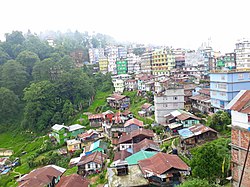
Rabong or Ravangla is a small town with an elevation of 8000 feet located, near Namchi City in the Namchi district of the Indian state of Sikkim. It is connected by state highway to other major towns in the state and lies between Namchi, Pelling and Gangtok. It is the starting point for the trek to Maenam Wildlife Sanctuary. It is approximately 65 km from the state capital, Gangtok, and 120 km from Siliguri, West Bengal. The name is derived from the Sikkimese language. ‘Ra’ means wild sheep, 'vong' translates to a rearing place, and ‘la’ means a pass.

Key Information

Geography

[edit]

Mt. Kanchenjunga, Mt. Pandim, Mt. Siniolchu, Mt. Kabru are some of the major peaks visible from Ravangla.

Flora

[edit]

Upper parts of Ravangla sometimes experience snowfall during winter. During the months of April–May, the area is surrounded by many flowers including orchids and rhododendrons.

Fauna

[edit]
Grey bushchat at Ravangla Sikkim

Ravangla attracts many Himalayan birds. Verditer flycatchers, blue-fronted redstarts, grey bush chats, dark-throated thrush, blue whistling-thrush, green-backed tits, and white-browed fantails are common.The forests around Ravangla have other birds like laughing thrushes, babblers, cuckoos, and hill partridges. The rare satyr tragopan can also be spotted in Ravangla.

Administrative History

[edit]

Currently, Sikkim has six administrative districts set up to strengthen governance and administration. However, before 1963, the state of Sikkim was divided into two administrative zone, before the merger with India, which was known as East Zone and West Zone. Each of these two zones was under the control of Revenue Officer appointed by the Chogyal (the then King) of Sikkim. Justice in the zones was in the hands of the tribal authorities, for example, Zonepal at the district Zone level, Yaplas Feudal Landlord, Pipon (head men), and Mandal Head etc. The Yaplas used to collet land revenue and deposit it in the state Khazana, most of the revenues was collected in the form harvest goods like grains, agriculture and so on. District, as a concept, was applied for the first time in Sikkim in the year of 1963. Hence, the East and West zone was bifurcated into North District, East District, West District and South District. The South District, in which Ravangla is a subdivision, came into being only in April 1963 and Mr. R.B. Mukhia was appointed as first District Officer of the South District. Sikkim merged with India on May 15, 1975, through referendum, the 36th Amendment Act officially recognized Sikkim as the 22nd state of the India Union[2]. After the merger District Collector was designated as District Magistrate and was given powers conferred with powers mentioned in criminal procedures of 1898. The first Collector and District Magistrate of the South District was Mr. Mingma Tshering[3].

Recent changes in the administrative setup: The Sikkim (re-Organization of District) Act, 2021, enforced from 21st December 2021, added two new districts- Soreng and Pakyong, by carving out West and East districts, to further strengthen the governance and administration. This step was addressed due to the growing population over the years which made the previous administrative set up challenging to deliver smooth functioning of the administration, specifically the public services sectors such as emergency response, disaster management, law and order, doorstep governance and the like[4][5].

Tibetan community

[edit]

A Tibetan community is located 1 km away from the Ravangla Market. It consists of seven camps, with 328.5 acres of total land and 1,300 people. The Tibetan settlement has one primary Tibetan medium school, two monasteries, administrative offices, and a primary health care clinic. Ralang Monastery, a Buddhist monastery of the Kagyu school of Tibetan Buddhism is located 6 km from Ravangla. The old monastery is also a few kilometers from Borong. There are many small hamlets where these communities live. Tourism is a major source of income for these communities.[6]

Education

[edit]

NIT Sikkim has a temporary campus in the town.

[edit]

See also

[edit]

References

[edit]
[edit]
Revisions and contributorsEdit on WikipediaRead on Wikipedia
from Grokipedia
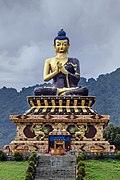
Ravangla, also known as Rabong or Ravongla, is a small town and sub-divisional headquarters in the of South , , located at an elevation of approximately 2,438 metres (8,000 feet) on a ridge at the base of Maenam Hill. As per the 2011 census, the Ravong sub-division encompassing Ravangla has a population of 47,955, with 25,331 males and 22,624 females, reflecting a predominantly rural demographic engaged traditionally in and but increasingly in . The town serves as a key transit hub connecting South Sikkim to West Sikkim and other regions, offering panoramic views of the Khangchendzonga range and access to trekking routes, monasteries, and natural sites. Historically, Ravangla has been a significant area within the former Kingdom of Sikkim, with roots in the region's Buddhist heritage dating back centuries, particularly through ancient pilgrimage sites like the Rabong Gompa Monastery complex. The local economy transitioned from agro-based activities to tourism in recent decades, boosted by infrastructure development and the establishment of major attractions such as the Buddha Park (Tathagata Tsal), constructed between 2006 and 2013 by the Sikkim government and local communities to commemorate the 2,550th birth anniversary of Gautama Buddha. This 130-foot (40-metre) statue of Sakyamuni Buddha, consecrated by the 14th Dalai Lama on 25 March 2013, stands as the town's centerpiece within the Himalayan Buddhist Circuit, drawing pilgrims and visitors with its surrounding gardens, museum, and spiral gallery depicting Buddha's life. Ravangla's cultural vibrancy is highlighted by the annual Pang Lhabsol festival, a traditional Lepcha and celebration honoring Mount Khangchendzonga as the state's guardian deity, featuring masked dances, prayers, and pageantry at local monasteries. Notable attractions include the nearby Ralang Monastery, a key Buddhist site founded in 1768; the sacred Shar Chok Bephu cave accessible via short treks; and proximity to Maenam Wildlife Sanctuary for nature trails and birdwatching. The town also provides access to Tendong Hill (elevation 8,530 feet), a mythical site for the indigenous Lepchas, and Ralong Hot Springs, enhancing its appeal as an emerging eco-tourism and adventure destination in the eastern Himalayas. Best visited from March to May or September to November, Ravangla lies about 65 kilometres south of and 20 kilometres from , making it an ideal base for exploring South Sikkim's biodiversity and spiritual landmarks.

Etymology and History

Etymology

The name Ravangla derives from the Sikkimese language, specifically the dialect spoken by the indigenous communities of the region. It is composed of three elements: "Ra," referring to wild sheep or goats; "vong," meaning a place for rearing or ; and "la," denoting a pass or . This etymology reflects the area's historical significance as a traditional route for through the Himalayan passes, where wild sheep were once reared and grazed. Alternative spellings and pronunciations of the name include Rabong, Ravongla, and Rawangla, which arise from phonetic variations in local Sikkimese and dialects. These forms highlight the linguistic fluidity in the region's oral traditions and early written records, where the term was adapted based on dialectal influences.

Historical Development

Ravangla is situated in an area with deep roots in the Buddhist heritage of the former , including ancient pilgrimage sites such as the Rabong Gompa Monastery complex, which has served as a significant spiritual center for centuries. Sikkim became a following the Anglo-Chinese Convention of 1890, which formalized British oversight of external affairs while preserving the kingdom's internal autonomy. The establishment of the Tibetan refugee settlement in Ravangla in 1978 marked a significant demographic shift, with the Sikkim government granting approximately 600 acres of land to accommodate around 1,000 refugees from , organized into seven camps to support self-sustaining agricultural and monastic communities. Sikkim's merger with in 1975 led to broader improvements across the state, integrating it more closely with national networks. This period also saw the reconstruction of Ralang Monastery between 1975 and 1981, restoring its structures as a key center of the lineage of originally established in 1730. In the early 21st century, the construction of (Tathagata Tsal) between 2006 and 2013, featuring a 130-foot statue of the , commemorated the 2550th birth anniversary of Gautama Buddha and elevated Ravangla's profile as a spiritual site. The witnessed further expansion as a tourist destination, driven by improved accessibility and cultural attractions, alongside the establishment of the National Institute of Technology (NIT) Sikkim's temporary campus in Ravangla in 2010. By 2025, preparations for NIT Sikkim's relocation to a permanent campus at Khamdong advanced, with construction approvals and land handover completed to support institutional growth.

Geography and Climate

Location and Topography

Ravangla is located in the of South Sikkim, , within the Eastern Himalayan region, at coordinates 27°17′33″N 88°21′34″E. The town lies approximately 65 km south of , the state capital, along the Gangtok-Gyalshing highway, and forms part of the Ravangla subdivision, which spans 452 km². Perched at an of 7,000 to 8,000 feet (2,134 to 2,438 m), Ravangla occupies a prominent ridge between Maenam Hill, rising to 10,300 feet (3,140 m), and Tendong Hill at 8,530 feet (2,600 m). This positioning provides panoramic vistas of the surrounding forested hills and contributes to its role as a key geographical feature in South . The topography of Ravangla is characterized by undulating ridges and slopes typical of the , with nearby valleys and streams carving through the landscape below. It is in close proximity to major peaks, including Kanchenjunga at 28,169 feet (8,586 m) to the northwest and Pandim at 21,952 feet (6,691 m), offering unobstructed views of these high-altitude formations on clear days. Historically, the ridge has served as an important pass connecting southern trade routes.

Climate and Environment

Ravangla exhibits a subtropical highland , characterized by cool summers with average temperatures ranging from 15°C to 25°C and cold winters between 0°C and 10°C. The region receives substantial annual rainfall of 2,000 to 3,000 mm, predominantly during the season from to , contributing to its lush vegetation but also posing risks of heavy downpours. Seasonally, upper areas of Ravangla experience snowfall from to , enhancing the scenic winter landscape amid sub-zero nights. and May mark the blooming season, when rhododendrons and other flourish, transforming the hills into vibrant displays before the arrives. The intense rains, however, frequently trigger landslides, disrupting connectivity and highlighting the area's geohazards. As part of the Eastern Himalayan , Ravangla supports diverse ecosystems within 's 47% forest cover, encompassing varied altitudinal zones from subtropical to alpine. The region faces significant vulnerability to , including accelerated glacial retreat in the broader , which has reduced glacier extents and altered river flows in nearby systems like the Teesta and Rangit, potentially leading to and increased flood risks as observed through 2025.

Demographics and Society

Population and Composition

As per the , the town of Ravangla recorded a of 2,282 residents. The broader Ravong subdivision, encompassing Ravangla and surrounding rural areas, had a total of 47,955 in the same , with males comprising 25,331 (52.8%) and females 22,624 (47.2%), yielding a of 893 females per 1,000 males. Data is based on the 2011 , as the 2021 Census was postponed. The district's decadal increase was 11.57% from 2001 to 2011. The age distribution in the Ravong subdivision shows the majority of residents (around 63%) falling within the working-age group of 15-59 years, consistent with broader trends in where younger cohorts dominate due to high fertility rates historically. Average household size stands at approximately 5 persons, derived from 9,646 households supporting the 2011 subdivision population. rates in the South District, which includes Ravong, were 81.42% overall in 2011 (86.55% for males and 75.61% for females). Ethnically, the population of Ravangla and its subdivision is diverse, with Nepalis of Gorkha origin forming the largest group at over 50%, followed by indigenous Lepcha and Tibetan-origin Bhutia communities, which together constitute a significant portion of the 34.4% Scheduled Tribe population. Additionally, a dedicated Tibetan refugee settlement in Ravangla houses about 1,200 individuals, contributing to the area's multicultural composition.

Languages and Communities

Ravangla exhibits linguistic diversity reflective of Sikkim's multicultural landscape, with Nepali serving as the primary among the majority population. The official languages of the region include Nepali, (also known as Sikkimese), Lepcha, and English, facilitating administration, education, and daily interactions. In areas with Tibetan refugee settlements, Tibetan is commonly used, contributing to a multilingual environment where occurs frequently in markets, homes, and social settings. The social fabric of Ravangla is woven from distinct community profiles that shape local dynamics. The Lepcha, as indigenous inhabitants, maintain traditions in local governance through their shamans, known as Bongthings, who mediate disputes and preserve cultural norms within village councils. communities exert monastic influences, with Buddhist institutions guiding ethical and communal practices, fostering a sense of spiritual cohesion. dominate agricultural activities, managing terraced farms and plantations that underpin the local economy. The Tibetan settlement, established in the 1960s following migrations from , features self-sustaining cooperatives for crafts and agriculture, alongside community schools that reinforce . Social structures in Ravangla highlight unique elements, such as matrilineal aspects in Lepcha society where often follows the mother's line, blending with patrilineal customs in property and marriage. Inter-community harmony is evident in everyday collaborations, occasionally reinforced through shared cultural events that promote mutual respect without overt conflict. According to the , ethnic comprise approximately 67% of Sikkim's population, while Lepchas and Bhutias each account for about 7-8%, patterns that mirror Ravangla's composition.

Economy

Agriculture and Local Industries

Ravangla's agricultural economy centers on cash crops suited to its hilly terrain at elevations between 6,000 and 8,000 feet, with large (Amomum subulatum) serving as a primary export-oriented . The contributes significantly to Sikkim's dominance in India's large production, which accounts for approximately 84% of the national total, cultivated under systems in shaded, forested margins at altitudes of 600 to 2,000 meters. Ginger (Zingiber officinale) is another key crop, grown alongside off-season vegetables on terraced fields that help mitigate the steep slopes characteristic of the area. These terraces, a traditional practice among local farmers, reduce soil runoff and support staple crops like and millet, which form the backbone of subsistence farming. Tea cultivation, introduced in 1969 by Sikkim's last monarch, Palden Thondup Namgyal, as a means to provide employment for Tibetan refugees, has become an integral part of the local landscape near Ravangla. The nearby Temi Tea Estate, spanning about 500 acres, exemplifies this initiative, producing high-quality orthodox teas under organic management with around 400 laborers involved. Local industries complement agriculture through handicrafts, particularly Tibetan-style carpet weaving using natural dyes and traditional motifs, alongside woodworking and carvings that draw on the region's abundant timber resources. These artisanal practices are preserved and promoted by the state Directorate of Handicrafts and Handlooms, established in 1957 to sustain ethnic arts. Small-scale dairy production arises from herding cows, goats, and occasionally yaks in the surrounding pastures, providing milk and manure for soil enrichment while integrating with mixed farming systems. Since the 2010s, organic farming has gained prominence in Ravangla, aligning with Sikkim's statewide transition to 100% organic status achieved in 2016 through policies banning chemical inputs and promoting sustainable practices. Pilot projects targeting crops like cardamom, ginger, and turmeric began around 2003 and expanded by 2010, supported by government subsidies for large cardamom farmers to enhance yields and market access. These efforts address challenges such as soil erosion, prevalent in the region's steep terrains, where terracing and agroforestry trap sediments and maintain soil fertility, preventing topsoil loss estimated at higher rates in untreated slopes. Organic methods have thus bolstered environmental resilience while securing livelihoods for over 60% of Sikkim's rural population dependent on agriculture.

Tourism and Employment

Ravangla, as a prominent tourist hub in South , plays a vital role in the region's economy, drawing visitors for its serene landscapes and proximity to major attractions. The town experiences peak tourist seasons from to May and to December, aligning with favorable weather conditions in the that facilitate outdoor activities and sightseeing. 's overall recovery post-2020 has bolstered Ravangla's influx, with the state recording over 1.6 million domestic visitors in 2023, a significant portion of which passes through or stays in key destinations like Ravangla. In 2025, 's domestic continued to surge, with over 843,000 visitors in the first five months, further boosting local economies like Ravangla's. Tourism contributes substantially to local in Ravangla, where the tertiary sector, including and related services, engages a notable share of the . Approximately 25% of the local is self-employed in and services, many of which are -related, with emerging opportunities in homestays and eco-tourism particularly benefiting women and through community-based initiatives. These efforts promote sustainable livelihoods, with self- in and services accounting for about 25% of occupations among working males. State-wide, generates jobs and supports economic diversification, transitioning from agriculture-dominant activities to service-oriented ones. Infrastructure developments, including hotels and trekking permit systems, have enhanced Ravangla's capacity to handle growing visitor numbers while emphasizing . Post-2020 policies have focused on eco-friendly practices, such as Sikkim's longstanding plastic ban—enforced since 2009 and reinforced in recovery efforts—to mitigate environmental impacts and promote responsible . revenue forms around 10% of Sikkim's gross state domestic product, with local economies like Ravangla's deriving even greater proportional benefits through direct spending on accommodations and services. Homestays, in particular, integrate agricultural products like organic teas into tourist experiences, fostering supplementary income streams.

Culture and Religion

Festivals and Traditions

Ravangla's festivals reflect the harmonious blend of its diverse ethnic communities, including Lepchas, Bhutias, and Tibetans, through vibrant celebrations that emphasize gratitude, protection, and renewal. Among the key events is Pang Lhabsol, observed annually in August or September to honor Mount Kanchenjunga as Sikkim's guardian deity, featuring masked dances such as the Pangtoed Chaam warrior performance that symbolize protection and peace. In Ravangla, this festival draws large crowds to local monasteries for rituals and cultural displays, culminating in archery contests that highlight community skill and camaraderie. Losar, the Tibetan New Year celebrated in February or March, brings families together in Ravangla for Gyalpu Losar festivities, including traditional dances, rituals, and feasts that mark the arrival of spring and renewal. Another significant occasion is Tendong Lho Rum Faat in August, a Lepcha thanksgiving festival for the harvest and the protective Tendong Hill, often involving a ceremonial trek from Ravangla to the hilltop for prayers and communal gatherings. Traditional practices during these festivals include folk dances like Singhi Chham, a lively performance by dancers in colorful costumes, accompanied by drums to invoke prosperity and ward off evil spirits. Community feasts follow rituals, featuring local cuisine such as momos and , shared among participants to strengthen social bonds. contests, a staple in events like Pang Lhabsol, test precision and are integrated with cultural performances to preserve ancestral skills. In the 2020s, preservation efforts have intensified through community-led initiatives and government support for cultural programs in Ravangla, ensuring these practices are documented and taught to younger generations via local workshops and festivals. These festivals play a crucial role in fostering unity among Ravangla's ethnic groups by providing platforms for inter-community participation and cultural exchange. Tourists are welcome to join observances respectfully, with guidelines emphasizing modest attire, prior permission for during rituals, and avoidance of disruptions to sacred proceedings, allowing visitors to experience the events while honoring local customs. Many celebrations tie briefly to nearby monasteries, where lamas lead invocations, enhancing the spiritual depth without overshadowing the communal aspects.

Religious Sites and Practices

Ravangla is home to several prominent religious sites that reflect the region's deep Buddhist heritage, particularly within the Tibetan tradition. The Ralang Monastery, located approximately 6 km from the town center in southern , serves as a key institution of the sect of and houses around 200 monks who engage in spiritual practices and preservation of monastic traditions. Nearby, the Tathagata Tsal, also known as the Buddha Park of Ravangla, features a towering 130-foot (40 m) of Shakyamuni , constructed between 2006 and 2013 at the base of Maenam Hill and consecrated by the in 2013 to mark the 2550th birth anniversary of Gautama . Complementing these larger sites are smaller Lepcha shrines and the Monastery in nearby Kewzing, which embody the indigenous animistic beliefs of the Lepcha community and their syncretic integration with Buddhist elements. Daily religious practices at these sites emphasize communal devotion and artistic expression. Monks at Ralang Monastery conduct regular prayer sessions in the main hall, adorned with intricate paintings depicting deities and Buddhist narratives, which are both preserved and occasionally created as part of monastic training. Visitors and locals alike participate in retreats, particularly around Tathagata Tsal, where the serene gardens and statue provide an ideal setting for contemplative practices amid the Himalayan landscape. In Lepcha-influenced areas, spiritual activities incorporate syncretic elements from the ancient tradition, blending animistic rituals with Buddhist invocations to honor local deities alongside figures like Guru Rinpoche. Monasteries in Ravangla play a vital role in community welfare and , functioning as centers for both spiritual and secular learning. Institutions like Ralang provide monastic schooling through programs such as Gonchoe Labtha, offering to young while fostering broader community support through welfare initiatives. Annual rituals, including pujas dedicated to Guru Rinpoche (), reinforce these ties, with ceremonies at Ralang invoking blessings for prosperity and protection, often integrating with local festivals for communal participation.

Education and Infrastructure

Educational Institutions

Ravangla hosts several primary and secondary educational institutions that serve population, including government-run schools and those catering to specific communities. The VCGL Ravangla Government Senior Secondary School provides up to the higher secondary level, offering a standard under the state system. Similarly, in Ravangla operates as a residential co-educational school for talented students from rural areas, affiliated with the and emphasizing science, , and vocational streams from Class VI to XII. The Sambhota Tibetan School, established in 1972 in the Kunphenling Tibetan Settlement, focuses on for children from the Tibetan refugee community, enrolling around 50-60 students across classes with a that includes Tibetan language and culture alongside standard subjects. At the higher education level, the National Institute of Technology (NIT) maintains a temporary in Ravangla's Barfung Block since its establishment in 2010, offering undergraduate, postgraduate, and doctoral programs primarily in engineering disciplines such as civil, , , and . The institute is operating from a temporary , with a permanent under development at Khamdong in as of 2025. The institute emphasizes and technical education, with a total enrollment of approximately 736 students as of the 2023-24 academic year. Vocational training opportunities in and are available through state-supported programs, aligning with Ravangla's tourism-driven economy and providing skills in hotel management and related services. Educational achievements in Ravangla are bolstered by state-wide initiatives, including Sikkim's goal to achieve 100% by 2027 through expanded and enrollment drives, contributing to the region's current rate of about 90.8%. Scholarships for ethnic minorities, such as those for Scheduled Tribes, Scheduled Castes, Other Backward Classes, and other marginalized groups, support access to by providing financial to economically weaker students pursuing studies from secondary to higher levels. These efforts have facilitated higher enrollment.

Transport and Connectivity

Ravangla's primary access is via road, with National Highway 10 (NH-10) serving as the main artery connecting it to major hubs in and . The town lies approximately 120 kilometers from and New Jalpaiguri (NJP), a journey that typically takes 4 to 5 hours by road due to the winding Himalayan terrain. From , the capital of , Ravangla is about 65 kilometers south, reachable in 3 to 4 hours along NH-10 and connecting state roads. Shared taxis and jeeps operate frequently from and NJP, with fares ranging from ₹300 to ₹500 per seat, while Sikkim National Transport (SNT) buses depart daily from around midday, offering a more economical option at ₹200 to ₹300. For air travel, the nearest airport is Bagdogra International Airport (IXB) in , located roughly 125 kilometers from Ravangla, with a of 4 to 6 hours via NH-10. (PYG), Sikkim's first airport inaugurated in 2018 and located about 70 kilometers northeast, has had intermittent commercial operations, most recently suspended since June 2024 with no scheduled flights as of November 2025. The road link takes approximately 2 to 3 hours, though services are weather-dependent. Prepaid taxis from Bagdogra to Ravangla cost ₹3,000 to ₹4,000 for a private vehicle. Rail connectivity relies on New Jalpaiguri Junction (NJP), the closest major station at 114 to 120 kilometers away, from where travelers can hire taxis or board connecting buses to Ravangla in about 4 hours. Within Ravangla, local transport includes shared jeeps and auto-rickshaws for navigating the town's hilly streets and accessing nearby treks, with fares starting at ₹50 for short rides. Mobile network coverage is reliable, with Airtel and offering the strongest signals across the area, supporting voice, data, and basic needs. services have expanded since 2020 through providers like Airtel Xstream and local ISPs, delivering speeds up to 40 Mbps in urban pockets of Ravangla, though rural outskirts may experience intermittent connectivity due to .

Attractions and Recreation

Natural Sites and Treks

Ravangla serves as a gateway to several pristine natural sites in South Sikkim, offering visitors opportunities to explore diverse ecosystems through trekking and . The Maenam Wildlife Sanctuary, established in 1987 and spanning approximately 35 square kilometers, is a prominent accessible via trails starting directly from Ravangla. This sanctuary features dense alpine forests and is renowned for its multi-day treks, such as the route to Maenam Peak, which typically takes about four hours uphill from Ravangla and offers panoramic vistas of the surrounding Himalayan ranges before descending to nearby Borong Village. Another key natural attraction is Tendong Hill, rising to an elevation of 8,530 feet (2,600 m) and providing sweeping views of the , including glimpses of the valley. The hill's summit, reachable by a moderate trek from nearby Damthang, showcases rolling forested landscapes and is part of the region's volcanic geological history. The area's is particularly notable, with over 50 species of orchids thriving in the moist temperate forests around Ravangla and Maenam Sanctuary. Rhododendrons, a hallmark of Sikkimese flora, bloom vibrantly from to May, influenced by the region's subtropical highland , adding splashes of color to the trails during this period. Among the fauna, the sanctuary harbors endangered species such as the , a colorful often spotted in the undergrowth, and the , which inhabits higher elevations. Other wildlife includes barking deer and leopard cats, contributing to the ecological richness of these habitats. Activities in these natural sites emphasize sustainable adventure, with guided treks mandatory for entry into protected areas like Maenam Sanctuary to ensure safety and minimize environmental impact. Permits are required from local forest authorities for overnight stays or extended hikes, promoting eco-tourism practices such as no-trace and restricted group sizes. is a popular pursuit, especially along the Maenam trails, where enthusiasts can observe over 150 Himalayan bird species with the aid of local guides equipped for ethical observation. These initiatives underscore conservation efforts, protecting the fragile while allowing immersive experiences in Ravangla's wilderness.

Cultural and Historical Landmarks

Samdruptse Hill, located approximately 22 kilometers from Ravangla in the , serves as a prominent viewpoint blending historical significance with panoramic scenic vistas of the surrounding Himalayan landscape. Known locally as the "wish-fulfilling hill," it is believed to be a and offers expansive views of the Teesta Valley and distant peaks, drawing visitors for its tied to ancient local and settlement patterns. Ralong Hot Springs, situated about 21 kilometers from near the Ralang area, feature natural sulfur-rich thermal baths renowned for their therapeutic properties, particularly in alleviating skin ailments and promoting relaxation. These springs emerge from rocky cliffs amid forested surroundings, providing a serene spot for soaking in mineral-laden waters that have been utilized traditionally as winter spas by local communities. Access involves a short 3-kilometer downhill trek from the roadhead, with no entry fee required; the best time to visit is from December to February when the waters are warmest against the cool mountain air, and operations run from 7:00 AM to 5:00 PM daily. The Barsey Rhododendron Sanctuary, accessible via routes from Ravangla through West , includes key viewpoints at elevations around 10,000 feet that showcase the region's and historical conservation efforts, offering unobstructed sights of Mount Kanchenjunga and vast blooms. Established as a in the Singalila Range bordering , it highlights the ecological heritage of Sikkim's montane forests, featuring several species of rhododendrons in pure stands, preserved since its designation in the late . Entry is free, though permits may be needed for trekking to viewpoints; the optimal visiting period is to during the flowering season, enhancing its appeal for focused on . Historical notes in Ravangla underscore the influence of Tibetan settlements, which led to the establishment of estates as a means of for refugees fleeing to . The , founded in 1969 by the on 440 acres near Ravangla, was specifically created to provide employment to these settlers, producing renowned organic black teas from clonal saplings sourced from ; though some early Tibetan-led initiatives in the Rabong area were abandoned by 1966 due to unsuitable terrain, Temi persists as Sikkim's sole estate. Visitors can explore the undulating plantations for free from March to May, when plucking season offers insights into this agricultural legacy, with operations limited to mornings from 7:00 AM to 1:00 PM. Additionally, preserved Lepcha stone carvings in the region, such as those depicting ancient motifs and footprints at historical sites like Mangbrue, reflect the indigenous Lepcha community's enduring artistic traditions dating back centuries, contributing to Ravangla's non-religious built heritage. These landmarks play a vital role in Ravangla's , attracting travelers interested in 's secular history and scenic integration. The brief ties to Tibetan settlements further contextualize Ravangla's evolution as a multicultural hub in South .

References

Add your contribution
Related Hubs
User Avatar
No comments yet.