


Community hub
Recent from talks
Contribute something
Nothing was collected or created yet.
Thermal paper
View on Wikipedia | This article has multiple issues. Please help improve it or discuss these issues on the talk page. (Learn how and when to remove these messages)
|


Thermal paper (often supplied in roll form, and sometimes referred to as an audit roll) is a special fine paper that is coated with a material formulated to change color locally when exposed to heat. It is used in thermal printers, particularly in inexpensive devices, such as adding machines, cash registers, credit card terminals and small, lightweight portable printers.
The surface of the paper is coated with a substance which changes color when heated above a certain temperature. The printer essentially consists of a transport mechanism which drags the paper across a thermal dot matrix print head. The (very small) dots of the head heat up very quickly to imprint a dot, then cool equally quickly.

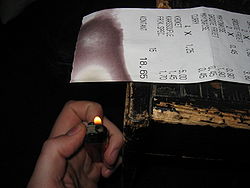
Most thermal papers' coatings turn black when heated, but coatings that turn blue or red, and multicolor coatings, are sometimes used. An unintended heat source, such as a coffee cup, can discolour the paper and obscure any printing. A fingernail rubbed quickly across the paper may generate enough heat from friction to produce a mark.
History
[edit] |
The earliest direct thermal papers were developed by NCR Corporation (using dye chemistry) and 3M (using metallic salts). The NCR technology became the market leader over time, although the image would fade rather rapidly compared with the much more expensive, but durable 3M technology.
Texas Instruments invented the thermal print head in 1965, and the Silent 700, a computer terminal with a thermal printer, was released in the market in 1969. The Silent 700 was the first thermal print system that printed on thermal paper. During the 1970s, Hewlett-Packard integrated thermal paper printers into the design of its HP 9800 series desktop computers, and integrated it into the top of the 2600-series CRT terminals as well as in plotters.
In the 1970s and early 1980s, Japanese producers, including Ricoh, Jujo, and Kanzaki, using similar dye-based chemistry, formed partnerships with barcode printer manufacturers, including TEC and Sato, and entered the emerging global bar code industry, primarily for supermarket receipt printers. U.S. producers including Appleton (NCR's license), Nashua Corporation, and Graphic Controls fought for market share. Users of pressure-sensitive label such as those made by Avery Dennison became major consumers of direct thermal label stock.
In the late 1980s and early 1990s, thermal transfer (distinct from direct thermal, and stable), laser printing, electrophotography, and, to a lesser extent, inkjet printing began to take away industrial and warehouse barcode applications due to better stability and durability of prints. Direct thermal made a strong comeback with point-of-sale receipt printing.
During 1998, Nintendo used thermal paper technology for their Game Boy Printer.
Mechanism of action
[edit]The printer essentially consists of a transport mechanism which drags the paper across a thermal dot matrix print head.[1] The (very small) dots of the head heat up very quickly to imprint a dot, then cool equally quickly.
Chemistry
[edit]Four different types of imaging chemicals are used in thermally sensitive papers: leuco dyes, developers, sensitizers and stabilizers.[2]
- Leuco dyes
- The leuco dyes used in direct thermal paper are usually triaryl methane phthalide dyes, such as Yamamoto Blue 4450, or fluoran dyes, such as Pergascript Black 2C. A third widely used leuco dye is Crystal violet lactone. Red or magenta color can be achieved with dyes such as Yamamoto Red 40. Yellow can be produced by the protonation of a triaryl pyridine, such as Copikem Yellow 37. These dyes have a colorless leuco form when crystalline or when in a pH neutral environment, but become colored when dissolved in a melt and exposed to an acidic environment.
- Developers
- Leuco dyes, in general, provide little color when melted unless they are melted in conjunction with one or more organic acids. Examples of organic acids suitable for thermochromic papers are phenols such as Bisphenol A (BPA) and Bisphenol S (BPS). Other suitable acidic materials are sulfonyl ureas such as BTUM and Pergafast 201. Zinc salts of substituted salicylic acids, such as zinc di-tert-butylsalicylate have also been commercially used as developers .
- Sensitizers
- A leuco dye and a developer, when melted together, are enough to produce color. However, the thermal threshold of the coated layer containing the colorizing components is determined by the lowest melting component of the layer. Furthermore, developers and leuco dyes often mix poorly upon melting. To optimize the colorization temperature and to facilitate mixing, a third chemical called a sensitizer is commonly added to the imaging layer. Sensitizers are commonly simple ether molecules such as 1,2-bis-(3-methylphenoxy)ethane or 2-benzyloxynapthalene. These two materials melt at approximately 100 °C, which is a practical lower limit for thermal coloration. These low-cost ethers are excellent low viscosity solvents for leuco dyes and developers, and this facilitates color formation at a well-defined temperature and with minimum energy input.
- Stabilizers
- Dyes in thermally sensitive paper are often unstable and return to their original colorless, crystalline forms when stored in hot or humid conditions.[3] To stabilize the metastable glass formed by the leuco dye, developer and sensitizer, a fourth type of material called a stabilizer is often added to thermal papers. Stabilizers often share similarities with developers and are often complex multifunctional phenols that inhibit recrystallization of the dye and developer, thereby stabilizing the printed image.
Paper stock
[edit]Papers are supplied either as rolls or (particularly for wider letter-size printers) sheets. They may have a stick-and-peel adhesive backing, for use as labels and similar purposes. Paper may be white, other colors, or transparent.
In 2006, NCR Corporation's Systemedia division introduced two-sided thermal printing technology, called "2ST".
Protective coating
[edit]Most direct thermal papers require a protective top-coating to:
- reduce fading of the thermal image caused by exposure to UV light, water, oils and fats, plasticizers, and other causes
- reduce print-head wear
- reduce or eliminate residue from the thermal coating on the thermal print heads
- provide better anchorage of flexographic printing inks applied to the thermal paper
- focus the heat from the thermal print head on the active coating.
Multicolored papers
[edit]Multicolor thermal paper first became available in 1993 with the introduction of the Fuji Thermo-Autochrome (TA) system.[4]
This was followed in 2007 by Polaroid's development of the Zink ("zero-ink") system.[5] Both of these methods rely on multi-layer coatings with three separate colorizing layers, with different methods used for independent activation of each layer.[6] The paper is used in compact photo printers. It has several layers: a backing layer with optional pressure sensitive adhesive, heat-sensitive layers with cyan, magenta and yellow pigments in colorless form, and overcoat. Zink technology allows the printing of full-color images in a single pass without requiring ink cartridges. The color addressing is achieved by controlling the heat pulse length and intensity.[7] The color-forming layers contain colorless crystals of amorphochromic dyes. These dyes form microcrystals of their colorless tautomers, which convert to the colored form by melting and retain color after resolidification.[8] The yellow layer is the topmost one, sensitive to short heat pulses of high temperature. The magenta layer is in the middle, sensitive to longer pulses of moderate temperature. The cyan layer is at the bottom, sensitive to long pulses of low temperature. The layers are separated by thin interlayers, acting as heat insulation, moderating the heat throughput.[9]
Health and environmental concerns
[edit]Some thermal papers are coated with BPA, a chemical considered to be an endocrine disruptor.[10][11] This material can contaminate recycled paper.[12][13] BPA can transfer readily to the skin in small amounts:
When taking hold of a receipt consisting of thermal printing paper for five seconds, roughly 1 μg BPA (0.2–0.6 μg) was transferred to the forefinger and the middle finger if the skin was rather dry, and about ten times more than this if these fingers were wet or very greasy. Exposure to a person who repeatedly touches thermal printer paper for about ten hours per day, such as at a cash register, could reach 71 micrograms per day, which is 42 times less than the present tolerable daily intake (TDI).[14]
The chemical bisphenol A (BPA) is used for thermal paper coatings because of its stability and heat-resistance. This allows inkless printing for receipts from cash registers. People who often are in contact with BPA coated receipts do have a higher level of BPA in their bodies than people with average contact. Therefore, the New York Suffolk County signed a resolution to ban BPA in thermal receipt papers. Violation of this new law, the "Safer Sales Slip Act", involves a US$500 penalty. The law became effective beginning January 3, 2014.[15]
From about 2013 bisphenol S (BPS), an analog of BPA that has been shown to have similar in vitro estrogenic activity to BPA,[16][17] has been used in thermal paper coatings. The recycling of thermal paper coated with BPS can introduce BPS into the cycle of paper production and cause BPS contamination of other types of paper products.[13] Newer formulations are available which use either urea-based compounds or vitamin C, and are "phenol free".[18][19] They can have comparable or even improved print quality, but cost more.
References
[edit]- ^ "What Is Thermal Paper?". hassan-brothers.ae. Retrieved 2024-10-19.
- ^ Chemistry and Applications of Leuco Dyes, ed. Ramaiah Muthyala, Plenum Press, New York, pp. 125-203 (1997)
- ^ "How to properly store thermal paper". 30 January 2017.
- ^ U. S. Patent 5,216,438, Direct color thermal printing method for optically and thermally recording a full-color image on a thermosensitive recording medium, by S. Nakao, N. Katsuma and A. Nagata, Fuji Photo Film Co. (1993)U.S. patent 5,216,438
- ^ U. S. Patent 7,166,558, Thermal imaging system, Bhatt et al., (2007) U.S. patent 7,166,558
- ^ U. S. Patent 7,166,558, Thermal imaging system, Bhatt et al., (2007).
- ^ "How Ink-free Mobile Photo Printers Work". howstuffworks.com. 24 June 2008.
- ^ Peter Bamfield; Michael G. Hutchings (2010). Chromic Phenomena: Technological Applications of Colour Chemistry. Royal Society of Chemistry. p. 114. ISBN 978-1-84755-868-8.
- ^ "THERMAL IMAGING SYSTEM". freepatentsonline.com.
- ^ Babu, S., Uppu, S. N., Martin, B., Agu, O. A., & Uppu, R. M. (2015). "Unusually high levels of bisphenol A (BPA) in thermal paper cash register receipts (CRs): development and application of a robust LC-UV method to quantify BPA in CRs". Toxicology Mechanisms and Methods. 25 (5): 410–6. doi:10.3109/15376516.2015.1045661. PMID 26024012. S2CID 20335285.
{{cite journal}}: CS1 maint: multiple names: authors list (link) - ^ Liao C, Kannan K (August 2011). "High levels of bisphenol A in paper currencies from several countries, and implications for dermal exposure". Environ. Sci. Technol. 45 (16): 6761–8. Bibcode:2011EnST...45.6761L. doi:10.1021/es200977t. PMID 21744851.
- ^ Fukazawa h, H. K.; Hoshino, K.; Shiozawa, T.; Matsushita, H.; Terao, Y. (2001). "Identification and quantification of chlorinated bisphenol a in wastewater from wastepaper recycling plants". Chemosphere. 44 (5): 973–979. Bibcode:2001Chmsp..44..973F. doi:10.1016/S0045-6535(00)00507-5. PMID 11513431.
- ^ a b Pivnenko, Kostyantyn; Pedersen, G.A.; Eriksson, E.; Astrup, T.F. (2015). "Bisphenol A and its structural analogues in household waste paper" (PDF). Waste Management. 44: 39–47. Bibcode:2015WaMan..44...39P. doi:10.1016/j.wasman.2015.07.017. PMID 26194879. S2CID 217938141.
- ^ Biedermann, Sandra; Tschudin, Patrik; Grob, Koni (September 2010). "Transfer of bisphenol A from thermal printer paper to the skin". Analytical and Bioanalytical Chemistry. 398 (1): 571–576. doi:10.1007/s00216-010-3936-9. PMID 20623271. S2CID 7412010.
- ^ "BPA Cash Register Roll Ban Enforced In Suffolk County". Retrieved 6 December 2015.
- ^ Viñas, R.; Watson, C. S. (2013). "Bisphenol S Disrupts Estradiol-Induced Nongenomic Signaling in a Rat Pituitary Cell Line: Effects on Cell Functions". Environmental Health Perspectives. 121 (3): 352–8. Bibcode:2013EnvHP.121..352V. doi:10.1289/ehp.1205826. PMC 3621186. PMID 23458715.
- ^ Ji, K.; Hong, S.; Kho, Y.; Choi, K. (2013). "Effects of Bisphenol S Exposure on Endocrine Functions and Reproduction of Zebrafish". Environmental Science & Technology. 47 (15): 8793–8800. Bibcode:2013EnST...47.8793J. doi:10.1021/es400329t. PMID 23806087.
- ^ "Phenol Free Thermal Paper Rolls". thermalroll.com. 6 January 2022.
- ^ "The Surprising Benefits and Pitfalls of BPA-Free Thermal Paper Rolls". paperrollproducts.com. 31 May 2017.
External links
[edit]- Texas Instruments-Computers & Software and Industrial Controls
- Silent 700 Electronic Data Terminals, 1976 (PDF) (archived 1 October 2007)
- 2ST Two-Sided Thermal Printing National Cash Register (archived 24 September 2011)
| History |
| ||||||||
|---|---|---|---|---|---|---|---|---|---|
| Types of paper |
| ||||||||
| Materials | |||||||||
| Specifications | |||||||||
| Manufacture and process | |||||||||
| Paper industry | |||||||||
| Uses | |||||||||


Thermal paper
View on GrokipediaThermal paper is a specialized fine paper coated with a heat-sensitive chemical layer that undergoes a color-changing reaction upon localized heating, enabling inkless printing in thermal devices.[1][2] The coating typically comprises a leuco dye, a developer such as bisphenol A (BPA) or its alternatives, and a sensitizer, where heat causes the developer to melt and react with the dye, forming a visible image through chromogenic development.[3][1] Introduced commercially in the 1960s by companies including 3M and NCR Corporation, thermal paper marked a shift toward direct thermal printing technology, initially leveraging dye chemistry and metallic salts for image formation without ribbons or toners.[4][5] Its adoption surged with the rise of inexpensive thermal printers for adding machines, cash registers, and credit card terminals, offering cost-effective, high-speed output for receipts, labels, tickets, and shipping documentation.[6][7] While prized for durability, fade resistance in protected forms, and efficiency in point-of-sale and logistics applications, thermal paper has drawn empirical scrutiny over dermal exposure risks from its chemical developers.[8][9] BPA, historically prevalent in coatings, facilitates skin absorption during handling, with studies linking it to endocrine disruption, reproductive effects, and potential carcinogenicity, prompting regulatory actions like the European Union's 2020 ban on its use in thermal paper above trace levels.[10][9][11] Replacements such as bisphenol S (BPS) have emerged, yet research indicates similar toxicological profiles, including hormone-mimicking activity, underscoring ongoing causal concerns in occupational and consumer exposure pathways.[12][13]
History
Invention and Early Development
The basic technology for direct thermal paper, which produces visible images through heat-induced chemical reactions without inks or ribbons, was invented by scientists at the NCR Corporation's laboratories in Dayton, Ohio, in the early 1960s.[14] NCR's formulation relied on leuco dye chemistry, where heat causes a color-forming reaction between a dye precursor and a developer, enabling compact, low-maintenance printing suitable for early data terminals and receipts.[4] Concurrently, 3M developed an alternative approach using metallic salts for thermal sensitivity, though NCR's dye-based system proved more dominant in initial applications due to its stability and cost-effectiveness.[4] These innovations addressed limitations of prior mechanical printing methods, such as noise and maintenance, by leveraging heat-sensitive coatings on paper stock.[6] A pivotal advancement occurred in 1965 when Texas Instruments, led by Nobel laureate Jack Kilby, invented the thermal print head using semiconductor technology, which precisely controlled heat application via resistive elements to form images on the paper.[15] This hardware complemented the paper's chemistry, enabling reliable non-impact printing. Early thermal paper required precise temperature control to avoid unintended fading or background darkening from ambient heat or friction, prompting iterative refinements in coating formulations during the mid-1960s.[14] Appleton Papers emerged as an early manufacturer, producing commercial thermal paper stocks optimized for these print heads.[6] By 1969, practical integration was demonstrated with Texas Instruments' Silent 700 terminal, one of the first devices to employ thermal printing for quiet, portable data output in business and telemetry settings.[16] This marked the transition from laboratory prototypes to viable products, though initial adoption was limited by paper sensitivity issues and the need for specialized hardware. Early development focused on enhancing image permanence and reducing costs, setting the stage for broader use in point-of-sale systems by the 1970s.[4]Commercial Adoption and Expansion
Direct thermal paper saw initial commercial adoption in the late 1960s following developments by companies such as NCR Corporation and 3M, which introduced dye-based and metallic salt-based formulations, respectively.[4][6] Texas Instruments contributed the thermal print head in 1965, enabling the release of the Silent 700 data terminal in 1969, one of the first widespread applications for thermal printing in office and computing environments.[4][15] Expansion accelerated in the 1970s as thermal paper integrated into point-of-sale (POS) systems, replacing ink-based methods in retail for faster, quieter receipt printing without consumables like ribbons.[17] Fax machines also adopted the technology during this period for efficient document transmission, broadening its use beyond terminals to telecommunications.[18] By the 1980s and 1990s, commercial penetration extended to labels, tickets, and shipping documentation across industries including transportation, logistics, and healthcare, driven by the technology's reliability and cost savings in high-volume printing scenarios.[18][19] This growth was further propelled by the rise of automated systems in supermarkets and ATMs, where thermal paper's heat-sensitive properties supported compact, maintenance-free printers.[20][21]Recent Advancements and Shifts
The thermal paper industry has undergone significant chemical reformulations since 2020, primarily driven by regulatory pressures to eliminate bisphenol A (BPA), bisphenol S (BPS), and phenolic developers due to their classification as endocrine disruptors. In the United States, California's Proposition 65 and similar mandates in Washington state have accelerated the transition, with mills reporting intensive reformulation efforts as of January 2025 to produce non-phenolic papers compliant with these rules.[22][23] These shifts address evidence from studies showing BPS exhibits toxicity profiles akin to BPA, including hormonal interference, prompting a move beyond mere BPA labeling to fully alternative systems.[13][24] Innovations in developer chemistry now emphasize urea-based or proprietary non-bisphenol alternatives, such as Pergafast 201, which maintain thermal sensitivity without phenolic compounds, though at higher production costs.[25] Some manufacturers have introduced physically imaged papers, like Blue4est®, that rely on mechanical or non-chemical activation for printing, eliminating chemical leaching risks entirely and enabling recyclability in standard paper streams.[26] Usage of bisphenol-containing receipts among major retailers declined from 93% in 2017 to 80% in 2022, reflecting broader adoption of these alternatives amid recycling contamination concerns.[27] Sustainability-focused advancements include linerless thermal labels, which reduce waste by eliminating silicone backing paper and providing up to 40% more printable length per roll, alongside substrates from recycled or plant-based materials.[28] These developments coincide with enhanced paper properties, such as greater heat sensitivity and fade resistance, supporting applications in smart packaging and durable labels despite competition from digital receipts.[29] The global thermal paper market, valued at over USD 5.18 billion in 2025, is projected to grow at a 4.8% CAGR to USD 8.28 billion by 2035, driven by packaging demand rather than traditional receipt volumes.[30]Mechanism of Operation
Thermal Reaction Fundamentals
The thermal reaction in direct thermal paper produces images through localized heat application to a specialized coating, inducing a chemical transformation without inks or toners. When the paper passes under a thermal printhead, selective heating—typically at temperatures between 120°C and 200°C for durations of milliseconds—activates the coating's components, resulting in a color change from colorless to dark (often black or blue-black).[3] This process exploits the thermosensitive properties of leuco dyes, which exist in a lactone (colorless) form at room temperature but convert to a resonant, colored quinoid structure upon reaction.[3][31] At the molecular level, heat facilitates protonation of the leuco dye by a co-reactive developer, a weak acid that donates a hydrogen ion, stabilizing the dye in its colored state through altered electron delocalization.[3][32] Sensitizers in the coating lower the melting point (often to around 50-100°C), enabling fluidic mixing of reactants that would otherwise remain segregated in a solid matrix, thus initiating the reaction at printhead temperatures.[33] The reaction's irreversibility under standard conditions stems from the thermodynamic favorability of the protonated complex, though exposure to solvents, abrasion, or prolonged heat can destabilize it, leading to fading.[34] This mechanism contrasts with photochemical or pressure-sensitive systems by relying solely on thermal energy to drive the endothermic proton transfer and subsequent chromophore formation, achieving resolutions up to 300-600 dpi due to the precise control of heat dots (typically 0.1-0.2 mm in size).[3] Empirical studies confirm the reaction's efficiency, with image density correlating linearly to applied energy above a threshold of approximately 0.5-1.0 mJ per dot, beyond which saturation occurs.[35] Stabilizers may be incorporated to modulate reaction kinetics, preventing premature activation from ambient conditions while ensuring rapid response (under 10 ms) during printing.[31]Integration with Printing Systems
Thermal paper primarily integrates with direct thermal printing systems, where a linear array of heating elements in the printhead applies precise, localized heat—typically ranging from 150°C to 300°C for durations of milliseconds—to activate the chemical coating on the paper, forming visible images without ink, toner, or ribbons.[36][37] This process relies on the paper's thermosensitive layer, which undergoes a color-forming reaction when heated, enabling high-speed printing at rates up to 300 mm per second in modern systems.[38] In these printers, integration involves mechanical components such as a stepper motor-driven platen roller that advances the paper past the printhead at controlled speeds, ensuring synchronization between paper feed and thermal activation to produce sharp, line-by-line images with resolutions often exceeding 200 dpi.[39][40] The printhead's resistive elements, numbering in the thousands per inch, are selectively energized via electronic drivers based on digital input, allowing compatibility with standard interfaces like USB, Bluetooth, or Ethernet in point-of-sale (POS), label, and receipt applications.[41] Compatibility demands specific matching of paper dimensions, core sizes, and thermal sensitivity grades (e.g., standard or high-sensitivity formulations) to the printer model, as mismatches can lead to jamming, uneven heating, or faded prints; for instance, paper widths from 57 mm to 112 mm are common for receipt printers, while thicker stocks suit label applications.[42][43] Direct thermal paper is incompatible with inkjet or laser printers, which require absorbent substrates and may inadvertently activate the coating through frictional heat or fuser units, resulting in artifacts or damage.[44][45] While thermal transfer printers use ribbon-based media for durable, heat-resistant outputs, direct thermal paper can sometimes be processed in transfer modes without ribbon for short-term use, though this yields suboptimal longevity and resolution due to the absence of pigment transfer.[46] Integration extends to hybrid systems, where thermal printers incorporate sensors for paper-end detection or gap/notch sensing in labels, enhancing automation in industrial environments like shipping and inventory management.[5]Chemical Composition
Dye and Developer Systems
Thermal paper employs a dye-developer system where a leuco dye, initially colorless, reacts with a developer under localized heat to form a visible colored image through protonation and structural rearrangement of the dye molecule.[3] The leuco dye typically exists in a lactone or spiropyran form that opens or shifts upon receiving a proton from the acidic developer, producing intense coloration such as black, blue, or red depending on the dye selected.[3] This reaction requires heat exceeding the melting point of a co-formulated sensitizer, which facilitates molecular mobility but is distinct from the core dye-developer interaction.[3] Common leuco dyes include fluoran derivatives like ODB-2 (2-anilino-6-dibutylamino-3-methylfluoran) for black imaging and Black 305 for versatile shades, alongside crystal violet lactone (CVL) historically used for blue-violet output.[3] These dyes are selected for their high sensitivity, sharp melting behavior, and stability in the unreacted state, enabling rapid color development at temperatures around 80–120°C in printing applications.[34] Developers are phenolic or acidic compounds that act as proton donors, with bisphenol A (BPA) dominating formulations until the early 2010s due to its efficacy in yielding dark, stable images.[47] Health concerns over BPA's endocrine-disrupting potential prompted regulatory scrutiny and industry shifts; by 2023, bisphenol S (BPS) emerged as the predominant alternative, detected in 85% of analyzed thermal receipts, followed by Pergafast 201 (a urea-urethane compound) in 12%.[13][48] These substitutes maintain comparable reactivity but vary in toxicity profiles, with BPS showing similar estrogenic activity to BPA in some assays, while non-bisphenol options like Pergafast 201 offer potentially lower bioaccumulation risks.[47][49] Despite transitions, trace BPA persists in about 1% of products, reflecting incomplete global phase-outs.[13]Sensitizers, Stabilizers, and Additives
Sensitizers in thermal paper coatings function primarily to reduce the activation temperature required for the color-forming reaction between leuco dyes and developers, thereby enabling efficient printing at lower heat levels and improving image sharpness and speed.[3] These compounds act as solvents that facilitate proton transfer and lower the melting point of the dye-developer mixture without participating directly in the chromogenic process.[3] Common examples include 2-(phenylmethoxy)naphthalene (BON, CAS 613-62-7), which has a melting point of at least 97°C and purity typically exceeding 99%, and diphenyl sulfone (DPS, CAS 127-63-9).[50] [3] Other sensitizers encompass aromatic ethers and esters, such as 1,2-bis[(4-chlorophenyl)methyl] ethanedioic acid ester (CAS 19829-42-6).[51] [3] Stabilizers are incorporated to maintain the stability of the colored complex formed during printing, preventing reversion to the colorless state by inhibiting dye-developer separation or recrystallization.[52] These additives also protect against environmental degradation, such as fading from exposure to light, heat, or moisture, thereby extending image longevity.[53] Phenolic compounds serve as a key class of stabilizers, often functioning as polar protic solvents that lock the dye in its ring-closed, colored form.[32] [52] In some formulations, stabilizers contribute to forming a metastable glass phase with the dye, developer, and sensitizer, enhancing resistance to unintended color changes.[54] Additional additives in the thermal coating layer include binders and fillers that support coating integrity and performance. Binders such as polyvinyl alcohol (PVA) or latex emulsions adhere the active chemicals to the paper substrate, ensuring uniform dispersion and durability during handling and printing.[3] Fillers like kaolin clay or calcium carbonate are used to improve opacity, smoothness, and cost-efficiency without interfering with the thermal reaction.[55] Sizing agents, often wax emulsions, provide water resistance and prevent excessive ink absorption in hybrid applications, while dispersants aid in even chemical distribution during manufacturing.[55] These components collectively optimize the coating's mechanical properties and print quality, with formulations adjusted based on specific end-use requirements such as fade resistance or speed.[3]Evolution of Chemical Alternatives
Thermal paper initially relied on bisphenol A (BPA) as the primary color developer, reacting with leuco dyes under heat to produce visible prints, a formulation dominant since the late 20th century when thermal printing expanded commercially.[13] BPA's effectiveness stemmed from its phenolic structure, enabling efficient proton donation to dyes at temperatures around 80–120°C, but dermal absorption studies from the 2010s highlighted its endocrine-disrupting potential, prompting regulatory scrutiny.[9] By the early 2010s, BPA concentrations in receipts averaged 10–20 mg/g, correlating with occupational exposure risks for cashiers.[47] Regulatory actions accelerated alternatives' development; the U.S. EPA's 2014 Design for the Environment assessment evaluated BPA substitutes, identifying bisphenol S (BPS) as a viable phenolic replacement due to similar reactivity and thermal stability, though with higher melting points requiring adjusted sensitizers like diphenyl sulfone.[56] [3] BPS adoption surged, comprising up to 80% of U.S. thermal receipts by 2017 alongside residual BPA, as it maintained print sensitivity without immediate performance trade-offs.[57] However, BPS exhibited comparable endocrine activity in vitro and migration from paper, undermining its safety profile despite structural modifications like sulfone substitution.[58] By the late 2010s, BPS faced parallel criticisms, spurring non-bisphenol developers; usage of phenol-free formulations rose from 5% of U.S. receipts in 2017 to 16% in 2022, often employing urea-based compounds or ascorbyl palmitate (vitamin C derivatives) for proton transfer without phenolic rings.[13] [59] These alternatives prioritize lower toxicity, with EPA hazard evaluations favoring options like 2,4-dihydroxybenzophenone for reduced bioaccumulation, though they demand optimized sensitizers to compensate for slower reaction kinetics.[47] European assessments, such as the Dutch RIVM's 2018 review, tested seven phenolic alternatives but highlighted non-phenolics' edge in dermal safety, albeit with potential image stability issues under humidity.[49] Ongoing shifts include bio-based "green" developers like lignin-derived monomers or tannic acid, explored in research since 2021 for sustainable reactivity, though commercial scalability lags due to cost premiums of 20–30% over BPS systems.[60] State-level bans, such as Washington's 2026 prohibition on BPS, further incentivize phenol-free papers, which now integrate stabilizers to mitigate fading rates observed in early non-bisphenol trials (up to 20% density loss after 6 months).[61] While these evolutions reduce bisphenol prevalence—dropping combined BPA/BPS from 93% to 80% in sampled receipts by 2022—residual challenges persist in ensuring equivalent print durability without reverting to hazardous sensitizers.[27]Paper Stock and Variants
Base Paper Substrates
The base paper substrate forms the foundational structural layer of thermal paper, offering mechanical strength, dimensional stability, and a uniform surface for adhering thermal coatings. It is predominantly produced from chemical wood pulp—either bleached hardwood or softwood fibers—via processes that yield wood-free paper, characterized by high purity and smoothness to support precise heat-induced imaging without defects from fiber impurities or surface irregularities.[62][63][64] This substrate is engineered for compatibility with thermal printing by incorporating fillers like calcium carbonate for opacity and calendering to refine surface texture, ensuring even heat transfer and coating adhesion while resisting premature chemical interactions. Manufacturers select base papers with basis weights typically suited to end-use demands, prioritizing tensile strength to endure rolling, cutting, and handling in high-volume applications such as point-of-sale receipts.[36][65][66] Although cellulose-based wood pulp dominates for its cost efficiency and print quality, synthetic alternatives like polyester films serve as substrates in specialized thermal papers requiring superior resistance to moisture, chemicals, or abrasion, as in industrial labels exposed to harsh environments. These variants maintain similar smoothness but offer extended longevity, though they increase material costs by up to 50% compared to standard paper bases.[1][67]Coatings and Surface Treatments
Thermal paper coatings primarily consist of a multi-layered application on the base substrate to enable heat-sensitive imaging and enhance durability. The precoat layer, often applied first, serves to smooth the base paper surface by filling surface voids and controlling porosity, providing a consistent foundation that improves the uniformity and adhesion of subsequent layers.[36] The core thermal coating layer contains the heat-activated chemicals—such as leuco dyes, developers, and sensitizers—that produce the visible image upon heating, with formulations designed for specific activation temperatures around 100°C to balance sensitivity and stability.[68] Over this, a topcoat or protective layer is frequently applied to shield the thermal image from environmental degradation, including abrasion, moisture, oils, and ultraviolet light exposure.[69] This topcoat, composed of polymers or resins, can extend image archival life up to 25 years under controlled conditions by preventing premature chemical reactions.[70] Rear-side coatings may also be used to improve handling, prevent curling, or enable two-sided printing in specialized variants.[36][71] Surface treatments complement these coatings by enhancing print quality and mechanical properties. Such treatments minimize irregularities that could cause uneven heat transfer, ensuring consistent density in printed outputs.[72] In high-durability applications, additional treatments like corona discharge may be employed to improve wettability and coating adhesion, though these are less common in standard thermal paper production.[73] The choice of treatments depends on end-use requirements, with topcoated papers preferred for environments involving chemical exposure or extended storage to mitigate fading risks.[63]Specialized Types (e.g., Multicolor, Adhesive)
Multicolor thermal paper incorporates specialized heat-sensitive coatings that produce hues beyond the standard black, such as blue, red, or dual tones, by employing distinct leuco dyes or multi-layer structures activated at varying temperatures.[74] For instance, dual-color variants feature a double-layer thermal-sensitive design, where selective heating reveals one color at lower temperatures (e.g., black) and another at higher ones (e.g., red), enabling basic differentiation in printed outputs without additional inks.[74] This technology, developed for applications requiring visual alerts or categorization, maintains compatibility with standard direct thermal printers but requires precise control of printhead temperatures to achieve consistent color separation.[75] Adhesive thermal paper, often termed sticky-back or linerless thermal labels, integrates a pressure-sensitive adhesive backing directly onto the heat-sensitive substrate, eliminating the need for separate liners and reducing waste in high-volume printing.[76] These variants are produced by applying adhesive formulations compatible with thermal coatings, ensuring the heat activation does not compromise bond strength, and are commonly used in point-of-sale labeling for quick-service environments like drive-thrus or food prep, where rolls can be peeled and applied immediately post-printing.[77] Durability enhancements, such as waterproofing or resistance to fading, are achieved through top coatings, making them suitable for outdoor or humid conditions, though exposure to prolonged heat or chemicals can degrade both imaging and adhesion.[78] Other specialized forms include perforated thermal paper for easy tear-off in ticketing and self-voiding variants that display security patterns upon tampering attempts, leveraging reactive chemicals in the coating to prevent fraud in financial or access control applications.[79] These adaptations prioritize functionality over standard receipt use, with manufacturing adjustments like reinforced substrates to withstand mechanical stress during dispensing.[80]Manufacturing Process
Production Stages
The production of thermal paper begins with pulp manufacturing, where virgin pulp is produced from wood fibers to form the foundational material, ensuring the necessary purity and strength for subsequent coatings. This stage aligns with standard papermaking practices and is typically handled by integrated producers to avoid contaminants from recycled materials.[81] Base paper production follows, converting the pulp into uncoated freesheet or jumbo rolls, often lightweight variants weighing around 50-60 gsm, using paper machines to form a uniform web that is then dried and wound. This step shares equipment and processes with non-thermal paper production, emphasizing smoothness and absorbency for optimal coating adhesion.[81] Coating constitutes the specialized phase, where the base paper is fed into an off-machine coater to apply a thermal-sensitive layer comprising leuco dyes, developers (such as bisphenol A or alternatives), sensitizers, and binders in a water-based slurry, typically at speeds of 80-120 m/min and controlled temperatures of 20-25°C to achieve uniform thickness of 4-6 g/m². An optional pre-coat or primer layer may precede this to enhance surface smoothness and protect print heads, followed by the primary thermal coat applied via methods like simultaneous two-layer coating for efficiency.[82][81][83] Drying occurs immediately after coating, utilizing hot air, infrared, or UV methods to evaporate solvents and stabilize the reactive chemicals, preventing premature color development while maintaining coating integrity, with parameters calibrated to avoid thermal damage.[82][84] An optional protective top coat is then applied over the thermal layer to improve durability, resistance to abrasion, oils, and fading, using similar coating and drying techniques, extending shelf life and print stability.[82] Final processing includes supercalendering to impart gloss and smoothness (achieving Bekk smoothness values of 500-1000 seconds), followed by slitting and rewinding jumbo rolls into narrower widths for converters, ensuring flatness and tension control to minimize defects like edge cracks.[81][84]Quality Control and Specifications
Quality control in thermal paper manufacturing ensures uniformity in coating application, thermal sensitivity, and print durability to meet end-use requirements such as fade resistance and legibility in receipts or labels. Manufacturers perform in-line inspections during production stages like coating and slitting to detect defects such as uneven thermal layer distribution or impurities, using automated optical systems for real-time monitoring.[72] Post-production lab testing verifies compliance with specifications, including dynamic thermal response uniformity assessed via standardized methods that measure print density across paper lots under controlled heat exposure.[85] Key specifications encompass physical properties like grammage, typically ranging from 50 to 80 g/m² and measured according to ISO 536, which determines paper weight and influences roll yield and handling stability.[86] Thickness, often 50 to 100 microns per ISO 534, affects printer compatibility and jam resistance, with tighter tolerances (e.g., ±5 µm) ensuring consistent feed in high-speed devices.[87] Brightness exceeds 88% under ISO 2470 to enhance contrast in printed images, while smoothness, evaluated via Bekk units, minimizes print head wear and supports high-resolution barcodes.[86] Thermal performance metrics include sensitivity thresholds for activation at 60-90°C and image stability tested against environmental factors like humidity and UV exposure, with top-coated variants required to retain legibility for at least 5-7 years under archival conditions.[66] Testing protocols for quality assurance involve scratch assessments to confirm active thermal coating—where fingernail abrasion produces visible marks without paper damage—and print trials evaluating density uniformity and resistance to fading via accelerated aging simulations.[88] Tensile strength in machine (MD) and cross (CD) directions, along with moisture content limited to 6.5 ±1% per ISO 287, prevents warping or brittleness during storage and use.[86] Non-conforming lots are rejected based on these empirical thresholds, prioritizing consistency over volume to mitigate field failures like ghosting or void prints..pdf)Applications
Retail and Point-of-Sale Uses
Thermal paper serves as the primary medium for generating receipts in point-of-sale (POS) systems across retail settings, including supermarkets, convenience stores, restaurants, and gas stations. These systems employ direct thermal printers, which apply heat from a printhead to activate the paper's chemical coating, producing text and barcodes without ink or ribbons.[89] This method enables rapid transaction processing, with printers achieving speeds up to 300 mm per second in modern models.[90] In the United States, thermal receipts accounted for 83% of the over 117 billion retail transactions in 2023, underscoring the technology's dominance in documenting sales.[91] Globally, retail applications represent approximately 36.1% of thermal paper consumption revenue as of 2024.[92] The paper's 80 mm or 57 mm widths are standard for POS rolls, often featuring end-of-roll indicators like red lines to alert merchants to replacements.[93] Key operational benefits include low maintenance due to the absence of ink cartridges, reducing downtime and costs by up to 50% compared to impact printers.[94] Printing is silent and produces high-contrast, fade-resistant images under normal conditions, lasting 5-7 years when stored properly away from heat and light.[95] Versatility extends to integrating with electronic shelf labels and self-service kiosks, enhancing efficiency in high-volume environments like fast-food chains.[96] Adoption persists despite digital alternatives, driven by consumer preference for physical receipts for returns and warranties, with over 60% of global retail receipts still thermal-printed.[97] However, image stability varies; exposure to PVC plastics or prolonged heat can cause fading within months, prompting use of stabilized formulations in premium POS paper.[98]Labels, Tickets, and Industrial Applications
Thermal paper finds widespread application in label production due to its ability to produce high-contrast, durable prints without inks or ribbons, facilitating quick on-demand labeling in dynamic environments. In logistics and shipping, direct thermal labels are commonly used for barcode and address printing on packages, enabling efficient tracking and inventory management; for instance, thermal printers support real-time generation of scannable codes that integrate with supply chain systems.[99][100] Healthcare applications include pharmacy and test tube labels, where thermal paper's resistance to smudging and compatibility with small-format printers ensure accurate patient and specimen identification.[101] Tickets printed on thermal paper are prevalent in scenarios requiring immediate, portable issuance, such as parking enforcement and event access control. Parking tickets benefit from thermal paper's weather resistance and smudge-free output, which maintains legibility in outdoor conditions without fading from handling or moisture exposure; systems like pay-and-display machines often use specialized thermal rolls for this purpose.[102][103] In entertainment and transportation, thermal tickets serve for admission to events, gaming, lotteries, and boarding passes, leveraging the paper's heat-sensitive coating for compact, high-volume printing from kiosks or mobile devices.[104][105][106] Industrial uses of thermal paper extend to manufacturing and logistics workflows, where it supports continuous-form documents like invoices, waybills, and rental agreements in transportation hubs. In warehousing, thermal labels aid in product identification and assembly line tracking, reducing operational delays through fast, error-resistant printing that withstands moderate handling.[107][108] The material's cost-effectiveness—eliminating the need for toners or maintenance-intensive printers—drives adoption in high-throughput settings, with global thermal paper demand in logistics projected to contribute to market growth from USD 4.08 billion in 2024 onward, reflecting its reliability for barcode-heavy operations.[21][99]Performance and Economic Benefits
Key Advantages
Thermal paper enables direct thermal printing, which eliminates the need for ink, toner, or ribbons, significantly reducing material costs compared to traditional impact or inkjet methods.[109][110] This results in lower per-print expenses, particularly for high-volume applications like receipts and labels, where operational savings can accumulate substantially over time.[111][112] Printing speeds with thermal paper exceed those of many alternatives, often reaching rates suitable for point-of-sale environments without compromising output volume.[113][114] The process generates minimal noise due to the absence of mechanical impacts or motors associated with ribbon-fed printers, enhancing usability in quiet retail settings.[115] Thermal paper produces high-resolution images through heat-activated chemical reactions, yielding crisp text and barcodes that scan reliably without smudging from initial handling.[2][113] Printers compatible with it feature fewer moving parts, leading to reduced maintenance requirements and downtime, which supports consistent performance in demanding operational contexts.[114][116] For short-term uses, thermal paper offers resistance to environmental factors like moderate moisture better than untreated bond paper, minimizing reprints and waste in transient documentation.[93] This combination of attributes contributes to overall economic efficiency by streamlining workflows and lowering total ownership costs for compatible systems.[63][117]Limitations and Mitigation Strategies
Thermal paper exhibits several limitations, primarily related to chemical exposure risks from bisphenol-based developers like bisphenol A (BPA) and its common substitute bisphenol S (BPS). These compounds enable the heat-sensitive color change but can transfer to skin during handling, with dermal absorption rates increased by factors such as hand sanitizers or moist conditions, leading to estimated occupational exposures of up to 1,303 ng BPA per day—substantially higher than the general population baseline of 17.5 ng per day.[118][9] Empirical studies in real-world settings, such as cafeteria receipt handling, confirm measurable BPA transfer via direct contact, hand-to-mouth transfer, and indirect surface contamination.[119] BPA concentrations in thermal paper vary widely, from 0.211 mg/g to 26.3 mg/g, contributing to median population intakes of approximately 445 ng per day from receipts alone.[120][121] Print durability represents another constraint, as thermal images fade over time due to exposure to heat, ultraviolet light, moisture, or chemical agents like oils and plastics, often rendering documents illegible within months to a few years without protective measures—unsuitable for long-term archival needs.[27] Environmentally, the silicone or clay coatings hinder recycling compatibility, directing most thermal waste to landfills where bisphenols may leach into ecosystems.[122] Mitigation strategies include regulatory restrictions, such as the European Union's prohibition on BPA concentrations exceeding 0.02% by weight in thermal paper since January 2020, which has prompted shifts toward alternatives.[123] BPA-free formulations predominate in markets like the U.S., where BPS remains the primary replacement (used in roughly 80% of receipts as of 2022), though BPS exhibits structural similarities to BPA and potential endocrine-disrupting effects, underscoring the need for further scrutiny.[13] Non-bisphenol developers, including urea-based or phenolic alternatives, have increased from 5% to 16% of U.S. receipts between 2017 and 2022, offering reduced toxicity profiles while maintaining print functionality.[13] Emerging phenol-free papers employ physical rather than chemical reactions for imaging, minimizing endocrine risks.[124] Practical measures encompass behavioral adjustments like wearing gloves during frequent handling, avoiding receipt contact with food, and washing hands post-exposure to limit dermal uptake.[118] For longevity, applying UV-protective laminates or storing prints in cool, dark environments can extend readability, though these add costs.[27] Broader adoption of digital receipts and email alternatives reduces overall paper dependency, eliminating chemical exposure pathways entirely.[24]Health Considerations
Exposure Routes and Empirical Data
The primary route of exposure to chemicals in thermal paper, such as bisphenol A (BPA) and its alternatives like bisphenol S (BPS), is dermal contact during handling of products like receipts, tickets, and labels.[9] [125] This occurs through direct skin transfer when grasping or manipulating the paper, with transfer efficiency increasing under conditions of skin moisture, grease, or prolonged contact.[126] [119] Secondary routes include indirect ingestion via hand-to-mouth transfer after handling, particularly if followed by eating or drinking without handwashing, and to a lesser extent, inhalation of dust from degraded paper or during manufacturing.[127] [128] Empirical studies quantify dermal transfer rates, showing that brief contact—such as holding thermal receipt paper for 5 seconds—can deposit 0.2 to 6 micrograms of BPA onto dry skin, with yields up to 10-fold higher on moist or oily skin.[126] BPA from such transfers penetrates the skin stratum corneum, remaining detectable in extracts even after washing, and can persist systemically for hours to days based on pharmacokinetic modeling.[129] [130] In occupational settings, cashiers exhibit urinary BPA levels where dermal contributions account for 51.9% to 84% of total exposure (geometric mean 70.9%), correlating with handling frequency.[131] A controlled experiment found urinary BPA concentrations increased significantly after 2 hours of ungloved receipt handling in a cafeteria simulation.[132] For BPS, which has replaced BPA in many papers since the mid-2010s, similar dermal transfer and absorption patterns occur, though with potentially lower permeability in some in vitro skin models; however, real-world urinary BPS elevations have been observed in frequent handlers.[130] [13] Thermal paper BPA concentrations typically range from 100 to over 1,000 micrograms per gram, enabling substantial transfer during routine use—far exceeding dietary sources in short-term scenarios.[119] [24] Population-level data indicate thermal paper as the second-largest external BPA exposure source for Europeans over age 3, after diet.[10]Risk Assessments and Scientific Debates
Thermal paper primarily employs bisphenol A (BPA) or its analog bisphenol S (BPS) as color developers, raising concerns over dermal exposure during handling, particularly for receipt paper in retail settings. Empirical studies demonstrate that BPA can transfer from thermal paper to skin and be absorbed systemically; for instance, simulated handling of receipts increased urinary BPA levels by up to 70% in participants without gloves, while glove use reduced absorption to near baseline. Cashiers exhibit elevated urinary BPA concentrations compared to non-occupational groups, with dermal contact contributing an estimated 0.1–2 μg/kg body weight per day in high-exposure scenarios, though this remains below regulatory tolerable daily intakes (TDIs).[132][133][134] Regulatory risk assessments generally deem BPA exposure from thermal paper negligible relative to dietary sources. The U.S. Food and Drug Administration (FDA) maintains that aggregate human exposure to BPA, including from receipts, poses no significant health risk, citing insufficient evidence of adverse effects at observed levels. Similarly, the European Food Safety Authority (EFSA) concluded in its 2015 evaluation that BPA from thermal paper does not contribute meaningfully to overall exposure, affirming no consumer health risks at then-current levels, though it later tightened the group TDI for bisphenols to 0.2 ng/kg body weight per day in 2023 based on updated toxicological data. These assessments prioritize human epidemiological data over high-dose rodent studies, estimating receipt handling adds less than 1–2% to total BPA intake for most populations.[135][136] Scientific debates center on BPA's low-dose effects and extrapolability from animal models to humans. Proponents of caution highlight non-monotonic dose-response curves in rodents, where doses mimicking human exposure (e.g., 2.5–25 μg/kg) induced endocrine disruption, altered mammary gland development, and metabolic changes, effects not always replicated at higher regulatory testing doses. Critics, including FDA reviewers, argue these findings suffer from inconsistencies, with human cohort studies showing weak or null associations between urinary BPA and outcomes like reproductive disorders or neurodevelopment, attributing discrepancies to route-of-exposure differences (oral vs. dermal) and confounding variables. The National Toxicology Program's CLARITY-BPA study (2018–2021) aimed to reconcile this by combining industry-funded high-throughput assays with National Institutes of Health-led guidelines; while it affirmed no clear low-dose hazards under GLP conditions, advocacy groups contested methodological biases favoring higher doses, perpetuating uncertainty.[137][138][139] BPS, increasingly used in "BPA-free" thermal papers, introduces parallel debates due to structural similarity and preliminary evidence of comparable toxicity. In vitro and rodent studies indicate BPS binds estrogen receptors, potentially disrupting thyroid function and reproduction at concentrations akin to those in receipts (up to 1–2% by weight). Human exposure data remain sparse, but urinary BPS levels correlate with receipt handling, and some analyses suggest dermal absorption rates similar to BPA. Regulatory bodies have not established BPS-specific TDIs, viewing it as lower-volume than BPA, yet emerging toxicology flags risks like cytotoxicity and neurotoxicity, prompting calls for precautionary substitution to non-bisphenol alternatives despite limited long-term epidemiology.[13][9][140]Environmental Aspects
Lifecycle Analysis
The lifecycle of thermal paper encompasses raw material extraction, manufacturing, distribution and use, and end-of-life disposal, each stage contributing to resource depletion, emissions, and waste generation. Raw materials primarily consist of wood pulp for the base substrate and synthetic chemicals such as bisphenol A (BPA) or bisphenol S (BPS) for the heat-sensitive coating, with virgin pulp dominating due to coating compatibility issues with recycled fibers. In the United States, production of thermal receipt paper alone consumes approximately 3.68 million trees and 10 billion gallons of water annually, alongside energy inputs equivalent to powering 10.4 million residential refrigerators.[141] Manufacturing involves pulping, refining, and multi-layer coating processes that demand significant electricity and generate volatile emissions, though specific per-tonne data remains limited; overall, these stages release greenhouse gases comparable to 471,000 vehicles' annual output for U.S. receipts.[141] During distribution and use, thermal paper's short lifespan—often discarded within minutes for applications like point-of-sale receipts—amplifies waste volumes. Australia produces 10.656 billion such receipts yearly, equivalent to 334 million pounds of solid waste in scaled U.S. terms, with minimal reuse and high transportation emissions from global supply chains.[142][141] This phase incurs indirect environmental costs from printer energy use but primarily drives downstream waste accumulation, as 49% of receipts are immediately discarded or lost per consumer surveys.[141] End-of-life management reveals acute challenges, with thermal paper's chemical coatings rendering it incompatible with standard recycling; BPA leaches into process waters, sludges, and effluents during pulping, contaminating downstream recycled products like tissue or packaging.[118] Consequently, over 93% of coated receipts evade recycling, directing most to landfills where anaerobic conditions limit degradation and treated leachates pose aquatic risks, or to incineration, which minimizes solid residuals but emits combustion byproducts.[141] In Australia, this non-recyclable waste from 10.656 billion receipts equates to 96,227 metric tonnes of CO2 emissions across the lifecycle, underscoring persistent ecological burdens absent chemical-free alternatives.[142]Sustainability Innovations and Challenges
Thermal paper's sustainability challenges stem primarily from its chemical coatings, which often include bisphenol A (BPA) or bisphenol S (BPS), substances classified as endocrine disruptors that leach during production, use, and disposal.[24] These chemicals contaminate wastewater from recycling facilities and other paper streams, with BPA persisting through treatment plants and entering ecosystems.[56] Additionally, the heat-sensitive coatings render most thermal paper non-recyclable in standard processes, as they interfere with pulping and de-inking, leading to 93% of receipt paper ending up in landfills where slow decomposition releases toxins.[143] Production contributes to deforestation from wood pulp sourcing and high energy demands, exacerbating carbon emissions equivalent to over 471,000 vehicles annually from receipt paper alone.[144][143] Efforts to mitigate these issues include the development of phenol-free thermal papers, which replace traditional bisphenol developers with alternatives like urea-based or starch-derived compounds, enabling full recyclability without compromising print quality.[145] Koehler Paper's Blue4est® technology eliminates chemical developers entirely, using a capsule-based system compatible with existing printers and certified for recyclability.[146] Microsphere innovations, where heat collapses non-chemical particles to form images, allow receipts to enter standard recycling streams without contamination, as demonstrated in acid-free formulations awarded by the EPA in 2017.[147][148] The BPA-free thermal paper market reflects growing adoption, valued at USD 2 billion in 2024 with a projected CAGR of 4.1% through 2034, driven by regulatory pressures in regions like California and Europe mandating safer alternatives.[149] Recycled-content thermal papers, incorporating 30-70% post-consumer waste, reduce virgin pulp needs while maintaining durability, though challenges persist in scaling these for high-volume applications without performance loss.[150] Biodegradable coatings from lignin or plant-based materials offer promise for compostability, but empirical data on long-term environmental persistence remains limited, requiring further lifecycle assessments to verify efficacy over chemical substitutes.[151] Despite innovations, transition barriers include higher initial costs—up to 20% more than conventional paper—and printer compatibility issues, slowing widespread replacement.[152]Market Trends
Global Production and Demand
The global thermal paper market was valued at approximately USD 4.08 billion in 2024, with projections estimating growth to USD 5.22 billion by 2030 at a compound annual growth rate (CAGR) of 4%.[21] Alternative analyses indicate a higher valuation of USD 4.37 billion in 2024, expanding to USD 7.68 billion by 2033, driven by persistent applications in point-of-sale (POS) systems and labeling.[91] Production is concentrated in Asia-Pacific, particularly Japan and South Korea, where manufacturers such as Mitsubishi Paper Mills, Oji Holdings Corporation, and Hansol Paper dominate output due to advanced papermaking infrastructure and proximity to high-demand retail markets.[153] Europe, led by Koehler Paper in Germany, and North America, with Appvion in the United States, account for significant shares, though exact production volumes remain proprietary and are not publicly detailed by country.[154] Demand is primarily fueled by the retail sector's reliance on thermal paper for receipts and tickets, alongside logistics and packaging for barcode labels, with e-commerce expansion sustaining volumes despite digital alternatives.[155] The food and pharmaceutical industries contribute through needs for direct thermal printing on labels requiring durability without inks, while medical applications for charts and prescriptions add niche demand.[156] Forecasts anticipate moderate growth through 2030, tempered by regulatory pressures on bisphenol A (BPA) content and shifts toward electronic receipts, yet offset by rising POS terminal installations in emerging markets.[157] In North America, demand reached USD 665 million in 2024, projected to grow at 6.7% CAGR to 2032, reflecting robust retail and logistics activity.[158]| Year | Market Size (USD Billion) | Source |
|---|---|---|
| 2024 | 4.08 | Grand View Research[21] |
| 2025 | 4.60 | Mordor Intelligence[92] |
| 2030 | 5.22 | Grand View Research[21] |
| 2033 | 7.68 | Market Data Forecast[91] |