Hubbry Logo
Tissue paperTissue paperMain
Open search
Tissue paper
Community hub
Tissue paper
logo
8 pages, 0 posts
0 subscribers
Be the first to start a discussion here.
Tissue paper
Tissue paper
from Wikipedia
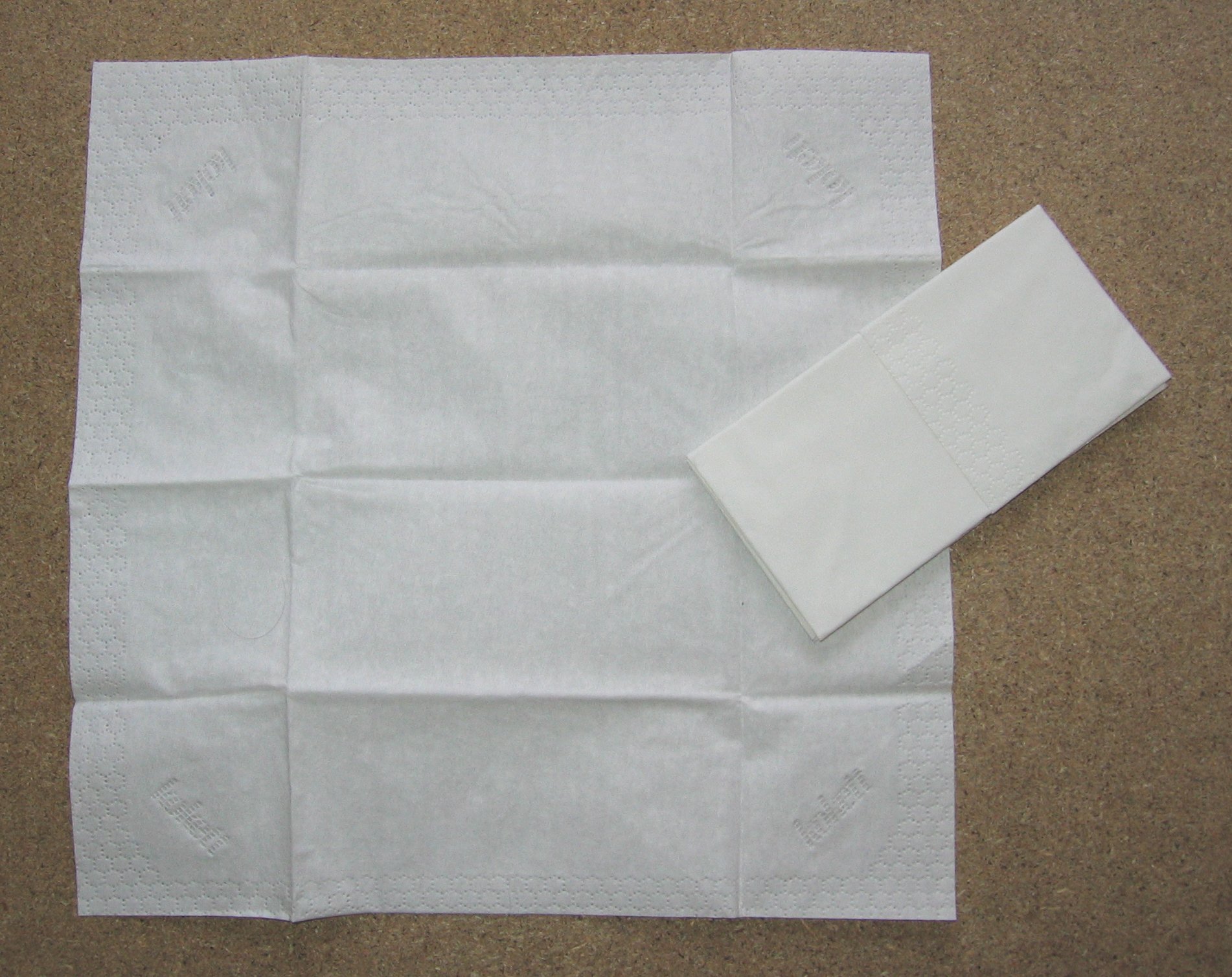
Tissue paper sheet

Tissue paper, or simply tissue, is a lightweight paper or light crêpe paper. Tissue can be made from recycled paper pulp on a paper machine.

Tissue paper is very versatile, and different kinds are made to best serve these purposes, which are hygienic tissue paper, facial tissues, paper towels, as packing material, among other (sometimes creative) uses.

The use of tissue paper is common in developed nations, around 21 million tonnes in North America and 6 million in Europe, and is growing due to urbanization. As a result, the industry has often been scrutinized for deforestation. However, more companies are presently using more recycled fibres in tissue paper.

Properties

[edit]

The key properties of tissues are absorbency, basis weight, thickness, bulk (specific volume), brightness, stretch, appearance and comfort.

Production

[edit]
Tissue Converting and Production Machine in action
Tissue paper converting machines with jumbo rolls attached[1]

Tissue paper is produced on a paper machine that has a single large steam heated drying cylinder (Yankee dryer) fitted with a hot air hood. The raw material is paper pulp. The Yankee cylinder is sprayed with adhesives to make the paper stick. Creping is done by the Yankee's doctor blade that is scraping the dry paper off the cylinder surface. The crinkle (crêping) is controlled by the strength of the adhesive, geometry of the doctor blade, speed difference between the Yankee and final section of the paper machine and paper pulp characteristics.[2]

The highest water absorbing applications are produced with a through air drying (TAD) process. These papers contain high amounts of NBSK and CTMP. This gives a bulky paper with high wet tensile strength and good water holding capacity.[3] The TAD process uses about twice the energy compared with conventional drying of paper.

The properties are controlled by pulp quality, crêping and additives (both in base paper and as coating). The wet strength is often an important parameter for tissue.

Applications

[edit]

Hygienic tissue paper(Toilet Paper)

[edit]
Tissue paper rolls used in toilets

Hygienic tissue paper is commonly for personal use as facial tissue (paper handkerchiefs), napkins, bathroom tissue and household towels. Paper has been used for hygiene purposes for centuries, but tissue paper as we know it today was not produced in the United States before the mid-1940s. In Western Europe large scale industrial production started in the beginning of the 1960s.

Facial tissues

[edit]
A box of facial tissues

Facial tissue (paper handkerchiefs) refers to a class of soft, absorbent, disposable paper that is suitable for use on the face. The term is commonly used to refer to the type of facial tissue, usually sold in boxes, that is designed to facilitate the expulsion of nasal mucus although it may refer to other types of facial tissues including napkins and wipes.

The first tissue handkerchiefs were introduced in the 1920s. They have been refined over the years, especially for softness and strength, but their basic design has remained constant. Today each person in Western Europe uses about 200 tissue handkerchiefs a year, with a variety of 'alternative' functions including the treatment of minor wounds, the cleaning of face and hands and the cleaning of spectacles.[4]

The importance of the paper tissue on minimising the spread of an infection has been highlighted in light of fears over a swine flu epidemic. In the UK, for example, the Government ran a campaign called "Catch it, Bin it, Kill it", which encouraged people to cover their mouth with a paper tissue when coughing or sneezing.[5]

Pressure on use of tissue papers has grown in the wake of improved hygiene concerns in response to the coronavirus pandemic.[6]

Paper towels

[edit]

Paper towels are the second largest application for tissue paper in the consumer sector. This type of paper has usually a basis weight of 20 to 24 g/m2. Normally such paper towels are two-ply. This kind of tissue can be made from 100% chemical pulp to 100% recycled fibre or a combination of the two. Normally, some long fibre chemical pulp is included to improve strength.[7]

Wrapping tissue

[edit]

Wrapping tissue is a type of thin, translucent tissue paper used for wrapping/packing various articles and cushioning fragile items.

Custom-printed wrapping tissue is becoming a popular trend for boutique retail businesses.[citation needed] There are various on-demand custom printed wrapping tissue paper available online. Sustainably printed custom tissue wrapping paper are printed on FSC-certified, acid-free paper; and only use soy-based inks.

Toilet paper

[edit]

Rolls of toilet paper have been available since the end of the 19th century. Today, more than 20 billion rolls of toilet tissue are used each year in Western Europe.[4] Toilet paper brands include, Andrex (United Kingdom), Charmin (United States) and Quilton (Australia), among many others.

Table napkins

[edit]

Table napkins can be made of tissue paper. These are made from one up to four plies and in a variety of qualities, sizes, folds, colours and patterns depending on intended use and prevailing fashions. The composition of raw materials varies a lot from deinked to chemical pulp depending on quality.

Acoustic disrupter

[edit]

In the late 1970s and early 1980s, a sound recording engineer named Bob Clearmountain was said to have hung tissue paper over the tweeter of his pair of Yamaha NS-10 speakers to tame the over-bright treble coming from it.[8][9][10]

The phenomenon became the subject of hot debate and an investigation into the sonic effects of many different types of tissue paper.[9][11] The authors of a study for Studio Sound magazine suggested that had the speakers' grilles been used in studios, they would have had the same effect on the treble output as the improvised tissue paper filter.[10] Another tissue study found inconsistent results with different paper, but said that tissue paper generally demonstrated an undesirable effect known as "comb filtering", where the high frequencies are reflected back into the tweeter instead of being absorbed. The author derided the tissue practice as "aberrant behavior", saying that engineers usually fear comb filtering and its associated cancellation effects, suggesting that more controllable and less random electronic filtering would be preferable.[11]

Road repair

[edit]

Tissue paper, in the form of standard single-ply toilet paper, is commonly used in road repair to protect crack sealants. The sealants require upwards of 40 minutes to cure enough to not stick onto passing traffic. The application of toilet paper removes the stickiness and keeps the tar in place, allowing the road to be reopened immediately and increasing road repair crew productivity. The paper breaks down and disappears in the following days.[12][13] The use has been credited to Minnesota Department of Transportation employee Fred Muellerleile, who came up with the idea in 1970 after initially trying standard office paper, which worked, but did not disintegrate easily.[14]

Packing industry

[edit]

Apart from above, a range of speciality tissues are also manufactured to be used in the packing industry. These are used for wrapping/packing various items, cushioning fragile items, stuffing in shoes/bags etc. to keep shape intact or, for inserting in garments etc. while packing/folding to keep them wrinkle free and safe. It is generally used printed with the manufacturers brand name or, logo to enhance the look and aesthetic appeal of the product. It is a type of thin, translucent paper generally in the range of grammages between 17 and 40 GSM, that can be rough or, shining, hard or soft, depending upon the nature of use.

Origami

[edit]

The use of double-tissue, triple-tissue, tissue-foil and Methyl cellulose coated tissue papers are gaining increasing popularity. Due to the paper's low grammage the paper can be folded into intricate models when treated with Methyl Cellulose (also referred to as MC). The inexpensive paper provides incredible paper memory paired with paper strength (when MC treated). Origami models sometimes require both thin and highly malleable papers, for this tissue-foil is considered a prime choice.

The industry

[edit]

Consumption of tissue in North America is three times greater than in Europe:[15] out of the world's estimated production of 21 million tonnes (21,000,000 long tons; 23,000,000 short tons) of tissue, Europe produces approximately 6 million tonnes (5,900,000 long tons; 6,600,000 short tons).[16]

The European tissue market is worth approximately 10 billion Euros annually and is growing at a rate of around 3%. The European market represents around 23% of the global market. Of the total paper and board market tissue accounts for 10%. An analysis and market research in Europe, Germany was one of the top tissue-consuming countries in Western Europe while Sweden was on top of the per-capita consumption of tissue paper in Western Europe. Market Study.[17]

In Europe, the industry is represented by the European Tissue Symposium (ETS), a trade association. The members of ETS represent the majority of tissue paper producers throughout Europe and about 90% of total European tissue production. ETS was founded in 1971 and is based in Brussels since 1992.[18]

In the U.S., the tissue industry is organized in the AF&PA.[19]

Tissue paper production and consumption is predicted to continue to grow because of factors like urbanization, increasing disposable incomes and consumer spending. In 2015, the global market for tissue paper was growing at per annum rates between 8–9% (China, currently 40% of global market) and 2–3% (Europe).[20] During the COVID-19 pandemic, tissue demand for homes increased dramatically as people spent more time in their homes, while commercial demand for the product decreased.[21]

Companies

[edit]

The largest tissue producing companies by capacity – some of them also global players – in 2015 are (in descending order):[20]

  1. Essity[22]
  2. Kimberly-Clark
  3. Georgia-Pacific
  4. Asia Pulp & Paper (APP)/Sinar Mas
  5. Procter & Gamble
  6. Sofidel Group
  7. CMPC
  8. WEPA Hygieneprodukte[23]
  9. Metsä Group
  10. Cascades

Sustainability

[edit]

The paper industry in general has a long history of accusations for being responsible for global deforestation through legal and illegal logging. The World Wide Fund for Nature (WWF —formerly the World Wildlife Fund) has urged Asia Pulp & Paper (APP), "one of the world's most notorious deforesters" especially in Sumatran rain forests, to become an environmentally responsible company; in 2012, the WWF launched a campaign to remove a brand of toilet paper known to be made from APP fiber from grocery store shelves.[24] According to the Worldwatch Institute, the world per capita consumption of toilet paper was 3.8 kilograms in 2005. The WWF estimates that "every day, about 270,000 trees are flushed down the drain or end up as garbage all over the world", a rate of which about 10% are attributable to toilet paper alone.[25][26]

Meanwhile, the paper tissue industry, along with the rest of the paper manufacturing sector, has worked to minimise its impact on the environment. Recovered fibres now represent some 46.5% of the paper industry's raw materials. The industry relies heavily on biofuels (about 50% of its primary energy). Its specific primary energy consumption has decreased by 16% and the specific electricity consumption has decreased by 11%, due to measures such as improved process technology and investment in combined heat and power (CHP). Specific carbon dioxide emissions from fossil fuels decreased by 25% due to process-related measures and the increased use of low-carbon and biomass fuels. Once consumed, most forest-based paper products start a new life as recycled material or biofuel[27]

EDANA, the trade body for the non-woven absorbent hygiene products industry (which includes products such as household wipes for use in the home) has reported annually on the industry's environmental performance since 2005. Less than 1% of all commercial wood production ends up as wood pulp in absorbent hygiene products. The industry contributes less than 0.5% of all solid waste and around 2% of municipal solid waste (MSW) compared with paper and board, garden waste and food waste which each comprise between 18 and 20 percent of MSW.[28]

There has been a great deal of interest, in particular, in the use of recovered fibres to manufacture new tissue paper products. However, whether this is actually better for the environment than using new fibres is open to question. A life-cycle assessment study indicated that neither fibre type can be considered environmentally preferable. In this study both new fibre and recovered fibre offer environmental benefits and shortcomings.

Total environmental impacts vary case by case, depending on for example the location of the tissue paper mill, availability of fibres close to the mill, energy options and waste utilization possibilities. There are opportunities to minimise environmental impacts when using each fibre type.

When using recovered fibres, it is beneficial to:

  • Source fibres from integrated deinking operations to eliminate the need for thermal drying of fibre or long distance transport of wet pulp,
  • Manage deinked sludge in order to maximise beneficial applications and minimise waste burden on society; and
  • Select the recovered paper depending on the end-product requirements and that also allows the most efficient recycling process.

When using new fibres, it is beneficial to:

  • Manage the raw material sources to maintain legal, sustainable forestry practices by implementing processes such as forest certification systems and chain of custody standards; and
  • Consider opportunities to introduce new and more renewable energy sources and increase the use of biomass fuels to reduce emissions of carbon dioxide.

When using either fibre type, it is beneficial to:

  • Improve energy efficiency in tissue manufacturing;
  • Examine opportunities for changing to alternative, non fossil based sources, of energy for tissue manufacturing operations
  • Deliver products that maximise functionality and optimize consumption; and
  • Investigate opportunities for alternative product disposal systems that minimize the environmental impact of used products.[29]

The Confederation of European Paper Industries (CEPI) has published reports focusing on the industry's environmental credentials. In 2002, it noted that "a little over 60% of the pulp and paper produced in Europe comes from mills certified under one of the internationally recognised eco-management schemes".[30] There are a number of ‘eco-labels’ designed to help consumers identify paper tissue products which meet such environmental standards. Eco-labelling entered mainstream environmental policy-making in the late seventies, first with national schemes such as the German Blue Angel programme, to be followed by the Nordic swan (1989). In 1992 a European eco-labelling regulation, known as the EU Flower, was also adopted. The stated objective is to support sustainable development, balancing environmental, social and economical criteria.

In 2019, the NRDC and Stand.earth released a report grading various brands of toilet paper, paper towels, and facial tissue; the report criticized major brands for lacking recycled material.[31]

Types of eco-labels

[edit]

There are three types of eco-labels, each defined by ISO (International Organization for Standardization).

Type I: ISO 14024 This type of eco-label is one where the criteria are set by third parties (not the manufacturer). They are in theory based on life cycle impacts and are typically based on pass/fail criteria. The one that has European application is the EU Flower.

Type II: ISO 14021 These are based on the manufacturers or retailers own declarations. Well known amongst these are claims of "100% recycled" in relation to tissue/paper.

Type III: ISO 14025 These claims give quantitative details of the impact of the product based on its life cycle. Sometimes known as EPDs (Environmental Product Declarations), these labels are based on an independent review of the life cycle of the product. The data supplied by the manufacturing companies are also independently reviewed.

The most well known example in the paper industry is the Paper Profile. You can tell a Paper Profile meets the Type III requirements when the verifiers logo is included on the document.[32]

An example of an organization that sets standards is the Forest Stewardship Council.

See also

[edit]

References

[edit]
[edit]
Revisions and contributorsEdit on WikipediaRead on Wikipedia
from Grokipedia
Tissue paper is a lightweight, often crêped paper manufactured from virgin wood pulp or recycled fibers, characterized by its thinness, softness, and high absorbency. It is primarily employed in hygienic products such as , facial tissues, and paper towels, which facilitate personal cleaning and sanitation by effectively absorbing moisture and contaminants. Wrapping tissue, a variant used for packaging delicate items, shares similar material properties but prioritizes protection over absorbency. The origins of tissue paper trace back over two millennia to ancient , where early forms were crafted from mulberry bark for basic wiping and writing purposes, evolving into more specialized products with advancements in techniques. Modern commercial tissue production emerged in the late 19th and early 20th centuries, with American firms like pioneering recognizable hygienic tissues through innovations in pulping and creping processes that enhanced softness and strength. These developments transformed tissue from a rudimentary material into an essential consumer good, driven by rising standards of personal and industrial scalability. Tissue paper production involves pulping raw materials into a , for fiber quality, forming wet sheets on a machine, pressing to remove water, drying via cylinders, and creping to impart texture and bulk. Common types include single-ply or multi-ply variants tailored for specific uses: soft tissues for nasal discharge, embossed toilet rolls for , and reinforced towels for kitchen spills. Global demand underscores its ubiquity, with manufacturing emphasizing efficiency to meet needs while incorporating recycled content to mitigate .

Definition and Properties

Material Characteristics

Tissue paper is primarily composed of fibers derived from wood pulp, including both virgin and pulps or recycled fibers, with short fibers contributing to softness and silkiness while long fibers enhance tensile strength. Blends of chemical pulps and recycled content are common, allowing for variations in quality and , though virgin pulp typically yields higher softness and absorbency due to fewer impurities. Key physical properties include low basis weight, generally ranging from 13 to 20 grams per square meter (), which enables lightweight, disposable characteristics distinct from denser papers like stock at 40-120 . Thickness, or caliper, measures 15-30 microns, correlating with bulkiness achieved through processes that minimize compression. Density remains low at 0.8-1.2 g/cm³, fostering an open fiber structure that supports high bulk and stretch, as defined in ISO 12625-1 standards for tissue products. Softness, a primary attribute, comprises bulk softness (perceived plushness from arrangement) and surface softness (frictional tactility), often quantified at 80-100 units via specialized testers like EMTEC, with chemical debonders enhancing sensory qualities without compromising structure. Absorbency is notably high, absorbing 200-400 ml/m² or 2-10 grams of per gram of , driven by in the porous network rather than chemistry alone. Tensile strength varies from 100-200 millinewtons (mN) in dry conditions, with wet-strength variants incorporating additives for durability in moist applications, though standard tissues prioritize disposability over robustness. These properties are governed by international standards such as ISO 12625 series, which emphasize elevated bulk, absorption, and stretch relative to conventional papers, ensuring functionality for uses while balancing manufacturability. Variations arise from pulp coarseness and processing; finer fibers improve formation and softness but may reduce tear resistance, underscoring trade-offs in fiber selection.

Standards and Variations

Tissue paper standards are primarily governed by the ISO 12625 series, which specifies test methods for physical properties of creped and uncreped tissue products, including , thickness, tensile strength, and absorbency. ISO 12625-1:2019 establishes general principles and terms applicable across the series, ensuring consistent evaluation of attributes like bulking and opacity. In the United States, provides specifications such as D3905-93 for toilet tissue, covering requirements for virgin, recycled, and creped varieties used in institutional settings. Key standardized properties include (basis weight, typically 13-35 g/m² for tissue), caliper (thickness, measured under specified ), and wet-dry tensile strength, which correlate with durability and performance in hygiene applications. Environmental standards like Green Seal GS-1 impose criteria on fiber sourcing, chemical use, and recyclability for sanitary products including tissue paper. Variations in tissue paper arise from ply count (1-4 layers, with multi-ply enhancing softness and strength), embossing (for improved bulk and liquid retention), and additives such as lotions or agents. Products differ by application: tissues prioritize softness (lower basis , ~15-20 g/), while paper towels emphasize absorbency and wet strength (higher , up to 40 g/). Coreless rolls and scented variants represent further adaptations for convenience and sensory appeal, though these may impact compostability. Recycled-content tissues, often standardized under the same ISO metrics, exhibit comparable performance to virgin when processed similarly but may vary in and texture due to fiber quality.

Historical Development

Ancient Origins

The concept of tissue paper, as a thin, absorbent material for personal , traces its rudimentary origins to ancient , where itself was first developed during the Eastern around 105 by , utilizing mulberry bark, , and rags. However, the earliest documented use of specifically for post-defecation cleansing appears in the writings of scholar Yan Zhitui (531–591 ), who noted its application for wiping, distinguishing it from prior non- methods like leaves or cloths prevalent across ancient societies. This marked a pivotal shift, leveraging 's disposability and absorbency, though early variants were coarser than modern tissues. In contemporaneous civilizations outside China, such as and , no evidence exists of paper-based wiping due to the absence of technology; Romans instead employed the tersorium—a communal sea sponge on a wooden stick rinsed in or —while and often used stones, pottery shards, or for anal cleansing. Archaeological finds, including cloth-wrapped hygiene sticks from a 2nd-century BC Chinese latrine site along the (dated 111–109 BCE), indicate proto-hygienic tools predating paper's adoption but not qualifying as tissue precursors, as they lacked paper's fibrous structure. These early Chinese innovations laid the causal foundation for tissue paper's evolution, driven by paper's scalability and hygiene advantages over reusable alternatives, though widespread use remained limited to elites until later dynasties, with no parallel developments in the Mediterranean or until paper's transmission via Islamic scholars in the AD.

Modern Invention and Commercialization

The first commercially available in the United States was patented by in 1857, marketed as "Gayetty's Medicated Paper" in flat sheets infused with and to treat ailments like and sold at a price of 50 cents per pack containing 1,000 sheets. Despite its medicinal claims, initial consumer adoption remained limited, as alternatives like corncobs, newspapers, and mail-order catalogs prevailed in both rural and urban areas due to entrenched habits and the product's higher cost relative to free substitutes. Commercial production advanced in the late when the began manufacturing in 1879, initially distributing it as "wafer paper" in boxed sheets to hotels and pharmacies before shifting to rolls. A key innovation came in 1890 when Seth Wheeler patented perforated rolls, allowing for easier tearing and reducing waste, which facilitated broader household use through dispensers patented in 1883. By the early 1900s, perforated rolls from companies like Scott became standard, with marketing emphasizing and convenience amid rising and awareness, though splinter-free varieties only emerged in the 1930s to address irritation complaints. Facial tissue emerged later, with Corporation introducing Kleenex in 1924 as a disposable alternative to cloth for removing and , leveraging creped technology originally developed for gas mask filters. Consumer feedback from surveys in the late revealed predominant use for nasal wiping, prompting a 1930 advertising pivot to position it as a hygienic substitute for reusable handkerchiefs, which boosted sales from under 500,000 cases in 1925 to over 1 million by 1930. The 1929 introduction of the pop-up dispensing box further enhanced commercialization by improving accessibility and portability.

20th and 21st Century Advancements

The early 20th century marked a pivotal shift in tissue paper production with the adoption of the creping process, which involved scraping the dried paper sheet against a blade to create a crinkled texture, enhancing bulk, softness, and absorbency compared to flat sheets. This technique, refined through improved papermaking machinery, allowed for more efficient manufacturing of disposable hygiene products. In 1935, Northern Tissue introduced the first splinter-free toilet paper, utilizing advanced refining methods to remove wood fibers that previously caused irritation, a innovation driven by consumer complaints about earlier coarse varieties. By the 1940s, multi-ply construction emerged as a key advancement, with Paper Mill launching two-ply toilet tissue in 1942, combining layers for greater strength and comfort without sacrificing thinness. Mid-century developments included embossing techniques to improve texture and pattern designs for better performance, alongside in converting lines that increased production speeds and consistency. These changes supported the post-World War II boom in household tissue use, as marketing emphasized and convenience. Entering the 21st century, Through-Air-Drying (TAD) technology, pioneered by Procter & Gamble and commercialized for premium tissues, revolutionized drying by passing hot air through the web on a fabric cylinder, yielding superior softness and absorbency with less mechanical creping. Complementary innovations like Next Tissue Technology (NTT), implemented by companies such as Marcal, achieved up to 41% energy savings in drying processes while maintaining product quality. Sustainability efforts advanced with higher recycled fiber incorporation—reaching 35% globally—and alternative raw materials like bamboo, alongside certifications for responsibly managed forests, reducing environmental impact without compromising performance. Recent multi-ply lamination and structured fabrics further optimize strength-to-weight ratios, enabling thinner yet more durable products.

Production Processes

Raw Material Sourcing

Tissue paper production primarily relies on pulp derived from fibers and recycled . pulp, the dominant raw material, is sourced from species such as and for strength and species like and for softness, typically in a blend of approximately 70% and 30% to achieve desired absorbency and texture. Recycled pulp, obtained from and manufacturing scraps, constitutes a significant portion in many products, reducing demand for virgin materials but requiring de-inking and purification processes. Virgin wood pulp is harvested from managed forests, with the U.S. industry sourcing 90% of its wood from private, working forests certified under programs like the Sustainable Forestry Initiative (SFI) or (FSC), emphasizing replanting and yield regulation to maintain supply. Globally, pulp for tissue originates from regions including , (e.g., Brazil's plantations), and boreal forests in and , where fast-growth plantations support volume but raise concerns over in ancient woodlands. Industry reports assert no net link in regulated areas, yet environmental analyses document increased tissue demand correlating with conversion in endangered ecosystems, such as Indonesia's rainforests. Recycled content sourcing involves municipal collection systems and streams, with and leading in recovery rates exceeding 60% for products, though quality limitations restrict its use to lower-grade tissues due to shorter lengths. Alternative s like or from agricultural residues represent under 5% of global tissue pulp, primarily in niche markets, as they demand specialized processing and yield inconsistent properties compared to wood. Supply chain traceability has improved via s, but gaps persist, with major producers like committing to 100% responsibly sourced pulp by 2030 amid scrutiny from NGOs questioning efficacy in high-risk areas.

Manufacturing Techniques

Tissue paper manufacturing primarily employs variations of the process adapted for thin, soft, absorbent sheets, involving web formation from pulp , mechanical , thermal , and creping to enhance texture and . The core techniques focus on achieving low basis weight (typically 12-25 g/m²) while maximizing bulk and softness through controlled and surface modification. The conventional wet-pressed dry crepe (WPDC) method, dominant in global production, begins with forming a dilute pulp (consistency around 0.5-1%) on a forming wire to create the embryonic web, followed by and mechanical pressing to remove up to 20-30% consistency. The partially dewatered web is then transferred to a heated Yankee dryer cylinder, where it adheres via sprays or films, dries to near-complete dryness (typically 95-98%), and is mechanically removed by a creping blade at an angle of 5-15 degrees, inducing micro-folds that increase stretch and softness. This technique, refined since the early , balances energy efficiency with product quality but compacts fibers, limiting bulk compared to alternatives. In contrast, the through-air drying (TAD) process, commercialized in the 1990s by firms including , , and Scott Paper, dewaters the web non-compressively using hot air (up to 150-200°C) blown through a permeable , achieving higher initial dryness (around 60-70%) before optional drying and creping. This method preserves fiber loft, yielding tissues with superior absorbency (up to 8-10 times their weight in water) and bulk (sheet caliper 20-50% greater than WPDC equivalents), though it demands higher energy input (approximately 2-3 times that of WPDC). TAD fabrics with patterned apertures direct to form three-dimensional structures, enhancing wet strength via chemical additives. Creping remains integral to both techniques, with the blade-doctor mechanism detaching the dry web from the surface, creating a crepe (wavelength 3-6 mm) that mechanically weakens interfiber bonds for pliability; factors like angle, chemistry (e.g., polyvinyl alcohol-based releases), and dryer speed (up to 1200-2000 m/min in modern lines) critically influence sheet properties such as tensile index and tensile strength. Post-creping, the web is wound into parent reels for subsequent converting, though variations like wet creping (rarely used commercially) apply action at higher to alter morphology differently.

Recent Innovations in Production

Recent advancements in tissue paper production emphasize and , driven by the integration of recycled fibers and alternative raw materials. In January 2025, a public-private partnership in introduced a process to recycle from used disposable diapers, marking the first commercial-scale application of this method to repurpose waste into hygienic products. This innovation addresses challenges while reducing reliance on virgin pulp, aligning with global demands for practices in the pulp and paper sector. Technological upgrades, such as Next Tissue Technology (NTT), have enabled significant energy reductions, with implementations achieving up to 41% savings in production processes by optimizing drying and forming stages. Through-Air-Drying (TAD) systems continue to evolve, producing premium tissue with enhanced absorbency and softness while incorporating sustainable fiber mixes to lower environmental impacts. Multi-ply production techniques, including advanced embossing and lamination, improve product strength and customization without excessive resource use, supporting efficient manufacturing of layered tissues. Automation and (AI) are transforming and operational efficiency. AI-driven systems predict pulp properties and optimize machine parameters in real-time, minimizing defects and waste in the forming and converting stages. Digital sensors and enhance process monitoring, enabling and flexible production lines adaptable to varying fiber inputs. Energy-efficient equipment innovations, including optimized drying technologies, further reduce operational costs and carbon footprints in modern tissue mills. These developments reflect a shift toward hybrid technologies that balance high-quality output with resource conservation, as evidenced by industry adoption of green integrations and AI for localized production adjustments.

Applications and Uses

Personal Hygiene Products

Toilet paper, a primary personal hygiene product derived from tissue paper, is employed for cleaning the anal and genital regions following or . It typically comprises one or more plies of soft, absorbent, embossed tissue paper perforated into separable sheets and wound onto a cylindrical core for dispensing. Global revenue in the toilet paper market reached an estimated US$101.45 billion in 2025, reflecting its widespread adoption in regions with access to sanitation infrastructure. Annual worldwide consumption approximates 42 million tons, though usage varies significantly by culture and development level, with only about 30% of the global population relying on it as the primary wiping method. Facial tissues, another key tissue paper-based hygiene item, serve for removing nasal , wiping facial secretions, or covering the during coughing and sneezing to contain germs. These single-use sheets, often boxed for easy access, provide a disposable alternative to reusable cloth handkerchiefs, promoting by reducing cross-contamination risks. In the United States, consumption exceeds 255 billion units annually, underscoring their role in daily personal care routines. The global facial tissues market, valued at approximately USD 8.1 billion in 2024, is projected to grow due to heightened hygiene awareness, with regular dry tissues comprising over 73% of usage for basic wiping needs. Both products emphasize disposability for convenience and , though some consumers repurpose toilet paper for nasal wiping, with 49% reporting occasional use in this manner. Innovations like moistened or flushable variants enhance functionality but remain secondary to standard dry formats in volume. Tissue paper's low lint and high absorbency properties make it suitable for sensitive contact, distinguishing it from coarser alternatives.

Household and Cleaning Applications

In households, tissue paper derivatives such as paper towels serve as primary tools for surface cleaning and spill management due to their absorbent, creped that enhances retention compared to non-textured papers. These products, typically 1- or 2-ply, are engineered for durability when wet, allowing effective wiping of counters, appliances, and floors without disintegration, thereby minimizing residue transfer. Their single-use disposability further supports by preventing bacterial buildup associated with reusable cloths, as evidenced by industry standards promoting reduced cross-contamination in domestic settings. Kitchen-specific applications include degreasing cookware and plates prior to washing, where paper towels absorb oils and sauces efficiently; for instance, pre-wiping reduces usage in dish cleaning by up to 20-30% in empirical tests. They are also employed for drying produce after rinsing, protecting cutting surfaces from moisture-induced slippage, and blotting fried items to remove excess fat, which aligns with practices recommending quick absorption to inhibit microbial growth. Beyond kitchens, interleaved or folded tissue towels facilitate hand drying and light dusting, with absorbency rates often exceeding 5-7 times their weight in under controlled lab conditions. For general cleaning chores, tissue paper products like multi-purpose wipes or towels handle and screen polishing without lint residue, outperforming in quick-drying scenarios due to their low shedding. However, their non-flushable composition—designed for tensile strength rather than biodegradability in —necessitates trash disposal to avoid clogs, as towels retain integrity longer than toilet tissue under aqueous stress. Empirical comparisons indicate that while effective for light-duty tasks, heavy-duty may require thicker variants to prevent tearing, with global household consumption averaging 10-15 rolls per family annually in developed markets.

Packaging and Specialty Uses

Tissue paper serves as a protective material in , particularly for wrapping fragile items like jewelry, glassware, , and flowers to prevent scratches, dust accumulation, and minor impacts during shipping and handling. Its thin, soft composition allows it to conform to irregular shapes, providing cushioning when crumpled or layered, while remaining easy to fold and transport without adding significant weight or bulk to shipments. In retail and , custom-printed variants enhance product presentation and branding, elevating the process and correlating with improved , as evidenced by a 2019 industry analysis comparing it favorably to alternatives like fillers for emotional appeal and protection efficacy. Specialty tissue papers, such as acid-free grades, are utilized for archival protection of delicate artifacts, artwork, and textiles, inhibiting chemical degradation and discoloration over extended storage periods. In manufacturing, unbleached machine-glazed variants function as release or protection layers in processes like digital transfer textile printing, safeguarding equipment belts from wear and residue buildup to extend operational lifespan. Decorative applications extend to arts and crafts, where colored tissue enables constructions like layered collages, pom-poms, or simulated flowers through techniques involving cutting, folding, and adhesion, valued for its translucency and pliability. Additionally, brown or kraft tissue finds use as eco-friendly void filler in boxes, absorbing moisture and stabilizing contents without generating plastic waste.

Industry and Market

Major Producers and Companies

Corporation, headquartered in , , is a prominent global producer of tissue products, including facial tissues (Kleenex) and bathroom tissues (Scott), with manufacturing facilities across , , and ; the company reported tissue and personal care segment revenues exceeding $4.5 billion in 2023. Co. (P&G), based in Cincinnati, Ohio, dominates segments like toilet paper through its Charmin brand, leveraging extensive R&D and distribution networks to hold significant U.S. market presence, with household care revenues (including tissues) reaching $19.5 billion in fiscal 2024. Georgia-Pacific LLC, a of Koch Industries headquartered in , Georgia, leads the North American tissue paper market, producing brands such as Angel Soft, Quilted Northern, and Brawny paper towels; it commanded the largest regional in 2024 through integrated pulp and converting operations across 180+ facilities. Essity AB, a Swedish firm spun off from SCA in and based in , specializes in hygiene tissues under brands like Tork and Lotus, operating over 50 tissue mills worldwide and emphasizing sustainable sourcing in its production of more than 20 billion rolls annually. Asia Pulp & Paper Group (APP), an Indonesian conglomerate with operations spanning and beyond, ranks among the largest tissue producers by volume, supplying private-label and branded products through affiliates like ; its integrated operations from pulp to finished goods support exports to over 150 countries, though environmental critiques have targeted its practices in peer-reviewed assessments. Other notable players include the Italian Sofidel Group, which focuses on private-label tissues with 2023 revenues of €1.3 billion from 30+ converting lines, and CMPC Tissue, a Chilean firm emphasizing premium products in . These companies collectively influence global supply dynamics, with indicating the top five accounting for over 40% of production capacity in key regions as of 2024, driven by in pulp procurement and converting technology. The global tissue paper market was valued at approximately USD 95.9 billion in 2024 and is projected to reach USD 186.9 billion by 2034, expanding at a (CAGR) of 6.9% from 2025 onward, driven primarily by heightened awareness and urbanization in emerging economies. Alternative estimates place the 2025 market size at USD 96.57 billion, with growth to USD 154.54 billion by 2032 at a CAGR of 6.95%, reflecting consistent demand for disposable products amid population increases and rising per capita consumption. These figures encompass facial tissues, , paper towels, and specialty variants, though broader tissue and paper segments may exceed USD 315 billion in 2025 revenue when including napkins and wipes. Key economic drivers include escalating consumer demand for premium and sustainable products, with premium tissue segments showing robust momentum into 2025 due to preferences for softer, stronger, and eco-labeled options in developed markets. Urbanization and rising disposable incomes in Asia-Pacific, particularly in China and India, fuel volume growth, as improved sanitation infrastructure and e-commerce boost household penetration. In North America, which holds about 30.2% market share valued at USD 28.9 billion, steady demand stems from high hygiene standards and institutional use in hospitality and healthcare, though growth is tempered at a 2.67% CAGR through 2030. Europe exhibits similar maturity with emphasis on recycled content, while Asia-Pacific's rapid expansion—projected at higher CAGRs—arises from industrialization and tourism recovery. Economically, the industry faces volatility from pulp raw material costs, which constitute 50-60% of production expenses, alongside energy and transportation fluctuations; pulp price surges in 2024, tied to supply chain disruptions, are expected to moderate in 2025 but could elevate tissue pricing by 3-5%. Trade dynamics favor exports from low-cost producers in and to high-consumption regions, with global capacity utilization around 85-90% supporting profitability amid competition from private labels. Sustainability mandates, such as EU regulations on deforestation-free supply chains, impose compliance costs but open premiums for certified products, potentially adding 10-15% to segment values by 2030. Overall, per capita consumption disparities—exceeding 20 kg annually in the U.S. versus under 5 kg in parts of —underscore untapped growth in developing regions, contingent on infrastructure investments.

Supply Chain and Trade Dynamics

The for tissue paper commences with , predominantly chemical wood pulp from and sources in managed forests, supplemented by recycled paper fibers collected from municipal and streams. In , approximately 90% of wood inputs for pulp production derive from sustainably managed working forests, with pulp mills processing these into jumbo reels of tissue stock suitable for conversion into end products. Globally, key pulp suppliers include , (notably eucalyptus plantations), , and Scandinavian nations, where trade in market pulp supports tissue manufacturing; for instance, Brazil's Suzano SA has been a major exporter of used in tissue absorbency layers. Recycled content, comprising up to 50-70% in some products, relies on efficient collection networks, though quality variability necessitates blending with virgin fibers for softness and strength. Manufacturing occurs at specialized tissue mills that form, dry, and crepe the pulp into parent reels, followed by converting facilities that rewind, perforate, and package into consumer formats like toilet rolls or facial tissues. These stages are geographically concentrated: , led by as the world's largest producer, dominates low-cost volume output using and wood pulp, while and focus on premium, high-hygiene variants with advanced machinery. facilitates this, with significant flows in both semi-finished tissue stock (HS 4803) and finished products (HS 4818). In 2023, top exporters of tissue stock included ($911 million), ($529 million), and ($508 million), while for , , , , , and led shipments. The , a major importer, sourced 918,000 tons of toilet, towel, and tissue paper in 2024, a 20% increase from 2023, primarily from ($839 million), ($678 million), and Mexico ($109 million). Trade dynamics are influenced by pulp price volatility, fluctuating between $900 and $1,300 per ton amid global supply constraints and demand surges, as seen during the 2020 COVID-19 hoarding that exposed just-in-time inventory risks. Geopolitical factors, including U.S. tariffs on imported pulp—such as those threatened on Brazilian suppliers—have heightened disruption potential, with warnings of supply shortages and price hikes for bath tissue if barriers escalate, as pulp constitutes 60-70% of production costs. Sustainability pressures drive shifts toward recycled and alternative fibers like bamboo in export-oriented Asian chains, though empirical data indicates virgin pulp yields superior absorbency and reduced defect rates, prompting debates over balancing environmental claims with performance efficacy. Regional self-sufficiency efforts, such as U.S. expansions in domestic pulp capacity, aim to mitigate import reliance, but ongoing trade tensions could redirect flows toward intra-regional blocs.

Health and Hygiene Considerations

Benefits of Disposable Tissue Products

Disposable tissue products, including facial tissues, , and paper towels, provide key hygienic benefits through their single-use nature, which facilitates immediate disposal and reduces cross-contamination risks compared to reusable cloth alternatives. Unlike cloth handkerchiefs, which require frequent laundering to prevent buildup and can spread viruses if reused prematurely, disposable facial tissues minimize germ transmission by being discarded after each use. Health analyses confirm that tissues are more hygienic, as handkerchiefs often retain and viruses, potentially exacerbating respiratory infections during colds or flu seasons. In household and public settings, paper towels demonstrate superior bacterial removal compared to cloth towels, which can harbor pathogens like E. coli and due to moisture retention between washes. Empirical studies on hand-drying methods indicate that paper towels efficiently dry hands, dislodge through mechanical , and limit environmental more effectively than reusable options. This is particularly relevant in kitchens, where disposable towels prevent the proliferation of foodborne on surfaces and hands, supporting lower infection risks without relying on consistent sterilization of reusables. Beyond , disposable tissues offer practical advantages in absorbency and , enabling quick of bodily fluids or spills without the labor of washing, which enhances compliance in high-use scenarios like illness or cleaning. Industry data from the American Forest & Paper Association highlights their role in curbing the spread of communicable diseases such as and by promoting hygienic disposal practices. While reusable alternatives may appeal for , the empirical edge in control underscores disposables' value in maintaining personal and standards.

Potential Health Risks and Mitigations

Tissue paper products, including and facial tissues, may contain trace levels of per- and polyfluoroalkyl substances (PFAS), known as "forever chemicals," which have been detected in samples from various global markets and are associated with increased risks of cancer, , , and disruption upon chronic exposure. residues, used in some manufacturing processes for strengthening or preserving, can cause , eye, , and throat irritation, with prolonged or high-level exposure linked to respiratory issues and classified as a probable by regulatory bodies. Dioxins, byproducts of chlorine-based bleaching, have been identified in certain whitened papers and are potent toxins potentially contributing to hormonal disruptions and cancer risks. Allergic contact dermatitis and irritant reactions are reported from additives such as fragrances, dyes, preservatives (e.g., methylchloroisothiazolinone/ in moist tissues), and fibers in low-quality or scented products, manifesting as perianal, perineal, or facial redness, itching, and dryness, particularly in sensitive individuals. Phthalates and polycyclic aromatic hydrocarbons (PAHs) in some recycled or imported tissue papers, especially from regions with lax regulations, pose dermal absorption risks, with elevated non-cancer hazard indices noted in exposure assessments for frequent users. Bacterial risks are minimal in properly manufactured and stored products due to their disposable nature and lack of moist environments, though improper handling can introduce pathogens; however, empirical data on widespread consumer-level infections from tissue paper is scarce. To mitigate these risks, consumers can select unscented, fragrance-free, and tissue products certified free of PFAS, , and bleach, such as those made from unbleached or recycled fibers processed with elemental chlorine-free (ECF) or total chlorine-free (TCF) methods, which reduce formation. For allergy-prone users, substituting with washed alternatives or testing patch sensitivities to specific brands is effective, as demonstrated in case studies resolving rhinoconjunctivitis upon switching from tissues. Regulatory compliance with limits on residual chemicals, combined with proper storage to prevent moisture-induced microbial growth, further minimizes exposure; however, no tissue product is entirely risk-free, and high-volume use amplifies cumulative effects from trace contaminants.

Empirical Comparisons to Alternatives

Studies evaluating hygiene outcomes for anal cleansing demonstrate that bidets achieve higher bacterial removal rates than dry toilet paper wiping. Water-based rinsing with bidets reduces residual fecal coliforms and E. coli more effectively, as mechanical wiping with paper often leaves microscopic traces that can harbor pathogens. However, chronic bidet use has been linked in some cohorts to increased vaginal colonization by , potentially elevating risks for in pregnant users. Dermatological assessments note that toilet paper's friction and embedded chemicals, such as resins, contribute to vulvar irritation and , whereas bidets minimize skin abrasion and chemical exposure in sensitive areas. Comparisons to wet wipes reveal mixed hygiene profiles. Wet wipes provide enhanced moisture for removing residues, outperforming dry toilet paper in subjective cleanliness and objective reduction of skin bacteria in controlled tests, but they introduce risks from preservatives like methylisothiazolinone, which can trigger allergic contact dermatitis. Improper front-to-back wiping with either dry paper or wipes correlates with higher urinary tract infection incidence in women, with odds ratios elevated by 1.5-2.0 in observational data from middle-aged cohorts. Flushable wet wipes, while marketed for superior hygiene, often fail to disintegrate fully, leading to plumbing-related indirect health issues like bacterial proliferation in blockages, though direct user contamination data remains limited. For nasal , disposable facial tissues exhibit superior microbial containment over reusable cloth handkerchiefs. Handkerchiefs, when reused without frequent laundering, foster bacterial and viral persistence—such as survival for days—facilitating cross-infection within households, as evidenced by transmission models showing 20-30% higher secondary attack rates. Tissues, by contrast, enable immediate disposal, curtailing recirculation; empirical audits confirm lower on subsequent uses compared to inadequately washed cloths. Recycled tissue variants maintain this edge without introducing laundering contaminants, though both formats avoid the chronic irritation risks from unbleached paper fibers seen in some tissue applications.

Environmental Impact and Sustainability

Resource Consumption and Emissions Data

Tissue paper production primarily relies on wood pulp as the key raw material, with typical formulations consisting of 70% pulp and 30% pulp per metric ton to achieve desired softness and absorbency. Recycled fiber alternatives reduce reliance on virgin pulp but require additional processing inputs like chemicals. Water consumption in tissue mills using virgin pulp averages about 5 m³ per ton of paper produced, though optimized systems in stock preparation and forming sections can limit this to under 2 m³ per ton, with full plant targets below 4 m³ per ton. The overall demands substantial freshwater, contributing to effluent challenges like (COD) and biological oxygen demand (BOD). Energy use is intensive, totaling approximately 2,240 kWh per ton, broken down into roughly 750 kWh , 600 kWh gas, and 890 kWh , driven by high requirements that exceed those of other standard grades. often constitutes the largest share of impacts in life cycle assessments, particularly from fossil-based grids. Greenhouse gas emissions vary by fiber source, energy mix, and technology. Life cycle assessments of premium and ultra-hygiene tissue products report 1,392 to 3,075 kg CO₂ equivalent per metric ton, influenced by mill location (higher in fossil-heavy grids like the U.S. Midwest) and drying methods (e.g., through-air drying variants).
ScenarioGHG Emissions (kg CO₂eq per metric ton)Key Factors
Premium tissue (various mills)1,392–3,075Technology, electricity source
Natural gas and grid electricity1,849Jumbo roll production hotspot
Biomass boiler substitution1,48520% reduction vs. fossil fuels
Virgin production yields higher midpoint impacts in categories like (15.4% of total) and fossil depletion (12.2%) compared to recycled , where dominates (73.3% of impacts) but overall endpoint effects on ecosystems and resources are lower. Other emissions include NOₓ from and waterborne pollutants like COD and BOD, with solid wastes such as generated across both pathways. The sector's demands represent about 6% of global industrial consumption, underscoring drying and pulping as persistent hotspots.

Waste Management and Recycling Efficacy

Tissue paper waste, encompassing products like , facial tissues, and paper towels, is primarily managed through landfilling and disposal into systems rather than dedicated streams. In the United States, tissue paper and towels (excluding bathroom tissue) generated approximately 3.8 million tons in 2018, representing 1.3% of total (MSW), with the majority entering landfills or incinerators alongside broader categories. , the largest subcategory, is overwhelmingly flushed into sewers, where it contributes to insoluble pollutants that resist treatment and increase volume in facilities. Landfilled tissue decomposes anaerobically, emitting , while recovers some energy but releases emissions depending on facility efficiency. Recycling of tissue paper faces significant barriers, resulting in low participation rates compared to aggregate paper products. Globally, paper recycling rates reach 60-75% in regions like the and , but these figures are dominated by higher-grade items like and newsprint; tissue-specific remains minimal due to short lengths, which degrade further upon reprocessing, and contamination from bodily fluids or adhesives, rendering material unhygienic and uneconomical for mills. In the market, valued at $9.4 billion as of 2020, recycled content constitutes less than 2%, reflecting limited supply of suitable post-consumer tissue feedstock. Collection infrastructure rarely segregates used tissue, and de-inking or cleaning processes add energy costs that often exceed benefits for low-value output like tissue-grade pulp. The efficacy of , when feasible, yields environmental gains but is constrained by scale and quality limitations. Production of tissue from recycled content can reduce to one-third of virgin fiber equivalents, primarily by avoiding harvesting and lowering demands in pulping, according to lifecycle analyses. However, recycled tissue fibers yield weaker, less absorbent products requiring blending with virgin pulp, and the overall system impact is diminished by low recovery volumes—most tissue evades recycling loops, perpetuating reliance on virgin sources. Empirical critiques note that while conserves resources in theory (e.g., one ton of recycled saves approximately 17 and 7,000 gallons of ), tissue's single-use nature and disposal pathways limit net efficacy, with diversion or landfilling often defaulting to less resource-intensive outcomes than hypothetical high-volume . Industry data emphasize sustainable for virgin tissue as a viable alternative, arguing that 's marginal benefits do not outweigh processing inefficiencies for hygiene-sensitive products.

Sustainability Debates and Empirical Critiques

Debates surrounding the sustainability of tissue paper production center on its reliance on virgin wood pulp, which critics argue drives and higher compared to recycled alternatives. Advocacy organizations such as the Natural Resources Defense Council (NRDC) have highlighted that major U.S. tissue manufacturers source pulp from endangered boreal forests in , contributing to habitat loss and carbon release from ancient woodlands, with tissue accounting for up to 15% of global linked to pulp production despite comprising less than 10% of total paper use. However, these claims warrant scrutiny, as NRDC's reports rely on supply chain tracing that may overlook certified sustainable forestry practices, and empirical forest inventory data from regions like show net forest growth over decades due to replanting and management, countering narratives of outright depletion. Life-cycle assessments (LCAs) provide empirical grounding, revealing that virgin pulp-based tissue emits approximately three times the equivalent compared to recycled-content tissue, primarily from harvesting, pulping, and transportation of trees. A 2024 Portuguese industrial site study quantified impacts, finding tissue production generates 1.5-2.5 kg CO2-eq per kg of product, with acidification and potentials exacerbated by chemical bleaching and discharge. Critiques of such data emphasize methodological limitations, including assumptions about sources and end-of-life disposal; for instance, recycled tissue requires additional de-inking and sorting , potentially offsetting gains in scenarios with fossil-fuel-dependent recycling facilities, while virgin pulp from fast-growing plantations can sequester carbon during regrowth. consumption adds another layer, with tissue mills averaging 5-20 m³ per ton produced—equating to roughly 37-140 liters per single roll—though closed-loop systems in modern facilities up to 95% of process , mitigating freshwater depletion claims. Alternatives like or sugarcane pulp spark further contention, with proponents citing faster growth rates ( matures in 3-5 years versus 20-80 for softwoods) and lower land-use intensity, yielding 30-60% fewer emissions than virgin wood in some models. Yet empirical LCAs critique 's when sourced from monocultures requiring pesticides or imported from regions with lax regulations, often resulting in higher transportation emissions and soil degradation than local options; NRDC analyses favor post-consumer content for its overall lower impact, dismissing as marginally better only if FSC-certified but still inferior to in carbon metrics. Bidets emerge in debates as a low-material alternative, potentially reducing tissue demand by 75% per use, but full LCAs reveal trade-offs: electric bidets consume 0.5-1 kWh annually per household alongside increased , yielding net environmental savings only if displacing high-impact virgin tissue without amplifying municipal burdens. These critiques underscore that simplistic "green" labels often ignore causal chains, such as post-use tissue's non- due to , which confines it to landfills or , amplifying if not managed. Industry trends exacerbate debates, as global tissue consumption—projected at 42 million tons annually—has seen declining recycled content in premium products, prioritizing softness over and reversing prior gains; a Stanford study noted U.S. recycled share dropping from 12% to under 5% post-2000, driven by preference for virgin-like texture. Empirical pushback includes evidence from pulp efficiency improvements, where bioenergy integration reduces non-renewable impacts by 20%, challenging blanket condemnations of the sector. Ultimately, while tissue's footprint is non-negligible—contributing 1-2% of pulp-related global emissions—critiques highlight disproportionate alarmism from sources, which systemic biases in environmental NGOs amplify through selective sourcing narratives, overlooking scalable solutions like demand reduction via cultural shifts or policy-mandated recycled quotas.

References

Add your contribution
Related Hubs
User Avatar
No comments yet.