
Hubbry Logo
Reid indexReid indexMain
Open search
Reid index
Community hub
Reid index
logo
7 pages, 0 posts
0 subscribers
Be the first to start a discussion here.
Reid index
Reid index
from Wikipedia

The Reid Index is a mathematical relationship that exists in a human bronchus section observed under the microscope. It is defined as ratio between the thickness of the submucosal mucus secreting glands and the thickness between the epithelium and cartilage that covers the bronchi. The Reid index is not of diagnostic use in vivo since it requires a dissection of the airway tube, but it has value in post mortem evaluations and for research.[1]


The Reid Index was developed in the late 1950s from the work of Dr. Lynne McArthur Reid, M.D. who first described the relationship between hypertrophic bronchial mucous glands and the resultant narrowing of the airways seen in chronic bronchitis.[2] In 1967, Dr. Reid became the first woman to achieve the rank of professor of experimental pathology in England and later became the first dean of the Cardiothoracic Institute at London University.[3]

Calculation

[edit]
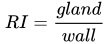
where:

RI is the Reid Index
wall is the thickness of the airway wall between the epithelium and the cartilage's perichondrium
gland is the thickness of the mucus-producing gland at the location of inspection.

Interpretation

[edit]

A normal Reid Index should be smaller than 0.4, the thickness of the wall is always more than double the thickness of the glands it contains. Chronic smoking causes submucosal gland hypertrophy and hyperplasia, leading to a Reid Index of >0.5 indicating chronic bronchitis.[4]

References

[edit]
Revisions and contributorsEdit on WikipediaRead on Wikipedia
from Grokipedia
The Reid index is a histopathological metric used to quantify the degree of submucosal in the bronchi, defined as the ratio of the thickness of the bronchial layer to the total thickness of the bronchial wall between the and the . Developed by British pathologist Lynne Reid in 1960 as a diagnostic tool for chronic bronchitis, it provides a standardized measurement observed in microscopic sections of bronchial tissue, where the thickness is measured at multiple points along the and averaged relative to the wall thickness. In healthy individuals, the Reid index is typically less than 0.4, reflecting a layer that occupies no more than about 40% of the submucosal space; values exceeding this threshold indicate pathological enlargement of the s, a hallmark of chronic bronchitis characterized by excessive production and airway inflammation. This index has become a cornerstone in pulmonary pathology for assessing the structural changes in (COPD), particularly the subtype, where gland correlates with clinical symptoms such as productive and hypersecretion. Reid's original study demonstrated that the index rises progressively with disease severity, distinguishing cases from normal lungs and even from other conditions like , which primarily affect alveolar structures rather than bronchial glands. Over time, research has validated its utility in postmortem and analyses, showing associations with smoking history and age-related changes, though it overlaps somewhat with non- populations and is thus best used alongside clinical and radiographic findings. Despite limitations, such as variability in measurement across bronchial generations and the need for precise histological preparation, the Reid index remains influential in epidemiological studies of and in evaluating therapeutic interventions aimed at reducing gland .

Background

Definition

The Reid index is a histopathological measurement defined as the ratio of the thickness of the layer to the total thickness of the , assessed in a microscopic cross-section of a from the basement membrane of the to the of the . This quantitative metric evaluates the relative proportion of glandular tissue within the , providing an objective indicator of structural changes in the airway wall. Submucosal glands are seromucinous structures located beneath the , composed of serous and mucous cells that secrete to protect and lubricate the airways. Their relative enlargement, as captured by the Reid index, reflects glandular hypertrophy resulting from chronic irritation or in the . In respiratory pathology, the Reid index serves to quantify the extent of mucous gland proliferation, which is particularly prominent in conditions like chronic bronchitis where elevated values signify pathological remodeling of the bronchial wall.

Historical Development

The Reid index was developed by Dr. Lynne McArthur Reid in the late 1950s while she was conducting research on chronic bronchitis at the Institute of Diseases of the Chest in . As a pathologist at the affiliated , Reid focused on the pathological changes in airways associated with respiratory diseases, leading to the creation of this metric to standardize the assessment of bronchial gland hypertrophy. Reid's foundational contributions to airway pathology were detailed in her seminal 1960 paper published in Thorax, which introduced the index as a quantitative diagnostic tool for evaluating mucous gland enlargement in chronic bronchitis. This work built on her earlier observations of glandular alterations in postmortem lung specimens and established a reproducible method for measuring these changes relative to bronchial wall thickness. The index quickly became a reference standard in histopathological analysis of airway remodeling. A key professional milestone for Reid occurred in 1967, when she became the first woman appointed as professor of experimental pathology in at the University of London's Cardiothoracic Institute, enhancing the visibility and adoption of her index within respiratory medicine. This achievement underscored her influence in integrating quantitative pathology into clinical research on lung diseases. In the 1960s, the Reid index gained early traction through its application in postmortem studies of and patients with chronic bronchitis, where it was used to correlate glandular with smoking exposure and severity, as demonstrated in analyses of necropsy lungs. For instance, researchers like Restrepo and Heard employed the method to measure gland-to-wall ratios in bronchial sections from affected individuals, confirming its utility in identifying pathological bronchial changes.

Measurement

Sample Preparation

The Reid index assessment requires bronchial tissue samples primarily obtained from postmortem autopsies, where the lungs are dissected to isolate segments of the major bronchi. In living patients, endobronchial biopsies procured via fiberoptic bronchoscopy provide an alternative source, although such samples may be limited in size and depth, potentially complicating full-wall measurements. Samples are selected from cartilaginous bronchi of the 2nd to 5th order to capture regions with well-defined submucosal glands and supporting plates, ensuring reliable structural reference points for the index. Immediately after , tissue samples are immersed in 10% neutral buffered formalin or equivalent fixatives to halt autolysis and preserve the architectural integrity of the glandular layer. The fixed specimens undergo through graded alcohol series, clearing in , and infiltration with molten , followed by embedding in paraffin blocks for stable storage and sectioning. Transverse sections are prepared using a rotary , yielding slices 4-6 micrometers thick to balance resolution of cellular details with overall tissue visibility under light microscopy. These sections are mounted on slides and stained either with hematoxylin and eosin (H&E) for routine histological evaluation of wall components or with Alcian blue-periodic acid Schiff (AB-PAS) to accentuate acidic and neutral mucins within the submucosal glands. Sections must be strictly to the bronchial axis to avoid from oblique or tangential planes, which could artifactually alter perceived thicknesses. To mitigate intra-sample variability due to regional differences in gland distribution, at least 3-5 non-adjacent sections per bronchial segment are routinely prepared, with measurements averaged across them for a representative value. This preparation protocol supports precise linear measurements essential for calculating the Reid index.

Technique

The technique for measuring the Reid index utilizes light microscopy to evaluate the thickness of submucosal glands relative to the bronchial wall in histological sections obtained from prepared or samples. Observations are conducted at magnifications ranging from 100x to 400x to distinctly visualize the bronchial wall layers, including the , , and . Precise linear measurements in micrometers are obtained using an ocular micrometer fitted to the microscope eyepiece or digital image analysis software such as ImageJ. The bronchial wall thickness is defined as the distance from the basement membrane to the perichondrium, serving as the baseline for assessment. Submucosal gland thickness is determined by tracing the depth at multiple points—typically 10 to 20 measurements per section—perpendicular to the wall surface, with values averaged to account for intra-sample variability and ensure reliability. To maintain accuracy, measurements exclude and from gland assessments, and only perfectly transverse sections are selected to avoid distortions from oblique cutting angles.

The Reid index (RI) is defined mathematically as the of the thickness of the submucosal glands (TgT_g) to the thickness of the bronchial wall (TwT_w): RI=TgTwRI = \frac{T_g}{T_w} This dimensionless ratio arises because both TgT_g and TwT_w are measured in the same units, typically micrometers, under microscopic examination of histological sections. The component TgT_g represents the average thickness of the submucosal glands, determined by measuring the distance from the epithelial to the deepest extent of the gland along perpendicular lines to the wall, with multiple such measurements averaged across sections. In contrast, TwT_w denotes the average thickness of the bronchial wall, measured as the total depth from the epithelial to the of the , excluding the and themselves, again averaged from multiple perpendicular measurements.

Computation Process

To compute the Reid index accurately from raw histological measurements, multiple assessments of the submucosal gland thickness (TgT_g) and the bronchial wall thickness (TwT_w, measured from the to the inner ) are performed across various sections of the tissue sample. Typically, at least 10 such measurements are taken per or section to capture structural variability and reduce . The averaging protocol begins by calculating the of the TgT_g values and the of the TwT_w values separately from these multiple readings, which helps minimize the impact of any outliers or irregular tissue features. This gland thickness and wall thickness are then used in the division step to obtain the Reid index (RI) as the ratio of the averaged TgT_g to the averaged TwT_w, expressed with precision to two decimal places for consistency in reporting. Variability in the measurements is handled by computing the standard deviation (SD) of the individual thickness ratios or the final RI value, providing a measure of reproducibility; for datasets with many observations (e.g., from multiple bronchi or subjects), statistical software like ImageJ for image analysis or R for aggregation and SD calculation is often employed. As a representative example, suppose the averaged gland thickness across measurements is 50 μm and the averaged wall thickness is 150 μm; the RI is then computed as 50/150=0.3350 / 150 = 0.33.

Interpretation

Normal Values

In healthy individuals, the Reid index typically ranges from 0.25 to 0.40, signifying that submucosal glands occupy less than 40% of the bronchial wall thickness between the and cartilage. This upper limit of 0.40 serves as a diagnostic threshold, with values below it reflecting normal glandular proportions in non-diseased airways. Population data from autopsy studies of non-smokers indicate Reid index values around 0.30 in large bronchi, derived from measurements in unselected adult cohorts without respiratory . For instance, original observations reported a of 0.26, while meta-analyses of multiple studies yield averages near 0.37, underscoring consistency across healthy samples. The Reid index exhibits slight variations influenced by age and bronchial location. In children and infants, values are modestly higher, often reaching up to 0.45, as evaluations show means of 0.37 to 0.41 across tracheal and bronchial levels, reflecting developmental glandular maturity. In adults without , the index stabilizes at lower levels and decreases distally along the bronchi, with minimal site-to-site differences in the major bronchial tree. Healthy lungs demonstrate minimal glandular alterations, remaining unaffected by short-term environmental irritants, as confirmed in longitudinal assessments of non-smokers.

Pathological Significance

An elevated Reid index, typically exceeding 0.4, signifies submucosal gland and , which are hallmarks of chronic mucus hypersecretion in the airways. This threshold reflects pathological expansion of the layer relative to the bronchial wall, distinguishing diseased states from normal bronchial architecture where values remain below 0.4. In chronic bronchitis, a primary phenotype of (COPD), the Reid index often surpasses 0.5, driven by smoking-related and submucosal gland enlargement that promote excessive production and airway obstruction. These glandular changes exacerbate airflow limitation by narrowing the bronchial lumen and impairing . Histopathological studies have linked higher Reid index values to increased sputum production, with significant correlations observed between gland-to-wall ratios and daily sputum volume in patients with chronic bronchitis. Furthermore, elevated indices are associated with intensified bronchial , including greater and infiltration within the submucosal glands of smokers exhibiting chronic sputum production. Seminal research from the 1960s onward, including necropsy examinations of over 100 cases, confirmed elevated Reid indices in the majority of pathologically verified specimens, underscoring the metric's role in identifying glandular as a core disease mechanism.

Applications

Research Uses

In postmortem epidemiological studies from the 1960s and 1970s, the Reid index served as a key morphometric tool to quantify smoking-related bronchial in large cohorts. Lynne Reid's foundational 1960 work introduced the index through measurements on bronchial sections from cases of , including , demonstrating its value in identifying glandular enlargement as a hallmark of the condition. Subsequent studies expanded this application, correlating elevated Reid index values with history and revealing significantly higher indices in smokers compared to nonsmokers. These findings underscored the index's role in establishing as a driver of bronchial . The Reid index has also been instrumental in pediatric research, particularly for investigating sudden infant death syndrome (SIDS) and early airway development in infants under one year of age. A 2004 study evaluated the index across tracheal and bronchial levels in normal infants, SIDS cases, and age-matched controls, finding it remarkably constant (standard deviation 0.06–0.10) and useful for detecting subtle variations in glandular proportions that may relate to immature maturation or SIDS risk factors. These findings highlighted the index's applicability beyond adult chronic conditions, providing insights into congenital or early-life bronchial adaptations without relying on symptomatic criteria. In experimental animal models, the Reid index has been applied to assess acute and chronic effects of exposure on airway glands, particularly in . Early studies in the 1970s exposed rats to tobacco smoke and measured tracheal gland via the index, observing dose-dependent increases that mimicked human chronic bronchitis changes, with alone causing a shift toward acid production in goblet cells and glands. More recent models continue this use, confirming early glandular responses to irritants and aiding in the evaluation of interventions. Contemporary research in the 2020s integrates the Reid index with molecular analyses to elucidate COPD , focusing on correlations with markers like and receptor signaling. For instance, bronchial measurements using the index have been combined with assessments of TGF-β type II receptor expression, revealing decreased levels in COPD smokers that inversely correlate with index values and indicate impaired regulatory pathways driving . Ongoing studies, such as a quantitative evaluation of submucosal changes in COPD patients (as of ), employ the index to track treatment-related alterations, linking morphological data to molecular profiles like overproduction for targeted therapeutic insights.

Clinical Relevance

The Reid index serves as a histopathological tool to support the diagnosis of chronic bronchitis by quantifying submucosal gland in bronchial biopsies or specimens, where an elevated value (typically >0.4) correlates with clinical symptoms such as persistent and production. This measurement aids pathologists in confirming glandular enlargement as a structural hallmark of the condition, particularly when integrated with patient history to differentiate chronic bronchitis from other respiratory disorders. In terms of prognostic value, a higher Reid index in histopathological examinations is associated with more severe glandular changes that contribute to progressive airflow obstruction and diminished lung function in (COPD), thereby informing assessments of disease severity. However, its prognostic utility is tempered by variable correlations between index values and overall clinical progression, as glandular hypertrophy may not always align precisely with symptom intensity or long-term decline. The Reid index functions in a complementary capacity within clinical practice, often used alongside non-invasive tests like for functional assessment and for structural evaluation of airways, rather than as a standalone diagnostic metric due to the invasive nature of obtaining tissue samples. Its limitations, including overlap in values between affected and unaffected individuals and weaker clinicopathological correlations compared to alternative morphometric methods like gland volume density, restrict its routine application in living patients. In contemporary settings, the Reid index has limited adoption in everyday clinical diagnostics owing to these constraints and the preference for less invasive modalities, but it retains value in for attributing smoking-related bronchial changes in cases of (SIDS) or unexplained adult deaths, where elevated indices help link glandular to chronic exposure histories.

References

Add your contribution
Related Hubs
User Avatar
No comments yet.