Hubbry Logo
Richard ProennekeRichard ProennekeMain
Open search
Richard Proenneke
Community hub
Richard Proenneke
logo
8 pages, 0 posts
0 subscribers
Be the first to start a discussion here.
Richard Proenneke
Richard Proenneke
from Wikipedia

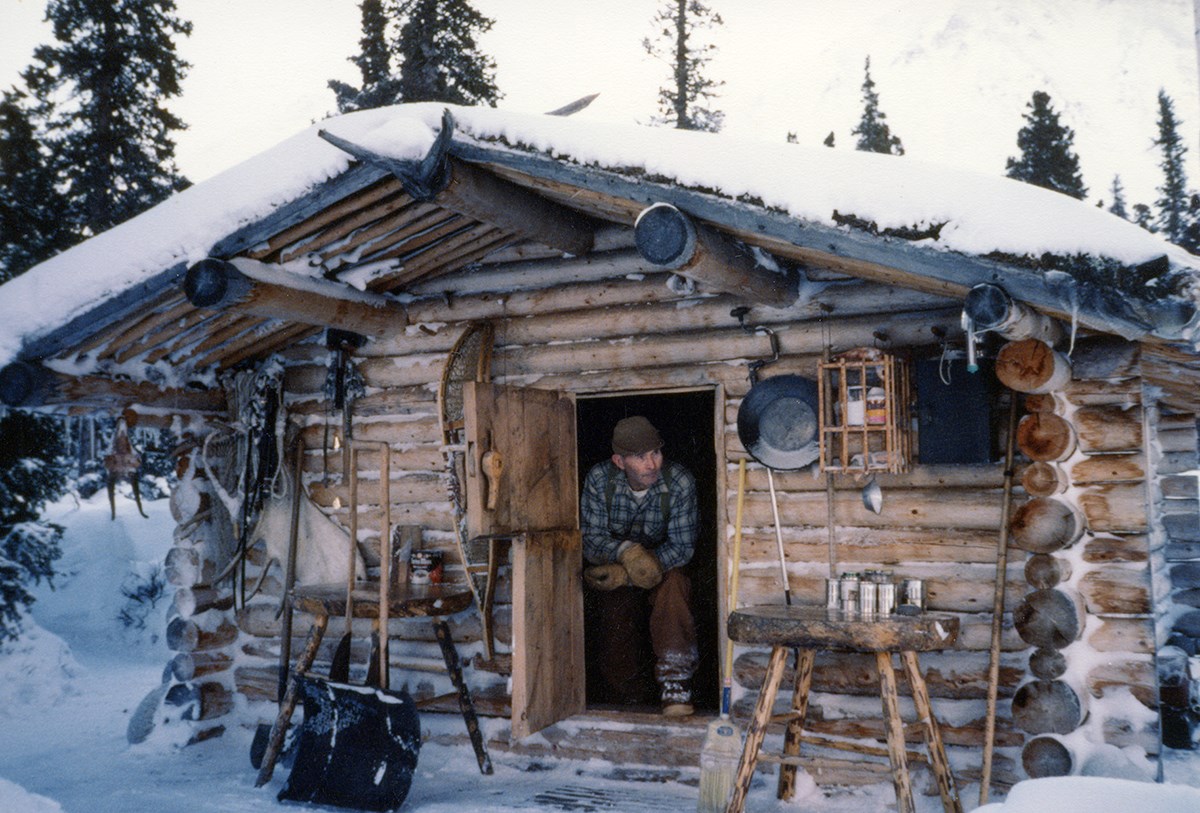
Richard Louis Proenneke (/ˈprɛnək/; May 4, 1916 – April 20, 2003) was an American self-educated naturalist, conservationist, writer, and wildlife photographer who, from the age of about 51, lived alone for nearly thirty years (1968–1998) in the mountains of Alaska in a log cabin that he constructed by hand near the shore of Twin Lakes. Proenneke hunted, fished, raised and gathered much of his own food, and also had supplies flown in occasionally. He documented his activities in journals and on film, and also recorded valuable meteorological and natural data.[1][2] The journals and film were later used by others to write books and produce documentaries about his time in the wilderness.

Key Information

Proenneke bequeathed his cabin to the National Park Service upon his death and it was included in the National Register of Historic Places four years later. The cabin is a popular attraction of Lake Clark National Park.

Early life

[edit]

Proenneke descended from a family of German immigrants.[3] His father, William Christian Proenneke (1880–1972), served in World War I, and made his living as a house painter, carpenter and well driller. His mother, Laura (née Bonn) (1884–1966) was a homemaker and gardener. His parents married in December 1909 and had three daughters and four sons: Robert, Helen, Lorene, Richard (Dick), Florence, Paul, and Raymond (Jake).[4][1]: xiii The year of Proenneke's birth is often mistakenly given as 1917, but social security and census records note Richard Louis Proenneke was born in Primrose, Iowa, on May 4, 1916.

Proenneke completed primary school in Primrose, but left high school after two years because he did not enjoy it. Until 1939, he worked in proximity to Primrose driving tractors, working with farm equipment, and doing typical chores Iowa family farms required at the time. He also admired motorcycles and obtained a Harley Davidson as a teen.[1]: xiii

[edit]

Proenneke enlisted in the United States Navy the day after the attack on Pearl Harbor and served as a carpenter. He spent almost two years at Pearl Harbor and was later stationed in San Francisco waiting for a new ship assignment. After hiking on a mountain near San Francisco he contracted rheumatic fever and was hospitalized at Norco Naval Hospital for six months. During his convalescence the war ended and he was given a medical discharge from the Navy in 1945.[1]: xiii According to one of his biographers and friend, Sam Keith, the illness was very revealing for Proenneke, who decided to devote the rest of his life to the strength and health of his body.[citation needed]

Later career

[edit]

Following his discharge from the Navy, Proenneke went to school to become a diesel mechanic. The combination of his high intelligence, adaptability, and strong work ethic helped him become a skilled technician. Though adept at his trade, Proenneke eventually yielded to his love of nature and moved to Oregon to work at a sheep ranch. He moved to Shuyak Island, Alaska, in 1950.

For several years, he worked as a heavy equipment operator and repairman on the Naval Air Station at Kodiak. He spent the next several years working throughout Alaska as both a salmon fisherman and diesel technician. He worked for the Fish and Wildlife Service at King Salmon on the Alaska Peninsula. His skills as a technician were well-known and sought after, and he was able to save for retirement.[citation needed]

Twin Lakes cabin

[edit]
Richard Proenneke Site
Park Service photo of the cabin
Richard Proenneke is located in Alaska
Richard Proenneke
LocationSoutheastern end of upper Twin Lakes, Lake Clark National Park and Preserve
Nearest cityPort Alsworth, Alaska
Coordinates60°38′42″N 153°49′15″W / 60.645°N 153.82096°W / 60.645; -153.82096
Arealess than one acre
Built1967 (1967)
Built byRichard Louis "Dick" Proenneke
NRHP reference No.06000241[5]
Added to NRHPMarch 8, 2007

On May 21, 1968, Proenneke arrived at his new place of retirement at Twin Lakes. Beforehand, he made arrangements to use a cabin on Upper Twin Lake owned by retired Navy Captain Spike Carrithers and his wife Hope of Kodiak (in whose care he had left his camper). This cabin was well-situated on the lake and close to the site that Proenneke chose for the construction of his own cabin.[6][7]

Proenneke's cabin is handmade and is notable for its fine craftsmanship as a result of his carpentry and woodworking skills; he also made 8mm films covering its construction.[7] Most of the structure and the furnishings are made from materials in and around the site, from the gravel taken from the lake bed to create the cabin's base, to the trees he selected, cut down, and then hand-cut with interlocking joints to create the walls and roof rafter framing. The fireplace and flue were made from stones he dug from around the site and mortared in place to create the chimney and hearth. He used metal containers for food storage: one-gallon cans were cut into basin shapes and buried below the frost line. This ensured that fruit and perishables could be stored for prolonged periods in the cool earth yet still be accessible when the winter months froze the ground above them. Proenneke's friend, bush pilot and missionary Leon Reid "Babe" Alsworth, returned periodically by seaplane or ski-plane to bring mail, food, and orders that Proenneke placed through him to Sears.[8]

Proenneke remained at Twin Lakes for the next sixteen months, after which he briefly went home to visit relatives and secure more supplies. He returned to Twin Lakes the following spring and remained there for most of the next thirty years, traveling to the contiguous United States only occasionally to visit his family. He made a film record of his solitary life, which was later re-edited and made into the documentary Alone in the Wilderness. In 2011 a sequel was produced after enough footage for at least two more programs was discovered. Alone in the Wilderness: Part 2 premiered on December 2, 2011.

Proenneke's cabin was added to the National Register of Historic Places in 2007. The site is a popular attraction for many who want to personally experience parts of Proenneke's life and values.[5][7]

Death and legacy

[edit]

In 1999, at age 83, Proenneke left his cabin and moved to Hemet, California, where he lived the remainder of his life with his brother Raymond "Jake" Proenneke. He died of a stroke on April 20, 2003, at the age of 86. He willed his cabin to the National Park Service, and it remains a popular visitor attraction in the still-remote Twin Lakes region of Lake Clark National Park.[9][2]

Sam Keith, who came to know Proenneke at the Kodiak Naval Station and went on numerous hunting and fishing trips with him, suggested that Proenneke's journals might be the basis for a good book. In 1973, Keith published the book One Man's Wilderness: An Alaskan Odyssey, based on Proenneke's journals and photography.[1]: vii Proenneke however alleged that Keith had "changed some things" to embellish the story, such as writing that Proenneke had assumed a role as King of Bears and wielded power over them. After years in print it was reissued in a new format in 1999, winning that year's National Outdoor Book Award (NOBA).[10] A hardcover "commemorative edition", celebrating the fiftieth anniversary of when Proenneke first broke ground and made his way in the Alaskan wilds in 1968 was published by Alaska Northwest Books in 2018. In 2003, some of the copyrighted text from the book and some of Proenneke's film were used with permission in the documentary Alone in the Wilderness,[11] which began appearing on U.S. Public Television. It follows Proenneke's life as he builds the cabin from the surrounding natural resources and includes his film footage and narration of wildlife, weather, and the natural scenery while he goes about his daily routine over the course of the winter months.

In 2005, the National Park Service and the Alaska Natural History Association published More Readings From One Man's Wilderness, another volume of Proenneke's journal entries. The book, edited by John Branson, a longtime Lake Clark National Park employee and friend of Proenneke, covers the years when the park was established. Proenneke had a very close relationship with the Park Service, assisting them in filming sensitive areas and notifying them if poachers were in the area.[citation needed]

The Early Years: The Journals of Richard L. Proenneke 1967–1973 was published by Alaska Geographic in 2010. As with More Readings From One Man's Wilderness, the volume is edited by John Branson. This collection of journals covers Proennekes' first years at Twin Lakes, including the construction of his cabin and cache. The journal entries overlap those in Sam Keith's edited collection of some of Proenneke's journals, One Man's Wilderness: An Alaskan Odyssey. But unlike that book—in which Keith frequently modified Proenneke's writing style—The Early Years presents Proenneke's journals with minimal or no modification.[citation needed]

In 2017, a Richard Proenneke museum exhibit was opened at the Donnellson Public Library in Donnellson, Iowa, near Proenneke's hometown of Primrose. The exhibit features a replica of Proenneke's cabin, some of his writings, and other artifacts.[12]

In 2016 and 2018, respectively, A life in Full Stride: The Journals of Richard L. Proenneke 1981-1985 and Your Life here is an Inspiration: The Journals of Richard L. Proenneke 1986–1991 were published. In 2020, the fifth and final collection of Proenneke's journals, Reaching the End of the Trail: The Journals of Richard L. Proenneke 1992–2000 was published. These three final collections were published by the Friends of Donnellson Public Library, The Richard Proenneke Museum, and were edited by John Branson.[citation needed]

Monroe Robinson, a woodworker who restored Dick's cabin and spent 19 summers there after Dick moved out, giving tours, wrote a book called the The Handcrafted Life of Dick Proenneke in 2021. This book focused on the tools and hand-made creations of Dick through his journals.[citation needed]

Additionally, the Donnellson Public Library published, in 2024 and 2025, Dear Jake Volume I and Dear Jake Volume II. These books include letters written from Richard to his brother Raymond "Jake" Proenneke. These two volumes cover the years 1965-1984 and are believed to be the very first Journal Richard wrote at Twin Lakes.[citation needed]

See also

[edit]

References

[edit]

Bibliography

[edit]
[edit]
Revisions and contributorsEdit on WikipediaRead on Wikipedia
from Grokipedia
Richard Louis Proenneke (May 4, 1916 – April 20, 2003) was an American naturalist, conservationist, writer, and wildlife photographer renowned for his 30 years of self-reliant living in the isolated wilderness of Alaska's Twin Lakes region, where he hand-built a using only traditional tools and documented his daily experiences with nature through detailed journals and 16mm films. Born in Primrose, , as the fourth of seven children to William Christian Proenneke, a carpenter, and Laura Etta Bonn Proenneke, he grew up amid the hardships of the , which instilled in him a lifelong frugality and appreciation for manual craftsmanship. After completing two years of high school, Proenneke joined the workforce as a carpenter's apprentice before enlisting in the U.S. Navy on December 8, 1941, the day after the , and served as a carpenter through the end of in 1945. Following his discharge, Proenneke worked various jobs as a diesel mechanic and salmon fisherman before moving to Alaska in 1950, initially to Shuyak Island for a brief period of cattle ranching, then taking employment as a heavy equipment operator and repairman at the Kodiak Naval Base. In the late 1960s, an eye injury caused permanent partial blindness in his left eye, prompting his retirement around age 52. Motivated by the injury and a deepening affinity for wilderness solitude, Proenneke first visited the remote Upper Twin Lake in 1962 at the invitation of friends Spike and Hope Carrithers, who had a cabin there; he returned in May 1967 to select a site and began constructing his own 12-by-16-foot log cabin the following spring using spruce logs felled on-site, completing the basic structure in three months without electricity, running water, or modern machinery. From 1968 to 1999, Proenneke sustained himself through , , and while meticulously observing and recording the local wildlife, weather patterns, and seasonal changes in over 30 years of journals that formed the basis for the bestselling book One Man's Wilderness (1973), co-authored with Sam Keith, and its sequel More Readings from One Man's Wilderness (2005). He also filmed hours of footage, later edited into the acclaimed documentaries Alone in the Wilderness (2003) and Alone in the Wilderness Part II (2004) by producer Bob Swerer, which highlight his harmonious existence with the environment. In 1999, declining health forced Proenneke to leave Twin Lakes for care in , where he spent his final years; upon his death, he bequeathed his cabin and artifacts to the , which added the site to the in 2007 as a symbol of stewardship and self-sufficiency.

Early Years

Birth and Family

Richard Louis Proenneke was born on May 4, 1916, in Primrose, a small rural community in Harrison Township, . He was the fourth of seven children born to William Christian Proenneke (1880–1972), a veteran who worked as a house painter, carpenter, and well driller, and Laura Etta Bonn Proenneke (1884–1966), a homemaker who managed the family home. The Proenneke household was marked by frugality and hard work, shaped by the economic hardships of the , which reinforced a culture of self-reliance and resourcefulness in rural . Proenneke's siblings included Robert Edgar (1910–1998), Helen E. (1912–2008), Lorene E. (1913–2008), Florence Ethel (1918–2003), Paul Bernard (1920–1928), and Raymond William (1923–2014), creating a large family environment centered on their farmstead. Life on the farm involved daily chores such as tending , maintaining equipment, and assisting with harvests, exposing the children from an early age to the demands of manual labor in a pre-mechanized agricultural setting. These responsibilities, combined with his father's skilled trades, fostered Proenneke's early interest in mechanical tasks, where he began developing hands-on abilities through practical farm maintenance rather than formal training. Growing up without completing high school or pursuing higher education, Proenneke's childhood emphasized self-taught skills honed amid the isolation and simplicity of Midwestern farm life, laying the groundwork for his later independence. The family's emphasis on thrift and ingenuity during lean times instilled a lifelong aversion to waste, influencing his approach to resource use in adulthood.

Education and Early Employment

Richard Proenneke received his elementary education at a one-room schoolhouse in Primrose, , where he completed the around age 13. He then attended high school in Donnellson for two years before leaving to contribute full-time to the . In the 1930s, amid the , Proenneke worked as a farmhand across farms, performing tasks such as harvesting crops and caring for , experiences that honed his physical stamina and introduced foundational techniques observed from his father's work as a house carpenter. These early labors instilled a robust shaped by his family's rural values. By the late 1930s, Proenneke took on short-term roles as a and apprentice carpenter, navigating economic challenges while building through practical application. Complementing his limited schooling, Proenneke engaged in self-directed learning via extensive reading and trial-and-error experimentation with tools and materials, deliberately avoiding the pull of city life.

Military and Professional Career

Richard Proenneke enlisted in the United States Navy on December 8, 1941, the day after the , motivated by a sense of patriotic duty. His prior experience as a carpenter's apprentice in civilian life prepared him well for his assigned role as a carpenter's mate third class, where he contributed to essential and repair tasks. Proenneke served in the Pacific Theater from 1941 to 1945, spending nearly two years stationed at , , after the base's recovery from the initial assault. There, he performed and duties on naval vessels, including repairing damage from combat operations and preparing ships for deployment in active war zones. Later transferred to for a new ship assignment, his service involved similar hands-on work amid the ongoing demands of the conflict. While stationed in awaiting his next assignment, Proenneke contracted , an illness that severely weakened him and required immediate hospitalization. He spent six months recovering at the Norco Naval Hospital in , where the illness left him with permanently reduced physical stamina. The war concluded during Proenneke's convalescence, leading to his honorable medical discharge from the in December 1945. This setback profoundly influenced his outlook, fostering a deepened appreciation for physical vitality and a simpler way of life that shaped his future pursuits.

Post-War Work and Skills Development

Following his medical discharge from the U.S. Navy in 1945 due to , Richard Proenneke recovered from the illness, where it left him with lingering physical limitations that influenced his cautious approach to strenuous activities throughout his life. By 1949, he relocated to , to enroll in a vocational course on diesel mechanics and heavy equipment operation, skills he pursued to secure stable employment while building on his Navy-acquired mechanical knowledge. He completed the training and soon found work as a diesel mechanic, initially in Oregon, where his precision and in repairing engines earned him a reputation for thoroughness. In 1950, Proenneke moved to for the first time, taking a position at the in Kodiak as a and repairman, roles that demanded expertise in maintaining bulldozers, tractors, and other machinery under harsh conditions. In 1955, he relocated to Shuyak Island to maintain machinery at a salmon cannery. Throughout the , he supplemented this work with seasonal jobs as a commercial fisherman along 's coasts, honing his endurance and familiarity with remote environments while operating independently on fishing boats. By the early , he transitioned to roles as a diesel for the U.S. Fish and Wildlife Service at , servicing equipment in isolated outposts and further developing his ability to improvise repairs with limited resources. In 1965, while on Shuyak Island, a tree branch struck his left eye during a windstorm, causing permanent partial blindness and prompting his retirement at age 49. Proenneke's professional experiences cultivated deep expertise in mechanics and carpentry—skills rooted in his father's tutelage and refined through hands-on Navy and civilian work—enabling him to fabricate tools and structures from raw materials without modern aids. He also mastered survival techniques, such as , , and weather adaptation, through solitary fieldwork in Alaska's . Never married and without children, Proenneke prioritized independent, introspective labor over social ties, a choice that aligned with his growing affinity for . From the mid-1950s onward, he spent progressively more time exploring Alaska's , scouting potential sites for off-grid living and solidifying his commitment to a self-sufficient existence there.

Life in Alaska

Preparation and Relocation

In the spring of 1967, at the age of 51, Richard Proenneke scouted potential sites in the remote Twin Lakes region of what is now . After exploring several locations by floatplane and on foot, he selected a spot on the northwest shore of Upper Twin Lake for its exceptional isolation—over 100 miles from the nearest road—combined with essential natural resources such as clear freshwater, dense stands of and for timber, and abundant fish and game populations. Proenneke's motivations for this relocation stemmed from a desire for profound solitude following a tree branch striking his left eye in a 1965 windstorm, causing permanent partial blindness and prompting his retirement at age 49 from work at a salmon cannery on Shuyak Island, . This decision was further shaped by his multiple prior visits to during his professional career, where he had developed a deep affinity for its untamed landscapes and self-reliant ethos, as well as a rheumatic heart condition from fever contracted during his naval service in . To test his resolve, he first established a temporary base using a nearby existing cabin that summer, assessing the feasibility of permanent settlement. On May 21, 1968, Proenneke returned for good via from the village of Port Alsworth, approximately 25 miles away, transporting roughly 700 pounds of essential supplies including nails, flour, sugar, salt, rice, and basic tools in carefully packed crates to minimize weight. He intentionally limited imported goods to fundamentals, intending to source , , and building materials from the surrounding to maintain harmony with the environment. His prior mechanical expertise from operating heavy machinery proved invaluable in organizing the camp's initial setup, such as rigging secure storage and basic infrastructure. The early days brought immediate challenges as Proenneke adapted to the , characterized by short, intense summers with nearly 20 hours of daylight and sudden drops to freezing temperatures, alongside long, dark winters that demanded meticulous preparation. Wildlife encounters were frequent, including close approaches by grizzly bears drawn to the area's salmon runs and berry patches, requiring constant vigilance and non-confrontational strategies. Transportation remained precarious, relying solely on weather-dependent floatplane flights for rare resupplies or mail, often grounded by , wind, or rain in this unpredictable backcountry.

Cabin Construction and Daily Living

In the summer of 1968, Richard Proenneke completed the construction of his 12-by-16-foot at Upper Twin Lake using only hand tools and locally sourced materials, having harvested and prepared logs from the surrounding the previous summer. He peeled the bark from the logs to prevent damage, notched them by hand for interlocking corners, and chinked the gaps with gathered nearby; the consisted of a layer over poles for insulation, while the foundation rested on moss-covered stones to deter moisture. Inside, Proenneke crafted essential furniture, including a sturdy from split logs and a dining table from a single slab, all assembled without nails or metal fasteners where possible. He also erected supporting structures, such as a 6-by-4-foot cache elevated on 9-foot poles sheathed in tin to safeguard supplies from bears and , accessed via a handmade , and a woodshed combined with an built from poles about 45 feet from the main cabin. Proenneke sustained himself through self-sufficient practices over his 30 years at Twin Lakes from 1968 to 1999, drawing water directly from the lake for drinking and chores after boiling or settling it, and heating the cabin with a wood stove fueled by firewood he chopped and stored in the woodshed. His diet relied on a combination of stored staples like oatmeal, beans, bacon, eggs, and sourdough pancakes, supplemented by foraging wild berries in summer, fishing for trout and grayling from the lake, and hunting or salvaging game such as Dall sheep, moose, and occasionally porcupine to minimize waste and respect the land. Despite a rheumatic heart condition stemming from fever contracted during his naval service, Proenneke maintained robust physical fitness through rigorous daily chores, including log hauling, tool sharpening, and trail maintenance, which he viewed as essential to his health and harmony with the environment. His daily routine followed the seasons, emphasizing minimal disturbance to and limited interaction with the outside world, primarily through occasional supply flights from the Alsworth at nearby Lower Twin Lake. In spring and summer, he focused on small plots of potatoes and near the cabin, , and to observe migrations; fall involved small game like squirrels for and , while winter centered on wood gathering, cabin repairs, and enduring extreme cold by bundling in layered he mended himself. Adaptations to challenges included reinforcing the cache against persistent bears, reseeding the with grass and adding chinking annually to withstand heavy and winds, and coping with isolation by pacing activities to avoid overexertion, all while fostering a profound respect for the that sustained him.

Documentation and Legacy

Journals, Films, and Publications

Proenneke meticulously documented his life in the Alaskan wilderness through handwritten journals and 16mm film footage, with intensive journaling beginning in the early at Twin Lakes (though entries date back to the late ) and continuing until 2003. His journals detailed daily activities, observations of , cabin maintenance, and philosophical reflections on solitude and nature. He captured his routines on using a Bolex 16mm camera, recording the construction of his cabin, interactions with , and seasonal changes, often narrating directly to the lens. Proenneke's journals formed the basis for several published books, starting with One Man's Wilderness: An Alaskan Odyssey, co-authored with his friend Sam Keith and first released in 1973 by Alaska Northwest Books. This work, drawn from Proenneke's 1968–1970 entries and accompanied by his photographs, chronicles his relocation to Twin Lakes and cabin-building process. The book was reissued in a 26th anniversary edition in 1999 and a 50th anniversary edition in 2018, the latter featuring a by . It received the 1999 National Outdoor Book Award in the History/ category for its evocative portrayal of self-reliant living. Subsequent volumes expanded on Proenneke's writings, edited primarily by historian John Branson. More Readings from One Man's Wilderness: The Journals of Richard L. Proenneke, 1974–1980, published in 2005, includes excerpts from his later years, focusing on wildlife encounters and environmental observations. The Early Years: The Journals of Richard L. Proenneke, 1967–1973, released in 2010, covers his initial move to and cabin construction, providing context for the original One Man's Wilderness. From 2016 to 2020, Alaska Geographic issued annual journal compilations, such as A Life in Full Stride: The Journals of Richard L. Proenneke, 1981–1985 (2016), Your Life Here Is an Inspiration: The Journals of Richard L. Proenneke, 1986–1990 (2018), Wild and Free, but You Have to Earn It: The Journals of Richard L. Proenneke, 1991–1995 (2019), The Range of Light: The Journals of Richard L. Proenneke, 1996–2000 (2020), and Forever Wild: The Journals of Richard L. Proenneke, 2001–2003 (2020), each highlighting evolving themes of aging, nature's cycles, and legacy. Proenneke's film footage was posthumously compiled into documentaries by filmmaker Bob Swerer Sr., who edited the raw 16mm reels and incorporated Proenneke's narration derived from his journals. The first, Alone in the Wilderness (2004), runs 57 minutes and showcases his cabin life from 1968 onward, emphasizing self-sufficiency and harmony with the environment. A sequel, Alone in the Wilderness Part II (), extends the narrative through 1999, featuring additional footage of wildlife and reflections on decades in isolation. These films, distributed by and available through outlets like the Richard Proenneke Store, have introduced Proenneke's story to wider audiences, preserving his firsthand accounts without alteration.

Death, Preservation Efforts, and Recognition

In 1999, at the age of 83, Proenneke left his cabin at Twin Lakes due to declining health and relocated to , to live with his brother . He spent the remaining years there until his death on April 20, 2003, at age 86, from a . Proenneke's ashes were subsequently scattered at Proenneke Peak near his former cabin site in . Prior to his departure, Proenneke donated his cabin, tools, and an extensive collection of journals and films to the (NPS) in 1999, with his brother Raymond facilitating the transfer. The site, encompassing the cabin and associated outbuildings, was listed on the in 2007, recognizing its significance as an exemplary demonstration of self-reliant wilderness living. The NPS continues to maintain the cabin as a backcountry attraction within Lake Clark National Park and Preserve, emphasizing limited access to preserve the surrounding character. Preservation efforts include periodic restoration work, such as chimney repairs, mold remediation, and structural assessments; for instance, in 2022, a historic structure report was prepared for and outbuildings, and interior preservation activities were conducted in September 2025. Proenneke's legacy has garnered recognition through various commemorative efforts, including the opening of the Richard L. Proenneke Museum in 2017 at the Donnellson Public Library in Donnellson, , near his birthplace, which features a life-size replica of his cabin and original artifacts. His influence on persists, inspiring modern publications such as the 2022 release of additional journal volumes by the museum, which provide insights into his later years.

References

Add your contribution
Related Hubs
User Avatar
No comments yet.