


Community hub
Recent from talks
Contribute something
Nothing was collected or created yet.
Rondane National Park
View on WikipediaRondane National Park (Norwegian: Rondane nasjonalpark) is the oldest national park in Norway, established on 21 December 1962. The park is located in Innlandet county, in the municipalities of Dovre, Folldal, Sel, Nord-Fron, Sør-Fron, Stor-Elvdal, and Ringebu. The park contains ten peaks above 2,000 metres (6,560 ft), with the highest being Rondeslottet at an altitude of 2,178 m (7,146 ft). The park is an important habitat for herds of wild reindeer.[1]
Key Information


The park was enlarged in 2003, and now covers an area of 963 km2 (372 sq mi). Rondane lies just to the east of the Gudbrandsdalen valley and two other mountain areas, Dovre and Jotunheimen are nearby. Dovre National Park lies a very short distance to the north of this park.[1]
Geography
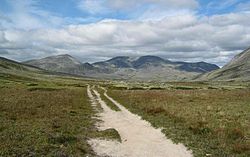
[edit]Rondane is a typical high mountain area, with large plateaus and a total of ten peaks above 2,000 metres (6,600 ft). The highest point is Rondeslottet ("The Rondane Castle") at an altitude of 2,178 metres (7,146 ft). The lowest point is just below the tree line, which is located at approximately 1,000 to 1,100 metres (3,300 to 3,600 ft) above sea level. The climate is mild but relatively arid. Apart from the white birch trees of the lower areas, the soil and rocks are mostly covered by heather and lichen, due to a lack of nutrients. The largest mountains are almost entirely barren; above 1,500 metres (4,900 ft) nothing but the hardiest lichens grow on the bare stones.[1]
The mountains are divided by marked valleys through the landscape; the deepest valley is filled by Rondvatnet, a narrow lake filling the steep space between the large Storronden–Rondeslottet massif and Smiubelgen ("The blacksmith's bellows"). The central massif is also cut by "botns": flat, dead stone valleys below the steep mountain walls of the peaks. Generally, Rondane does not receive enough precipitation to generate persistent glaciers, but glacier-like heaps of snow can be found in the flat back valleys.
At the centre of the park lies the lake Rondvatnet, from which all the peaks above 2,000 metres (6,600 ft) in elevation can be reached in less than one day's walk. In the central and northern regions, the altitude is relatively high compared with the flatter plateaus of the south. Rondane has ten peaks over 2,000 metres (6,600 ft) including:
- Rondeslottet, 2,178 metres (7,146 ft)
- Storronden, 2,138 metres (7,014 ft)
- Høgronden, 2,114 metres (6,936 ft)
- Midtronden western summit, 2,060 metres (6,760 ft)
- Vinjeronden, 2,044 metres (6,706 ft)
- Midtronden eastern summit, 2,042 metres (6,699 ft)
- Trolltinden, 2,018 metres (6,621 ft)
- Storsmeden, 2,016 metres (6,614 ft)
- Digerronden, 2,015 metres (6,611 ft)
- Veslesmeden, 2,015 metres (6,611 ft)
In many parts of the park, there are spread-out holes (kettle holes) created by small remains of ice age glaciers, and peculiar small hills called "eskers" made by ground moraine released from melting glaciers.

History
[edit]Prehistory
[edit]The history of life in the area of the park begins at the end of the latest ice age. Large climate changes allowed reindeer to spread widely across Scandinavia, only to be forced back to a much smaller area — including the Rondane mountain area — only some hundreds of years later. Archaeologists have found that the forest quickly grew at high altitudes; birch trees found at 1,030 metres (3,380 ft) were 8500 years old.
On the mountain plateau, there is evidence that nomadic hunter-gatherers lived off reindeer. Large traps used to catch reindeer can be found at Gravhø and Bløyvangen and are also spread throughout the park. These are constructed from stone to make holes or large fenced-in areas into which reindeer could be tricked or led.
Accompanying the substantial traps, smaller arched stone structures are presumed to have served as concealment for archers awaiting their targets. Dating techniques indicate that the oldest of these traps could be approximately 3500 years old. The majority of discoveries, encompassing residential ruins, are dated to the period spanning 500 to 700 AD.
It is thus known with confidence that the large traps and accompanying walls were used from the 6th century until the onset of the Black Death in the 14th century.[2]
Establishment
[edit]
After nearly a decade of planning, Rondane was established as the first Norwegian National Park on 21 December 1962. It was first established as a nature protection area, but was later named a national park. The main reasons for protecting the park were "to safeguard the natural environment with its native plants, animal life, and cultural heritage and also to secure the environment as a recreational area for future generations".[3]
.jpg)
.jpg)
Legal efforts to protect nature in Norway date from 1954, when the nature protection law was passed. Soon after, in 1955, community meetings were held in the municipalities close to Rondane, and a commission was founded. Norman Heitkøtter was president of the commission, and made it possible by Royal resolution to establish Rondane National Park. At its establishment, the park covered an area of 580 km2 (224 sq mi) (later, this was nearly doubled).
Although Rondane was the first national park in Norway, many others followed. The parks are maintained by the Norwegian Directorate for Nature Management.
2003 expansion
[edit]As a special measure for the protection of the wild reindeer, the park was significantly enlarged in 2003, its area increasing from 580 square kilometres (220 sq mi) to 963 square kilometres (372 sq mi).
The expansion of the park primarily occurred towards the northwest, accompanied by moderate enlargements in the east and south. Furthermore, zones with reduced levels of protection, encompassing both landscape and nature conservation areas, were instituted in conjunction with the park.
A new national park, Dovre National Park, between Rondane and Dovrefjell-Sunndalsfjella National Park was also opened. Following the expansion, it is now only approximately 1 kilometre (0.62 mi) from the northern border of Rondane to the southern border of Dovre National Park, and large sections of adjacent mountain areas are protected by the three parks.
Geology
[edit]
The bedrock in Rondane comes from a shallow sea floor, created 500 to 600 million years ago. From this, changes in the Earth's crust created a mountain area of metamorphic rock and quartz. There are no fossils found in Rondane today and so it is thought the sea where the rock came from contained no animal life.[2]
The present landscape was mostly formed by the last ice age, nine to ten thousand years ago. During that period, significant amounts of ice accumulated, and it is theorized that this ice underwent gradual melting in alternating cycles of thawing and ice build-up.
The ice melting cycles occurred rapidly, digging deep river valleys.[1]
Rondane contains a few small canyons which were created by the rapid ice melting, most prominently Jutulhogget and Vesle-Ula.[1]
Biology
[edit]Rondane is one of the few places in Scandinavia and Europe where wild reindeer (as opposed to the domestic breed) are found.[4] The Directorate for Nature Management regards Rondane as "especially important as a life supporting area for the native reindeer".[5] It is estimated that approximately 2000 to 4000 reindeer live in Rondane and the nearby Dovre area. To protect the reindeer population in their core area during the last ten years[update], hiking trails have been moved. The park was also enlarged in 2003 to provide increased protection for the reindeer.[1]
Other large game, including roe deer and elk (moose) are commonplace along the rims of the park and occasionally musk ox from Dovre can be seen. Wolverines, lynxes, and a small population of bears are also present, while wolves are rare.
The reindeer largely rely on the lichen and reindeer moss that grow together with heather and hardy grass on the quite arid and nutrient-poor stony plateaus. The lichen provide food for the reindeer, but also fertilize the earth, making it possible for less hardy plants to grow, and mice and lemmings to feed. One of the flower species to survive very well is the Glacier Crowfoot, found up to an elevation of 1,700 metres (5,600 ft).[1]
Tourism
[edit]
Visitors to Rondane National Park are permitted to engage in hiking and camping throughout the park, with the exception of areas immediately surrounding cabins.
The park is a motor traffic-free zone, and it operates under minimal special regulations. Licensed individuals are granted the opportunity to fish and hunt within the park's boundaries.
The Norwegian Mountain Touring Association (DNT) is an association that owns and manages a network of mountain cabins in the service of hikers. In Rondane, there is a central cabin by the southern end of Lake Rondvatnet, Rondvassbu. There is also Dørålseter and Bjørnhollia at the northern and eastern rims of the park. All three cabins are staffed, and provide food and limited accommodation (possible to book beforehand). There are also unstaffed cabins in the Park, like Eldåbu where a key is needed.[1]
DNT also mark trails in the Park, with red Ts that are easy to spot. The T-trails lead the way cabin-to-cabin, as well as marking the path to some of the peaks close to Rondvatnet. Recently, some trails have moved slightly to avoid the core areas of the wild reindeer.
The service cabins are also open during the winter season, although they are sometimes only self-serviced off season. Ski trails are marked and sometimes prepared, either by DNT or some of the nearby hotels and skiing resorts.
Rondane in literature
[edit]The landscapes of Rondane have inspired many Norwegian writers. Probably the best-known work is Peer Gynt (1867), a play by Henrik Ibsen, which is partly set in Rondane:
- Act 2, Scene lV
- (Among the Ronde mountains. Sunset. Shining snowpeaks all around.
- Peer Gynt enters, dizzy and bewildered.)
- Peer
- Tower over tower arises!
Hei, what a glittering gate!
Stand! Will you stand! It's drifting
further and further away!
...
- Tower over tower arises!
With this scene, Ibsen wrote Rondane into one of the 19th centuries better-known plays and made Rondane a symbol for Norway.
Peter Christen Asbjørnsen, writer and gatherer of Norwegian folk tales in the mid-19th century, collected many stories connected with Rondane, including Peer Gynt, the story that inspired Ibsen.
A third writer who set one of his famous works in Rondane is the poet Aasmund Olavsson Vinje with his poem Ved Rundarne.
Name
[edit]Rondane is the finite plural of the word rond. Several mountains in the area have the ending -ronden (Digerronden, Høgronden, Midtronden, Storronden and Vinjeronden), and this is the finite singular of the same word. The word rond was probably originally the name of the long and narrow lake Rondvatnet ('Rond water/lake') - the mountains around it were then named after this lake. For the meaning see under Randsfjorden.
See also
[edit]
References
[edit]- ^ a b c d e f g h Ryvarden, Leif, ed. (27 October 2021). "Rondane nasjonalpark". Store norske leksikon (in Norwegian). Kunnskapsforlaget. Retrieved 13 February 2022.
- ^ a b Barth, Edvard K (1984). Rondane (in Norwegian). Oslo: Gyldendal norsk forlag. ISBN 8205133158.
- ^ "Rondane National Park" (in Norwegian). Directorate for Nature Management. 26 September 2004. Archived from the original on 26 September 2004.
- ^ "The wild reindeer areas in Norway". Villrein.no. Retrieved 13 February 2022.
- ^ Norwegian Directorate for Nature Management on Rondane[permanent dead link]
.jpg)
External links
[edit]
- VisitRondane.com
- Norwegian Directorate for Nature Management map of Rondane
- Rondvassbu
- Map
- Images from Rondane
- Rondane Høyfjellshotell


Rondane National Park
View on GrokipediaGeography
Location and Boundaries
Rondane National Park is situated in Innlandet county in south-central Norway, encompassing a mountainous region between the Gudbrandsdalen and Østerdalen valleys.[4][2] The park lies near the town of Otta in the Gudbrandsdalen valley, with its southern extent reaching Ringebu municipality and the northern boundary approaching Hjerkinn on the Dovrefjell plateau.[1] This positioning places it within the broader Scandinavian mountain chain, facilitating access from major transport routes connecting Oslo and Trondheim.[5] The park covers an area of 963 km², defined by established boundaries that include core protection zones where human activities are strictly limited to preserve natural integrity.[1] Surrounding buffer areas extend protection beyond the core, integrating land-use planning to mitigate external impacts such as development and tourism pressures while allowing limited local uses.[6] These boundaries span multiple municipalities, including Dovre, Folldal, Sel, Nord-Fron, Sør-Fron, Stor-Elvdal, and Ringebu, ensuring a contiguous protected landscape.[3] Rondane is adjacent to Dovre National Park to the north, forming a continuous protected corridor that supports broader ecological connectivity, particularly for wild reindeer migration routes traversing the region.[1] The park's boundaries align with these migration paths, with management practices designed to minimize disturbances.[1] Administrative oversight is provided by the Norwegian Environment Agency through the Rondane-Dovre National Park Board, which coordinates conservation efforts across the area.[7][1]Topography and Hydrology
Rondane National Park features a diverse mountainous landscape characterized by rounded, glacier-free peaks and high plateaus, with ten summits exceeding 2,000 meters in elevation, the highest being Rondslottet at 2,178 meters.[8][9] The park encompasses 187 named peaks overall, forming part of the Rondane massif, which includes barren, rocky terrain above the treeline and vast areas covered in heather and lichen.[9] Elevations range from approximately 1,000 meters in the lower valleys to over 2,000 meters at the summits, with the treeline occurring between 1,000 and 1,100 meters, above which the landscape transitions to arid alpine environments.[3][10] The topography includes U-shaped valleys sculpted by past glaciation, deep valley bottoms, and striking features such as the Jutulhogget canyon, a 500-meter-long gorge with walls up to 30 meters high located near Rondvatnet lake.[1][11] The park's hydrology is defined by several key water bodies that drain into larger regional systems. Central to the landscape is Rondvatnet, a long, narrow lake spanning about 95 hectares that lies in the deepest valley between major massifs and serves as a focal point for trails and wildlife.[3][9] Other notable lakes include Atnsjøen, contributing to the park's network of alpine waters.[1] Rivers such as the Atna and Sjoa originate or flow through the park, forming tributaries that eventually join the Gudbrandsdalslågen, the major river system bordering the western edge of the national park.[12][13] These waterways, along with features like the Ulafossen waterfall dropping 50 meters, support a dynamic hydrological regime influenced by seasonal snowmelt and precipitation.[3]Climate
Rondane National Park experiences a continental climate typical of inland Norway, characterized by mild summers and cold, snowy winters with relatively low precipitation. Average summer temperatures in July range from highs of about 19°C to lows of 9°C, while winter months like January see highs around -4°C and lows near -12°C. Annual precipitation is arid, averaging 400–600 mm, predominantly as snow in winter, contributing to drier conditions compared to coastal regions.[14][15] The park's short growing season lasts 100–120 days, primarily from mid-June to mid-September, constrained by its high latitude of approximately 62°N and varying elevations from approximately 1,000 m to over 2,000 m. This period features stable but cool weather, with snow possible even in summer on higher peaks. Seasonal transitions are abrupt, with unpredictable springs from April to June marked by melting snow and fast-flowing rivers, and autumns from August to October prone to rapid shifts to wintry conditions. Winters dominate from mid-October to May, often extending into June, with temperatures dropping to -10°C to -20°C and persistent snow cover.[16][17] Microclimates in the park vary significantly by altitude and topography, with higher plateaus often fog-prone and cooler due to exposure, while lower valleys remain drier and slightly warmer. These variations create diverse environmental conditions across the landscape, influencing local weather patterns. Since 2000, climate change has led to observed shifts in the treeline upward by tens of meters and altered snowmelt patterns, with earlier thawing affecting seasonal hydrology. These changes may impact fauna migration timing, as seen in shifts for species like wild reindeer.[16][18]History
Prehistory and Early Human Use
The region encompassing Rondane National Park has yielded evidence of human activity dating back to the Stone Age, with settlements discovered near lakes like Breisjøene and Holmsjøen in Hedmark (now part of Innlandet county), and Early Iron Age cooking pits indicating seasonal herding and gathering practices in the valleys. These finds suggest early inhabitants utilized the area's resources for temporary settlements, focusing on foraging and livestock management during warmer months.[19] Archaeological evidence points to organized reindeer hunting by Sami and Norse peoples from the Iron Age onward, with pitfall traps from the Iron Age and Medieval periods identified in the park's mountainous terrain, including the Storgrava system (likely Iron Age or Medieval) and the Verket system (dated 1000–1300 AD) designed for mass trapping of wild reindeer herds. These stone- and wood-lined pits, often integrated into funnel-shaped driving systems, facilitated communal hunts and reflect adaptations to the migratory patterns of reindeer populations that have persisted in the region since prehistory.[20][19] Rondane's location along ancient trade routes through Gudbrandsdalen facilitated exchange of goods like furs and salt, with petroglyphs at sites such as Drotten in Fåberg—dated to approximately 6000 years ago—depicting hunting scenes near the valley's edges, alongside Iron Age burial sites like the grave field at Vesle Sølensjøen containing Celtic-influenced artifacts. These elements underscore the area's role as a corridor for cultural and economic interactions from the Bronze Age onward.[19][21] Indigenous practices, including Sami reindeer herding and hunting, demonstrated cultural continuity in the park until the 19th century, with pitfall systems remaining in use until their prohibition in 1864, though some were abandoned earlier due to shifting economies and environmental pressures.[19]Establishment
Rondane National Park was established on 21 December 1962 through a royal resolution, marking it as Norway's first national park.[22] The regulation, issued under the Nature Conservation Act of 1954, designated approximately 580 km² of mountainous terrain in the municipalities of Dovre, Sel, Nord-Fron, Sør-Fron, Sollia, and Folldal as a protected nature reserve to safeguard its unique highland ecosystem.[22] This founding came amid growing concerns over environmental degradation following World War II, as Norway's rapid industrialization and infrastructure development—particularly hydropower projects and road expansions—threatened remote wilderness areas.[23] The primary motivations for the park's creation centered on preserving the region's wild reindeer herds, estimated at around 2,000 animals at the time, and maintaining the untouched mountain landscapes that supported them.[24] Local mountain boards first proposed protection in 1956, driven by fears of habitat loss to human activities, though national authorities shifted emphasis toward broader goals of outdoor recreation and cultural heritage preservation.[23] Conservationists, including ecologist Ivar Mysterud, who conducted pioneering botanical research in Rondane during the late 1950s, played a key role in highlighting the area's ecological value and advocating for its safeguarding against encroaching development.[25] Initial management fell under the Directorate of State Forests (Direktoratet for statens skogar), in coordination with the Ministry of Church and Education, with provisions allowing traditional uses such as grazing and limited hunting to continue under the Mountain Act of 1920.[22] The regulation implemented basic zoning by prohibiting construction, vegetation removal, and motorized access across the core area, while permitting essential activities like reindeer herding to balance protection with local livelihoods; this framework laid the groundwork for stricter oversight as national conservation policies evolved in the following decade.[22][23]Expansions and Recent Developments
In 2003, Rondane National Park was expanded from its original 580 km² to 963 km², primarily to enhance protection for the park's wild reindeer populations by incorporating additional highland areas critical to their habitat.[26][9] This enlargement focused on preserving migration routes and calving sites amid growing pressures from surrounding land use.[1] As part of broader European environmental commitments under the EEA agreement, the park received designation within the Natura 2000 network during the 2000s, emphasizing biodiversity conservation in response to climate change effects—such as diminishing winter snow cover and warmer temperatures impacting alpine ecosystems—and increasing tourism demands.[27] These measures aligned with Norway's obligations to maintain protected habitats, including those vital for reindeer, while promoting sustainable visitor management to reduce habitat fragmentation.[28] In 2025, the Norwegian government introduced stringent conservation actions to address the ongoing decline in wild reindeer numbers, estimated at 1,500–2,000 individuals across the Rondane area, driven by human disturbance and habitat loss.[29] These included temporary closures of key roads, parking facilities, and mountain cabins such as Rondvassbu during sensitive periods like calving season, alongside restrictions on trails to limit recreational impacts.[29][30] The Den Norske Turistforening (DNT) supported these efforts by adjusting operations at five cabins and shortening access seasons, aiming to restore herd functionality.[31] Long-term monitoring of the wild reindeer population has been conducted through the Villreinprosjektet (Wild Reindeer Project), initiated in the 1960s by the Norwegian Institute for Nature Research (NINA) and collaborators, using techniques like GPS collaring to track movements and update demographic data annually.[32] Recent assessments from this initiative have informed adaptive management, highlighting persistent challenges from infrastructure and climate variability while guiding harvest quotas and habitat restoration.[33]Geology
Rock Formations
The bedrock of Rondane National Park is predominantly composed of Sparagmite, a type of arkosic sandstone rich in feldspar, formed during the Eo-Cambrian period approximately 500 to 600 million years ago in shallow marine environments.[34] These sedimentary rocks, which include layers of quartz conglomerates and pelitic sediments, constitute the thick sequence of the Sparagmite Formation, reaching thicknesses of 5,000 to 10,000 meters due to tectonic repetition.[35] The primary minerals are quartz (comprising 70-80% of the rock) and microcline feldspar (20-30%), accompanied by muscovite, chlorite, and minor iron ores.[35] These rocks underwent low-grade regional metamorphism in the green schist facies, resulting in meta-sandstones and quartzites that exhibit a superficial quartzitic character due to their high quartz content and resistance to weathering.[36] Quartzite ridges, such as those visible in the park's higher elevations, form prominent features because of their durability against erosion, contributing to the rounded profiles of the mountains.[37] While gneissic outcrops are less dominant, localized schistose and phyllitic zones within the Sparagmite display weak foliation from metamorphic overprinting.[35] Mineral deposits are primarily limited to quartz and feldspar, with no history of significant extraction owing to the area's protected status since the park's establishment.[37] The geological structure of Rondane was profoundly shaped by the Caledonian orogeny, a mountain-building event during the Ordovician to Silurian periods (around 490-390 million years ago), which involved southeastward thrusting of the ancient sediments and uplift of the Scandinavian Caledonides.[34] This tectonic activity deformed the Sparagmite layers, creating imbricate thrust faults, folds, and a schistosity aligned with the direction of transport (WNW-ESE).[35] The resistance of these quartz-rich rocks to erosion has influenced the park's topography, forming stable ridges and broad plateaus that define its highland landscape.[37]Glacial Landforms
The landscape of Rondane National Park bears the imprint of the Weichselian glaciation, the last major ice age in Scandinavia that spanned from approximately 115,000 to 11,700 years ago, with deglaciation in the park's region completing around 9,700 years before present.[38] During this period, the Fennoscandian Ice Sheet underwent multiple advances and retreats, including stadials like the Younger Dryas readvance, which sculpted the park's characteristic U-shaped valleys and steep-walled cirques through abrasive erosion and plucking of bedrock.[39] These features are particularly evident in the park's high plateaus and valleys, where the ice sheet's dynamic fluctuations enhanced valley incision and cirque formation over repeated glacial cycles.[37] Depositional landforms such as terminal and lateral moraines, along with glacial erratics, provide evidence of the ice sheet's former extent and thickness, which reached up to 2-3 km at the Last Glacial Maximum in southern Norway, with colder, less erosive basal conditions in Rondane's "dry valleys."[40] These features indicate ice margins stabilized during retreats, depositing debris that now dots the plateaus, while erratics transported from distant sources underscore the sheet's vast coverage.[41] Post-glacial isostatic rebound continues in the region, with total uplift since deglaciation exceeding 100 m and current rates around 0.5 cm per year, gradually elevating the landscape.[42] Unlike the glacier-persisting fjords of western Norway, Rondane lacks extant glaciers today due to its continental, relatively arid climate, which limits precipitation and prevents ice accumulation despite high elevations.[37] This aridity, combined with periglacial conditions during deglaciation, has preserved relict landforms like blockfields with minimal Holocene modification.[39]Ecology
Flora
Rondane National Park's flora is characterized by sparse vegetation adapted to a harsh, dry climate and nutrient-poor, rocky soils, with much of the landscape above the treeline dominated by bare rock and resilient alpine species. The park's high elevation and continental climate limit plant growth, resulting in a mosaic of lichen-covered plateaus, heather-dominated heaths, and scattered hardy perennials that thrive in exposed conditions. Lichens, including map lichen (Rhizocarpon geographicum) which imparts a yellowish-green hue to the terrain and various reindeer lichens (Cladonia spp.) adding white tones, form the primary ground cover in these upper zones.[43][2] In the alpine tundra above the treeline, typically exceeding 1,000–1,200 meters, plant communities consist mainly of low-growing shrubs, mosses, and cushion-forming species resilient to wind, frost, and short growing seasons. Heather (Calluna vulgaris) blankets large areas of the plateaus, providing a colorful understory during late summer blooms, while iconic flowers such as the glacier crowfoot (Ranunculus glacialis) persist up to 1,700 meters, marking the park's extreme altitudinal limits for vascular plants. These species exhibit adaptations like deep root systems and protective pubescence to survive in the nutrient-scarce, acidic soils derived from local bedrock. Dwarf birches (Betula nana) add autumnal reds and golds to the landscape, contributing to the visual diversity of this zone.[43][1] Below 1,000 meters in the lower valleys, boreal forest remnants feature open woodlands of Scots pine (Pinus sylvestris) as the dominant conifer, interspersed with birch (Betula pubescens) and willow (Salix spp.) thickets along streams and moist areas. Spruce (Picea abies) occurs only to a limited extent due to the arid conditions that hinder its establishment, unlike wetter regions elsewhere in Norway. These forests support understory perennials such as wood crane's-bill (Geranium sylvaticum), angelica (Angelica archangelica), and wolf's bane (Aconitum lycoctonum), which flourish in slightly more sheltered, nutrient-enriched spots. In the southern sectors, like Grimsdalen valley, mineral-rich soils foster richer communities including mountain avens (Dryas octopetala) moorlands and bog species, enhancing overall plant diversity.[44][43][1] The park's vegetation faces pressures from climate warming, which may shift alpine zones upward and alter species distributions, as well as overgrazing by wild reindeer and human activities like tourism that compact soils and disrupt habitats. Seasonal blooms peak in July and August, when wildflowers briefly transform the tundra into vibrant displays, underscoring the fragility of this ecosystem. Management includes trail closures to mitigate trampling impacts on sensitive plant communities.[43][45]Fauna
Rondane National Park serves as a critical habitat for the wild reindeer (Rangifer tarandus), a keystone species that shapes the high-mountain ecosystem through its grazing patterns and influence on vegetation dynamics. The park hosts one of Europe's last original wild reindeer herds, with little intermingling from domesticated populations, numbering approximately 3,500–4,000 individuals across sub-populations in the northern and southern ranges (as of 2025).[46][47][48] These reindeer undertake seasonal migrations between winter lichen grounds in forested lowlands and summer pastures on alpine plateaus, with calving concentrated in the northeastern plateaus during spring to minimize predation and disturbance risks.[49][43] The park's mammalian fauna includes apex predators such as wolverine (Gulo gulo) and Eurasian lynx (Lynx lynx), which prey on reindeer calves and smaller ungulates, alongside occasional sightings of brown bear (Ursus arctos) and gray wolf (Canis lupus) that wander from adjacent areas.[43][1] Herbivores like roe deer (Capreolus capreolus) and elk (Alces alces) are common along the park's forested edges, while introduced musk oxen (Ovibos moschatus) from nearby Dovrefjell occasionally enter, adding to the ungulate diversity.[3] The Arctic fox (Vulpes lagopus) forages on lemmings and other small mammals and invertebrates in the tundra-like uplands, playing a role in controlling prey populations.[50] Avifauna in Rondane encompasses around 130 species, with raptors like the golden eagle (Aquila chrysaetos) nesting on cliffs and preying on ptarmigan and reindeer fawns.[1][51] The rock ptarmigan (Lagopus muta) is a prominent ground-dwelling bird adapted to the alpine terrain, alongside other species such as dotterel (Charadrius morinellus) and golden plover (Pluvialis apricaria) that breed in open meadows.[43][2] Wild reindeer populations in Rondane face ongoing pressures from habitat fragmentation due to infrastructure and recreational activities, which disrupt migration routes, reduce habitat quality, and increase vulnerability to predation.[52][53] In response, a national action plan for the Rondane wild reindeer area was released in September 2025, introducing measures such as stricter visitor regulations, infrastructure relocations, and habitat restoration to mitigate these impacts.[54] Since around 2010, monitoring efforts have utilized GPS collars on female reindeer to track movements, habitat use, and responses to human activity, providing data for adaptive management.[55][52]Management and Conservation
Protection Strategies
Rondane National Park contributes to Norway's obligations under the EEA agreement implementing the EU Habitats Directive, aligning with the goals of the Natura 2000 network to conserve biodiversity and ensure the sustainable management of habitats and species of community interest.[27] In Norway, this framework supports the park's role in safeguarding critical ecosystems, particularly through the Dovre-Rondane area identified as a key site for species reproduction and habitat preservation under the Habitats Directive.[56] The Norwegian Environment Agency is responsible for the overall management and enforcement of conservation measures in the park. A primary focus within this integration is enhancing connectivity for wild reindeer habitats, as the park's expansive wilderness areas allow for seasonal migrations essential to the survival of the Rondane herd, estimated at 2,000–4,000 individuals across connected regions.[43] The Norwegian Institute for Nature Research (NINA) has conducted long-term monitoring programs in Rondane since the early 2000s, assessing the impacts of climate change on wild reindeer populations and broader ecosystem dynamics. These efforts include tracking shifts in migration patterns, habitat use, and vulnerability to extreme weather events like rain-on-snow icing, which reduce access to winter forage and contribute to population declines.[33] NINA's database integrates GPS collar data and environmental modeling to quantify cumulative human and climatic pressures, informing adaptive management strategies to mitigate fragmentation and support resilient habitats.[29] Protection against poaching remains a core strategy, with regulated hunting quotas enforced by the Norwegian Environment Agency to prevent illegal harvesting that historically depleted herds, while surveillance and community reporting help curb unauthorized activities.[57] Although no specific lynx reintroductions occurred in Rondane during the 1990s, ongoing conservation measures protect the resident Eurasian lynx population as a key predator, including anti-poaching enforcement and habitat connectivity enhancements that benefit this species alongside reindeer. International collaborations emphasize transboundary management of reindeer, with Norway partnering with Sweden through frameworks like the Nordic reindeer husbandry agreements to address shared migration routes and predator dynamics, ensuring coordinated policies for wild and semi-domestic herds crossing borders.[58] These efforts align with EU biodiversity goals, promoting genetic exchange and reducing cross-border threats. In 2025, temporary closures of select areas were implemented to further bolster habitat protection amid rising pressures.[29]Visitor Regulations
Motorized vehicles are prohibited within Rondane National Park to preserve its natural environment, with exceptions limited to designated roads in surrounding protected landscapes that may have seasonal closures.[59] All-terrain biking is restricted to specific marked trails and roads to minimize soil erosion and disturbance to wildlife, such as the route from Spranget to Rondvassbu; e-bikes are confined to vehicle-accessible areas outside core park zones.[60] The Norwegian right to roam, known as Allemannsretten, permits free access for hiking, skiing, and wild camping across the park, provided visitors adhere to no-trace principles: leaving no litter, burying human waste, avoiding damage to vegetation or cultural sites, and showing consideration for wildlife and other users.[59] Camping is allowed at least 150 meters from inhabited houses, cabins, or cultivated land, with a preference for established sites near tourist cabins; groups exceeding 30 person-days in one location require prior permission from park authorities.[59] Hunting and fishing in Rondane demand specific licenses obtainable through the national iNatur system, with prohibitions on using live bait fish or transferring equipment between water bodies to prevent invasive species spread.[59] Seasonal restrictions apply during wild reindeer calving from mid-April to mid-June, when core zones may see trail closures, cabin shutdowns, and reduced access to protect herds sensitive to human disturbance—such as noise and proximity that can lead to abandonment of calving grounds.[61] In 2025, enhanced measures include extended cabin closures from post-Easter to late June, removal of over 60 kilometers of trail markers in high-impact areas, and parking bans at key entry points like Spranget to further limit disturbances during this vulnerable period.[29]Tourism and Recreation
Activities
Rondane National Park offers a variety of outdoor activities that highlight its rugged mountain landscapes and pristine wilderness, attracting adventurers year-round. Hiking stands out as the most popular pursuit, with an extensive network of well-marked trails maintained by the Norwegian Trekking Association (DNT), allowing visitors to explore diverse terrains from gentle valleys to high plateaus.[62] Day hikes are abundant and accessible, such as the route to Sohlbergplassen, a renowned viewpoint offering panoramic vistas of the Rondane massif, often depicted in Norwegian art and reachable via a short, scenic path from the nearby road. For more ambitious explorers, multi-day treks lead to iconic summits like Rondslottet, the park's highest peak at 2,178 meters, providing rewarding challenges with stunning alpine scenery along the way. These trails are adjusted in some areas to minimize disturbance to wildlife, ensuring sustainable access.[63][62][59] In winter, the park transforms into a haven for non-motorized snow activities, emphasizing its vast plateaus ideal for cross-country skiing on groomed tracks that wind through snow-covered forests and open terrains. Snowshoeing is also widely enjoyed, offering a quieter way to traverse the winter landscape without the infrastructure for downhill skiing, preserving the area's natural tranquility.[64][65] Wildlife viewing and photography draw nature enthusiasts, particularly during the autumn reindeer migrations when herds of wild mountain reindeer—one of Europe's last remaining populations, estimated at over 2,000 individuals—move across the plateaus, creating opportunities for ethical observation from designated vantage points.[3][66] Guided tours enhance the experience, focusing on specialized interests like birdwatching, where participants spot species such as ptarmigan and golden eagles amid the subalpine meadows, or geology interpretation, exploring the park's ancient rock formations and glacial history. These tours peak during the summer months from June to September, when milder weather and longer days facilitate immersive outings led by local experts.[67][68][8]Infrastructure and Access
Rondane National Park is accessible primarily by car via the E6 highway from Oslo, a drive of approximately four hours to reach southern gateways such as Otta or Ringebu.[69] From the west, visitors can approach via National Road 27 (Rondanevegen), connecting through Ringebu to Folldal and providing scenic entry to the park's western edges.[43] Key entry points include the Mysusæter and Høvringen gateways in the Gudbrandsdalen valley, where designated parking areas are available for day visitors and those starting multi-day hikes.[8][43] Accommodations within the park consist mainly of cabins operated by the Norwegian Trekking Association (DNT), with a total of over 20 tourist cabins available across the area, including both DNT-managed and private options.[8] DNT specifically maintains eight cabins in Rondane, comprising three staffed facilities that provide meals and guided services during the summer season, and five self-service cabins requiring visitors to bring their own supplies.[70] A representative example is Rondvassbu, a staffed cabin with capacity for 128 beds, located centrally for access to major trails.[70][71] There are no roads penetrating the interior of the park, preserving its wilderness character and prohibiting motorized vehicles beyond the boundaries.[4] At the main entrances like Mysusæter and Høvringen, shuttle services operate seasonally to transport hikers closer to trailheads, while bike rentals are available for exploring peripheral paths.[8] Digital resources support navigation, including the UT app for interactive trail maps, route planning, and real-time weather updates tailored to the park.[70] Additionally, emergency shelters are strategically placed along popular routes, offering basic protection for backcountry travelers.[8] As of 2025, select cabins in sensitive ecological zones have been closed to minimize human impact on wildlife, as part of measures introduced in October 2025 to protect wild reindeer herds; these include closures of certain roads, parking areas, and mountain cabins to reduce disturbance during calving and migration seasons.[29]Cultural Aspects
Etymology
The name Rondane derives from Old Norse rǫnd, meaning "shield," "rim," or "edge," likely originating as a reference to the long, narrow shape of Rondvatnet lake at the park's center, which resembles a stripe or border.[72] This lake name predates the broader application to the surrounding mountain massif, as indicated in Norwegian place-name studies.[72] Several prominent peaks within Rondane bear descriptive names highlighting their distinctive forms. Rondslottet, the highest point at 2,178 meters, translates to "Rondane Castle" and evokes a turreted fortress due to its rugged, castellated profile rising dramatically above the landscape.[62] Sagtindan, reaching 1,838 meters, is known as "Sawtooth Peak" for its sharp, serrated ridges that mimic the teeth of a saw. (Note: While Wikipedia is not citable, the name's literal translation is verifiable via standard Norwegian dictionaries; see https://naob.no/ordbok/sag and https://naob.no/ordbok/tind for components.) While the primary nomenclature in Rondane stems from Norse traditions, the broader region reflects Sami linguistic influences in terms describing high plateaus, though these do not directly apply to the park's core features.Representation in Literature
Rondane National Park's dramatic landscapes have profoundly influenced Norwegian literature, particularly during the 19th century when romanticism celebrated the nation's natural heritage. Henrik Ibsen's renowned play Peer Gynt (1867) draws direct inspiration from the park's mountainous terrain and folklore, with Act 2, Scene 4 explicitly set among the Ronde mountains at sunset, evoking the region's shining snow peaks and mystical aura. Ibsen incorporated local legends of trolls and the folk figure Peer Gynt, transforming the park's rugged wilderness into a symbolic backdrop for themes of identity and fantasy.[73] Aasmund Olavsson Vinje's poem "Ved Rundarne" (1861), later retitled "Ved Rondane" and set to music by Edvard Grieg, offers a poignant romantic portrayal of the park's serene beauty. In the work, Vinje reflects on revisiting the Rondane mountains and valleys from his youth, describing the cooling winds on heated brows and the golden light on eternal snow, capturing the timeless tranquility around features like Rondvatnet lake. This piece exemplifies the era's fascination with Norway's high plateaus as sources of national renewal and introspection.[74] The park's aura of enchantment also permeates Norwegian folklore, as collected by Peter Christen Asbjørnsen during his 1842 travels through Gudbrandsdalen Valley, where he stayed at Høvringen on Rondane's edge. Asbjørnsen's tales, such as those involving trolls and hidden realms, portray the area as a mystical wilderness teeming with supernatural elements, drawing from local oral traditions to evoke Rondane's isolated, otherworldly essence. These stories reinforced the park's role in shaping Norway's cultural imagination of untamed nature.[75][73]References
- https://en.wikivoyage.org/wiki/Rondane_National_Park