Hubbry Logo
Solar water disinfectionSolar water disinfectionMain
Open search
Solar water disinfection
Community hub
Solar water disinfection
logo
8 pages, 0 posts
0 subscribers
Be the first to start a discussion here.
Solar water disinfection
from Wikipedia
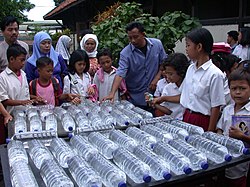
Solar water disinfection (SODIS) application in Indonesia using clear polyethylene terephthalate (PET) plastic beverage bottles

Solar water disinfection, in short SODIS, is a type of portable water purification that uses solar energy to make biologically contaminated (e.g. bacteria, viruses, protozoa and worms) water safe to drink. Water contaminated with non-biological agents such as toxic chemicals or heavy metals require additional steps to make the water safe to drink.[1]

Solar water disinfection is usually accomplished using some mix of electricity generated by photovoltaics panels (solar PV), heat (solar thermal), and solar ultraviolet light collection.

Solar disinfection using the effects of electricity generated by photovoltaics typically uses an electric current to deliver electrolytic processes which disinfect water, for example by generating oxidative free radicals which kill pathogens by damaging their chemical structure. A second approach uses stored solar electricity from a battery, and operates at night or at low light levels to power an ultraviolet lamp to perform secondary solar ultraviolet water disinfection.

Solar thermal water disinfection uses heat from the sun to heat water to 70–100 °C for a short period of time. A number of approaches exist. Solar heat collectors can have lenses in front of them, or use reflectors. They may also use varying levels of insulation or glazing. In addition, some solar thermal water disinfection processes are batch-based, while others (through-flow solar thermal disinfection) operate almost continuously while the sun shines. Water heated to temperatures below 100 °C is generally referred to as pasteurized water.

The ultraviolet part of sunlight can also kill pathogens in water. The SODIS method uses a combination of UV light and increased temperature (solar thermal) for disinfecting water using only sunlight and repurposed PET plastic bottles. SODIS is a free and effective method for decentralized water treatment, usually applied at the household level and is recommended by the World Health Organization as a viable method for household water treatment and safe storage.[2] SODIS is already applied in numerous developing countries.[3]: 55  Educational pamphlets on the method are available in many languages,[4] each equivalent to the English-language version.[3]

Process for household application

[edit]
SODIS instructions for using solar water disinfection

Guides for the household use of SODIS describe the process.

Colourless, transparent PET water or soda bottles of 2-litre or smaller size with few surface scratches are selected for use. Glass bottles are also suitable. Any labels are removed and the bottles are washed before the first use. Water from possibly contaminated sources is filled into the bottles, using the clearest water possible. Where the turbidity is higher than 30 NTU it is necessary to filter or precipitate out particulates prior to exposure to the sunlight. Filters are locally made from cloth stretched over inverted bottles with the bottoms cut off. In order to improve oxygen saturation, the guides recommend that bottles be filled three-quarters, shaken for 20 seconds (with the cap on), then filled completely, recapped, and checked for clarity.[citation needed]

Aluminum reflects ultraviolet well

The filled bottles are then exposed to the fullest sunlight possible. Bottles will heat faster and hotter if they are placed on a sloped sun-facing reflective metal surface. A corrugated metal roof (as compared to a thatched roof) or a slightly curved sheet of aluminum foil increases the light inside the bottle. Overhanging structures or plants that shade the bottles must be avoided, as they reduce both illumination and heating. After sufficient time, the treated water can be consumed directly from the bottle or poured into clean drinking cups. The risk of re-contamination is minimized if the water is stored in the bottles. Refilling and storage in other containers increases the risk of contamination.

Suggested treatment schedule[5]
Weather conditions Minimum treatment duration
Sunny (less than 50% cloud cover) 6 hours
Cloudy (50–100% cloudy, little to no rain) 2 days
Continuous rainfall Unsatisfactory performance;
use rainwater harvesting

The most favorable regions for application of the SODIS method are located between latitude 15°N and 35°N, and also 15°S and 35°S.[3] These regions have high levels of solar radiation, with limited cloud cover and rainfall, and with over 90% of sunlight reaching the earth's surface as direct radiation.[3] The second most favorable region lies between latitudes 15°N and 15°S. these regions have high levels of scattered radiation, with about 2500 hours of sunshine annually, due to high humidity and frequent cloud cover.[3]

Local education in the use of SODIS is important to avoid confusion between PET and other bottle materials. Applying SODIS without proper assessment (or with false assessment) of existing hygienic practices and diarrhea incidence may not address other routes of infection. Community trainers must themselves be trained first.[3]

Applications

[edit]

SODIS is an effective method for treating water where fuel or cookers are unavailable or prohibitively expensive. Even where fuel is available, SODIS is a more economical and environmentally friendly option. The application of SODIS is limited if enough bottles are not available, or if the water is highly turbid. In fact, if the water is highly turbid, SODIS cannot be used alone; additional filtering is then necessary.[6]

A basic field test to determine if the water is too turbid for the SODIS method to work properly is the newspaper test.[4] For the newspaper test the user has to place the filled bottle upright on top of a newspaper headline and look down through the bottle opening. If the letters of the headline are readable, the water can be used for the SODIS method. If the letters are not readable then the turbidity of the water likely exceeds 30 NTU, and the water must be pretreated.[citation needed]

In theory, the method could be used in disaster relief or refugee camps. However, supplying bottles may be more difficult than providing equivalent disinfecting tablets containing chlorine, bromine, or iodine. In addition, in some circumstances, it may be difficult to guarantee that the water will be left in the sun for the necessary time.

Other methods for household water treatment and safe storage exist, including chlorination, flocculation/disinfection, and various filtration procedures. The method should be chosen based on the criteria of effectiveness, the co-occurrence of other types of pollution (e.g. turbidity, chemical pollutants), treatment costs, labor input and convenience, and the user's preference.

When the water is highly turbid, SODIS cannot be used alone; additional filtering or flocculation is then necessary to clarify the water prior to SODIS treatment.[7][8] Recent work has shown that common table salt (NaCl) is an effective flocculation agent for decreasing turbidity for the SODIS method in some types of soil.[9] This method could be used to increase the geographic areas for which the SODIS method could be used as regions with highly turbid water could be treated for low costs.[10]

SODIS may alternatively be implemented using plastic bags. SODIS bags have been found to yield as much as 74% higher treatment efficiencies than SODIS bottles, which may be because the bags are able to reach elevated temperatures that cause accelerated treatment.[11] SODIS bags with a water layer of approximately 1 cm to 6 cm reach higher temperatures more easily than SODIS bottles, and treat Vibrio cholerae more effectively.[11] It is assumed this is because of the improved surface area to volume ratio in SODIS bags. In remote regions plastic bottles are not locally available and need to be shipped in from urban centers which may be expensive and inefficient since bottles cannot be packed very tightly. Bags can be packed more densely than bottles, and can be shipped at lower cost, representing an economically preferable alternative to SODIS bottles in remote communities. The disadvantages of using bags are that they can give the water a plastic smell, they are more difficult to handle when filled with water, and they typically require that the water be transferred to a second container for drinking.[citation needed]

Another important benefit in using the SODIS bottles as opposed to the bags or other methods requiring the water to be transferred to a smaller container for consumption is that the bottles are a point-of-use household water treatment method.[12] Point-of-use means that the water is treated in the same easy to handle container it will be served from, thus decreasing the risk of secondary water contamination.[13]

Cautions

[edit]
The PET recycling mark shows that a bottle is made from polyethylene terephthalate, making it suitable for solar water disinfection[14]

If the water bottles are not left in the sun for the proper length of time, the water may not be safe to drink and could cause illness. If the sunlight is less strong, due to overcast weather or a less sunny climate, a longer exposure time in the sun is necessary.[citation needed]

The following issues should also be considered:

Bottle material
Some glass or PVC materials may prevent ultraviolet light from reaching the water.[15] Commercially available bottles made of PET are recommended. The handling is much more convenient in the case of PET bottles. Polycarbonate (resin identification code 7) blocks all UVA and UVB rays, and therefore should not be used. Bottles that are clear are to be preferred over bottles that have been colored, for example green lemon/lime soda pop bottles.
Aging of plastic bottles
SODIS efficiency depends on the physical condition of the plastic bottles, with scratches and other signs of wear reducing the efficiency of SODIS. Heavily scratched or old, blind bottles should be replaced.
Shape of containers
The intensity of the UV radiation decreases rapidly with increasing water depth. At a water depth of 10 cm (4 inches) and moderate turbidity of 26 NTU, UV-A radiation is reduced to 50%. PET soft drink bottles are often easily available and thus most practical for the SODIS application.
Oxygen
Sunlight produces highly reactive forms of oxygen (oxygen free radicals and hydrogen peroxides) in the water. These reactive molecules contribute in the destruction process of the microorganisms. Under normal conditions (rivers, creeks, wells, ponds, tap) water contains sufficient oxygen (more than 3 mg/L of oxygen) and does not have to be aerated before the application of SODIS.
Leaching of bottle material
There has been some concern over the question of whether plastic drinking containers can release chemicals or toxic components into water, a process possibly accelerated by heat. The Swiss Federal Laboratories for Materials Testing and Research have examined the diffusion of adipates and phthalates (DEHA and DEHP) from new and reused PET-bottles in the water during solar exposure. The levels of concentrations found in the water after a solar exposure of 17 hours in 60 °C (140 °F) water were far below WHO guidelines for drinking water and in the same magnitude as the concentrations of phthalate and adipate generally found in high-quality tap water. Concerns about the general use of PET-bottles were also expressed after a report published by researchers from the University of Heidelberg on the release of antimony from PET-bottles for soft drinks and mineral water stored over several months in supermarkets. However, the antimony concentrations found in the bottles are orders of magnitude below WHO[16] and national guidelines for antimony concentrations in drinking water.[17][18][19] Furthermore, SODIS water is not stored over such extended periods in the bottles.
Regrowth of bacteria
Once removed from sunlight, remaining bacteria may again reproduce in the dark. A 2010 study showed that adding just 10 parts per million of hydrogen peroxide is effective in preventing the regrowth of wild Salmonella.[20]
Toxic chemicals
Solar water disinfection does not remove toxic chemicals that may be present in the water, such as factory waste.

Health impact, diarrhea reduction

[edit]

According to the World Health Organization, more than two million people per year die of preventable water-borne diseases, and one billion people lack access to a source of improved drinking water.[21][22]

It has been shown that the SODIS method (and other methods of household water treatment) can very effectively remove pathogenic contamination from the water. However, infectious diseases are also transmitted through other pathways, i.e. due to a general lack of sanitation and hygiene. Studies on the reduction of diarrhea among SODIS users show reduction values of 30–80%.[23][24][25][26]

Research

[edit]

The effectiveness of the SODIS was first discovered by Aftim Acra, of the American University of Beirut in the early 1980s. Follow-up was conducted by the research groups of Martin Wegelin at the Swiss Federal Institute of Aquatic Science and Technology (EAWAG) and Kevin McGuigan at the Royal College of Surgeons in Ireland. Clinical control trials were pioneered by Ronan Conroy of the RCSI team in collaboration with Michael Elmore-Meegan.[citation needed]

A joint research project on SODIS was implemented by the following institutions:

The project embarked on a multi-country study including study areas in Zimbabwe, South Africa and Kenya.

Other developments include a continuous flow disinfection unit[27] and solar disinfection with titanium dioxide film over glass cylinders, which prevents the bacterial regrowth of coliforms after SODIS.[28]

Research has shown that a number of low-cost additives are capable of accelerating SODIS and that additives might make SODIS more rapid and effective in both sunny and cloudy weather, developments that could help make the technology more effective and acceptable to users.[29] A 2008 study showed that powdered seeds of five natural legumes (peas, beans and lentils)—Vigna unguiculata (cowpea), Phaseolus mungo (black lentil), Glycine max (soybean), Pisum sativum (green pea), and Arachis hypogaea (peanut)—when evaluated as natural flocculants for the removal of turbidity, were as effective as commercial alum and even superior for clarification in that the optimum dosage was low (1 g/L), flocculation was rapid (7–25 minutes, depending on the seed used) and the water hardness and pH was essentially unaltered.[30] Later studies have used chestnuts, oak acorns, and Moringa oleifera (drumstick tree) for the same purpose.[31][32]

Other research has examined the use of doped semiconductors to increase the production of oxygen radicals under solar UV-A.[33] Recently, researchers at the National Centre for Sensor Research and the Biomedical Diagnostics Institute at Dublin City University have developed an inexpensive printable UV dosimeter for SODIS applications that can be read using a mobile phone.[34] The camera of the phone is used to acquire an image of the sensor and custom software running on the phone analyses the sensor colour to provide a quantitative measurement of UV dose.

In isolated regions the effect of wood smoke increases lung disease, due to the constant need for building fires to boil water and cook. Research groups have found that boiling of water is neglected due to the difficulty of gathering wood, which is scarce in many areas. When presented with basic household water treatment options, residents in isolated regions in Africa have shown a preference for the SODIS method over boiling or other basic water treatment methods.

A very simple solar water purifier for rural households has been developed which uses 4 layers of saree cloth and solar tubular collectors to remove all coliforms.[35]

In July 2020 researchers reported the development of a reusable aluminium surface for efficient solar-based water sanitation to below the WHO and EPA standards for drinkable water.[36][37]

Promotion

[edit]

The Swiss Federal Institute of Aquatic Science and Technology (EAWAG), through the Department of Water and Sanitation in Developing Countries (Sandec), coordinates SODIS promotion projects in 33 countries including Bhutan, Bolivia, Burkina Faso, Cambodia, Cameroon, DR Congo, Ecuador, El Salvador, Ethiopia, Ghana, Guatemala, Guinea, Honduras, India, Indonesia, Kenya, Laos, Malawi, Mozambique, Nepal, Nicaragua, Pakistan, Perú, Philippines, Senegal, Sierra Leone, Sri Lanka, Togo, Uganda, Uzbekistan, Vietnam, Zambia, and Zimbabwe.[38]

SODIS projects are funded by, among others, the SOLAQUA Foundation,[39] several Lions Clubs, Rotary Clubs, Migros, and the Michel Comte Water Foundation.

SODIS has also been applied in several communities in Brazil, one of them being Prainha do Canto Verde, Beberibe west of Fortaleza. Villagers there using the SODIS method have been quite successful, since the temperature during the day can go beyond 40 °C (104 °F) and there is a limited amount of shade.[citation needed]

One of the most important things to consider for public health workers reaching out to communities in need of suitable, cost efficient, and sustainable water treatment methods is teaching the importance of water quality in the context of health promotion and disease prevention while educating about the methods themselves. Although skepticism has posed a challenge in some communities to adopt SODIS and other household water treatment methods for daily use, disseminating knowledge on the important health benefits associated with these methods will likely increase adoption rates.[citation needed]

See also

[edit]

References

[edit]
[edit]
Revisions and contributorsEdit on WikipediaRead on Wikipedia
from Grokipedia
Solar water disinfection (SODIS) is a simple, low-cost household water treatment method that harnesses ultraviolet-A (UV-A) radiation and thermal energy from sunlight to inactivate harmful microorganisms in drinking water, making it safe for consumption without the need for chemicals or electricity. The process involves filling transparent polyethylene terephthalate (PET) bottles with clear, low-turbidity water (≤30 NTU) and exposing them to direct sunlight. This technique is particularly suited for resource-limited settings and emergency situations where access to conventional purification methods is unavailable. Developed in the by Aftim Acra and refined in the by researchers at the Swiss Federal Institute of Aquatic Science and Technology (EAWAG), SODIS has been implemented in numerous low- and middle-income countries, with endorsement from the as a viable point-of-use intervention. It primarily inactivates pathogens through UV-A-induced DNA damage, , and heat, achieving significant reductions in , viruses, and under optimal conditions, with field studies showing 16–44% reductions in childhood incidence. While effective, SODIS is limited by factors like water turbidity and availability, and is typically applied to small volumes, though innovations such as larger containers and enhanced designs continue to improve . As of 2024, research advances including micro-nano bubble integration and regional priority mapping support its ongoing role in global .

Introduction and History

Overview

Solar water disinfection (SODIS) is a low-cost household water treatment method that involves exposing biologically contaminated water in transparent containers to sunlight, leveraging ultraviolet (UV) radiation and heat to inactivate pathogens such as bacteria, viruses, protozoa, and helminths. This process renders drinking water microbiologically safe without the need for electricity, chemicals, or specialized equipment, making it particularly suitable for resource-limited settings where access to conventional treatment options is restricted. However, SODIS does not remove chemical pollutants or heavy metals from the water. Globally, SODIS addresses a critical need, as approximately 2.1 billion people—about one in four worldwide—still lack access to safely managed , contributing to widespread waterborne diseases in developing regions. The method has been endorsed by the (WHO) for household-level application in areas with limited infrastructure, as part of broader efforts to combat and other infections transmitted through unsafe water. In practice, the SODIS process begins by filling clean, transparent bottles with filtered water to minimize , which can hinder effectiveness. The bottles are then placed horizontally on a reflective surface and exposed to full for 6 hours on clear days (less than 50% ) or for 2 consecutive days under mostly cloudy conditions.

Historical Development

Solar water disinfection (SODIS) originated in the early 1980s when Aftim Acra, a professor at the , discovered that solar (UV) combined with thermal heating could effectively disinfect contaminated water stored in transparent glass bottles. Acra's team published their findings in a 1984 booklet supported by , highlighting the method's potential for low-cost in areas lacking conventional infrastructure. During the late 1980s and 1990s, initial field trials were conducted in several developing countries, including , to validate the technique's practicality under real-world conditions. These trials revealed limitations with glass bottles, such as fragility and reduced UV penetration, prompting researchers to adapt the method using plastic bottles, which offered superior UV transmission and durability while being readily available and inexpensive. In the 1990s, the Swiss Federal Institute of Aquatic Science and Technology (EAWAG) played a pivotal role in advancing SODIS through extensive laboratory and field testing, refining protocols and promoting its adoption as a household-level solution. A major milestone came in 1996 with a in led by Ronan Conroy and colleagues, which showed a 40% reduction in among children using SODIS-treated water, providing key evidence of its health benefits. In 2001, the (WHO) endorsed SODIS in its report, recognizing it as an accessible, nearly cost-free intervention for preventing waterborne diseases in low-resource settings. By the 2020s, SODIS had evolved into a widely implemented tool, with promotion and use extending to over 30 countries across , , and , supported by EAWAG-led projects that addressed early challenges like material selection and user education to ensure and .

Scientific Principles

Disinfection Mechanisms

Solar water disinfection (SODIS) primarily inactivates pathogens through three interconnected mechanisms: ultraviolet-A (UV-A) radiation, thermal effects, and photo-oxidation. UV-A radiation in the 315-400 nm wavelength range penetrates microbial cells and damages and RNA by inducing formation and other photoproducts, disrupting replication and transcription processes. Thermal effects contribute when water temperatures exceed 45°C, with significant enhancement up to around 50°C achievable in PET bottles, causing protein denaturation and disruption in microorganisms, akin to . Photo-oxidation involves the excitation of endogenous sensitizers within microbes by UV-A, leading to the production of (ROS) such as hydroxyl radicals (•OH), (¹O₂), and (H₂O₂), which oxidize cellular components including lipids, proteins, and nucleic acids. These mechanisms exhibit synergistic interactions that amplify overall disinfection efficacy. UV-A radiation enhances ROS generation by activating dissolved oxygen in water, resulting in oxidative bursts that accelerate cell membrane peroxidation and permeability loss, making pathogens more susceptible to thermal damage. This combined action—where UV-induced ROS sensitize cells to —reduces the required for inactivation compared to individual processes. Pathogen inactivation in SODIS follows decay kinetics, commonly modeled as log(NtN0)=kt\log\left(\frac{N_t}{N_0}\right) = -k t where NtN_t is the number of surviving at time tt, N0N_0 is the initial number, and kk is the inactivation rate constant. The value of kk increases with cumulative UV-A dose and , reflecting the dose-dependent nature of UV damage and the exponential rise in above 45°C. Water properties, particularly dissolved oxygen levels, play a crucial role by facilitating ROS formation during photo-oxidation; higher oxygen under solar exposure promotes the generation of cytotoxic species from UV-excited states, thereby enhancing disinfection rates in oxygenated solutions.

Influencing Factors

Several environmental and operational variables significantly influence the performance of solar water disinfection (SODIS), determining the rate and extent of inactivation through UV and effects. is a primary factor, with effective treatment typically requiring a minimum of 3-5 kWh/m² per day, equivalent to about 500 W/m² over 6 hours on sunny days; in regions with low , such as during winter or at higher latitudes, decreases, often necessitating longer exposure times. Weather conditions further modulate irradiance, as can reduce UV dose by approximately half, extending the required treatment from 6 hours on clear days to 48 hours on overcast days, while continuous rain may render SODIS impractical without alternatives. Water quality plays a critical role in UV penetration and (ROS) generation. levels exceeding 30 NTU scatter and absorb UV light, substantially blocking disinfection and requiring pre-treatment like or to achieve clarity below this threshold. thresholds amplify SODIS efficiency synergistically with UV exposure. Inactivation rates increase notably above 45°C, with water reaching 50°C enabling pasteurization-like effects that rapidly kill pathogens, though achieving these temperatures depends on ambient conditions and container exposure. Container characteristics affect both UV transmission and process enhancement. (PET) bottles transmit over 80% of relevant UV wavelengths (primarily UVA), making them ideal, whereas glass containers permit less than 50% transmission, reducing overall efficacy. Additionally, oxygen levels influence ROS formation; agitating bottles to increase dissolved oxygen, such as by shaking three-quarters-filled containers for 20 seconds, boosts disinfection rates.

Implementation Methods

Household Procedures

Solar water disinfection (SODIS) at the household level follows a straightforward protocol designed for accessibility in resource-limited settings, relying on sunlight to inactivate pathogens in small volumes of water. The method requires no specialized equipment beyond clean plastic bottles and is suitable for daily use by individuals or families. Proper adherence to these steps ensures effective microbiological treatment without altering the water's chemical properties. Preparation begins with selecting source water that is relatively clear, with a turbidity level below 30 nephelometric units (NTU), as measured by the ability to read text through the filled bottle. Use clean, transparent (PET) bottles of 1 to 2 liters capacity, ensuring they are free from scratches or cracks that could harbor contaminants. To oxygenate the water and enhance pathogen inactivation, fill the bottle to three-quarters capacity, shake it vigorously for 20 seconds to dissolve atmospheric oxygen, then fill it completely and cap it tightly. For turbid source water exceeding 30 NTU, pre-treatment is essential to improve light penetration. Allow the water to stand undisturbed for one day to permit suspended particles to settle, then carefully decant the clearer upper layer into the SODIS bottles. Alternatively, filter the water through a clean cloth, , or a simple household to reduce solids before proceeding with the standard preparation. The exposure phase utilizes solar UV radiation and heat for disinfection. Position the filled bottles horizontally on a reflective surface, such as a corrugated metal roof or sheet, to maximize sunlight absorption and ensure no part is shaded. Expose them to direct sunlight for 6 hours on clear or mostly sunny days (up to 50% cloud cover) or from 9 a.m. to 3 p.m. on days with higher solar intensity. Under fully overcast conditions, extend exposure to two full consecutive days, as reduced UV levels prolong the required treatment time. Avoid initiating SODIS during prolonged rainy weather, when solar radiation is insufficient for effective disinfection. Weather influences the protocol's efficiency, with optimal results under high UV conditions. Following exposure, the treated water is ready for consumption and should be stored in the same capped bottles in a cool, dark place to prevent recontamination from external sources. SODIS does not alter the water's taste or odor, as it targets only microbiological pathogens without introducing chemicals. To accommodate family needs, scale the process by preparing multiple bottles in batches, such as four per family member—two undergoing exposure while two provide immediate supply for drinking or cooking. Integrate SODIS into a household routine by designating a responsible adult to handle filling, exposure, and storage daily, ensuring a steady production of 4 to 8 liters per person. Replace bottles every 6 months or when visibly damaged to maintain treatment reliability.

Materials and Equipment

The primary containers for solar water disinfection (SODIS) are clear (PET) bottles with capacities of 1 to 2 liters, as these allow optimal penetration of ultraviolet-A (UV-A) radiation while maintaining a water depth of no more than 10 cm when laid horizontally. Recycled soda bottles are particularly suitable due to their widespread availability, transparency, and compliance with SODIS requirements for UV transmittance above 90% in the 315-400 nm range. Colored bottles must be avoided, as pigments block solar UV-A rays and reduce disinfection efficacy, while (PVC) bottles are unsuitable because they contain additives like that can leach into the water under solar exposure, potentially posing health risks. Studies confirm that repeated use of PET bottles in SODIS does not result in significant migration of or other chemicals to levels exceeding guidelines. To enhance the disinfection process, especially under cloudy conditions, bottles can be placed on reflective surfaces such as aluminum foil, which redirects UV-A and back toward the water, increasing the overall solar dose and accelerating inactivation. Alternatively, sheets can be used as a backing to absorb and promote effects, though they primarily boost rather than UV reflection. Corrugated metal roofs or sheets also serve as effective, low-cost reflectors in household settings. For turbid source water, pre-filtration is essential to reduce suspended particles that shield pathogens from UV light; simple tools include clean cloth straining to remove larger debris, slow sand filters for finer and biological treatment, or jars that allow gravity-based clarification over several hours. These methods can lower from levels above 30 NTU to below 5 NTU, ensuring SODIS effectiveness without specialized equipment. Monitoring the process can be aided by basic thermometers to verify water temperatures reaching 50°C or higher for enhanced thermal disinfection, or UV dosimeters such as the device, a solar-powered indicator developed through research in 2021 that signals when sufficient UV exposure has been achieved via a visual display. The , produced by Helioz, integrates seamlessly with SODIS by measuring cumulative UV dose in real-time alongside bottles. Materials for SODIS are designed for accessibility, with most items being low-cost or free through reuse of household PET bottles sourced from beverage waste, minimizing environmental impact and economic barriers in resource-limited areas. For higher-volume needs, such as community applications, SODIS bags made from fused transparent and black PET sheets offer an alternative, providing a larger surface area for exposure while maintaining similar UV and ease of storage.

Efficacy and Health Impacts

Pathogen Inactivation

Solar water disinfection (SODIS) effectively targets a range of waterborne pathogens, achieving greater than 99.99% inactivation (4-log reduction) for many bacterial species under optimal conditions. For bacteria such as Escherichia coli, Vibrio cholerae, and Salmonella typhimurium, laboratory studies demonstrate 4- to greater than 5-log reductions after 6 hours of exposure in clear PET bottles under full sunlight, corresponding to >99.999% inactivation. Viruses show variable inactivation, with rotavirus achieving only minor reductions (<1-log) in standard exposure times, while more susceptible viruses like MS2 bacteriophage achieve 3-log reductions in 6 hours; adenovirus exhibits greater resistance, often requiring extended exposure times beyond a single day for significant inactivation. Recent reviews (as of 2023) confirm variable viral efficacy, with <2-log reductions for robust viruses like murine norovirus in 6 hours, emphasizing the need for complementary treatments in high-viral-risk settings. Protozoan parasites, including Giardia lamblia and Cryptosporidium parvum, achieve >2-log reductions (over 99%) in 6-12 hours, with Giardia becoming completely non-infective after 4 hours at 40°C and high irradiance. Helminths such as Ascaris suum experience partial inactivation, with 1.42-log reductions observed after 6 hours at 550 W/m² irradiance. In laboratory settings using simulated sunlight, SODIS typically yields 4- to 6-log reductions for bacteria in sunny conditions equivalent to 850-1000 W/m² global irradiance, while field applications under natural variability achieve similar bacterial reductions but with greater inconsistency due to weather and water quality factors. Viral inactivation is generally slower, often necessitating up to 48 hours for 3- to 4-log reductions in robust species like certain coliphages or adenoviruses, though rotavirus responds minimally. Protozoa and helminths show variable field efficacy, with Cryptosporidium requiring elevated temperatures for optimal results. These differences arise primarily from the mechanisms of UV-induced DNA damage and thermal stress, as detailed in the disinfection mechanisms section. The dose-response relationship for SODIS emphasizes cumulative UV-A exposure, with a minimum uninterrupted dose exceeding 108 kJ/m² required for complete bacterial inactivation like E. coli, though practical protocols recommend 500-1000 kJ/m² over 6 hours to account for interruptions. For , this UV dose ensures 4- to 5-log reductions, while higher doses or longer exposures are needed for viruses and . Water temperature above 50°C synergistically enhances inactivation, approximately halving the required exposure time by accelerating protein denaturation and membrane damage. Household validation of SODIS efficacy relies on simple coliform testing kits, such as H₂S-based vials or membrane filtration methods, which detect reductions in total coliforms and E. coli from initial levels of 10²-10⁵ CFU/100 mL to below detection limits post-treatment. These kits provide accessible verification in field settings, correlating well with laboratory-measured log reductions for bacterial indicators.

Disease Reduction Outcomes

Meta-analyses of randomized controlled trials have demonstrated that solar water disinfection (SODIS) significantly reduces the incidence of childhood , with pooled risk ratios indicating reductions ranging from 30% to 38% across studies. For instance, a 2020 and of 11 trials found a pooled (RR) of 0.62 (95% CI: 0.53–0.72), corresponding to a 38% decrease in risk among children under five years old. Earlier seminal work, including household interventions like SODIS, reported similar , with an overall RR of 0.66 (95% CI: 0.56–0.78) for reduction. These outcomes are attributed to SODIS's inactivation of key waterborne pathogens such as and other enteric bacteria, as detailed in laboratory studies. At the population level, SODIS contributes to broader improvements by lowering mortality from waterborne diseases, which claim up to 1.4 million lives annually worldwide due to inadequate water, sanitation, and hygiene (). By mitigating —a primary cause of these deaths—SODIS helps avert an estimated 273,000 under-five deaths linked to unsafe each year. Additionally, reduced episodes enhance nutritional outcomes, as frequent infections impair nutrient absorption and exacerbate in vulnerable populations; safer water via SODIS supports better growth and development in resource-limited settings.00458-0/fulltext) Longitudinal field studies further substantiate these benefits. In a 1990s controlled trial among Maasai children in , SODIS use yielded an (OR) of 0.66 (95% CI: 0.50–0.87) for all episodes and 0.65 (95% CI: 0.50–0.86) for severe cases, equating to approximately a 34–35% reduction over 12 weeks. Bolivian trials from the same era reported around 40% lower incidence in participating households, highlighting SODIS's potential in high-altitude rural areas. More recent Kenyan research in the confirmed sustained impacts with consistent use, showing an incidence rate ratio (IRR) of 0.37 (95% CI: 0.29–0.48) for nondysentery and 0.56 (95% CI: 0.34–0.92) for among under-fives, underscoring long-term health gains when adoption is promoted effectively.

Limitations and Cautions

Operational Constraints

Solar water disinfection (SODIS) requires exposing filled bottles to for 6 hours under clear skies or up to 48 hours under fully conditions, which constrains the process to one or two batches per day and limits output to 2 liters per standard 2-liter bottle. This extended treatment time makes SODIS suitable primarily for small-scale household use, where a typical family might treat up to 20 liters daily using multiple bottles, but it is impractical for larger volumes without supplementary systems. The method's effectiveness heavily depends on consistent , rendering it unreliable during rainy seasons or prolonged cloudy weather, where continuous rainfall prevents adequate disinfection even after extended exposure. In regions above 35 degrees latitude north or south, average daily doses often fall below the threshold required for reliable inactivation, limiting applicability in higher latitudes with fewer hours. SODIS is designed for biologically contaminated but clear water sources, with optimal turbidity below 30 NTU to allow sufficient penetration; turbid or suspended-particle-laden water reduces disinfection efficiency by blocking solar radiation. SODIS does not remove salts from , necessitating complementary treatments like for viable use. User compliance poses a significant operational challenge, as inconsistent practices—such as forgetting to expose bottles for the full duration or reusing unwashed containers—compromise treatment outcomes and sustain risks in treated water. Behavioral studies indicate that these lapses often stem from the method's daily routine demands, leading to variable adoption rates in household settings.

Safety Considerations

Solar water disinfection (SODIS) effectively inactivates biological pathogens but does not address non-biological contaminants such as , pesticides, or salts present in the source water. These chemical pollutants remain unaffected by UV-A radiation and thermal effects, necessitating complementary treatments like or prior to or alongside SODIS to ensure overall . Appropriate bottle materials are critical to minimize health risks during SODIS application. Polyethylene terephthalate (PET) bottles are recommended as they transmit UV-A effectively and do not leach harmful substances at levels exceeding regulatory limits when used correctly. In contrast, polyvinyl chloride (PVC) bottles should be avoided due to the potential leaching of , which can pose toxicological risks. PET bottles withstand temperatures up to 70°C during solar exposure but degrade from prolonged sunlight, reducing UV transmittance; they should be replaced every 6 to 12 months of regular use or when scratched or opaque to maintain efficacy and safety. Pathogen regrowth in treated SODIS water is a potential concern if storage exceeds 2 days, as sub-lethally injured microorganisms may recover under favorable conditions, though full revival of pathogens has not been widely observed in controlled studies. To mitigate this, treated water should be consumed promptly or stored in the same sealed bottle to prevent recontamination. Key precautions include avoiding SODIS-treated water for preparing or foods without subsequent , as residual risks from incomplete inactivation could lead to severe in vulnerable infants. Periodic testing for is advised to verify ongoing effectiveness, particularly in field settings where water sources may vary. Environmentally, SODIS promotes reuse of plastic bottles, reducing reliance on single-use containers and associated waste, but PET is not biodegradable and contributes to if not recycled. Users should prioritize programs or safe disposal methods, such as centralized , to avoid open burning, which releases toxic compounds like and polycyclic aromatic hydrocarbons.

Applications and Case Studies

Field Deployments

Solar water disinfection (SODIS) has seen widespread field deployment in developing countries, particularly in and , where it addresses limited access to safe in rural and peri-urban areas. In , SODIS trials initiated in the by researchers at the Swiss Federal Institute of Aquatic Science and Technology (EAWAG) and local partners evaluated its microbiological efficacy and community adoption, with one community-randomized controlled trial reporting a median daily use rate of 32% (interquartile range: 17-50%) over a one-year period in rural households. Similar implementations in have focused on rural communities, where a randomized intervention study among children under five years old achieved compliance rates of approximately 44%, contributing to reduced incidence. EAWAG-coordinated projects have expanded SODIS to over 25 low- and middle-income countries since , reaching at least 5 million users through partnerships with local organizations, with adoption rates varying from 20% to 80% depending on promotional strategies and socio-cultural factors. In African settings like , , and Ng’ombe slum in , these deployments have yielded health impacts including reduced prevalence among children, while in Latin American contexts such as , field studies have highlighted sustained use in household settings. programs in Indian villages, such as one intervention in rural areas, integrated SODIS with , resulting in a 75.88% reduction in prevalence after eight weeks among users compared to non-users. In disaster relief scenarios, SODIS's simplicity enables rapid deployment for quick setup. Following the , household initiatives, including SODIS, were distributed to affected populations, supporting safe storage and reducing risks in camps where was disrupted. The method has also been recommended for refugee camps and humanitarian crises due to its low cost and lack of need for external supplies beyond PET bottles. In one EAWAG-supported evaluation during a cholera outbreak in , SODIS users experienced an 86% reduction in cases compared to non-users. Adaptations in flood responses, such as those in , have combined SODIS with chlorination to accelerate inactivation under cloudy conditions.

Large-Scale Adaptations

Large-scale adaptations of solar water disinfection (SODIS) extend the method beyond household use to community and institutional settings, employing engineered designs to handle greater volumes while maintaining efficacy against pathogens. Key system designs include compound parabolic concentrators (CPCs) and parabolic trough concentrators (PTCs), which focus solar radiation to intensify UV-A and thermal effects for faster inactivation. These non-imaging reflectors enable treatment capacities of 100 to 1000 liters per day, suitable for schools or small communities, with CPC-based SODIS systems demonstrating over 5-log reduction in bacterial populations under clear sky conditions. Batch reactors, such as scaled-up transparent (PET) containers or jerrycans, facilitate intermittent processing in volumes up to 25 liters per unit, aggregated for daily outputs in the target range; field tests in resource-limited areas confirm their viability for turbid up to 50 NTU. Hybrid approaches integrate SODIS with complementary technologies like slow sand filtration to address limitations in high-turbidity source water, particularly in institutional settings such as rural schools. In , a 2024 spatial mapping study identified priority regions for SODIS deployment based on and water vulnerability. These configurations pre-filter water to below 30 NTU before SODIS, ensuring optimal solar penetration and thermal at 50–55°C. Pilot projects illustrate practical implementation, including SODIS ponds in urban slums of , where shallow, lined basins expose large water volumes to for communal treatment; a Vellore slum intervention treated shared sources serving 878 households, yielding 78% compliance and significant E. coli reductions. Challenges in scaling include ensuring treatment consistency across variable , addressed through automated monitoring via UV dosimeters or feedback control systems that signal completion upon reaching lethal doses (typically 555 W-h/m²). These devices, integrated into batch or flow reactors, minimize operator error and support outputs for public supplies at costs around $0.01 per liter, factoring in minimal material and maintenance needs. A 2022 systematic review emphasizes these adaptations for public water systems in low-resource areas, highlighting SOPAS-enhanced SODIS hybrids for continuous flow in regions like and , with potential to serve thousands daily while reducing waterborne disease burdens. As of 2024, SODIS continues to be promoted in crisis situations for its low-cost deployment in emergencies.

Research and Innovations

Key Studies

Early research demonstrated the synergistic effects of (UV) radiation and mild heat in inactivating enteric in contaminated exposed to , laying the foundation for solar disinfection (SODIS). This work highlighted how solar UV photons damage microbial DNA while elevated temperatures enhance permeability, achieving significant reductions without chemical additives. Trials conducted by the Swiss Federal Institute of Aquatic Science and Technology (EAWAG) in the confirmed the efficacy of a standardized exposure protocol for SODIS, achieving reliable inactivation of diarrhea-causing in clear under direct . These and field validations established the practical guidelines for household implementation, emphasizing exposure during peak solar hours for optimal results. Meta-analyses of studies from 2002 to 2015, including comprehensive reviews by McGuigan et al., consistently demonstrated that SODIS achieves at least a 4-log reduction (99.99% inactivation) in bacterial indicators such as under typical conditions of low and sufficient . These syntheses underscored SODIS's reliability against vegetative but noted variability due to environmental factors like . A 2021 review by Ubomba-Jaswa et al. advanced kinetic modeling for viral inactivation in SODIS, integrating UV dose and dependencies to predict log reductions for non-enveloped viruses like MS2 coliphage, which require longer exposures than . Such models help optimize protocols by quantifying synergistic effects, showing that temperatures above 45°C can accelerate viral decay by up to twofold. Field trials provided empirical evidence of health benefits; a 2009 cluster-randomized controlled trial in rural by McGuigan et al. reported a 44% reduction in prevalence among children under 6 months using SODIS, with overall compliance influencing outcomes. Multi-country studies in the , including the EU-funded SODISWATER project across and , corroborated these findings, showing consistent risk reductions of 20-40% in diverse settings with proper adherence. Adaptations of the Chick-Watson model have been used to describe SODIS kinetics, where the inactivation rate constant kk is modeled as a function of UV dose and temperature, such as k=m(UV dose)neEaRT,k = m \cdot (\text{UV dose})^n \cdot e^{-\frac{E_a}{RT}}, with mm and nn as empirical constants, EaE_a as activation energy, RR as the gas constant, and TT as temperature in Kelvin, enabling predictions of bacterial die-off under varying solar conditions. Pre-2020 studies, while establishing SODIS's microbiological efficacy, frequently lacked robust data on long-term household compliance, which meta-analyses identified as a key limitation in extrapolating short-term lab results to sustained public health impacts.

Recent Advances

Recent advances in solar water disinfection (SODIS) have emphasized material enhancements to accelerate inactivation. A 2024 study demonstrated that incorporating natural kaolin clay into SODIS processes reduced populations by 59% after 2 hours of solar exposure, while (TiO₂) additives further improved overall microbial eradication reliability by enhancing photocatalytic activity under sunlight. Design innovations have addressed and user engagement. SODIS bags, which optimize the surface-to-volume ratio compared to traditional bottles, have enabled higher treatment volumes while maintaining effective UV penetration and thermal heating, with field tests showing improved inactivation kinetics for household-scale use. Between 2021 and 2024, low-cost UV dosimeters emerged as tools for real-time user feedback, allowing households to confirm when the required UV dose for safe disinfection has been achieved, thereby reducing over- or under-exposure in variable conditions. Modeling approaches have advanced predictive capabilities for real-world variability. A 2024 kinetic model, developed through of field data, accurately forecasts inactivation by integrating UV intensity, water temperature changes, and levels (1–30 NTU), enabling estimates of treatment duration under fluctuating weather patterns with high predictive accuracy (R² = 0.93). Pathways to large-scale implementation include community-oriented systems reviewed in recent analyses. A highlighted hybrid SOPAS-SODIS configurations using concentrating solar collectors, achieving daily productivities of 16–291 L/m² for public supply in rural settings, with intermittent flow designs proving most efficient for sustained community disinfection. In crisis contexts, SODIS has been promoted for its minimal resource needs, providing accessible purification without chemicals or fuel amid disrupted infrastructure. A 2025 study explored solar-driven SODIS synergized with micro-nano bubbles, which enhance the generation of and photothermal effects, improving inactivation rates in low-sunlight conditions. Adoption research underscores the role of in uptake. A 2024 study in rural found 97% of households willing to accept and use SODIS-treated water, with those having higher levels 65% more likely to adopt it compared to those without formal , emphasizing targeted campaigns to boost long-term compliance.

Promotion and Adoption

Organizational Efforts

The Swiss Federal Institute of Aquatic Science and Technology (EAWAG), through its Department of Water and Sanitation in Developing Countries (Sandec), initiated the SODIS project in the 1990s, conducting laboratory and field studies to validate solar disinfection as a low-cost household water treatment method. This effort has evolved into a global promotion program, partnering with NGOs and governments to disseminate SODIS training materials and support implementation in resource-limited settings. The SOLAQUA Foundation, based in , has focused on funding and distributing SODIS-compatible bottles and resources in and since the early 2000s, providing for community-based projects to enhance access to safe in rural and peri-urban areas. The (WHO) and UNICEF have integrated SODIS into their guidelines for household water treatment and safe storage within Water, Sanitation, and Hygiene (WASH) programs, recognizing it as an effective, low-technology option for microbial inactivation. These organizations have facilitated SODIS training for health workers and communities in over 50 countries, emphasizing its role in preventing diarrheal diseases through integration with broader WASH initiatives. Non-governmental organizations (NGOs) have played a pivotal role in SODIS promotion during emergencies and community outreach. The International Federation of Red Cross and Red Crescent Societies (IFRC) includes SODIS in its household water treatment protocols for kits, providing training and supplies to ensure safe access in crisis-affected regions. Similarly, the Centre for Affordable Water and Sanitation Technology (CAWST) conducts workshops for community leaders on SODIS as part of its Community Promotion program, equipping participants with tools to verify proper implementation and promote sustained adoption at the household level. Educational campaigns have been central to SODIS dissemination, particularly through school-based initiatives that target children and families to foster long-term behavior change. In , programs such as those supported by local NGOs and international partners have introduced SODIS in primary schools, reaching thousands of students and their households with hands-on demonstrations and education to reduce waterborne illnesses. Supporting media tools, including multilingual manuals and posters, have been developed by EAWAG and partners to guide trainers in explaining the method's principles and monitoring compliance. SODIS promotion programs have been implemented in more than 25 countries, primarily in developing regions of , , and , with a strong emphasis on behavior change strategies such as repeated community demonstrations and peer-to-peer education to encourage consistent use. These efforts have collectively reached millions, prioritizing scalable interventions that align with local cultural practices to improve safety.

Barriers and Strategies

Socio-cultural barriers significantly hinder the widespread adoption of solar water disinfection (SODIS). One primary challenge is the altered of treated , often described as insipid, salty, or bitter due to the interaction with plastic bottles or the disinfection process itself, which contrasts with the perceived "" of untreated sources and discourages regular use. Cultural preferences for traditional methods, such as , further impede uptake, as communities may view SODIS as insufficiently "hot" or reliable under local beliefs like the Andean "hot and cold" of . Additionally, low awareness of invisible waterborne pathogens persists, with users habituated to and demanding visible evidence of contamination, leading to about SODIS efficacy. These factors contribute to poor compliance, with field trials reporting rates below 50%, such as 32% overall adherence in a Kenyan study and declines to under 30% over time in South African interventions. Economic and logistical constraints exacerbate these issues, particularly in resource-limited settings. Bottle shortages pose a major obstacle in remote or rural areas, where access to clear PET containers is limited, as noted in sustainability assessments from where scarcity was reported by two-thirds of promoters. Initial education and promotion costs, while low overall, can strain community resources, including training and material distribution, representing a barrier in low-income households reliant on SODIS. To address these barriers, targeted strategies emphasize community sensitization and resource support. In , a 2024 spatial mapping initiative developed the SODIS Usage Potential Index (SUPI) and Priority Index (SUPrI), integrating and water vulnerability data to identify high-priority zones like the Northeast semi-arid (87% high/medium priority) and northern Amazon regions, facilitating focused training programs that have reached over 41,000 teachers and 26,000 health workers since 2010. Subsidies and provision of low-cost dosimeters, such as UV indicators, enhance verification of treatment completion, promoting sustained use in promotion projects. Policy integration into broader frameworks bolsters adoption. In , SODIS has been incorporated into state-level community child improvement programs under Water, Sanitation, and Hygiene () initiatives, reaching over 24,000 households through village-level promotion since the early 2000s. Monitoring tools, including camera phone-based UV-dosimeters, enable real-time assessment of solar exposure to ensure compliance and encourage long-term behavior change. Recent 2024-2025 studies highlight high willingness to adopt SODIS (up to 97% in some communities) but note low adherence in rural areas like , underscoring the need for enhanced education programs. Looking ahead, future paths focus on hybrid approaches and enhancements. Combining SODIS with technologies like or solar pasteurization systems improves efficiency and addresses limitations in cloudy conditions, as outlined in a 2022 . efforts include large-volume reactors (e.g., 88-144 L prototypes) and automated solar disc systems capable of treating 315 L daily for rural communities, emphasizing cost-effective designs without grid dependency.

References

Add your contribution
Related Hubs
User Avatar
No comments yet.