Hubbry Logo
Sandra StevensSandra StevensMain
Open search
Sandra Stevens
Community hub
Sandra Stevens
logo
8 pages, 0 posts
0 subscribers
Be the first to start a discussion here.
Sandra Stevens
Sandra Stevens
from Wikipedia

Key Information

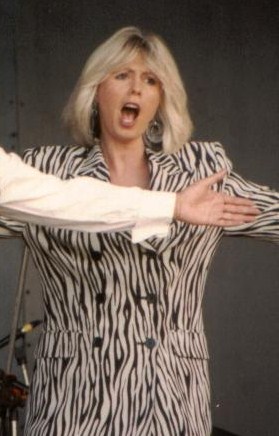
Sandra Stevens (born 23 November 1944) is an English singer and a member of the pop group Brotherhood of Man.

Early career

[edit]

Sandra Stevens first entered into a singing career in the 1960s when she joined the club band, The Track (who then changed their name to The Nocturnes).[1] The group was formed by drummer Ross Mitchell and among the six members Stevens sang vocals alongside Eve Graham (later of The New Seekers). Based in Manchester, the band played local clubs, performing pop hits of the day such as "The Loco-Motion" and "Da Doo Ron Ron". In early 1967 Stevens decided to leave the group and was replaced by Lyn Paul (also later of The New Seekers).[2] Over the next few years she sang with the big bands of Joe Loss and Ken MacKintosh and also joined another group, Jason Flocks.[3] Also at this time Stevens was working during the day as a shorthand typist.[4]

Brotherhood of Man

[edit]

In 1973, Stevens was performing as the resident singer at Wakefield Theatre Club when she came to the attention of Tony Hiller who was looking to recruit a new singer for Brotherhood of Man – a group he was managing.[5] The group were currently performing as a trio (Martin Lee, Lee Sheriden and Nicky Stevens (no relation)) and had released two singles. Stevens took the two singles and listened to them, immediately she was taken by the sound and was keen to join them. In late 1973 Brotherhood of Man became a four-piece with Sandra sharing lead vocals.[6]

It was not long before the group released their first single featuring the new line up. In January 1974 "When Love Catches Up on You" was released on Dawn Records and by the end of the year they had scored a European hit with "Lady" and had released an album.[7]

Over the next few years, Stevens enjoyed great success with Brotherhood of Man throughout the world. In 1975 they scored their first number one single and a year later they won the Eurovision Song Contest with the song "Save Your Kisses for Me".[8] The song made No.1 in the UK as well as many other countries and this was followed by two more UK chart toppers, "Angelo" and "Figaro".[9][10] Although Hiller, Sheriden and Lee wrote the bulk of their material, Stevens is credited as a co-writer on one of their songs: "Let's Love Together", the B-side to "Save Your Kisses for Me". In over 100 songs recorded, this is the only time that one of the female members of the group received a writing credit.

Stevens continued with Brotherhood of Man, recording lead vocals for many of their biggest hits and performing live with them through the decades. The group continued with the same line-up. They appeared in concert and on television,[11] until 20 October 2020, when they retired from touring.

Personal life

[edit]

During the peak of the group's success, Stevens was in a relationship with fellow band member Martin Lee and moved in with him. Due to the young age of many of the group's fans, this was kept largely a secret. Stevens and Lee later married in 1979 until Lee's death in 2024.[12][13] Stevens was keen on swimming and playing tennis.[14]

References

[edit]
Revisions and contributorsEdit on WikipediaRead on Wikipedia
from Grokipedia
Sandra Stevens (born 23 November 1949) is an English singer best known for her role as a in the 1970s pop group , with whom she won the in 1976 representing the with the song "Save Your Kisses for Me", which became a massive international hit topping charts in over 30 countries. Born in , , Stevens began her professional singing career in the late as a big-band vocalist, notably standing in for the regular singer with the Orchestra during a performance that led to further opportunities in the music industry. In 1973, she joined , completing the group's stable quartet alongside , Lee Sheriden, and (no relation), under the guidance of Tony Hiller. The group's Eurovision victory propelled them to stardom, with "" selling over 5 million copies worldwide and earning them three UK number-one singles during the decade, including "" and "Figaro". Stevens contributed shared lead vocals on many tracks and remained with the band through their active touring and recording years into the 1980s, though the group has occasionally reunited for performances since.

Early Life and Career Beginnings

Childhood and Upbringing in

Sandra Stevens was born on 23 November 1949 in , , . She grew up in during the period in Britain, a time of economic recovery following . Food , introduced in 1940 to manage wartime shortages, persisted into her early childhood and only fully ended on 4 July 1954 with the lifting of meat restrictions. As an industrial center in , in the 1950s featured a burgeoning local music scene, with clubs, dance halls, and emerging pop influences shaping the cultural landscape for young residents. This environment of austerity transitioning to youthful cultural vibrancy, including the rise of rock 'n' roll in venues like city dance halls, surrounded Stevens during her formative years.

Entry into Music in the 1960s

Sandra Stevens began her professional singing career in her mid-teens during the early , drawing on the musical interests nurtured in her upbringing. She joined the Manchester-based club band The Track as a , a group that later rebranded as The Nocturnes (sometimes stylized as Les Nocturnes) under drummer Ross Mitchell's leadership. The ensemble, which included fellow vocalist , performed regularly in clubs, including extended residencies at Tiffany's on in , where Stevens contributed to their live sets blending pop and harmony vocals. By the mid-1960s, Stevens had left The Nocturnes around 1967 and expanded her experience through engagements with prominent big bands, gaining exposure in live performances and variety shows. After leaving the group, she worked briefly as a typist before resuming her career. She performed as a vocalist with the Orchestra, including a notable instance where she substituted for the regular singer who had lost her voice during a show featuring a revolving setup. Similarly, she worked with Ken MacKintosh and His Orchestra, honing her skills in the structured environment of dance band music amid the era's shift toward rock and pop influences. In addition to these orchestral roles, Stevens had a brief stint with Jason Flock's group, further solidifying her reputation as a versatile session and live performer on the club and variety circuit. These early opportunities allowed her to navigate the competitive, often male-dominated landscape of British music, building a foundation in both backing and lead vocals through consistent gigging in ballrooms, theaters, and clubs across the country. She was later spotted by Tony Hiller while performing as a resident singer at Theatre Club.

Career with Brotherhood of Man

Joining the Group and Initial Success

In 1973, record producer Tony Hiller reformed as a permanent four-piece vocal group, enlisting songwriter-performers and Lee Sheriden alongside vocalists and Sandra Stevens, who was not related to Nicky. The new lineup shifted the group toward a more defined pop style, drawing on Hiller's vision for accessible, feel-good music. Sandra Stevens, leveraging her prior experience as a big-band singer, was recruited specifically for her strong lead vocal capabilities and joined as the group's female co-lead. She quickly contributed to the ensemble's sound, sharing lead duties on recordings and live performances. One of her early contributions came on the 1973 compilation album The World of the , which blended fresh tracks with re-releases of prior hits like "United We Stand" to reintroduce the group to audiences. The reformed group began gaining traction outside the UK, building momentum through continental European releases in the mid-1970s. Their 1974 single "Lady," penned by Hiller, Sheriden, and Lee, achieved notable success in and , marking an initial breakthrough. This was followed by "Kiss Me Kiss Your Baby" in 1975, another Hiller composition, which became a widespread hit across and led to increased television appearances, helping solidify the quartet's international profile ahead of their UK chart resurgence. While UK chart entries remained modest during this phase, these early releases established the group's harmonious pop formula and vocal interplay, with Stevens' clear, emotive delivery playing a key role.

Eurovision Victory and Global Fame

In 1976, , including vocalist Sandra Stevens, entered the national selection process known as A Song for Europe with "," a bubbly pop track co-written by band members and Lee Sheriden alongside producer Tony Hiller. The song, featuring lighthearted lyrics about a father leaving for work and asking his three-year-old daughter to save her kisses for him, edged out competitors like Co-Co's entry by just two points to secure the spot at the in , . Performed as the opening act on April 3, 1976, among 18 entries, "" captivated audiences with its infectious melody, synchronized choreography—including a signature raised-knee dance move—and the quartet's wholesome, family-friendly charm. Stevens' clear harmonies and engaging stage presence, alongside those of her bandmates, contributed significantly to the song's endearing appeal, helping it amass 164 points—over 80% of the maximum possible—to claim victory by a wide margin of more than 70 points over Switzerland's runner-up. This marked the United Kingdom's third Eurovision win and propelled the group, including Stevens, into international stardom. The victory triggered immediate global success for "Save Your Kisses for Me," which topped the UK Singles Chart for six weeks and reached number one in 33 countries, including Ireland, Belgium, and Australia. Worldwide sales exceeded six million copies, making it the best-selling Eurovision-winning single of all time and cementing its status as a pop phenomenon. The win sparked widespread media attention, with the group appearing on major TV shows across Europe and North America, alongside extensive press coverage that highlighted their clean-cut image and the song's universal, feel-good message. This breakthrough elevated Stevens' profile as a key performer in the ensemble, drawing fans to their subsequent tours and recordings.

Key Hits, Songwriting, and Later Group Activities

Following their Eurovision triumph, achieved further commercial success with several hit singles, where Sandra Stevens contributed prominent vocals that helped define the group's polished pop sound. The 1977 single "," written by Tony Hiller, Lee Sheriden, and , topped the UK Singles Chart for one week and spent 12 weeks in the top 40, showcasing Stevens' shared lead vocals alongside in the harmonious verses. Similarly, "Figaro," released in early 1978 and also penned by Hiller, Sheriden, and Lee, reached number one on the UK chart for one week with 12 weeks total in the top ranks; here, Stevens and delivered the joint lead vocals, emphasizing the duo's tight interplay over the song's upbeat rhythm. Other notable releases from this period included "" from the 1977 album Images, which charted at number 51 in the UK and found stronger reception in , such as number 15 in the , with Stevens providing key backing harmonies that supported Martin Lee's lead. Stevens also played a creative role in the group's songwriting, particularly on B-sides and album tracks that complemented their mainstream hits. She received co-writing credit on "Let's Love Together," the B-side to the 1976 Eurovision-winning single "Save Your Kisses for Me," alongside Hiller, Sheriden, and Lee; the track, produced by Hiller, highlighted her influence on the group's romantic, feel-good lyrical style. Beyond full compositions, Stevens contributed significantly to the arrangement process, offering input on vocal harmonies and blending her soprano range with Nicky Stevens' to create the quartet's signature layered sound, which was essential to their pop accessibility during the late 1970s. Into the 1980s and beyond, Brotherhood of Man maintained a stable lineup with Stevens, Sheriden, Lee, and , which fostered consistent group dynamics centered on their four-part harmony approach and ensured the preservation of their original Eurovision-era sound. The quartet toured extensively across the and during the 1980s, performing at venues and festivals to capitalize on their hits, while reunion shows in the 1990s and 2000s kept their catalog alive. By the 2010s, they embraced nostalgia circuits, with regular appearances at events like the Rewind Festival and theaters, where Stevens' enduring vocal presence helped sustain fan engagement; for instance, in a 2019 interview, the group noted ongoing European tours that drew crowds reminiscing about their 1970s peak. This longevity underscored Stevens' role in anchoring the group's cohesive performances amid evolving pop landscapes.

Retirement from Touring

Sandra Stevens retired from touring as a member of Brotherhood of Man following the group's final live performance on 20 October 2020, after nearly 50 years in the music industry. The band, which had sustained success from their 1970s hits including the Eurovision-winning "Save Your Kisses for Me," formally announced their retirement from touring in December 2022. Following the death of Martin Lee on September 29, 2024, the group has ceased all activities. In reflections shared by the group, they highlighted the fulfillment derived from a career filled with global performances and lasting fan support, allowing members like Stevens to transition to a more private life post-touring.

Personal Life and Legacy

Marriage to Martin Lee and Family

Sandra Stevens began a romantic relationship with fellow Brotherhood of Man member Martin Lee shortly after joining the group in 1973. Their partnership developed amid the band's rising success, with the couple moving in together by the mid-1970s, though they maintained privacy about their union to shield it from public scrutiny, particularly given the young demographic of the group's fans. This approach allowed Stevens and Lee to focus on their shared professional commitments without external pressures disrupting their personal lives. The couple married in August 1979, formalizing a bond that had already been central to their lives for several years. With no children of their own, but Lee having a daughter from a previous marriage, Stevens and Lee built a life centered on music, travel, and mutual support during the highs of their career, including the group's international tours and performances. Their experiences as bandmates strengthened their partnership, providing a foundation of collaboration and understanding that endured beyond the spotlight. Martin Lee passed away on September 29, 2024, at the age of 77, following a short illness caused by , after 45 years of marriage to Stevens. In a statement from the band, Stevens was highlighted for her profound loss, with members noting that Lee would be "sadly missed... especially [by] Sandra Stevens to whom he had been married for 45 happy years," underscoring the deep emotional bond they shared throughout their decades together.

Hobbies, Interests, and Post-Retirement Life

Following the Brotherhood of Man's retirement from touring in October 2020, Sandra Stevens has embraced a quieter lifestyle in the United Kingdom, stepping away from the demands of live performances while maintaining a low public profile. In the years after her husband Martin Lee's death from heart failure in September 2024, Stevens has focused on personal reflection and charitable efforts, auctioning off five of Lee's cherished guitars in Wiltshire in September 2025 to benefit the British Heart Foundation. The sale raised £4,875, a decision Stevens made to honor Lee's memory, noting that "it was his heart that gave in at the end." Stevens has spoken of missing Lee daily but with a positive outlook, fondly recalling their shared life and his passion for as sources of enduring joy. This approach underscores her adaptation to later years, prioritizing privacy and meaningful tributes over media attention.

Cultural Impact and Recognition

The victory of Brotherhood of Man's "Save Your Kisses for Me" at the 1976 , with Sandra Stevens providing key vocals, marked a significant in the competition's history, as the track became its best-selling winner to date, achieving number one status in 33 countries and selling over six million copies worldwide. The song's cheerful, family-oriented and choreographed performance helped establish a template for upbeat, accessible pop anthems within the Eurovision framework, influencing subsequent entries with its blend of harmony and light-hearted storytelling. This success earned the group three in 1976, recognizing it as the Most Performed Work, International Hit of the Year, and Best Selling British Single. Through , Stevens contributed to the vibrant landscape of British pop, where the group's polished harmonies and relatable themes captured the era's escapist spirit, achieving three UK number one hits and solidifying their place in the genre's canon. The ensemble's extensive European tours in the post-Eurovision years built a dedicated continental fanbase, with the group's music maintaining chart recognition and live appeal decades later. Stevens' role as a core female vocalist exemplified the integration of women in mixed pop harmony groups, enhancing the band's dynamic stage presence and vocal balance during their peak international fame. In reflections on her career, Stevens has emphasized the enduring joy of Brotherhood of Man's performances, noting in a 2025 interview her late husband Martin Lee's passion for the stage as emblematic of the group's lasting bond. The song's modern relevance persists through covers and revivals, including Natasha Thomas's rendition, while tracks like "" continue to underpin the group's sustained popularity in nostalgic media and live tributes. Stevens' story highlights the longevity possible in the music industry, as the quartet's catalog remains a touchstone for pop revivalism into the .

References

Add your contribution
Related Hubs
User Avatar
No comments yet.