Hubbry Logo
SclerotinSclerotinMain
Open search
Sclerotin
Community hub
Sclerotin
logo
8 pages, 0 posts
0 subscribers
Be the first to start a discussion here.
Sclerotin
Sclerotin
from Wikipedia

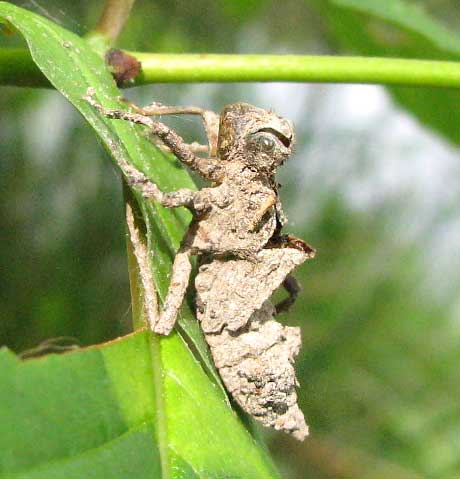
Insect exoskeleton (comprising sclerotin): abandoned exuviae of a dragonfly

Sclerotin is a component of the cuticle of various Arthropoda, most familiarly insects. It is formed by cross-linking members of particular classes of protein molecules, a biochemical process called sclerotization, a form of tanning in which quinones are enzymatically introduced into the cuticle, and react with terminal and lysine-related amino groups in the proteins to form strong links between the molecules.[1] The resulting material greatly increases the rigidity of an insect's chitinous exoskeleton, which is otherwise fairly soft. It is particularly prominent in the thicker, armoured parts of insect and arachnid integument, such as in the biting mouthparts and sclerites of scorpions and beetles.[2]

As it matures, freshly formed sclerotin becomes a hard, horn-like substance with a range of yellow-brown colors. As animals adapted to life on land, increasingly diverse needs for organic stiffening components arose (as opposed to mineral stiffening components such as calcium carbonates and phosphates). Among the invertebrates, this need was met largely by the development of sclerotins and other cross-linked proteins that allowed insects to adapt to existence on the land and later to develop wings.[3]

Sclerotin is biochemically variable; different species incorporate different proteins in different proportions, and the same insect will use different compositions in forming the different components of its body. For example, a caterpillar may have sclerotized jaws, head capsule, and legs, with the rest of the body soft and membranous. In general, sclerotized cuticle is formed by cross-linking the various protein molecules with phenolic compounds – a tanning process under enzymatic control.[1] In some of the Apterygota, however, at least some of the cross-linking is by disulphide bonds reminiscent of protein cross-linking in the formation of keratin.[4] This has led many authors to refer to such cross-linked proteins in invertebrates as keratin, but modern analyses have shown that the term is inappropriate: keratins are a fairly well-defined set of proteins comprising particular chains in different proportions cross-linked in particular ways. Invertebrate connective tissue proteins based on disulphide links appear to be radically different.[5][6]

See also

[edit]

References

[edit]
Revisions and contributorsEdit on WikipediaRead on Wikipedia
from Grokipedia
Sclerotin is a hard, dark-colored, cross-linked protein that serves as a primary structural component of the in arthropods, particularly , providing mechanical rigidity, toughness, and resistance to environmental stress through quinone tanning of fibrous proteins. Formed during the post-molt hardening process known as sclerotization, sclerotin emerges from the enzymatic conversion of derivatives—such as dopa, , and N-acetyldopamine—into reactive ortho-s that bind to and stabilize cuticular proteins, often catalyzed by phenol oxidases and regulated by hormones like . This biochemical tanning mechanism not only darkens the but also enhances its durability, enabling arthropods to withstand physical deformation and chemical degradation, as seen in the rapid hardening of insect eggshells or pupal cases within minutes to hours after formation. In , sclerotin is most prominent in the exocuticle layer, where it interlinks with microfibrils to create a that varies in density across body regions, from flexible membranes to rigid sclerites. The process involves free amino groups on proteins reacting with quinones, leading to both intra- and intermolecular cross-links, including potential isopeptide bonds in some , which contribute to the cuticle's amber-to-brown pigmentation and insolubility. While primarily studied in like flies and , sclerotin analogs appear in cuticles and even mollusk periostracum, highlighting its evolutionary role in exoskeletal adaptation across invertebrates. Ongoing research continues to elucidate the precise molecular pathways, including the roles of enzymes like dopa decarboxylase, underscoring sclerotin's importance in and .

Overview

Definition and Discovery

Sclerotin is an insoluble, hardened protein matrix that forms within the procuticle of exoskeletons, primarily through oxidative cross-linking reactions known as tanning or sclerotization. This stiffens the -protein composite of the , providing mechanical strength and rigidity essential for arthropod structural integrity. Unlike , which serves as the primary scaffold, sclerotin specifically refers to the tanned, cross-linked protein component that impregnates and reinforces this framework. The concept of sclerotin emerged in the early amid studies on cuticle hardening, with British biochemist Michael G. M. Pryor providing the foundational description in 1940. In his research on the ootheca (egg case) of the cockroach Blatta orientalis, Pryor coined the term "sclerotin" to denote the tanned protein responsible for the irreversible stiffening of cuticular structures post-ecdysis. He proposed that this hardening results from the enzymatic oxidation of phenolic compounds (such as protocatechuic acid, as later identified) into reactive ortho-quinones that covalently bind to protein residues, forming a stable network. Pryor's model was later refined with the identification of specific catecholamine precursors, such as N-acetyldopamine and N-β-alanyldopamine, in sclerotization pathways during the late . Pryor's key experiments involved isolating and analyzing oothecal proteins, demonstrating that tanning mimics historical leather processes where phenols darken and toughen hides. He showed that extracted oothecae could be softened by reducing agents and re-hardened upon exposure to phenolic substrates and oxidases, confirming quinone-mediated cross-linking as the mechanism. These findings established sclerotin as chemically distinct from , shifting scientific understanding from earlier views of cuticle hardening as mere dehydration or deposition to a protein-centric tanning process. Subsequent reviews have upheld Pryor's model as the cornerstone of sclerotization research.

Biological Significance

Sclerotin plays a pivotal role in the evolutionary success of arthropods by providing the rigidity and durability essential for their exoskeletons, enabling these organisms to thrive in diverse environments from the period onward. The sclerotized , a hallmark of arthropods, facilitated the of both aquatic and terrestrial habitats by offering structural support against mechanical stresses and , contributing to the phylum's radiation into over a million described species. This adaptation likely emerged as a key innovation during the , allowing early arthropods to exploit new ecological niches and outcompete other through enhanced mobility and protection. Physiologically, sclerotin supports critical life processes in arthropods, particularly , by allowing the to transition from a flexible state immediately after molting to a hardened form, which accommodates body expansion during growth phases. Sclerotization, which is integral to the molting cycle, allows the newly formed to be initially pliable to permit , followed by tanning that imparts strength without restricting post-molt expansion. In , sclerotin enables the remodeling of body structures, such as the development of wings in adult , ensuring survival through developmental transitions. Ecologically, sclerotin enhances survival by conferring hardness that deters predators and, through associated pigmentation, aids in against visual threats. The toughened resists penetration and crushing, providing a passive defense mechanism observed across taxa like crustaceans and . Additionally, the quinone-mediated tanning process often results in melanin-based pigments that blend with natural backgrounds, as seen in the sclerotized elytra of beetles, which not only shield hindwings but also facilitate cryptic coloration to evade detection by birds and other predators.

Chemical Structure

Protein Components

Sclerotin is primarily composed of cuticular proteins from arthropod-specific families, most notably the cuticular proteins with the Rebers & Riddiford (R&R) consensus sequence, often referred to as CPRs. These proteins form the structural scaffold of the procuticle, providing an initial matrix that interacts with fibers before undergoing modification. CPRs are characterized by their enrichment in specific residues, including , , and , which serve as potential sites for subsequent interactions due to their reactive side chains. For instance, RR-2 subfamily proteins often exhibit elevated levels of and , contributing to the protein's suitability for matrix stabilization. The structural features of these cuticular proteins include predominantly beta-sheet conformations, which confer flexibility to the uncross-linked procuticle while allowing for ordered assembly with . This beta-sheet rich architecture, often forming antiparallel half-barrel motifs in the R&R domains, enables chitin binding and initial mechanical resilience. Molecular weights of CPRs typically range from 10 to 30 , though variations occur depending on the isoform and species, facilitating diverse roles in cuticle layering. Examples include proteins around 19 kDa in Tribolium castaneum and 22 kDa in Calpodes ethlius, underscoring the compact nature of these scaffolds. Protein isoforms exhibit variations across taxa, influencing composition and properties. In , cuticular proteins often display higher content compared to some other arthropods, supporting enhanced rigidity through residue availability for tanning processes. For example, insect CPRs like those in and show isoform-specific enrichments in and , adapting to sclerotized exoskeletal demands, whereas counterparts may prioritize for flexibility. These differences highlight evolutionary adaptations in protein sequences to meet taxon-specific environmental and structural needs.

Cross-Linking Agents

The primary cross-linking agents in sclerotin are quinones derived from , including N-acetyldopamine (NADA), dopa, and N-acetylnorepinephrine. These quinones react with nucleophilic side chains of cuticular proteins—such as those on , , and residues—to form stable covalent bonds that integrate the agents into the protein framework. The resulting cross-links encompass di-tyrosine bonds, di-histidine bonds, and quinone-protein adducts, which collectively establish a three-dimensional network enhancing the overall connectivity of the protein matrix. Di-tyrosine links form through coupling of radicals or quinone intermediates, while di-histidine and adducts arise from of imidazole or amine groups to electrophilic quinone sites. A fundamental reaction in this process is the oxidation of phenolic precursors to reactive quinones, exemplified by the conversion of -derived phenols: \ceArOH>[oxidation]Ar=O\ce{Ar-OH ->[oxidation] Ar=O} where \ceArOH\ce{Ar-OH} represents the phenolic hydroxyl group and \ceAr=O\ce{Ar=O} the o-quinone. This step generates the electrophilic species essential for subsequent protein conjugation.

Sclerotization Process

The sclerotization process in , particularly in , initiates immediately following , when the newly formed procuticle consists of uncross-linked proteins embedded in a matrix, providing initial flexibility for body expansion. This soft state allows the animal to inflate its new to full size by swallowing air or , a critical phase lasting minutes to hours post-molting. Phenolic compounds, derived from metabolites, are then incorporated into the procuticle from underlying epidermal cells, setting the stage for subsequent chemical modifications. The next stage involves the oxidation of these incorporated phenols to reactive quinone intermediates, which occurs within the cuticle over several hours. These quinones subsequently react with nucleophilic sites on cuticular proteins, forming covalent cross-links that stabilize the structure through a tanning mechanism, transforming the pliant procuticle into rigid sclerotin. The overall tanning phase extends from hours to days, depending on the species and cuticle region; for instance, in dipteran insects like Sarcophaga bullata during puparium formation, sclerotization progresses through distinct color stages—from white to brown—over 6–8 hours, culminating in a hardened protective case. Environmental factors significantly influence the rates of these reactions. Alkaline pH conditions, such as 7.5, accelerate the of dehydrated phenolic precursors and enhance reactivity, thereby speeding up cross-linking. In the pupation of bullata, endogenous release of raises cuticular , promoting rapid non-enzymatic oxidation and darkening for timely enclosure. also modulates the process indirectly by maintaining cuticular hydration, which is essential for phenol and reaction progression; low can delay development during pupation by increasing risk, as observed in cecidomyiid flies where high relative (above 80%) optimizes larval-to-pupal transition and associated sclerotization.

Enzymatic Mechanisms

The formation of sclerotin relies on specific enzymatic activities that oxidize phenolic precursors into reactive intermediates capable of cross-linking cuticular components. Phenoloxidases, including tyrosinases and laccases, play a central role by catalyzing the oxidation of N-acetyldopamine (NADA) and N-β-alanyldopamine (NBAD) to their corresponding ortho-quinones, which initiate the cross-linking process. Tyrosinases, in particular, hydroxylate tyrosine to L-DOPA and subsequently oxidize it to dopaquinone, while laccases such as Laccase 2 in beetles are essential for tanning across larval, pupal, and adult stages, as demonstrated by RNAi knockdowns resulting in untanned, deformable cuticles. Peroxidases may contribute to alternative cross-links, such as dityrosine formations, through free radical mechanisms in certain species. These enzymes are often secreted as inactive zymogens and activated via the pro-phenoloxidase cascade, a proteolytic pathway involving serine proteases, ensuring controlled onset of sclerotization. Two primary biochemical pathways govern the sclerotization process: ortho- and beta-sclerotization. In the ortho-sclerotization route, ortho-s generated by phenoloxidases directly react with nucleophilic sites on cuticular proteins, forming stable adducts that contribute to hardening and pigmentation. This pathway is supported by quinone isomerases that enhance reactivity by converting quinones to quinone methides, accelerating binding rates by orders of magnitude compared to non-enzymatic reactions. Conversely, beta-sclerotization involves the formation of dehydro-N-acetyldopamine (dehydro-NADA) or dehydro-N-β-alanyldopamine (dehydro-NBAD) through methide isomerases, which then react at the beta-position of the side chain, often yielding colorless cross-links via benzodioxan structures. These routes allow for varied mechanical properties in different cuticular regions, with beta-sclerotization predominating in flexible areas. Enzymatic activity in sclerotin formation is tightly regulated by hormonal signals, particularly ecdysteroids, which peak post-molt to induce expression of key enzymes like dopa decarboxylase and phenoloxidases in epidermal cells. This hormonal trigger ensures sclerotization aligns with , activating the pro-phenoloxidase system and precursor synthesis for timely cuticle hardening.

Functions

Structural Role

Sclerotin imparts essential mechanical properties to the , primarily by conferring rigidity, tensile strength, and controlled elasticity to the otherwise pliable chitin-based . During sclerotization, cross-linking of cuticular proteins forms sclerotin, which hardens the and enables it to resist deformation under load. Sclerotized cuticles exhibit Young's moduli ranging from 1 to 20 GPa, significantly higher than the 1 kPa to 50 MPa of unsclerotized regions, allowing structures like mandibles to withstand compressive stresses up to approximately 100 MPa. The integration of sclerotin with chitin microfibrils creates a that markedly enhances the 's toughness and load-bearing capacity. fibrils, with their high inherent tensile strength ( exceeding 150 GPa), act as reinforcing elements embedded in the sclerotin matrix, which binds and stabilizes the while distributing mechanical stresses to prevent localized . This matrix reinforcement mechanism improves resistance and overall durability, enabling the exoskeleton to absorb energy without catastrophic cracking. In beetles, sclerotin's structural contributions are evident in the contrast between highly sclerotized elytra and flexible joints. The elytra, serving as hardened cases, achieve exceptional rigidity with tensile strengths of 80–100 MPa, protecting underlying tissues during impacts and flight. Conversely, joints with lower sclerotin content maintain elasticity for articulation, with moduli of 1–50 MPa facilitating bending and movement without rigidity-induced brittleness.

Protective Adaptations

Sclerotin's cross-linking of cuticular proteins significantly reduces the permeability of the , forming a barrier that prevents excessive water loss and protects terrestrial arthropods from . This effect arises from the incorporation of sclerotin precursors and into an extracuticular layer, which is exuded from epidermal duct cells and spreads across the surface, creating a hydrophobic seal essential for survival in arid environments. In such as and beetles, this adaptation allows maintenance of internal hydration levels despite exposure to low-humidity conditions, highlighting sclerotin's role in enabling terrestrial lifestyles among arthropods. Beyond structural integrity, sclerotization facilitates melanization, where reactive quinones from tyrosine-derived precursors polymerize into pigments, darkening the and providing defense against ultraviolet radiation. These deposits absorb UV light, minimizing DNA damage and in exposed tissues, a critical for diurnal like flies and that face intense solar exposure. Additionally, the resulting dark pigmentation enhances by mimicking , bark, or foliage, reducing visibility to predators in natural habitats and thereby improving survival rates in diverse ecosystems. Sclerotinized cuticles exhibit enhanced resistance to pathogens through the robust physical barrier formed by the tanned , which limits microbial penetration and growth, supplemented by properties of reactive compounds generated during sclerotization. This protective mechanism is particularly vital in soil-dwelling or pathogen-rich environments, where the tanned acts as a first line of defense, reducing the need for internal immune responses in species like and locusts, as evidenced by increased susceptibility to infections in insects with impaired sclerotization, such as Anopheles mosquitoes deficient in laccase 2 activity.

Distribution

In Insects

Sclerotin is a ubiquitous component of the cuticle, present across all orders where it contributes to the hardening and stabilization of the . This widespread distribution enables to form rigid protective structures essential for their diverse lifestyles, from terrestrial to aquatic environments. The degree of sclerotization varies significantly among groups, with Coleoptera (beetles) exhibiting the highest levels, particularly in their heavily sclerotized elytra and body, which provide exceptional mechanical protection and contribute to their rich fossil record. In contrast, other orders show more moderate sclerotization adapted to specific needs, such as flexibility in flight structures. Sclerotin formation also differs by life stage and body part, with newly ecdysed cuticles initially soft and pale before undergoing rapid hardening through sclerotization, a process more pronounced in stages than in soft-bodied larvae. For instance, membranous wings maintain minimal sclerotization for flexibility, while hardened thoracic segments in adults achieve greater rigidity. Research on has elucidated patterns underlying sclerotin production in the , with studies identifying key enzymes like those encoded by and tan that regulate sclerotin synthesis via dopamine-derived pathways during pupariation. These investigations reveal stage-specific expression, such as elevated activity in lighter regions to favor yellow-tan sclerotin over , highlighting molecular control of cuticular properties.

In Other Arthropods

In crustaceans, sclerotin contributes to the hardening of the alongside , particularly in species such as where phenolic cross-linking interacts with deposits to achieve a composite of organic and reinforcement. This dual mechanism is evident in decapod crustaceans, where post-molt phenolic tanning stabilizes the newly formed through diphenoloxidase-mediated reactions. In , direct evidence of sclerotin presence in the confirms its role in this process, though the extent of tanning varies by species and environmental factors. In s, sclerotin is integral to the of spiders and scorpions, providing a balance of rigidity and flexibility essential for locomotion and predatory behaviors. In spiders, sclerotization occurs hours after through covalent cross-linking of matrix proteins, enhancing the mechanical strength of the while allowing articulated movement for web construction. Similarly, in scorpions, sclerotin contributes to the toughness and flexibility of the layers, supporting predatory behaviors such as stinging. These adaptations highlight sclerotin's conserved yet tailored function across taxa. In myriapods, such as centipedes and millipedes, sclerotin precursors like prosclerotin, rich in phenolic groups, are present in the , contributing to its hardening through similar tanning processes. Sclerotization in non-insect arthropods shows notable differences from that in , with less extensive phenolic tanning in aquatic forms like , which prioritize mineralization for and protection in marine environments, compared to the more pronounced cross-linking in terrestrial spiders adapted to resistance. These variations stem from evolutionary divergences within Arthropoda, where crustaceans and arachnids have independently modified ancestral sclerotization pathways to suit aquatic versus terrestrial lifestyles.

References

Add your contribution
Related Hubs
User Avatar
No comments yet.