Hubbry Logo
logo
Seletar
Community hub

Seletar

logo
0 subscribers
Read side by side
from Wikipedia

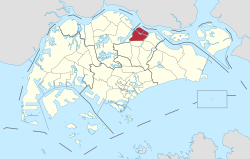
Seletar (/səˈltɑːr/ sə-LEE-tar) is an area located in the north-east of Singapore. Its name can also refer to the Seletar Planning Area (as defined by the Urban Redevelopment Authority), situated in the North-East Region of Singapore. The place name was derived from the Malay subgroup who were indigenous to the area, the Orang Seletar. It shares boundaries with the planning areas of Sengkang to the south, Punggol to the east, Yishun and Simpang to the west, as well as the Straits of Johor to the north.

Key Information

Formerly Royal Air Force Station Seletar Royal Air Force military airfield site, the area now houses a new S$60 million Seletar Aerospace Park that spans 140 hectares. The aerospace park houses industries specialising in aircraft maintenance and repair services.[3][4] There are future plans to transform Seletar into one of the Singapore's regional centres, along with Jurong East, Tampines and Woodlands. Once the transformation is complete, Seletar will be known as the only regional centre without a single MRT line passing through it, unlike its other regional rivals who have multiple MRT lines. The recent introduction of newer residential property and retail malls, most notably Greenwich V and Seletar Mall,[5] Parc Botannia at Fernvale, Luxus Hill, Belgravia Ace[6] and Parc Greenwich has served well in rejuvenating the Seletar area, with further plans to increase BTO flats supply in the area serve to create additional housing options for people working in the Aerospace Park.

Geography

[edit]

Geographical extent

[edit]

According to the book Down the Seletar River: Discovering a Hidden Treasure of Singapore, Seletar generally refers to a region defined by the Ponggol River to the east, the Seletar River to the west, Ang Mo Kio to the south and the Straits of Johore to the north. It includes the areas covering Yio Chu Kang, Jalan Kayu, Lower Seletar Reservoir and a part of Upper Thomson.[7]

Seletar Planning Area

[edit]

Seletar Planning Area, as defined by the Urban Redevelopment Authority, shares a land boundary with planning areas of Sengkang to the south, riverine boundaries with Punggol to the east and Yishun to the west. Its northern boundary is made up by the Straits of Johor.[8][9] Seletar Planning Area is officially divided into 4 subzones – Seletar, Seletar Aerospace Park, Pulau Punggol Barat and Pulau Punggol Timor.

History

[edit]

The area was home to the indigenous Malay population, especially the Orang Seletar (Malay for Seletar people) - a subgroup of Malay sea gypsies living on the waters of the island. There were already hundreds of them even before the arrival of Raffles. Seletar was originally a rubber plantation estate owned and managed by the Singapore United Rubber Plantations Ltd. In 1923, the Straits Settlement government bought 600 acres (2.4 km2) from the Singapore United Rubber Plantations Ltd and gave it to the British Royal Air Force as a site for its military air base in Singapore.[10] Construction of the airfield was completed in 1929 and it was officially opened in 1930. The airfield was the first RAF base east of India and had also served as a civilian airport until 1937, when Kallang Airport was opened to the public.[11]

The Seletar Reservoir (now known as Upper Seletar Reservoir), was first built in 1920, after the First World War to cope with the water demand in Singapore. It was marked as a conservation site in August 1999.[12]

The area is also dotted with colonial bungalows that were built for the military personnel of the RAF, which still stands today. In 2007, the government announced that some 174 bungalows has been set aside for demolition to make way for the new Seletar Aerospace Park, while the remaining 204 bungalows will be retained and some of these units will be converted into aerospace training schools and food and beverage outlets, while 131 units will be set aside for residential use.[13]

See also

[edit]

References

[edit]

Sources

[edit]
  • Victor R Savage, Brenda S A Yeoh (2003), Toponymics – A Study of Singapore Street Names, Eastern Universities Press, ISBN 981-210-205-1
Revisions and contributorsEdit on WikipediaRead on Wikipedia
from Grokipedia
Seletar is a planning area in the northeastern part of Singapore's main island, encompassing the historic Seletar Airport and the surrounding Seletar Aerospace Park.[1][2] The name derives from the Malay word referring to the Orang Seletar, aboriginal coastal people who once inhabited the mangrove swamps and coastal regions of the area.[3] Originally a site of mangrove swamps, coconut palms, and wildlife, Seletar transformed with the establishment of the Royal Air Force (RAF) base in 1928, which became operational as Singapore's first aerodrome in 1929 and handled its initial commercial flight in 1930.[4][1] The RAF Seletar station served as the largest British airbase in the Far East until its handover to Singapore in 1971, after which it functioned primarily for general aviation and military use.[5] Today, Seletar Airport supports private and business aviation, while the adjacent Aerospace Park hosts advanced aerospace manufacturing, maintenance, repair, and overhaul facilities, emphasizing sustainable engineering practices.[2][1] The area also features conserved elements of its colonial aviation heritage alongside modern industrial development.[5]

Geography

Location and Boundaries

Seletar is a planning area in the North-East Region of Singapore, situated in the northeastern part of the main island. Defined by the Urban Redevelopment Authority (URA), it encompasses territories south of Yishun, west of Sungei Punggol, including the Lower Seletar Reservoir and portions extending toward the northern part of the Tampines Expressway (TPE).[6] The area also incorporates reclaimed land such as Pulau Seletar.[6] Its boundaries adjoin the Straits of Johor to the north, providing a maritime frontier with Malaysia; Yishun and Simpang planning areas to the west; Punggol to the east; and Sengkang to the south.[7] This positioning isolates Seletar somewhat, contributing to its development as an aerospace and industrial hub rather than a densely residential zone.[8]

Physical Features and Reservoirs

Seletar occupies a low-lying portion of Singapore's northeastern coastal plain, characterized by gently undulating terrain with average elevations around 18 meters above sea level.[9] The Seletar Airport, a key landmark, sits at approximately 13 meters (43 feet) elevation, reflecting the area's generally flat topography suited to aviation and urban development.[10] Historically traversed by the Seletar River through forests and plantations, the landscape now blends residual secondary vegetation with engineered water bodies and green corridors linking to broader nature reserves.[11] Lower Seletar Reservoir, formed by damming the mouth of Sungei Seletar with dredging of the riverbed to eliminate saline deposits, functions as a major freshwater storage site integral to Singapore's water security.[12] Completed with nine stormwater collection stations to harness urban runoff, it incorporates ABC Waters features like bioretention swales and rain gardens for natural filtration and pollution control.[13] Bordered by Yishun Avenue 1 and Lentor Avenue, the reservoir supports adjacent parks with jetties for fishing and multi-purpose stages for community events.[14] Upper Seletar Reservoir, impounded in the early 20th century as one of Singapore's initial large-scale water bodies, spans an area enveloped by 15 hectares of preserved natural vegetation, fostering biodiversity amid urban pressures.[15] Its park, enhanced since the 1970s, includes a prominent viewing tower for overlooks of the calm waters and encircling trees, alongside trails for jogging and wildlife observation.[16] Expansion plans integrate it into eco-corridors connecting to the Central Catchment Nature Reserve, emphasizing habitat continuity.[17]

History

Indigenous Origins and Pre-Colonial Period

The Seletar area, encompassing the Seletar River and adjacent mangroves in northern Singapore, was home to the Orang Seletar, a subgroup of the indigenous Orang Laut seafaring nomads who inhabited the region's waterways and coastal wetlands. These communities, known for their boat-dwelling lifestyle, relied on fishing, shellfish gathering, and foraging in the mangrove ecosystems, maintaining seasonal mobility between Singapore's northern shores and the southern Johor coastline across the Straits of Johor.[18] [19] As part of the broader Orang Laut network—often termed "sea people" in historical records—the Orang Seletar engaged in maritime activities that included supporting regional trade routes and occasionally piracy, docking at key points like early Singapore harbors as noted in Portuguese accounts from the 16th century onward.[20] Their semi-nomadic existence, centered on houseboats (perahu) and occasional stilt settlements, reflected adaptation to the tidal rivers and estuaries, with no evidence of large-scale permanent agriculture or urban development in the Seletar vicinity prior to European contact.[21] Archaeological findings from broader Singapore sites, such as shell middens and fishing tools, corroborate the long-term presence of such aquatic-oriented indigenous groups, though specific Seletar artifacts remain limited due to later urbanization.[19] The Orang Seletar's societal structure emphasized kinship ties and oral traditions, with roles divided by gender in resource exploitation—men handling deep-sea fishing and women managing near-shore gathering—fostering resilience in a resource-variable environment.[18] While integrated into the pre-colonial Malay world, including loose affiliations with sultanates like Johor, their primary allegiance was to kin-based bands rather than centralized polities, distinguishing them from inland agrarian communities elsewhere on the island.[21] This period ended with intensifying colonial pressures from the late 18th century, displacing many Orang Laut groups through land reclamations and resettlement policies.[19]

Colonial Development and RAF Establishment

The British colonial administration in Singapore identified Seletar, a sparsely populated and swampy area in the northeastern part of the island, as suitable for aviation infrastructure amid growing concerns over regional defense in the early 20th century. In 1921, the Royal Air Force (RAF) approved plans for an airfield, flying boat base, and supporting naval facilities in Singapore to extend imperial air power in the Far East, particularly in response to emerging threats from Japan. By 1923, Seletar was selected as one of two potential sites in the northern region due to its proximity to the Straits of Johor, favorable terrain for water landings, and distance from urban centers, which minimized interference with civilian activities.[22][23] Construction of the airfield began in the mid-1920s, involving land clearance, drainage works, and the building of concrete runways, seaplane ramps, hangars, and administrative structures to accommodate flying boats and land-based aircraft. The facility became operational in 1928 under the command of Group-Captain H. M. Cave-Brown-Cave, marking the RAF's initial presence with the arrival of early aircraft squadrons. It was officially opened on 1 January 1930 by Sir Cecil Clementi, Governor of the Straits Settlements, who highlighted its strategic importance; at that time, RAF Seletar was the largest RAF station in the Far East, serving as the headquarters for No. 205 Squadron and later the Far East Command.[24][5][25] The establishment spurred further colonial development around the base, including the construction of barracks, officers' quarters in the characteristic black-and-white colonial bungalow style, and support facilities for up to several thousand personnel and their families. Initially doubling as Singapore's primary civil aerodrome from 1930, it handled both military operations—such as patrols and training—and limited commercial flights until the opening of Kallang Airport on 12 June 1937, after which its role shifted predominantly to military use. This dual function underscored the integration of colonial military priorities with nascent civil aviation needs, though the base's primary purpose remained defensive air operations.[26][1]

World War II and Post-War Transition

During the early stages of World War II, RAF Seletar underwent expansion with reinforcements arriving in the late 1930s and early 1940s amid rising tensions in the Far East, including the camouflaging of aircraft and reconnaissance missions by squadrons such as No. 36 Squadron.[23][25] The base became a target for Japanese aerial assaults, including carpet bombing raids by Imperial Japanese Navy aircraft following the initial landings on the Malay Peninsula in February 1942, which inflicted significant structural damage on facilities.[5][27] The airfield fell to Japanese forces after the British surrender on 15 February 1942, with Seletar—renamed Seretar Hikojo—coming under the control of the Imperial Japanese Navy Air Service, while nearby Tengah was assigned to the army air service.[24][23] Japanese authorities compelled British and Indian prisoners of war to construct a new airstrip amid the extensive wartime destruction, and by 8 March 1942, the first Japanese aircraft, including Mitsubishi G4M "Betty" bombers, began operating from the site for regional patrols.[28][29] During the occupation from 1942 to 1945, multiple Imperial Japanese Navy squadrons utilized Seletar primarily for pilot training exercises.[24] Following Japan's surrender in 1945, control reverted to the Royal Air Force, which repurposed the base as its primary hub for logistics, maintenance, and training in the Far East.[1] In the post-war era, Seletar supported counter-insurgency operations during the Malayan Emergency (1948–1960), deploying aircraft such as Bristol Beaufighters and Short Sunderlands for patrols and strikes against communist guerrillas.[26] The RAF's full withdrawal from Singapore occurred in 1971, transferring the facility to the Republic of Singapore Air Force, with the eastern sector initially allocated for military training purposes.[22][5]

Independence and Modern Evolution

Following Singapore's attainment of independence on 9 August 1965, the British military presence at Seletar, including the Royal Air Force (RAF) base, underwent a phased transition as part of the broader withdrawal of British forces from east of Suez. The handover of Seletar Airport to the Singapore government commenced in 1968, with the Department of Civil Aviation assuming administrative control in April 1970.[1] The RAF station officially closed on 31 March 1971, after which the eastern portion was allocated to the Singapore Armed Forces (SAF) for military operations, while the western side opened to civilian aviation activities.[1][5] In the immediate post-handover period, Seletar was repurposed to support both military and civilian aviation needs, laying the groundwork for its evolution into a specialized hub. Consultancy studies in 1969 identified the site for aerospace-related development, leading to the establishment of Singapore General Aviation Services (SGAS) that year for maintenance, repair, and overhaul (MRO) services and flight training.[30] A 1970 agreement with Lockheed Aircraft Corporation enabled MRO for Singapore Air Defence Command aircraft at the West Camp facilities.[30] By 1975, the Singapore Aerospace Maintenance Company (SAMCO) was formed to handle Republic of Singapore Air Force (RSAF) requirements, while the Republic of Singapore Flying Club relocated to Seletar in 1974.[31] Commercial operations resumed from 1970, primarily focused on flight training and military use, with 24-hour operations commencing on 1 July 1977.[1] Seletar's modern configuration solidified in subsequent decades as a secondary airport emphasizing general and business aviation, distinct from Changi Airport's international focus. The Singapore Flying College, a subsidiary of Singapore Airlines, established operations there in 1988, followed by Jet Aviation's fixed-base operations and MRO services in 1995.[31] Infrastructure upgrades, including a 244-meter runway extension tendered in 2008 for S$42.2 million, supported growing demands from training schools, which accounted for about 80% of flights by the early 2000s.[1] In 2014, 34 historic structures from the RAF era were gazetted for conservation, balancing preservation with ongoing aerospace adaptations.[5] Today, Seletar primarily serves private jets, charter flights, and aviation education, maintaining its role as Singapore's oldest operational aerodrome.[1]

Infrastructure

Seletar Airport

Seletar Airport, located in the northeast of Singapore approximately 16 km from the city center, functions primarily as a hub for general aviation, business jets, and flight training. Originally established as a Royal Air Force (RAF) base in 1928, it transitioned to civilian operations after Singapore's independence, with the RAF withdrawing in 1971. The airport received its first commercial flight on 10 February 1930, when a Dutch East Indies Airways aircraft arrived from Jakarta carrying eight passengers.[32][4] It served as Singapore's initial civil aerodrome before the opening of Kallang Airport in 1937.[5] The airport features a single runway designated 03/21, measuring 1,836 meters in length and 46 meters in width, surfaced with asphalt and equipped for precision approaches. This runway supports operations for smaller aircraft, including business jets and turboprops, but imposes restrictions on larger commercial jets due to length limitations. A new passenger terminal, completed in 2018, spans 10,000 m² and includes four check-in counters, baggage handling, six immigration counters, and facilities for up to three turboprop aircraft simultaneously, with an annual capacity of 700,000 passengers. However, actual usage remains focused on non-scheduled flights, with limited regional services such as those operated by Firefly Airlines.[33][34][35] Operations at Seletar Airport are managed by the Changi Airport Group and emphasize aviation services including maintenance, repair, and overhaul (MRO), airfreight, medical evacuation, and training. Approximately 80% of flights are conducted by flying schools, underscoring its role in pilot education. The airport enforces a night curfew from 22:00 to 07:00 local time, permitting only emergency and medical evacuation flights during those hours to mitigate noise impacts. It also supports the adjacent Seletar Aerospace Park, facilitating growth in Singapore's aerospace sector through integrated MRO and logistics capabilities.[36][37][38]

Aerospace Park and Industrial Facilities

Seletar Aerospace Park, spanning approximately 320 hectares adjacent to Seletar Airport, serves as a dedicated hub for aviation-related industries, encompassing maintenance, repair, and overhaul (MRO) operations, engine manufacturing, research and development (R&D), and training facilities.[2][39] Developed by the JTC Corporation, the park integrates over 70 original equipment manufacturers (OEMs) and tier-one suppliers, fostering a clustered ecosystem that supports Singapore's aerospace sector output.[40] Initial phases of development, announced in the mid-2000s, aimed to create up to 10,000 jobs by 2018 through phased investments exceeding S$60 million across 140 hectares, effectively doubling the sector's productivity from 2007 levels.[41] Key industrial facilities within the park include multi-tenanted buildings such as JTC Aviation One and JTC Aviation Two, offering leasable spaces from 43 to 315 square meters at rates of S$18–23 per square meter per month, targeted at small- to medium-sized aviation firms and light industrial users.[2] Larger developments like JTC aeroSpace @ SAP provide units up to 4,437 square meters for specialized operations. Prominent tenants include Rolls-Royce, whose 154,000-square-meter Seletar Campus—opened in February 2012—focuses on engine testing, assembly, and MRO for civil aerospace applications.[42] ST Engineering operates extensive airframe MRO services, positioning itself as one of the world's largest third-party providers, alongside capabilities in engine services for platforms like CFM LEAP.[43] Recent expansions underscore ongoing growth, with GE Aerospace announcing a US$75 million investment in September 2025 to upgrade its Seletar site into an advanced repair technology and R&D center, enhancing capabilities for engine components and digital MRO processes.[44] Other facilities host firms like Barnes Aerospace, maintaining two integrated MRO sites emphasizing lean manufacturing for precision components. The park's concentration of over 60 MRO entities, including SIA Engineering Company for comprehensive nose-to-tail aircraft services, has solidified Seletar's role in global supply chains, supported by government incentives totaling SGD 210 million as of 2025.[45][46][47]

Transportation and Connectivity

Seletar is primarily accessed via major expressways, including the Seletar Expressway (SLE), a six-lane dual carriageway that links the Central Expressway (CTE) at its western end to the Tampines Expressway (TPE) and Pan Island Expressway (PIE) in the east, facilitating connectivity across northern and eastern Singapore.[48] The SLE, completed in phases between 1992 and 1998, runs adjacent to key areas like the Upper Seletar Reservoir and supports industrial traffic to the Seletar Aerospace Park.[49] Additional infrastructure enhancements include the Seletar Aerospace Flyover, a dual three-lane structure opened on May 16, 2015, which directly connects local roads to the CTE, SLE, and TPE, reducing travel times for aerospace hub users.[50] More recently, the Seletar Link Flyover, operational since January 22, 2024, provides a direct link from Seletar Link to the TPE (bound for Changi Airport), alleviating congestion at interchanges.[51] Public transportation relies on bus services integrating with the Mass Rapid Transit (MRT) network, as no MRT line directly serves Seletar. Key routes include SBS Transit bus 102, which operates from Seletar Airport to Buangkok MRT Station (NE15 on the North East Line), with journeys taking approximately 10-15 minutes, followed by MRT transfers to central areas like Clarke Quay in about 56 minutes total.[52] Bus 103 connects the airport and nearby areas to Yishun MRT (NS14) and Serangoon MRT (NE12/CC14), offering access to the North South and North East Lines.[53] Other services, such as 163, 50, 70M, and 85, serve residential and commercial zones like Seletar Mall, linking to Sengkang MRT (NE16) and Punggol MRT.[54] These routes operate frequently during peak hours, with fares starting at S$1-2, though travel times can extend to 30-60 minutes to downtown due to indirect paths.[55] Seletar Airport enhances regional connectivity, primarily for private and business aviation, with ground access via taxis available 24/7 from the departure hall (metered fares to central Singapore averaging S$20-30) and ride-hailing options like Grab.[55] For drivers, GPS navigation uses the address "21 Seletar Aerospace Road 1" or postal code 797405, with direct expressway links minimizing delays.[55] Private transfers and shuttles are also common for aerospace personnel, though public bus options remain limited compared to Changi Airport.[56] Overall, while road infrastructure supports efficient vehicular movement, public transit emphasizes feeder buses to MRT hubs, reflecting Seletar's peripheral industrial focus rather than high-density urban commuting.

Economy and Development

Aerospace Industry Growth

Seletar Aerospace Park has emerged as a key hub for aerospace manufacturing, maintenance, repair, and overhaul (MRO) activities in Singapore, driven by strategic government planning and multinational investments. Developed by JTC Corporation, the park spans multiple phases, with the fourth phase of factory buildings slated for completion by 2027 to accommodate growing demand for MRO and advanced manufacturing facilities.[57] This expansion builds on prior phases that have attracted over 50 aerospace firms, focusing on high-value activities such as engine servicing and component production.[58] Major investments underscore the sector's momentum. In September 2025, GE Aerospace committed US$75 million to upgrade its MRO facilities at Seletar, enhancing capabilities for engine and component repairs to support Asia-Pacific demand.[44] Similarly, Collins Aerospace broke ground in July 2025 on a US$250 million facility in the park, marking a significant escalation in local operations for aerostructures and systems integration.[59] Pratt & Whitney allocated US$20 million in March 2024 to expand manufacturing capacity within the park, targeting increased production of engine parts amid rising global aviation needs.[60] Rolls-Royce's Seletar Campus, covering 65,000 square meters, represents a US$700 million investment in MRO and repair services, contributing over 15% to Singapore's overall aerospace output.[61] ST Engineering, a cornerstone tenant, has advanced its Seletar operations with a new multimillion-dollar engine MRO facility opened in September 2025, alongside specialized centers for airframe maintenance and VIP interiors, bolstering global supply chain resilience.[62] Employment in the sector has expanded rapidly, reflecting sustained hiring amid post-pandemic air travel recovery. The aerospace industry added nearly 3,000 jobs in the two years prior to February 2024, with plans to recruit an additional 2,500 workers over the subsequent three to five years, prioritizing skilled roles in engineering and digital technologies.[63] ST Engineering's latest facility alone is projected to create 300 positions by 2027.[64] Broader aviation-related employment, including aerospace, reached approximately 36,000 by May 2025, supported by investments exceeding S$500 million from new and existing firms establishing or upgrading operations in Seletar.[65][58] These developments position Seletar as a competitive node in Asia's aerospace ecosystem, leveraging proximity to Seletar Airport for logistics efficiency.[66]

Regional Centre Aspirations and Investments

The Singapore government envisions Seletar evolving into a regional centre, designated as the fourth such hub alongside Jurong East, Tampines, and Woodlands, with plans outlined in the Urban Redevelopment Authority's master plan to integrate business, residential, and aerospace functions.[67] This aspiration positions Seletar Regional Centre (SRC) adjacent to Seletar Aerospace Park, fostering synergies between high-value manufacturing and urban development, with potential long-term growth to twice the scale of Tampines Regional Centre through mixed-use developments including commercial spaces and housing estates.[68] The focus emphasizes sustainable growth, leveraging the area's proximity to Seletar Airport for logistics and innovation in sectors like advanced air mobility.[2] Supporting these ambitions, aerospace firms have pledged over S$500 million in investments over five years for facilities in Seletar Aerospace Park, including maintenance, repair, and overhaul operations, as announced by JTC Corporation in coordination with industry leaders.[58] Notable commitments include Collins Aerospace's US$250 million (approximately S$330 million) manufacturing facility, with groundbreaking in July 2025 and completion targeted for 2027, relocating and expanding production capabilities to enhance regional supply chain resilience.[69] Earlier investments, such as Rolls-Royce's S$700 million Seletar Campus opened in 2012, underscore the area's role in engine assembly and advanced technology, contributing to an ecosystem expected to generate S$3.3 billion annually in value-added output.[70] Infrastructure enhancements, like NetLink NBN Trust's S$110 million Seletar Central Office opened in October 2025, bolster digital connectivity to serve northern and northwestern regions, aligning with broader hub development.[71] JTC's ongoing expansions in Seletar Aerospace Park, including an 11,000 square metre green-certified development launched in 2024, incorporate sustainable features like enhanced greenery and energy-efficient designs to attract further investment while mitigating environmental impacts.[72] These initiatives reflect a strategic push to position Seletar as a competitive regional node, with public-private partnerships driving capabilities in manufacturing technologies, data analytics, and repair services amid global aerospace recovery.[2]

Environmental and Social Considerations

Natural Reserves and Biodiversity

Upper and Lower Seletar Reservoir Parks represent the primary natural areas in Seletar, encompassing secondary forests, wetlands, and constructed features that support urban biodiversity amid industrial and residential development. Upper Seletar Reservoir Park covers 15 hectares of vegetation around the reservoir, providing habitat for native flora such as Syzygium species that attract butterflies during flowering seasons.[15][73] These parks integrate into Singapore's nature park networks, linking to broader ecological corridors without formal designation as protected reserves under the Parks and Trees Act.[74] Avian diversity includes resident species like the greater racket-tailed drongo (Dicrurus paradiseus), collared kingfisher (Todiramphus chloris), olive-winged bulbul (Pycnonotus plumosus), and changeable hawk-eagle (Nisaetus cirrhatus), with over 50 bird species documented via citizen science observations.[15][75] Mammals such as long-tailed macaques (Macaca fascicularis) and plantain squirrels (Callosciurus notatus) forage in forest edges, while reptiles including water monitors (Varanus salvator) and occasional snakes like the jasper cat snake (Boiga dendrophila) occur near water bodies.[76][77] Aquatic and wetland habitats in Lower Seletar Reservoir sustain macroinvertebrate communities, including dragonfly larvae and crabs, with temporal studies from 2021–2022 revealing fluctuations in zooplankton and fish biomass influenced by biomanipulation efforts.[78] The endangered Johnson's freshwater swamp crab (Somiola spp., akin to Potamidae relatives) inhabits streams feeding the reservoir, highlighting conservation value despite urban pressures.[79] Introduced reptiles, such as the Chinese stripe-necked turtle (Mauremys sinensis) from southeastern China, have established populations, potentially competing with natives.[80] Rain gardens in the park promote about 10 plant species, filtering runoff while boosting invertebrate diversity.[13] Invertebrates feature notably, with rare records of the Malayan spineleg dragonfly (Gynacantha basiguttata) at Upper Seletar in 2019 and puff-faced water snakes (Homalopsis buccata) near Lower Seletar in 2023, underscoring remnant wetland refugia.[81][82] Secondary forests border the reservoirs, dominated by fast-growing Albizia trees, which provide canopy but face scrutiny for ecological maturity compared to primary habitats.[83] Historically, North Seletar was gazetted as one of 15 forest reserves in the early 1900s, predating extensive urbanization.[84] These pockets preserve biodiversity hotspots, though development like solar installations prompts environmental impact assessments to mitigate habitat fragmentation.[83]

Residential and Community Developments

Seletar features limited residential development compared to denser Singaporean neighborhoods, primarily consisting of low- to mid-rise private housing in enclaves such as Seletar Hills Estate, which emphasizes landed properties and cluster homes amid a predominantly industrial and aerospace-focused landscape.[85][86] Developed in the 1950s by Singapore United Estates as a 999-year leasehold landed enclave, Seletar Hills spans areas like Jalan Kechubong and includes semi-detached and terrace houses, many retaining modernist architectural elements from the 1970s and 1980s.[87][88][89] Notable private residential projects include Belgravia Ace, a freehold strata-landed development launched in 2022 at Belgravia Drive with cluster housing units, and Seletar Park Residence, a 276-unit 99-year leasehold condominium completed in 2015 along Seletar Road, offering 1- to 4-bedroom apartments and penthouses in a 3-block, 5-story configuration.[90][91] Executive condominiums like Parc Greenwich at Fernvale Lane, opposite Seletar Hills, provide mid-tier housing options with units launched for sale in recent years.[92] Smaller cluster developments, such as the 14-unit Seletar View at Seletar Hills Drive, further characterize the area's low-density profile, with built-up areas ranging from 1,615 square feet for intermediate terraces to larger semi-detached homes.[93][94] Community facilities in Seletar remain modest, supporting its quiet, family-oriented appeal with access to nearby primary schools and recreational paths around Lower Seletar Reservoir, enhanced by Urban Redevelopment Authority (URA) plans for linked walking and cycling networks.[95][96] Private amenities like Seletar Country Club offer pools, tennis courts, and fitness facilities primarily to members, while broader community integration ties into aspirations for a Seletar Regional Centre, including new residential zones and upgraded connectivity to foster local living without high-density urbanization.[97][85][68] This approach preserves the area's rustic, colonial-era bungalows and green buffers, prioritizing low-impact growth over expansive public housing estates.[98]

Controversies

Airspace Disputes with Malaysia

In late 2018, tensions escalated between Singapore and Malaysia over airspace arrangements for Seletar Airport, stemming from Singapore's planned implementation of Instrument Landing System (ILS) procedures effective January 3, 2019.[99] Malaysia objected that the ILS approaches for runway 21 would require aircraft to overfly its territory near Pasir Gudang in Johor at low altitudes—approximately 100 meters above ground level—without prior consent, constituting a violation of sovereignty and potentially restricting industrial development in the area.[100] Singapore countered that the procedures adhered to International Civil Aviation Organization (ICAO) standards, involved no unauthorized entry into Malaysian airspace, and were essential for safe operations in poor visibility, with flight paths respecting established boundaries delegated under a 1974 bilateral separation agreement.[101] [102] The dispute intensified on December 12, 2018, when Malaysia's Transport Minister Anthony Loke announced plans to revoke the 1974 delegation of airspace control to Singapore's Civil Aviation Authority of Singapore (CAAS), citing the ILS as incompatible with Malaysian interests; this delegation had enabled efficient management of the busy Singapore Flight Information Region (FIR).[103] In response, Malaysia established a permanent restricted flying zone over Pasir Gudang and temporarily closed airspace north of Seletar, disrupting business aviation and commercial flights, including Firefly Airlines' services from Subang to Seletar, which were suspended from January 8, 2019.[104] [100] Singapore reciprocated by suspending recognition of certain Malaysian airspace procedures, leading to operational delays and heightened bilateral friction amid Malaysia's new Pakatan Harapan government's review of historical pacts.[105] On January 9, 2019, the two countries agreed to a mutual and reciprocal suspension of disputed procedures—Singapore halting new ILS implementation and Malaysia lifting the northern airspace closure—restoring normal operations at Seletar effective midnight that day.[106] Negotiations continued, culminating in a April 6, 2019, agreement where Singapore permanently withdrew the ILS procedures for Seletar, and Malaysia indefinitely suspended the Pasir Gudang restricted area, enabling Firefly flights to resume the following week.[107] [103] This resolution averted prolonged disruptions but highlighted underlying sensitivities over border-adjacent aviation infrastructure, with Malaysia's Prime Minister Mahathir Mohamad framing it as reclaiming delegated airspace while Singapore emphasized safety and compliance.[108] No major escalations have occurred since, though the episode underscored the interplay of technical aviation needs and national sovereignty claims in the shared FIR.[102]

Environmental Impact Criticisms

Public feedback on the Seletar Aerospace Park masterplan in 2007 highlighted concerns over the loss of mature heritage trees and lush greenery, with critics arguing that preserving only around 30 to 200 trees was insufficient compared to the hundreds in the area, potentially diminishing Singapore's natural heritage and biodiversity.[41] Residents and environmental advocates expressed worries about disruption to local wildlife, including bird species, and the transformation of tranquil surroundings into noisy construction zones with dust and industrial activity.[41] In 2021, the Nature Society of Singapore (NSS) criticized large-scale forest clearance adjacent to Lower Seletar Reservoir—spanning areas equivalent to at least 20 football fields of mature secondary forest—for proceeding without consultation with environmental groups, raising fears of irreversible habitat loss and impacts on water quality through increased sedimentation.[109] Development proposals in nearby Springleaf, part of the broader Seletar planning area, drew 28 public submissions in 2022 emphasizing the ecological value of Springleaf Forest, including threatened species like Aglaia yzermannii, and warning that high-density housing could fragment habitats, reduce connectivity, and heighten human-wildlife conflicts without enhanced mitigation measures.[110] Critics advocated for retaining more forested buffers and community stewardship to preserve biodiversity amid urbanization pressures.[110]

References

User Avatar
No comments yet.