Hubbry Logo
BulbulBulbulMain
Open search
Bulbul
Community hub
Bulbul
logo
8 pages, 0 posts
0 subscribers
Be the first to start a discussion here.
Bulbul
Bulbul
from Wikipedia

Bulbul
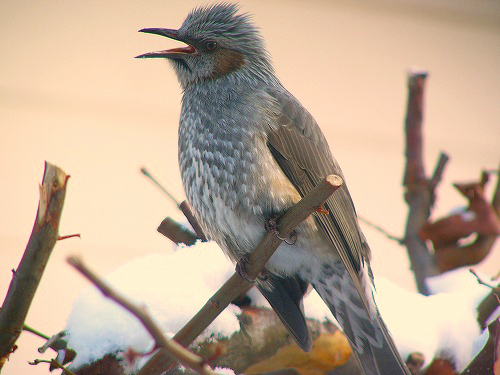
Brown-eared bulbul (Hypsipetes amaurotis)
Scientific classification Edit this classification
Kingdom: Animalia
Phylum: Chordata
Class: Aves
Order: Passeriformes
Superfamily: Sylvioidea
Family: Pycnonotidae
Gray, GR, 1840
Genera

See text

Synonyms
  • Brachypodidae Swainson, 1831
  • Trichophoridae Swainson, 1831
  • Ixosidae Bonaparte, 1838
  • Hypsipetidae Bonaparte, 1854
  • Crinigeridae Bonaparte, 1854 (1831)
  • Phyllastrephidae Milne-Edwards & Grandidier, 1879
  • Tyladidae Oberholser, 1917
  • Spizixidae Oberholser, 1919

The bulbuls are members of a family, Pycnonotidae, of medium-sized passerine songbirds, which also includes greenbuls, brownbuls, leafloves, and bristlebills. The family is distributed across most of Africa and into the Middle East, tropical Asia to Indonesia, and north as far as Japan. A few insular species occur on the tropical islands of the Indian Ocean. There are 166 species in 32 genera. While different species are found in a wide range of habitats, the African species are predominantly found in rainforest, whereas Asian bulbuls are predominantly found in more open areas.

Taxonomy

[edit]

The family Pycnonotidae was introduced by the English zoologist George Robert Gray in 1840 as a subfamily Pycnonotinae of the thrush family Turdidae.[1][2]

The Persian word bulbul (بلبل) is sometimes used to refer to the "nightingale" as well as the bulbul, but the English word bulbul refers to the birds discussed in this article.[3]

A few species that were previously considered to be members of the Pycnonotidae have been moved to other families. Several Malagasy species that were formerly placed in the genus Phyllastrephus are now placed in the family Bernieridae.[4][5] In addition, the genus Nicator containing three African species is now placed in a separate family Nicatoridae.[6][7]

A study published in 2007 by Ulf Johansson and colleagues using three nuclear markers found that the genus Andropadus was non-monophyletic. In the subsequent revision, species were moved to three resurrected genera: Arizelocichla, Stelgidillas and Eurillas. Only the sombre greenbul (Andropadus importunus), was retained in Andropadus.[8][9] A study by Subir Shakya and Frederick Shelden published in 2017 found that species in the large genus  Pycnonotus formed several deeply divergent clades. The genus was split and genera were resurrected to accommodate these clades.[8][10]

The family forms two main clades. One clade contains species that are only found in Africa; many of these have greenbul in the common name. The second clade contains mostly Asian species but includes a few species that are found in Africa.[10]

Pycnonotidae – bulbuls (163 species)

Paradoxornithidae – parrotbills and myzornis (38 species)

Sylviidae – sylviid warblers (32 species)

Zosteropidae – white-eyes (152 species)

Timaliidae – tree babblers (58 species)

Pellorneidae – ground babblers (68 species)

Alcippeidae – Alcippe fulvettas (10 species)

Leiothrichidae – laughingthrushes and allies (133 species)

Phylogeny based on a study of the babblers by Cai and colleagues published in 2019.[8][11]

List of genera

[edit]
Collared finchbill
Red-whiskered bulbul

Currently, there are 161 recognized species in 28 genera:[8]

Cladogram

[edit]

Phylogeny based on a study by Subir Shakya and Frederick Shelden published in 2017 with the revised genera as defined in the AviList checklist.[8][10] The positions of the bare-faced bulbul (Nok hualon) and the yellow-browed bulbul (Acritillas indica) are based on a study by Jérôme Fuchs and colleagues published in 2018.[12] As currently defined the genera Chlorocichla and Arizelocichla are not monophyletic.

Pycnonotidae
Africa clade

Andropadus – sombre greenbul

Calyptocichla – golden greenbul

Stelgidillas – slender-billed greenbul

Neolestes – black-collared bulbul

Phyllastrephus – greenbuls, brownbuls, leaflove (20 species)

Criniger – greenbuls (5 species)

Eurillas – greenbuls (5 species)

Bleda - Bristlebill – bristlebills (5 species)

Arizelocichla – greenbuls (12 species)

Atimastillas – yellow-throated leaflove

Ixonotus – spotted greenbul

Thescelocichla – swamp palm bulbul

Arizelocichla montana – Cameroon greenbul

Chlorocichla – greenbuls (5 species)

Baeopogon – greenbuls (2 species)

Chlorocichla simplex – simple greenbul

mainly Asian clade

Microtarsus – (7 species)

Rubigula – (8 species)

Pycnonotus – (34 species)

Nok – bare-faced bulbul

Spizixos – finchbills (2 species)

Tricholestes – hairy-backed bulbul

Alophoixus – (8 species)

Setornis – hook-billed bulbul

Alcurus – striated bulbul

Iole – (7 species)

Acritillas – yellow-browed bulbul

Hemixos – (4 species)

Hypsipetes – (25 species)

Ixos – (5 species)

Description

[edit]

Bulbuls are short-necked slender passerines. The tails are long and the wings short and rounded. In almost all species the bill is slightly elongated and slightly hooked at the end. They vary in length from 13 cm and 13.3 g (0.47 oz) for the tiny greenbul to 29 cm and 93 g (3.3 oz) in the straw-headed bulbul.[13] Overall the sexes are alike, although the females tend to be slightly smaller. In a few species the differences are so great that they have been described as functionally different species. The soft plumage of some species is colorful with yellow, red or orange vents, cheeks, throat or supercilia, but most are drab, with uniform olive-brown to black plumage. Species with dull coloured eyes often sport contrasting eyerings. Some have very distinct crests. Bulbuls are highly vocal, with the calls of most species being described as nasal or gravelly. One author described the song of the brown-eared bulbul as "one of the most unattractive noises made by any bird".[14]

Behaviour and ecology

[edit]

Breeding

[edit]

The bulbuls are generally monogamous. One unusual exception is the yellow-whiskered greenbul which at least over part of its range appears to be polygamous and engage in a lekking system. Some species also have alloparenting arrangements, where non-breeders, usually the young from earlier clutches, help raise the young of a dominant breeding pair.[15] Up to five speckled eggs are laid in open tree nests and incubated by the female. Incubation usually lasts between 11 and 14 days, and chicks fledge after 12–16 days.[16]

Feeding

[edit]

Bulbuls eat a wide range of foods, ranging from fruit to seeds, nectar, small insects and other arthropods and even small vertebrates. The majority of species are frugivorous and supplement their diet with some insects, although there is a significant minority of specialists, particularly in Africa. Open country species in particular are generalists. Bulbuls in the genus Criniger and bristlebills in the genus Bleda will join mixed-species feeding flocks.

Relationship to humans

[edit]

The red-whiskered bulbuls and red-vented bulbuls have been captured for the pet trade in great numbers and have been widely introduced to tropical and subtropical areas, for example, southern Florida, Fiji, Australia and Hawaii. Some species[which?] are regarded as crop pests, particularly in orchards.[citation needed]

In general, bulbuls and greenbuls are resistant to human pressures on the environment and are tolerant of disturbed habitat. Around 13 species are considered threatened by human activities, mostly specialised forest species that are threatened by habitat loss.

References

[edit]

Sources

[edit]
  • Fishpool, L.D.C.; Tobias, J.A. (2005). "Family Pycnonotidae (Bulbuls)". In del Hoyo, J.; Elliott, A.; Christie, D.A. (eds.). Handbook of the Birds of the World. Vol. 10: Cuckoo-shrikes to Thrushes. Barcelona, Spain: Lynx Edicions. pp. 124–250. ISBN 978-84-87334-72-6.
[edit]
Revisions and contributorsEdit on WikipediaRead on Wikipedia
from Grokipedia
The bulbuls are a , Pycnonotidae, of medium-sized songbirds comprising approximately 160 species across 32 genera, primarily native to and . These active birds, typically measuring 13–28 cm (5–11 inches) in length, are recognized for their slender, downcurved bills adapted for foraging, short rounded wings, and medium to long tails, with many species featuring a conspicuous crest on the head. Their plumage varies from subdued olive, brown, or gray tones in forest-dwelling forms—often called greenbuls, brownbuls, or leafloves—to brighter hues of , , or white in open-country bulbuls. Bulbuls inhabit a wide range of environments, from dense tropical forests and woodlands to gardens, plantations, and urban areas, where they are often among the most common and vocal birds. They are predominantly frugivorous, feeding on fruits and berries, but also consume insects, nectar, and small invertebrates, particularly during breeding seasons to provide protein-rich food for nestlings. Known for their melodious and varied songs, bulbuls are highly territorial and social, often foraging in pairs or small flocks, and some species, like the red-vented bulbul (Pycnonotus cafer), have been introduced to regions outside their native range, including parts of the Americas, Hawaii, and Australia, where they can become invasive. Taxonomically, the family belongs to the passerine order and has diversified significantly since its origins in the , with phylogenetic studies revealing close affinities to other songbirds. Most species build cup-shaped nests in trees or shrubs and are monogamous, raising 2–4 eggs per clutch, though breeding success can be affected by predation and habitat loss. While many bulbuls remain abundant, a few, such as certain African greenbuls, face threats from and are listed as vulnerable on conservation assessments.

Taxonomy

Etymology and classification history

The term "bulbul" derives from the Persian word بلبل (bulbul), which refers to the nightingale and evokes the bird's melodious, bubbling song, with roots also in بُلْبُل (bulbul) of imitative origin. This name entered European ornithological in the mid-18th century, coinciding with Carl Linnaeus's 1758 description of the as Lanius jocosus in his , marking the first formal scientific recognition of a bulbul , though Linnaeus did not use the vernacular "bulbul." The Persian-Arabic term reflects early cultural associations with nightingale-like songsters, distinguishing bulbuls from other passerines despite superficial resemblances. Early classifications placed bulbuls within the passerine order, with French ornithologist Louis Jean Pierre Vieillot introducing the Pycnonotus in 1816 for the (now Pycnonotus cafer), initially grouping them among thrush-like birds in his Analyse d'une Nouvelle Ornithologie Élémentaire. Throughout the , bulbuls faced taxonomic confusion, often allied with thrushes (Turdidae) due to similar morphology or with warblers () based on vocal and habitat similarities, as noted in works by early systematists like John Latham and Coenraad Jacob Temminck. The family Pycnonotidae was formally established as a subfamily of Turdidae by in 1840, encompassing genera like Pycnonotus, Hypsipetes, and Criniger, with 20th-century revisions by authors such as Eugene Oates (1889) and Herbert Deignan (1963) refining species limits and distributions across and . Molecular studies in the 1990s and 2000s resolved these ambiguities, confirming the of Pycnonotidae through DNA-DNA hybridization by Charles Sibley and Jon Ahlquist (1990), which positioned the family within the Sylvioidea superfamily, and subsequent sequence-based analyses like those by David Moyle and Bret Marks (2006), which supported a single African-Asian radiation with robust phylogenetic support. A key milestone came with the International Ornithological Congress (IOC) World Bird List's version 2.7 in 2010, which adopted this molecular framework to recognize Pycnonotidae as a distinct family of approximately 130 species, standardizing its separation from thrushes and warblers.

Genera and species

The family Pycnonotidae comprises approximately 161 distributed across 28 genera, reflecting recent taxonomic revisions informed by molecular phylogenetic studies. These updates, particularly from 2017 onward, have involved splits within traditionally broad genera, such as the division of Andropadus into multiple genera including Arizelocichla, Eurillas, and Stelgidillas (with Andropadus now reduced to 1 species), based on nuclear and analyses that revealed distinct evolutionary lineages. This restructuring has increased the recognized genus count while maintaining the family's overall , with species primarily concentrated in tropical and subtropical regions of and . As of 2025, some checklists recognize up to 166 due to ongoing revisions. The genus Pycnonotus represents the largest within the family, encompassing 31 species, many of which are widespread and adaptable to human-modified landscapes. Notable examples include the (Pycnonotus cafer), an in regions outside its native Asian range, and the (Pycnonotus jocosus), known for its distinctive facial markings. Other key genera include Chlorocichla with 5 species, primarily African greenbuls such as the yellow-bellied greenbul (Chlorocichla flaviventris), which inhabits forest understories; and Ixos with 5 species, featuring Asian forms like the mountain bulbul (Ixos mcclellandii), endemic to montane forests in the Himalayas and . Additional genera of note are Hypsipetes (26 species, including island endemics like the Seychelles bulbul, Hypsipetes crassirostris), Andropadus (now 1 species), and Phyllastrephus (19 species, mostly African forest dwellers). Species diversity in Pycnonotidae shows marked endemism in insular regions, with the hosting 6 endemic across genera like Ixos and Alophoixus, and the supporting unique taxa such as the critically endangered Seychelles bulbul. In continental settings, over 70 occur in , particularly in sub-Saharan rainforest habitats, while supports around 90 , concentrated in Southeast Asian biodiversity hotspots. According to IUCN assessments, 9 are classified as vulnerable, 2 as endangered, and 1 as critically endangered, primarily due to habitat loss and invasive hybridization, highlighting conservation priorities for endemic island populations.

Phylogenetic relationships

The bulbuls (family Pycnonotidae) are positioned within the order Passeriformes, specifically in the suborder Passeri and parvorder , as part of the superfamily Sylvioidea. Molecular analyses employing (mtDNA) sequences such as and nuclear genes including intron 2 and glyceraldehyde-3-phosphate dehydrogenase intron 11 have established Pycnonotidae within Sylvioidea, with close affinities to other Old World warbler-like families. Within Pycnonotidae, phylogenetic reconstructions based on a supermatrix of up to 12 gene loci (seven mitochondrial and five nuclear) from 121 of the approximately 130 recognized species confirm the family's monophyly with strong support (bootstrap >95%). The tree topology reveals two primary clades: a basal, exclusively African radiation comprising genera such as Phyllastrephus (greenbuls), Thescelocichla, and Stelgidillas, which represent early divergences likely tied to ancient forest habitats in sub-Saharan Africa; and a derived, predominantly Asian clade that includes major branches like the tribe Pycnonotini (encompassing Pycnonotus and allies) and Chlorocichlini (leafbulbs and brownbuls such as Alophoixus and Iole). This bipartition underscores an African origin followed by dispersal and diversification into Asia, with cladograms illustrating sequential branching where African greenbuls form the outgroup to the Asian lineages. Divergence time estimates calibrated with fossil constraints place the crown age of Pycnonotidae at approximately 20–30 million years ago during the , coinciding with and the fragmentation of tropical forests that facilitated adaptive radiations in both African and Asian lineages. Subsequent diversification within the Asian accelerated in the , driven by tectonic uplift and habitat shifts, while recent genomic studies from the have uncovered evidence of hybridization and , particularly among Southeast Asian Pycnonotus species, complicating fine-scale phylogenetic resolution but reinforcing the role of in shaping contemporary diversity.

Description

Morphology and size

Bulbuls exhibit considerable size variation across the family Pycnonotidae, with total body lengths ranging from 13 cm in the Tiny Greenbul (Phyllastrephus debilis) to 29 cm in the Straw-headed Bulbul (Pycnonotus zeylanicus). Weights correspond to this range, typically from 11–18 g for the smallest species like the Tiny Greenbul to 80–93 g for larger ones such as the Straw-headed Bulbul, though some individuals may exceed 100 g. Females are generally slightly smaller than males, but sexual size dimorphism is minimal overall. The general body structure of bulbuls is well-suited to their primarily arboreal habitats. Many species possess a prominent crest on the head, which varies in size and shape among genera. Wings are short and rounded, enabling precise maneuvers through dense forest and foliage. Tails are medium to long relative to body size, often square or rounded at the tip, providing stability during perching and flight. Legs are sturdy, supporting agile perching on branches and vines, while bills range from slender and slightly downcurved in nectar-feeding species to stouter forms in primarily fruit-eating ones, typically featuring a slight hook at the tip. Skeletal adaptations include a robust , the avian vocal organ, which facilitates the complex songs and calls typical of bulbuls as songbirds. In certain genera, such as greenbuls (Phyllastrephus and allies), the tarsi are elongated, enhancing mobility for ground-level in leaf litter and undergrowth.

and coloration

Bulbuls in the family Pycnonotidae display considerable diversity in coloration and patterns, reflecting adaptations to various habitats across , , and surrounding regions. Many , particularly those in African genera like Pycnonotus and Phyllastrephus, exhibit predominantly olive-green or brownish upperparts with contrasting or pale underparts, providing effective in forested environments. For instance, the (Pycnonotus barbatus) has olive upperparts and yellowish underparts that become more subdued in worn plumage. In contrast, some Asian show brighter and more contrasting patterns, often incorporating black, red, or white elements; the Black-capped Bulbul (Rubigula melanictera), for example, features a glossy black head and against olive-green upperparts and bright underparts, with white tips on the tail feathers. These vibrant hues, especially s and reds, are primarily produced by pigments obtained from dietary sources such as fruits and , which birds deposit into feathers during growth. Sexual dimorphism in plumage is generally minimal across the family, with males and females of most species sharing nearly identical coloration and patterns, facilitating pair recognition without strong visual differentiation. Exceptions occur in a few taxa, such as the (Pycnonotus jocosus), where males may display slightly more prominent crest features, including black tips accented by red patches, though overall differences remain subtle. This monomorphic tendency contrasts with more dimorphic families and likely relates to mutual or reduced pressure on visual traits. Age-related variations are evident in juvenile plumage, which is typically duller and less contrasted than that of adults, aiding in during vulnerable early stages. For example, young Red-vented Bulbuls (Pycnonotus cafer) show browner tones and reduced yellow saturation on the underparts compared to adults. Seasonal changes are limited in many tropical species, as they lack a full pre-breeding molt; instead, a single complete prebasic molt occurs post-breeding, renewing without significant color shifts during non-breeding periods. This strategy conserves energy in stable tropical environments, with feather wear gradually dulling colors over time until the next molt cycle.

Distribution and habitat

Geographic range

Bulbuls (family Pycnonotidae) are native to , where more than 50 species occur, primarily in forested and wooded habitats, and to South and Southeast Asia, encompassing over 100 species ranging from eastward to and northward to . The family is absent from , , and the in their native ranges, reflecting biogeographic barriers that limit their dispersal. Several bulbul species have been introduced outside their native ranges, notably the (Pycnonotus cafer) and (P. jocosus), which were established in , , and various Pacific islands including , , and between the 1960s and 1980s through pet trade and deliberate releases. These populations have shown range expansions into new areas during the , adapting to urban and agricultural landscapes. The global distribution of bulbuls is shaped by major biogeographic divides, such as the , which influences species composition in ; higher diversity occurs west of the line in Sundaic regions like (with 22 species), while east in only the Golden Bulbul (Alophoixus affinis) is present, and the (with around 14 species across multiple genera) reflect the broader Asian fauna. Additionally, Pleistocene glaciations drove historical range shifts through fluctuating sea levels that alternately connected and isolated landmasses, facilitating colonization and diversification across island archipelagos.

Habitat preferences and adaptations

Bulbuls of the family Pycnonotidae primarily occupy tropical and subtropical forests, with many species favoring dense primary s, secondary woodlands, and human-modified landscapes such as gardens and agricultural edges. African bulbuls tend to prefer interiors, while Asian species are more versatile, inhabiting a broader spectrum from moist lowland forests to arid savannas. For instance, the Stripe-throated Bulbul (Pycnonotus finlaysoni) is commonly found in tropical moist lowland and montane forests, extending to elevations up to 3,000 meters in . Certain species, like the Straw-headed Bulbul (Pycnonotus zeylanicus), also utilize forests and riverine habitats alongside areas. These birds exhibit notable adaptations that enable them to thrive in varied and often disturbed environments. Many pycnonotids demonstrate high tolerance to disturbance, readily colonizing urban gardens, roadsides, and fragmented landscapes due to their opportunistic and nesting behaviors. Species such as the (Pycnonotus cafer) show enhanced resilience to human-induced modifications, including faster escape flights in edge habitats that reduce predation risk. In montane regions, altitudinal migration allows species like the (Pycnonotus leucogenys) to shift elevations seasonally, descending to lower slopes during winter to access milder conditions and food resources. Savanna-dwelling bulbuls, including the (Pycnonotus barbatus), display drought resistance through physiological adjustments like efficient and behavioral shifts to exploit seasonal fruit availability in arid conditions. Habitat fragmentation poses challenges, particularly for forest-interior specialists, leading to observed population declines in isolated patches. Recent studies from the 2020s indicate that strict forest-dependent bulbuls, such as the Yellow-throated Bulbul (Pycnonotus xantholaemus), experience reduced and breeding success in highly fragmented areas due to limited connectivity. Conversely, generalist species demonstrate resilience in urban edges and secondary habitats, maintaining viable populations amid ongoing landscape changes, as evidenced by bird assemblage analyses in southwest Chinese urban fragments.

Behavior

Vocalizations

Bulbuls are known for their diverse and melodious vocal repertoire, with males primarily producing complex songs to defend territories and attract mates. These songs typically consist of intricate phrases comprising 2-6 notes, often delivered in rapid succession at rates of approximately 252 notes per minute, as observed in the Red-vented Bulbul (Pycnonotus cafer). In species like the Light-vented Bulbul (Pycnonotus sinensis), song dialects vary across populations, with rapid evolution of vocal traits occurring following range expansions, attributed to founder effects and cultural drift. Similarly, the White-spectacled Bulbul (Pycnonotus xanthopygos) exhibits population-specific motifs in its songs, analyzed through machine learning to reveal subtle acoustic variations learned within local groups. Calls in bulbuls serve multiple functions, including alarm signaling, contact maintenance, and social coordination, and are generally shorter and less structured than songs. The produces at least six distinct call types, such as contact notes for flock cohesion and alarm chirps that vary by threat level—Type-I calls are broad-band (1.03–6.36 kHz) for low-risk alerts, while Type-II calls feature narrower frequencies for urgent threats. In the Sooty-headed Bulbul (Pycnonotus aurigaster), calls include 19 patterns ranging from short phrases to longer sequences, primarily in the 2–7 kHz range to navigate noisy environments. Duetting occurs in certain species, where paired individuals synchronize calls; for instance, Straw-headed Bulbuls (Pycnonotus zeylanicus) engage in rhythmic, antiphonal duets to strengthen pair bonds. Acoustic analyses highlight the role of bulbul vocalizations in and cultural transmission, with frequencies typically spanning 2–8 kHz to optimize transmission through dense . Studies on isolated populations, such as those in the Streak-eared Bulbul complex (Pycnonotus blanfordi), demonstrate genetic differentiation without accompanying vocal , contributing to cryptic on Southeast Asian islands. This learned variability underscores the adaptive significance of bulbuls' vocal in diverse habitats.

Social and daily behaviors

Bulbuls exhibit varied social structures across the family Pycnonotidae, with most species forming monogamous pairs that maintain biparental care during the breeding season, often extending to small family groups including juveniles. In the non-breeding season, many species, such as the (Pycnonotus barbatus), join loose flocks of up to 100 individuals, though smaller groups of 5–20 are more typical for and roosting, sometimes associating with mixed-species flocks for enhanced vigilance. These flocks provide social benefits like reduced predation risk but dissolve during breeding when pairs become more isolated. Daily activity patterns in bulbuls are predominantly diurnal, with peaks in activity during early morning and late afternoon, aligning with crepuscular singing bouts that serve as social signals for territory maintenance and pair coordination. Foraging occurs mainly in the understory or layers, where bulbuls employ a characteristic hopping locomotion to navigate branches and foliage, occasionally insects from leaves or probing crevices while climbing. Resting periods are interspersed throughout the day, often in shaded cover, with overall routines adapting to local light and temperature cues in tropical habitats. Territoriality is a year-round feature in many bulbul species, defended primarily through vocalizations and visual displays such as wing-flicking or crest-raising, with aggression escalating in response to intruders. In high-density urban environments, species like the show heightened levels, including more frequent chases and physical confrontations, as population pressures intensify competition for limited resources. This behavioral plasticity allows bulbuls to thrive in anthropogenic landscapes, where territories may shrink but defense remains vigilant.

Ecology

Breeding and reproduction

Bulbuls exhibit varied breeding seasons depending on their geographic distribution and local environmental conditions. In tropical regions, many species breed year-round or during extended periods aligned with food availability, while in subtropical or temperate-edge habitats, breeding is more seasonal, often linked to monsoons or rainy seasons; for instance, in parts of , reproduction peaks from January to October, coinciding with post-monsoon fruiting. Clutch sizes typically range from 2 to 4 eggs, with 2-3 being most common across the family. Nests are generally cup-shaped structures constructed from vegetation such as grasses, leaves, twigs, and rootlets, often lined with finer materials like or , and placed 1-5 above ground in shrubs, trees, or dense foliage. Both sexes participate in nest-building, which takes several days. In species like the (Pycnonotus cafer), nests are preferentially built in protected sites such as parks or orchards to minimize exposure. Incubation lasts 11-14 days and is primarily performed by the , though males may assist in some ; eggs are pale with spots and hatch asynchronously. Fledging occurs after 11-17 days, during which both parents provide biparental care, including feeding and defense of the young. Some African , such as the yellow-whiskered greenbul (Eurillas latirostris), may exhibit in certain systems, with potential helpers aiding in nest defense. Breeding success varies but averages around 50%, heavily influenced by predation on eggs and nestlings, which accounts for up to 20-30% of losses in studied populations; infertile eggs comprise about 10%. Factors like nest height and type, such as urban parks versus rural areas, can enhance survival rates.

Diet and foraging strategies

Bulbuls (family Pycnonotidae) exhibit an omnivorous diet dominated by fruits and , with consumed by certain such as those in the genus Pycnonotus. Dietary composition varies across genera; for instance, frugivorous in Pycnonotus derive approximately 60–70% of their intake from plant matter like berries, figs, and seeds, supplemented by 30–40% invertebrates including beetles, caterpillars, and spiders, as observed in studies of the (P. barbatus). In contrast, greenbuls (e.g., genera Phyllastrephus and Stelgidillas) are more insectivorous, emphasizing arthropods while incorporating fruits opportunistically. Foraging strategies among bulbuls are versatile and adapted to arboreal and shrubby environments, primarily involving insects and fruits from foliage and branches while perched. They also employ hovering or short sallying flights to capture flying and probe the ground or leaf litter for hidden prey, particularly in disturbed habitats like gardens where they opportunistically exploit human-provided resources such as cultivated berries. These techniques allow efficient exploitation of patchy food resources in forests and urban edges. Seasonal patterns in bulbul foraging reflect resource availability, with fruit consumption peaking during wet seasons when fleshy produce abounds, while insect intake rises in drier periods to meet nutritional demands. Daily activity concentrates in early mornings and late afternoons, optimizing energy gain from abundant daylight foraging. As prolific consumers of fruits, bulbuls play a key ecological role as seed dispersers, facilitating forest regeneration by excreting viable seeds away from parent plants in tropical and subtropical ecosystems.

Conservation

Threats and status

Bulbuls in the family Pycnonotidae face varying levels of conservation concern, with approximately 12 species classified as threatened (Critically Endangered, Endangered, or Vulnerable) on the , representing about 7-8% of the family's roughly 160 species, while 15 species are Near Threatened. Common urban and adaptable species, such as the (Pycnonotus cafer), are listed as Least Concern with stable or expanding populations in human-modified landscapes. In contrast, endemic forest-dependent species are more vulnerable; for example, the Nicobar bulbul (Hypsipetes nicobariensis) is Near Threatened due to its restricted range on the and susceptibility to habitat degradation. The primary threat to bulbuls is habitat loss from and , which has led to significant range contractions across and the , with some experiencing up to 30% reduction in suitable habitat since the early 2000s due to ongoing forest conversion. Hunting and trapping for the cage bird trade exacerbate these pressures, particularly in , where over 50% of threatened bird , including several bulbuls, face this risk; the straw-headed bulbul (Pycnonotus zeylanicus), classified as Critically Endangered, has seen severe population declines from illegal capture. Introduced bulbuls, such as the , act as invasive competitors in non-native regions like , potentially displacing local through resource competition and aggression. Population trends show declines in many endemic bulbuls, particularly in forested areas; for instance, the black-and-white bulbul (Microtarsus melanoleucos) is undergoing a moderately rapid decline of 20-29% over three generations due to in Indonesian highlands. Similarly, the streak-breasted bulbul (Hypsipetes siquijorensis) in the has experienced a 50-79% population reduction between and 2022, driven by on islands like . However, some widespread species benefit from urban expansion, with the (Pycnonotus sinensis) showing population increases and range expansions in modified s across eastern Asia. Overall, while common bulbuls remain stable, the combined impacts of habitat loss and exploitation threaten the persistence of range-restricted endemics.

Conservation measures

Conservation efforts for bulbuls emphasize habitat protection through designated areas that safeguard critical ecosystems across their range in Asia and Africa. In Malaysia, Taman Negara National Park serves as a key protected site for Asian bulbul species, encompassing ancient rainforests that support diverse populations including the straw-headed bulbul, with ongoing enforcement of wildlife laws to prevent habitat degradation. Similarly, in Taiwan, Kenting National Park provides legal protection for the Styan's bulbul since 1995, where the species remains common within its boundaries. For African species like the common bulbul, Tsavo National Park in Kenya acts as a vital refuge, contributing to broader biodiversity conservation amid regional anti-poaching initiatives. Important Bird and Biodiversity Areas (IBAs) play a crucial role, with many threatened bulbul species—such as the yellow-throated bulbul in India's Eastern and Western Ghats—occurring in these sites, where approximately 13.5% of suitable habitats are currently protected. International trade regulations have bolstered bulbul conservation, particularly for heavily exploited species. The straw-headed bulbul was uplisted to Appendix I in 2023, prohibiting commercial to curb its decline from cage-bird demand, following its prior inclusion in Appendix II. In countries like and , national laws under wildlife preservation acts list several bulbuls as protected, enhancing enforcement against illegal capture. restoration initiatives, such as reforestation in India's Deccan hillocks, indirectly benefit bulbuls like the yellow-throated bulbul by preserving scrub forests, with community-led tree-planting efforts promoting native vegetation recovery. In , biodiversity restoration projects in have rejuvenated thousands of acres of degraded forestland, supporting bulbul habitats through integration. Community-based monitoring programs have gained momentum in the , fostering local involvement in bulbul preservation across . In Java, , initiatives engage residents in tracking songbird populations, including the ruby-throated bulbul, to inform habitat management and reduce through awareness campaigns. These efforts emphasize education and participatory surveys, aligning with broader goals to protect forest fragments vital for bulbuls. Research on genetic health addresses vulnerabilities in isolated populations, particularly on . Studies of the olive-winged bulbul in urban-fragmented landscapes reveal high and , indicating resilience against despite habitat pressures. For island endemics, genetic analyses highlight the need to monitor risks, as seen in low but detectable levels in like the cream-vented bulbul on Singapore's islands. Success stories include the bulbul, whose population has stabilized and shown natural recovery since the 1980s, attributed to protection and absence of targeted interventions, rising from low numbers to a stable trend without approaching vulnerable thresholds. These findings underscore ongoing gaps in long-term genetic monitoring to support translocation or connectivity measures for at-risk island populations.

Relationship to humans

Cultural significance

In Chinese culture, the light-vented bulbul (Pycnonotus sinensis), known locally as bai tou que, symbolizes and marital harmony due to the phonetic resemblance of its name to "white head," evoking images of elderly couples with . This association is vividly captured in traditional art, where pairs of bulbuls perched on branches represent "wealth and honor until old age" (fu gui dao bai tou), a auspicious motif in paintings and decorative motifs that underscores in later life. Across South Asian traditions, particularly in Persian-influenced and , the bulbul embodies the of the passionate lover, its melodious song likened to expressions of unrequited desire directed toward the (gul), symbolizing beauty's transience and love's endurance. This motif appears in classical works like those of and Mirza, where the bulbul's voice conveys poetic eloquence and emotional depth, extending to Indian epics and where bulbul-like songbirds represent devotion and joy in natural harmony. In Bollywood cinema, this symbolism persists, as seen in the iconic song "Ek Tha Gul Aur Ek Thi Bulbul" from the 1965 film , which uses the bulbul's call to evoke romantic yearning and narrative storytelling. In , bulbuls feature as clever protagonists, with species like the swamp greenbul associated with superstitions in Ghanaian tales. Bulbuls hold a prominent place in , especially in Mughal miniature paintings from the 17th to 19th centuries, where species like the (Pycnonotus cafer) are rendered with exquisite detail in bird studies, symbolizing natural beauty, fidelity, and the garden's poetic allure. These depictions, part of a broader tradition of floral and avian motifs, reflect the emperor's patronage of and aesthetic refinement.

Role in aviculture and pest status

Bulbuls, particularly species like the red-whiskered bulbul (Pycnonotus jocosus), are popular in aviculture worldwide due to their melodious vocalizations and attractive plumage, making them sought-after cage birds especially in Southeast Asia. In Thailand, where the species is highly valued for singing competitions, approximately 1 million individuals are kept in captivity, though only about 1% are captive-bred, with the vast majority sourced from wild poaching. This unregulated trade has contributed to population declines and local extinctions in native ranges, prompting concerns over animal welfare, including poor housing conditions and high mortality rates during capture and transport. Breeding in captivity is feasible, with successful reproduction documented in aviaries providing suitable diets of fruits and insects, though efforts remain limited by reliance on wild stock. Several bulbul exhibit pest status due to their frugivorous diets, leading to significant agricultural damage in introduced regions. In , the (Pycnonotus cafer) and cause losses to fruit orchards and nurseries by consuming buds, fruits, and vegetables; for instance, red-vented bulbuls damage up to 75% of crops on Oʻahu, resulting in significant economic losses to the orchid industry. The similarly impacts garden plants and commercial fruits, competing with native for resources and predating endemic arthropods. Control measures include physical barriers such as netting over crops to prevent access and targeted using birds, which has proven effective in reducing flock on agricultural lands. As , bulbuls have notable ecological impacts in non-native habitats, particularly in where the was introduced to Oʻahu in the mid-1960s through escaped cage birds from the pet trade. Established populations displace native passerines through competition for and nesting sites, while also facilitating the spread of like and ivy gourd via in their droppings. These effects exacerbate in island ecosystems, with the species predating young birds and altering communities. As of 2025, management continues to emphasize trapping programs by committees across the to mitigate ecological disruptions.

References

Add your contribution
Related Hubs
User Avatar
No comments yet.