Hubbry Logo
Seth GordonSeth GordonMain
Open search
Seth Gordon
Community hub
Seth Gordon
logo
8 pages, 0 posts
0 subscribers
Be the first to start a discussion here.
Seth Gordon
Seth Gordon
from Wikipedia

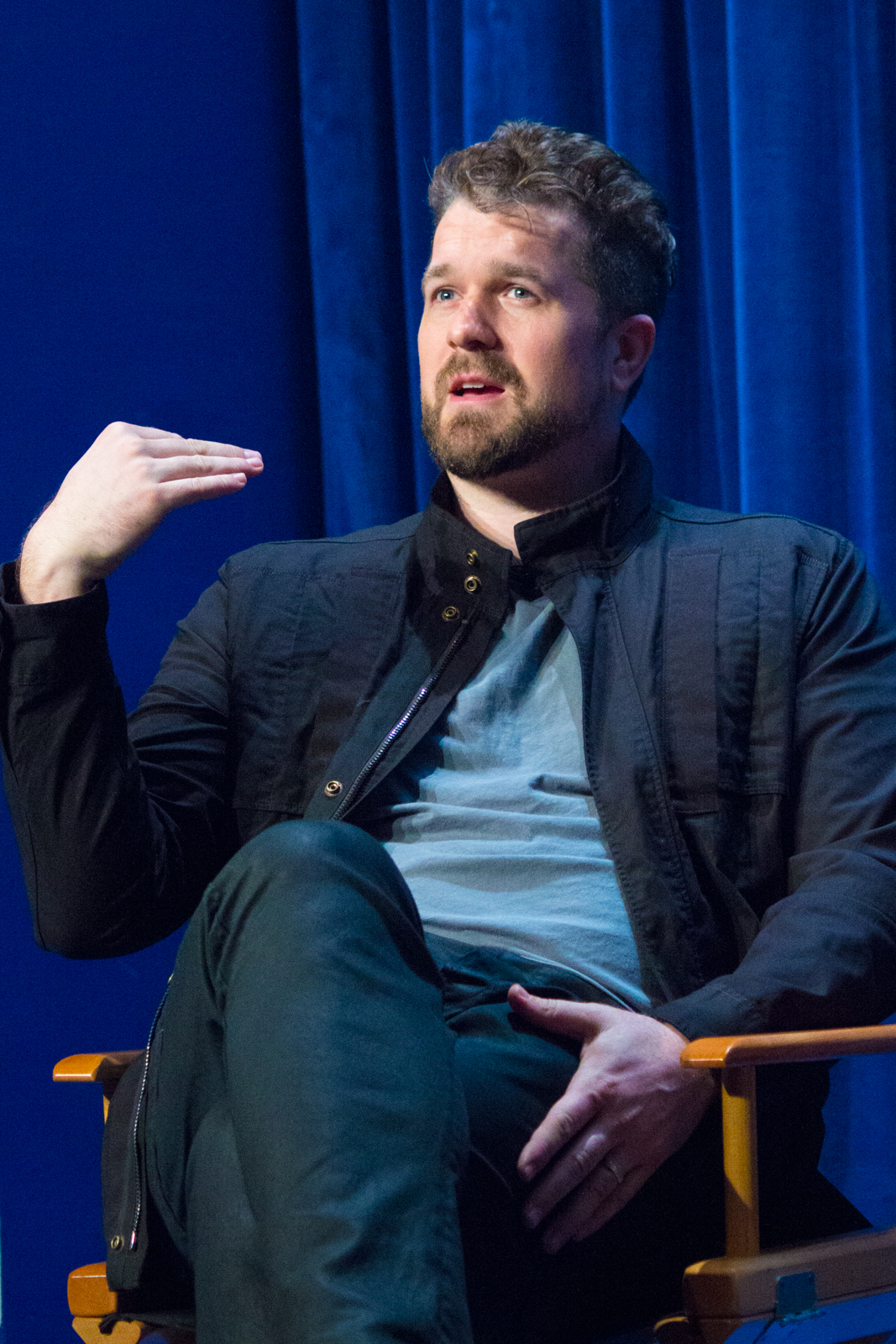
Seth Lewis Gordon is an American film director, producer, screenwriter, and film editor.

Key Information

He has produced and directed for film and television, including for PBS, the Bill & Melinda Gates Foundation, and the United Nations Staff 1% for Development Fund. His films have screened at the Sundance Film Festival and Slamdance Film Festival.

He has directed the films The King of Kong: A Fistful of Quarters (2007), Four Christmases (2008), Horrible Bosses (2011), Identity Thief (2013), and Baywatch (2017). He has also directed several episodes of television series like The Office, Parks and Recreation, Modern Family, Atypical, and For All Mankind.

Life and career

[edit]

Born in 1976, Gordon grew up in Evanston, Illinois.[1] He attended Yale University class of 1998, where he studied architecture until leaving in 1997 to teach high school for six months in the small village of Shimanyiro, Kenya. While there he helped secure United Nations financing to finish construction of a school, and began filming what would eventually become the documentary Building Shimanyiro.[2] Upon returning to Yale, Gordon taught himself how to edit his footage on an Avid editing machine.[1] Later, he helped shoot Barbara Kopple and Cecilia Peck's Dixie Chicks documentary Shut Up & Sing,[1] and after working as cinematographer, editor and producer on various films, he gained prominence with his documentary The King of Kong: A Fistful of Quarters.

Gordon directed the game company Zynga's "GagaVille" online film in 2010. He co-created and is an executive producer of the Fox television series Breaking In.[3] He directed the 2011 comedy Horrible Bosses, but in August 2013 declined to direct the sequel, citing commitments to the television series The Goldbergs, on which he is an executive producer, and a planned remake of the film WarGames.[4] Gordon directed the pilot of Sneaky Pete for Amazon Studios, which he also produced with Bryan Cranston and David Shore.

Gordon directed the 2017 film version of Baywatch, starring Dwayne Johnson, Priyanka Chopra and Zac Efron.[5]

He graduated from Lakeside School (Seattle) in 1994 and the Harvard Graduate School of Design.[6]

In 2009, Gordon developed and directed a video series focusing on the threat posed by cybercrime to Internet users, H*Commerce: The Business of Hacking You, sponsored by antivirus software company McAfee.[7] Gordon has directed various music videos and commercials, and an episode each of Modern Family and Community, two episodes of The Office, and several episodes of Parks and Recreation. He was a director and executive producer on NBC's Marry Me. Gordon is a director and executive producer on ABC's The Goldbergs.[8] He also serves as a director and executive producer on the Netflix series Atypical.[9]

Filmography

[edit]

Film

[edit]

Director

Acting credits

Year Title Role
2011 Horrible Bosses Ralph Peterberg (voice role)
2017 Baywatch Helicopter pilot

Other credits

Year Title Role
2005 Cry Wolf Editor, associate producer, and second unit director
2015 Pixels Executive producer
2022 The Lost City Story writer and producer

Documentary film

[edit]
Year Title Director Producer Writer
2005 New York Doll No Yes No
2007 The King of Kong Yes No No
2010 Freakonomics Yes Executive Yes
Make Believe No Executive No
2011 Undefeated No Yes No
2014 Mitt No Executive No
Print the Legend No Yes No
2015 Finders Keepers No Yes No
Dark Web No Executive No
2016 Gleason No Yes No
2017 Bill Nye: Science Guy No Yes No
Served Like a Girl No Yes No
2018 Wrestle No Yes No
2020 Zappa No Executive No
2023 Finding Home: Journey to MLB No Executive No

Television

[edit]
Year Title Director Executive
producer
Writer Notes
2009 Community Yes No No Episode "Environmental Science"
2009–2010 The Office Yes No No Episodes "Double Date" and "The Delivery" (part 1)
Parks and Recreation Yes No No Episodes "Canvassing" and "The Stakeout"
2010 Modern Family Yes No No Episode "Travels with Scout"
2011 Breaking In Yes Yes Yes Also creator;
Directed 5 episodes
2013–2017 The Goldbergs Yes Yes No 7 episodes
2014–2015 Marry Me Yes Yes No 3 episodes
2015 Sneaky Pete Yes Yes No Episode "Pilot"
The Jim Gaffigan Show Yes Yes No Episode "Pilot"
2017 Atypical Yes Yes No Episodes "Antarctica" and "A Nice Neutral Smell"
The Good Doctor Yes Yes No Episodes "Burnt Food" and "She"
2019 For All Mankind Yes Yes No Episodes "Red Moon" and "He Built the Saturn V"
2020 Lincoln Rhyme: Hunt for the Bone Collector Yes Yes No Episode "Pilot"
United We Fall No Yes No
2022 The Long Game: Bigger Than Basketball Yes Yes No Directed 5 episodes
2023 The Night Agent Yes Yes No 2 episodes

References

[edit]
[edit]
Revisions and contributorsEdit on WikipediaRead on Wikipedia
from Grokipedia
Seth Gordon (born July 15, 1974) is an American , , and known for his documentary : A Fistful of Quarters (2007) and studio comedies such as (2011). Born in , Gordon initially studied architecture at before pursuing , including a period teaching high school in . His breakthrough came with , a critically acclaimed examination of obsession in competitive arcade gaming that highlighted rivalries in high scores. Gordon subsequently directed big-budget features like (2013), Pixels (2015), and (2017), blending humor with action elements, while also helming episodes of popular TV comedies including , , and . Recent projects include producing The Lost City (2022) and directing the action-comedy Back in Action (2025).

Early life and education

Childhood and formative influences

Seth Gordon was born on July 15, 1976, in , where he spent his childhood. As a child, he developed an affinity for cinema, frequently rewatching action films such as , which he later described as providing emotional comfort and ritualistic enjoyment. Gordon attended Lakeside School in Seattle, Washington, graduating in 1994, before enrolling at to study . Initially committed to a career in architecture, his trajectory shifted during a leave from Yale in 1997, when he traveled to to teach. There, disillusioned with college and seeking purpose, he acquired a camera and began documenting his experiences, marking the onset of his engagement with . Upon returning to the , Gordon enrolled in a Yale course and self-taught editing using an Avid system to refine his Kenyan footage, solidifying his pivot from to visual . This hands-on immersion in production, driven by personal exploration rather than formal training, became a foundational influence, emphasizing observational narrative over scripted forms.

Academic pursuits and early professional steps

Gordon attended , where he studied architecture. In 1997, during his time at Yale, he interrupted his studies to teach high school mathematics for six months in the rural village of Shimanyiro, , on the border with . The village lacked electricity and running water, conditions that shaped his resourcefulness. While in , Gordon acquired a Hi8 and began his initial forays into by producing short films with his students, marking the start of his practical engagement with the medium. Upon returning to the , he self-taught non-linear using desktop computers to assemble and refine footage from his Kenyan experience, which deepened his interest in as a core element of narrative construction in documentaries. Gordon later participated in a writing fellowship at Oxford University and studied at the , experiences that complemented his evolving creative pursuits. These academic and experiential steps transitioned into early professional roles, including work as a cameraman on the 2006 documentary Shut Up & Sing about the Dixie Chicks. He also contributed as producer and editor to the documentary New York Doll and served as cinematographer on the 2005 thriller Cry Wolf, which earned approximately $10 million at the U.S. box office despite a modest budget. These projects honed his technical skills and positioned him for feature-length documentary direction.

Documentary career

Initial documentary projects

Gordon's earliest documentary effort, Building Shimanyiro, originated from footage he captured while teaching in a remote Kenyan village during his college years at . Self-taught in using an Avid system, he assembled the film to examine contrasts in between developing and developed nations, drawing from local disputes over infrastructure projects. In 2005, Gordon took on multiple roles—producer, editor, and additional cinematographer—for New York Doll, directed by . The film traces the improbable redemption of Arthur "Killer" Kane, the estranged bassist of the proto-punk band , who reunited for a performance after decades of personal struggles, facilitated by Morrissey's intervention. Premiering at the , it earned a Grand Jury Prize nomination in the documentary category and later secured distribution through releases on platforms like . These projects marked Gordon's foundational experience in nonfiction storytelling, emphasizing personal narratives and cultural undercurrents, before transitioning to his solo directorial work.

The King of Kong and its impact

The King of Kong: A Fistful of Quarters, directed by Seth Gordon, chronicles the rivalry between Steve Wiebe, an out-of-work Boeing engineer from Washington state, and Billy Mitchell, a Florida hot sauce salesman holding the long-standing Donkey Kong arcade high score of 874,300 set in 1982. Filmed over 2005 and 2006, the documentary captures Wiebe's determined attempts to surpass Mitchell's record through rigorous practice sessions, live arcade submissions, and interactions with the competitive gaming organization Twin Galaxies, highlighting the insular world of retro arcade score-chasing and interpersonal conflicts within it. Gordon's debut feature-length documentary premiered at the Slamdance Film Festival on January 24, 2007, and received a limited theatrical release in the United States on August 17, 2007, distributed by New Line Cinema. The film earned widespread critical acclaim for its character-driven and portrayal of obsession in niche subcultures, achieving a 97% approval rating on based on 101 reviews and an 83/100 Metascore on from 23 critics. It secured 11 "Best Documentary" awards across film festivals and critics' groups, including the Cinema Eye Honors Audience Choice Prize in 2008 and runner-up for Best Documentary Feature from the of Film Critics in 2007, marking it as the videogame documentary with the most such honors per . Commercially, it grossed over $700,000 in despite a modest budget, resonating with audiences through its story and subtle critique of gatekeeping in gaming validation processes. The documentary significantly elevated public awareness of competitive arcade gaming, transforming obscure high-score pursuits into a subject of mainstream fascination and inspiring renewed participation in retro gaming events. It spotlighted ' role in score verification, prompting discussions on authenticity in analog-era records amid the rise of digital . Gordon's editing emphasized Mitchell's evasive tactics and Wiebe's perseverance, fostering a perception of Mitchell as an that persisted in gaming lore. Subsequent developments amplified the film's legacy: in 2018, Twin Galaxies vacated Mitchell's Donkey Kong scores after forensic analysis of submission tapes revealed use of emulator software incompatible with original 1980s hardware, leading to his lifetime ban from the organization—a controversy the documentary had foreshadowed through skepticism over Mitchell's unverifiable private recordings. Mitchell contested the findings, filing a defamation lawsuit against Twin Galaxies in 2020 that settled in January 2024, reinstating select historical scores while upholding the modern ban and excluding him from current leaderboards. These events, investigated independently via tape degradation patterns and hardware emulation artifacts, validated the film's insinuations of impropriety without relying on Gordon's footage, though Mitchell maintained his achievements used period-appropriate modifications. The saga influenced stricter verification standards in gaming records and inspired follow-up media, including Wiebe's continued advocacy for transparent scoring.

Narrative film directing

Transition to comedy features

Gordon's directorial debut in narrative feature filmmaking came with the 2008 holiday comedy Four Christmases, following the critical success of his documentary The King of Kong: A Fistful of Quarters (2007), which grossed $677,914 in the United States despite a limited release. The opportunity arose from the documentary's cult following and acclaim for capturing interpersonal rivalries with comedic authenticity, skills that appealed to studio executives seeking directors adept at handling ensemble dynamics and improvisation—elements central to comedy production. Produced by with an estimated budget of $60–80 million, starred and as a cohabiting couple forced to visit each parent's home over the holidays, highlighting familial absurdities and relational tensions. Released on November 26, 2008, the film debuted to $31.7 million in its opening weekend and ultimately earned $120.1 million domestically and $164.1 million worldwide, marking a commercially viable entry into scripted features for Gordon. He later reflected that work's emphasis on observing equipped him to elicit natural comedic timing from actors, bridging the gap from to fiction without formal scripted experience. This project established his versatility, paving the way for further studio comedies while leveraging his reputation for finding humor in competitive or chaotic real-life scenarios.

Key commercial films and box office outcomes

Gordon's first major studio narrative feature, (2008), starring and , earned $120.1 million domestically and $48.2 million internationally, for a worldwide total of $168.3 million, against an estimated budget of $60 million, marking a profitable holiday comedy release. His follow-up, Love Happens (2009), a romantic drama with and , underperformed commercially, generating about $44 million globally on an $18 million budget, limited by mixed reviews and limited appeal. The 2011 black comedy Horrible Bosses, featuring Jason Bateman, Charlie Day, and Jason Sudeikis, became Gordon's most successful film to date, opening to $28.3 million domestically and ultimately grossing $117.5 million in North America and $94.9 million overseas, totaling $212.4 million worldwide on a $35 million budget. This R-rated ensemble hit demonstrated strong audience draw for workplace satire, contributing to a sequel. Identity Thief (2013), reuniting Gordon with Bateman alongside Melissa McCarthy, debuted at $36.6 million and amassed $141.0 million worldwide ($74.7 million domestic, $66.3 million international) against a $35 million budget, buoyed by McCarthy's rising star power despite critical pans. In contrast, the 2017 action-comedy Baywatch, starring Dwayne Johnson and Zac Efron, opened to $18.5 million but stalled domestically at $58.1 million, though international markets added $117.8 million for a $175.9 million global haul on a $69 million budget, resulting in break-even performance amid poor reviews.
FilmRelease DateDomestic GrossInternational GrossWorldwide GrossProduction Budget
Four ChristmasesNovember 26, 2008$120,146,040$48,165,518$168,311,558$60,000,000
Horrible BossesJuly 8, 2011$117,538,559$94,879,042$212,417,601$35,000,000
February 8, 2013$74,686,702$66,250,000$140,936,702$35,000,000
May 25, 2017$58,060,186$117,803,597$175,863,783$69,000,000
Gordon's commercial track record shows peaks with mid-budget comedies leveraging star ensembles, but variability tied to critical reception and genre saturation, with no consistent blockbuster formula beyond Horrible Bosses.

Television work

Guest directing episodes

Gordon began guest directing episodes of established television series in the late , focusing on single-camera comedies that aligned with his experience in humor and character-driven narratives. These assignments allowed him to collaborate with showrunners on mockumentary-style formats, honing skills between his documentary and narrative projects. His early guest credits include one episode each of Community and Modern Family. In Community, he directed "Environmental Science" (Season 1, Episode 10, aired December 3, 2009), where protagonists navigate a group project involving a diorama and interpersonal conflicts. For Modern Family, he helmed "Travels with Scout" (Season 1, Episode 21, aired April 28, 2010), centering on family mishaps during a pet-sitting scenario. Gordon directed two episodes of in Season 6: "Double Date" (Episode 2, aired October 1, 2009), depicting awkward double-date dynamics, and "The Delivery" (Parts 1 and 2, Episodes 17–18, aired March 4, 2010), focusing on a birth storyline amid office antics. He also contributed two episodes to : "Canvassing" (Season 1, Episode 2, aired April 16, 2009), involving election outreach efforts, and "The Stakeout" (Season 2, Episode 4, aired October 1, 2009), featuring surveillance humor. Later guest work extended to family sitcoms, such as "The Ring" (Season 1, Episode 3 of The Goldbergs, aired October 2, 2013), which explored a marital artifact's significance. These episodes typically featured his signature blend of and ensemble timing, drawing from his prior documentary precision in capturing authentic behaviors.
ShowEpisode TitleSeason/EpisodeAir Date
Environmental Science1/10December 3, 2009
Travels with Scout1/21April 28, 2010
Double Date6/2October 1, 2009
The Delivery (Pt. 1)6/17March 4, 2010
The Delivery (Pt. 2)6/18March 4, 2010
Canvassing1/2April 16, 2009
The Stakeout2/4October 1, 2009
The GoldbergsThe Ring1/3October 2, 2013

Producing and executive roles

Gordon co-created the Fox comedy series Breaking In, which premiered on April 6, 2011, and served as its alongside . The series, centered on a high-tech firm, ran for two seasons totaling 13 episodes before cancellation in May 2012 due to low ratings. Under a multi-year overall deal with signed in September 2011, Gordon expanded his television producing footprint, developing multiple projects through the studio. As executive producer on ABC's The Goldbergs, which debuted on September 24, 2013, Gordon directed the pilot episode and contributed to its early creative direction, drawing from creator Adam F. Goldberg's 1980s family experiences. The long-running sitcom, produced by , achieved sustained success with over 170 episodes across 10 seasons, ending in 2023. Gordon executive produced the comedy-drama , which launched on August 11, 2017, overseeing its four seasons and 38 episodes focused on a teenager on the autism spectrum. He also served as on Amazon's , directing its pilot aired on August 7, 2015, and supporting its three-season run of crime drama centered on and family secrets. In recent years, Gordon has taken credits on high-profile streaming series, including Netflix's thriller , which premiered on March 23, 2023, and featured 10 episodes in its first season based on Matthew Quirk's novel. He renewed his deal in May 2019, extending his role in developing and producing content across broadcast and streaming platforms.

Recent projects and future endeavors

Back in Action (2025)

Back in Action is an film directed, co-written, and produced by Seth Gordon, marking his return to feature directing after The Lost City (2022). The screenplay, penned by Gordon alongside Brendan O'Brien, centers on former CIA operatives Emily () and Matt (), who abandoned to raise their family but are thrust back into the field after their civilian identities are compromised. Supporting roles feature , Andrew Scott, , and the directors' children, McKenna Roberts and Rylan Jackson, as the couple's kids. Gordon conceived the project casually during a Dodgers game, initially as a humorous pitch before developing it into a full script. Production faced hurdles, including delays from the 2023 Hollywood strikes and Foxx's 2023 medical emergency, which halted filming temporarily; shooting resumed after Foxx's recovery. The film represents Diaz's first major role since retiring from acting in 2018, paralleling her character's arc of balancing family and high-stakes missions. Netflix acquired distribution rights, shifting the release from a planned November 15, 2024, debut to January 17, 2025. Upon streaming release, Back in Action achieved significant viewership, amassing 46.8 million global accounts in its first two days and ranking as Netflix's most-watched English-language film debut since 2023. By mid-2025, it had become the platform's top-streamed original movie of the year, underscoring strong audience appeal for its blend of spy thrills, family dynamics, and star chemistry despite formulaic elements. Critically, however, reception was lukewarm, with aggregating a 30% approval rating from 97 reviews, citing overreliance on tropes and uneven pacing, though some praised the leads' rapport and action sequences. User scores were higher, averaging 5.9/10 on from over 62,000 ratings, reflecting broader entertainment value for casual viewers. The film concludes on a , teasing potential sequels by leaving unresolved threats to the protagonists' future, a deliberate choice by Gordon to extend the franchise if audience demand persists. Gordon has expressed openness to spin-offs, highlighting the project's scalability within Netflix's action- slate. This endeavor reaffirms Gordon's versatility in helming crowd-pleasing genre hybrids, building on his prior successes in and documentaries.

Upcoming documentary on the Ruby Slippers

In January 2025, Seth Gordon announced plans for an independent documentary exploring the 2005 theft and 2018 FBI recovery of a pair of ruby slippers worn by Judy Garland in The Wizard of Oz, one of only four surviving pairs from the 1939 film. The project, tentatively titled Under the Rainbow, draws on Gordon's experience with real-world underdog stories, as seen in his earlier documentary The King of Kong: A Fistful of Quarters. Gordon described the narrative as "crazy," centering on career criminal Terry Martin's confession to the heist—prompted by a desire to pull one final job before retirement—and subsequent revelations involving figures who held the slippers for over a decade without successfully fencing them due to their cultural value and lack of black-market demand. Production began in earnest by late 2023, with Gordon's team, including co-director and producer Nikki Calabrese, conducting on-location filming in Grand Rapids, , near the Museum from which the slippers were stolen. The documentary captured key developments, including the slippers' public in 2024, where they sold for $28 million to an anonymous bidder represented by collector Michael Shaw, the original owner who had loaned them to the museum. As of early 2025, Gordon indicated the film remains in active production without a confirmed distributor or release date, positioning it as a return to his documentary roots amid recent narrative features like Back in Action.

Reception and controversies

Critical acclaim versus commercial variability

Gordon's debut documentary The King of Kong: A Fistful of Quarters () earned widespread critical acclaim, achieving a 97% approval rating on [Rotten Tomatoes](/page/Rotten Tomatoes) based on 102 reviews, praised for its compelling portrayal of competitive gaming rivalries and human perseverance. The film also scored 83/100 on from 23 critics, highlighting its insightful examination of obsession and authenticity in niche subcultures. However, as a low-budget independent documentary, its commercial performance remained modest, grossing under $1 million domestically despite cult appeal and festival buzz. Transitioning to narrative features, Gordon's comedies exhibited stark variability, with critical reception often diverging from box office outcomes. (2011) received mixed-to-positive reviews, holding a 69% score from 220 critics for its sharp ensemble chemistry and satirical take on workplace dysfunction, though some faulted its uneven pacing. Commercially, it succeeded, earning $117.5 million domestically on a $35 million budget and grossing $209.8 million worldwide, buoyed by strong opening weekend performance of $28.3 million. In contrast, (2013) drew poor critical marks, with a 20% rating from 172 reviews citing formulaic plotting and overreliance on , yet it proved a financial hit, opening to $36.6 million and totaling $134.5 million domestically. This pattern persisted in later works like (2014), which garnered largely negative reviews at 27% on for failing to recapture the original's anarchic charm, despite nostalgic draw from stars and . Box office returns were solid but underwhelming relative to expectations, grossing approximately $86 million domestically on a $50 million budget, reflecting franchise fatigue amid middling audience reception. Overall, Gordon's demonstrates high initial acclaim in documentaries yielding limited revenue, juxtaposed against feature films where commercial viability—driven by star power and broad appeal—frequently outpaced critical favor, underscoring audience tolerance for mainstream tropes over innovative .

Disputes surrounding The King of Kong

The 2007 documentary The King of Kong: A Fistful of Quarters, directed by Seth Gordon, chronicled the rivalry between Steve Wiebe and Billy Mitchell over the Donkey Kong arcade high score, portraying Mitchell's 1,047,200-point submission from June 2007 as a benchmark that Wiebe sought to surpass on original hardware. However, in April 2018, Twin Galaxies, the organization tracking video game records, invalidated Mitchell's Donkey Kong scores from 1999 to 2007—including the one central to the film's climax—after forensic analysis revealed they were achieved using emulator software or modified hardware incompatible with unmodified arcade rules. Independent researcher Jeremy Young's examination of Mitchell's submitted videotapes identified graphical artifacts, such as straight ladder-climbing animations absent in authentic hardware, consistent with Multi Arcade Machine Emulator (MAME) usage rather than original Nintendo cabinets. Mitchell denied cheating, attributing discrepancies to a modified cabinet provided by for promotional purposes, but ' adjudication panel, comprising experts including hardware specialist Rob Childers, upheld the findings based on mismatches and emulation signatures in the footage. Wiebe, the film's , expressed belief that Mitchell's scores during the documentary's production period were legitimate, though he acknowledged the broader investigation's validity without personal involvement in verification. The revelations prompted Mitchell's lifetime ban from competitions and erased his records from official leaderboards, retroactively undermining the film's depiction of Mitchell as an unbeatable record-holder. Critics have accused of selective and fabricated conflicts to heighten drama, such as omitting a pre-filming one-on-one match between Mitchell and Wiebe, which occurred but was downplayed to emphasize antagonism. Archivist detailed inaccuracies, including misrepresented verification processes where Mitchell's tape was temporarily scrutinized and briefly removed from records before reinstatement, facts elided to streamline the underdog narrative. Gordon has acknowledged excising additional footage that portrayed Mitchell negatively, suggesting the final cut already amplified his villainous traits for storytelling effect. In January 2024, Mitchell settled a defamation lawsuit against , resulting in his scores' archival listing in a non-competitive "historical database" rather than restoration to active rankings, without admitting fault. These events have fueled debates on the film's ethical framing, with some viewing it as prescient in exposing competitive gaming's underbelly, while others argue it prioritized entertainment over factual rigor, contributing to prolonged misinformation about Mitchell's achievements. Gordon has not publicly retracted elements of the film but noted in 2025 that a sequel incorporating post-2007 developments is nearing release, potentially addressing the disputes.

Filmography overview

Feature films

Gordon directed his feature film debut, the documentary The King of Kong: A Fistful of Quarters, released on September 10, 2007, which chronicled the rivalry between arcade gamers Steve Wiebe and Billy Mitchell in pursuit of the Donkey Kong high score. The film premiered at the 2007 Tribeca Film Festival and earned $13.6 million worldwide on a $300,000 budget. His first narrative feature, Four Christmases, was released on November 25, 2008, starring Vince Vaughn and Reese Witherspoon as a couple navigating family visits over the holidays; it grossed $120.3 million against a $60 million budget but received mixed reviews for its formulaic humor. In 2011, Gordon helmed Horrible Bosses, a dark comedy released July 8, featuring Jason Bateman, Charlie Day, and Jason Sudeikis as frustrated employees scheming against their abusive superiors, including portrayals by Kevin Spacey, Jennifer Aniston, and Colin Farrell; the film earned $209.8 million globally on a $35 million budget. Identity Thief, released February 8, 2013, reunited Gordon with Bateman alongside Melissa McCarthy in a chase comedy about a man tracking an identity fraudster; it grossed $174.1 million worldwide despite a $35 million production cost and polarized critics over its repetitive gags. Gordon directed the action-comedy on May 25, 2017, adapting the TV series with , , and Jonas as lifeguards uncovering crime; budgeted at $69 million, it earned $177.8 million but faced criticism for crude humor and deviations from the source material. His most recent directorial effort, Back in Action, a Netflix spy thriller-comedy starring and as retired CIA agents pulled back into , debuted on January 17, 2025; Gordon also co-wrote the screenplay.

Television credits

Seth Gordon began his television career directing episodes of acclaimed comedy series, contributing to the visual and comedic style of shows such as (NBC, 2005–2013), where he helmed multiple episodes including "The Client" in 2005. He also directed installments of (NBC, 2009–2015), (ABC, 2009–2020), and (NBC, 2009–2015), honing his skills in ensemble-driven humor during the late 2000s and early 2010s. Transitioning to more varied genres, Gordon directed episodes of dramatic and genre series including (Netflix, 2017–2021), The Good Doctor (ABC, 2017–2024), (Amazon Prime Video, 2015–2019), For All Mankind (Apple TV+, 2019–present, episodes 1 and 2 of season 1), Lincoln Rhyme: Hunt for the Bone Collector (NBC, 2020), and (Netflix, 2023–present). These credits demonstrate his versatility beyond comedy, encompassing medical dramas, alternate history sci-fi, and thrillers. In producing roles, Gordon co-created and executive produced the short-lived Breaking In (2011–2012), which aired 13 episodes across two seasons. He served as on The Goldbergs (ABC, 2013–2023), contributing to all 229 episodes of the nostalgic family . Additional executive producing credits include Imaginary Mary (ABC, 2017, 9 episodes), Me, Myself & I (CBS, 2017–2018, 13 episodes), and (, 2014, 8 episodes). In May 2019, Gordon extended a three-year overall deal with through his Exhibit A banner, facilitating development of and scripted content.

References

Add your contribution
Related Hubs
User Avatar
No comments yet.