Hubbry Logo
Sex-linkSex-linkMain
Open search
Sex-link
Community hub
Sex-link
logo
8 pages, 0 posts
0 subscribers
Be the first to start a discussion here.
Sex-link
Sex-link
from Wikipedia
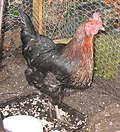
A black sex-link hen

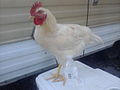
Sex-links[1] are crossbred chickens whose color at hatching is differentiated by sex, thus making chick sexing an easier process. Sex-links come in several varieties. As hybrids of laying or dual-purpose breeds infused with extra vigor via heterosis, sex-links can be extremely good egg-layers which often produce 300 eggs a year or more depending on the quality of care and feed. The color of their eggs vary according to the mix of breeds, and blue-green eggs are possible.

Chicks of a single breed that are similarly sex-linked are called autosex chickens, a term developed to differentiate between sex linkage in purebred chickens versus sex linkage in crossbreeds.

[edit]

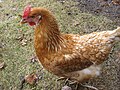
Many common varieties are known as the black sex-link (also called black stars) and the red sex-link (also called red stars).[2] More specific variety names are common as well.

  • Black sex-link like "Black rocks" are a cross between unique specially bred hybrid strains of Rhode Island Red rooster (but any non-white and non barred rooster may be used for other black sex-link crosses) and a Barred Rock hen (which carry both extended black and barring genes).
  • Red sex-links are a cross between a Rhode Island Red or New Hampshire rooster and a White Rock (This variety pair is known as a Golden Comet), Silver Laced Wyandotte, Rhode Island White, or Delaware hen.

Examples of a red-linked breeds include the Red Shaver and ISA Brown sex-links which are found in Canada.[3]

White birds should not be used in sex-linked crosses because white colour allele is sometimes dominant and sometimes recessive.[4]

[edit]

See also

[edit]

References

[edit]
[edit]
Revisions and contributorsEdit on WikipediaRead on Wikipedia
from Grokipedia
Sex-linkage, also known as sex-linked inheritance, refers to the genetic phenomenon in which certain traits are controlled by genes located on the sex chromosomes—typically the X chromosome, and less commonly the Y chromosome—leading to distinct patterns of expression and inheritance that differ between males and females. In humans and many other species, females possess two X chromosomes (XX), while males have one X and one Y (XY), making males hemizygous for X-linked genes and thus more likely to express recessive X-linked traits. This form of inheritance was first described in studies of fruit flies by Thomas Hunt Morgan in the early 20th century, where he observed white eye color as an X-linked recessive trait. X-linked traits, which account for the majority of sex-linked inheritance due to the X chromosome's larger size and greater number of genes (approximately 800–900 protein-coding genes compared to about 100 on the Y as of 2023), often follow non-Mendelian patterns where affected males inherit the trait from carrier mothers, and carrier females may pass it to half their sons. Prominent examples of X-linked recessive disorders include hemophilia A and B, which impair blood clotting and primarily affect males, red-green , and , a progressive muscle-wasting condition. In contrast, Y-linked traits are rarer and typically involve genes passed directly from fathers to sons, such as those related to male-specific fertility or the SRY gene, which initiates male sex determination during embryonic development. Understanding sex-linkage is crucial in for diagnosing and counseling on conditions with sex-biased prevalence, as females can often mask recessive alleles through X-chromosome inactivation, a process where one X chromosome is randomly silenced in each cell.

Fundamentals

Definition and Basic Concepts

Sex-linkage refers to the phenomenon in where certain traits or disorders are inherited through genes located on the , specifically the X or Y chromosomes, rather than on the autosomes. This pattern arises because humans and many other organisms have unequal numbers of between males and females: females typically possess two X chromosomes (XX), while males have one X and one Y chromosome (XY). As a result, the transmission and expression of sex-linked genes differ from the balanced seen in autosomal genes, which are present in pairs in both sexes. The play a primary role in determining biological sex, with the presence of the generally triggering male development, while its absence leads to development. For on the , males are hemizygous, meaning they carry only a single copy of each X-linked without a homologous on the to potentially mask recessive variants. This hemizygosity makes males more susceptible to expressing recessive X-linked traits, as there is no second for dominance interactions. In contrast, females have two , allowing for potential masking of recessive by a dominant counterpart on the other X. To balance between males and females, mammals employ dosage compensation through inactivation in females, a process where one of the two X chromosomes is randomly silenced in each cell early in embryonic development, as proposed in the Lyon hypothesis. This ensures that both sexes effectively express genes from a single active X chromosome, preventing overexpression in females. Y-linked genes, however, lack such compensation mechanisms and are expressed solely in males, contributing to male-specific traits. A key distinction from autosomal is the sex-biased transmission probabilities in sex-linkage: sons inherit their X chromosome solely from the mother and their Y from the father, leading to asymmetric patterns where, for example, X-linked recessive conditions are more frequently expressed in males due to hemizygosity. Autosomal traits, by comparison, show equal risks across sexes because both parents contribute equally to the paired autosomes. This fundamental difference underscores why sex-linked often results in skewed phenotypic distributions between males and females.

Historical Background

The concept of sex-linkage emerged from early 20th-century genetic experiments that revealed inheritance patterns deviating from Mendel's laws. In 1910, discovered a white-eyed in the fruit fly Drosophila melanogaster while breeding flies at , marking the first documented case of sex-linked inheritance. By crossing the white-eyed male with red-eyed females and observing the trait's appearance predominantly in males across generations, Morgan concluded that the gene was carried on the , establishing sex-linkage as a non-Mendelian phenomenon and providing initial evidence for the chromosomal theory of inheritance. Building on this, key advancements solidified the framework of sex-linkage. In 1913, , a student in Morgan's lab, constructed the first map using recombination frequencies from crosses involving sex-linked traits like white eyes, miniature wings, and yellow body color, demonstrating that genes on the are arranged linearly and that crossing over occurs between them. This map not only quantified genetic distances but also confirmed the physical basis of linkage on chromosomes. In humans, and saw confirmation of X-linked traits through pedigree analyses; for instance, studies linking hemophilia to provided definitive evidence that these disorders are X-linked, as the traits co-segregated in families without recombination, supporting their location on the same chromosome. Further, in 1961, proposed the hypothesis of random X-chromosome inactivation in female mammals, explaining dosage compensation and the mosaic expression of X-linked traits observed in heterozygous mice, which extended understanding from flies to mammalian systems. Post-World War II research accelerated the identification of X-linked loci in humans through systematic linkage studies. In the 1950s and 1960s, researchers like Victor McKusick utilized family pedigrees and emerging serological markers to map dozens of X-linked conditions, such as Duchenne muscular dystrophy and G6PD deficiency, establishing a preliminary human X-chromosome map and highlighting the chromosome's role in hereditary diseases. This era shifted focus from descriptive genetics to quantitative mapping, integrating statistical methods to estimate recombination rates. The publication of the sequence of the human X chromosome in 2005, as part of the efforts following the completion of the Human Genome Project in 2003, represented a pinnacle of this evolution, identifying 1,098 X-linked genes, which enabled precise localization of disease-causing mutations and integrated sex-linkage into modern genomics. The historical progression of sex-linkage research transitioned from animal models, particularly Drosophila, where Morgan's group established foundational principles, to mammalian and human studies that revealed subtler mechanisms like X-inactivation. This shift underscored the rarity of Y-linked traits, as early mappings in flies and mice identified few holandric genes, prompting recognition that Y-chromosome inheritance is limited compared to the gene-rich X. In 2020, researchers achieved the first complete, gapless sequence of the human X chromosome using advanced long-read sequencing technologies, further refining the annotation of its genes.

Types and Mechanisms

X-linked Inheritance

The human carries approximately 829 protein-coding genes, significantly more than the approximately 106 on the , reflecting their divergent evolutionary paths. These genes are primarily located in the non-recombining region of the X, but small homologous segments known as pseudoautosomal regions (PAR1 at the short arm tip and PAR2 at the long arm tip) permit limited recombination with the during male , facilitating proper chromosome pairing and segregation. X-linked inheritance follows distinct patterns due to the hemizygous state of males (XY) and heterozygous potential in females (XX). In , males expressing the trait (genotype X^a Y, where a denotes the recessive ) transmit the affected X to all daughters (who become carriers, X^A X^a), but none to sons (X^A Y), resulting in no male-to-male transmission; carrier females pass the to 50% of sons (affected) and 50% of daughters (carriers). This can be illustrated via a for a carrier (X^A X^a) and unaffected father (X^A Y):
X^AX^a
X^AX^A X^A (normal female)X^A X^a (carrier female)
YX^A Y (normal male)X^a Y (affected male)
Thus, each son has a 50% chance of being affected, and each daughter a 50% chance of being a carrier. In , an affected male (X^A Y, where A denotes the dominant ) passes the trait to all daughters (X^A X^a) but no sons (X^a Y); affected heterozygous females (X^A X^a) transmit to 50% of offspring of each sex, though expression in females is often variable due to X-chromosome inactivation. For a of an affected heterozygous mother (X^A X^a) and unaffected father (X^a Y):
X^AX^a
X^aX^A X^a (affected female)X^a X^a (normal female)
YX^A Y (affected male)X^a Y (normal male)
X-chromosome inactivation, occurring randomly in female embryonic cells, silences one X per cell to equalize with males, creating a of cells expressing either the maternal or paternal X. Approximately 85% of X-linked genes are subject to this inactivation, while ~15% escape it, leading to biallelic expression in females and contributing to sex-specific dosage differences. In rare cases, —where one X is preferentially silenced (e.g., >80% bias)—can manifest recessive traits in heterozygous females by reducing functional protein from the normal .

Y-linked Inheritance

Y-linked inheritance, also known as holandric inheritance, refers to the transmission of genetic traits encoded exclusively on the , which occurs solely from fathers to their sons, bypassing females entirely. In this pattern, all sons of an affected father inherit the trait, and generations do not skip, as the Y chromosome is passed intact without recombination in most regions. This strict patrilineal mode contrasts with other inheritance patterns due to the 's role in male determination and its limited gene repertoire. The complete sequencing of the human in 2023 by the Telomere-to-Telomere (T2T) Consortium provided a gapless reference, revealing additional protein-coding genes and enhancing understanding of its structure. The human harbors approximately 106 protein-coding genes, with the vast majority residing in the non-recombining region (NRY), a segment comprising about 95% of the chromosome that does not undergo crossing over with the during . This lack of recombination leads to the persistence of haplotype blocks—large stretches of DNA inherited together—and contributes to accelerated evolutionary rates, as deleterious mutations accumulate without the purifying effects of genetic exchange. The NRY's structure, rich in repetitive sequences and ampliconic regions, further promotes higher mutation rates compared to autosomes or the . Central to Y-linked function is the SRY gene, located within the NRY, which acts as the primary sex-determining factor by triggering testis development and male gonadal differentiation during embryogenesis. Other notable genes include TSPY, a multi-copy encoding testis-specific proteins implicated in ; variations in TSPY copy number, particularly low counts, are associated with impaired and reduced spermatogenic efficiency. Despite these key players, confirmed Y-linked traits remain rare, attributable to the Y chromosome's small gene count and the frequent lethality of mutations, which often result in non-viable embryos or severe developmental disruptions before traits can manifest.

Examples in Humans

X-linked Disorders

X-linked disorders are genetic conditions caused by mutations in genes located on the , leading to a range of clinical manifestations that often exhibit sex-specific patterns due to differences in X chromosome dosage between males and females. These disorders can be classified as recessive or dominant based on inheritance patterns and phenotypic expression. In X-linked recessive disorders, males, who are hemizygous for the X chromosome, typically express the full upon inheriting a single mutated , while females require two mutated alleles for full expression but may show milder symptoms if heterozygous. In contrast, X-linked dominant disorders manifest in both sexes but often with greater severity in males due to the absence of a second X chromosome to potentially compensate via mechanisms like . Prominent examples of X-linked recessive disorders include hemophilia A, , and red-green . Hemophilia A results from mutations in the F8 gene, which encodes , leading to deficient blood clotting and prolonged bleeding after injury or surgery; it affects approximately 1 in 5,000 males worldwide. Duchenne muscular dystrophy arises from mutations in the DMD gene, causing absence or dysfunction of the protein essential for muscle cell stability, resulting in progressive muscle weakness, loss of ambulation by , and cardiac and respiratory complications; its prevalence is about 1 in 3,500 to 5,000 male births. Red-green , the most common form of deficiency, stems from alterations in the OPN1LW and OPN1MW genes on the , which encode opsins for red and green light detection in cone cells, impairing discrimination between these hues; it occurs in roughly 8% of males compared to 0.5% of females. X-linked dominant conditions, though less common, include Fragile X syndrome and Rett syndrome. Fragile X syndrome is caused by expansion of a CGG trinucleotide repeat in the FMR1 gene beyond 200 repeats, leading to silencing of the gene and deficiency of the FMRP protein critical for neuronal development; this results in intellectual disability, autism spectrum features, and physical characteristics like a long face and large ears, with symptoms more severe in males, affecting about 1 in 4,000 to 7,000 males. Rett syndrome, primarily affecting females, arises from mutations in the MECP2 gene, which encodes a protein involved in gene regulation via chromatin modification; it causes developmental regression, loss of purposeful hand use, stereotyped movements, seizures, and intellectual disability after normal early development, while males with the mutation often experience lethality in utero or severe neonatal encephalopathy due to hemizygosity. Mutations in X-linked genes account for over 500 known disorders, representing a significant portion of monogenic diseases, with estimates suggesting involvement in 5-10% of cases of in males. Due to hemizygosity, males are generally more susceptible to the effects of recessive X-linked mutations, contributing to a 1.5- to 2-fold higher overall prevalence of compared to females. In dominant forms, the sex bias can vary, but male lethality or severity often limits expression to females. Heterozygous females for X-linked recessive disorders frequently serve as asymptomatic carriers, as random silences one X chromosome per cell, potentially balancing expression; however, —where the normal is disproportionately inactivated—can lead to mild or variable symptoms in carriers. This phenomenon underscores the role of in modulating phenotypic outcomes in females for both recessive and dominant X-linked conditions.

Y-linked Traits

Y-linked traits are exceedingly rare in humans due to the extensive degeneration of the , which has lost most of its original over approximately 300 million years of since its divergence from the in mammals. This progressive loss, driven by the absence of recombination and accumulation of deleterious mutations, has reduced the to a small size with limited functional , primarily those essential for male sex determination and . The complete telomere-to-telomere sequencing of the human , published in 2023, identified 106 protein-coding , including 41 previously unannotated ones, most of which are multicopy in ampliconic regions involved in . As a result, only a handful of confirmed Y-linked traits exist, all male-specific and often related to reproductive function, with research challenges stemming from the chromosome's repetitive structure and low count. Among confirmed Y-linked traits, deletions in the azoospermia factor (AZF) regions—AZFa, AZFb, and AZFc—on the long arm of the are a primary cause of , specifically non-obstructive or severe oligozoospermia due to impaired . These microdeletions affect approximately 10-15% of men with and are the most common genetic etiology of severe spermatogenic failure, with AZFc deletions being the most frequent subtype. Another established trait involves in the SRY gene, located on the short arm of the , which is critical for testis development; pathogenic variants lead to Swyer , resulting in a despite a 46,XY and streak gonads. These account for about 10-15% of Swyer cases and disrupt the gene's role as the primary sex-determining factor. Hypothesized Y-linked traits include of the ears (hairy ears), a condition characterized by excessive hair growth on the ear pinnae, which has been proposed as Y-linked based on apparent father-to-son transmission in some pedigrees but remains highly debated due to conflicting genetic evidence. Molecular studies using Y-chromosomal haplotyping have found no linkage to Y-specific markers, suggesting it may instead be autosomal or multifactorial. Variants associated with non-obstructive beyond standard AZF deletions, such as partial or novel microdeletions in AZF regions, have also been hypothesized as Y-linked contributors to spermatogenic impairment, though their requires further validation through functional studies. Population studies reveal variations in Y-linked trait frequencies across ethnic groups, often analyzed via Y-chromosome haplogroups, though direct correlations with specific lineages are inconsistent. For instance, AZF deletion prevalence is higher in certain populations, such as up to 29% in infertile Indian men compared to 7-12% in Chinese cohorts, highlighting potential founder effects or environmental influences on rates without strong haplogroup dependence. These disparities underscore the challenges in studying Y-linked traits, as small sample sizes and regional biases limit generalizability.

Examples in Other Organisms

In Fruit Flies

Fruit flies, particularly , have served as pivotal model organisms for studying sex-linked inheritance due to their well-characterized and ease of manipulation. In 1910, discovered the white-eye mutation, an X-linked recessive trait that provided the first clear evidence of in animals. This mutation affects , with wild-type flies exhibiting red eyes; the white-eye (w) is recessive, meaning females require two copies (homozygous) to express the , while hemizygous males express it with a single copy. Morgan's crosses demonstrated that the trait followed a non-Mendelian pattern, with white eyes appearing only in males in the initial F1 generation when a white-eyed male was crossed with red-eyed females, confirming its location on the . This discovery enabled the mapping of genes along the through recombination frequencies, laying the foundation for chromosome theory. Other notable sex-linked traits in include the Bar eye , an X-linked dominant (B) resulting from a position effect caused by a duplication in the 16A region of the . Heterozygous females and hemizygous males display narrow, bar-shaped eyes, with the severity increasing in homozygotes due to higher ; this highlighted how chromosomal rearrangements can alter without changing the sequence. The miniature wings (m), an X-linked recessive trait discovered shortly after white-eye, reduces wing size and was used in early linkage studies. Females homozygous for m and hemizygous males exhibit short, crumpled wings, while heterozygotes show normal morphology. Sex-linked lethal , such as those disrupting essential X-chromosome genes, further illustrated inheritance patterns; when carried by heterozygous females, they produce a 2:1 female-to-male ratio in offspring due to the lethality in hemizygous males, distorting the typical 1:1 and aiding in . The experimental advantages of stem from its short generation time of about 10-14 days at 25°C, allowing rapid multi-generational studies, and the abundance of visible phenotypic markers like and shape for easy scoring without specialized equipment. Reciprocal crosses reveal the criss-cross inheritance pattern characteristic of X-linked traits: for instance, a male crossed with wild-type females passes the X-linked to all daughters (who appear wild-type if recessive) but none to sons, while the transmits it from heterozygous mothers to sons, bypassing daughters. This pattern underscores the hemizygous nature of the male X and has been instrumental in confirming . Genomically, the Drosophila X chromosome spans approximately 22 Mb and contains about 2,200 protein-coding genes, comprising roughly 20% of the total ~14,000 genes in the , with mechanisms for dosage compensation similar to those in humans to equalize expression between sexes. In contrast, the Y chromosome is highly degenerate, consisting mostly of and repetitive DNA with few functional genes, primarily involved in , and lacks significant Y-linked traits observable in standard inheritance studies.

In Other Animals and Plants

In mammals, sex-linked traits often manifest through X-chromosome mechanisms, as seen in the cat's coat color, where the orange and fur patterns result from X-linked alleles at the O locus, leading to mosaicism due to random X-chromosome inactivation in heterozygous females. This inactivation, which silences one X chromosome per cell early in embryonic development, explains why patterns are predominantly observed in females, with rare male exceptions typically involving XXY genotypes. Another example is X-linked in dogs, caused by mutations in the DMD gene on the , resulting in deficiency that primarily affects males due to their single X chromosome, leading to progressive muscle degeneration and early mortality. This canine model closely mirrors human and has been instrumental in studying patterns. Birds employ a , where females are heterogametic (ZW) and males homogametic (ZZ), reversing the typical mammalian XY pattern and influencing the expression of Z-linked traits. A prominent Z-linked trait is the barring in chickens, controlled by the dominant B on the Z , which produces alternating light and dark bars and is used in sex-linked crosses for early chick identification in breeding. Unlike mammals, birds lack global X-chromosome inactivation for dosage compensation; instead, Z-linked shows partial upregulation in males to balance the dosage difference, though this mechanism is less complete than in mammals. In plants, sex-linked traits appear in dioecious species with differentiated , such as Silene latifolia, where the carries genes that suppress female development, while the carries genes that promote female development, with male traits promoted by Y-linked genes through a dosage-sensitive mechanism involving X/Y balance. This white campion species exhibits early sex chromosome evolution, with the accumulating male-promoting and female-suppressing loci, contributing to its utility as a model for studying heteromorphic . Similarly, garden asparagus ( officinalis) displays sex-linked floral traits determined by two Y-linked genes: one suppressing pistil development in males and another promoting anther formation in males, enabling the production of unisexual flowers in XY males and XX females. Evolutionary studies highlight dynamic sex chromosome changes across species, as in guppies (Poecilia reticulata), where Y-linked color patterns have evolved rapidly through recombination suppression, linking male-specific orange spots and black markings to the to enhance advantages. These Y-linked traits underscore how can drive ecological adaptations, such as predation-driven variation in male coloration, without the need for dosage compensation akin to that in other vertebrates.

Clinical and Research Aspects

Diagnosis and Genetic Testing

Diagnosis of sex-linked conditions often begins with pedigree analysis, which involves constructing family trees to identify patterns suggestive of X-linked or Y-linked traits. For X-linked disorders, a key indicator is the absence of male-to-male transmission, as affected males pass the trait to all daughters but no sons, while carrier females transmit it to half their sons on average; this method helps suspect sex-linkage in families with recurrent affected males across generations. Pedigree analysis is particularly useful for initial screening in conditions like hemophilia or , guiding subsequent molecular confirmation. Molecular testing provides definitive identification of sex-linked variants through targeted techniques. Karyotyping visualizes chromosomal structure and number, detecting gross anomalies such as extra or missing (e.g., XXY in or XO in ) by staining and microscopic examination of chromosomes from blood or samples. For specific gene mutations, (PCR)-based assays amplify and detect inversions in the F8 gene, which account for about 45% of severe hemophilia A cases, enabling rapid diagnosis from . Next-generation sequencing (NGS) using X-exome panels sequences all protein-coding regions on the , identifying rare variants in over 100 genes with high sensitivity, often achieving diagnostic yields of 20-30% in undiagnosed cases. Prenatal screening allows early detection of sex-linked conditions in at-risk pregnancies. Invasive methods like , performed between 15-20 weeks gestation, or (CVS) at 10-13 weeks, obtain fetal cells for karyotyping, PCR, or NGS to determine fetal sex and genotype for X-linked disorders such as . These procedures carry a small risk of (about 0.1-0.5%) but provide high accuracy for single-gene testing. Non-invasive prenatal testing (NIPT), analyzing from maternal blood as early as 10 weeks, screens for X-linked aneuploidies like X with positive predictive values of approximately 40-50%, offering a safer alternative though confirmatory invasive testing is recommended for positives. Carrier testing in females focuses on detecting heterozygous mutations without direct phenotypic effects. For , or PCR quantifies CGG trinucleotide repeats in the gene, classifying carriers with 55-200 repeats (premutation) at risk of expansion to full mutations (>200 repeats) in offspring. If the causative is unknown, linkage analysis uses polymorphic markers flanking the disease locus on the to track inheritance from known carriers, achieving over 95% accuracy in informative families for conditions like hemophilia. Advances in diagnostics include CRISPR-based tools emerging by 2025 for rapid detection of sex-linked variants. CRISPR-Cas systems, such as Cas12a or Cas13a, enable point-of-care assays that cleave reporter molecules upon binding specific Y-chromosome sequences or single-nucleotide variants, providing results in under an hour with sensitivity rivaling PCR for applications like non-invasive Y-linked trait screening. These methods enhance accessibility in resource-limited settings by integrating with lateral flow readouts.

Implications for Genetic Counseling

In genetic counseling for sex-linked disorders, is crucial for informing families about recurrence probabilities based on patterns. For X-linked recessive conditions, an affected male has a 50% chance of passing the to each , who becomes a carrier, while sons are unaffected as they inherit the father's . Carrier females face a 50% of having an affected and a 50% chance of a carrier per , leading to a 25% of affected grandsons through carrier s. These calculations, derived from Mendelian principles, guide personalized discussions and . Counseling strategies emphasize preconception and prenatal options to mitigate risks, particularly for severe X-linked lethal disorders. (PGD) combined with in vitro fertilization (IVF) allows selection of unaffected embryos, avoiding transmission of mutations to offspring. Counselors also explain variable expressivity in carriers due to X-chromosome inactivation, where skewed patterns can result in mild symptoms or full manifestation, influencing carrier status evaluation and family expectations. Psychological support is integrated to address emotional impacts, such as guilt in X-linked families where affected s highlight maternal carrier risks. Ethical considerations in sex-linked counseling include debates over via PGD to prevent X-linked disorders in males, which some view as eugenic despite its medical intent, raising concerns about imbalance and embryo discard. Informed consent is paramount, ensuring families understand testing implications, including potential psychological burdens and non-directive counseling to respect . Justice issues arise in consanguineous populations, where higher frequencies elevate X-linked risks, necessitating culturally sensitive approaches. Public health initiatives, such as hemophilia registries and carrier screening programs, enhance early identification and in at-risk groups, including consanguineous communities with elevated . These efforts promote equitable and . Looking ahead, using adeno-associated virus (AAV) vectors for (DMD), an X-linked disorder, has advanced significantly, including the FDA approval of delandistrogene moxeparvovec (Elevidys) in 2023 for certain pediatric patients, with ongoing clinical trials including phase 3 studies evaluating safety and efficacy as of 2025. However, access disparities persist in low-resource settings, where limited counseling infrastructure hinders benefits, underscoring the need for global equity strategies.

References

Add your contribution
Related Hubs
User Avatar
No comments yet.