Hubbry Logo
CoccidiaCoccidiaMain
Open search
Coccidia
Community hub
Coccidia
logo
8 pages, 0 posts
0 subscribers
Be the first to start a discussion here.
Coccidia
Coccidia
from Wikipedia

Coccidia
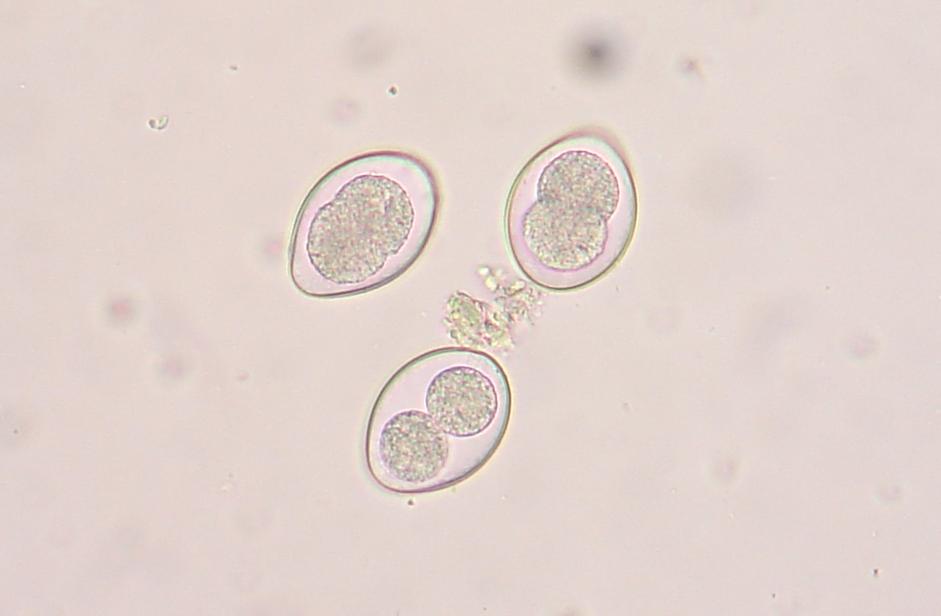
Coccidia oocysts in a fecal flotation from a cat. The cat was underweight and had diarrhea, showing signs of coccidiosis.
Scientific classification Edit this classification
Domain: Eukaryota
Clade: Sar
Clade: Alveolata
Phylum: Apicomplexa
Class: Conoidasida
Subclass: Coccidia
Leuckart, 1879
Orders
Synonyms
  • Coccidiasina

Coccidia (Coccidiasina) are a subclass of microscopic, spore-forming, single-celled obligate intracellular parasites belonging to the apicomplexan class Conoidasida.[1] As obligate intracellular parasites, they must live and reproduce within an animal cell. Coccidian parasites infect the intestinal tracts of animals,[2] and are the largest group of apicomplexan protozoa.

Infection with these parasites is known as coccidiosis. Coccidia can infect all mammals, some birds, some fish, some reptiles, and some amphibians. Most species of coccidia are species-specific in their host. An exception is Toxoplasma gondii, which can infect all mammals, although it can only undergo sexual reproduction in cats. Depending on the species of coccidia, infection can cause fever, vomiting, diarrhea, muscle pain, and nervous system effects and changes to behavior, and may lead to death. Healthy adults may recover without medication—but those who are immunocompromised or young almost certainly require medication to prevent death. Humans generally become infected by eating under-cooked meat, but can contract infection with T. gondii by poor hygiene when handling cat waste.

Taxonomy

[edit]

The class is divided into four orders, which are distinguished by the presence or absence of various asexual and sexual stages:

The order Eucoccidiorida is divided into two suborders. These two groups differ in their sexual development: syzygy for Adeleorina and independent gametes for Eimeriorina.

The first suborder, Adeleorina, comprises coccidia of invertebrates and the coccidia that alternate between blood-sucking invertebrates and various vertebrates; this group includes Haemogregarina and Hepatozoon. There are seven families in this suborder.

The second suborder, Eimeriorina, comprises a variety of coccidia, many of which form cysts. A number of genera, including Toxoplasma and Sarcocystis, infect vertebrates.

Coccidiosis

[edit]

Transmission

[edit]

Infected animals spread spores called oocysts in their stool. The oocysts mature, called sporulation. When another animal passes over the location where the feces were deposited, it may pick up the spores, which it then ingests when grooming itself. Mice may ingest the spores and become infected. When another animal eats the mouse, it becomes infected.

Some species of coccidia are transmissible to humans, including toxoplasma and cryptosporidium.[3]

Infection

[edit]

Inside the host, the sporulated oocyst opens, and eight sporozoites are released. Each one finds a home in an intestinal cell and starts the process of reproduction. These offspring are called merozoites. When the cell is stuffed full of merozoites, it bursts open, and each merozoite finds its own intestinal cell to continue the cycle.[3]

Symptoms of infection

[edit]

As the infection continues, millions of intestinal cells may become infected. As they break open, they produce a bloody, watery diarrhea. This can cause dehydration, and can lead to death in young or small pets.[3] Coccidian infections display symptoms mainly from the digestive tract including diarrhea, inflammation, intestinal pain or damage, vomiting, and irregular nutrition. These can lead to weight loss or reduced growth development, anemia, exhaustion, and even death in severe cases.[4]

Diagnosis and treatment

[edit]

Coccidiosis can be diagnosed by finding oocysts in fecal smears. In early stages of the disease, there may be very few oocysts being shed, and a negative test does not rule out the disease.

Coccidiosis is most commonly treated through the administration of coccidiostats, a group of medications that stop coccidia from reproducing. In dogs and cats, the most commonly administered coccidiostat is sulfa-based antibiotics. Once reproduction stops, the animal can usually recover on its own, a process that can take a few weeks, depending on the severity of the infection and the strength of the animal's immune system.[3]

See also

[edit]

References

[edit]

Further reading

[edit]
[edit]
Revisions and contributorsEdit on WikipediaRead on Wikipedia
from Grokipedia
Coccidia is a subclass of the phylum , consisting of obligatory intracellular protozoan parasites that infect a diverse array of and hosts worldwide. These single-celled organisms are defined by their possession of an apical complex—a specialized structure including micronemes and rhoptries that facilitates active host cell invasion and parasitism. Classified within the order Eucoccidiorida, Coccidia encompass numerous genera, with over 1,800 species identified, many of which are host-specific and cause diseases collectively known as . The life cycle of Coccidia typically involves both asexual and sexual phases, beginning with the ingestion of sporulated oocysts that release invasive sporozoites into the host's or other tissues. occurs through schizogony, producing merozoites that further invade cells and multiply, while the sexual phase involves gametogony, leading to the formation of zygotes and new oocysts excreted in to perpetuate transmission. This monoxenous (single-host) cycle is characteristic of genera like Eimeria, though heteroxenous (multi-host) cycles occur in others, such as Toxoplasma gondii, where definitive hosts like felids complete sexual reproduction. Oocysts are environmentally resistant, sporulating under favorable conditions to become infective, which contributes to their persistence in , water, and animal environments. Coccidia represent a major threat to animal and human health, with species causing severe enteric primarily in but also in and rabbits, resulting in annual global economic losses exceeding US$14 billion as of 2025 due to reduced growth, mortality, and treatment costs. In humans, induces , a zoonotic that can lead to congenital defects, ocular disease, or life-threatening in immunocompromised individuals. Other notable genera include and , which affect and cause neuromuscular disorders or foodborne illnesses, underscoring the subclass's broad pathological impact across species.

Overview

Definition and Characteristics

Coccidia represent a subclass of protists within the phylum and class Conoidasida, defined as obligate intracellular parasites that reproduce via formation. These single-celled eukaryotes are microscopic in scale and exhibit a specialized apical complex at the anterior end of their invasive stages, which facilitates host cell penetration. This complex includes secretory organelles such as rhoptries, which discharge enzymes to modify the host , and micronemes, which release adhesive proteins to promote and attachment. The defining morphological feature of Coccidia is the oocyst, a resistant stage that encapsulates sporocysts containing infective sporozoites. Oocysts typically measure 10–100 micrometers in diameter, varying by species, with a thick wall that protects the enclosed structures until excystation in the host environment. Sporozoites within sporocysts are banana-shaped, motile forms equipped with the apical complex for invasion. Coccidia primarily inhabit the epithelial cells of the intestinal tract, though certain species can infect other tissues such as the liver or . Most species demonstrate strict host specificity, infecting only particular hosts or even specific genera within them, which limits cross-transmission; an exception is Toxoplasma gondii, a generalist capable of infecting a wide range of animals. This parasitism often underlies , a diarrheal in affected hosts.

Biological Importance

Coccidia represent a significant biological challenge in agriculture, primarily as the causative agents of coccidiosis, a diarrheal disease that severely impacts livestock such as poultry and cattle. In poultry production, infections by species like Eimeria lead to reduced growth rates, poor feed efficiency, and high mortality, contributing to global economic losses exceeding $13 billion annually from treatment costs, decreased performance, and culling as of 2020. Recent estimates as of 2025 indicate losses surpassing $14 billion USD globally for poultry coccidiosis. These parasites thrive in intensive farming environments, amplifying their veterinary importance and necessitating ongoing management strategies to sustain food security. From a perspective, certain coccidia exhibit zoonotic potential, with Toxoplasma gondii infecting an estimated 30–50% of the global human population through contaminated food or water. This latent infection poses risks during , where congenital transmission can result in severe defects such as , , and neurological impairments in newborns. In immunocompromised individuals, such as those with or undergoing , reactivation of T. gondii often leads to life-threatening and high mortality rates, underscoring its role as an opportunistic . Ecologically, coccidia play a key role in regulating host populations within food chains by exerting density-dependent effects that limit and influence dynamics. For instance, infections in wild birds and mammals can modulate and , contributing to maintenance, while studies explore their potential in biological control paradigms, such as using fungal antagonists to target coccidian oocysts. Over 1,900 apicomplexan , including many coccidia, have been described from vertebrates, yet only about 5.8% of potential hosts have been surveyed, leaving numerous undescribed particularly in hotspots like tropical forests. Coccidia also hold evolutionary and biomedical significance as model organisms for understanding apicomplexan parasitism, with conserved mechanisms like host cell invasion informing antimalarial drug development. Species such as Toxoplasma gondii and Eimeria share metabolic pathways with Plasmodium spp., enabling research into targets like pantothenate biosynthesis for novel therapies against malaria and other apicomplexan diseases. This homology facilitates in vitro cultivation and genetic studies, advancing broader antiparasitic strategies.

Taxonomy and Evolution

Classification

Coccidia are classified as a subclass, Coccidiasina, within the phylum , encompassing obligate intracellular protozoan parasites characterized by their apical complex for host cell invasion. This subclass includes several orders, with Eucoccidiorida representing the primary group of vertebrate parasites. The classification follows traditional morphological criteria, emphasizing differences in life cycle stages, oocyst structure, and host specificity, as established in early 20th-century works such as those by Léger. Within the subclass Coccidiasina, the order Eucoccidiorida includes the suborder Eimeriorina, which features genera with direct life cycles, such as Eimeria and Isospora. Haemosporidians, encompassing blood-dwelling parasites like Plasmodium with coccidian-like traits in their tissue stages, are classified in the separate order Haemosporida. The suborder Eimeriorina, named by Léger in 1911, forms the core of tissue and intestinal coccidia. Prominent families within Eimeriorina are Eimeriidae, which includes intestinal coccidia such as species of Eimeria and Isospora, and Sarcocystidae, known for tissue cyst-forming parasites like Sarcocystis. These families are distinguished by oocyst morphology and schizogony patterns, with Eimeriidae oocysts typically containing four sporocysts and Sarcocystidae featuring independent sporocysts. The taxonomy adheres to the (ICZN) for naming and priority, ensuring stability in for species descriptions. Overall, Coccidia encompass approximately 42 genera across Eimeriorina alone, with the genus comprising over 2,000 described species, highlighting the group's extensive diversity in hosts.

Phylogenetic Relationships

The Coccidia, as members of the phylum , trace their evolutionary origins to photosynthetic ancestors through a secondary endosymbiosis event involving a red alga, which gave rise to the apicoplast—a non-photosynthetic remnant unique to this group and retained across apicomplexan lineages for essential metabolic functions such as and isoprenoid . This plastid's derivation from red algal ancestors is supported by phylogenomic analyses of apicoplast-encoded genes, which align it closely with plastids in the broader eukaryotic tree. Molecular phylogenetic studies, employing markers like 18S rRNA and multi-locus datasets including genes, consistently resolve Coccidia as a within the subclass Coccidiasina of the class Conoidasida, positioned as the to haemosporidians and piroplasmids, with gregarines forming a basal sister lineage to this broader conoidasidan assemblage. Piroplasmida forms a with Haemosporida, sister to core Coccidia. These analyses, based on up to 195 nuclear proteins, underscore the shared ancestry of coccidians and gregarines through the presence of a conoid structure, while highlighting the of Coccidia through robust support from both ribosomal and protein-coding data. Recent phylogenomic advancements in the have refined this framework, revealing evidence of in species like through identification of copy number variants in sexual recombinants, which challenges earlier assumptions of predominant clonality and suggests occasional contributes to lineage diversity. Metagenomic surveys have further uncovered new clades within marine Coccidia, such as the ichthyocolids—a widespread group infecting over 50 species across 16 orders—positioned as the sister to corallicolids and distinct from terrestrial coccidian lineages, based on rRNA and organellar phylogenies. Key evolutionary adaptations in Coccidia include the loss of flagella, which ancestral apicomplexans likely possessed, and the development of substrate-dependent gliding motility powered by a conserved actin-myosin motor complex (glideosome), where short actin filaments nucleated at the preconoidal ring enable rearward translocation for forward propulsion during host invasion. Post-2010 molecular surveys, utilizing 18S rDNA sequencing from underrepresented hosts like reptiles, have illuminated previously unrecognized diversity, identifying novel genotypes in taxa such as Caryospora and Eimeria in snakes and turtles, thereby expanding the known phylogenetic breadth of vertebrate coccidians beyond traditional morphological classifications.

Life Cycle

Asexual Stages

The asexual stages of Coccidia, collectively known as schizogony or merogony, involve intracellular multiplication within host cells, primarily to amplify parasite numbers before transitioning to . Upon ingestion of sporulated oocysts, sporozoites are released in the host's and actively invade epithelial cells, such as enterocytes, using and the formation of a moving junction at the apical complex. Once inside, sporozoites transform into trophozoites within a parasitophorous , where they feed on host cell nutrients and grow, losing their apical complex in genera like . Trophozoites then develop into schizonts through multiple nuclear divisions, undergoing schizogony to produce numerous merozoites—ranging from 8 to over 1,000 per schizont, depending on the species and generation. Merozoites are released upon rupture of the host cell, which often leads to cell death, and they rapidly reinvade adjacent or nearby cells to initiate new cycles of schizogony, thereby amplifying the infection through endogenous cycles within the host. These cycles typically occur in waves of merogony: initial generations focus on tissue invasion and rapid multiplication to disseminate the parasite, while later generations produce merozoites that differentiate into precursors for gamonts. In Eimeria species, such as E. tenella, schizogony involves 2–5 sequential generations confined to the intestinal epithelium, with each cycle lasting 2–3 days and culminating in acute infections over 1–2 weeks. Tissue tropism varies by genus; Eimeria targets intestinal crypts and villi, while Sarcocystis exhibits extraintestinal development, with schizonts forming in vascular endothelium and ultimately producing sarcocysts in muscle tissues containing bradyzoite-like merozoites. In , asexual reproduction features two distinct forms: tachyzoites, which rapidly divide by endodyogeny (a modified schizogony producing two daughter cells per cycle) in acute infections across various nucleated cells, and bradyzoites, which form slow-growing tissue cysts in chronic phases, primarily in the and muscles. These stages enable widespread dissemination, with tachyzoites converting to bradyzoites under immune pressure to establish latency. Across Coccidia, the asexual phases conclude when sufficient merozoites invade cells to initiate gametogony.

Sexual Stages

The sexual phase of the Coccidia life cycle, termed gamogony, occurs within the epithelial cells of the host's intestine, where specific merozoites differentiate into either microgamonts or macrogamonts. Microgamonts undergo repeated nuclear divisions to produce numerous biflagellated microgametes, which are motile and capable of traversing the host cell to locate female gametes. In parallel, macrogamonts develop into rounded macrogametes that accumulate wall-forming granules, protein-rich structures essential for constructing the protective oocyst wall. Fertilization follows when a microgamete fuses with a macrogamete, yielding a diploid that rapidly encases itself in the oocyst wall derived from the macrogamete's granules. The then enters sporogony, a process involving and that divides the contents into sporocysts; species typically produce 2-4 sporocysts per oocyst, with each sporocyst enclosing 2-4 sporozoites in (e.g., four sporocysts, each with two sporozoites) or 4 sporozoites in Cystoisospora and Toxoplasma (e.g., two sporocysts, each with four sporozoites). Unsporulated oocysts are released from the host's intestinal cells and shed in the feces, remaining non-infectious until external sporulation occurs. Sporulation requires aerobic conditions, warmth (around 20-30°C), and moisture, typically completing within 1-3 days and rendering the sporozoites infective. This sexual reproduction exhibits key variations across Coccidia genera. Homoxenous species, such as Eimeria, complete gamogony in a single host, with oocysts directly shed by the definitive host. In contrast, heteroxenous species like Sarcocystis require two hosts: sexual stages occur in the definitive carnivorous host (e.g., producing oocysts with multiple sporocysts, each containing four sporozoites), while the intermediate herbivorous host ingests sporocysts for asexual development. Oocysts of Coccidia possess a robust multilayered wall reinforced by dityrosine cross-links and , conferring resistance to common disinfectants like and , as well as environmental stressors; they can remain viable in or for several months, aiding long-term transmission.

Coccidiosis

Transmission and Epidemiology

Coccidia are primarily transmitted through the fecal-oral route, where hosts ingest sporulated oocysts shed in the feces of infected individuals, contaminating water, feed, soil, or bedding. This mode of transmission is particularly efficient in environments with poor sanitation, leading to rapid spread within herds or flocks via direct contact with contaminated materials. In livestock settings, such as crowded poultry or cattle operations, the high density of animals facilitates direct transmission, as oocysts accumulate in shared spaces and are easily ingested during feeding or grooming. Oocysts require warm, moist conditions to sporulate and become infective, typically within 1-3 days, enhancing transmission in humid environments. Certain coccidian parasites exhibit zoonotic potential, bridging animal and human hosts. For instance, spreads to humans primarily through ingestion of tissue cysts in undercooked meat from infected livestock or wild game, or via oocysts in contaminated water, soil, or vegetables exposed to cat feces, as felids are the definitive hosts. These zoonotic pathways underscore the role of environmental contamination in human infections. Epidemiologically, coccidiosis shows high prevalence in tropical and subtropical regions, where warm climates favor oocyst survival and sporulation, with pooled global rates in poultry reaching 44.3%. Seasonal peaks occur during warm, wet periods, as elevated temperatures and humidity accelerate oocyst infectivity, while young animals and immunocompromised individuals face heightened risk due to immature or weakened immune responses. Economic impacts are substantial, with global poultry losses from coccidiosis exceeding $15 billion annually as of 2025, including reduced growth and mortality in the U.S. sector. For human toxoplasmosis, seroprevalence in developing countries ranges from 30-80%, with congenital incidence rates of 1-10 per 1,000 live births in high-burden areas like parts of South America. Climate change exacerbates transmission by altering precipitation patterns and warming waters, increasing waterborne risks, as highlighted in recent assessments of environmental health threats.

Pathogenesis

Coccidia, as members of the , initiate infection through active of host cells mediated by their apical complex, which secretes micronemal and rhoptry proteins to enable tight attachment, apical reorientation, moving junction formation, and penetration of the host , ultimately establishing a protective parasitophorous . Inside this vacuole, sporozoites or merozoites undergo asexual replication, culminating in the release of daughter merozoites that the host cell during egress, leading to widespread epithelial sloughing and disruption of tissue architecture. This cyclical process of and directly contributes to cellular damage, particularly in the targeted by genera such as Eimeria. The pathological consequences of these invasion events include villous atrophy in the intestines, where repeated cell destruction reduces absorptive surface area and impairs uptake, often resulting in syndromes. Additionally, the compromised mucosal barrier facilitates secondary bacterial invasions, exacerbating tissue and injury. In species like , chronic infections form bradyzoite-filled tissue cysts that persist latently, with the cyst wall shielding parasites from immune clearance and enabling long-term survival in host tissues such as the and muscles. Coccidia evade host immunity through mechanisms such as cytokine modulation; for example, Eimeria species secrete IFN-γ inhibitory molecules that suppress CD4+ and CD8+ T-cell responses, allowing unchecked proliferation. In T. gondii, bradyzoites within cysts downregulate immune recognition, contributing to persistent, asymptomatic infections that can reactivate under immunosuppression. Disease severity is modulated by factors including parasite dose, host age, and immune competence; higher inocula and younger hosts exhibit more acute damage, while immunocompromised individuals, such as those with CD4+ T-cell depletion in HIV/AIDS, face severe reactivation of latent T. gondii due to impaired T-cell control. The , a unique to apicomplexans, harbors essential metabolic pathways absent in mammalian hosts, making it a prime target for drugs that disrupt processes like isoprenoid and , thereby inhibiting parasite survival without host toxicity.

Clinical Manifestations

Clinical manifestations of coccidiosis vary by host species and age, primarily affecting the and leading to enteritis-like symptoms that can mimic other causes of , such as bacterial infections or viral . In , particularly young chickens and turkeys, infected birds often exhibit ruffled feathers, huddling under heat sources, and bloody or mucoid droppings due to intestinal damage, alongside reduced feed intake and . In , calves typically show acute (with or without blood), , straining, and progressive , which can lead to a rough hair coat and unthrifty appearance. The disease progression in animals is generally acute, with symptoms appearing 5-6 days post-infection in and around 17 days in , reflecting the parasites' life cycle stages that cause epithelial cell destruction and . Acute cases can escalate rapidly over 3-7 days, potentially resulting in mortality rates up to 30% in untreated calves due to severe and secondary infections, while chronic forms are less common but may involve relapsing over weeks in subclinically affected individuals. In adult animals, infections are often or mild, with immunity preventing severe manifestations. In humans, coccidial infections like present differently, often asymptomatically in immunocompetent adults but with severe outcomes in vulnerable groups. typically causes flu-like symptoms including fever, muscle aches, and in symptomatic cases, while immunocompromised individuals may develop (with confusion, headaches, and seizures) or ocular toxoplasmosis leading to . Congenital toxoplasmosis poses risks to newborns, including , , and intracranial calcifications, often presenting as the classic triad in symptomatic infants.

Diagnosis and Management

Diagnosis of Coccidia infections in animals typically begins with microscopic examination of fecal samples using fecal flotation techniques to detect and identify oocysts based on their morphology and size. For species such as Cyclospora, modified acid-fast staining is employed, where oocysts appear as pink-red structures against a green background, enhancing visibility in direct smears or concentrated sediments. Histopathological examination of tissue samples may be necessary to identify intracellular stages in cases of severe or systemic infections, revealing schizonts or gametocytes within host cells. Molecular diagnostics, particularly polymerase chain reaction (PCR) assays, provide high sensitivity and specificity for detecting and speciating Coccidia, with quantitative real-time PCR achieving analytical sensitivities as low as 41 oocysts per gram of feces for Eimeria acervulina. These methods are especially useful for identifying low-level infections or mixed species, outperforming traditional microscopy in accuracy. For Toxoplasma gondii, serologic testing detects IgG and IgM antibodies to assess acute or chronic infection, often combined with PCR on blood or tissue for confirmation in immunocompromised hosts. Recent advancements include point-of-care diagnostics, such as smartphone-integrated microscopes for on-site detection of oocysts in ruminant feces, enabling rapid field identification with reported sensitivities comparable to laboratory PCR. Treatment of coccidiosis in veterinary settings focuses on anticoccidial drugs that target parasite metabolism, with sulfonamides such as sulfadiazine inhibiting folate synthesis by blocking dihydropteroate synthetase, thereby preventing nucleic acid production in the parasite. Toltrazuril, administered as a single oral dose (e.g., 20 mg/kg in small ruminants), disrupts mitochondrial function and is effective against both asexual and sexual stages of Eimeria species. Supportive therapy, including fluid administration and electrolyte replacement, is essential to manage dehydration and secondary bacterial infections in affected animals. Live attenuated vaccines, containing precocious strains of multiple Eimeria species, are widely used in production to induce protective immunity without causing clinical , offering long-term control superior to chemical treatments alone. Management challenges include emerging , as evidenced by 2025 studies showing resistance to sulphaclozine and maduramicin in E. tenella field isolates from chickens. Prophylactic use of ionophores like monensin in remains a cornerstone, selectively disrupting ion transport in parasite membranes to prevent outbreaks while allowing natural immunity development. In humans, treatment varies by species; for toxoplasmosis caused by Toxoplasma gondii, pyrimethamine combined with sulfadiazine and folinic acid is the standard regimen, targeting folate metabolism to reduce tachyzoite replication in acute or congenital cases.

Ecology and Impact

Host Specificity and Distribution

Coccidia exhibit varying degrees of host specificity across genera, with some displaying strict limitations while others demonstrate broad adaptability. In the genus Eimeria, species are typically host-specific, often infecting only a single host species or a narrow range within a taxonomic group, such as poultry or ruminants, which restricts cross-transmission between unrelated hosts. In contrast, Toxoplasma gondii shows remarkable versatility, capable of infecting virtually all warm-blooded vertebrates as intermediate hosts, with felids serving as the definitive host for its sexual reproduction. Similarly, genera like Sarcocystis often involve heteroxenous life cycles with wildlife serving as reservoirs; for instance, opossums (Didelphis virginiana) act as definitive hosts for Sarcocystis neurona, shedding sporocysts that contaminate environments accessible to intermediate hosts such as marine mammals. Globally, Coccidia are ubiquitous, with higher observed in tropical and subtropical regions due to favorable environmental conditions that support oocyst survival and transmission. Estimates suggest around 2,000 described or potential species within the subclass, though surveys remain incomplete, particularly for amphibians and reptiles, where fewer than 6% of species have been examined for infections. species, for example, infect over 90% of flocks in intensive systems worldwide, underscoring their pervasive presence in agricultural settings. Marine environments host diverse coccidians as well, with over 100 species reported from fishes across oceanic basins, including the Atlantic and Pacific. Ecological factors significantly influence Coccidia distribution and host interactions, with in confined environments like farms enhancing oocyst accumulation and transmission efficiency. Wildlife reservoirs further facilitate persistence, as seen with opossum-shed Sarcocystis sporocysts entering food chains via contaminated water or forage.

Veterinary and Public Health Significance

Coccidia infections pose substantial challenges in , particularly in intensive production systems where caused by species leads to significant morbidity and mortality. Preventive strategies emphasize measures, such as maintaining clean litter to reduce oocyst contamination and implementing all-in-all-out production cycles to break the parasite's life cycle. Rotation grazing in free-range systems for other hosts further minimizes environmental buildup of infective stages. , including strains like and , are increasingly used to compete with for intestinal adhesion sites and modulate gut immunity, offering a non-chemical alternative that enhances resilience. , such as live attenuated formulations like Coccivac, stimulate protective immunity in and layer chicks by controlled exposure to sporulated oocysts, reducing reliance on chemoprophylaxis. Recent advancements as of 2025 include recombinant subunit and AI-driven monitoring for early detection, further supporting integrated control. The economic burden of coccidiosis in the U.S. poultry industry is estimated at over $800 million annually as of recent assessments, accounting for losses from reduced feed efficiency, , and increased mortality, with global figures exceeding $14 billion. In sustainable farming contexts, integrated management approaches promote the use of phytogenic feed additives and improved ventilation to lower oocyst viability while aligning with antimicrobial stewardship goals. From a public health perspective, Coccidia like Toxoplasma gondii represent a zoonotic threat, with congenital infections posing risks to fetal development. Key preventive measures include pasteurization of dairy products to eliminate tissue cysts and rigorous meat inspection protocols to detect and remove infected carcasses before processing. Hygiene education campaigns stress handwashing after handling soil or cat litter and thorough cooking of undercooked meats to inactivate bradyzoites. Routine serological screening of pregnant women identifies seroconversions early, enabling timely interventions to mitigate transplacental transmission. The global disease burden from toxoplasmosis includes an estimated 190,100 congenital cases annually, contributing to substantial disability-adjusted life years (DALYs) through neurological sequelae. Control efforts face ongoing challenges, including widespread resistance to coccidiostats like ionophores, which has reduced their efficacy in flocks and prompted regulatory scrutiny in the . A approach integrates veterinary surveillance of animal reservoirs with human monitoring to address shared transmission pathways, emphasizing cross-sectoral to curb zoonotic spillover and misuse.

References

Add your contribution
Related Hubs
User Avatar
No comments yet.