Hubbry Logo
SifaSifaMain
Open search
Sifa
Community hub
Sifa
logo
8 pages, 0 posts
0 subscribers
Be the first to start a discussion here.
Sifa
Sifa
from Wikipedia
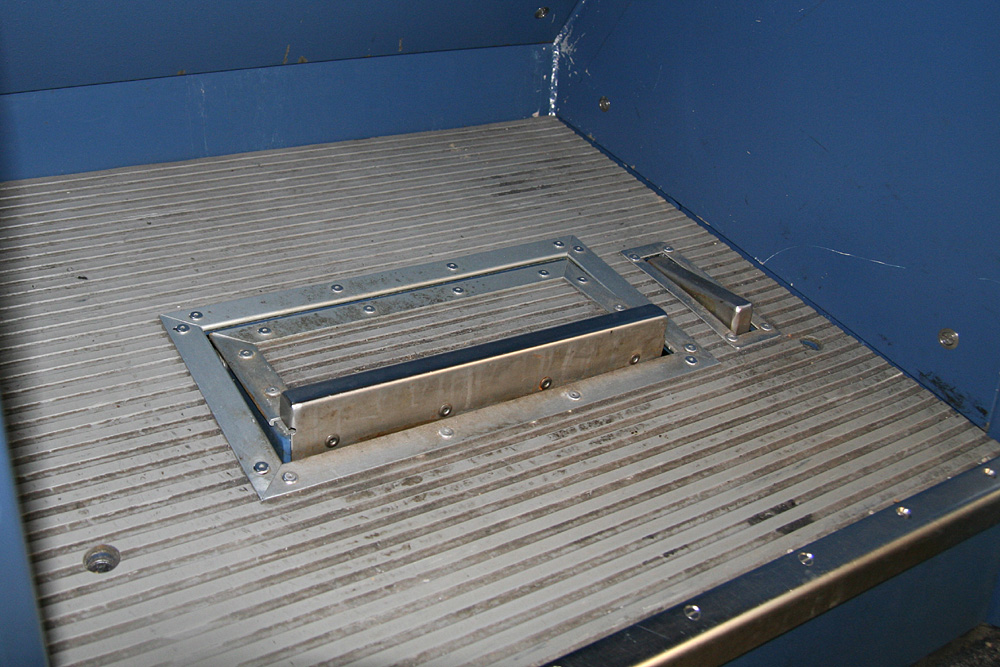
A Sifa pedal in an Intercity Express ICE 1 power car. To the right of the Sifa pedal is the foot-operated button for the train horn

Sifa is a type of deadman's control system used on German-influenced European railways.[1] Although deadman's pedals are commonly used on railways worldwide, Sifa systems are specifically those codified by German Industrial Norms VDE 0119-207-5.

In Switzerland the equivalent system is called 'safety control' (Sicherheitssteuerung).[2]

Description

[edit]

Sifa is short for Sicherheitsfahrschaltung, German for "safety driving circuit". It is usually a pedal and/or large press button, which monitors the alertness of the driver. The driver has to repeatedly press a button after a fixed interval; if they fail to do so, the train will carry out an emergency stop. It complements the external train safety systems: PZB, LZB and ETCS.[3]

The Sifa control display in the ICE 3

In Europe the Zeit-Zeit-Sifa (time-time Sifa) is common. In this system, the engine driver holds a pedal or button down for 30 seconds and must then briefly release the pressure. Thus the system can confirm that the driver is still able to react. If the driver does not react after 30 seconds, the system warns the driver, at first optically, then for a few seconds acoustically. After a further short period of time without any reaction the train is automatically stopped. The Zeit-Weg-Sifa (time-distance Sifa) system takes account of the distance travelled, as well as time, since the last activation.

In electric trains such as those working on U- and S-Bahn lines the Sifa has for a long time been combined with the driving switch. This is where the concept of the dead man's switch first arose. If the button was released (due to the driver becoming incapacitated) the train was automatically stopped.

Drivers must carry out a Sifa test before using a train, to check that the automatic braking is functioning correctly.

Following some serious accidents in which drivers fell asleep but somehow the pedal was still being activated, the Deutsche Reichsbahn in East Germany introduced a special type of Sifa (Sifa86). Here the driver has to acknowledge, by pressing a button, an optical signal given at random times and distances.

See also

[edit]

References

[edit]
[edit]
Revisions and contributorsEdit on WikipediaRead on Wikipedia
from Grokipedia
Sifa, short for Sicherheitsfahrschaltung (safety driving circuit), is a designed for railway locomotives and traction vehicles to monitor the driver's alertness and automatically apply emergency brakes if the driver fails to respond to vigilance prompts. This system ensures operational safety by preventing accidents caused by driver incapacitation, such as loss of consciousness or inattention, particularly during solo operation of trains. Sifa was developed in in the early and became mandatory on leading vehicles under the Railway Construction and Operating Regulations of May 8, 1967. It remains a standard requirement for trams and standard rail lines in . Primarily used in German-influenced European railway networks, including , , and , it features variants such as time-time in and , time-distance in , and way-way in . Modern electronic implementations from manufacturers like DEUTA comply with standards including and UIC 641, incorporating components like foot switches, control units, and audible indicators. In the common time-time variant, the driver must periodically acknowledge the system, typically every 30 seconds; failure to do so triggers warnings followed by emergency braking if unacknowledged. The time-distance variant in incorporates both time and distance elements in its prompts. These systems have enhanced railway safety while offering durable designs for rail environments.

Overview

Definition

Sifa, an abbreviation for Sicherheitsfahrschaltung (Safety Driving Circuit), is a German-engineered installed on locomotives and control cars in railway networks. The primary role of Sifa is to monitor the alertness of the , thereby preventing accidents caused by driver incapacitation, such as from emergencies or . At its core, demands periodic or continuous acknowledgment from via a foot pedal, hand , or ; without such confirmation, it initiates an automatic emergency braking sequence to halt the . Distinguished from broader deadman systems that often require uninterrupted physical pressure, Sifa incorporates timed vigilance checks tailored to the operational needs of German-influenced railways.

Purpose

The primary purpose of Sifa is to monitor the alertness of train drivers and automatically initiate emergency braking if the driver fails to respond to periodic vigilance checks, thereby preventing accidents due to sudden incapacitation. This system ensures that the train comes to a complete stop in scenarios where the driver is unable to maintain control, directly addressing risks associated with human error or health emergencies during operation. Sifa complements broader safety protections, such as track-based signaling systems, by specifically targeting factors that could lead to loss of or , including drowsiness or medical incidents like heart attacks. By focusing on the driver's continuous responsiveness, it enhances overall system reliability without relying solely on external infrastructure, contributing to the prevention of collisions, derailments, and other high-consequence events. In terms of regulatory basis, Sifa is mandated under UIC Guideline 641 for single-driver train operations in German and other European railways influenced by German standards, ensuring compliance with requirements for driver vigilance devices. This mandate aligns with European railway directives that emphasize mechanisms to protect passengers, crew, and infrastructure. For instance, if a driver falls asleep or loses consciousness, the failure to acknowledge the vigilance prompt—typically via a foot pedal—triggers audible and visual warnings followed by full brake application, halting the train safely.

History

Origins in German Railways

The Sifa (Sicherheitsfahrschaltung) safety system was introduced in Switzerland in the 1920s, particularly to support one-man train operations following the widespread electrification of railways, with initial trials in 1927 on 30 SBB Ae 3/6 I locomotives. It was later adopted in Germany during the 1930s as a direct response to rising train accidents attributed to driver fatigue and sudden incapacitation. This period saw increased electrification of railways and longer operational hours, exacerbating risks of human error, prompting the Deutsche Reichsbahn to seek automated solutions for driver vigilance. Building on international trends in deadman's control devices—such as those requiring constant pressure to maintain operation—Sifa was adapted specifically for the Deutsche Reichsbahn's fleet of electric and . Unlike simpler deadman pedals that relied solely on continuous activation, Sifa incorporated periodic acknowledgment mechanisms to balance with , allowing for more practical single-person operations while addressing the limitations of manual oversight. Precursors to Sifa included manual vigilance checks, where drivers periodically signaled alertness through bells or tokens, a practice common in pre-electrification eras but prone to inconsistency and itself. Sifa automated these processes using electromechanical relays for reliability, marking a shift toward integrated onboard . A pivotal came with the first installations of Sifa on German mainline railways in the 1930s, driven by post-World War I reforms that centralized railway management under the and emphasized preventive measures following the 1920 nationalization. The RZM-Sifa variant, specified by the Reichsbahn-Zentral-Maschinenamt, represented this early implementation, enabling safer high-speed and freight services amid growing network demands.

Standardization and Variants

The Sifa system was made mandatory in by the Railway Construction and Operating Regulations of May 8, 1967, establishing uniform protocols across German railway networks. Technical specifications were later formalized in standards such as DIN VDE 0119-207-5 (first published 2004), which is part of the broader VDE series on vehicle control and and defines requirements for driver's devices, including vigilance monitoring to prevent unauthorized train movement. In the post-World War II era, (German Democratic Republic) adapted Sifa for its railway system, leading to the development of the Sifa 86 variant in the . This version, used by the , incorporated random vigilance prompts to address vulnerabilities exposed by earlier accidents, such as collisions attributed to driver inattention or system bypasses during that decade. Key variants emerged to suit different operational needs. The Zeit-Weg-Sifa, which integrated time intervals with distance traveled for more adaptive monitoring, was implemented in German locomotives from the mid-1950s, particularly on freight lines to accommodate variable speeds and longer hauls, such as the BBC variant. The Zeit-Zeit-Sifa, a purely time-based system relying on periodic driver acknowledgments, evolved later as an evolution of basic vigilance controls for passenger and mixed services. Internationally, adaptations appeared in neighboring countries influenced by German railway practices. In Switzerland, the equivalent system was designated as "safety control" (Sicherheitssteuerung), reflecting localized terminology while retaining core Sifa principles during mid-20th-century infrastructure alignments.

Technical Operation

Core Mechanism

The core mechanism of Sifa operates as a vigilance monitoring system that requires the train driver to actively engage with a foot-operated pedal or a dashboard-mounted button to demonstrate ongoing attentiveness during train operation. In the standard configuration, the driver must maintain continuous depression of the pedal or button, but periodically release and re-depress it at regular intervals to reset the system's timer and confirm alertness. This cyclic interaction prevents the initiation of safety warnings and ensures the device detects potential driver incapacitation, such as from fatigue or medical emergencies. The exact intervals and escalation procedures vary by system variant. Upon failure to perform the required release and re-depression within the specified interval, the system escalates warnings progressively to prompt driver response. An initial optical signal, usually a steady warning light on the driver's console, activates after the timeout period to indicate the need for acknowledgment. If the driver does not re-engage the pedal or button within this phase, an acoustic alarm—typically a or intermittent tone—sounds a few seconds after the optical warning, further urging immediate action. Should the driver fail to acknowledge the acoustic alarm by releasing and re-depressing the device within an additional short timeframe of a few seconds, the system triggers an emergency response by applying full service brakes, bringing the to a complete stop to avert potential accidents. This automatic braking intervention halts movement until manually reset. The reset procedure involves the driver releasing and re-depressing the pedal or to silence warnings and, in the case of braking activation, returning the driver's controller (e.g., the master switch) to a neutral position before resuming operation, thereby verifying restored vigilance.

System Variants

The Sifa system encompasses several operational variants tailored to different railway networks and vehicle types, each modifying the core vigilance mechanism to balance driver attentiveness with operational practicality. The Zeit-Zeit-Sifa, prevalent in , operates on a purely time-based cycle where the driver must continuously depress a foot or hand pedal for 30 seconds before briefly releasing it to reset the sequence. Failure to release triggers an optical warning signal after 30 seconds of uninterrupted pressure, followed by an acoustic alert 2.5 seconds later, and an emergency brake application after an additional 2.5 seconds if unacknowledged; the brake can only be released by repositioning the driver's controller to neutral and reactivating the pedal. In contrast, the Zeit-Weg-Sifa integrates both temporal and spatial elements, making it suitable for routes with variable speeds, such as those in . Here, the driver maintains pedal pressure, but the system monitors elapsed time alongside distance traveled since the last acknowledgment—typically issuing an optical warning after 30–60 seconds or 500–1600 meters (with specific modes like 50 meters in high-speed configurations), with an acoustic signal and potential brake initiation after further progression, such as another 200 meters (or 50 meters in certain modes), if ignored. This hybrid approach adjusts intervals dynamically based on vehicle movement, ensuring acknowledgments occur roughly every 60 seconds or 1 kilometer at typical speeds, thereby accommodating acceleration and deceleration without excessive interruptions. The Weg-Weg-Sifa, common in , is purely distance-based, requiring the driver to release the pedal every 900 meters. Failure to do so triggers an optical warning after 75 meters, followed by an acoustic alert and emergency braking if not acknowledged. The Sifa 86 variant, developed in the 1980s for the in , introduces enhanced unpredictability to prevent habitual or somnolent responses. It employs random timing for optical signals between 30 and 50 seconds, independent of prior actions, combined with distance-based checks—triggering after 400 meters at speeds below 100 km/h or 800 meters above that threshold. Acknowledgment requires a deliberate button press upon the optical cue, followed by an acoustic warning after 4 seconds and emergency braking after another 6 seconds if unmet; some implementations incorporate additional verification steps, though driver identification is not standard. Adaptations for urban rail, such as trams and U-Bahn systems, often employ vigilance-only modes that omit automatic full braking to suit frequent stops and low-speed operations. In these configurations, the system prompts periodic acknowledgments via but relies on manual intervention or partial power reduction rather than emergency stops, aligning with the controlled environments of city transit.

Implementation

Components and Installation

The primary components of a Sifa system include the foot pedal, which serves as the main driver interface for periodic acknowledgment of alertness, and a vigilance button or lever for alternative operation. Relay circuits handle signal processing to detect non-response, while the brake interface links directly to the train's pneumatic or electro-pneumatic braking system to apply emergency brakes if the driver fails to confirm vigilance. Control units, such as standalone modules (e.g., UDB1) or evaluation boards (e.g., UD19), manage the overall logic and integrate sound indicators for warnings. Electrically, Sifa systems are integrated into the locomotive's control circuits, powered by the train battery at a typical voltage of 24 V DC, with relays ensuring and preventing single-point failures. Wiring follows standardized connectors, such as 16-pole DIN 41622 interfaces, to link the components to the braking and power systems while maintaining per norms. Installation occurs in the driver's cab, where the foot pedal is floor-mounted for easy access, and buttons or levers are positioned on the , armrests, or control desk. The process involves securing the hardware, cables to the valves and battery supply, and testing interconnections before commissioning, often in compliance with UIC guideline 641 for vigilance devices. Systems are retrofittable on older locomotives from the onward, as required by the Eisenbahn-Bau- und Betriebsordnung (EBO) § 28, which, under § 28, mandates Sifa equipment on locomotives and other leading vehicles operating with a single at speeds of 20 km/h or more, to enhance . Adaptations for accessibility include hand levers in place of pedals for modern ergonomic cabs and integration with seat switches to detect driver presence, allowing combined operation without constant manual input. These variants maintain the core principles while accommodating diverse cab layouts.

Testing and Maintenance

Pre-departure testing of the Sifa system is a mandatory procedural requirement to ensure operational reliability before each shift. The driver must activate the full cycle, including the initial warning signal, the subsequent alarm, and the automatic brake application, to verify the system's complete functionality from warnings to emergency braking. This test is conducted in each driver's cab at least once daily, in accordance with German railway regulations such as the Eisenbahn-Bau- und Betriebsordnung (EBO). Maintenance of Sifa components follows scheduled inspections to maintain safety standards. Relays and pedals undergo annual inspections as part of routine vehicle upkeep, with fault logging facilitated by systems introduced in the for modern variants like Sifa 86. These diagnostics record errors for prompt analysis and repair, ensuring compliance with EBO § 32 requirements for periodic vehicle examinations. (Note: Used for variant history only, not as primary source) Fault handling procedures prioritize safety while minimizing disruptions. Automatic bypass of the Sifa is permitted only in depots for non-operational testing or repairs; during service, faults require manual activation of the Störschalter (fault switch), limiting speed to 50 km/h, notification of the operations center, and closure of the Sifa cutoff valve. Operational faults must be repaired within 24 hours to restore full functionality, per guidelines. Training for Sifa operation is integrated into driver certification programs, emphasizing quick response to alerts. Drivers receive certification through specialized sessions, including simulator-based training that simulates warning sequences and measures response times to ensure proficiency in acknowledging signals within the required intervals (typically 2-30 seconds depending on variant). This training is mandatory under Eisenbahn-Fahrzeugführerschein regulations and has incorporated simulators as a standard since updates in the 2020s.

Usage and Adoption

Geographical Scope

Sifa, or Sicherheits-Fahrsperre, is predominantly adopted in German-influenced European railway networks, with its primary geographical scope centered on , , and . In , the system is universally installed on mainline locomotives and multiple units operated by , serving as a mandatory vigilance device for both freight and passenger trains to prevent accidents due to driver inattention. This widespread implementation reflects Sifa's role as a foundational element in the country's extensive rail infrastructure, covering over 33,000 kilometers of track. In , Sifa is integrated into the of the (), where variants such as the way-way Sifa—requiring periodic pedal releases every 900 meters—are commonly employed on mainline services. Modern trains, including the Taurus and Talent series, often incorporate the time-time Sifa model aligned with German standards, ensuring compatibility across cross-border operations. The system's adoption here dates back to the mid-20th century, supporting Austria's dense network of approximately 4,900 kilometers. Switzerland represents another key area of implementation, where Sifa operates under the designation "safety control system" on (SBB), introduced in the 1920s with modern vigilance features added since the 1950s, particularly on adhesion tracks and urban tramways. The time-distance variant is standard, triggering warnings after 3 seconds or 50 meters of non-response, followed by emergency braking after an additional 50 meters or equivalent time, and it is mandatory for ensuring operator alertness in the country's mountainous and high-density rail environment spanning about 5,300 kilometers. Historically, Sifa's spread extended to the former following 1945, as part of the post-war standardization of railway safety measures under the , integrating the system into rebuilt infrastructure influenced by pre-war German designs. Limited adoption occurred in neighboring Scandinavian countries, such as —where pedal positioning in the middle is required on certain locomotives—and the , where it activates at standstill upon direction selection—often via imported German equipment. Additionally, Sifa has been phased into select urban rail systems, including the , enhancing vigilance protocols on subway operations.

Integration with Other Systems

Sifa interfaces with Indusi/PZB systems by serving as a complementary vigilance device that monitors driver attentiveness alongside the intermittent speed supervision provided by PZB, ensuring emergency braking if the driver fails to acknowledge periodic prompts while PZB enforces signal-based restrictions. In German railways, this combination allows Sifa to utilize PZB activation elements for acknowledgments, enhancing overall train protection without interfering with PZB's core functionality. Upgraded variants of Sifa demonstrate compatibility with continuous train control systems like LZB and ETCS Levels 1 and 2, where Sifa acts as a fallback vigilance mechanism linked to the automatic train protection features of these systems, with integrations becoming standard on high-speed lines since the early 2000s. For instance, modern locomotives equipped with LZB or ETCS retain Sifa to verify driver responsiveness, allowing seamless transitions between modes during operations on equipped routes. This linkage supports bidirectional data exchange for safety overrides, as seen in Deutsche Bahn's fleet upgrades. In urban rail applications, such as networks, Sifa is paired with deadman pedals or buttons that require continuous or rhythmic activation, triggering full braking if released due to driver incapacitation, thereby integrating vigilance directly into the traction control circuit. During (ATO) modes prevalent in these systems, Sifa can be overridden by the automation logic while still monitoring for manual interventions, ensuring compatibility with semi-automated urban signaling. Digital retrofits, such as the Sifa 86 variant, enable integration with advanced systems like CBTC by incorporating random-interval acknowledgments (every 40-50 seconds or 400-800 meters) and digital interfaces for real-time data sharing, facilitating upgrades on legacy lines transitioning to modern communications-based controls. These enhancements, often implemented via modular hardware from suppliers like DEUTA, allow Sifa to interface with CBTC's continuous positioning and speed enforcement without requiring full system replacement. Sifa continues to serve as a complementary vigilance system during ETCS transitions in , , and .

Comparisons and Impact

Comparison to Other Safety Devices

Sifa differs from the traditional dead man's pedal used in and railways, which requires continuous pressure on a foot pedal to prevent braking activation. In contrast, Sifa employs timed vigilance cycles, typically requiring the driver to briefly interrupt pressure on a pedal or every 30 seconds to reset the system, followed by an acoustic pre-alarm if not acknowledged, leading to automatic emergency braking. This periodic reset mechanism reduces driver fatigue compared to constant pressure but demands active, timed acknowledgments to confirm alertness. Compared to vigilance devices like the UK's (AWS), Sifa is strictly driver-focused, monitoring only the operator's responsiveness without integrating trackside signal information. , by contrast, uses track magnets to provide audible warnings (a bell for clear signals and a horn for caution or danger) approximately 180-230 meters before signals, requiring acknowledgment to avoid braking, thus combining signal advisory with vigilance elements. Sifa lacks such audio tones tied to signal aspects, relying solely on cab-based periodic checks of the driver's vigilance. Sifa also contrasts with overspeed prevention systems such as the UK's Train Protection and Warning System (TPWS) or similar on-train control systems (OTCS), which prioritize mitigating signals passed at danger (SPADs) and excessive speed through trackside loops that trigger automatic braking. TPWS employs an OverSpeed Sensor (OSS) and Train Stop System (TSS) at signals to enforce speed limits and halt trains independently of driver input, often overriding manual controls. Sifa, however, centers on detecting driver incapacitation via cab-centric vigilance, without direct enforcement, though it is frequently combined with such systems for comprehensive protection. A unique aspect of Sifa variants is the acknowledgment pattern: standard Sifa uses predictable timed cycles, while the Sifa 86 variant introduces random intervals for acoustic prompts (typically 40-50 seconds, varied by a generator), requiring the driver to wait for and confirm the alarm rather than preemptively resetting. This differs from probabilistic systems in other regions, which may use irregular but non-prompt-based timings to test alertness.

Safety Effectiveness and Limitations

Sifa has demonstrated significant effectiveness in enhancing railway safety by monitoring driver vigilance and preventing accidents caused by inattention or incapacitation. The system requires drivers to periodically acknowledge their , triggering an and subsequent emergency braking if no response is received, thereby averting potential collisions in cases of or medical . The introduction of the Sifa 86 variant in the 1980s, developed by the GDR Reichsbahn, improved reliability and integration in locomotives. Despite its strengths, Sifa has inherent limitations that can affect its performance. Sifa alone does not provide speed supervision or continuous positioning, requiring integration with supplementary systems like the (ETCS) for high-speed operations. Looking ahead, Sifa remains a in legacy railway systems across German-influenced networks, but it is increasingly supplemented by AI-driven monitoring technologies for enhanced driver vigilance and predictive . Emerging AI applications, such as real-time detection via cameras and sensors, aim to overcome Sifa's reactive nature by proactively alerting operators, ensuring continued evolution in without full replacement of established vigilance devices.

References

Add your contribution
Related Hubs
User Avatar
No comments yet.