


Community hub
Recent from talks
Contribute something
Nothing was collected or created yet.
Small Faces discography
View on Wikipedia
| Small Faces discography | |
|---|---|
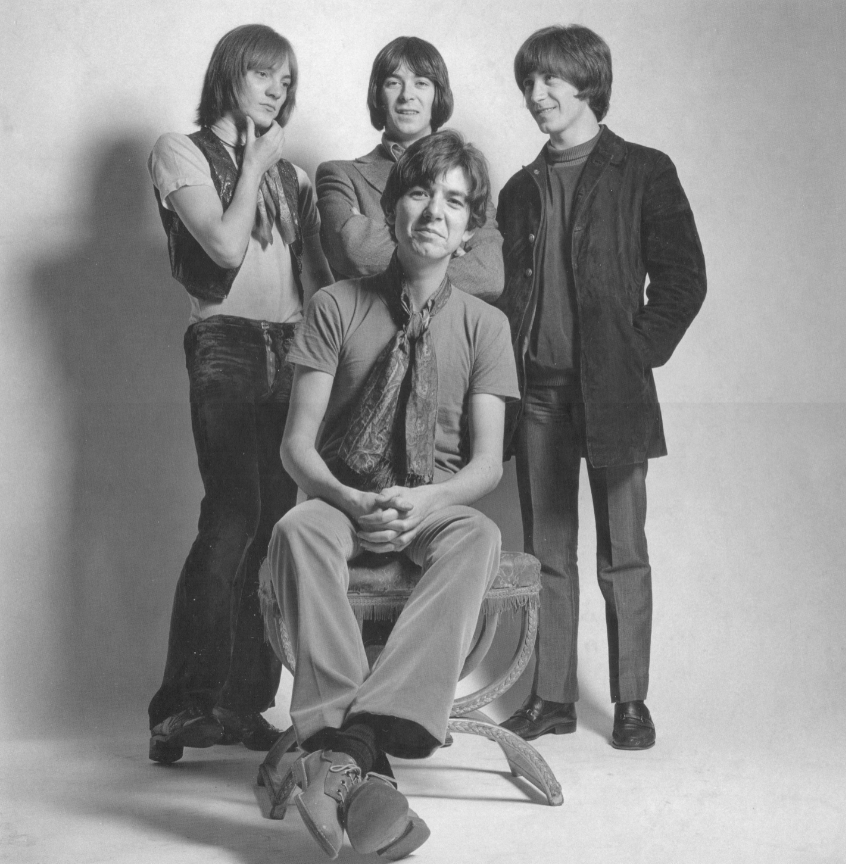
 The Small Faces in 1968 | |
| Studio albums | 5 |
| Live albums | 2 |
| Compilation albums | 14 |
| Singles | 21 |
| B-sides | 21 |
The Small Faces were an English rock band who were initially active between 1965 and 1969.[1] During their original tenure, they released three studio albums,[A] four compilation albums and fourteen singles in the United Kingdom. With the exception of the band's two first singles "Whatcha Gonna Do About It" and "I've Got Mine" (both 1965) that featured Jimmy Winston on guitar and keyboards,[5] Small Faces had a consistent lineup of guitarist Steve Marriott, bassist Ronnie Lane, keyboardist Ian McLagan and drummer Kenney Jones.[6][B] Between August 1965 and June 1968, the Small Faces scored ten top-20 singles on the UK singles chart, including seven top-10 releases, of which "All or Nothing" reached number one.[8] Several of their singles were featured on the UK's year-end ranking,[8] and they became the eleventh best-selling recording artist in Britain during 1966.[9] Despite their success in Britain, the Small Faces only scored one top-20 hit on the US Billboard Hot 100 with "Itchycoo Park" (1967),[10][11] and have thus been referred to as "the best English band never to hit it big in America" by AllMusic critic Bruce Eder.[12] The Small Faces achieved success during the transition to the album era,[12] with their third and final studio album Ogdens' Nut Gone Flake reaching number one for six weeks during the summer of 1968.[8] The band initially broke up in 1969 after Marriott formed Humble Pie with Peter Frampton.[13]
The Small Faces' debut album and eight first singles were released by Decca Records in the UK under the management of Don Arden.[14] The band were not directly signed to Decca, but rather to Arden's production company Contemporary Music. The Small Faces signed a three-year recording contract on 10 June 1965 together with their parents, as they were underage.[15] Throughout 1966, the Small Faces' relationship with Arden soured, particularly after the single "My Mind's Eye" was released in November without the band's consent.[12][16] After an incident in which Arden told the band members' parents about supposed drug use,[17] the band turned to Andrew Loog Oldham's independent record label Immediate Records, who bought the contract from Arden for £25,000 and signed the band in February 1967.[16] As a direct retaliation, Arden released the compilation album From the Beginning and the single "Patterns" in an attempt to hamper the success of the band's Immediate debut single "Here Come the Nice" (all 1967).[18] With Immediate, the band released a further two studio albums and seven singles during their original tenure.[19] The Small Faces reunited in the mid-1970s after a re-issue of "Itchycoo Park" had become a hit,[20][8] and the band released the albums Playmates and 78 in the Shade to limited commercial and critical success while signed to Atlantic Records.[12][21]
The Small Faces' music has been compiled on hundreds of compilation albums following their breakup,[22] starting with The Autumn Stone in November 1969, which contained material the band had released on both Decca and Immediate.[2][23] Most subsequent compilation albums are solely bound to the material Decca or Immediate had the rights to; a notable exception to this rule is the 2003 compilation album Ultimate Collection, released on Sanctuary Records, which features tracks from both of the band's labels.[24] Sanctuary owns the rights to the Immediate Recordings in the UK, whilst Charly Records owns the rights in the US.[25] The multitrack tapes for the group's Immediate recordings were presumed lost after Virgin Records took over ownership of Olympic Studios in the 1970s.[26] A few of them were salvaged, and released on the Here Come the Nice: The Immediate Years 1967–1969 box set in January 2014.[26][27] The Decca Recordings are currently owned by Decca under Universal Music Group, who released The Decca Years 1965–1967 box set in 2015 from recently discovered first generation master tapes.[28][29]
Albums
[edit]Studio albums
[edit]| Year | Title | Album details | Peak chart positions | Certifications (sales thresholds) | |||||
|---|---|---|---|---|---|---|---|---|---|
| UK [8] |
US [10] |
FIN [30] |
NOR [31][C] |
GER [33] | |||||
| 1966 | Small Faces |
|
3 | — | 8 | × | — | ||
| 1967 | Small Faces |
|
12 | — | — | — | — | ||
| 1968 | Ogdens' Nut Gone Flake | 1 | 159 | 5 | 13 | 6 | BPI: Gold[36] | ||
| 1977 | Playmates |
|
— | — | — | — | — | ||
| 1978 | 78 in the Shade |
|
— | — | — | — | — | ||
| "—" denotes releases that did not chart or were not released in that territory. "×" denotes the chart did not exist yet. | |||||||||
Live albums
[edit]| Year | Title | Album details |
|---|---|---|
| 2000 | The BBC Sessions |
|
| 2021 | Live 1966[F] |
|
Compilation albums
[edit]| Year | Title | Album details | Peak chart positions | Certifications (sales thresholds) | ||
|---|---|---|---|---|---|---|
| UK [8] |
US [10] | |||||
| 1967 | From the Beginning[G] |
|
17 | — | ||
| 1968 | There Are But Four Small Faces |
|
— | 178 | ||
| 1969 | In Memoriam | — | — | |||
| The Autumn Stone |
|
— | — | |||
| 1972 | Early Faces |
|
— | 176 | ||
| 1976 | Rock Roots |
|
— | — | ||
| 1995 | The Best of Small Faces |
|
— | — | BPI: Silver[36] | |
| The Immediate Years |
|
— | — | |||
| 1996 | The Decca Anthology |
|
66 | — | ||
| 2000 | The Darlings of Wapping Wharf Launderette |
|
— | — | ||
| 2003 | Ultimate Collection |
|
24 | — | BPI: Silver[36] | |
| 2014 | Here Come the Nice: The Immediate Years 1967–1969 |
|
— | — | ||
| Greatest Hits: The Immediate Years 1967–1969 |
|
— | — | |||
| 2015 | The Decca Years 1965–1967 |
|
— | — | ||
| 2021 | The Complete Atlantic Years |
|
— | — | ||
| "—" denotes releases that did not chart or were not released in that territory. | ||||||
Singles
[edit]| Year | Single details | Peak chart positions | Certifications | Album | |||||||
|---|---|---|---|---|---|---|---|---|---|---|---|
| UK[8] | AUS | CAN | SWE [53] |
NL | NOR | US | |||||
| 1965 | "Whatcha Gonna Do About It"
b/w "What's a Matter Baby"
|
14 | — | 28 | — | — | — | — | non-album single[K] | ||
| "I've Got Mine"
b/w "It's Too Late" (from Small Faces)
|
— | x | x | — | x | x | x | non-album single | |||
| 1966 | "Sha-La-La-La-Lee"
b/w "Grow Your Own"
|
3 | 51 | — | — | —[L] | — | — | Small Faces | ||
| "Hey Girl"
b/w "Almost Grown"
|
10 | 60 | — | — | — | — | — | non-album single[M] | |||
| "All or Nothing"
b/w "Understanding"
|
1 | 15 | — | 15 | 2 | 10 | — | non-album single[M] | |||
| "My Mind's Eye"
b/w "I Can't Dance With You"
|
4 | — | — | 17 | 13 | — | — | non-album single[M] | |||
| 1967 | "I Can't Make It"
b/w "Just Passing"
|
26 | — | — | — | — | — | — | non-album single[N] | ||
| "Patterns"[O]
b/w "E Too D" (from Small Faces)
|
51[P] | — | — | — | — | — | — | non-album single | |||
| "Here Come the Nice"
b/w "Talk to You" (from Small Faces)
|
12 | — | — | — | —[Q] | — | — | non-album single[N] | |||
| "Itchycoo Park"
b/w "I'm Only Dreaming"
|
3 | 2 | 1 | — | 3 | 4 | 16 | BPI: Silver[36] | non-album single[N] | ||
| "Tin Soldier"
b/w "I Feel So Much Better"
|
9 | 3 | 38 | 16 | 4 | — | 73 | non-album single[N] | |||
| 1968 | "Lazy Sunday"
b/w "Rollin' Over (Part II of Happiness Stan)" (from Ogdens' Nut Gone Flake)
|
2 | 5 | 42 | — | 1 | 7 | 114 | Ogdens' Nut Gone Flake | ||
| "The Universal"[R]
b/w "Donkey Rides, A Penny, A Glass"
|
16 | 37 | — | — | 12 | — | — | non-album single[N] | |||
| 1969 | "Mad John"[S]
b/w "The Journey" (from Ogdens' Nut Gone Flake)
|
x | — | — | x | x | x | — | Ogdens' Nut Gone Flake | ||
| "Afterglow of Your Love"
b/w "Wham Bam Thank You Mam"
|
36 | 95 | — | — | 19 | — | — | ||||
| 1975 | "Itchycoo Park"[T]
b/w "My Way of Giving" (from Small Faces)
|
9 | — | x | x | x | x | x | non-album single | ||
| 1976 | "Lazy Sunday"[T]
b/w "(Tell Me) Have You Ever Seen Me?" (from Small Faces)
|
39 | x | x | x | x | x | x | Ogdens' Nut Gone Flake | ||
| 1977 | "Lookin' for a Love"
b/w "Kayoed (By Luv)" (from Playmates)
|
— | — | x | x | — | x | x | Playmates | ||
| "Stand By Me, Stand By You"
b/w "Hungry And Looking"
|
— | x | x | x | x | x | x | 78 in the Shade | |||
| 1978 | "Filthy Rich"
b/w "Over Too Soon" (from 78 in the Shade)
|
— | x | x | x | x | x | x | |||
| 2013 | "Green Circles (stereo)"[U]
b/w "Green Circles (mono)" (from Small Faces)
|
— | x | x | x | x | x | x | Small Faces | ||
| "—" denotes releases that did not chart. "x" denotes single not released in that territory. | |||||||||||
Year-end rankings
[edit]| Year | Single | Year-end rankings |
|---|---|---|
| UK | ||
| 1966 | "Sha-La-La-La-Lee" | 41 |
| "All or Nothing" | 19 | |
| "My Mind's Eye" | 73 | |
| 1967 | "Itchycoo Park" | 33 |
| 1968 | "Lazy Sunday" | 38 |
Footnotes
[edit]- ^ Immediate Records released There Are But Four Small Faces in place of the band's two first self-titled studio albums Small Faces (Decca) and Small Faces (Immediate) in the US on 17 March 1968.[2][3] Authors John Hellier and Paolo Hewitt list the release as a compilation album.[4]
- ^ In addition to the group's two first singles, Winston also played on roughly half of the debut album Small Faces before being replaced by McLagan.[7]
- ^ VG-lista published its first album chart on 1 January 1967.[32]
- ^ Stereo LP catalogue number was IMSP 008[2]
- ^ Stereo LP catalogue number was IMSP 012[2]
- ^ Archival release, recorded live in Mouscron, Belgium on 9 January 1966[39]
- ^ Issued by Decca after the Small Faces had signed with Immediate Records[40]
- ^ US-only release[43]
- ^ West Germany, France and Australian-only release[44]
- ^ Go-Set published the first Australian national chart on 7 October 1966.[50] Charts prior to the publishing of Go-Set are taken from David Kent's Kent Music Report.[51]
- ^ The song was later included on the album Small Faces.[57]
- ^ "Sha-La-La-La-Lee" did not chart on the Dutch Single Top 100, but reached number 31 on the Dutch Top 40.[60]
- ^ a b c The song was later included on the album From the Beginning[57]
- ^ a b c d e The song was later included on the album The Autumn Stone[57]
- ^ Issued by Decca after the Small Faces had signed with Immediate Recordsbreak[40]
- ^ Chart position is from the official UK "Breakers List".[8]
- ^ "Here Come the Nice" did not chart on the Dutch Single Top 100, but reached number 28 on the Dutch Top 40.[66]
- ^ Marriott originally titled the song "Hello The Universal", something that "escaped before we [Small Faces and Immediate Records] could put that right".[70]
- ^ North America and Australian-only release[72]
- ^ a b Re-issue sanctioned by Immediate employee Tony Calder[74]
- ^ Record Store Day release by Charly Records. "Here Comes the Nice" was also re-issued on the same day.[78]
References
[edit]Citations
- ^ Schmitt & Twelker 2002, pp. 124, 165; Hellier & Hewitt 2004, xiv
- ^ a b c d e f g Flood 2014, p. 68.
- ^ Schmitt & Twelker 2002, p. 194.
- ^ Hellier & Hewitt 2004, p. 308.
- ^ Unterberger, Richie. "I've Got Mine Review by Richie Unterberger". AllMusic. Archived from the original on 19 March 2025. Retrieved 19 March 2025.
- ^ Flood 2014, pp. 14, 21, 70.
- ^ Hellier & Hewitt 2004, pp. 111–112.
- ^ a b c d e f g h i Roberts 2006, p. 508.
- ^ Hellier & Hewitt 2004, p. 111.
- ^ a b c d "Small Faces Chart History". Billboard. 19 May 2019. Archived from the original on 19 May 2019. Retrieved 1 May 2025.
- ^ Neill 2011, p. 98.
- ^ a b c d Eder, Bruce. "Small Faces Biography by Bruce Eder". AllMusic. Archived from the original on 23 January 2025. Retrieved 19 March 2025.
- ^ Hellier & Hewitt 2004, p. 180.
- ^ Erlewine, Stephen Thomas. "The Decca Years 1965–1967 Review by Stephen Thomas Erlewine". AllMusic. Archived from the original on 20 January 2023. Retrieved 19 March 2025.
- ^ Hellier & Hewitt 2004, p. 93.
- ^ a b Neill 2011, p. 41.
- ^ Hellier & Hewitt 2004, p. 127.
- ^ Hellier & Hewitt 2004, p. 124.
- ^ Schmitt & Twelker 2002, pp. 326, 330.
- ^ a b Anon. (22 November 1975). "Nov. 22 Index" (PDF). Music Week. p. 62. Archived (PDF) from the original on 3 December 2024. Retrieved 19 March 2025 – via WorldRadioHistory.
- ^ a b c Brown, David (30 July 1977). "Small Faces New Single" (PDF). Record Mirror. p. 4. Archived (PDF) from the original on 20 May 2024. Retrieved 18 March 2025 – via WorldRadioHistory.
The Small Faces have their first Atlantic single release on July 29, "Looking For A Love", followed by their Playmates album on August 12.
- ^ Hellier & Hewitt 2004, pp. 308–317.
- ^ Eder, Bruce. "The Autumn Stone Review by Bruce Eder". AllMusic. Archived from the original on 13 December 2024. Retrieved 19 March 2025.
- ^ Bush, John. "Ultimate Collection [Sanctuary] Review by John Bush". AllMusic. Archived from the original on 9 October 2022. Retrieved 19 March 2025.
- ^ Egan, Sean (2004). "The Small Faces: by Sean Egan". Designer. Archived from the original on 21 January 2025. Retrieved 19 March 2025.
- ^ a b Flood 2014, Foreword.
- ^ a b Lifton, Dave (14 November 2013). "Small Faces To Release Limited-Edition Box Set". Ultimate Classic Rock. Archived from the original on 9 November 2024. Retrieved 18 March 2025.
- ^ a b Bonner, Michael (23 July 2015). "Small Faces 5-CD set to include rarities and outtakes". Uncut. Archived from the original on 10 September 2024. Retrieved 19 March 2025.
- ^ Paytress 2015, Foreword.
- ^ Nyman 2005.
- ^ "Topp 40 Album – 1968 – Uge 33". VG-Lista. Archived from the original on 18 March 2025. Retrieved 18 March 2025.
- ^ "Topp 40 Album – 1967 – Uge 1" [Topp 40 Album – 1967 – Week 1] (in Norwegian). VG-Lista. 1 January 1967. Archived from the original on 17 December 2024. Retrieved 21 February 2025.
- ^ "Small Faces – Ogdens' Nut Gone Flake" (in German). Offizielle Deutsche Charts. Archived from the original on 27 November 2024. Retrieved 18 March 2025.
- ^ a b Anon. (6 May 1966). "Out Today! A Great Double Event!" (PDF). New Musical Express. p. 1. Archived (PDF) from the original on 20 May 2024. Retrieved 18 March 2025 – via WorldRadioHistory.
The new single "Hey Girl" and this year's most exciting L.P. Small Faces
- ^ Hellier & Hewitt 2004, p. 171.
- ^ a b c d e f "British certifications – Small Faces". British Phonographic Industry. Retrieved 22 May 2022. Type Small Faces in the "Search BPI Awards" field and then press Enter.
- ^ "The New Albums" (PDF). Record Business. 4 September 1978. p. 23. Archived (PDF) from the original on 20 May 2024. Retrieved 18 March 2025 – via WorldRadioHistory.
- ^ Unterberger, Richie. "BBC Sessions: 1965–1968 Review by Richie Unterberger". AllMusic. Archived from the original on 8 December 2021. Retrieved 18 March 2025.
- ^ a b Anon. (29 July 2021). "The Unheard Small Faces! 1966 Live Album Out Now!". Mojo. Archived from the original on 11 November 2024. Retrieved 18 March 2025.
- ^ a b Flood 2014, p. 33.
- ^ Hellier & Hewitt 2004, p. 149.
- ^ Anon. (10 February 1968). "'Itchycoo Park' Is an Immediate Success". Cash Box. p. 56.
[Immediate Records through CBS Records] is releasing Small Faces' first album, 'There Are But Four Small Faces,' next week.
- ^ Schmitt & Twelker 2002, p. 169.
- ^ a b Hellier & Hewitt 2004, p. 309.
- ^ Unterberger, Richie. "Rock Roots Review by Richie Unterberger". AllMusic. Archived from the original on 20 January 2023. Retrieved 18 March 2025.
- ^ "Small Faces – Box Set". AllMusic. Archived from the original on 18 March 2025. Retrieved 18 March 2025.
- ^ Eder, Bruce. "Decca Anthology 1965–1967 Review by Bruce Eder". AllMusic. Archived from the original on 20 January 2023. Retrieved 26 March 2025.
- ^ Erlewine, Stephen Thomas. "The Darlings of Wapping Wharf Launderette Review by Stephen Thomas Erlewine". AllMusic. Archived from the original on 2 December 2024. Retrieved 18 March 2025.
- ^ Erlewine, Stephen Thomas. "Greatest Hits: The Immediate Years 1967–1969 Review by Stephen Thomas Erlewine". AllMusic. Archived from the original on 11 June 2023. Retrieved 18 March 2025.
- ^ a b "Australian Top 40 Singles and Album Charts 1966–1974". GoSet. Archived from the original on 23 January 2025. Retrieved 18 March 2025.
- ^ Kent 2005, p. 365.
- ^
- Anon. (15 November 1965). "R.P.M Play Sheet" (PDF). RPM. p. 5. Archived from the original (PDF) on 2 September 2024. Retrieved 18 March 2025 – via WorldRadioHistory.
- Anon. (27 January 1968). "The RPM 100" (PDF). RPM. p. 1. Archived from the original (PDF) on 21 February 2025. Retrieved 18 March 2025.
- Anon. (27 April 1968). "The RPM 100" (PDF). RPM. p. 1. Archived from the original (PDF) on 2 September 2024. Retrieved 18 March 2025.
- Anon. (1 June 1968). "The RPM 100" (PDF). RPM. p. 5. Archived from the original (PDF) on 2 September 2024. Retrieved 18 March 2025.
- ^ Hallberg 1993, p. 240.
- ^ "Small Faces – Single Top 100" (in Dutch). Single Top 100. Archived from the original on 13 December 2024. Retrieved 18 March 2025.
- ^ "Small Faces: Song". Norwegian Charts. VG-Lista. Archived from the original on 13 December 2024. Retrieved 18 March 2025.
- ^ Anon. (23 July 1965). "London Group First" (PDF). New Musical Express. p. 6. Archived from the original (PDF) on 20 May 2024. Retrieved 18 March 2025 – via WorldRadioHistory.
- ^ a b c Schmitt & Twelker 2002, p. 329.
- ^ Anon. (29 October 1965). "New Dodd, Shadows, Elvis Singles" (PDF). New Musical Express. p. 7. Archived (PDF) from the original on 14 December 2024. Retrieved 18 March 2025 – via WorldRadioHistory.
Also released next Friday [5 November]... Small Faces follow-up to their first chart success, "I've Got Mine".
- ^ Anon. (22 January 1966). "New Discs from Lulu, Silkie and Small Faces" (PDF). Record Mirror. p. 5. Archived (PDF) from the original on 26 January 2025. Retrieved 18 March 2025 – via WorldRadioHistory.
Next week (28) Small Faces return with Kenny Lynch-Mort Shuman's "Sha-La-La-La-Lee" (Decca).
- ^ "Small Faces – Sha-La-La-La-Lee" (in Dutch). Dutch Top 40. Archived from the original on 12 December 2024. Retrieved 18 March 2025.
- ^ Hellier & Hewitt 2004, p. 121.
- ^ Anon. (5 November 1966). "New Who & Small Faces" (PDF). Record Mirror. p. 6. Archived (PDF) from the original on 7 October 2024. Retrieved 18 March 2025 – via WorldRadioHistory.
Steve Marriott and Plonk Lane have penned the Small Faces' new single, "My Mind's Eye". It is released by Decca on November 11.
- ^ Anon. (25 February 1967). "Small Faces To Sign Up With Andrew Oldham" (PDF). Disc and Music Echo. p. 4. Archived (PDF) from the original on 20 May 2024. Retrieved 18 March 2025 – via WorldRadioHistory.
New Faces' single "I Can't Make It" and "Just Passin'" is out on March 3, to tie in with their tour with Roy Orbison and Paul and Barry Ryan.
- ^ Schmitt & Twelker 2002, p. 48.
- ^ Anon. (27 May 1967). "Faces Change Labels – Join Immediate" (PDF). Melody Maker. p. 2. Archived (PDF) from the original on 20 May 2024. Retrieved 19 March 2025 – via WorldRadioHistory.
The Small Faces have switched from Decca Records to Andrew Oldham's Immediate Records, Their first single on their new label will be released on June 2. Title of the new Steve Marriott-Plonk Lane composition is "Here Come the Nice" coupled with another original, "Talk to You".
- ^ "Small Faces – Here Come The Nice" (in Dutch). Dutch Top 40. Archived from the original on 21 January 2025. Retrieved 19 March 2025.
- ^ Schmitt & Twelker 2002, p. 98.
- ^ Hellier & Hewitt 2004, p. 160.
- ^ ´Anon. (30 March 1968). "Kinks, Faces, Davies, Floyd, MacKenzie – New Singles" (PDF). New Musical Express. p. 9. Archived (PDF) from the original on 11 August 2024. Retrieved 19 March 2025 – via WorldRadioHistory.
"Lazy Sunday Afternoon" (Immediate) is the title of the Small Faces' new single out next Friday (5th).
- ^ Hellier & Hewitt 2004, pp. 173–174.
- ^ a b Flood 2014, p. 54.
- ^ Hellier & Hewitt 2004, p. 304.
- ^ Flood 2014, p. 53.
- ^ Hellier & Hewitt 2004, p. 230.
- ^ Anon. (19 March 1976). "Mar. 19 Index". Music Week. p. 62.
- ^ Anon. (12 November 1977). "Releases Index" (PDF). Music Week. p. 58. Archived (PDF) from the original on 20 May 2024. Retrieved 19 March 2025 – via WorldRadioHistory.
- ^ Anon. (15 July 1978). "Releases Index" (PDF). Music Week. p. 39. Archived (PDF) from the original on 20 May 2024. Retrieved 19 March 2025 – via WorldRadioHistory.
- ^ a b McGovern, Kyle (22 March 2013). "Record Store Day 2013: Complete List of Exclusives". Spin. Archived from the original on 13 April 2024. Retrieved 19 March 2025.
Sources
- Hallberg, Eric (1993). Eric Hallberg presenterar Kvällstoppen i P3: Sveriges Radios topplista över veckans 20 mest sålda skivor [Eric Hallberg Presents Kvällstoppen in P3: Sveriges Radios Top List of the Week's 20 Most Sold Records] (in Swedish). Sweden: Drift Musik. ISBN 978-91-630-2140-4. OCLC 186244613.
- Hellier, John; Hewitt, Paolo (2004). Steve Marriott: All Too Beautiful.... UK: Helter Skelter Publishing. ISBN 1-900924-44-7. OCLC 56452717. Retrieved 18 March 2025 – via Internet Archive.
- Kent, David (2005). Australian Chart Book 1940–1969. Australia: Australian Chart Book. ISBN 0-646-44439-5. OCLC 62561852.
- Neill, Andy (2011). Had Me a Real Good Time: The Faces Before During and After. UK: Omnibus Press. ISBN 978-178-32-36-190. OCLC 956770410. Retrieved 19 March 2025 – via Internet Archive.
- Nyman, Jake (2005). Suomi soi 4: Suuri suomalainen listakirja [Finland is Calling 4: The Great Finnish Chart Book] (in Finnish). Finland: Tammi. ISBN 978-951-31-2503-5. OCLC 936866988.
- Paytress, Mark (2012). Small Faces (CD) (Deluxe ed.). UK: Decca. 276 528-0. Retrieved 18 March 2025 – via MusicBrainz.
- Paytress (2015). The Decca Years: 1965–1967 (CD). UK: Universal Music. 473 429-6.
- Roberts, David (2006). British Hit Singles & Albums (19th ed.). UK: Guinness World Records Limited. ISBN 1-904994-10-5. OCLC 64098209.
- Schmitt, Roland; Twelker, Uli (2002). Small Faces & Other Stories (1st ed.). UK: Music Sales. ISBN 978-18-607-439-24. OCLC 993110405. Retrieved 18 March 2025 – via Google Books.
- Flood, Tosh (2014). Here Come the Nice: The Immediate Years Box Set 1967–1969 (CD). UK: Charly. CHARLY 170 BX. Retrieved 18 March 2025 – via MusicBrainz.
External links
[edit]- Small Faces discography at Discogs
Small Faces discography
View on GrokipediaAlbums
Studio albums
The Small Faces produced five studio albums across two distinct phases of their career: an original 1960s era marked by mod-influenced R&B and psychedelic experimentation, and a 1970s reunion period featuring altered lineups emphasizing blues-rock revival. The early albums, released under Decca and Immediate Records, showcased the core quartet of Steve Marriott, Ronnie Lane, Ian McLagan, and Kenney Jones, with production often handled internally or by collaborators tied to the British Invasion scene. These works were primarily issued as vinyl LPs in mono and stereo variants, reflecting the era's recording standards. The later albums, under Atlantic Records, involved partial reunions without Lane initially, and self-production credits under the band pseudonym Kemastri, highlighting a return to raw energy amid lineup changes. The band's debut, Small Faces, arrived amid the mod movement's peak, capturing their raw soul and R&B roots with energetic covers and originals recorded at Decca's studios. Released on May 6, 1966, by Decca Records as a mono LP (catalog LK 4790), it ran approximately 35 minutes across 12 tracks, produced by a team including Kenny Lynch and Ian Samwell, who emphasized the band's live-wire sound.[2][3] Their sophomore effort, the second self-titled Small Faces (also known as There Are But Four Small Faces in some markets), marked a shift to Immediate Records and psychedelic leanings, engineered by Glyn Johns at Olympic Studios with production led by Marriott and Lane. Issued on June 23, 1967, as a stereo LP (catalog IMLP 008), it spanned about 32 minutes over 14 tracks, blending mod pop with emerging freakbeat elements.[4] The pinnacle of their original run, Ogdens' Nut Gone Flake, was a groundbreaking concept album produced entirely by the band at Olympic Studios, featuring a side-long narrative suite "Happiness Stan" narrated by comedian Stanley Unwin. Released on May 24, 1968, by Immediate Records in a distinctive round tobacco-tin-inspired packaging as a stereo LP (catalog IMLP 012), it clocked in at around 39 minutes with 11 tracks plus spoken interludes, innovating both sonically and visually.[5][6] Following the band's 1969 dissolution, a partial reunion without Lane yielded Playmates, the first under the Small Faces name since 1968, with Marriott, McLagan, Jones, and bassist Rick Wills self-producing as Kemastri at various studios including Ridge Farm. Launched on August 1977 by Atlantic Records as a stereo LP (catalog SD 19113), it lasted roughly 41 minutes over 10 tracks, aiming to recapture their bluesy vigor.[7] The final studio outing, 78 in the Shade, retained the same lineup and self-production via Kemastri, recorded at Ridge Farm and recorded mostly live to tape for an organic feel. Released in September 1978 by Atlantic Records as a stereo LP (catalog SD 19171), it featured 10 tracks totaling about 40 minutes, serving as a swan song before the band's second breakup.[8]| Title | Release Date | Label | Producer(s) | Format(s) | Notes |
|---|---|---|---|---|---|
| Small Faces | May 6, 1966 | Decca | Kenny Lynch, Ian Samwell | Mono LP | Debut; R&B-focused; 12 tracks, ~35 min. |
| Small Faces | June 23, 1967 | Immediate | Steve Marriott, Ronnie Lane (engineered by Glyn Johns) | Stereo LP | Psychedelic shift; 14 tracks, ~32 min. |
| Ogdens' Nut Gone Flake | May 24, 1968 | Immediate | Small Faces | Stereo LP | Concept album; innovative packaging; 11 tracks + narrative, ~39 min. |
| Playmates | August 1977 | Atlantic | Kemastri (band) | Stereo LP | Reunion debut; 10 tracks, ~41 min. |
| 78 in the Shade | September 1978 | Atlantic | Kemastri (band) | Stereo LP | Final album; live-to-tape sessions; 10 tracks, ~40 min. |
Live albums
The Small Faces produced few dedicated live albums during their original 1965–1969 tenure, with official releases emerging posthumously from archival sources to capture their dynamic stage energy, which blended mod R&B, soul, and emerging psychedelia. These recordings emphasize the band's raw, unpolished performances, often sourced from radio sessions or rare concert tapes preserved by members like drummer Kenney Jones. "Live 1966," released in 2021 by Nice Records, documents the band's earliest known full concert recording, consisting of two sets performed at the Twenty Club in Mouscron, Belgium, on January 9, 1966. Drawn from Jones' personal archive, the album features high-energy covers and originals such as "Ooh Poo Pah Doo," "You Need Loving," and "Parchman Farm Blues," showcasing their aggressive R&B style and crowd interaction in a club setting; it was issued in limited vinyl and CD formats, highlighting its rarity as a pre-fame snapshot.[9] The BBC Sessions 1965–1968, issued in 1999 by Strange Fruit Records, compiles live-in-the-studio performances from BBC radio shows including Saturday Club and Top Gear, spanning the band's Decca and Immediate eras. Recorded between September 1965 and April 1968, it includes raw takes of early mod hits like "Whatcha Gonna Do About It" and "Shake" alongside later psychedelic numbers such as "Tin Soldier" and "Lazy Sunday," illustrating their vocal harmonies and instrumental interplay without audience noise; available on CD and later vinyl reissues, it serves as a key historical document of their broadcast appearances.[10] Although primarily a compilation, The Autumn Stone (released 1969 by Immediate Records) incorporates live material from the band's 18 November 1968 performance at Newcastle City Hall in the UK, featuring tracks such as "Rollin' and Tumblin'," "If I Were a Carpenter," "Every Little Bit Hurts," "All or Nothing," and "Tin Soldier," providing insight into their onstage psychedelic experimentation post-Ogdens' Nut Gone Flake, issued on double LP and CD formats by Universal Music in subsequent editions. The 1970s reunion lineup—featuring Steve Marriott, Ian McLagan, Kenney Jones, and later additions Rick Wills and Jimmy McCulloch—yielded no official live album despite extensive touring.Compilation albums
The Small Faces' compilation albums encompass a range of retrospective releases that aggregate their early singles, outtakes, and rarities, often issued posthumously following the band's 1969 breakup or during later reunions. These collections, primarily from labels like Decca and Immediate Records, have played a key role in preserving and reintroducing the band's mod rock and psychedelic output to new audiences, with several achieving commercial success in the UK and US. Early compilations focused on Decca-era material, while later ones delved into Immediate's catalog, including unreleased sessions; modern reissues up to 2025 have expanded these with remastering, alternate mixes, and archival bonuses. One of the band's first compilations, From the Beginning, was released on 2 June 1967 by Decca Records, compiling tracks from their initial Decca singles and album sessions, such as "Runaway" and "My Mind's Eye." It peaked at number 17 on the UK Albums Chart, marking an early effort to capitalize on the band's growing interest amid their label transition to Immediate. Similarly, In Memoriam, issued in May 1969 on Immediate Records shortly after the band's dissolution, gathered live recordings, B-sides, and unreleased studio tracks from 1967-1968 sessions intended for uncompleted albums, including "Rollin' Over" and "If I Were a Carpenter"; this hasty posthumous release served as a tribute, blending hits with experimental cuts like the psychedelic "Collibosher."[11][12][13] The most prominent early compilation, The Autumn Stone, appeared in November 1969 as a double album on Immediate Records, reaching number 5 on the UK Albums Chart. It featured a mix of singles like "Itchycoo Park" and "All or Nothing," alongside outtakes and "throwaway" tracks recorded post-breakup, such as the unreleased "Afterglow (Of Your Love)," providing fans with rare glimpses into the band's creative process during their final months. In the 1980s, Castle Communications issued several reissues and samplers of the band's early work, including The Small Faces Collection (1985), a double LP compiling hits, B-sides, and live tracks like "Wham Bam, Thank You Mam," which highlighted their mod roots and sold steadily as a budget-friendly overview.[14][15][16] Reunion-era efforts in the 1970s and beyond inspired further compilations, such as expanded reissues of 78 in the Shade (originally a 1978 Atlantic studio album by the reformed lineup minus Steve Marriott), with the 2005 CD edition adding bonus tracks from sessions, and the 2021 The Complete Atlantic Recordings set incorporating rarities like alternate mixes of "Phone Call from Leilani." In 2013, Immediate's catalog was revisited with the box set Here Come the Nice: The Immediate Years 1967-1969, a 4-CD/4-vinyl collection of all singles, EPs, and unreleased material, including session outtakes and mono masters, which remains a definitive singles-focused anthology. More recently, the 2025 expanded edition of The Autumn Stone—a 3-CD/3-LP box set marking Immediate Records' 60th anniversary—features remastered originals, alternate mixes, and new bonuses like BBC sessions, accompanied by liner notes from drummer Kenney Jones detailing the band's legacy. Additionally, There Are But Four Small Faces received a 2025 remaster by Solid Records, reissuing the 1967 US compilation (blending Immediate singles with exclusives like "Yesterday, Today and Tomorrow") with enhanced audio from original tapes, updating this early American entry for contemporary listeners.[8][17][18][19][20]| Compilation Album | Release Year | Label | Key Features and Chart Performance |
|---|---|---|---|
| From the Beginning | 1967 | Decca | Decca-era tracks; peaked UK #17. |
| In Memoriam | 1969 | Immediate | Live/unreleased 1967-1968 material; posthumous tribute. |
| The Autumn Stone | 1969 | Immediate | Singles, outtakes, post-breakup recordings; UK #5. |
| The Small Faces Collection | 1985 | Castle Communications | Hits, B-sides, live tracks; budget reissue. |
| Here Come the Nice: The Immediate Years 1967-1969 | 2013 | Immediate | Singles box set with unreleased sessions. |
| 78 in the Shade (expanded reissue) | 2021 | Atlantic/Wounded Bird | Reunion album bonuses in Complete Atlantic set. |
| The Autumn Stone (expanded) | 2025 | Immediate | 3-CD/3-LP remaster with BBC sessions, Kenney Jones notes. |
| There Are But Four Small Faces (remaster) | 2025 | Solid Records | 1967 US compilation remastered from originals. |
Singles and extended plays
Singles
The Small Faces began their recording career with singles on Decca Records in 1965, releasing a total of eight 7-inch singles with the label through early 1967 before switching to Immediate Records, where they issued the remaining six of their original era's 14 singles until 1969.[21] Many B-sides were original compositions exclusive to the single or album tracks, such as "E Too D" and "Donkey Rides, A Penny a Glass."[22] The band's UK singles during this period are listed below:| Year | A-side | B-side | Label | Catalogue |
|---|---|---|---|---|
| 1965 | Whatcha Gonna Do About It | What's a Matter Baby | Decca | F 12208 |
| 1965 | I've Got Mine | It's Too Late | Decca | F 12276 |
| 1966 | Sha-La-La-La-Lee | Grow Your Own | Decca | F 12317 |
| 1966 | Hey Girl | Almost Grown | Decca | F 12393 |
| 1966 | All or Nothing | Understanding | Decca | F 12470 |
| 1966 | My Mind's Eye | I Can't Dance with You | Decca | F 12500 |
| 1967 | I Can't Make It | Just Passing | Decca | F 12565 |
| 1967 | Patterns | E Too D | Decca | F 12619 |
| 1967 | Here Come the Nice | Talk to You | Immediate | IM 051 |
| 1967 | Itchycoo Park | I'm Only Dreaming | Immediate | IM 059 |
| 1967 | Tin Soldier | I Feel So Much Better, Dear | Immediate | IM 062 |
| 1968 | Lazy Sunday | Rollin' Over (Part II) | Immediate | IM 064 |
| 1968 | The Universal | Donkey Rides, A Penny a Glass | Immediate | IM 069 |
| 1969 | Afterglow (Of Your Love) | Wham Bam Thank You Mam | Immediate | IM 077 |
Extended plays
The Small Faces issued a number of extended plays in the 1960s, primarily targeting the UK market during their Decca period, where EPs served as affordable mini-compilations bridging singles and full albums for the mod subculture. These releases typically featured four tracks, drawing from early singles and B-sides to capitalize on the band's rising popularity. All were produced in the standard 7-inch 45 RPM mono format, allowing for extended playtime compared to singles while keeping costs low for young fans.[1] The debut EP, The Small Faces, arrived in December 1965 via Decca Records (catalogue DFE 8595). It collected the band's initial single "Whatcha Gonna Do About It" alongside B-side "What's a Matter Baby," plus album tracks "I've Got Mine" and "Grow Your Own," highlighting their raw rhythm and blues energy.[26][27] In October 1966, Decca followed with The Small Faces No. 2 (catalogue DFE 8649), compiling mod-friendly cuts including the recent single "Hey Girl," cover "Almost Grown," a reissue of "What'cha Gonna Do About It," and the instrumental "Own Up Time." This release underscored the group's evolving sound amid their chart success.[1][21] Internationally, limited EPs bolstered their European presence; for instance, the Dutch Itchycoo Park EP (1967, Philips, catalogue 355 006), included the hit title track alongside "Tin Soldier" and other Immediate singles, aiding continental promotion.[28][29]Chart performance and certifications
Album performance
The Small Faces achieved their greatest commercial success in the UK during their original 1965–1969 tenure with Decca and Immediate Records, where their albums consistently entered the top 20 of the Official Charts Company's Albums Chart. Their debut album, Small Faces (1966), peaked at number 3 and spent 42 weeks on the chart, reflecting strong initial popularity driven by mod culture and hit singles like "Sha-La-La-La-Lee." The follow-up compilation From the Beginning (1967) reached number 17 for 5 weeks, while their breakthrough concept album Ogdens' Nut Gone Flake (1968) topped the chart for 6 weeks and remained on it for a total of 19 weeks, marking their commercial zenith amid the psychedelic era.[15][30][31] In the United States, the band's albums had more modest impact on the Billboard 200, largely due to limited promotion and competition from American acts. The US version of their second studio album, released as There Are But Four Small Faces (1968), peaked at number 183, buoyed slightly by the single "Itchycoo Park" crossing over to the Hot 100. Ogdens' Nut Gone Flake fared marginally better, reaching number 159 upon its 1968 release, though it re-entered the chart at number 196 in 1973 amid renewed interest. Earlier efforts like the debut Small Faces (1966) and From the Beginning (1967, reissued as Early Faces in 1972) did not crack the top 200, with the latter peaking at number 183 in its reissue form. The 1975–1978 reunion albums, Playmates (1977) and 78 in the Shade (1978), failed to chart on the Billboard 200.[32] Internationally, Small Faces albums saw sporadic success beyond the UK and US, often tied to singles performance in markets like Australia, Canada, and Norway. For instance, Ogdens' Nut Gone Flake peaked at number 13 in Australia, while compilations such as Best Of later entered Norwegian charts in the 1970s. Canadian album charts were similarly driven by singles, with no top-100 entries for full-length releases during the band's active years. No significant chart activity occurred for reunion-era albums outside the UK.[33][34] Certifications underscore the enduring UK sales of key releases, particularly from the Immediate Records period (1967–1968). Ogdens' Nut Gone Flake has been certified Gold (100,000 units) by the British Phonographic Industry (BPI), including physical sales, reissues, and streaming equivalents. Modern compilations and box sets have further boosted totals; for example, the 2013 Here Come the Nice: The Immediate Years 1967–1969 box set contributed to ongoing digital certifications, though no standalone BPI award for it has been issued as of 2025. No RIAA certifications exist for any Small Faces albums in the US.[35] Overall, the Small Faces' album performance peaked during the 1967–1968 Immediate era, with top-10 UK entries and modest international gains, before declining sharply post-1969 breakup due to lineup changes and shifting tastes. Reunion efforts in the late 1970s yielded no chart success, but 21st-century remasters and box sets have revitalized streaming metrics, contributing to BPI-equivalent units for classics like Ogdens' Nut Gone Flake and sustaining legacy sales in the digital age.[15][35]| Album | UK Peak (Weeks) | US Peak (Billboard 200) |
|---|---|---|
| Small Faces (1966) | 3 (42) | - |
| From the Beginning (1967) | 17 (5) | (183 in 1972 reissue) |
| There Are But Four Small Faces (1968) | - | 183 |
| Ogdens' Nut Gone Flake (1968) | 1 (19) | 159 |
| Playmates (1977) | - | - |
| 78 in the Shade (1978) | - | - |
Singles performance and year-end rankings
The Small Faces experienced considerable success on the UK Singles Chart during their original 1960s run, securing seven top 10 hits between 1966 and 1968. Their breakthrough came with "Sha La La La Lee", which peaked at number 3 in February 1966 and spent 11 weeks on the chart. This mod-influenced track was followed by "Hey Girl" at number 10, "All or Nothing" which topped the chart for one week in September 1966 after 12 weeks in the top 40, and "My Mind's Eye" at number 4 later that year. The band's transition to psychedelia propelled "Itchycoo Park" to number 3 in 1967, where it remained for 14 weeks and became a defining Summer of Love anthem noted for its innovative phasing effects. "Tin Soldier" followed at number 9 in December 1967, while "Lazy Sunday" reached number 2 in 1968, showcasing their music hall influences over 11 weeks.[15] In the United States, the Small Faces' chart impact was more modest, reflecting challenges in penetrating the market despite their UK popularity. "Itchycoo Park" stands as their sole top 20 entry on the Billboard Hot 100, peaking at number 16 in January 1968 after debuting in November 1967. Other singles like "Tin Soldier" fared poorly, reaching only number 73 on the Hot 100 in early 1968. International variations were mixed; for instance, "Lazy Sunday" topped charts in the Netherlands but bubbled under in the US at around number 114 on extended airplay lists. Year-end UK rankings underscored the band's consistent presence in the 1960s pop landscape, with "Sha La La La Lee" placing at number 28 in 1966, "Itchycoo Park" at number 15 in 1967, and "Lazy Sunday" at number 19 in 1968, based on period compilations from sources like NME and Record Retailer. Reunion-era singles from the 1970s onward, such as those under the Faces banner, did not achieve comparable year-end visibility. Sales estimates for key releases remain approximate due to era-specific tracking limitations, though "All or Nothing" reportedly exceeded 250,000 copies in the UK, contributing to its chart dominance. In 2022, "Itchycoo Park" received a BPI Silver certification for 200,000 units, incorporating modern streaming equivalents and highlighting enduring digital revival. Recent streaming data shows renewed interest, with the track appearing in UK top 100 year-end streams for 2024 amid classic rock playlist surges.| Single | UK Peak (Year) | US Billboard Hot 100 Peak (Year) | Notable International Peak |
|---|---|---|---|
| All or Nothing | 1 (1966) | - | 1 (Netherlands) |
| Itchycoo Park | 3 (1967) | 16 (1968) | 1 (Canada) |
| Tin Soldier | 9 (1967) | 73 (1968) | 3 (Australia) |
| Lazy Sunday | 2 (1968) | ~114 (1968, airplay) | 1 (Netherlands) |