


Community hub
Recent from talks
Contribute something
Nothing was collected or created yet.
Southern grasshopper mouse
View on Wikipedia
| Southern grasshopper mouse | |
|---|---|

| |
Scientific classification 
| |
| Kingdom: | Animalia |
| Phylum: | Chordata |
| Class: | Mammalia |
| Order: | Rodentia |
| Family: | Cricetidae |
| Subfamily: | Neotominae |
| Genus: | Onychomys |
| Species: | O. torridus
|
| Binomial name | |
| Onychomys torridus (Coues, 1874)
| |

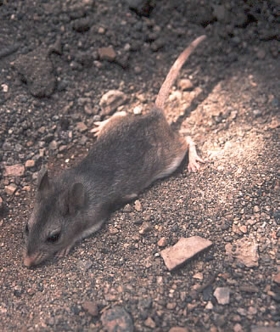
The southern grasshopper mouse or scorpion mouse (Onychomys torridus) is a species of predatory rodent in the family Cricetidae,[2] native to Mexico and the states of Arizona, California, Nevada, New Mexico, and Utah in the United States.[1] Notable for its resistance to venom, it routinely preys on the highly venomous Arizona bark scorpion.
Description
[edit]The southern grasshopper mouse is a robust, small, nocturnal species that typically forms monogamous pairs.[3] It has a short tail, growing to a total length of 120 to 163 mm (4.7 to 6.4 in). The head, back and sides are pinkish- or grayish-brown while the underparts are white, the two colors being distinctly separated. The tail is club-shaped, short and broad, the anterior part being the same color as the body and the tip being white.[4]
Biology
[edit]The southern grasshopper mouse feeds almost entirely on arthropods, such as beetles, grasshoppers and scorpions. In addition to arthropods, it is known to prey upon the little pocket mouse (Perognathus longimembris) and the western harvest mouse (Reithrodontomys megalotis).[4]
In the arid regions inhabited by the southern grasshopper mouse, the Arizona bark scorpion is plentiful and avoided by most predators because of the very painful sting it can inflict. The grasshopper mouse can feed on this scorpion with impunity even when the scorpion stings it repeatedly in the face.[5] Researchers have found that a neural mechanism is involved that blocks the sending of pain messages to the brain. This mouse can normally feel pain from other sources, but can be temporarily insensitive to these stimuli after a dose of venom from a bark scorpion.[5][6] This pain modulation is activated soon after the scorpion sting; the mouse does briefly feel pain from the sting, but the scorpion venom binds to the transmembrane channel otNav1.8.[7] Specifically, the venom binds to a glutamic acid residue located within the channel protein,[7] thus preventing neuron action potentials from firing and acting as a type of temporary anesthetic and pain reliever for the mouse. When this glutamic acid was replaced with hydrophilic glutamine residue, the venom did not bind with the protein, and the pain modulation ability was lost.[7]
Females are able to produce several litters in a year, but their reproductive life does not usually last into their second year. The average litter size is 2.6 (range 1 to 5), produced after an average gestation period of 29 days. The young are born naked, with pink translucent skin. One day later, the pigment is developing on the dorsal surface and by day ten, hairs 3 millimetres (0.12 in) long are present on the back. The eyes open on day 15 and solid food is being consumed by day 19. The females give birth to their first litter when four or five months old.[4]
Ecology
[edit]Southern grasshopper mice are unique among other North American rodents in the family Cricetidae in that their diet consists mostly of arthropods.[4] They are usually found in areas with lower population densities.[4] Several studies have demonstrated that the reproductive attributes of this species allows them to be naturally maintained at lower population densities.[4] Females tend to be sexually active only during one breeding season, which is due to their rapid reproductive aging following their first year.[4] Moreover, males' unique pauses in their testicular activity during the breeding season might also contribute to the lower population densities in which they live.[4]
The natural habitat of southern grasshopper mice include hot, arid valleys, and scrub deserts. A male and female along with their offspring occupy a larger home range for burrowing compared to males and females alone.[4] On average, males have a home range of 7.8 acres (3.2 ha), while females occupy an area of 5.9 acres (2.4 ha).[4] They tend to maintain a specific place of residency for a longer period of time compared to other mammals.[4] The home ranges between southern grasshopper mice are not too far from each other, with an average maximum distance of 118.4 ± 8.0 m (388.5 ± 26.2 ft).[4] However, adult males tend to be very territorial and their efficient spacing is facilitated by vocalizations they make at night.[4]
In a study done by Denise H. Frank and Edward J. Heske, the home range of southern grasshopper mice in the Chihuahuan Desert were observed.[3] The home range of males during the non-breeding season were found to be smaller than those held by males during the breeding season.[3] In contrast, there was not a significant difference between the home ranges of females during the breeding and non-breeding seasons.[3] Male ranges during the reproductive season were some two to three times larger than those of adult females during the reproductive season.[3]
There are no currently known conservation issues associated with southern grasshopper mice, largely due to its wide distribution and tolerance for disturbances caused by arthropods.[8] However, some disturbances have been observed in their low density populations.[8]
Predatory behavior
[edit]Southern grasshopper mice are a predatory and very aggressive rodent species.[9] In a study done by Richard McCarty and Charles H. Southwick, these grasshopper mice were deprived of food and their predatory behavior against laboratory mice and crickets was observed.[9] After 48 hours of food deprivation, southern grasshopper mice spent more time eating crickets than the laboratory food they were provided.[9] Live crickets were preferred to deceased specimens, which might suggest that prey movement might be a catalyst and cue for predatory attack.[9] There was no gender related difference in how much time the mice spent feeding on crickets.[9]
Highly aggressive behaviors were displayed towards laboratory mice in the same study, such as biting the back and tail of their prey.[9] After two days of being around the laboratory mice, six of the 43 male grasshopper mice and 22 of the 45 females grasshopper mice killed and ate certain parts of the laboratory mice.[9] This difference in predatory behavior between the male and female grasshopper mice was significant.[9] In their study, both McCarty and Southwick concluded that food deprivation and the type of prey affected the intensity and aggressiveness of the predatory attacks observed by southern grasshopper mice.[9]
Brain and body size relation
[edit]Relative brain size tends to vary with food preferences.[10] Brain size is usually smallest in folivores, larger in both granivores and insectivores, and largest in generalists.[10] Measurements of cranial volume of museum specimens of southern grasshopper mouse have shown that on average, females were heavier and longer than males, but their cranial volume was about 3% less than that of males.[10] However, this was not a significant difference.[10] This pattern of brain-body relationship can also be seen in northern grasshopper mice.[10] Moreover, the tail length of southern grasshopper mice made up an average of 33.9% of its body length.[10] Their tail length measures an average of 4.58 ± 0.36 cm (1.80 ± 0.14 in) in females, and 4.50 ± 0.39 cm (1.77 ± 0.15 in) in males.[10] Average tail length does not vary greatly between the sexes.[10]
On average, female southern grasshopper mice are able to deal with a larger body size without increasing their brain size, when compared to males.[10] There is still not enough evidence to explain the difference in body size and brain between males and females.[10] It is possible that there are different demands on both sexes, which might contribute to this difference.[10] These studies were also only done in the laboratory, and there might be sex-specific stresses in their natural habitat that influence brain growth.[10] However, sexual dimorphism is quite common and has been observed in the central nervous system of other mammals.[10]
References
[edit]- ^ a b Lacher, T.; Timm, R.; Álvarez-Castañeda, S.T. (2017) [errata version of 2016 assessment]. "Onychomys torridus". IUCN Red List of Threatened Species. 2016 e.T15339A115127523. doi:10.2305/IUCN.UK.2016-3.RLTS.T15339A22354700.en.
- ^ Musser, G. G.; Carleton, M. D. (2005). "Superfamily Muroidea". In Wilson, D. E.; Reeder, D. M. (eds.). Mammal Species of the World: A Taxonomic and Geographic Reference (3rd ed.). Johns Hopkins University Press. p. 1061. ISBN 978-0-8018-8221-0. OCLC 62265494.
- ^ a b c d e Frank, D. H.; Heske, E. J. (1992). "Seasonal changes in space use patterns in the southern grasshopper mouse, Onychomys torridus torridus". Journal of Mammalogy. 73 (2): 292–298. doi:10.2307/1382059. JSTOR 1382059.
- ^ a b c d e f g h i j k l m McCarty, Richard (1975). "Onychomys torridus". Mammalian Species (59): 1–5. doi:10.2307/3503863. JSTOR 3503863. S2CID 253905384.
- ^ a b Wade, Lizzie (24 October 2013). "Mouse impervious to scorpion's sting". Science. Retrieved 16 September 2014.
- ^ Reardon, S. (1 November 2013). "Zoologger: Mouse eats scorpions and howls at the moon". NewScientist.
- ^ a b c Thompson, Bemjamin (Spring 2018). "The Grasshopper Mouse and Bark Scorpion: Evolutionary Biology Meets Pain Modulation and Selective Receptor Inactivation" (PDF). Journal of Undergraduate Neuroscience Education. p. R51-R53. Retrieved 9 May 2020.
- ^ a b Guevara-Carrizales, A. A.; Escobar-Flores, J.; Martínez-Gallardo, R. (2012). "Marginal record of the southern grasshopper mouse Onychomys torridus in Baja California, México". Western North American Naturalist. 72 (3): 416–417. Bibcode:2012WNAN...72..416G. doi:10.3398/064.072.0316.
- ^ a b c d e f g h i McCarty, R.; Southwick, C. H. (1981). "Food deprivation: Effects on the predatory behavior of southern grasshopper mice (Onychomys torridus)". Aggressive Behavior. 7 (2): 123–130. doi:10.1002/1098-2337(1981)7:2<123::AID-AB2480070205>3.0.CO;2-#.
- ^ a b c d e f g h i j k l m Mann, M. D.; Towe, A. L. (2003). "Brain-body size relations in grasshopper mice". Brain, Behavior and Evolution. 62 (1): 13–18. doi:10.1159/000071956. PMID 12907856.
Southern grasshopper mouse
View on GrokipediaTaxonomy and distribution
Taxonomy
The southern grasshopper mouse, Onychomys torridus, belongs to the kingdom Animalia, phylum Chordata, class Mammalia, order Rodentia, family Cricetidae, subfamily Neotominae, genus Onychomys, and species O. torridus.[5][6] The species was first described by Elliott Coues in 1874 based on specimens from Arizona.[7] The genus Onychomys comprises three extant species: the northern grasshopper mouse (O. leucogaster), Mearns' grasshopper mouse (O. arenicola), and the southern grasshopper mouse (O. torridus).[8][9] The southern grasshopper mouse is distinguished within the genus by its specialized adaptations to arid environments, including physiological traits that enhance survival in xeric habitats with limited water availability.[1] Subspecies recognized include the nominate O. t. torridus (southwestern United States and northern Mexico), O. t. clarus (southern California), O. t. perpallidus (Nevada and Utah), O. t. ramona (southern California), O. t. tularensis (central California), and O. t. yakiensis (northern Sinaloa, Mexico).[5] Subspecies exhibit minor morphological variations in pelage coloration, tail length, and skull proportions. Phylogenetically, Onychomys species are closely related to other carnivorous rodents within the Cricetidae, sharing derived traits like simplified molars suited for a predatory diet.[10] The genus has a fossil record extending to the Pleistocene epoch, with multiple extinct species indicating a long evolutionary history of adaptations to predation and arid conditions in North America.[11][12]Geographic range
The Southern grasshopper mouse (Onychomys torridus) is native to the southwestern United States and northern Mexico. In the United States, its range encompasses Arizona, California, Nevada, New Mexico, Utah, and the extreme western portion of Texas. In Mexico, it occurs in the states of Baja California, Sonora, Chihuahua, and northern Sinaloa.[6][13] Fossil records indicate that the species experienced range expansions following the Pleistocene epoch, driven by post-glacial climatic shifts that facilitated southward and westward movements into arid habitats. No significant range contractions have been documented in modern assessments, suggesting relative stability in its distribution over recent millennia, though some subspecies face local threats.[14][15] The species primarily occupies low-elevation desert biomes, typically below 1,500 meters, where it thrives in xeric environments but is absent from higher-elevation mountain ranges. In the northern extent of its distribution, it overlaps with the northern grasshopper mouse (Onychomys leucogaster) in regions such as Arizona, New Mexico, and Nevada, though hybridization between the two species remains rare.[16][17]Description
Physical characteristics
The southern grasshopper mouse (Onychomys torridus) is a small rodent characterized by a total length of 120–163 mm, with the tail measuring 40–70 mm and comprising 33–40% of the body length; adults typically weigh 30–55 g.[18] It possesses a robust, stocky body build supported by short legs, a large head, prominent ears, and a distinctive club-shaped tail, all covered in dense fur that offers insulation against the temperature extremes of arid habitats.[18] Cranially, the species features strong jaws and specialized carnassial teeth well-suited for tearing flesh, and strong claws adapted for digging in loose soils.[18] Sensory structures include large eyes optimized for low-light conditions during nocturnal activity and elongated, sensitive whiskers that facilitate tactile navigation in underground burrows.[2]Sexual dimorphism
The southern grasshopper mouse exhibits moderate sexual dimorphism, particularly in body size and cranial features. On average, females are heavier and slightly longer than males, with this pattern consistent across subspecies such as O. t. pulcher. These differences are likely linked to the energetic demands of reproduction in females, including gestation and lactation. Females have approximately 3% smaller cranial volumes relative to body size compared to males, even accounting for their larger overall dimensions; this dimorphism holds statistically across samples and may reflect allometric scaling rather than functional divergence. Reproductively, females possess six mammae arranged in three pairs (two inguinal and one pectoral), supporting litter sizes of 3–5 young. Males typically maintain larger home ranges than females—averaging 3.2 ha compared to 2.4 ha—suggesting territorial dimorphism influenced by mating strategies and resource defense.[19][16] These morphological differences may contribute to behavioral variations, such as enhanced territoriality in males due to expanded ranges, though direct ties to musculature or stress responses in prey capture remain underexplored.[16]Habitat and ecology
Habitat preferences
The southern grasshopper mouse (Onychomys torridus) primarily inhabits arid biomes such as scrub deserts, shortgrass prairies, and creosote bush flats, favoring open, xeric landscapes with sparse vegetation cover.[1][6] It shows a strong preference for hot, arid valleys and desert scrub habitats within the Lower Sonoran life zone, including alkali desert scrub in regions like the Mojave Desert, while occurring at lower densities in succulent shrub or wash areas.[20][6] The species avoids dense vegetation, wetlands, or mesic environments, selecting instead for low-elevation sites with minimal canopy closure to facilitate foraging and predator detection.[1][20] Within these biomes, the mouse utilizes microhabitats featuring loose, friable sandy or gravelly soils suitable for burrowing, often under rocks, shrubs, or abandoned rodent tunnels.[20][21] It constructs or occupies shallow burrows, which serve as nests and refuges from diurnal heat and predators. Home ranges vary by location and season, typically 2-3 hectares in some areas (e.g., New Mexico: males ~3.2 ha, females ~2.4 ha), but can be larger in others (e.g., up to 11 ha in Arizona), allowing overlap between sexes but territorial defense against same-sex individuals.[22][1][20] This species tolerates extreme aridity, thriving in arid climates with low annual rainfall (typically under 300 mm in desert habitats) and wide temperature fluctuations, including extremes from below freezing to over 40°C, where it remains active year-round and relies on burrows for thermoregulation and protection.[1][20] Such adaptations enable persistence in harsh desert conditions across its range in the southwestern United States and northern Mexico. Population parameters vary across regions, with higher densities in prey-rich scrub habitats compared to marginal areas.[6]Population dynamics
The population density of the southern grasshopper mouse (Onychomys torridus) is characteristically low, typically ranging from 1 to 2 individuals per hectare in optimal arid scrub and grassland habitats. A study in Nevada desert scrub using capture-recapture techniques over 12 months estimated an average density of 1.83 mice per hectare.[16] In marginal habitats with sparser vegetation or reduced prey availability, densities decline further, often below 1 individual per hectare, as individuals expand their home ranges to compensate for resource scarcity.[23] Population sizes remain relatively stable throughout the year, facilitated by the species' opportunistic breeding that can occur year-round but with reduced activity (quiescence) from late summer to early winter, which buffers against sharp seasonal declines observed in many desert rodents.[16] However, reproductive activity intensifies in late spring and summer, aligning with peaks in arthropod prey abundance, leading to modest population increases during these periods.[1] This pattern results in minor fluctuations rather than dramatic irruptions, with densities lagging behind environmental productivity shifts in some Chihuahuan Desert populations. Territorial behavior plays a key role in regulating population densities, as both males and females vigorously defend exclusive home ranges averaging 2–3 hectares, with minimal overlap between individuals outside of pairs.[16] These pairs often cohabitate and share parental duties, further limit density by partitioning space and reducing intraspecific competition.[23] The species demonstrates resilience to human-induced disturbances, such as habitat modification through agriculture or urbanization, with no evidence of widespread declines or frequent local extirpations across its range.[2] This stability is reflected in its Least Concern status on the IUCN Red List, where populations are described as common and tolerant of altered environments.[24]Behavior
Activity patterns
The southern grasshopper mouse exhibits a strictly nocturnal circadian rhythm, emerging from its burrow shortly after sunset to initiate foraging and other activities, with peak activity often occurring in the early evening hours between 2000 and 2400.[25][26] Its nightly activity period typically spans several hours, aligning with the available darkness in its desert habitat, though exact durations vary with environmental conditions such as moonlight, which can suppress surface activity.[25] This species maintains year-round activity without hibernation or seasonal migrations, foraging consistently across seasons in suitable arid environments.[20] Breeding occurs primarily from May to July, during which individuals show increased movement within their home range to locate mates and resources, expanding space use compared to non-breeding periods.[16][26] Southern grasshopper mice are proficient climbers, capable of scaling vegetation and rocks to pursue prey or evade threats, and skilled diggers that excavate shallow burrows in friable soils or repurpose those abandoned by other rodents.[1][20] Within home ranges averaging 2–3.7 ha, they travel distances up to approximately 118 m per night, often following scent-marked trails to navigate their territory efficiently.[2] During daylight hours, individuals retreat to burrows for rest, minimizing exposure to heat and predators; in some populations, such as the Tulare subspecies, they may enter diurnal torpor to conserve energy under high temperatures.[23] This resting strategy supports their adaptation to harsh desert conditions while facilitating nocturnal hunting.[20]Communication and social structure
The southern grasshopper mouse (Onychomys torridus) exhibits a social system characterized by monogamous pair bonding, where male-female pairs form stable associations and both parents provide high levels of care to their offspring.[28] These pairs maintain low social tolerance toward other individuals, displaying aggression toward intruders to protect their territory and resources.[20] Outside of breeding and parental duties, individuals are largely solitary, with pairs widely separated from neighboring groups to minimize competition.[20] Territorial defense is a key aspect of their social organization, with pairs sharing overlapping home ranges—typically 2.4–3.2 hectares for adults in arid habitats—but actively patrolling and defending boundaries against conspecifics.[20] Males, in particular, exhibit stronger territorial behaviors, including more frequent vocalizations and patrols along range peripheries, while pairs often forage independently to cover larger areas efficiently without direct interference.[6] This aggression extends to physical confrontations with intruders, reinforcing spatial separation and reducing overlap with non-pair members.[20] Vocal communication plays a central role in their interactions, primarily through high-pitched, long-distance calls known as howls, which are produced in an upright posture with a wide mouth gape.[29] These calls last 0.8–1.4 seconds and range from 11 to 14.8 kHz, functioning as territorial warnings to advertise presence and deter intruders, as well as signals for mate attraction within pairs.[29] Audible over distances exceeding 100 meters, the howls facilitate spacing in low-density populations, though their primary role is in maintaining social boundaries.[29] In closer contexts, such as mating, they produce ultrasonic vocalizations (46.7–70.8 kHz) for short-range signaling.[29] In addition to vocalizations, southern grasshopper mice rely on chemical and tactile signals for communication. Scent marking with secretions from enlarged midventral sebaceous glands establishes and maintains territory boundaries, conveying information on ownership, reproductive status, and individual identity.[30] Urine marking by males further reinforces pair bonds, as paternal urine elicits increased maternal care toward pups by acting as a chemical cue.[28] Tactile interactions, including grooming and physical contact, occur predominantly during mating and parental care, strengthening monogamous ties without extensive group socialization.[28]Predatory behavior
Hunting techniques
The southern grasshopper mouse employs a stalk-and-pounce hunting strategy, approaching potential prey low to the ground while tracking its movements silently before launching a sudden rush to seize it.[1] This method allows the mouse to close the distance undetected, culminating in a precise bite to the head or neck to immobilize smaller arthropods quickly.[31] During the attack, the mouse often closes its eyes and flattens its ears against its head to protect these sensitive organs from retaliation by the prey.[32] The mouse relies heavily on olfaction and hearing to detect and locate prey, using its keen sense of smell to follow scent trails and its auditory acuity to home in on subtle sounds in low-light conditions. Tactile cues from vibrissae (whiskers) guide the final strike, particularly in darkness, enabling accurate targeting even without visual input.[33] Experience refines these behaviors, with inexperienced individuals requiring more attempts to subdue prey, while adults demonstrate prey-specific adjustments to defenses.[31] For larger or defended prey like scorpions, the mouse pins the tail (metasoma) to the ground and delivers repeated bites to sever the stinger before consuming the body, persisting through multiple stings due to its venom resistance.[33] This targeted approach neutralizes the primary threat efficiently. The mouse also exhibits cannibalistic tendencies, attacking and consuming conspecifics when food is scarce or during territorial disputes.[4] These adaptations allow the mouse to exploit defended prey that other rodents avoid.Diet composition
The diet of the southern grasshopper mouse (Onychomys torridus) is primarily carnivorous, comprising approximately 89% animal matter based on analyses of stomach contents from wild individuals.[19] Arthropods dominate this component, with orthopterans (such as grasshoppers and crickets) accounting for about 39%, coleopterans (beetles) around 21%, and lepidopterans (caterpillars and moths) roughly 17% of the total diet.[19] Scorpions represent a significant portion, with remains found in up to 37% of scats in certain populations, alongside centipedes and other invertebrates. Small vertebrates, including pocket mice (Chaetodipus spp.), harvest mice (Reithrodontomys spp.), and deer mice (Peromyscus spp.), contribute about 3% but are more prevalent in field observations.[19] Plant material constitutes 10-25% of the diet opportunistically, mainly seeds and green vegetation consumed during prey shortages or as supplements.[1] This vegetable fraction drops below 5% in late summer when arthropod abundance peaks.[19] Seasonal shifts occur, with insects forming the bulk of summer intake (June-October), while winter diets incorporate more small mammals and rely on cached food stores in burrows, such as seeds collected earlier.[19] The species exhibits nutritional adaptations suited to carnivory, including elevated protein demands met by animal prey, and derives most water needs from metabolic water in consumed tissues rather than free-standing sources.[34]Reproduction and life history
Mating and breeding
The southern grasshopper mouse (Onychomys torridus) exhibits a socially monogamous mating system, characterized by the formation of lasting pair bonds where male and female partners share and defend territories year-round.[35] This monogamy is associated with high levels of territorial aggression toward intruders of the same sex, supporting exclusive access to mates and resources.[36] Males actively contribute to reproduction through biparental care, including grooming the young, guarding the nest against predators, and retrieving pups that stray from the burrow; such paternal involvement enhances pup survival and development.[36] Breeding in O. torridus occurs year-round under favorable conditions, but reproductive activity peaks from late spring through summer (May to July), aligning with optimal environmental resources in their arid habitats.[2] Females typically reach sexual maturity and produce their first litters at 4-5 months of age, allowing for multiple breeding cycles within a single year for those born early in the season.[6] Courtship involves males emitting ultrasonic vocalizations, such as frequency-modulated downsweeps, trills, and chevrons in the 40-50 kHz range, produced via an aerodynamic whistle mechanism to attract and localize females during close-range interactions; these calls often occur antiphonally between sexes to coordinate pairing.[29] Copulation is protracted once initiated, typically lasting several hours overall per estrus cycle, with multiple intromissions and post-ejaculatory locks occurring repeatedly (averaging 18.7 locks per bout).[37] Each lock endures about 12-13 seconds, after which intervals between events progressively lengthen until satiety. The gestation period spans 26-35 days, resulting in litters of 1–5 young (average 2.6), born altricial and dependent on parental provisioning.[16]Development and lifespan
Southern grasshopper mice (Onychomys torridus) are born in an altricial state, characterized by being hairless, with closed eyes and ears, and weighing approximately 2.3–2.6 grams at birth.[1] Neonates remain dependent on parental care, nursing primarily from the mother during the initial weeks, as their physical development progresses rapidly in a laboratory setting.[16] Key growth milestones include eye opening around day 15 postpartum, with ear opening occurring slightly earlier by day 13.[16] Weaning typically takes place at 20–21 days of age, after which juveniles begin consuming solid food and gradually become more mobile outside the nest.[20] Independence is achieved between 4 and 6 weeks, as young mice disperse and establish foraging behaviors, though high juvenile mortality from predation often limits survival to adulthood.[16] Sexual maturity is attained at approximately 9 weeks (around 63 days) for both males and females, enabling breeding in laboratory conditions, though wild females often produce their first litters at 4–5 months.[38] Females seldom breed beyond 2 years, with the oldest recorded successful reproduction at 24 months in captivity.[23] In the wild, southern grasshopper mice typically live less than 12 months, primarily due to predation and environmental pressures, resulting in an average lifespan of 1–2 years for survivors.[6] In captivity, longevity extends significantly, with individuals surviving up to 4.6–5 years under optimal conditions.[39][16]Physiology
Venom resistance
The southern grasshopper mouse (Onychomys torridus) possesses a specialized physiological adaptation that confers resistance to the venom of the Arizona bark scorpion (Centruroides sculpturatus), allowing it to prey on this highly toxic arthropod without experiencing significant pain or incapacitation. The primary mechanism involves genetic variations in the voltage-gated sodium channel Nav1.8, expressed in nociceptive neurons, which binds the scorpion's alpha-toxin and inhibits sodium ion influx. This binding prevents the toxin's typical activation of pain-signaling pathways, effectively neutralizing the venom's nociceptive effects and blocking action potential propagation along sensory nerves.[40] This resistance enables the mouse to tolerate venom doses up to approximately 30 times the median lethal dose (LD50) for non-resistant rodents like the house mouse (Mus musculus), with LD50 values for sympatric grasshopper mouse populations reaching around 12–18 mg/kg compared to 0.5–1.0 mg/kg in house mice.[41][40] Upon being stung, the mouse exhibits minimal distress, often briefly grooming the injection site for a few seconds before killing and consuming the scorpion, in contrast to the prolonged grooming and pain responses observed in susceptible species.[40] Evolutionarily, this trait represents an adaptation to the mouse's carnivorous diet, which frequently includes venomous scorpions and other arthropods in arid habitats, providing a selective advantage for survival and predation efficiency. However, the resistance is highly specific to certain scorpion toxins and does not extend broadly; for example, the mice show normal sensitivity to formalin-induced pain, underscoring the targeted nature of this neural rewiring rather than a general toxin immunity.[40] Research in the 2010s, led by scientists at the University of Arizona, has detailed these Nav1.8 mutations—such as the amino acid substitution E862 in the channel's domain II—and their functional implications through electrophysiological assays, revealing how the interaction turns the venom into an analgesic. These findings have spurred interest in biomedical applications, including the development of selective Nav1.8 inhibitors for chronic pain management in humans.[40]Brain-body size relation
The southern grasshopper mouse (Onychomys torridus) displays an allometric scaling between brain size and body mass that aligns with general patterns observed in rodents and other small mammals, where cranial volume—serving as a proxy for brain size—increases predictably with body weight and length. This relationship follows the expected logarithmic scaling typical of myomorph rodents, without deviation indicating atypical encephalization.[42] Sexual dimorphism introduces variation in this allometry, with males exhibiting larger absolute cranial volumes despite smaller average body sizes compared to females. In the subspecies O. t. pulcher, females are on average heavier (by approximately 10-15%) and slightly longer than males, yet their cranial volumes are about 3% smaller, a difference that reaches marginal statistical significance (p ≈ 0.06). This pattern of relatively larger male brains holds across Onychomys species and may relate to heightened cognitive demands for territorial defense in males.[42] Functionally, the brain-body relation in the southern grasshopper mouse supports specialized adaptations for predation, including enhanced sensory integration for hunting and spatial navigation in nocturnal, arid environments. As an insectivore, it possesses a relatively larger brain compared to granivorous rodents of similar body mass, consistent with dietary influences on encephalization in small mammals, though no evidence suggests cognitive abilities exceeding those required for its predatory ecology.[42]Conservation
Status and threats
The southern grasshopper mouse (Onychomys torridus) is classified as Least Concern on the IUCN Red List, with the assessment conducted in 2016 (errata version 2017) and no subsequent changes reported as of 2025.[2] This status reflects its extensive distribution across arid and semi-arid regions of the southwestern United States and northern Mexico, which supports stable populations without evidence of significant declines.[2] The species demonstrates resilience to habitat fragmentation due to its adaptability to diverse desert environments.[1] Potential threats to the southern grasshopper mouse are generally minor but include localized habitat loss from urbanization in the southwestern U.S., which can reduce available open desert and grassland areas. Pesticide applications in agricultural regions may diminish populations of invertebrate prey, such as scorpions and beetles, indirectly affecting the mouse's food resources.[43] Climate change poses an emerging risk by potentially altering arid habitats through increased drought frequency and temperature shifts, though the species' broad range mitigates widespread impacts.[44] Population trends indicate stability, with no reported declines across its range, attributed to high reproductive rates and ecological flexibility.[2] Monitoring efforts occur within U.S. national parks such as Joshua Tree and Death Valley, where mammal inventories track occurrence and abundance as part of broader biodiversity assessments.[44] The species as a whole is not federally listed as threatened or endangered. However, certain subspecies, such as the Tulare grasshopper mouse (O. t. tularensis) and the southern California subspecies (O. t. ramona), are considered Species of Special Concern at the state level in California due to restricted ranges and habitat threats from agriculture and urbanization.[45][46]Management
The southern grasshopper mouse receives no specific legal protections under federal law, as it is not listed as threatened or endangered by the U.S. Fish and Wildlife Service.[46] However, the species inhabits arid and semi-arid ecosystems across the southwestern United States and northern Mexico, including public lands managed by the Bureau of Land Management (BLM), where general habitat conservation measures—such as rangeland management and protection from excessive development—indirectly benefit its populations by preserving desert shrublands and grasslands.[47] Research on the southern grasshopper mouse focuses on its remarkable physiological adaptations, particularly its resistance to scorpion venom, which has potential applications in developing novel pain therapeutics.[40] More recent investigations continue to explore intraspecific variations in venom tolerance, linking them to geographic overlap with scorpions and evolutionary pressures.[48] Population monitoring efforts employ standard live-trapping techniques, such as Sherman traps baited with seeds or peanut butter, to assess distribution and abundance in desert habitats without harming the animals.[26][49] Economically, the southern grasshopper mouse plays a beneficial role as a natural controller of insect pests, including crop-damaging grasshoppers and beetles, in agricultural fringes of desert regions; its carnivorous diet helps suppress outbreaks that could otherwise lead to forage and crop losses.[50] Instances of crop raiding by the species are rare and negligible, occurring only when insect prey is scarce and involving minimal consumption of seeds or vegetation. Public engagement with the southern grasshopper mouse enhances awareness of desert biodiversity through its portrayal in wildlife media, such as National Geographic Wild documentaries highlighting its predatory behaviors and venom resistance.[51] Similarly, BBC's Hidden Kingdoms series features the species in episodes on Sonoran Desert ecosystems, emphasizing its unique howling vocalizations and role in food webs to foster appreciation for arid environments.[52] These representations contribute to broader educational efforts on conserving underappreciated small mammal predators.[53]References
- https://fieldguide.wildlife.[utah](/page/Utah).gov/?Species=Onychomys%2520torridus