


Community hub
Recent from talks
Contribute something
Nothing was collected or created yet.
Steven Keats
View on Wikipedia | This article includes a list of general references, but it lacks sufficient corresponding inline citations. (October 2017) |
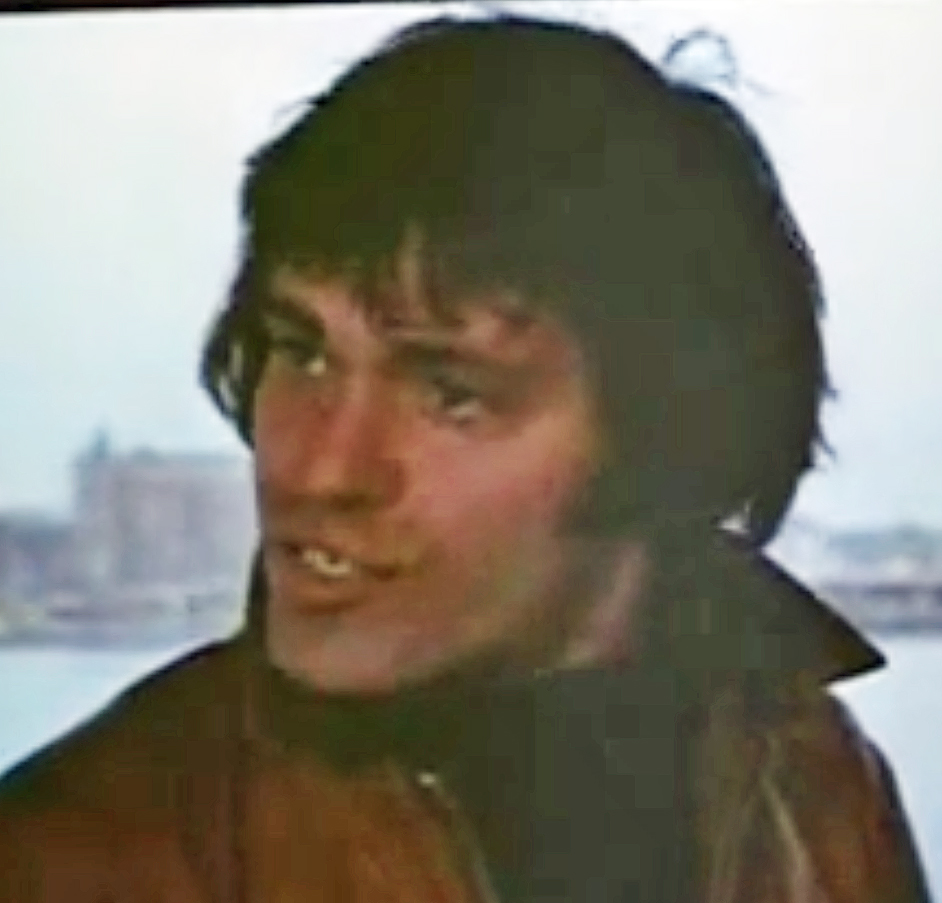
Steven Keats (born Steven Paul Keitz; February 6, 1945 – May 8, 1994) was an American actor who appeared in such films as Death Wish (as Charles Bronson's character's son-in-law), Black Sunday, Hester Street and the Chuck Norris thriller Silent Rage.
Key Information


Early life and education
[edit]Keats was born in the Bronx to Francis (née Rebold) and Daniel David Keitz. His father was born in Copenhagen, Denmark to Polish Jewish parents from Warsaw. His mother was born in New York, also to a Polish Jewish family.[1][2] As a small child his father was the proprietor of a camera store and the family lived on Bryant Avenue in the South Bronx.[3]
He grew up in Canarsie, Brooklyn, New York. At the time of his graduation from Thomas Jefferson High School in 1962 he was living in Bay View Houses, a public housing project.[4] After serving a tour of duty in Vietnam with the United States Air Force from 1965 to 1966, Keats attended the Yale School of Drama in 1969–1970. He is the father of photographer and actor Thatcher Keats and of Shane Keats.[2]
Career
[edit]Keats debuted on Broadway in the second cast of Oh! Calcutta! and appeared in over 80 films and TV shows. He was nominated for an Emmy Award in 1977 for his role as the ruthless, Great Depression-era entrepreneur Jay Blackman, who clawed his way to the top of the "rag trade", or clothing business, in the 1977 miniseries Seventh Avenue. He also portrayed Thomas Edison on the brink of inventing the electric light bulb in the science fiction TV series Voyagers!.
His film career included roles in The Friends of Eddie Coyle (1973), Death Wish (1974), The Gambler (1974), The Gumball Rally (1976), The Last Dinosaur (1977), Black Sunday (1977), The Ivory Ape (1980), Hangar 18 (1980), Silent Rage (1982), Turk 182 (1985), Badge of the Assassin (1985), and the 1982 TV movie of the Norman Mailer book The Executioner's Song.[5]
Keats appeared in the 1975 film Hester Street. Set on New York City's Lower East Side of the 1890s, Keats played Jake Podkovnik (late of Russia), an assimilated "Amerikaner". He played a deranged bomber in the 1974 Kojak episode "Therapy in Dynamite", and guest-starred on an episode of The A-Team, "Harder Than It Looks". He played Bobby Nelson in The Streets of San Francisco season 3 episode "One Chance to Live". He played Ed McClain on Another World and guest-starred as Alf Gresham on All My Children.[5] In 1983 he appeared in the first episode of Automan as Collins. In 1987, in the final season of Hill Street Blues, he played Detective Penzickis. Additional roles included one in Miami Vice in 1987 with "Contempt in Court". He also played TV reporter Jake Baron on the April 6, 1990 episode of MacGyver, titled "Rush to Judgement".
Death
[edit]Keats was found dead in his Manhattan apartment on May 8, 1994. His son said that he died by suicide.[2]
Filmography
[edit]| Year | Title | Role | Notes |
|---|---|---|---|
| 1973 | The Friends of Eddie Coyle | Jackie Brown | |
| 1974 | Death Wish | Jack Toby | |
| 1974 | The Gambler | Howie | |
| 1975 | Hester Street | Jake | |
| 1975 | The Dream Makers | Barry | |
| 1976 | Sky Riders | Rudy | |
| 1976 | The Gumball Rally | Kandinsky - Dodge Team | |
| 1977 | The Last Dinosaur | Chuck Wade | |
| 1977 | Black Sunday | Robert Moshevsky | |
| 1980 | The American Success Company | Rick Duprez | |
| 1980 | Hangar 18 | Paul Bannister | |
| 1982 | Silent Rage | Dr. Philip Spires | |
| 1985 | Turk 182 | Jockamo | |
| 1985 | Badge of the Assassin | Harold Skelton, Defense Attorney | |
| 1989 | The Spring | Mark | |
| 1990 | Eternity | Tax Collector / Harold | |
| 1991 | Shadows and Fog | Hacker's Vigilante #3 (uncredited) |
References
[edit]- ^ "Steven Keats". Ladies' Home Journal. Vol. 94. Family Media, Incorporated. July 1977. pp. 33–35. Retrieved 15 October 2017 – via Google Books.
- ^ a b c "Steven Keats, 48, Film and TV Actor". The New York Times. 18 May 1994. p. B8. Retrieved 15 October 2017.
- ^ United States of America, Bureau of the Census; Washington, D.C.; Seventeenth Census of the United States, 1950; Record Group: Records of the Bureau of the Census, 1790-2007; Record Group Number: 29; Residence Date: 1950; Home in 1950: New York, Bronx, New York; Roll: 2198; Sheet Number: 14; Enumeration District: 3-696, Ancestry.com
- ^ Ancestry.com. U.S., School Yearbooks, 1900-2016 [database on-line]. Lehi, UT, USA: Ancestry.com Operations, Inc., 2010.
- ^ a b Steven Keats at IMDb
External links
[edit]- Steven Keats at IMDb
- Steven Keats at the Internet Off-Broadway Database (archived)
- Obituary, nytimes.com

Steven Keats
View on GrokipediaEarly life and education
Family background and childhood
Steven Keats was born Steven Paul Keitz on February 6, 1945, in the Bronx, New York City.[4] He was the son of Daniel David Keitz and Frances Rebold Keitz.[4] Keats' paternal heritage traced to his father's birth in Copenhagen, Denmark, to Polish Jewish parents from Warsaw, making his father a Danish immigrant to the United States.[5] His mother was born in New York to a Jewish family of Polish descent.[5] The family relocated during his early years to Canarsie, Brooklyn, where Keats grew up in a household influenced by his Jewish immigrant heritage.[2] The working-class neighborhoods of New York City provided a vibrant cultural environment that exposed him to diverse local influences, including the performing arts scene emerging in the city's Jewish communities.[3]Formal education and early training
Steven Keats attended the High School for the Performing Arts in Manhattan, now known as Fiorello H. LaGuardia High School of Music & Art and Performing Arts, where he received foundational training in the performing arts.[2] Graduating from this institution, he honed his skills in acting through its rigorous curriculum focused on dramatic arts, which emphasized practical performance and theatrical techniques.[2] Following high school, Keats committed to a professional path in acting, enrolling at Montclair State College in New Jersey.[2] He subsequently attended the Yale School of Drama from 1969 to 1970, gaining advanced training in classical and contemporary acting methods under esteemed faculty.[6] This period marked the culmination of his formal education, equipping him with the technical proficiency and interpretive depth essential for stage and screen work.[3]Career
Early roles and breakthrough
Following his formal training, Steven Keats entered the professional acting scene in the late 1960s through New York theater, making his Broadway debut in 1970 as part of the second cast of the controversial revue Oh! Calcutta!, where he performed nude sketches alongside established performers.[2] This exposure in the vibrant Off-Broadway and Broadway circuits marked his initial foray into stage work, building on the foundational skills from his education at the High School for Performing Arts and Yale School of Drama.[2][7] Keats transitioned to film in the early 1970s, landing his screen debut as the charismatic but volatile gun runner Jackie Brown in the crime drama The Friends of Eddie Coyle (1973), directed by Peter Yates and based on George V. Higgins' novel.[2] His breakthrough came the following year with the role of Jack Toby, the troubled son-in-law of vigilante Paul Kersey (Charles Bronson), in Michael Winner's Death Wish (1974), a gritty urban thriller that showcased his ability to portray complex, edgy characters and helped establish his reputation in cinema.[2] This performance, following his stage experience, highlighted his versatility amid the era's demand for intense, streetwise supporting players. As a young actor of Jewish immigrant descent from Denmark, Keats navigated potential typecasting risks by embracing diverse roles that ranged from punks to family men. By the mid-1970s, he shifted into more prominent supporting parts, such as the assimilated Russian-Jewish tailor Jake in Joan Micklin Silver's acclaimed Hester Street (1975), opposite Carol Kane, which earned the film an Academy Award nomination for Best Actress and further solidified his transition from minor theater and film gigs to recognized character work.[2][7]Filmography highlights
Steven Keats' film career gained momentum in the 1970s with supporting roles that showcased his ability to portray complex, often morally ambiguous characters in gritty urban dramas. His debut in The Friends of Eddie Coyle (1973), directed by Peter Yates, cast him as Jackie Brown, a volatile young informant entangled in Boston's criminal underbelly alongside Robert Mitchum. The film was lauded for its authentic dialogue and unflinching realism, earning a 98% approval rating on Rotten Tomatoes from contemporary and retrospective reviews, and it marked Keats' entry into Hollywood as a promising character actor capable of capturing the desperation of low-level crooks. This role, drawn from George V. Higgins' novel, helped establish Keats' reputation for naturalistic performances in crime thrillers, influencing his casting in subsequent high-profile projects.[8][9] The following year, Keats appeared in Death Wish (1974), Michael Winner's controversial vigilante action film, where he played Jack Toby, the liberal son-in-law of protagonist Paul Kersey (Charles Bronson), whose family suffers a brutal home invasion. Though a minor role, it provided Keats with exposure in a box-office hit that grossed $22 million domestically against a $3 million budget, becoming one of the year's top earners and launching Bronson's action-hero persona. Critics panned the film's glorification of vigilantism as exploitative, with Vincent Canby noting its sloppy production but acknowledging the emotional weight of the family dynamics, in which Keats' character embodies the urban liberal naivety that contrasts Kersey's transformation. The movie's cultural impact, sparking debates on crime and justice in 1970s America, elevated Keats' visibility, transitioning him from indie debuts to mainstream thrillers and solidifying his versatility in tense ensemble casts.[10][11] A pivotal performance came in Hester Street (1975), Joan Micklin Silver's intimate drama about Jewish immigrants on New York's Lower East Side, where Keats portrayed Jake, an ambitious tailor who rejects his Orthodox wife's traditions in favor of American assimilation. Made on a shoestring $400,000 budget, the black-and-white film earned critical acclaim for its poignant exploration of cultural conflict and gender roles, securing an Academy Award nomination for Best Actress for Carol Kane and an 81% Rotten Tomatoes score. Keats' depiction of Jake as a charming yet selfish anti-hero was highlighted for adding pathos and wit to the narrative, with reviewer Andy Wickesberg praising the ensemble's authenticity in evoking early 20th-century immigrant life. This role represented a career high point, demonstrating Keats' range beyond action genres into period character studies, and contributed to the film's modest commercial success, grossing over $6 million and cementing Silver's reputation as a trailblazing female director. It also broadened Keats' appeal, leading to more diverse opportunities in the late 1970s.[12][13][14] In Black Sunday (1977), John Frankenheimer's suspense thriller adapted from Thomas Harris' novel, Keats took on the role of Robert Moshevsky, a fanatical Palestinian terrorist plotting a blimp-borne attack at the Super Bowl. As the right-hand man to the unstable pilot (Bruce Dern), Keats brought intensity to the ensemble led by Robert Shaw, in a film that blended high-stakes action with geopolitical tension amid post-Munich Olympics fears. Though reviews were mixed—Vincent Canby critiqued the characters as plot devices but commended the strong cast for sustaining suspense—the movie was a moderate success, grossing $15.6 million, and Keats' portrayal of the ideologically driven operative added depth to the antagonists, showcasing his skill in morally complex villainy. This performance further diversified his portfolio, bridging crime dramas and big-budget spectacles, and highlighted his evolution toward more antagonistic figures in the thriller genre.[15] By the 1980s, Keats continued to build on his mid-career momentum with roles in genre films that emphasized his adaptability, often shifting from supporting parts in major releases to more prominent positions in independent and action-oriented projects. In Silent Rage (1982), a sci-fi horror-action hybrid directed by Michael Miller, he played Dr. Philip Spires, a scientist experimenting with super-soldier serums that unleash a rampaging killer (Brian Libby) on a small town, opposed by Sheriff Chuck Norris. The film, blending Frankenstein tropes with martial arts, received middling reviews for its formulaic plot but was noted for its energetic cast, with Keats' ethical doctor providing a cerebral counterpoint to the violence; it grossed $10.5 million, appealing to Norris' growing fanbase and allowing Keats to explore mad-scientist archetypes in low-budget fare. Later in the decade, appearances in Turk 182! (1985) as a federal agent and The American Success Company (1979, released later in some markets) as Rick Duprez underscored his transition to leads in quirky independents, where he tackled satirical takes on ambition and authority, though these received limited critical attention compared to his 1970s work. Overall, these roles reflected Keats' career arc from ensemble player to genre staple, influencing his later television transitions while maintaining a film output focused on character-driven intensity over stardom.Television and stage appearances
Steven Keats began his stage career in New York during the early 1970s, making his Broadway debut in the controversial revue Oh! Calcutta!, appearing in the second cast during its extended run at the Belasco Theatre from 1971 to 1972, contributing to sketches that explored themes of sexuality and human relationships.[16] Later in the decade, Keats performed in off-Broadway revivals, including a 1991 mounting of Raft of the Medusa at the Minetta Lane Theatre, showcasing his range in experimental theater amid the vibrant New York scene.[17] Transitioning to television, Keats sustained his career through a series of guest appearances in crime dramas throughout the 1970s and 1980s, often portraying intense, psychologically complex characters that highlighted his edgy intensity. In 1974, he guest-starred as the deranged bomber Danny Zucco in the Kojak episode "Therapy in Dynamite," a role that involved a therapy group member targeting personal enemies with explosives.[18] He followed this with a tense performance as a wounded hostage-taker in the 1975 Starsky and Hutch episode "Shootout," where his character escalates a diner standoff involving the leads.[19] Keats's television work extended into the 1980s, including a notable 1987 guest spot as informant Jack Rivers in the Miami Vice season four premiere "Contempt of Court," depicting a former mob associate navigating witness protection amid cartel threats. By the early 1990s, he appeared in multiple episodes of Law & Order as defense attorney George Zuckert, such as in the 1993 installment "Virus," bringing a sharp, adversarial presence to courtroom scenes.[20] Keats also demonstrated versatility in historical miniseries and TV movies, balancing his dramatic output with period pieces that allowed for more nuanced characterizations. His portrayal of garment industry entrepreneur Jay Blackman in the 1977 NBC miniseries Seventh Avenue earned him an Emmy nomination for Outstanding Lead Actor in a Limited Series, underscoring his ability to anchor ensemble narratives about ambition and family in early 20th-century New York. Other credits included the frontierswoman saga The Awakening Land (1978), where he played a supporting role in the adaptation of Conrad Richter's novels, and the true-crime biopic The Executioner's Song (1982), as a peripheral figure in Gary Gilmore's story.[2] These roles, spanning crime procedurals to biographical dramas, helped sustain Keats's visibility between film projects in the 1980s and 1990s, reflecting his adaptability across episodic formats and live theater.[1]Personal life
Military service
Steven Keats enlisted in the United States Air Force at the age of 18.[7] Assigned to the Forward Air Controllers unit in Vietnam, his duties involved flying missions to locate enemy positions, directing air strikes against them, and subsequently assessing casualties by flying low over the targeted areas.[7] He later described these experiences as profoundly dehumanizing, stating, "our mission was to fly in search of the enemy, direct our air strikes over them, and then to fly low and count the dead," and coped by "divorcing my humanity" to function like a "robot."[7] The psychological toll was severe, with Keats noting that many in his company later died by suicide, and he considered it a "miracle" that he returned with both mind and body intact.[7] Keats completed a one-year tour of duty from 1965 to 1966 before receiving his discharge and reintegrating into civilian life.[3] Upon returning to New York, where he had grown up and attended the High School for the Performing Arts, the service experience marked a pivotal shift, contributing to his personal growth and resolve to pursue acting more intensely as a means of processing the trauma and finding emotional peace.[7] This period of reflection ultimately propelled him toward formal drama training, reinforcing his commitment to the performing arts.Relationships and later personal challenges
Keats had three marriages, all of which ended in divorce.[2] His first marriage, at age 19 to a Roman Catholic woman, led to a temporary estrangement from his Jewish family, whom he described as viewing the union as a profound betrayal of their cultural values.[7] By 1977, he had experienced two difficult marriages and maintained a close relationship with his two young sons from these unions.[7] Public details on Keats' romantic partnerships remain limited beyond these accounts, with no confirmed long-term relationships documented after his divorces. He was survived by sons Thatcher Keats, a photographer and actor, and Shane Keats.[2] Keats also reconciled with his parents in later years, gaining deeper understanding of his father's own immigrant hardships, which helped him navigate his Jewish heritage despite his self-described role as the family "black sheep."[7] In his later years, Keats grappled with personal challenges stemming from his Vietnam service, where he served as a Forward Air Controller and witnessed significant trauma among peers, many of whom took their own lives.[7] He pursued psychiatric therapy to process these suppressed emotions, crediting it with preserving his mental intactness upon returning home.[7] This therapy, initiated post-military, addressed the psychological toll of his experiences and contributed to his efforts at personal reconciliation.Death and legacy
Circumstances of death
Steven Keats was found dead in his Manhattan apartment on May 8, 1994, at the age of 49.[2][1][4] His death was officially ruled a suicide, with no evidence of foul play indicated in public reports.[3] His son, Thatcher Keats, confirmed the cause of death to the press, stating that Steven had taken his own life.[2] Friends and family members reported that he had been grappling with depression in the years prior, which may have been exacerbated by personal challenges.[4]Posthumous recognition and influence
Following his death on May 8, 1994, Steven Keats received immediate recognition through an obituary in The New York Times on May 18, 1994, which highlighted his versatility as a character actor across film, television, and stage. The piece detailed his range of roles, from the punk informant in The Friends of Eddie Coyle (1973) to the ambitious Jewish immigrant Jake in Hester Street (1975), Charles Bronson's son-in-law in Death Wish (1974), and an Israeli operative in Black Sunday (1977), underscoring his ability to embody diverse ethnic and cultural figures with authenticity.[2] In the decades since, Keats' performances have garnered retrospective appreciation, particularly for his contributions to 1970s cinema portraying working-class and immigrant characters. The film Hester Street, featuring Keats opposite Carol Kane's Oscar-nominated portrayal of Gitl, has been reevaluated for its depiction of Jewish assimilation struggles on New York's Lower East Side, influencing subsequent representations of Jewish and immigrant experiences in American media by emphasizing cultural tensions and identity shifts with nuance and realism.[21] This enduring impact is evidenced by the film's 4K restoration from the original camera negative, presented by Cohen Media Group, which premiered in the Cannes Classics section of the 73rd Cannes Film Festival in 2020, nearly 25 years after Keats' death. The restoration has since screened at numerous festivals, including the Virginia Festival of Jewish Film in 2022 and the New York Film Festival's Revivals section in 2025, renewing interest in Keats' chameleon-like ability to capture the complexities of marginalized figures in post-Vietnam-era storytelling.[22][23][24] In 2025, for the film's 50th anniversary, restored screenings continued at events such as the New York Jewish Film Festival, further highlighting its lasting significance.[25]Filmography
Film roles
Steven Keats appeared in over a dozen feature films during his acting career, often portraying streetwise or supporting characters in crime dramas, thrillers, and comedies. His film roles spanned from gritty urban tales in the 1970s to more varied genres in the 1980s. Below is a chronological overview of his major feature film appearances.| Year | Title | Role | Description |
|---|---|---|---|
| 1973 | The Friends of Eddie Coyle | Jackie Brown | In this Boston-set crime drama directed by Peter Yates, Keats plays Jackie Brown, a young informant entangled in the local underworld's gun-running and robbery schemes, providing key testimony that unravels the criminal network.[26] |
| 1974 | Death Wish | Jack Toby | Keats portrayed Jack Toby, one of the violent muggers who brutally attack the family of architect Paul Kersey (Charles Bronson), igniting the protagonist's descent into vigilantism in Michael Winner's urban revenge thriller.[27] |
| 1974 | The Gambler | Howie | As Howie, a fellow student and gambler under the influence of a compulsive betting professor (James Caan), Keats's character navigates the escalating debts and high-stakes poker games that threaten their futures in Karel Reisz's character study. |
| 1975 | Hester Street | Jake Putkovsky | In Joan Micklin Silver's immigrant drama set in 1890s New York, Keats plays Jake Putkovsky, an ambitious Jewish tailor who pressures his wife to abandon her Orthodox traditions for American assimilation, highlighting cultural clashes in the Lower East Side tenements. |
| 1976 | Sky Riders | Rudy | In Douglas Hickox's action thriller, Keats plays Rudy, a terrorist involved in a kidnapping plot thwarted by hang glider commandos led by James Coburn.[28] |
| 1976 | The Gumball Rally | Kandinsky - Dodge Team | In this comedic road race film inspired by real events, Keats plays Kandinsky, a participant in the unsanctioned cross-country competition from New York to California, emphasizing chaotic fun and rule-breaking antics. |
| 1977 | Black Sunday | Robert Moshevsky | As terrorist operative Robert Moshevsky in John Frankenheimer's thriller, Keats's character aids in a plot to detonate a blimp over the Super Bowl, targeting American spectators in a high-tension conspiracy involving Palestinian militants.[29] |
| 1977 | The Last Dinosaur | Chuck Wade | Keats portrayed Chuck Wade, a tough guide and hunter accompanying an oil tycoon on an expedition to a hidden Arctic world populated by prehistoric creatures, in this Japanese-American co-production blending adventure and monster elements. |
| 1979 | The American Success Company | Rick Duprez | Keats's role as Rick Duprez involves a scheming family member in this dark satire on corporate greed, where the protagonist (Jeff Bridges) takes over his in-laws' artificial Christmas tree business through manipulation and murder. |
| 1980 | Hangar 18 | Paul Bannister | In this UFO conspiracy thriller, Keats plays government agent Paul Bannister, who uncovers evidence of a crashed alien spacecraft hidden by authorities at a secret military base, fueling public paranoia and cover-up revelations. |
| 1982 | Silent Rage | Dr. Philip Spires | Keats depicted Dr. Philip Spires, a psychiatrist treating a violent, scientifically enhanced patient at a rural hospital, in Michael Miller's horror film blending slasher elements with ethical dilemmas in medical experimentation. |
| 1985 | Turk 182! | Jockomo | In Bob Clark's comedy about a firefighter's brother (Timothy Hutton) becoming a graffiti vigilante, Keats appears in a supporting role as Jockomo, contributing to the film's satirical take on New York City's bureaucratic corruption. |
| 1989 | The Spring | Mark | Keats took a lead role as Mark, a man grappling with personal loss and redemption in this independent drama exploring themes of grief and renewal in a small-town setting. |
| 1990 | Eternity | Tax Collector / Harold | In this low-budget comedy-fantasy, Keats played dual roles as a tax collector and Harold, a hapless inventor whose botched experiment leads to time-travel mishaps and romantic entanglements across eras. |
Television roles
Steven Keats amassed dozens of guest appearances on television, predominantly in crime dramas and procedural series, showcasing his range in supporting roles from villains to attorneys.[1] His television credits, presented chronologically, include the following notable examples:- Seventh Avenue (1977): As Jay Blackman in this miniseries about the garment industry, earning an Emmy nomination for Outstanding Lead Actor in a Limited Series.[30]
- Kojak (1974): In the episode "Therapy in Dynamite" (aired March 14, 1974), Keats portrayed Danny Zucco, a psychopathic delivery driver who plants bombs to eliminate the personal enemies of his therapy group members.[18]
- Starsky & Hutch (1975): Keats appeared in "Shootout" (Season 1, Episode 14; aired December 17, 1975) as Joey Martin, a hitman involved in a tense restaurant hostage standoff with the protagonists.[19]
- The Executioner's Song (1982): As Larry Samuels in this two-part miniseries (aired November 28–29, 1982), Keats played a supporting role in the dramatization of convicted murderer Gary Gilmore's final days and execution.[31]
- Miami Vice (1987): Keats guest-starred as Jack Rivers in "Contempt of Court" (Season 4, Episode 1; aired September 25, 1987), depicting a mob accountant turned informant whose testimony against a crime boss endangers his life.
- Law & Order (1990–1993): Recurring as Defense Attorney George Zuckert across multiple episodes, including "The Torrents of Greed, Part 1" and "Part 2" (Season 1, Episodes 15–16; aired February 6 and 13, 1990) and "Virus" (Season 3, Episode 18; aired March 2, 1993), where he represented clients in high-stakes legal battles involving corruption and cybercrimes.[20]