


Community hub
0 subscribers8 pages, 0 posts
Recent from talks
All channels
Be the first to start a discussion here.
Be the first to start a discussion here.
Be the first to start a discussion here.
Be the first to start a discussion here.
Contribute something
Welcome to the community hub built to collect knowledge and have discussions related to Sunstone.
Nothing was collected or created yet.
Sunstone
View on Wikipediafrom Wikipedia
Not found
Sunstone
View on Grokipediafrom Grokipedia
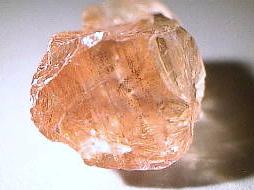
Sunstone is a gem-quality variety of the mineral feldspar, primarily oligoclase (a plagioclase feldspar), renowned for its aventurescent schiller effect—a sparkling or flashing play of light caused by the reflection from oriented, plate-like inclusions of hematite, goethite, or metallic copper within the crystal structure.[1] This optical phenomenon, often evoking the shimmer of sunlight on water, typically appears in translucent to transparent stones with base colors ranging from colorless and yellow to orange, red, and occasionally green or bicolor patterns.[2] With a Mohs hardness of 6 to 6.5, sunstone is suitable for jewelry such as cabochons, faceted gems, beads, and carvings, though it requires careful cutting to maximize its display.[3]
The formation of sunstone occurs in igneous rocks, particularly as phenocrysts within slowly cooling basaltic lavas or syenites, where the feldspar crystals develop and trap metallic inclusions that align along cleavage planes during crystallization.[2] In unique cases, such as Oregon sunstone, copper nanoparticles precipitate through diffusion in the magma at high temperatures (around 1000°C for at least 100 days), creating distinctive color zoning like the "watermelon" effect with red cores, green rims, and clear edges.[4] This process, spanning millions of years in plutonic environments or rapid cooling in volcanic flows, results in concentrations as low as 20 parts per million of copper for visible color.[4] Additional optical effects include pleochroism, where the stone shifts from red to green under polarized light due to anisotropic copper particles.[4]
Sunstone deposits are found worldwide in regions of ancient igneous activity, with notable sources including Norway (Kragero area, historically prized for reddish varieties), Russia (near Lake Baikal), India (Tamil Nadu), Tanzania, Canada (Labrador and Ontario), and the United States (particularly Oregon's Ponderosa Mine in Lake and Harney Counties, the only verified gem-quality copper-bearing locality).[1][2] Oregon sunstone stands out for its vibrant hues and has been the state gem since 1987, with commercial mining initiated in the early 1900s by Tiffany & Co. after Native American use for tools and ornaments.[2]
Historically, sunstone has been valued since ancient times for its solar symbolism, appearing in Viking navigation lore as a potential polarizing crystal (though unproven) and in Roman and medieval jewelry for its warmth and vitality associations.[3] Today, it is prized in modern jewelry design for its dynamic sparkle, with Oregon varieties gaining popularity for their rare colors and untreated authenticity, distinguishing them from diffusion-treated imitations.[4]