


Community hub
Recent from talks
Contribute something
Nothing was collected or created yet.
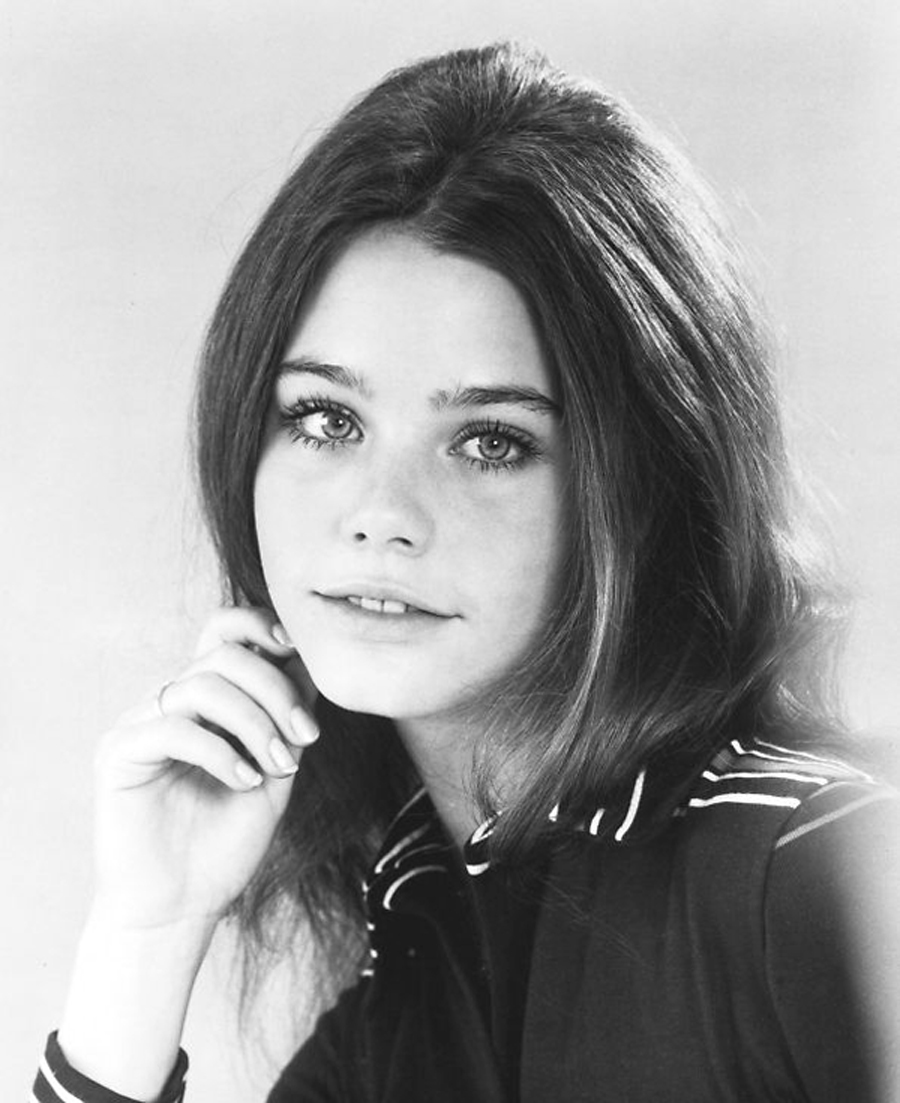
Susan Dey
View on Wikipedia
Susan Hallock Dey (born December 10, 1952)[1] is an American retired actress, known for her television roles as Laurie Partridge on the sitcom The Partridge Family from 1970 to 1974, and as Grace Van Owen on the drama series L.A. Law from 1986 to 1992. A three-time Emmy Award nominee and six-time Golden Globe Award nominee, she won the Golden Globe for Best Actress in a Drama Series for L.A. Law in 1988.
Key Information


Early life and education
[edit]Dey was born in Pekin, Illinois, to Ruth Pyle (née Doremus) Dey, a nurse, and Robert Smith Dey.[2] Ruth died in 1961, when Susan was eight.[2]
Dey attended Columbus Elementary School in Thornwood, New York. She later moved to Mount Kisco, New York, where she graduated from Fox Lane High School in 1970.[3]
Career
[edit]
Dey began her professional life as a model. Her first modeling break was the cover photo of a booklet by Pursettes tampons on first facts of menstruation for young girls, "Getting to Know Yourself."[citation needed]
She was cast as Laurie Partridge in the television series The Partridge Family from 1970 to 1974.[4][5] She was 17 when she won the part, and had no previous acting experience. She briefly reprised that role for the Hanna-Barbera animated series, Partridge Family 2200 A.D. for two episodes, before being replaced by Sherry Alberoni. She returned to weekly network television in 1977 as the co-star of the short-lived sitcom Loves Me, Loves Me Not.[4]
Dey's first film role was as a passenger in the 1972 airline hijack movie Skyjacked, starring Charlton Heston.[6] In a 1977 made-for-television movie, Mary Jane Harper Cried Last Night, she portrayed a disturbed young mother with serious psychological problems who begins to take them out on her toddler daughter.[4][7] Also in 1977, Dey starred opposite William Katt in First Love, directed by Joan Darling.[4][8] She also appeared in the Barnaby Jones episode "Testament of Power" (1977).
Dey co-starred with Albert Finney in the 1981 science-fiction film Looker, written and directed by Michael Crichton.[4] She had a leading role in 1986's Echo Park, as a struggling waitress-actress who takes a job as a stripper delivering singing telegrams.[4][9] She starred on L.A. Law from 1986 through 1992 as Los Angeles County deputy district attorney Grace Van Owen, who later became a judge.[4] She won a Golden Globe Award as Actress in a Leading Role – Drama Series for the role in 1988.[10] She was also nominated in each of the following four years. She was also nominated for the Emmy Award for Outstanding Lead Actress in a Drama Series in 1987, 1988, and 1989.[11]

She hosted a 1992 episode of Saturday Night Live. Later that year, she co-starred in the sitcom Love & War.[4] Although the show ran until 1995, Dey was replaced in 1993 by Annie Potts because producers reportedly felt she had "no chemistry" with co-star Jay Thomas.[12] In 1993, Dey produced and starred in Lies & Lullabies (later released on DVD as Sad Inheritance), where she played a pregnant cocaine addict.[13]
Dey was mentioned in Shirley Jones's memoir as the only cast member who "consistently refused" to take part in Partridge Family reunions.[14]
In 1972, Dey was credited as the author of a book titled Susan Dey's Secrets on Boys, Beauty and Popularity.[15]
Personal life
[edit]During the production of The Partridge Family, Dey had romantic feelings for co-star David Cassidy. They eventually pursued a relationship when the show ended, but Cassidy broke it off as he did not share her feelings. In 1994, Cassidy disclosed details of his relationship with Dey in his autobiography C'mon, Get Happy ... Fear and Loathing on the Partridge Family Bus; he presumed this led to her severing contact with him.[16]
Dey was married to Leonard "Lenny" Hirshan from 1976 to 1981.[17] They have one daughter. Dey has been married to television producer Bernard Sofronski since 1988.[18]
She serves as a board member of the Rape Treatment Center at UCLA Medical Center, and co-narrated a documentary on campus rape with former L.A. Law co-star Corbin Bernsen.[19] She suffered from anorexia during the run of The Partridge Family.[20]
Filmography
[edit]Film
[edit]| Year | Title | Role | Notes |
|---|---|---|---|
| 1972 | The Candidate | Girl in Crowd | |
| 1972 | Skyjacked | Elly Brewster | |
| 1977 | First Love | Caroline | |
| 1981 | Looker | Cindy Fairmont | |
| 1986 | Echo Park | May | |
| 1987 | The Trouble with Dick | Diane | |
| 1998 | Avenged | Margo | |
| 2003 | Rain | Dianna Davis |
Television
[edit]| Year | Title | Role | Notes |
|---|---|---|---|
| 1970–74 | The Partridge Family | Laurie Partridge | 96 episodes Nominated—Golden Globe Award for Best Supporting Actress – Series, Miniseries or Television Film |
| 1973 | Circle of Fear | Peggy | Episode: "Doorway to Death" |
| 1973 | Goober and the Ghost Chasers | Laurie Partridge (voice) | 8 episodes |
| 1973 | Terror on the Beach | DeeDee Glynn | Television film |
| 1974 | Partridge Family 2200 A.D. | Laurie Partridge (voice) | 2 episodes |
| 1975 | The Rookies | Angel | Episode: "Angel" |
| 1975 | Hawaii Five-O | Susan Bradshaw | Episode: "Target? the Lady" |
| 1975 | S.W.A.T. | Janice | 2 episodes |
| 1975 | Cage Without a Key | Valerie Smith | Television film |
| 1976 | The Quest | Charlotte Rosee | Episode: "The Captive" |
| 1976 | The Streets of San Francisco | Barbara Ross | Episode: "The Thrill Killers" (filmed as a two-hour episode; aired in two parts) |
| 1977 | Mary Jane Harper Cried Last Night | Rowena Harper | Television film |
| 1977 | Loves Me, Loves Me Not | Jane Benson | 6 episodes |
| 1977 | Barnaby Jones | Linda Jason | Episode: "Testament of Power" |
| 1978 | Little Women | Jo March | Television miniseries |
| 1980 | The Comeback Kid | Megan Barrett | Television film |
| 1983 | Sunset Limousine | Julie Preston | Television film |
| 1983–84 | Emerald Point N.A.S. | Celia Mallory | 22 episodes |
| 1983 | Malibu | Linda Harvey | Television film |
| 1984 | Love Leads the Way | Beth | Television film |
| 1986–92 | L.A. Law | Grace Van Owen | 110 episodes Golden Globe Award for Best Actress – Television Series Drama Nominated—Golden Globe Award for Best Actress – Television Series Drama (1989–92) Nominated—Primetime Emmy Award for Outstanding Lead Actress in a Drama Series (1987–89) Nominated—Viewers for Quality Television Award for Best Actress in a Quality Drama Series |
| 1987 | Angel in Green | ||
| 1992–93 | Love & War | Wallis "Wally" Porter | 23 episodes |
| 1992 | Bed of Lies | Vicky Daniel | Television film |
| 1993 | Lies and Lullabies | Christina Kinsey | Television film (aka Sad Inheritance) |
| 1994 | Beyond Betrayal | Joanna/Emily Doyle | Television film |
| 1995 | Deadly Love | Rebecca Barnes | Television film |
| 1995 | Blue River | Mrs. Sellers | Television film |
| 1997 | Bridge of Time | Madeleine Armstrong | Television film |
| 1999 | Family Law | Karen Hershey | Episode: "Holt vs. Holt" |
| 2002 | L.A. Law: The Movie | Grace Van Owen | Television film |
| 2002 | Disappearance | Patty Henley | Television film |
| 2004 | Third Watch | Dr. Breene | 2 episodes |
References
[edit]- ^ Green, Joseph (1994). The Partridge Family Album. Harper Perennial. pp. 10, 306. ISBN 9780060950750.
- ^ a b "Obituary". The New York Times. July 21, 1961.
- ^ Reynolds, William Joseph (September 4, 2010). "A Look Back: Fox Lane High Graduate Susan Dey". Bedford-Katonah Patch. Archived from the original on July 20, 2011.
- ^ a b c d e f g h "Susan Dey". TV Guide. TV Guide. Retrieved October 16, 2019.
- ^ "The Partridge Family (TV Show) 1970". TV Guide. TV Guide. Retrieved August 18, 2018.
- ^ Soares, Emily. "Skyjacked (1972)". Turner Classic Movies. Turner Classic Movies (TCM). Retrieved August 16, 2018.
- ^ "Mary Jane Harper Cried Last Night (1977)". Turner Classic Movies. Turner Classic Movies (TCM). Archived from the original on March 12, 2018. Retrieved August 16, 2018.
- ^ Maslin, Janet (November 5, 1977). "First Love, Film of the 70's, Misogynistic on Ugly Affair". The New York Times.
- ^ Ebert, Roger (April 25, 1986). "Echo Park (1986)". RogerEbert.com. Chicago Sun-Times.
- ^ "Best Performance by an Actress In A Television Series - Drama (1988)". GoldenGlobes.com. Golden Globe Awards. Archived from the original on March 24, 2019. Retrieved August 16, 2018.
- ^ "39th Emmy Awards Nominees and Winners : OUTSTANDING LEAD ACTRESS IN A DRAMA SERIES - 1987". Emmys.com. Emmy Awards. Retrieved January 31, 2019.
- ^ The Complete Directory to Prime Time Network and Cable TV Shows 1946-Present Ballantine Books. 2003. p. 705. 0-345-45542-8
- ^ Scott, Tony (March 11, 1993). "ABC Sunday Night Movie Lies and Lullabies". Variety. Variety.
- ^ Nguyen, Vi-An (July 29, 2013). "7 Surprising Secrets of the Partridge Family Cast from Shirley Jones's Memoir". Parade.com. Parade Publications. Archived from the original on May 12, 2015. Retrieved April 29, 2015.
- ^ Dey, Susan (May 10, 1972). Susan Dey's secrets on boys, beauty, & popularity. Scholastic Book Service.
- ^ "DAVID CASSIDY AND SUSAN DEY: INSIDE AN UNREQUITED LOVE ON 'THE PARTRIDGE FAMILY' BUS". Inquisitr. 2017. Archived from the original on November 21, 2017. Retrieved November 21, 2017.
- ^ "Susan Dey". Archived from the original on September 2, 2013.
- ^ Associated Press (February 23, 1988). "Susan Dey ties knot with movie executive". St. Joseph Gazette. p. 8A.
- ^ Campus Rape. Rape Treatment Center, Santa Monica Hospital Medical Center. 1990. OCLC 21500123.
- ^ Mathews, Jay (October 5, 1989). "SUSAN DEY, LIGHT-YEARS FROM THE CHILD STAR". Washington Post. Retrieved January 2, 2020.
Sources
[edit]- Terrace, Vincent (1985). Encyclopedia of Television Series, Pilots and Specials: 1974–1984. New York: New York Zoetrope. ISBN 978-0-918432-61-2. Retrieved October 14, 2011.
External links
[edit]
| International | |
|---|---|
| National | |
| Artists | |
| People | |
| Other | |

Susan Dey
View on GrokipediaSusan Hallock Dey (born December 10, 1952) is an American retired actress recognized primarily for her television roles as the idealistic eldest daughter Laurie Partridge in the sitcom The Partridge Family (1970–1974) and as the ambitious deputy district attorney Grace Van Owen in the legal drama L.A. Law (1986–1992).[1][2]
Dey's breakthrough came with The Partridge Family, where she portrayed a teenager navigating family dynamics and budding romance amid the show's musical performances, contributing to its status as a cultural staple of 1970s television.[1] Transitioning to more complex characters, her portrayal of Grace Van Owen earned critical acclaim for depicting professional ambition and personal entanglements in a high-stakes legal environment, spanning over 170 episodes.[1]
Among her achievements, Dey received three Primetime Emmy nominations for Outstanding Lead Actress in a Drama Series and six Golden Globe nominations, winning the latter's Best Actress in a Television Series – Drama award in 1988 for L.A. Law.[3][4] Her career also included film appearances, such as in Skyjacked (1972), but television defined her legacy, after which she largely withdrew from public life following her retirement.[1]
Early Life
Birth and Family
Susan Hallock Dey was born on December 10, 1952, in Pekin, Illinois.[5][2] Her parents were Robert Smith Dey, a newspaper editor, and Ruth Pyle Dey (née Doremus), a nurse.[6][7] Dey's mother died of pneumonia when she was eight years old, after which her father raised her.[2][8]Education and Early Interests
Dey attended Columbus Elementary School in Thornwood, New York, during her early years.[9] Following her family's relocation to Mount Kisco, New York, she completed her secondary education at Fox Lane High School, from which she graduated in 1970.[7][10] Before transitioning to acting, Dey's primary early interest lay in modeling, which she began as a teenager with no prior professional experience in performance.[11] This pursuit was sparked by her stepmother, Gail, who, inspired by an article on fashion modeling in Seventeen magazine, submitted photographs of Dey and her sister to a modeling agency.[12] The endeavor proved successful, establishing Dey in the field and ultimately facilitating her entry into television at age 17.[13]Career
Pre-Acting Modeling and Initial Forays
Susan Dey commenced her professional career in modeling at age 15 in 1967, after her stepmother mailed her photograph to a New York modeling agency. Her breakthrough assignment was posing for the cover of a Pursettes tampon booklet titled First Facts About Menstruation. She subsequently appeared in advertisements for Avon cosmetics and featured in spreads for Seventeen magazine, showcasing her in various teen fashion contexts.[14] In her initial two years as a model, Dey traveled for assignments to destinations such as Montréal, the Virgin Islands, Florida, Puerto Rico, and Washington, D.C., accumulating experience in commercial print work. Her modeling tenure proved brief, however, spanning only from approximately 1967 to 1969. Lacking any acting background or expressed interest in performance, she transitioned abruptly when Screen Gems executives, reviewing modeling portfolios, selected her for an audition that secured her debut role in 1970.[2][15]The Partridge Family Era (1970–1974)
At age 17, Susan Dey landed the role of Laurie Partridge, the eldest daughter and voice of youthful idealism in the family band, on the ABC sitcom The Partridge Family, which premiered on September 25, 1970.[16][17] The series followed widowed mother Shirley Partridge and her children as they pursued musical fame from their California home, blending sitcom humor with light musical performances.[16] Dey, transitioning from modeling with minimal acting experience, brought a poised, relatable quality to Laurie, a 16-year-old character focused on social causes like environmentalism and animal rights, often mediating family dynamics.[17][18] The show ran for four seasons, producing 96 half-hour episodes that aired weekly until its finale on March 23, 1974.[19] Dey appeared in every installment, portraying Laurie as the tambourine-playing, keyboard-contributing band member who balanced teenage angst with moral clarity, serving as a role model for young female viewers.[19][18] Her earnest performance garnered critical notice, earning a nomination for Best Supporting Actress in a Series at the 1973 Golden Globe Awards.[4] Behind the scenes, Dey developed a personal crush on co-star David Cassidy, who played her brother Keith, spanning the production's duration despite their sibling roles.[20] The chemistry contributed to the show's appeal, though Dey's limited prior experience highlighted her rapid adaptation to television demands, including scripted musical segments where the cast mimed performances backed by studio musicians.[20] The series' success, peaking in the top 20 Nielsen ratings during its early seasons, solidified Dey's image as wholesome teen stardom.[19]Post-Partridge Transition and Film Work (1970s–1980s)
Following the end of The Partridge Family in 1974, Susan Dey actively sought to transition away from her teenage persona by selecting roles emphasizing adult themes, emotional complexity, and independence, aiming to demonstrate versatility beyond family-oriented sitcoms.[21] This shift involved guest appearances on action-oriented series like S.W.A.T. in 1975 and a pivot to made-for-television films that explored darker or more realistic narratives, such as Cage Without a Key (1975), where she portrayed a rebellious juvenile delinquent entangled in crime and prison life.[22] Her efforts reflected a deliberate strategy to avoid typecasting as the wholesome Laurie Partridge, though early post-series projects often still leveraged her youthful appeal while testing dramatic boundaries.[23] Dey's first regular television series after The Partridge Family was the CBS sitcom Loves Me, Loves Me Not (1977), in which she played Jane Benson, a schoolteacher tentatively exploring romance with a reporter; the show aired six episodes before cancellation, highlighting her attempt to anchor a light romantic comedy as a lead in her early twenties.[24] That same year, she took on heavier dramatic roles in TV movies like Mary Jane Harper Cried Last Night, depicting a mother grappling with postpartum psychosis and child custody battles, and secured her first leading role in a feature film with First Love, a coming-of-age romantic drama opposite William Katt that grossed modestly but earned positive notices for her portrayal of a college student navigating first love and abortion.[22] [25] Into the 1980s, Dey continued blending television films with sporadic theatrical releases to build credibility in genre work. Notable TV movies included The Comeback Kid (1980), where she starred as a young widow rebuilding her life after tragedy, and Malibu (1983), an ensemble miniseries adaptation of a beach novel featuring her as an aspiring actress.[22] Her second major film, Looker (1981), cast her as Cindy Fairmont, a model targeted in a sci-fi thriller involving high-tech assassinations and corporate intrigue, directed by and co-starring Albert Brooks; the film received mixed reviews but showcased Dey's ability to handle satirical elements and physical action.[26] Later, Echo Park (1986), an independent drama, saw her as May, a single mother in a Los Angeles ensemble navigating relationships and aspirations, marking a return to character-driven cinema amid her growing television prominence.[25] These projects, while not always commercial hits, underscored her persistence in diversifying from sitcom roots, with box office for Looker totaling approximately $3 million domestically against a modest budget.[27]L.A. Law and Peak Television Success (1986–1992)
Susan Dey portrayed Grace Van Owen, a deputy district attorney, on the NBC legal drama L.A. Law from its premiere on September 15, 1986, through 1992, appearing in 126 episodes.[28][29] Her character worked at the fictional Los Angeles law firm McKenzie, Brackman, Chaney and Kuzak, handling high-profile cases while navigating personal relationships, including marriages and a judgeship transition by the series' later seasons.[1] The role marked Dey's successful shift to mature, dramatic performances, contrasting her earlier family sitcom work.[21] L.A. Law, created by Steven Bochco and Terry Louise Fisher, blended serialized storytelling with episodic legal proceedings, earning praise for its innovative format and social issue explorations.[30] Dey's Grace Van Owen emerged as a central figure, embodying a poised, ambitious prosecutor whose arcs, such as romantic entanglements with firm partners, drove key narratives and boosted the show's appeal.[31] The series achieved strong viewership, consistently ranking among NBC's top programs during its early years, contributing to Dey's elevated status in television.[30] Dey's performance garnered significant recognition, including a Golden Globe Award for Best Actress in a Television Series – Drama in 1988, presented at the 45th ceremony on January 23, 1988.[32][4] She received additional Golden Globe nominations in 1991 and 1992 for the role.[3] Furthermore, Dey earned three Primetime Emmy nominations for Outstanding Lead Actress in a Drama Series during this period, underscoring her critical acclaim.[9] These honors highlighted L.A. Law as the pinnacle of her on-screen career, with the show's ensemble dynamics and her character's evolution solidifying her as a leading television actress.[33] Dey departed the series in 1992 following the resolution of Grace Van Owen's storyline, which included her appointment as a judge, allowing her to pursue other opportunities amid the show's continued run until 1994.[31][30] This era represented her most commercially and critically successful television phase, with L.A. Law's format influencing subsequent legal dramas.[21]Later Roles, Production, and Retirement (1990s–2000s)
Following the conclusion of L.A. Law in 1992, Dey took the lead role of Charlotte "Charlie" Hines in the CBS sitcom Love & War, which aired from September 1992 to February 1993 for one season before the character was recast.[21] In 1993, she produced and starred as Stephanie "Steve" Koontz in the CBS television film Lies and Lullabies (also known as Sad Inheritance), a drama addressing fetal alcohol syndrome based on real events. The project marked her primary foray into production, though she did not pursue extensive producing credits thereafter.[1] Dey continued with select television films in the mid-1990s, including portraying Mia Farrow in the NBC biopic Love and Betrayal: The Mia Farrow Story in 1995, which depicted Farrow's relationship with Woody Allen and drew mixed reviews for its handling of sensitive personal details.[34] Her acting appearances became less frequent by the late 1990s, with roles in made-for-TV movies such as Disappearance (2002) as Patty Henley and Rain (2001) as Diane Davis, both low-budget thrillers that received limited distribution and critical attention.[35] Dey's final onscreen roles came in 2004 with two episodes of the NBC drama Third Watch, where she played Dr. Breene, a psychologist counseling first responders after a traumatic event.[21] [36] She has not appeared in acting projects since, effectively retiring from the industry to maintain a private life focused on family and personal interests, citing a desire for new challenges beyond repeating established patterns in her career.[37] This withdrawal followed a pattern of selective engagements post-L.A. Law, prioritizing quality over quantity amid shifting television landscapes.[11]Awards and Accolades
Emmy Nominations and Golden Globe Win
Susan Dey's performance as Grace Van Owen on L.A. Law garnered critical acclaim, leading to three consecutive Primetime Emmy Award nominations for Outstanding Lead Actress in a Drama Series. These nominations occurred in 1987 for the show's inaugural season, in 1988 for the second season, and in 1989 for the third season, recognizing her nuanced depiction of the ambitious district attorney.[38][39][40] Despite the recognition, she did not secure an Emmy win in any of these years. In addition to the Emmy nods, Dey achieved a major accolade with her Golden Globe Award victory. At the 45th Golden Globe Awards ceremony on January 23, 1988, she won Best Actress in a Television Series – Drama for L.A. Law, honoring her work in the 1987 television season.[4] This win highlighted her transition from family-oriented roles to more complex dramatic characters, distinguishing her among peers in the category. Dey received further Golden Globe nominations in subsequent years, including 1991 and 1992, but the 1988 triumph remains her sole win in the awards' history for this series.[4]Other Recognitions
In 2004, Dey received the TV Land Award for Favorite "Teen Dream" – Female, honoring her iconic role as Laurie Partridge on The Partridge Family.[3][41] This accolade highlighted her status as a quintessential teen idol of 1970s television, distinct from competitive acting honors. She was also nominated in 2003 for the TV Land Award in the Quintessential Non-Comic (Leading, Supporting or Guest Role in a Comedy Series) category for the same series.[3] Further recognizing the ensemble dynamic of The Partridge Family, Dey shared a 2006 TV Land Award nomination for Favorite Singing Siblings with her castmates.[3] These cable network tributes, presented annually from 2003 to 2014, celebrated nostalgic pop culture figures rather than contemporary performance metrics.Personal Life
Marriages and Children
Susan Dey married talent agent Leonard Hirshan in 1976.[5] The couple divorced in 1981.[5] They had one daughter, Sara Dey-Hirshan, born in November 1978.[42] Dey married television producer Bernard Sofronski on February 20, 1988.[5] The marriage has endured as of the latest public records, with no children reported from this union.[43]Health Challenges and Privacy Choices
In the early 1970s, during her tenure on The Partridge Family, Dey developed anorexia nervosa, restricting her diet primarily to carrots, which led to significant weight loss, amenorrhea, and visible physical changes such as orange-tinted skin noted by co-star David Cassidy.[44][45] This eating disorder persisted into bulimia, contributing to her malnourishment and impacting her health amid the pressures of teen stardom.[45][46] By the early 1990s, Dey faced alcoholism, which tabloid publications exposed without her prior consent, prompting her to publicly acknowledge the issue in a 1993 Parade magazine interview where she discussed seeking sobriety.[47][21] These experiences underscored her preference for shielding personal struggles from public scrutiny, as the unauthorized revelations intensified her aversion to media intrusion. Following her departure from acting in the late 1990s, Dey opted for a reclusive lifestyle, residing in upstate New York and avoiding interviews or public appearances to safeguard her privacy and family life.[11][48] This deliberate withdrawal from Hollywood, maintained into her 70s, reflects a consistent prioritization of personal autonomy over celebrity obligations, with no verified reports of further health disclosures.[11]Reception and Legacy
Public Image and Cultural Impact
Susan Dey's public image emerged as that of an archetypal wholesome teen idol through her portrayal of Laurie Partridge on The Partridge Family from 1970 to 1974, where she embodied the intelligent, morally grounded eldest daughter in a fictional musical family navigating fame and everyday challenges. This role positioned her alongside contemporaries like Maureen McCormick and Marie Osmond in teen magazines, fostering a fanbase drawn to her poised demeanor and natural appeal amid the era's youth culture.[49] The series' cultural footprint, including the No. 1 Billboard Hot 100 hit "I Think I Love You" released on October 31, 1970, amplified her visibility, with the Partridge family's vibrant tour bus becoming an enduring symbol of 1970s family sitcom escapism that influenced subsequent ensemble casts in television. Dey's transition to L.A. Law from 1986 to 1992 recast her as Grace Van Owen, a driven deputy district attorney whose assertive courtroom presence contributed to the show's pioneering depiction of professional women, earning her a 1988 Golden Globe for Best Actress in a Drama Series and helping elevate legal procedurals' focus on gender dynamics in the workplace.[50] Her cultural impact lies in bridging teen entertainment with adult-oriented prestige TV, demonstrating versatility that challenged typecasting for former child stars and inspired later actresses in transitioning from idol status to substantive roles. Post-1992, Dey cultivated a reclusive public persona, prioritizing family over celebrity after her daughter's birth in 1993, which underscored a deliberate retreat from media scrutiny and contrasted sharply with her earlier exposure, as evidenced by her absence from Partridge Family reunions and limited interviews.[11][51]Professional Criticisms and Career Challenges
Dey's transition from child stardom on The Partridge Family (1970–1974) presented challenges typical of former teen actors, including efforts to overcome typecasting as the wholesome Laurie Partridge and demonstrate dramatic range in adult roles. After the series ended, she actively sought to distance herself from her innocent image, which had defined her early career, leading to a period of varied but less prominent work before her breakthrough on L.A. Law.[11] During her time on The Partridge Family, Dey developed anorexia, a personal health struggle that impacted her physically and emotionally amid the pressures of sudden fame as a teenager with no prior acting experience. This eating disorder, which she later discussed publicly, reflected broader challenges for young performers navigating industry expectations and public scrutiny, though it did not result in professional derailment at the time.[36] Professional critiques of Dey's performances were sparse and generally tied to the constraints of her roles rather than her abilities; for instance, some observers noted the formulaic nature of legal dramas like L.A. Law (1986–1992), where her portrayal of Grace Van Owen emphasized procedural competence over deep character exploration, contributing to her post-series ambivalence about returning to acting. She expressed no nostalgia for the show, stating there was "nothing to miss" after its conclusion, signaling burnout from long hours and repetitive storylines.[52] A key career challenge emerged in the 1990s, as Dey opted for semi-retirement following L.A. Law's end, prioritizing family life over sustaining high-profile acting commitments; this decision, while personally fulfilling, limited her output to sporadic production work and guest appearances, such as in Avonlea (1996), after which she ceased onscreen roles entirely by 2002. Industry commentators have attributed this shift partly to the difficulties of maintaining momentum after peak television success, compounded by her desire for privacy amid ongoing typecasting associations with earlier hits.[46][21]Filmography
Television
Susan Dey's television career began with her portrayal of Laurie Partridge, the idealistic teenage daughter and tambourine player in the family pop band, on the ABC sitcom The Partridge Family, which aired from 1970 to 1974 across 96 episodes in four seasons.[1] [53] Her role as the 18-year-old Laurie debuted when Dey was 17 years old, marking her transition from modeling to acting.[54] Following The Partridge Family, Dey appeared in several made-for-television films, including Terror on the Beach (1973) as Peg Prescott, a role depicting a family vacation disrupted by violence; Cage Without a Key (1975), where she played juvenile delinquent Debbie alongside a young Nick Nolte; Mary Jane Harper Cried Last Night (1977) as the titular mother facing child custody issues after a suicide attempt; and The Comeback Kid (1980) as a widow navigating romance.[22] These roles showcased her shift toward more dramatic parts, often involving themes of family dysfunction and personal crisis.[27] Dey's most prominent dramatic television work came as Grace Van Owen, an ambitious deputy district attorney later promoted to district attorney, on the NBC legal drama L.A. Law from 1986 to 1992, spanning six seasons and 126 episodes before her character's departure.[1] [21] For this performance, she received five consecutive Golden Globe nominations from 1987 to 1991, winning Best Actress in a Television Series – Drama in 1988, and earned four Primetime Emmy nominations between 1987 and 1990.[4] [3] Later television appearances were sporadic, including the TV movie L.A. Law: The Movie (2002) reprising Grace Van Owen and a guest role as a social worker in two episodes of Third Watch (2004), her final on-screen credit to date.[27] [21]Film
Dey's cinematic debut came in the 1972 action thriller Skyjacked, directed by John Guillermin, where she portrayed a passenger aboard a hijacked Boeing 707 flight alongside Charlton Heston and Yvette Mimieux. The film, released on May 24, 1972, marked her transition from modeling and television to feature films, though her role was minor and uncredited in some early listings before correction. In 1977, Dey took a leading role as Caroline in the romantic drama First Love, directed by Joan Darling and co-starring William Katt as her college sweetheart Elgin Smith.[55] Released on October 14, 1977, the film explored themes of youthful romance complicated by an older lover, earning mixed reviews for its earnest portrayal of emotional turmoil but praised for the leads' chemistry.[56] She next appeared in Michael Crichton's 1981 science fiction thriller Looker, playing Cindy Fairmont, a model whose perfection leads to her early murder, prompting plastic surgeon Larry Roberts (Albert Finney) to investigate.[26] Released October 30, 1981, the film was notable for pioneering computer-generated imagery in creating a 3D model of Dey's character, though critics found the plot convoluted despite strong visual effects.[57] Dey's final major theatrical role was as May Greer, a single mother and aspiring actress, in the 1986 independent drama Echo Park, directed by Robert Dornhelm and featuring Tom Hulce and Michael Bowen.[58] Premiering at Cannes in 1985 and released theatrically in 1986, the film depicted struggling artists in Los Angeles' Echo Park neighborhood, receiving positive notices for its authentic ensemble dynamics and Dey's grounded performance amid financial and personal hardships.[59]| Year | Title | Role | Director | Notes |
|---|---|---|---|---|
| 1972 | Skyjacked | Susan | John Guillermin | Supporting role in hijacking thriller |
| 1977 | First Love | Caroline | Joan Darling | Lead in romantic drama[55] |
| 1981 | Looker | Cindy Fairmont | Michael Crichton | Model victim; featured early CGI[26] |
| 1986 | Echo Park | May Greer | Robert Dornhelm | Single mother in ensemble drama[58] |