Hubbry Logo
logo
Taphophobia
Community hub

Taphophobia

logo
0 subscribers
Read side by side
from Wikipedia
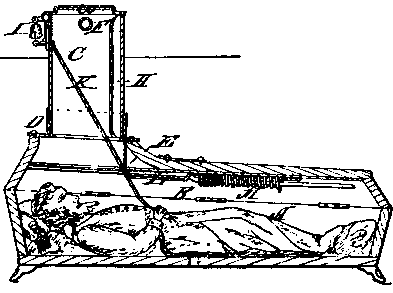
Inventors addressed the fear of being buried alive with safety coffins.

Taphophobia (from Greek τάφος – taphos, "grave, tomb"[1] and φόβος – phobos, "fear"[2]) is an abnormal (psychopathological) phobia of being buried alive as a result of being incorrectly pronounced dead.[3]

Before the era of modern medicine, the fear was not entirely irrational. Throughout history, there have been numerous cases of people being buried alive by accident. In 1905, the English reformer William Tebb collected accounts of premature burial. He found 219 cases of near live burial, 149 actual live burials, 10 cases of live dissection and 2 cases of awakening while being embalmed.[4]

The 18th century had seen the development of mouth-to-mouth resuscitation and crude defibrillation techniques to revive persons considered dead, and the Royal Humane Society had been formed as the Society for the Recovery of Persons Apparently Drowned.[5] In 1896, an American funeral director, T. M. Montgomery, reported that "nearly 2% of those exhumed were no doubt victims of suspended animation",[6] although folklorist Paul Barber has argued that the incidence of burial alive has been overestimated, and that the normal effects of decomposition are mistaken for signs of life.[7]

There have been many urban legends of people being accidentally buried alive. Legends included elements such as someone entering into the state of sopor or coma, only to wake up years later and die a horrible death. Other legends tell of coffins opened to find a corpse with a long beard or corpses with the hands raised and palms turned upward.

Of note is a legend about Anne Hill Carter Lee, the wife of Henry Lee III. According to the story,[8][better source needed] in 1804 Mrs. Lee took ill and apparently died; she was rescued from the burial vault by a sexton who heard noises coming from her casket.[8]

Several notable historical figures are thought to have been afraid of live burial, including Frédéric Chopin (who requested that his heart be cut out to ensure his death), George Washington (who requested that his body be laid out for three days), and Hans Christian Andersen and Alfred Nobel (who both asked to have their arteries cut open).[9]

Literature found fertile ground in exploring the natural fear of being buried alive. One of Edgar Allan Poe's horror stories, "The Premature Burial," is about a person suffering from taphophobia. Other Poe stories about premature burial are "The Fall of the House of Usher" and "The Cask of Amontillado"; and, to a lesser extent, "The Black Cat."

Fear of being buried alive was elaborated to the extent that those who could afford it would make all sorts of arrangements for the construction of a safety coffin[10] to ensure this would be avoided (e.g., glass lids for observation, ropes to bells for signaling, and breathing pipes for survival until rescued).[11] For example, the wealthy South African businessman, Jacobus Arnoldus Graaff, had himself buried in a safety coffin with a working telephone upon his death in 1927.[12]: 251  It is sometimes claimed that the English phrases "saved by the bell" and/or "dead ringer" are in some way related to such safety bells, but such is not the case.[13][14]

Although greater public confidence in the medical profession and its ability to diagnose death accurately has seen a reduction in fear of premature burial after the early 20th century there have been periods of public alarm in recent decades after medical errors in diagnosing death were reported.[15] Taphophobia may remain common in some parts of the world. For example, a study of Pakistani women found severe taphophobia in one third of subjects with mental illness and a mild degree of this fear in half of the controls.[16] Although rare in the developed world, a recent study reported three cases of taphophobia among older people in the west of Ireland.[17]

See also

[edit]

References

[edit]
Revisions and contributorsEdit on WikipediaRead on Wikipedia
from Grokipedia
Taphophobia, also known as taphephobia, is an abnormal and persistent phobia characterized by an intense, irrational fear of being buried alive.[https://www.betterhelp.com/advice/trauma/fear-of-being-buried-alive-understanding-phobias/][https://www.psychologytoday.com/us/blog/shadow-boxing/201409/taphophobia-fear-of-waking-inside-your-grave] The term was coined in 1891 by Italian psychiatrist Enrico Morselli from the Greek words taphos (grave) and phobos (fear), describing it as a severe form of claustrophobia involving dread of entombment.[https://pubmed.ncbi.nlm.nih.gov/27225418/][https://www.history.com/articles/buried-alive-19th-century-panic-safety-coffins] In contemporary psychology, it is classified as a specific phobia under the DSM-5, often overlapping with claustrophobia or thanatophobia (fear of death); though rare today due to advances in confirming death such as EEG monitoring, it can cause significant anxiety and avoidance behaviors.[https://www.betterhelp.com/advice/trauma/fear-of-being-buried-alive-understanding-phobias/][https://www.ncbi.nlm.nih.gov/pmc/articles/PMC10752835/] The fear gained prominence in the 19th century amid concerns over premature burial.

Definition and Etymology

Definition

Taphophobia is an abnormal and irrational fear of being buried alive, particularly stemming from the dread of being mistakenly declared dead while still alive. This phobia manifests as an intense anxiety triggered by the anticipation or thought of premature interment, leading to significant distress and avoidance behaviors.[1][2][3] Under the DSM-5, taphophobia is classified as a specific phobia within the category of anxiety disorders, meeting criteria that include marked fear or anxiety about a specific situation—here, burial while alive—that is out of proportion to the actual danger posed and persists for at least six months. The condition involves immediate anxiety responses upon exposure to the phobic stimulus, recognition by the individual that the fear is excessive, and resultant interference with daily functioning or marked distress.[4][5][6] Although fears of premature burial were once rational in pre-modern eras due to unreliable methods for confirming death, such as limited medical diagnostics, taphophobia today represents an irrational phobia in light of modern advancements like electrocardiography and legal waiting periods that virtually eliminate the risk.[3][7]

Etymology

The term taphophobia derives from the Ancient Greek words táphos (τάφος), meaning "grave" or "tomb," and phóbos (φόβος), meaning "fear" or "dread," literally translating to "fear of the grave."[8] This etymological structure aligns with the standard nomenclature for phobias in psychiatry, where Greek roots are combined with the suffix -phobia—itself from phóbos—to denote specific irrational fears, a convention that emerged in the 19th century alongside the formalization of psychological terminology.[9] The term was coined in 1891 by Italian psychiatrist Enrico Morselli in his seminal paper Sulla dismorfofobia e sulla tafofobia, where he described it as an extreme form of claustrophobia rooted in the dread of premature burial.[10] In Morselli's original Italian text, the word appears as tafofobia, reflecting a phonetic adaptation; this variant, anglicized as taphephobia, persisted in early English translations and medical literature as an alternative spelling to taphophobia.[11] Over time, taphophobia became the predominant form in psychiatric discourse, consistent with the preference for direct transliteration from Greek roots in phobia naming.

Historical Context

Prevalence in History

Taphophobia, the intense fear of being buried alive, emerged as a significant societal concern in the 18th and 19th centuries, driven by the limitations of medical diagnostics that often failed to distinguish between death and states of apparent death, such as catalepsy or deep coma. Before advancements in medical technology, premature burial was not merely a phobia but a documented risk, fueled by rapid burial practices and incomplete verification of death. Historical records indicate that this fear permeated European and American societies, leading to widespread anxiety and the formation of organizations dedicated to preventing such tragedies.[12] In the late 18th century, efforts to address apparent death gained momentum through initiatives like those of the Royal Humane Society, founded in 1774 in London as the Society for the Recovery of Persons Apparently Drowned. This organization promoted resuscitation techniques, including warming the body, artificial respiration, and tobacco smoke enemas, primarily for drowning victims but extending to broader fears of premature interment. By offering rewards for successful revivals and disseminating guidelines, the society highlighted the prevalence of mistaken death declarations, where individuals were at risk of burial while in suspended animation. These efforts underscored the era's recognition that apparent death was common enough to warrant institutional intervention, reflecting taphophobia's deep societal impact.[13] By the 19th century, compilations of cases amplified awareness of the issue's scale. English reformer William Tebb, in his 1905 collection of accounts, documented 219 instances of near-live burial—where individuals revived just before or during burial preparations—and 149 actual live burials, drawing from medical journals, newspapers, and eyewitness reports across Europe and North America. Similarly, in 1896, American funeral director T. M. Montgomery, overseeing exhumations at South Dakota's Fort Randall Cemetery, estimated that nearly 2% of the bodies disinterred showed signs of suspended animation, such as scratch marks inside coffins or undecomposed states inconsistent with elapsed time. These figures, while not exhaustive, illustrated the tangible prevalence of premature burial risks, estimated by contemporaries like Rev. J. G. Ouseley at around 2,700 cases annually in England and Wales during the period.[12] The decline of taphophobia as a widespread concern began in the 19th and early 20th centuries with diagnostic innovations that provided verifiable signs of death. The invention of the stethoscope in 1816 by René Laennec allowed physicians to auscultate heart and lung sounds noninvasively, reducing reliance on visual or tactile checks prone to error and thereby minimizing premature burial incidents. Further confirmation came with the electroencephalogram (EEG) in the 1920s, developed by Hans Berger, which detected brain activity to confirm irreversible death, effectively dispelling lingering doubts about suspended animation. These tools, alongside legal requirements for death certificates and waiting periods, dramatically lowered the perceived and actual risks, transforming taphophobia from a rational historical fear into a rarer psychological condition.[14][15]

Notable Cases and Figures

One of the earliest prominent figures to express taphophobia was George Washington, who, on his deathbed in 1799, instructed his secretary Tobias Lear to delay his burial for at least three days to ensure he was truly deceased.[16] This precaution reflected the era's widespread anxiety over premature interment, particularly amid outbreaks of diseases like diphtheria that could mimic death. In the 19th century, composer Frédéric Chopin exhibited a profound fear of being buried alive, stemming from his lifelong battle with tuberculosis and the era's medical uncertainties.[17] Upon his death in 1849, he requested that his heart be removed and preserved separately to confirm his passing, a measure his sister Ludwika honored by transporting it to Warsaw, while his body was buried in Paris.[18] Similarly, Danish author Hans Christian Andersen lived in constant dread of premature burial, keeping a bedside note that read, "I only appear to be dead," and imploring his friends to cut open his veins or arteries immediately after apparent death to verify it. Alfred Nobel, the Swedish chemist and inventor of dynamite, also grappled with taphophobia, which influenced provisions in his personal directives despite not appearing in his widely known 1895 will establishing the Nobel Prizes.[17] He explicitly wished for his major arteries to be incised and his body examined postmortem to prevent live burial, underscoring how the phobia permeated even among the era's scientific elite. Beyond these individuals, taphophobia manifested in documented premature burial incidents across 18th- and 19th-century Europe, fueling public hysteria and medical reforms. By the late 19th century, records indicated approximately 700 such cases worldwide, with higher rates in Europe: about 5 per 1,000 burials in the Netherlands around 1830 and 2 per 1,000 in France.[17] These often involved victims of catalepsy or coma from conditions like cholera or epilepsy, where shallow breathing was mistaken for death; exhumations frequently revealed scratched coffin lids or contorted remains, as reported in medical journals and newspapers of the time. Such events, though sometimes sensationalized, prompted innovations in death verification and contributed to the phobia's cultural grip.[17]

Inventions for Prevention

The fear of premature burial in the 18th and 19th centuries spurred the invention of safety coffins, specialized caskets equipped with mechanisms to allow the interred individual to signal for help, access air, or escape if revived. These devices typically included features such as bells connected to cords placed in the deceased's hand, air tubes extending to the surface, viewing windows to check for signs of life, and spring-loaded lids for quick release.[19] One of the earliest documented designs was created in 1792 for Ferdinand, Prince of Brunswick-Lüneburg, incorporating a window in the coffin lid, an air tube for ventilation, and a lockable mechanism with a key accessible from inside to prevent unauthorized opening while enabling self-release.[19] In the 19th century, numerous patents emerged across Europe and America, reflecting widespread taphophobic anxieties. German physician Adolf Gutsmuth patented a safety coffin in 1822 featuring multiple air tubes, a feeding tube, and a system for signaling via ropes attached to bells or flags above ground; he demonstrated its efficacy by being buried alive for several hours.[19] In the United States, over 100 such patents were granted, including Christian Henry Eisenbrandt's 1843 "life-preserving coffin" with a spring-loaded lid that could be opened from within (US Patent 3,335), and Franz Vester's 1868 design connecting a cord from the coffin to a surface bell and flag (US Patent 81,437).[20][21] Later examples included Charles A. Smith and John Kay's 1885 battery-powered alarm system with an air pump and retractable flag (US Patent 329,495). Into the early 20th century, South African businessman Jacobus Arnoldus Graaff was interred in 1927 in a custom safety coffin equipped with a telephone for calling for help and a ladder for climbing out if needed. A French design by Count Michel de Karnice-Karnicki, patented in 1899, used a tube to detect chest movements and automatically raise a flag with a bell, though it failed during public tests.[19] Organizational efforts further promoted these inventions and advocated for burial reforms. In England, the London Association for the Prevention of Premature Burial, co-founded in 1896 by activist William Tebb and physician Walter Hadwen, documented over 140 cases of live burial and pushed for mandatory waiting periods before interment, while endorsing safety coffins and medical verification protocols; by 1905, it claimed evidence of 219 narrow escapes and 149 actual premature burials.[19] In America, the short-lived American Society for the Prevention of Premature Burial sought a charter in New York around 1900, proposing stricter death certification rules and the use of signaling devices in coffins to address perceived inadequacies in medical examinations.[22] Despite their ingenuity, safety coffins had significant limitations, including mechanical failures from soil obstruction or weather, high costs that limited adoption to the wealthy, and psychological reassurance without addressing root diagnostic issues. Their obsolescence accelerated in the late 19th and early 20th centuries with medical advancements like stethoscopes for heartbeat detection (invented 1816 but widespread by the 1870s), pulse oximetry precursors, and routine embalming, which confirmed death more reliably and reduced taphophobic panics. By the mid-20th century, these devices were largely abandoned, though isolated patents continued into the 1990s incorporating modern elements like heart monitors.[19]

Psychological Aspects

Causes

Taphophobia, as a specific phobia, arises from a complex interplay of psychological, genetic, and environmental factors that contribute to the development of an intense, irrational fear of being buried alive.[23] Psychological factors often involve traumatic experiences that condition an individual to associate confinement or death with burial scenarios. For instance, near-death experiences, such as being trapped in enclosed spaces or witnessing a burial, can trigger the phobia by creating a lasting association between helplessness and interment.[24] Additionally, exposure to themes of premature burial through media or personal encounters with medical crises may exacerbate this vulnerability, leading to heightened anxiety responses rooted in the brain's fear circuitry, particularly involving the amygdala.[25] Genetic predisposition plays a moderate role in taphophobia, as with other specific phobias, where heritability estimates range from 25% to 40% based on twin and family studies. This suggests that individuals with a family history of anxiety disorders, including phobias clustered within blood-injection-injury or situational subtypes, may inherit a heightened susceptibility to developing such fears.[26][27] Clinical cases have documented familial patterns, where multiple relatives share the phobia, indicating possible shared genetic liabilities that amplify risk when combined with other triggers.[28] Environmental influences further shape the onset of taphophobia, particularly through cultural narratives and personal histories that perpetuate the dread of live burial. Stories of historical medical errors, such as misdiagnosed deaths leading to premature interment, can imprint on individuals via family anecdotes or societal lore, fostering the phobia even in low-risk contexts.[28] In older populations, direct exposure to outdated diagnostic practices or personal encounters with ambiguous states of unconsciousness may reinforce these fears.[10] Historically, taphophobia originated as a rational concern during eras of limited medical knowledge, when distinguishing death from catalepsy or coma was unreliable, resulting in documented cases of live burials that fueled widespread anxiety.[10] With modern advancements like electrocardiography and brain imaging, the actual risk has diminished dramatically, transforming what was once a prudent caution into an irrational phobia disconnected from contemporary realities.[28] This shift highlights how environmental evolution can sustain psychological fears long after their practical basis erodes.[29]

Symptoms and Diagnosis

Taphophobia, classified as a specific phobia, presents with acute physical symptoms upon exposure to triggers such as graves, coffins, or discussions of burial. These include panic attacks characterized by rapid heartbeat, excessive sweating, shortness of breath, and nausea, which can mimic a fight-or-flight response and lead to trembling or dizziness.[23][30] Psychologically, individuals experience intense dread and irrational anxiety about being buried alive, often resulting in avoidance behaviors like steering clear of cemeteries, funerals, or media depicting entombment. Common manifestations also involve obsessive thoughts of entrapment, recurrent nightmares of waking in a coffin, and heightened vigilance around health issues that might lead to misdiagnosis of death.[31][30][23] Diagnosis follows the DSM-5 criteria for specific phobia (300.29), requiring marked fear or anxiety about the phobic object or situation (here, premature burial), immediate provocation of distress upon exposure, active avoidance or endurance with intense discomfort, fear disproportionate to actual risk, persistence for at least six months, and significant impairment in social, occupational, or other functioning, not attributable to another medical or mental disorder.[32] A mental health professional conducts this via clinical interview, assessing symptom severity and ruling out overlaps with conditions like panic disorder.[23] Taphophobia frequently co-occurs with claustrophobia, given its focus on confined, enclosed spaces like coffins, and thanatophobia, the broader fear of death.[10][33] Modern research highlights its prevalence in certain populations; for instance, a 2014 study of Pakistani women reported severe taphophobia in approximately 33% of those with mental illness, compared to milder forms in half of mentally healthy controls, suggesting cultural or contextual influences on expression.[34]

Treatment and Management

Therapeutic Approaches

Cognitive Behavioral Therapy (CBT) is a primary evidence-based treatment for taphophobia, focusing on identifying and restructuring irrational beliefs about death, burial, and entrapment.[35] Through techniques such as cognitive restructuring, individuals learn to challenge catastrophic thoughts, such as the inevitability of premature burial, replacing them with rational perspectives on mortality and modern safeguards.[36] This approach typically involves 8-12 sessions and has demonstrated high efficacy, with studies on specific phobias showing improvement rates of 70-90% in reducing fear intensity and avoidance behaviors.[37] Exposure therapy, often integrated within CBT, entails gradual and controlled confrontation with taphophobia triggers to desensitize the fear response.[31] Initial steps may include imagining burial scenarios, progressing to visiting cemeteries or confined spaces like elevators, always under therapeutic guidance to ensure safety and manage anxiety.[38] Research indicates that exposure-based interventions lead to significant symptom reduction in 80-90% of phobia cases, with long-term maintenance of gains when combined with relaxation training.[39] Additional therapies, such as hypnotherapy and mindfulness-based stress reduction (MBSR), offer supportive options for anxiety management in taphophobia. Hypnotherapy facilitates subconscious reprogramming of fear responses through guided relaxation and suggestion, particularly useful for uncovering underlying trauma related to burial fears.[40] MBSR, involving mindfulness meditation and body awareness practices, helps individuals observe burial-related anxieties without judgment, reducing overall stress reactivity.[41] Both methods show promise as adjuncts to CBT.

Pharmacological Interventions

Pharmacological interventions can support the management of taphophobia by alleviating associated anxiety. Selective serotonin reuptake inhibitors (SSRIs), such as sertraline or fluoxetine, may be prescribed as adjunctive treatments for taphophobia, particularly when comorbid with other anxiety disorders, to modulate serotonin levels and reduce intrusive fears and panic symptoms.[42] These medications are effective for long-term management when combined with therapy, with clinical evidence supporting their use in anxiety disorders stemming from irrational fears of death or entrapment.[43]

Modern Medical Precautions

In contemporary medical practice, death is confirmed through rigorous clinical protocols that minimize the risk of premature burial. Standard verification involves assessing the absence of vital signs, including no palpable central pulse (e.g., carotid artery), no audible heart or respiratory sounds via auscultation, and no observable signs of life such as movement or respiratory effort, typically observed for at least five minutes.[44] For cases involving potential brain death, such as in comatose patients on mechanical ventilation, protocols require two sets of neurological examinations by qualified physicians, including tests for brainstem reflexes (pupillary, corneal, vestibulo-ocular) and an apnea test to confirm irreversible cessation of brain function.[45] During the apnea test, pulse oximetry is employed to monitor oxygen saturation while delivering 100% oxygen, ensuring no respiratory drive is present as carbon dioxide levels rise.[46] Electroencephalography (EEG) has historically been used to detect electrocerebral silence as an ancillary confirmatory tool for brain death, though updated guidelines from 2025 no longer recommend it due to limitations in reliability and the sufficiency of clinical tests.[47][45] Apnea monitors, while primarily used in pediatric settings to detect breathing cessation and prevent sudden infant death syndrome, are not standard for adult death confirmation but underscore broader advancements in respiratory monitoring that indirectly bolster confidence in vital sign assessments.[45] Legal and procedural safeguards further reinforce these medical measures in developed countries. Many jurisdictions, including various U.S. states, mandate waiting periods of 24 to 48 hours after death certification before cremation or burial, allowing time for thorough verification and potential autopsy if needed.[48] Advanced autopsy protocols, such as histopathological examination, provide additional confirmation of death in ambiguous cases, while certification requires multiple physician sign-offs to certify cause and timing.[49] In the UK, the Academy of Medical Royal Colleges' 2025 code emphasizes dual-physician confirmation and family involvement to ensure procedural integrity.[45] These combined advancements have nearly eliminated the incidence of premature burial in developed countries, with documented cases of autoresuscitation (Lazarus phenomenon) rare and typically occurring in clinical settings rather than leading to burial.[50] Historical fears of taphophobia persist culturally, but medical protocols have rendered actual events virtually nonexistent since the mid-20th century.[3]

Cultural Representations

In Literature

Taphophobia has been a recurring motif in literature, particularly within Gothic fiction, where it serves as a metaphor for psychological entrapment, the fragility of life, and the terror of premature judgment on one's vitality. Edgar Allan Poe's short story "The Premature Burial," published in 1844, stands as a seminal work in this tradition, vividly portraying the narrator's obsessive fear of being interred alive due to catalepsy, culminating in a hallucinatory experience aboard a ship that blurs the line between reality and nightmare.[3] Poe's narrative not only amplifies the era's medical anxieties about misdiagnosed death but also explores the mind's capacity to manifest dread, influencing subsequent depictions of isolation and resurrection in horror literature.[51] This theme permeates broader Gothic literature, where fears of live burial intertwine with concerns over reanimation and the undead, symbolizing societal dread of unchecked scientific ambition and mortality's uncertainties. In Mary Shelley's Frankenstein (1818), the novel's galvanic experiments evoke taphophobia by challenging the boundaries between death and life, reflecting contemporaneous worries about premature burial amid advances in resuscitation techniques like those promoted by Andrew Ure.[52] Similarly, Bram Stoker's Dracula (1897) incorporates the phobia through scenes of apparent death and entombment, such as the protagonist's torment over his loved one being "buried alive," which underscores Victorian anxieties about cholera-induced comas and the horror of awakening in a coffin.[53] These works use taphophobia to delve into themes of bodily violation and eternal confinement, heightening the Gothic emphasis on the sublime terror of the unknown.[54] Nineteenth-century novels further reflected the period's widespread taphophobia, often embedding it in narratives of social and psychological imprisonment that mirrored real fears of institutional misdiagnosis. Wilkie Collins, who personally suffered from the phobia and carried a letter requesting verification of his death, infused his sensation novels with motifs of wrongful confinement; in The Woman in White (1859–1860), the protagonist's entrapment in an asylum evokes the suffocating dread of live burial, paralleling the era's panic over premature interment and inadequate medical safeguards.[55] Collins' storytelling, drawing from Gothic conventions, amplified these terrors to critique institutional power and the vulnerability of the individual.[56] In post-20th-century horror literature, taphophobia evolves into a staple of psychological and supernatural suspense, often symbolizing modern existential isolation and the inescapability of trauma. Stephen King's novella Dolan's Cadillac (1985) exemplifies this shift, depicting a vengeful burial alive as a deliberate act of torment, which intensifies the phobia's claustrophobic horror while exploring revenge and moral decay in contemporary settings. Such portrayals maintain the theme's potency, adapting it to probe deeper into human resilience against perceived finality, as seen in King's broader oeuvre where entrapment motifs underscore the mind's battle with oblivion.

In Film and Media

Taphophobia, the intense fear of being buried alive, has long served as a potent motif in film and television, amplifying themes of claustrophobia, psychological torment, and the fragility of life. This phobia often manifests through characters experiencing premature burial or obsessing over the possibility, drawing on historical anxieties about misdiagnosis of death that date back centuries. In cinema, these portrayals frequently explore the visceral horror of entrapment in confined spaces, heightening tension through limited perspectives and desperate survival efforts.[57] One seminal depiction appears in Roger Corman's 1962 adaptation of Edgar Allan Poe's short story The Premature Burial, where protagonist Guy Carrell (played by Ray Milland) is consumed by taphophobia due to his cataleptic condition, leading him to construct an elaborate escape mechanism in his tomb. The film vividly illustrates the phobia's paralyzing grip, as Carrell's obsession strains his relationships and culminates in a nightmarish realization of his fears. Similarly, the 2010 thriller Buried, directed by Rodrigo Cortés and starring Ryan Reynolds, confines the audience to a single coffin for its entire runtime, portraying truck driver Paul Conroy's frantic attempts to signal for help using only a cell phone and lighter after awakening underground in Iraq. This minimalist approach intensifies the psychological dread of isolation and helplessness inherent to taphophobia. In 2025, the film Buried Alive and Survived directly engages the theme, following a woman who awakens trapped in a coffin underground, highlighting ongoing cultural fascination with survival against entombment.[58][57][59] Television has also exploited the theme, often in anthology formats that blend suspense with horror. In the 1964 episode "Final Escape" from The Alfred Hitchcock Hour, a convict fakes his death to escape prison, only to face the real terror of being buried alive and relying on a partner's timely intervention. Another early example is the 1961 Thriller episode "Welcome Home," which satirizes familial taphophobia through a macabre tradition of entombing relatives alive in a mausoleum. More recently, Quentin Tarantino's Kill Bill: Vol. 2 (2004) features a pivotal scene where the Bride (Uma Thurman) is buried alive by her enemy Bill, methodically punching her way out to symbolize resilience against the phobia's suffocating panic. These representations underscore taphophobia's enduring appeal in media as a metaphor for existential entrapment.[57]

References

User Avatar
No comments yet.