



Community hub
Recent from talks
Contribute something
Nothing was collected or created yet.
The Skyliners
View on Wikipedia
 | This article needs additional citations for verification. (August 2010) |
The Skyliners are an American doo-wop group from Pittsburgh. The original lineup was: Jimmy Beaumont (lead), Janet Vogel Rapp (soprano), Wally Lester (tenor), Jackie Taylor (bass voice, guitarist), Joe Verscharen (baritone).[1][2] The Skyliners were best known for their 1959 hit, "Since I Don't Have You".
Key Information

History
[edit]The Skyliners also hit the top 40 with "This I Swear" and "Pennies from Heaven". Other classics include "It Happened Today" (1959), "Close Your Eyes" (1961), and "Comes Love" (1962). The original group dissolved in 1963, but re-united eleven years later (without Jackie Taylor), for what would become their last charted record, "Where Have They Gone?"
In 1965, Jimmy Beaumont recorded two notable singles for the Bang label: the first record, "Tell Me"/"I Feel Like I'm Falling in Love", had medium-tempo soul-styled tracks.
For his second Bang 45, "You Got Too Much Going for You"/"I Never Loved Her Anyway", Beaumont transformed into an impressive soul singer, sounding nothing like his previous, more pop-styled efforts. It led some to question in later years, if it actually was his singing.[citation needed] These two tracks are now considered Northern Soul collectibles. The single was also issued on UK London HLZ 10059 in 1966.
Jackie Taylor was drafted into the U.S. Army about 1965.[3] In 1975 Wally Lester and Joe Versharen left the group; they were replaced by new members, Jimmie Ross and Bob Sholes.[4][5]
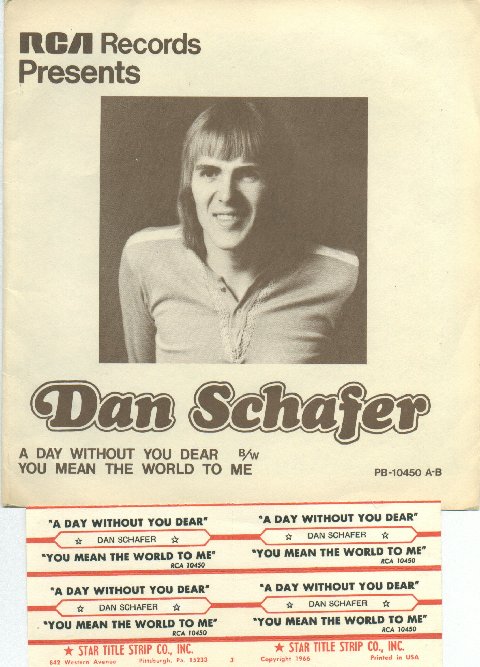
In 1978, the Detroit-based record producer Don Davis — who produced Marilyn McCoo and Billy Davis Jr., Johnny Taylor, the Dramatics, and the Dells — picked up one of his favorite groups (the Skyliners) to record in his United Sound Studios. They recorded the group's "comeback" album for the RCA subsidiary, Tortoise International Records.[6] The songs "Oh, How Happy" and "The Love Bug" were included, as was a hefty re-make of Dan Schafer's original RCA Victor single, "A Day Without You, Dear".[7]
Janet Vogel committed suicide in 1980; Cathy Cooper joined the group as a replacement.[4] She and Ross left two years later to form a duo;[4] they were replaced by Rick Morris[8] and Donna Groom.[3]
Morris retired in 1993.[8] Beaumont invited David Proch to join the group and he accepted. Also performing with the group at this time was Tom Sholes, brother of Bob Sholes. The two were local to the group; they attended St George High School in the Allentown neighborhood of Pittsburgh. The group became Beaumont, Groom, Proch, and Nick Pociask.[9]
David Proch (at age 44) the third person to sing tenor for the Skyliners, died on October 19, 1998, in a car accident.[10] His car collided with a truck hauling asphalt on U.S. Route 30 near Ligonier, Pennsylvania. Proch's place was taken by Dick Muse, a former member of the Laurels.[11] Rick Morris replaced Muse in 2011.[8] Frank Czuri replaced Morris in 2013.[12] In January 2019 Jim Gregorakis replaced Nick Pociask. Eric Bruce replaced Frank Czuri in September 2019.
Their longtime manager and producer Joe Rock, who also co-wrote "Since I Don't Have You", died on April 4, 2000, at age 63, after complications from quadruple bypass heart surgery.[13]
Four of the original members have died:
- Janet Vogel (born June 10, 1942, in Pittsburgh) died by suicide on February 21, 1980, aged 37[14]
- Joe Verscharen (born August 30, 1940, in Pittsburgh) died of cancer on November 2, 2007, aged 67[15]
- Wally Lester (born Walter Paul Lester Jr. on October 5, 1941, in Pittsburgh) died of pancreatic cancer in Southport, North Carolina on April 21, 2015, aged 73[16][17]
- Jimmy Beaumont (born James Beaumont on October 21, 1940, in Pittsburgh) died in McKeesport, Pennsylvania, on October 7, 2017, aged 76.[18][19]
Until his death, Jimmy Beaumont performed with the Skyliners in their line-up of Nick Pociask, Frank Czuri, and Donna Groom (whose husband, Mark Groom, has been the group's drummer/conductor for more than 25 years).
Discography
[edit]Albums
[edit]- The Skyliners— Calico CLP-3000 (Mono only) (1959)
- Since I Don't Have You — Original Sound OSR-LPM 5010 (Mono)/OSR-LPS-8873 (Stereo) (1963)
- Once Upon a Time — Kama Sutra KSBS-2026 (1971)
- The Skyliners — Tortoise International BXL1-2749 (1978)
Singles
[edit]| Year | Titles (A-side, B-side) Both sides from same album except where indicated |
Label & number | Chart positions | Album | ||
|---|---|---|---|---|---|---|
| US Hot 100 [20] |
US Cashbox |
US R&B [20] | ||||
| 1959 | "Since I Don't Have You" b/w "One Night, One Night" |
Calico 103/104 | 12 | 7 | 3 | The Skyliners (1959) |
| "This I Swear" b/w "Tomorrow" |
Calico 106 | 26 | 31 | 20 | ||
| "It Happened Today" b/w "Lonely Way" |
Calico 109 | 59 | 43 | — | Since I Don't Have You | |
| 1960 | "How Much" b/w "Lorraine from Spain" (from Since I Don't Have You) |
Calico 114 | — | 98 | — | Non-album track |
| "Pennies from Heaven" b/w "I'll Be Seeing You" |
Calico 117 | 24 | 24 | — | The Skyliners (1959) | |
| "Happy Time" b/w "Believe Me" |
Calico 120 | — | — | — | Non-album tracks | |
| 1961 | "I'll Close My Eyes" b/w "The Door Is Still Open" |
Colpix 188 | — | — | — | |
| "Close Your Eyes" b/w "Our Love Will Last" |
Colpix 613 | — | — | — | ||
| 1962 | "Everyone But You" b/w "Three Coins in the Fountain" |
Cameo 215 | — | — | — | |
| "Comes Love" b/w "Tell Me" |
Viscount 104 | 128 | — | — | ||
| 1963 | "Since I Fell for You" b/w "I'd Die" |
Atco 6270 | — | — | — | |
| 1965 | "The Loser" b/w "Everything Is Fine" |
Jubilee 5506 | 72 | 88 | 34 | |
| "Get Yourself a Baby" b/w "Who Do You Love" |
Jubilee 5512 | — | — | — | ||
| 1966 | "I Run to You" b/w "Don't Hurt Me Baby" |
Jubilee 5520 | — | — | — | |
| 1974 | "Where Have They Gone" b/w "I Could Have Loved You So Well" |
Capitol 3979 | 100 | — | — | |
| 1976 | "The Day the Clown Cried" b/w "Our Day Is Here" |
Drive 6250 | — | — | — | |
| 1978 | "Oh How Happy" b/w "We've Got Love on Our Side" |
Tortoise International 11243 | — | 96 | — | The Skyliners (1978) |
| "The Love Bug (Done Bit Me Again)" b/w "Smile on Me" |
Tortoise International 11312 | — | — | — | ||
| 1990 | "You're My Christmas Present" b/w "Another Lonely New Year's Eve" |
Classic Artists 123 | — | — | — | Non-album tracks |
| "—" denotes releases that did not chart or were not released in that territory. | ||||||
Jimmy Beaumont solo singles
[edit]- "The End of a Story" / "Baion Rhythms" — Colpix 607–1961
- "Ev'rybody's Cryin'" (Billboard No. 100) / "Camera" — May 112–1961
- "I Shoulda Listened to Mama" / "Juarez" — May 115–1962
- "I'm Gonna Try My Wings" / "Never Say Goodbye" — May 120–1962
- "Give Her My Best" / "I'll Always Be in Love with You" — May 136–1963
- "There's No Other Love" / "Please Send Me Someone to Love" — Gallant 3007–1964
- "Love Is a Dangerous Game" / "Just A Little Closer" — Gallant 3012–1964
- "I Feel Like I'm Falling in Love" (Billboard No. 123) / "Tell Me" — Bang 510–1965
- "You Got Too Much Going for You" / "I Never Loved Her Anyway" — Bang 525–1966
Janet Vogel solo single as Janet Deane
[edit]- "Another Night Alone" / "I'm Glad I Waited"—Gateway 719–1963
Awards and recognition
[edit]The Skyliners were inducted into The Vocal Group Hall of Fame in 2002.[21]
On August 11, 2019, a section of road in McKeesport PA's Renziehausen Park, Tulip Drive, was renamed Jimmy Beaumont Blvd. With Beaumont's family present, the dedication ceremony took place at the park's Lions Bandshell and was followed by a concert with the current Skyliners.
References
[edit]- ^ Whitburn, Joel (2000). Joel Whitburn's Top Pop Singles 1955-1999. Menomonee Falls, Wisc.: Record Research. ISBN 089820139-X.
- ^ "Frank Czuri | Jimmy Beaumont and The Skyliners". Theskyliners.com. Archived from the original on November 19, 2013. Retrieved September 30, 2015.
- ^ a b "Jimmy Beaumont, Skyliners: A Hometown Success Story". The Pittsburgh Press. February 23, 1989.
- ^ a b c "Jimmie Ross - Pittsburgh Music History". Archived from the original on December 24, 2014. Retrieved May 15, 2013.
- ^ "ROBERT M. "BOB" SHOLES Obituary: View ROBERT SHOLES's Obituary by Pittsburgh Post-Gazette". Legacy.com. September 3, 2011. Retrieved May 15, 2013.
- ^ "Tortoise International Records". Discogs.com. Retrieved December 29, 2011.
- ^ "Dan Schafer 1976 RCA single & jukebox strips". DanSchafer.com. Retrieved February 5, 2012.
- ^ a b c "Rick Morris | Jimmy Beaumont and the Skyliners". Theskyliners.com. Archived from the original on February 4, 2013. Retrieved May 15, 2013.
- ^ Pore-Lee-Dunn Productions. "Interview with The Skyliners". Classicbands.com. Retrieved May 15, 2013.
- ^ Rock, Doc. "The Dead Rock Stars Club 1998 - 1999". Thedeadrockstarsclub.com. Retrieved October 9, 2017.
- ^ "Old Mon Music: Dick Muse & The Laurels". Oldmonmusic.blogspot.com. August 27, 2010. Retrieved May 15, 2013.
- ^ "Frank Czuri | Jimmy Beaumont and the Skyliners". Theskyliners.com. Archived from the original on November 19, 2013. Retrieved September 30, 2015.
- ^ Rock, Doc. "The Dead Rock Stars Club 2000". Thedeadrockstarsclub.com. Retrieved October 9, 2017.
- ^ Rock, Doc. "The Dead Rock Stars Club - The 1980s". Thedeadrockstarsclub.com. Retrieved October 9, 2017.
- ^ "THE SKYLINERS". Joetroiano.wordpress.com. May 27, 2010. Archived from the original on October 10, 2017. Retrieved October 9, 2017.
- ^ Mervis, Scott (April 24, 2015). "Obituary: Walter 'Wally' Paul Lester / Original singer for the Skyliners | Pittsburgh Post-Gazette". Post-gazette.com. Retrieved September 30, 2015.
- ^ Walter Lester. "Walter Lester Obituary - Southport, NC | Post-Gazette.com". Legacy.com. Retrieved September 30, 2015.
- ^ "Pittsburgh music legend Jimmy Beaumont of the Skyliners dies at 76". Wtae.com. Associated Press. October 9, 2017. Retrieved October 9, 2017.
- ^ "JAMES BEAUMONT Obituary - McKeesport, PA | Pittsburgh Post-Gazette". Legacy.com. Retrieved October 28, 2019.
- ^ a b "The Skyliners - Awards". AllMusic. Archived from the original on April 25, 2015. Retrieved September 30, 2022.
- ^ "The Vocal Group Hall Of Fame | The Skyliners". vocalgroup.org. Retrieved June 29, 2018.
Bibliography
[edit]- Joel Whitburn, The Billboard Book of Top 40 Hits. 7th edn, 2000, ISBN 978-0823082803
External links
[edit]- Official Website
- Current Booking Website
- "The Skyliners" Vocal Group Hall of Fame Page
- Interview with Nick Pociask of the Skyliners
- Pittsburgh Music History Skyliners Profile Archived September 22, 2013, at the Wayback Machine
- Pittsburgh Music History Janet Vogel Rapp Profile Archived September 28, 2013, at the Wayback Machine
- Tortoise International Records
| International | |
|---|---|
| Artists | |
| Other | |

The Skyliners
View on GrokipediaHistory
Formation and Early Success (1958–1960)
The Skyliners formed in mid-1958 in the South Hills suburb of Pittsburgh, Pennsylvania, when high school friends Jimmy Beaumont and Wally Lester, along with Jack Taylor from the local group the Crescents, recruited baritone singer Joe Verscharen and soprano Janet Vogel from the El Rios to create a new vocal ensemble.[2][1] The group drew inspiration from Pittsburgh's vibrant local doo-wop scene, blending influences from acts like the Cadillacs and the Spaniels with vocal harmony styles from the Four Freshmen and Hi-Lo's.[1] Named after Charlie Barnet's instrumental hit "Skyliner" by their manager Joe Rock, the quintet—featuring Beaumont on lead vocals, Vogel on soprano, Lester on tenor, Verscharen on baritone, and Taylor on bass—quickly honed their sound through rehearsals and local performances.[2] After facing rejections from over a dozen labels, the Skyliners signed with the small Pittsburgh-based Calico Records on November 3, 1958, owned by Lou Caposi and Bill Lawrence.[1] Their debut single, "Since I Don't Have You," co-written by Beaumont (music) and Rock (lyrics) and inspired by a personal romantic rejection, was recorded on December 3, 1958, at Capitol Studios in New York City with an 18-piece orchestra arranged by Lenny Martin.[1][2] Released on December 26, 1958, the ballad gained traction through heavy radio play on stations like KDKA in Pittsburgh and a pivotal appearance on American Bandstand on February 13, 1959, propelling it to #12 on the Billboard Hot 100, #3 on the R&B chart, and #1 on Cashbox's R&B survey—the first for a white doo-wop group.[1][4] The record sold over 100,000 copies in its first three days post-Bandstand and ultimately exceeded one million units, establishing the group nationally.[1][5] Building on their breakthrough, the Skyliners recorded follow-up singles in New York studios, including "This I Swear" in early 1959 with producer Phil Spector observing the session.[1] Released in May 1959, it reached #26 on the Billboard Hot 100 and #20 on the R&B chart, showcasing Beaumont's emotive lead and the group's intricate harmonies.[6][7] Their third hit, a swinging cover of the 1936 standard "Pennies from Heaven" inspired by the Clovers' style, was released in spring 1960 and peaked at #24 on the Billboard Hot 100.[8][9] These early successes fueled initial tours, including performances on the chitlin' circuit, eight shows at Harlem's Apollo Theatre, Alan Freed's 1959 Easter Jubilee in New York, and Dick Clark's Caravan of Stars, which took them through the Midwest and beyond.[1][2]Career Peak and Decline (1961–1966)
Following the collapse of their original label, Calico Records, in 1961, The Skyliners transitioned to Colpix Records, the recording arm of Columbia Pictures, seeking greater distribution and stability.[10] This move allowed them to continue their signature style of reinterpreting pre-rock standards with lush vocal harmonies, resulting in the release of their self-titled debut album, The Skyliners, which featured tracks such as "Close Your Eyes" and "The Door Is Still Open." The album highlighted the group's maturing sound but failed to replicate the chart success of their earlier Calico hits, peaking outside the top 100 on Billboard. Colpix issued several singles during 1961–1962, including "Close Your Eyes" b/w "Our Love Will Last" and "The Door Is Still Open (To My Heart)" b/w "How Much," both produced by Stu Phillips and emphasizing orchestral arrangements.[11] These releases garnered modest airplay, with "Close Your Eyes" briefly entering the lower reaches of the national charts in late 1961, reaching No. 105 on Billboard's Bubbling Under Hot 100 Singles chart.[10][12] The group also made television appearances, including on American Bandstand during this period, to promote their material, though national momentum waned as doo-wop's popularity diminished amid shifting musical tastes.[11] Regionally, they maintained a strong following in Appalachia and the Midwest, bolstered by tours with Dick Clark's Caravan of Stars, where live performances of standards like "Heartaches" drew enthusiastic crowds. By 1962, label instability persisted as The Skyliners moved to smaller imprints like Cameo and Viscount, releasing "Everyone But You" b/w "Three Coins in the Fountain" and "Comes Love" b/w "Tell Me," the latter a cover that competed unsuccessfully against versions by other artists.[11] Internal challenges mounted, including exhaustion from relentless touring and personal strains, prompting lead singer Jimmy Beaumont to pursue solo recordings on the May label, such as "Ev'rybody's Cryin'" in 1961.[10] Soprano Janet Vogel briefly left in 1963 for a solo venture under the name Janet Deane on Gateway Records, further straining group cohesion.[10] The British Invasion, beginning in 1964, exacerbated their decline by overshadowing American vocal groups, with British acts dominating airwaves and reducing opportunities for doo-wop ensembles.[2] In 1963, a final Atco single, "I'd Die" b/w "Since I Fell for You," marked their last major label effort before a hiatus, as members grew weary of the industry's demands.[11] Bass Jackie Taylor's U.S. Army draft in 1965 disrupted rehearsals and performances, contributing to lineup instability.[13] Manager Joe Rock assembled a revised configuration for Jubilee Records in 1965–1966, issuing singles like "The Loser" b/w "Everything Is Fine" and "Who Do You Love" b/w "Get Yourself a Baby," but these failed to chart, signaling the end of their initial era.[11] Amid mounting tensions and lack of commercial viability, the original group officially disbanded in 1966, concluding a period of diminishing returns after nearly a decade of activity.[10]Reunions and Later Developments (1974–present)
In 1974, the Skyliners reunited under the leadership of original members Jimmy Beaumont and Wally Lester, with soprano Janet Vogel rejoining and manager Joe Rock overseeing operations. Original baritone Joe Verscharen and tenor Wally Lester retired permanently on January 1, 1976. The group signed with Capitol Records and released the single "Where Have They Gone," which peaked at number 100 on the Billboard Hot 100 in 1975. This comeback effort marked a brief return to recording, though it did not replicate their earlier chart success. Joe Verscharen died of cancer on November 2, 2007, at age 67. Throughout the 1980s and 1990s, the Skyliners focused on touring the nostalgia and oldies circuits, performing their classic hits at revival shows across the United States. The group faced significant challenges during this period, including the tragic suicide of Janet Vogel on February 21, 1980, due to carbon monoxide poisoning amid struggles with drug addiction. Wally Lester occasionally participated in performances until his death from pancreatic cancer on April 21, 2015, at age 73. These losses prompted lineup adjustments, with new vocalists like Donna Groom and Nick Pociask joining to maintain the group's harmony-driven sound. Original bassist Jack Taylor died on January 8, 2024, at age 82. The 2000s brought relative stability to the Skyliners, with Jimmy Beaumont continuing as lead singer and guiding the ensemble through consistent live appearances until his unexpected death on October 7, 2017, at age 76. Following Beaumont's passing, the group transitioned to a current lineup featuring Donna Groom, Mark Groom, John Sarkis, Jim Gregorakis, and Eric Bruce, under ongoing management by Joe Rock. This iteration has preserved the Skyliners' legacy through regional performances. In the post-2020 era, the Skyliners navigated disruptions from the COVID-19 pandemic, which halted many live music events, but resumed touring with regional shows emphasizing their doo-wop catalog. The group remains active as of November 2025, with performances throughout the year, including at Jergel's Rhythm Grille in Warrendale, Pennsylvania, on January 19, 2025, and the Washington County Fair in August 2025.[14][15]Musical Style and Influences
Doo-Wop Roots
Doo-wop emerged as a subgenre of rhythm and blues in the late 1940s, characterized by tight vocal group harmonies, a wide range of parts including lead tenor, falsetto, baritone, and bass, and the use of nonsense syllables such as "doo-wop" or "doo-wah" to fill melodic lines and provide rhythmic backing.[16] Often performed a cappella or with minimal instrumentation like piano, guitar, and drums, the style emphasized simple beats, slow to moderate tempos, and straightforward lyrics focused on romance and heartache.[16] Its origins trace to post-World War II urban African American communities in large East Coast and Midwestern cities, where teenage boys practiced harmonizing on street corners, in school gyms, and subway entrances, drawing from gospel quartets, jazz scat singing, and earlier R&B vocal groups.[16] By the mid-1950s, the genre expanded to include Italian American participants in cities like New York, blending street-corner traditions with pop sensibilities.[16] In Pittsburgh during the 1950s, a vibrant local doo-wop scene developed amid the city's blue-collar neighborhoods and R&B radio broadcasts, fostering groups that recorded at small independent labels like Fee Bee and Gateway.[17] This environment was influenced by national vocal harmony acts such as The Platters, known for their smooth, orchestral-tinged ballads, and The Flamingos, whose experimental harmonies and emotional delivery shaped the genre's expressive potential.[18] Pittsburgh's clubs in the Hill District, including the Crawford Grill, served as key venues where doo-wop intertwined with jazz and R&B, supported by DJs like Porky Chedwick who promoted local talent on stations such as WHOD and WAMO.[17] The Skyliners aligned closely with doo-wop's core elements through their emphasis on romantic ballads, but distinguished themselves by incorporating lush orchestral backing, as seen in their 1958 debut "Since I Don't Have You," recorded with 18 musicians at Capitol Studios—a rarity for teen vocal groups at the time.[1] This approach elevated their sound beyond pure a cappella street styles, blending R&B harmonies with pop orchestration while maintaining the genre's emotional vocal interplay.[1] Emerging in the late 1950s amid the post-R&B explosion and just before rock 'n' roll's full dominance, the Skyliners represented one of the first successful white doo-wop acts in a field predominantly led by African American artists, topping R&B charts and bridging racial divides in vocal harmony music.[1][19]Arrangements and Vocal Harmonies
The Skyliners' vocal harmonies were characterized by lush, multi-layered arrangements that emphasized emotional depth, with lead singer Jimmy Beaumont delivering a smooth, soaring tenor that conveyed heartfelt longing. Supporting Beaumont was soprano Janet Vogel, whose high, ethereal counterpoint added a distinctive falsetto-like quality, often weaving through the background with ad-libs that heightened the dramatic tension, as heard in the bridge of their breakthrough single "Since I Don't Have You." The group's bass vocalist, Jackie Taylor, provided a firm rhythmic foundation, while tenor Wally Lester and baritone Joe Verscharen filled out the rich, interlocking layers, creating a sound that blended vulnerability with orchestral grandeur.[20][5][21] Unlike the sparse, a cappella or minimal instrumentation typical of doo-wop groups, The Skyliners employed full orchestral arrangements crafted by producer and arranger Lennie Martin, incorporating strings, horns, and a complete rhythm section to elevate their ballads. Martin's contributions, including sweeping string sections and brass accents, contrasted sharply with genre norms and influenced later producers like Phil Spector. In "Since I Don't Have You," the structure follows a verse-chorus format with building orchestration that underscores the emotional arc, culminating in Vogel's soaring ad-libs over a lush string backdrop, recorded with an 18-piece ensemble at Capitol Studios in New York. This approach extended to tracks like "This I Swear," where horns added a symphonic polish to the vocal interplay.[22][23][5] The group's innovations lay in seamlessly blending pop standards with original doo-wop compositions, reimagining classics through their harmonic lens; for instance, their 1960 cover of "Pennies from Heaven" transformed the 1936 standard into an up-tempo rocker with swinging big-band elements, swirling strings, and Vogel's bright soprano accents, arranged by Martin during a swift 15-minute session with an eight-piece band. Over time, their style evolved toward soul-tinged expressions in later singles, with Beaumont's increasingly emotive, gospel-inflected delivery adding rhythmic intensity and depth, as evident in tracks like "How Can I Find True Love."[22][24][21] Recording sessions prioritized vocal precision and emotional delivery, with the group laying down tracks live alongside the orchestra to capture raw passion rather than polished rhythm, often in one or two takes to preserve authenticity. While early rehearsals occurred in Pittsburgh's local venues, major releases like "Since I Don't Have You" were cut at professional facilities such as Capitol Studios, where multi-tracking was minimally used to retain the organic blend of their five voices. This technique amplified the intimacy of their harmonies, focusing on Beaumont's nuanced phrasing and the ensemble's tight synchronization.[25][26][20]Members
Original Lineup
The original lineup of The Skyliners, formed in 1958 in Pittsburgh, Pennsylvania, featured five young vocalists who blended doo-wop harmonies with orchestral arrangements, creating a distinctive sound that propelled their early hits. This quintet—Jimmy Beaumont (lead tenor), Janet Vogel (soprano), Wally Lester (tenor), Jackie Taylor (bass), and Joe Verscharen (baritone)—emerged from local high school groups like the Crescents, Montereys, and El Rios, merging under manager Joe Rock to record their breakthrough single "Since I Don't Have You."[1][2] Jimmy Beaumont, born James Beaumont on October 21, 1940, in Pittsburgh's Knoxville neighborhood, served as the group's lead tenor and de facto leader during their formative years. Growing up in a bi-racial community, he developed an early interest in singing after being inspired by Nat King Cole at age six or seven, practicing in school hallways and bathrooms before joining the Montereys as a bass singer and later shifting to lead. Beaumont co-wrote the music and vocal backgrounds for "Since I Don't Have You" with manager Joe Rock, drawing from rhythm and blues influences like the Cadillacs and Moonglows, and his silky, emotive delivery defined the group's romantic style through hits like "This I Swear" in 1959.[27][28][1] Janet Vogel, born on June 10, 1941, in Pittsburgh, brought a rare female soprano voice to the all-male doo-wop scene, making her one of the first women to serve as a prominent lead in a major group of the era. At age 16, she joined the lineup from the El Rios quartet, recruited by Beaumont after a local performance, where her exceptional vocal range—capable of hitting a high C—added soaring falsetto-like highs to harmonies, most notably in the ad-libbed finale of "Since I Don't Have You." Vogel's stage presence, characterized by confident delivery and emotional depth, complemented the group's polished performances, contributing to their appeal on shows like American Bandstand during 1958–1960.[20][1][2] Wally Lester, born on October 5, 1941, in Pittsburgh's Allentown neighborhood, was a co-founder who provided tenor support, anchoring the harmonies with a smooth, versatile tone just below Vogel. As a 13-year-old tenor in the Crescents, he was discovered by Rock and helped form the core of the Skyliners, singing to create their signature layered sound on tracks like "Pennies from Heaven" in 1960. Lester's contributions extended to live performances, where his reliable presence helped stabilize the group's rhythm during their peak touring years.[29][1] Jackie Taylor handled bass vocals and guitar, offering the rhythmic foundation that grounded the Skyliners' intricate arrangements from 1958 to his departure in 1965. A member of the original Crescents alongside Lester and Beaumont, Taylor's deep, steady bass lines provided balance to the higher voices, evident in the driving undercurrents of early singles like "This I Swear." His tenure was brief, marked by his role in early recordings before he left for U.S. Army service, during which he rose to captain in Vietnam.[1][13][2] Joe Verscharen, born around 1940 in Pittsburgh, specialized in baritone harmonies, adding rich mid-range depth to the group's vocal blend as a founding member from the El Rios. Recruited at age 17 alongside Vogel, his baritone supported the emotional swells in songs like "Since I Don't Have You," contributing to the seamless five-part harmonies that defined their 1958–1966 output. Verscharen remained active through the early 1960s before pursuing other ventures in real estate and insurance.[1][2]Changes and Current Members
Following the group's decline in the mid-1960s, The Skyliners experienced several lineup shifts as they attempted to sustain performances and recordings. In 1970, core original members Jimmy Beaumont, Janet Vogel, Wally Lester, and Joe Verscharen reformed the group for touring and a new album on Kama Sutra Records, marking an early effort to revive their career.[30] By 1974, they signed with Capitol Records, releasing singles like "Where Have They Gone," with the lineup still centered on Beaumont, Vogel, Lester, and Verscharen, though additional vocalists were occasionally incorporated for live shows.[2] In 1975, Lester and Verscharen departed, with Lester passing away on April 21, 2015, from pancreatic cancer at age 73, and Verscharen dying on November 10, 2007, at age 67; they were replaced by tenor Jimmie Ross and bassist Bob Sholes to maintain the group's harmony structure.[30][29][31] The death of soprano Janet Vogel by suicide on February 21, 1980, at age 38, represented a significant transition, as she had been a key harmonic element since the group's formation.[30][32] Cathy Cooper joined as her replacement, providing soprano vocals alongside Beaumont and the existing members. However, by 1982, Cooper and Ross left to form a duo, leading to the addition of Rick Morris on tenor and Donna Groom as lead female vocalist, who brought a fresh dynamic to the ensemble.[30] Further changes occurred in the 1990s; Morris retired in 1993 and was succeeded by David Proch on first tenor, while Nick Pociask joined around 1990 as bass, baritone, and second tenor, contributing to a stable configuration that included Beaumont and Groom.[30] Proch's death in a car accident on October 19, 1998, at age 44, led to Dick Muse taking over tenor duties until 2011, when Morris briefly returned before Frank Czuri assumed the role in 2013.[30] Jimmy Beaumont's passing on October 7, 2017, at age 76 after battling cancer, prompted another major shift, as he had remained the lead singer and creative anchor for decades.[27] Post-2017, the group adapted by elevating Donna Groom to primary lead vocals, with Pociask, Czuri, and others supporting the harmonies. In January 2019, Jim Gregorakis replaced Pociask on bass, and in September 2019, Eric Bruce succeeded Czuri as second tenor, solidifying a lineup focused on preserving the original sound through live performances.[30] No further changes have occurred since 2020, allowing the ensemble to emphasize legacy touring without disruption.[2] As of 2025, The Skyliners' current configuration consists of Donna Groom (lead vocals and piano, joined 1982; a Pittsburgh native and Duquesne University graduate who began performing piano at age 3 and singing professionally in her teens), Mark Groom (baritone and drummer, husband of Donna Groom and a longtime collaborator since the early 1980s), John Sarkis (tenor, joined prior to 2010; a multifaceted entertainer with 50 years of experience as a singer, guitarist, dancer, and DJ starting at age 10), Jim Gregorakis (bass, joined January 2019; a Canonsburg, Pennsylvania-based vocalist, bassist, and composer with family ties to The Four Coins), and Eric Bruce (second tenor, joined September 2019; a veteran frontman from groups like The Affections and The Four Townsmen, known for his smooth falsetto and songwriting since age 15).[30][33][15] This lineup prioritizes authentic doo-wop harmonies and has maintained stability to honor the group's catalog during national tours.[15]Discography
Albums
The Skyliners' debut album, The Skyliners, was released in 1959 by Calico Records as a 12-track mono LP. It featured the group's breakthrough hits "Since I Don't Have You" and "This I Swear" alongside covers of pop standards such as "If I Loved You," "I'll Be Seeing You," and "Zing Went the Strings of My Heart," showcasing their signature vocal harmonies and doo-wop style. The album was produced in-house by Calico and recorded to capture the fresh energy of their early Pittsburgh performances.[34] The group's follow-up full-length release, Since I Don't Have You, appeared in 1963 on Original Sound Records. This album compiled key tracks like the title song, "This I Swear," and "Pennies From Heaven," while emphasizing interpretations of standards including "I'll Be Seeing You" and "If I Loved You." Divided into "dreamy" and "rockin'" sides, it highlighted the band's versatility in blending ballads with upbeat numbers.[35] In later years, the Skyliners recorded additional studio efforts amid lineup changes and reunions. Their 1971 album Once Upon a Time on Kama Sutra Records marked a return to recording after a period of inactivity. The 1978 self-titled The Skyliners on Tortoise International, produced for Great Lakes Productions and recorded at United Sound Systems in Detroit, incorporated soul influences while revisiting classic material.[36][37] Post-reunion compilations have sustained the group's catalog, often reissuing core tracks with added rarities. Notable examples include Encore of Golden Hits (1993, Juke Box Treasures) and One More Mountain (2005, Collectables), both crediting Jimmy Beaumont and the Skyliners. As of 2025, the discography encompasses five studio albums and more than ten compilations.[36]Singles
The Skyliners' singles discography spans from their debut in 1958 through sporadic reunion releases into the 1990s, primarily on small independent labels that captured their doo-wop style before shifting toward more contemporary arrangements in later years. Their early Calico Records output produced several Top 40 hits on the Billboard Hot 100, driven by lush vocal harmonies and romantic themes. Subsequent labels like Colpix and Jubilee yielded modest chart success amid lineup changes, while 1970s reunions on major labels like Capitol marked a brief return to the charts. Later singles were mostly non-charting, often reissues or holiday-themed tracks.[38][39] The following table chronicles their primary U.S. singles, focusing on original 7-inch releases with available A- and B-sides, labels, catalog numbers, and Billboard Hot 100 peak positions (where applicable; non-charting entries noted as N/C). Reissues and compilations are excluded for brevity.| Year | A-Side | B-Side | Label | Catalog No. | US Peak (Billboard Hot 100) |
|---|---|---|---|---|---|
| 1958 | Since I Don't Have You | One Night, One Girl | Calico | 103 | #12 |
| 1959 | This I Swear | Tomorrow | Calico | 106 | #26 |
| 1959 | It Happened Today | Lonely Way | Calico | 109 | #59 |
| 1960 | How Much | Lorraine from Spain | Calico | 114 | N/C |
| 1960 | Pennies from Heaven | I'll Be Seeing You | Calico | 117 | #24 |
| 1960 | Happy Time | Believe Me | Calico | 120 | N/C |
| 1961 | I'll Close My Eyes | The Door Is Still Open | Colpix | 188 | N/C |
| 1961 | Close Your Eyes | How Wrong Can I Be | Colpix | 613 | #105 (bubbling under) |
| 1962 | Everyone But You | Three Coins in the Fountain | Cameo | 215 | N/C |
| 1962 | Comes Love | Tell Me | Viscount | 104 | #128 (bubbling under) |
| 1965 | The Loser | Everything Is Fine | Jubilee | 5506 | #72 |
| 1965 | Get Yourself a Baby | Who Do You Love | Jubilee | 5512 | N/C |
| 1966 | I Run to You | Don't Hurt Me Baby | Jubilee | 5520 | N/C |
| 1974 | Where Have They Gone | I Could Have Loved You So Well | Capitol | 3979 | #100 |
| 1976 | The Day the Clown Cried | Our Day Is Here | Drive | 6250 | N/C |
| 1978 | The Love Bug (Done Bit Me Again) | Smile on Me | Tortoise International | 11312 | N/C |
| 1978 | Oh How Happy | We've Got Love on Our Side | Tortoise International | 11243 | N/C |
| 1990 | You're My Christmas Present | Another Lonely New Year's Eve | Classic Artists | 123 | N/C |