Recent from talks
Nothing was collected or created yet.
Tommy James
View on Wikipedia
Key Information
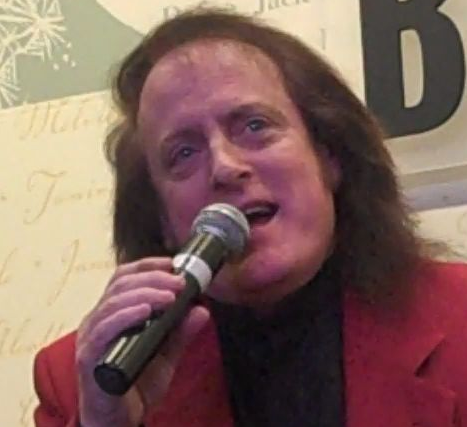
Tommy James (born Thomas Gregory Jackson; April 29, 1947) is an American musician,[1] singer, songwriter, and record producer. James is the frontman of the rock band Tommy James and the Shondells,[2] which is known for hit singles such as "Mony Mony", "Crimson and Clover" and "I Think We're Alone Now".
Early life and career
[edit]Born in Dayton, Ohio on April 29, 1947,[1] James later moved with his family to Niles, Michigan. He was a child model at the age of four.[2][3]
Career
[edit]Tommy James and the Shondells
[edit]In 1959, at the age of twelve, James formed the band "The Echoes", which eventually became "Tom and the Tornadoes".[3] In 1964, the band changed its name to The Shondells. That same year, Jack Douglas, a local DJ at WNIL radio station in Niles, formed his own record label, Snap Records. The Shondells were one of the local bands he recorded at WNIL Studios.[4] One of the songs was the Jeff Barry and Ellie Greenwich ditty "Hanky Panky", which the pair had recorded under the name The Raindrops.[4] The song was a hit locally, but the label had no resources for national promotion, and it was soon forgotten.[3][4]

In 1965, a local dance promoter, Bob Mack, found a copy of "Hanky Panky" in a used record bin and started playing it at his Pittsburgh dance clubs.[2][3] Soon after, a Pittsburgh area bootlegger made a copy of the song and began pressing copies of it, speeding it up slightly in the process.[4] Sales of the bootleg were estimated at 80,000 in ten days.[2][5] It became a number one on Pittsburgh radio stations in early 1966.[5] Douglas heard about the record's sudden popularity in Pittsburgh because his name and contact information appeared on Snap Records labels.[4] Numerous calls from Pittsburgh convinced James to go to Pennsylvania, where he met Mack and Chuck Rubin, who handled the talent bookings for Mack's dance clubs. Before long, all three major music trade papers, Billboard, Cashbox and Record World, were listing "Hanky Panky" as a regional breakout hit. Rubin, who had music industry connections, said it was a good time for the trio to travel to New York City in search of a record deal.[4]
The band made the rounds of the major recording labels, getting initial potential offers from most companies they visited. One label, Roulette Records, gave no initial response because its head, Morris Levy, was out of town until that evening; Roulette was one of the last stops on their visit.[4] By the next morning, Mack, Rubin, and James were now receiving polite refusals from the major record companies after the enthusiasm for the record the day before. James said, "We didn't know what in the world was going on, and finally Jerry Wexler over at Atlantic leveled with us and said, 'Look, Morris Levy and Roulette called up all the other record companies and said, "This is my freakin' record." (laughs) and scared 'em all away – even the big corporate labels.'" Their only option would be to sign with Roulette.[5]
Since the band had broken up two years before, James was the only Shondell left.[4] Mack made his dance club bands available to James, but nothing seemed to fit until one of the bands' guitarists took James to the Thunderbird Lounge in Greensburg, Pennsylvania. James sang with the house band, the Raconteurs. The Raconteurs became the new Shondells,[4] and Jackson acquired the professional name of Tommy James. By the third week of June 1966, "Hanky Panky" had become the top single at WLS.[6] By the third week of July 1966, "Hanky Panky" had become the top single in the United States.[4]
After a few comings and goings of members, the classic lineup of James, Eddie Gray (guitar), Mike Vale (bass), Ron Rosman (keyboards) and Pete Lucia (drums) was formed. The group recorded a follow-up song to "Hanky Panky". When Bob Mack's attempt at finding some Shondells worked out in an inadvertent way, he told James about another record he found in the same used record bin "Hanky Panky" came from: "Say I Am" by Jimmy Gilmer and the Fireballs. The only thing James and his new Shondells were aware of when they entered the recording studio for the first time is that whatever they recorded should sound similar to "Hanky Panky", although the two songs sound nothing alike. Mack played The Fireballs record for the group, and they decided to record their version of the song. Mack was credited as the producer for the group's first album, Hanky Panky.[4][7]
Songwriter Richie Cordell wrote (or co-wrote) and produced many of the group's hits, among them "I Think We're Alone Now", "Mirage", and "Mony Mony".[8] The creation of "Mony Mony" was a group effort involving Cordell, James, Shondells band member Peter Lucia, producer Bo Gentry, and Bobby Bloom. James and Cordell set out to create a party rock single, working out everything except the song's title, which eluded them even after much effort. When they took a break from their creative endeavors on James' apartment terrace, they looked up at the Mutual of New York Insurance Company's large neon sign bearing the abbreviation for the company: M-O-N-Y, which provided the song's name.[4]
Tommy James and the Shondells also produced a "Mony Mony" video when the song was a hit. Even though a number of musical groups had already produced videos by that time, there was no market at all for that film in the US. Television stations would not air it, and it was originally shown between double features in movie theaters in Europe. The film was not seen in the US until the creation of MTV.[3][better source needed]
James was contacted by Beatle George Harrison, who was working with a group called Grapefruit at the time. Harrison and the group had written some songs they wanted James to consider recording. Since the group had made a decision to change their musical style (and would do so with "Crimson and Clover": see below) and the material Harrison and Grapefruit provided was in the style of "Mony Mony", James turned down their offer.
The music business changed after the success of "Mony Mony". Top 40 program formatting, based on 45 RPM single records, drove popular music on the radio. Few stations played cuts from record albums, so radio was, in effect, "selling" single records for the record companies.[4] In August 1968, James and the Shondells went on the campaign trail for three months with presidential candidate Vice President Hubert Humphrey. Meanwhile, popular music had become album-driven, displacing many performers whose singles had been top sellers. James realized he and the Shondells needed to become an album-oriented group if they were to survive in the business, necessitating a change in their style.
After working out a marketing strategy for their new sound, James visited WLS when the group was in Chicago to play a concert, bringing along a rough cut of "Crimson and Clover" to the station. WLS secretly recorded the music when James played his tape for them. By the time James was out of the building and in the car, its radio was playing the station's dub of the not-yet-finished song. "Crimson and Clover" had to be pressed the way it was heard on the radio station, and the marketing plan was now wasted time and effort.[4]
"Crimson and Clover" was a huge success, and the group would have two follow-up hits that also reached the Hot 100's top 10, "Sweet Cherry Wine" and "Crystal Blue Persuasion". James, who co-wrote all three of those songs (with Peter Lucia, Richie Grasso, and Eddie Gray & Mike Vale, respectively),[9] and his band did well enough with the transition to be invited to perform at Woodstock. James describes Artie Kornfeld's invitation like this: "Artie was up and asked if you could play at this pig farm up in upstate New York." I said, "What?!?" "Well, they say it's gonna be a lot of people there, and it's gonna be a really important show." At the time James was in Hawaii and was incredulous about being asked to travel 6,000 miles to play a show on an upstate New York pig farm, telling the Roulette Records' secretary Karin Grasso, "If I'm not there, start without us, will you please?"[2][4]
In March 1970, after four more hits, drugs almost killed James when, at a concert, he collapsed, and was pronounced dead.[citation needed] However, he survived, decided to take a break from the recording studio, and moved up into the country to recuperate.[citation needed] The Shondells, without James, recorded two albums under the new group name Hog Heaven (one "self titled" on Roulette Records in 1970 and the second in 1971 but unreleased until 2008), but disbanded soon afterwards.
In October 2008, James and the three surviving members of the original Shondells (Pete Lucia died in 1987) reunited in a New Jersey studio to record again after 37 years. The group recorded an album, I Love Christmas.[3][10]
Tommy James and The Shondells were voted into the Michigan Rock and Roll Legends online Hall of Fame in 2006. Four of the band's biggest hits have been voted Legendary Michigan Songs: "Crimson & Clover" in 2010, and "Hanky Panky", "I Think We're Alone Now", and "Mony Mony" in 2011.[11]
Solo career
[edit]James recorded the Tony Romeo composition, "Indian Lake" which found its way onto a PPX release, backed with an Addrisi Brothers composition which had reached #39 on the Hot 100 for The Association, "Time for Livin'".[12]
Having gone solo in 1970, he released his first two solo albums on Roulette, Tommy James (September 1970) and Christian of the World (August 1971). He had two further Billboard Hot 100 top 20 chart hits with "Draggin' the Line" (co-written by Bob King) (#4 in 1971) and "Three Times in Love" (#19 in 1980), plus eleven much smaller Hot 100 chartings. "Hanky Panky" has been James' one RIAA certified gold single. He also wrote and produced the million-selling 1970 hit "Tighter, Tighter" for the group Alive 'N Kickin' (co-written by Bob King).
It was evident when James first met Morris Levy of Roulette Records that Levy was willing to strong-arm others when necessary.[5] While a Roulette artist had great creative control when recording for the company, the lack of payment for those efforts was difficult to take.[4][5][10] James estimates the company owed him $30 to $40 million in royalties.[5][13] Roulette was used as a front for organized crime, also functioning as a money laundering operation, as Levy was closely allied with the Genovese crime family. In the early 1970s, the Genovese outfit found itself in a bloody gang war with the Gambino family, which saw victims not only among mobsters (such as Levy's close friend and business partner Thomas Eboli), but increasingly among non-mob figures on the periphery of the organizations. Levy had taken a somewhat fatherly shine to James, and worried that he might be a target for those who wanted to get at the Genovese family through Levy, so he warned James to flee New York for an extended period until the war was over. In 1971, James settled in Nashville, Tennessee, where the Mafia had little presence or influence. While there, he recorded an album with top Nashville musicians entitled My Head, My Bed and My Red Guitar (January 1972), which received critical acclaim but sold poorly. He left Roulette Records in 1974 and two more albums, In Touch (July 1976) and Midnight Rider (January 1978), followed on Fantasy Records, with yet another, Three Times in Love, appearing on Millennium Records in late 1979. The independent label Aegis Records put out his Hi-Fi album in the summer of 1990.
To date, over 300 musicians have recorded versions of James' music.[2][3] Covers of three of James' songs went top ten on the Hot 100 (the last two as consecutive No. 1s) in the 1980s: Joan Jett with "Crimson and Clover", Tiffany with "I Think We're Alone Now", and Billy Idol with "Mony Mony".
Other endeavors
[edit]In February 2010, James published an autobiography entitled Me, The Mob, and The Music. James announced that deals were in hand to turn the story into both a film and a Broadway play.[3][better source needed] Barbara De Fina was said to be producing the film. James did not feel comfortable writing his book until all those deeply involved with the record company had died.[5] After Roulette Records and Levy's Big Seven Music publishing company were sold (the record company to an EMI and Rhino Records partnership, the music publishing company to Windswept Pacific Music, which was later sold to EMI) James began to receive large royalty checks from sales of his records.[14]
In February 2018, James became host of weekly radio program 'Gettin Together with Tommy James' on Sirius XM Radio channel 73, 60s Gold.[15]
James can also be seen on late-night informercials selling collections of music from the Woodstock era for Time Life.[16]
Personal life
[edit]James moved to Clifton, New Jersey in the mid 1970s and circa 2000 to nearby Cedar Grove.[17] He has been married three times and has one child. On February 23, 2022, his wife Lynda died after a prolonged illness.[18]
James married his long-time manager Carol Ross on April 5, 2025.[19]
Solo discography
[edit]Albums
[edit]| Year | Album | US 200 [20] |
Record label | ||
|---|---|---|---|---|---|
| 1970 | Tommy James | — | Roulette Records | ||
| 1971 | Christian of the World | 131 | |||
| My Head, My Bed, and My Red Guitar | — | ||||
| 1976 | In Touch | — | Fantasy Records | ||
| 1978 | Midnight Rider | — | |||
| 1979 | Three Times in Love | 134 | Millennium Records | ||
| 1990 | Hi-Fi | — | Aegis Records | ||
| 1991 | The Solo Years (1970-81) | — | Rhino Records | ||
| 1994 | Discography Deals and Demos 74-92 | — | Aura Records | ||
| 2006 | Hold the Fire | — | |||
| 2008 | I Love Christmas | — | |||
| 2019 | Alive | — | |||
| "—" denotes releases that did not chart. | |||||
Singles
[edit]| Year | Title | Peak chart positions | Record label | B-side | Album | |||
|---|---|---|---|---|---|---|---|---|
| US [21] |
US AC [22] |
AUS [23] |
CAN | |||||
| 1970 | "Ball and Chain" | 57 | — | — | 44 | Roulette Records | "Candy Maker" | Tommy James |
| "Church Street Soul Revival" | 62 | — | — | 55 | "Draggin' the Line" | Christian of the World | ||
| 1971 | "Adrienne" | 93 | — | — | — | "Light of Day" | ||
| "Draggin' the Line" | 4 | 6 | 20 | 2 | "Bits and Pieces" | |||
| "I'm Comin' Home" | 40 | — | — | 19 | "Sing, Sing, Sing" | |||
| "Nothing to Hide" | 41 | — | — | 35 | "Walk a Country Mile" | My Head, My Bed, and My Red Guitar | ||
| 1972 | "Tell 'Em Willie Boy's A'Comin'" | 89 | — | — | 89 | "Forty Days and Forty Nights" | ||
| "Cat's Eye in the Window" | 90 | — | — | 85 | "Dark is the Night" | Non-album singles | ||
| "Love Song" | 67 | 40 | — | 51 | "Kingston Highway" | |||
| "Celebration" | 95 | — | — | — | "The Last One to Know" | |||
| 1973 | "Boo, Boo, Don't'cha Be Blue" | 70 | — | — | 68 | "Rings and Things" | ||
| "Calico" | — | — | — | — | "Hey, My Lady" | Non-album single | ||
| 1974 | "Glory, Glory" | — | — | — | — | MCA Records | "Comin' Down" | Non-album single |
| 1976 | "Tighter, Tighter" | — | — | — | — | Fantasy Records | "Comin' Down" | In Touch |
| "I Love You Love Me Love" | — | — | — | — | "Devil Gate Drive" | |||
| 1977 | "Love is Gonna Find a Way" | — | — | — | — | "I Don't Love You Anymore" | Midnight Rider | |
| 1979 | "Three Times in Love" | 19 | 1 | — | 64 | Millennium Records | "I Just Wanna Play the Music" | Three Times in Love |
| 1980 | "You Got Me" | 101 | — | — | — | "It's All Right (For Now)" | ||
| 1981 | "You're So Easy to Love" | 58 | — | — | — | "Halfway to Heaven" | Non-album singles | |
| 1983 | "Say Please" | — | — | — | — | 21 Records | "Two Time Lover" | |
| 1990 | "You Take My Breath Away" | — | — | — | — | AEGIS | "Heartbeat in the Night" | Hi-Fi |
| 1990 | "Go" | — | — | — | — | AEGIS | "Backtrack" | |
| 2006 | "Love Words" | — | 40 | — | — | Aura Records | N/A | Hold the Fire |
| 2019 | "So Beautiful" | — | 29 | — | — | Aura Records | N/A | Alive |
| "I Think We're Alone Now" (acoustic) | — | 27 | — | — | N/A | |||
| "—" denotes releases that did not chart or were not released in that territory. | ||||||||
Bibliography
[edit]- James, Tommy; Martin Fitzpatrick (2010). Me, the mob, and the music: one helluva ride with Tommy James and the Shondells. New York: Scribner. ISBN 978-1-4391-2865-7. The book extensively details James's relationship with Morris Levy.
References
[edit]- ^ a b Deming, Mark. "Tommy James Biography". AllMusic.
- ^ a b c d e f "Tommy James & The Shondells". Classicbands.com. Retrieved December 11, 2010.
- ^ a b c d e f g h "Tommy James Biography". TommyJames.com. Retrieved December 11, 2010.
- ^ a b c d e f g h i j k l m n o p James, Tommy; Fitzpatrick, Martin, eds. (2010). Me, the Mob, and the Music: One Helluva Ride with Tommy James & The Shondells. Scribner. p. 240. ISBN 978-1-4391-2865-7. Retrieved December 11, 2010.
raindrops.
- ^ a b c d e f g Mervis, Scott (March 22, 2010). "Tommy James' music success linked to Pittsburgh and gangsters". Pittsburgh Post-Gazette. Retrieved December 11, 2010.
- ^ "Silver Dollar Survey". WLS. June 17, 1966. Retrieved August 30, 2014.
- ^ Viglione, Joe. "Hanky Panky (album)". AllMusic. Retrieved December 11, 2010.
- ^ Kuruts, Steve. "Richie Cordell Biography". AllMusic. Retrieved December 11, 2010.
- ^ Ruhlmann, William. "The Very Best of Tommy James & the Shondells". AllMusic. Retrieved December 11, 2010.
- ^ a b James, Gary. "Tommy James Interview". Classicbands.com. Retrieved December 11, 2010.
- ^ "Home". Michigan Rock and Roll Legends. Retrieved June 25, 2014.
- ^ Discogs - Tommy James – Indian Lake
- ^ La Gorce, Tammy (November 19, 2010). "A Rock 'n' Roll Story Is Finally Told". New York Times. Retrieved December 11, 2010.
- ^ "For Tommy James, the past is the future | 40 Years After | a Chron.com blog". Blogs.chron.com. July 5, 2010. Retrieved April 13, 2012.
- ^ "Tommy James Launches New Weekly Series Exclusively on SiriusXM". cashboxmagazine.com. February 28, 2018. Retrieved July 23, 2018.
- ^ "The Woodstock Collection". Time Life. September 30, 2012. Retrieved August 19, 2015.
- ^ Lustig, Jay (September 5, 2010). "Tommy James tells all: The glorious highs and little-known dark side of a hit-filled career". The Star-Ledger. Retrieved October 2, 2016.
James was born in Dayton, Ohio, and grew up in South Bend, Ind., Monroe, Wis., and Niles, Mich. He moved to New York in '66, and New Jersey in 1973. He has been in Cedar Grove for about 10 years, having previously lived in Clifton. He recently moved to Sykesville, Maryland.
- ^ "Lynda Jackson: 1947 - 2022". Legacy (Obituary).
- ^ Kuperinsky, Amy (April 6, 2025). "It's all crimson and clover as N.J. singer Tommy James marries longtime manager in rock wedding". nj. Retrieved April 20, 2025.
- ^ "Tommy James - Billboard 200". Billboard. Retrieved October 22, 2022.
- ^ "Tommy James - Billboard Hot 100". Billboard. Retrieved October 22, 2022.
- ^ "Tommy James Chart History: Adult Contemporary". Billboard. Retrieved March 27, 2019.
- ^ Kent, David (1993). Australian Chart Book 1970–1992 (illustrated ed.). St Ives, N.S.W.: Australian Chart Book. p. 154. ISBN 0-646-11917-6.
External links
[edit]Tommy James
View on GrokipediaTommy James (born Thomas Gregory Jackson; April 29, 1947) is an American singer, songwriter, musician, and record producer best known as the frontman of the 1960s rock band Tommy James and the Shondells.[1][2]
With the Shondells, James achieved two number-one singles on the Billboard Hot 100—"Hanky Panky" in 1966 and "Crimson and Clover" in 1969—along with additional top-ten hits including "Mony Mony" (No. 3, 1968), "I Think We're Alone Now" (No. 4, 1967), "Crystal Blue Persuasion" (No. 2, 1969), and "Sweet Cherry Wine" (No. 7, 1969).[3][4] The band sold over 100 million records worldwide and earned five BMI Million Air awards for songs exceeding one million radio plays each.[5]
Following the band's dissolution in 1970, James launched a solo career, scoring hits such as "Draggin' the Line" (No. 4, 1971) and "Three Times in Love" (No. 10, 1980), while continuing to release albums and perform.[5] His pioneering work included early music videos, such as for "Mony Mony," and collaborations across genres, cementing his influence in pop-rock during a transformative era.[5]
Early Life
Childhood in Michigan
Thomas Gregory Jackson, professionally known as Tommy James, was born on April 29, 1947, in Dayton, Ohio. His family soon relocated to Niles, Michigan—a small working-class town near the Indiana border and Lake Michigan—where he spent his formative years in a modest environment that emphasized self-reliance amid local manufacturing influences.[6][7][1] James's early musical inclinations were sparked by rock 'n' roll broadcasts on the radio and television appearances, such as Elvis Presley's debut on The Ed Sullivan Show in 1956, which he viewed at age nine. His mother supported this interest by purchasing a record player for the household, providing access to popular recordings that captivated him from a young age.[7][8] At nine years old, James bought his first acoustic guitar and self-taught basic techniques by emulating heard songs, advancing to an electric guitar by age ten to pursue amplified rock sounds. This hands-on progression in Niles's limited but vibrant local scene laid foundational skills, driven by innate curiosity rather than formal instruction.[9][7]Initial Musical Development
At age nine, Tommy James began teaching himself to play the guitar after watching Elvis Presley perform on The Ed Sullivan Show, an experience that sparked his interest in the instrument and rock music.[10] [11] This self-directed learning emphasized practical repetition and adaptation, allowing him to develop basic proficiency without formal instruction.[12] Presley's energetic style and vocal delivery became a primary influence, shaping James's early approach to singing and performance through imitation and experimentation.[13] In 1959, at the age of twelve, James formed his first band, The Echoes, in Niles, Michigan, recruiting local schoolmates to play covers of popular 1950s rock and roll tunes.[14] The group initially rehearsed informally, focusing on trial-and-error refinement of arrangements to match venue acoustics and audience responses during small-scale events.[7] Their debut performance occurred at a seventh-grade variety show in James's junior high school, marking an entry into live experimentation amid limited equipment and feedback from peers.[15] The Echoes soon expanded to local venues around Niles, performing at teenage dances and community gatherings, where persistence in booking slots and adapting setlists based on crowd reactions honed their garage rock style.[7] These early outings, often in basements or modest halls, underscored a reliance on empirical adjustments—such as volume tweaks and song selections—to build audience engagement despite initial technical shortcomings and obscurity.[16] This phase laid foundational skills in group dynamics and stage presence, fostering resilience through repeated low-stakes trials before any professional aspirations emerged.[6]Formation and Early Success of Tommy James and the Shondells
Band Origins and Local Scene
Tommy James formed his first band, The Echoes, in 1959 at age 12 in Niles, Michigan, recruiting schoolmates including drummer Mike Booth and players on saxophone, trumpet, and piano for a school variety show.[17] The group soon evolved into a trio named Tom and the Tornadoes, featuring James on vocals and guitar, Larry Coverdale on guitar, and later adding Larry Wright on bass, performing covers and original material at local venues like Niles Legion Hall and sock hops.[17][18] Lineup changes occurred frequently amid teenage band dynamics, with Booth replaced by Nelson Shepard on drums in 1962 and saxophonist Mike Finch added shortly after.[17] By 1964, as the band rebranded to The Shondells, Finch and Shepard departed, succeeded by keyboardist Craig Villeneuve and drummer Jim Payne, while James, Coverdale, and Wright remained core members from junior high school origins.[17][18] This iteration recorded regionally, including a 1961 single "Judy" backed with "Long Pony Tail" on Northway Sound, which sold approximately 3,100 copies in the Midwest.[17] The Shondells honed their sound through persistent performances on the local Michigan circuit, playing resorts, dances, and teen events, often repeating sets to cultivate a following despite equipment shortages and logistical hurdles common to adolescent groups.[17][18] These gigs emphasized covers of popular rock and roll alongside originals, fostering regional recognition but facing challenges from member turnover and drying opportunities by 1965, leading to temporary splintering.[17]"Hanky Panky" Rediscovery and Breakthrough (1964-1966)
In April 1964, Tommy James and the Shondells recorded "Hanky Panky," a song written by Jeff Barry and Ellie Greenwich, at a studio in Munster, Indiana, for the small Snap Records label.[19] The single, backed with "Thunderbolt," achieved modest local success in the Niles, Michigan, area, selling around 10,000 copies before the original band lineup disbanded later that year amid waning interest.[19] By early 1966, Pittsburgh disc jockey Bob Mack began playing bootleg copies of the 1964 recording on his show, sparking massive regional demand as fans requested it relentlessly, leading to informal pressings and sales exceeding 80,000 units in the Pittsburgh market alone by May.[20] Mack located James, who had been working odd jobs, and urged him to capitalize on the surge; James promptly traveled to Pittsburgh, assembled a temporary pickup band from local musicians, and performed promotional spots on radio and television stations to meet the frenzy.[7] James and Mack then brought a master copy of the track to New York City, securing a distribution deal with Roulette Records owner Morris Levy, who reissued it nationally on June 4, 1966.[21] The re-release propelled "Hanky Panky" to the top of the Billboard Hot 100, holding the No. 1 position for two weeks beginning July 30, 1966, and eventually earning gold certification for over 1 million sales. To sustain touring demands, James hastily reformed the Shondells with a new permanent lineup—guitarist Eddie Gray, bassist Mike Vale, keyboardist Ron Rosman, and drummer Peter Lucia—recruited from Niles bar bands, enabling over 300 performances that year while preserving the group's name and momentum.[21]Peak Commercial Success
Signing with Roulette Records
Following the explosive regional popularity of "Hanky Panky" in Pittsburgh during early 1966, Tommy James, then 19, traveled to New York City to negotiate a recording contract amid interest from multiple labels. Roulette Records president Morris Levy, recognizing the track's potential after its initial 1964 release on the small Snap Records had faded, aggressively pursued James by contacting rival executives and warning that signing him would invite interference, effectively steering the deal to Roulette.[22][20] The agreement, finalized in April 1966, transitioned James and the Shondells from independent obscurity to Roulette's promotional machinery, which emphasized payola-influenced radio play and nationwide distribution unavailable through prior regional outlets. This structure enabled the re-release of "Hanky Panky," which sold over one million copies and reached No. 1 on the Billboard Hot 100 by July 18, 1966, capitalizing on the song's garage rock appeal and James's raw vocals.[5][23] While the contract initially appeared standard and provided modest advances for touring and operations, Levy's hands-on oversight—demanding personal approvals for expenditures—hinted at Roulette's non-traditional management style, prioritizing label control over artist autonomy in ways that diverged from major-label norms. These resources facilitated prompt studio sessions in New York, laying groundwork for expanded output beyond the single's momentum.[20][24]Major Hits and Sales Dominance (1967-1969)
Following the signing with Roulette Records, Tommy James and the Shondells achieved a series of Top 10 hits on the Billboard Hot 100 between 1967 and 1969, marking their peak commercial period. "I Think We're Alone Now," released in 1967, peaked at No. 4, becoming one of the year's top-selling singles and ranking 12th on the Billboard Year-End Hot 100.[3][25] In 1968, "Mony Mony" reached No. 3, driven by its energetic rhythm and call-and-response structure that resonated widely on radio.[3] The following year, "Crimson and Clover" topped the chart at No. 1 for two weeks starting February 1, 1969, exemplifying their shift toward psychedelic elements.[3][26] This string of successes underscored their sales dominance, with the group selling more singles than any other artist worldwide during 1968-1969, surpassing even the Beatles in that category according to industry records.[27][28] Over their career, James and the Shondells amassed over 100 million records sold globally, with much of this volume attributable to the high output and popularity of hits from this era, including 23 gold singles overall.[5][20] Creative experimentation in the studio contributed to their market edge, particularly on "Crimson and Clover," where James employed innovative tremolo and phasing effects on the guitar—achieved via a phase-shift oscillator modulating the signal—to create its signature swirling, psychedelic sound.[29][30] This technique, among the earliest in major pop hits, enhanced the track's dreamy texture and helped it stand out amid evolving 1960s production trends.[29]| Song | Peak Position (Billboard Hot 100) | Release Year |
|---|---|---|
| I Think We're Alone Now | No. 4 | 1967 |
| Mony Mony | No. 3 | 1968 |
| Crimson and Clover | No. 1 | 1968 |
Industry Challenges and Mob Connections
Roulette Records' Organized Crime Ties
Roulette Records, founded in 1957 by Morris Levy among others, maintained deep ties to organized crime, particularly the Genovese crime family, through Levy's longstanding associations as an associate and operational front.[31][32] The FBI's 3.5-year investigation starting in 1984 explicitly targeted Levy and Roulette for infiltration by the Genovese family, alleging the label served as a laundering mechanism under figures like Vincent Gigante, the reputed family boss, with practices including extortion and fund skimming.[33][32] This culminated in Levy's 1988 conviction on extortion charges, resulting in a 10-year prison sentence and $200,000 fine, confirming judicial recognition of his mob-linked operations.[32][34] For artists like Tommy James, these connections manifested in direct financial exploitation and intimidation, where Roulette's opaque accounting withheld royalties despite multimillion-dollar sales figures. James reported receiving minimal payments—often under $100,000 total—while the label pocketed the bulk, attributing this to Levy's mob-enforced control that discouraged inquiries through threats, including armed enforcers at meetings and menacing calls.[35][23] Such tactics, detailed in James's firsthand accounts, compelled compliance and stalled career moves, as challenging the label risked physical reprisal or blacklisting in a mob-influenced distribution network.[36][37] In the broader 1960s music industry, mob infiltration extended to payola schemes and promotional rackets, where crime families like the Genovese controlled independent promoters and jukebox placements to manipulate airplay and sales, empirically boosting hits while siphoning revenues through kickbacks and denied artist earnings.[38][39] Roulette exemplified this pattern, using intimidation to maintain artist loyalty amid systemic corruption that prioritized syndicate profits over transparent dealings.[40][37]Exploitation, Declined Opportunities, and 1970 Crisis
Despite achieving commercial success with multiple gold-certified singles and estimated worldwide sales exceeding 100 million records, Tommy James received minimal royalties from Roulette Records, often described as poverty-level payments that failed to reflect the label's earnings.[41] James later stated in interviews that he "never saw a cent in mechanical royalties" from the company, attributing the withholding to deliberate financial deceptions by label executives.[20] This exploitation persisted even as the band notched 23 gold singles, underscoring a pattern of contractual imbalances common in the era's independent labels.[35] In mid-1969, while vacationing in Hawaii, James declined an invitation to perform at the Woodstock festival after his secretary relayed it as a small event on "a pig farm in upstate New York," prompting skepticism about its viability.[42] The band prioritized rest over the uncertain gig, only to later regret the decision as Woodstock drew over 400,000 attendees and became a defining cultural milestone.[43] James reflected that "we could have just kicked ourselves," viewing it as a missed opportunity amid their peak touring schedule.[44] The pressures culminated in a personal crisis in March 1970, when James collapsed off-stage after a concert in Birmingham, Alabama, from exhaustion exacerbated by drug use and relentless touring.[45] Hospitalized and briefly pronounced dead upon arrival, the incident fueled false reports of a fatal overdose, including an erroneous New York Times obituary declaring his death.[45] James survived and debunked the rumors, demonstrating resilience by resuming work shortly thereafter, though the episode highlighted the toll of industry deceptions and personal strain.[46]Transition to Solo Work
Band Dissolution and Drug-Related Struggles
In mid-spring 1970, Tommy James and the Shondells disbanded after a period of declining hits and internal exhaustion from a relentless touring and recording schedule that had spanned over three years of peak success. James attributed the split directly to his drug addiction, stating in a 1974 interview, "the reason the Shondells and I broke up was because, uh…well, because I was a junkie. And you can’t function being a junkie."[47] The band's members, facing similar burnout from the high-pressure environment, dispersed to pursue individual endeavors outside the group's framework, with some transitioning to session work or other musical projects.[47] James's substance use, primarily amphetamines, had escalated in the late 1960s as a means to sustain a grueling 24-hour daily workload amid industry demands and personal stress. He later reflected, "I was taking amphetamines in the late 60s and I was addicted to them," acknowledging the chemicals' role in enabling productivity but ultimately contributing to physical and mental deterioration.[48] This dependency culminated in a severe health crisis in March 1970, when James collapsed following a concert in Birmingham, Alabama, due to a drug overdose; he was briefly pronounced dead before reviving, an incident that underscored the toll on his functionality.[49][50] The addiction directly impaired James's creative output, leading to prolonged pauses in songwriting and production capabilities as he grappled with withdrawal and recovery on a secluded farm for several months. While the band's dissolution allowed members to escape the collective strain, James's struggles highlighted the causal connection between unchecked substance use and the erosion of professional cohesion in high-stakes rock environments of the era.[47][48]Initial Solo Releases (1970s)
Following the dissolution of Tommy James and the Shondells, James released his debut solo album, Tommy James, in September 1970 on Roulette Records. The record marked a departure from the band's bubblegum and psychedelic sound, incorporating more introspective and experimental elements, including tracks like the debut single "Ball and Chain," which highlighted James's evolving songwriting amid personal transitions.[51] Produced primarily by James himself, the album reflected his push for greater creative control after years of label constraints, though it achieved only modest commercial traction, failing to produce major hits.[52] James followed with Christian of the World in August 1971, also on Roulette, where he co-produced with collaborator Bob King. The album's lead single, "Draggin' the Line"—co-written by James and King—became his biggest solo success of the decade, peaking at No. 4 on the Billboard Hot 100 on August 14, 1971, after debuting at No. 86 on June 12 and charting for 13 weeks. [53] The track's laid-back, rhythmic groove showcased James's maturation as a performer, drawing from personal experiences of perseverance, but subsequent singles from the album underperformed, underscoring the challenge of sustaining momentum without the Shondells' established brand.[54] These early efforts emphasized James's autonomy in production and artistic direction, yet sales remained inconsistent, often eclipsed by nostalgia for his group-era hits like "Crimson and Clover." By the mid-1970s, after leaving Roulette in 1974, James explored further independence through recordings on labels like Fantasy, prioritizing self-directed projects over commercial formulas, though without replicating the explosive success of his 1960s output.[55] This period's variability highlighted the difficulties of transitioning from band frontman to solo artist in a shifting rock landscape.[46]Later Career and Endeavors
Reunions, Touring, and New Material
In the late 2000s, James reunited with musicians billed as the Shondells for the album I Love Christmas, released on October 7, 2008, via Aura Records, which included the title track as a collaborative effort after decades without such a group recording.[56] [57] This marked a revival of the band configuration for select projects amid James's solo-oriented career. Subsequent touring incorporated the Shondells name with rotating backing players, focusing on live performances of era-defining hits to meet audience expectations for nostalgia-driven shows. James has sustained an active touring schedule through the 2000s and into the 2020s, with over 200 documented concerts, including multiple appearances in Las Vegas and at casino venues such as Grand Falls Casino & Resort in Iowa and Prairie Band Casino in Kansas.[58] [59] Setlists typically emphasize core hits like "Crimson and Clover," "I Think We're Alone Now," "Mony Mony," and "Crystal Blue Persuasion," reflecting adaptations to capitalize on enduring radio play and fan familiarity rather than new compositions.[60] This consistency underscores persistent demand, evidenced by scheduled 2025 dates at venues like Arlington Music Hall in Texas and The Showroom at Golden Nugget in Las Vegas.[59] New releases in the 2000s and 2010s included Hold the Fire in 2006 and Alive in 2019, the latter arriving after a decade-long gap and featuring original tracks amid electronic and rock explorations.[61] BMI recognized this longevity in 2013 with five Million-Air Awards for cumulative airplay exceeding 22 million performances across James's catalog, highlighting the songs' sustained broadcast viability without reliance on contemporary chart success.[62]Business Ventures, Book, and Biopic Developments
In 2010, Tommy James co-authored the autobiography Me, the Mob, and the Music: One Helluva Ride with Tommy James and the Shondells with Martin Fitzpatrick, published by Simon & Schuster, which details his experiences with Roulette Records, including financial exploitation and ties to organized crime figures like label head Morris Levy.[63] The book draws on legal documents, contracts, and personal records to substantiate claims of unpaid royalties—estimated by James at over $30 million—and industry manipulations such as payola schemes, presenting a corrective narrative to prior accounts that downplayed Roulette's criminal associations.[64] James uses the memoir to critique systemic issues in the 1960s music business, arguing that mob involvement enabled short-term hits but long-term artist disenfranchisement, with his documentation serving as evidence against self-serving industry lore.[65] The autobiography's revelations spurred development of a biopic adaptation titled Me, the Mob, and the Music, announced in July 2019 and produced by Barbara DeFina, known for collaborations with Martin Scorsese, to dramatize James' trajectory from regional obscurity to chart dominance amid Levy's influence.[66] By October 2025, James indicated the project had shifted toward a television series format, stating that "a movie wouldn't be enough" to encompass the full scope of events, with production stalled by the COVID-19 pandemic and the 2023 Hollywood writers' strike.[41] [67] This extension aims to highlight causal links between criminal oversight and creative output, positioning the story as an exposé on how mob control distorted residuals and opportunities, independent of James' musical catalog alone.[68] Beyond publishing and media adaptations, James has pursued production roles on subsequent recordings and leveraged songwriting credits—such as on hits like "Mony Mony" and "Crimson and Clover"—for verifiable royalty streams from licensing to advertisements, films, and broadcasts, emphasizing documented income over anecdotal industry promises.[69] These ventures underscore his post-Roulette focus on narrative sovereignty and financial accountability, using the book and biopic to counter exploitative precedents with primary-source validation rather than reliant on biased retrospective accounts from implicated parties.[70]Legacy and Reception
Commercial Achievements and Metrics
Tommy James and the Shondells achieved three number-one singles on the Billboard Hot 100: "Hanky Panky" in July 1966, "Mony Mony" in March 1968, and "Crimson and Clover" in February 1969.[4] The band amassed 14 top-40 entries on the same chart, including additional top-10 hits such as "I Think We're Alone Now" (No. 4, 1967), "Mirage" (No. 10, 1967), and "Crystal Blue Persuasion" (No. 2, 1969).[3] James's solo career added further chart success, with "Draggin' the Line" reaching No. 4 in 1971 and "Three Times in Love" peaking at No. 19 in 1980, contributing to a total of over 30 Billboard Hot 100 entries across his discography.[71][72] RIAA certifications for James's work are limited but notable; "Hanky Panky" earned gold status in recognition of one million units sold, marking the band's sole such honor for a single.[73] Broader claims from James's management and interviews attribute 23 gold singles and nine platinum albums to his catalog, though these encompass international and label-verified metrics beyond RIAA thresholds.[71] Cumulative global sales for James's recordings exceed 100 million units, as reported consistently in artist biographies and industry profiles spanning decades.[20][5] This figure underscores the commercial endurance of his bubblegum and psychedelic output, evidenced by high-profile covers like Billy Idol's live version of "Mony Mony," which topped the Billboard Hot 100 in November 1987 after selling over a million copies.[74] Such re-recordings highlight sustained market viability, with Idol's track achieving platinum certification and reinforcing the original's foundational sales impact.[75]Musical Innovations, Influence, and Criticisms
Tommy James and the Shondells pioneered production techniques that blended garage rock with emerging psychedelic elements, notably in "Crimson and Clover" (1968), where tremolo effects on guitar and vocals created a stuttering, immersive texture predating widespread pop adoption of such studio manipulations.[29] [76] The vocal tremolo was generated by routing a Telefunken 251 microphone through an Ampex Gemini 2 amplifier with tempo-synchronized modulation, while guitar tremolo leveraged built-in amplifier circuits, and tape delay feedback—fed from the play head back to the record head on a 24-track Allegro console—produced layered echo without digital aids.[29] These methods marked a causal shift from their earlier bubblegum sound, enabling stereo depth that facilitated airplay transition from AM to FM formats.[29] The band's innovations exerted influence through genre fusion, crossing raw garage energy into polished pop without overt politicization, a rarity amid 1960s contemporaries delving into protest themes.[77] Their sound inspired covers exceeding 200 instances, including Joan Jett's adaptation of "Crimson and Clover," Billy Idol's punk-infused "Mony Mony," and Tiffany's revival of "I Think We're Alone Now," evidencing empirical endurance via reinterpretation by diverse artists from Prince to Cher.[78] This metric of adaptation underscores causal impact on subsequent pop and rock production, prioritizing melodic hooks and effects over lyrical complexity. Critics frequently derided the Shondells' output as formulaic "bubblegum" or "teenybopper" fare, affixing labels like "Prince of Bubble Gum" to James for its perceived shallowness and youth-market focus, often sidelining technical experimentation in favor of authenticity hierarchies.[79] [80] Such dismissals reflected 1960s-1970s rock journalism's bias toward "serious" or countercultural acts, undervaluing apolitical pop's structural innovations despite their role in sustaining broad accessibility.[81] Defenses arise from the music's persistent fan engagement and cover proliferation, which empirically validate its hooks' resilience against era-bound snobbery rather than critical consensus.[78]Personal Life
Marriages, Family, and Relationships
Tommy James has been married three times, with his first two marriages ending in divorce.[82] He has one child from one of his early unions, though details about the child and prior spouses remain private, reflecting James's preference for shielding family matters from public scrutiny amid his extensive touring and professional commitments.[82] James's third marriage was to Lynda Brooks Jackson (also known as Lynda James), with whom he shared approximately 50 years together until her death on February 23, 2022, following a prolonged illness. [83] Her obituary highlighted her residence in Cedar Grove, New Jersey, and prior ties to Valencia, Pennsylvania.[84] Following Lynda's passing, James married his longtime manager, Carol Ross, on April 5, 2025, in Cedar Grove, New Jersey. [85] Ross, who had managed James's career for over three decades, had been widowed since 2011; their relationship evolved from professional collaboration to marriage after years of friendship.[85] The ceremony drew attendees from the music industry, underscoring James's enduring connections within rock circles.Health Incidents and Resilience
In March 1970, James collapsed off-stage after a performance in Birmingham, Alabama, due to severe exhaustion from prolonged overwork and a demanding tour schedule.[86] This incident, amid a period of intense professional pressures, highlighted the physical toll of his career but did not result in long-term impairment, as he resumed activities shortly thereafter.[86] On March 7, 2025, during a concert at The Showroom at the Golden Nugget in Las Vegas, James abruptly halted the show midway, citing total exhaustion from a long flight combined with immediate sound check and performance demands.[87] [86] Audience reports noted heavy breathing and him sitting to recover, but his representative confirmed a swift recuperation without medical complications, allowing him to return home to New Jersey for rest and continue touring as scheduled.[88] [89] At age 78, James has sustained vocal performance levels comparable to his earlier career, defying typical age-related decline through consistent self-reported practices focused on voice maintenance and overall health.[90] In mid-2025 discussions, he emphasized proactive care routines as key to this endurance, enabling continued live performances without evident deterioration.[91] These episodes underscore a pattern of rapid recovery from fatigue-induced setbacks, attributable to empirical management of physical limits rather than inherent invulnerability.Discography
Albums with Tommy James and the Shondells
Tommy James and the Shondells issued their initial albums through Roulette Records, a label notorious for prioritizing singles revenue over comprehensive album promotion and artist royalties, which limited the commercial visibility of their LPs despite strong single performance. The debut album, Hanky Panky, released in April 1966, capitalized on the reissued title single's success and earned RIAA gold certification for sales exceeding 500,000 units, marking the band's only such album accolade.[73] Subsequent 1967 releases I Think We're Alone Now and Gettin' Together maintained a garage rock orientation but received scant label support, resulting in negligible chart presence. By 1968, the band transitioned toward psychedelic elements, evident in Mony Mony, which peaked at #193 on the Billboard 200 amid Roulette's focus on the titular single.[92] The pivotal Crimson and Clover, released in December 1968, represented their commercial apex for albums, reaching #8 on the Billboard 200 and signaling a mature experimental phase with innovative production techniques like phasing effects.[3] The follow-up Cellophane Symphony in 1969 continued this evolution with orchestral arrangements but charted modestly at #141, underscoring Roulette's inadequate marketing amid the band's internal creative advancements.[93] These Roulette-era albums collectively underscore the tension between artistic ambition and label exploitation; James later recounted in interviews how Morris Levy's operation withheld substantial earnings, with the artist estimating over $30 million in unpaid royalties despite generating significant revenue through hits-driven sales.[20]Solo Albums
Tommy James released his self-titled debut solo album in September 1970 on Roulette Records, marking the end of his work with the Shondells and a transition to more personal songwriting amid personal and professional challenges, including drug issues and label disputes.[94] The album featured tracks like "Church Street Soul Revival," blending soul and rock elements, but achieved limited commercial success, reflecting James's move away from the band's bubblegum pop toward introspective material.[95] After a follow-up, Christian of the World in 1971—which included the hit single "Draggin' the Line" reaching number four on the Billboard Hot 100—James left Roulette in 1974, gaining greater artistic independence by signing with Fantasy Records.[96] His 1976 album In Touch, self-produced and recorded in late 1975, incorporated covers of glam rock hits such as "Devil Gate Drive" and "(Do You Wanna) Touch Me," signaling a stylistic shift toward edgier, harder rock influences while retaining pop accessibility, though it failed to chart significantly.[97] This period emphasized James's control over production, prioritizing creative experimentation over the formulaic hits of his band era.[98] Subsequent releases like Midnight Rider (1978) continued on Fantasy with a rock-oriented sound, but modest sales underscored the challenges of solo viability without the Shondells' momentum.[99] By 1980, Three Times in Love on Millennium Records yielded a top-20 single of the same name, yet overall chart performance remained subdued compared to his earlier group successes.[100] After a decade-long gap, James returned with Hi-Fi in 1990, self-released and featuring AOR and west coast rock styles with tracks like "You Take My Breath Away," highlighting polished production and mature themes of romance and resilience, though it received niche acclaim rather than broad commercial breakthrough.[101] Later efforts, such as Hold the Fire in 2006, further demonstrated his commitment to independent output, focusing on artistic fulfillment amid evolving personal recovery and business ownership of masters.[102] These solo works collectively illustrate a progression from label-dependent pop to self-directed explorations in rock subgenres, valuing longevity over peak sales.[103]Key Singles
Tommy James and the Shondells scored multiple top-10 hits on the Billboard Hot 100 in the late 1960s, beginning with "Hanky Panky," which reached number 1 in June 1966 after rediscovery from its earlier regional release.[3] "I Think We're Alone Now" followed at number 4 in November 1967, while "Mony Mony" peaked at number 3 in April 1968.[3] The band continued with "Crimson and Clover" hitting number 1 in December 1968 and "Crystal Blue Persuasion" at number 2 in June 1969, contributing to over 20 million records sold by the group during this period.[3] Transitioning to a solo career, James released "Draggin' the Line" in 1971, co-written with producer Bob King, which climbed to number 4 on the Hot 100.[3] His later single "Three Times in Love" reached number 19 in 1980, marking his final top-20 entry.[72] These tracks maintain enduring radio airplay and cultural relevance through covers, including Billy Idol's version of "Mony Mony" (number 1 in 1987), Joan Jett's "Crimson and Clover" (number 7 in 1982), and Tiffany's "I Think We're Alone Now" (number 1 in 1987), which revived interest in James's originals.[104][105]| Single | Year | Peak Billboard Hot 100 |
|---|---|---|
| Hanky Panky | 1966 | 1 |
| I Think We're Alone Now | 1967 | 4 |
| Mony Mony | 1968 | 3 |
| Crimson and Clover | 1968 | 1 |
| Crystal Blue Persuasion | 1969 | 2 |
| Draggin' the Line | 1971 | 4 |
| Three Times in Love | 1980 | 19 |
