Hubbry Logo
Two-stroke diesel engineTwo-stroke diesel engineMain
Open search
Two-stroke diesel engine
Community hub
Two-stroke diesel engine
logo
8 pages, 0 posts
0 subscribers
Be the first to start a discussion here.
Two-stroke diesel engine
from Wikipedia
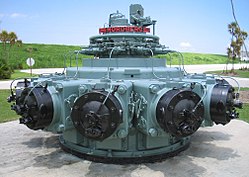
Nordberg two-stroke radial diesel engine formerly used in a pumping station at Lake Okeechobee

A two-stroke diesel engine is a diesel engine that uses compression ignition in a two-stroke combustion cycle. It was invented by Hugo Güldner in 1899.[1]

In compression ignition, air is first compressed and heated; fuel is then injected into the cylinder, causing it to self-ignite. This delivers a power stroke each time the piston rises and falls, without any need for the additional exhaust and induction strokes of the four-stroke cycle.

History

[edit]

According to the engineer who drew up Rudolf Diesel‘s design for one of the first operational diesel engine, Motor 250/400, Imanuel Lauster, Diesel did not originally intend using the two-stroke principle for the diesel engine. Hugo Güldner designed what is believed to be the first operational two-stroke diesel engine in 1899, and he convinced MAN, Krupp and Diesel to fund building this engine with 10,000 each.[2] Güldner's engine had a 175 mm work cylinder, and a 185 mm scavenging cylinder; both had a stroke of 210 mm. The indicated power output was 12 PS (9 kW; 12 hp).[3] In February 1900, this engine ran under its own power for the first time. However, with its actual power output of only 6.95 PS (5 kW; 7 hp) and high fuel consumption of 380 g·PS−1·h−1 (517 g·kW−1·h−1), it did not prove to be successful;[4] Güldner's two-stroke diesel engine project was abandoned in 1901.[5]

In 1908, MAN Nürnberg offered single-acting piston two-stroke diesel engines for marine use,[6] the first double-acting piston[clarify] engine from MAN Nürnberg was made in 1912 for an electric power plant.[7] In collaboration with Blohm + Voss in Hamburg, MAN Nürnberg built the first double-acting piston two-stroke engine for marine use in 1913/1914.[8] Paul Henry Schweitzer argues that the opposed piston two-stroke diesel engine was originally invented by Hugo Junkers.[9] During World War I, MAN Nürnberg built a six-cylinder, double-acting piston, two-stroke diesel engine with a rated power of 12,400 PS (9,120 kW; 12,230 hp).[6] MAN moved their two-stroke diesel engine department from Nürnberg to Augsburg in 1919.[10]

By 1939, several two-stroke diesel types were in widespread use, and others were being developed for high-power applications,.[11]

Of several two-stroke aircraft diesel engine concepts, the Junkers Jumo 205 was the only type to be made in significant quantities, with approximately 900 units in all.[12] Introduced in 1939, the design concept had first been proposed in 1914.[13][14] The design was license-manufactured in several countries. Subsequent advances in petrol fuel injection technology rendered the two-stroke aircraft engine obsolete.[15] Although the Napier Culverin, a licensed version of the larger Jumo 204, was not put into production, the later Napier Deltic incorporated a redesigned triangular arrangement with three cylinders per bank, and was successfully adopted in locomotive and marine applications, well into the postwar era.[16]

From 1923 until 1982, MAN had been using reverse flow scavenging for their marine two-stroke engines. From 1945, a slide valve for the ram induction effect was installed, and from 1954, constant gas flow supercharging with intercooling was used.[17] The supercharging was achieved with the combination of four supercharging methods: a crankshaft-driven roots type supercharger, a turbo supercharger, the engine pistons' undersides, and a supercharger powered by an electric motor.[18] The slide valve for the ram induction effect eventually proved to be prone to failure and was rendered obsolete by increasing supercharging rates in the early 1960s.[10] In the early 1980s, all major two-stroke diesel engine manufacturers switched from reverse flow scavenging to uniflow scavenging, because the latter, despite being more complicated, allows a higher engine efficiency and thus lower fuel consumption.[6]

Charles F. Kettering and colleagues, working at the General Motors Research Corporation and GM's subsidiary Winton Engine Corporation during the 1930s, designed two-stroke diesel engines for on-road use with much higher power-to-weight ratios and output range than contemporary four-stroke diesels. The first mobile application of the two-stroke diesel engine was with the diesel streamliners of the mid-1930s. Continued development work resulted in improved two-stroke diesels for locomotive and marine applications in the late 1930s. This work laid the foundation for the dieselisation of railroads in the 1940s and 1950s in the United States.[19]

Towards the end of the twentieth century, interest in aircraft diesel engines revived,[20] with two-stroke examples such as the Superior Air Parts Gemini Diesel 100 under development as of 2015.

Characteristics

[edit]

Diesel or oil engines

[edit]

The defining characteristic of the diesel engine is that it relies on compression ignition. As air is compressed it heats up. Fuel is then injected into the hot, compressed air and ignites spontaneously. This allows it to operate with a lean mixture comprising mainly air. Together with the high compression ratio, this makes it more economical than the petrol or gasoline Otto engine. It also does not require either a carburettor to mix the air and fuel before delivery, or a spark plug or other ignition system. Another consequence is that to control speed and power output, the airflow is not throttled but only the amount of fuel injected at each cycle is varied.

Two-stroke cycle

[edit]
Cutaway model of a MAN B&W two-stroke marine diesel engine with the piston rod attached to a crosshead

In the two-stroke cycle, the four stages of internal combustion engine operation (intake, compression, ignition, exhaust) occur in one 360° revolution of the crank shaft, whereas in a four-stroke engine they take two complete revolutions. Consequently, in the two-stroke cycle the stages overlap through most of the engine's operation. This makes its thermodynamic and aerodynamic processes more complex. Because the four-stroke cylinder fires only every other revolution, the power output of the two-stroke cycle is theoretically twice as much. However, the scavenging losses make this advantage difficult to achieve in practice.

  • Intake begins when the piston is near the bottom dead center (BDC). Air is admitted to the cylinder through ports in the cylinder wall (there are no intake valves). All two-stroke diesel engines require artificial aspiration to operate, and will either use a mechanically driven blower or a turbo-compressor to charge the cylinder with air. In the early phase of intake, the air charge is also used to force out any remaining combustion gases from the preceding power stroke, a process referred to as scavenging.
  • As the piston rises, the intake charge of air is compressed. Near top dead center, fuel is injected, resulting in combustion due to the charge's extremely high pressure and heat created by compression, which drives the piston downward. As the piston moves downward in the cylinder, it will reach a point where the exhaust port is opened to expel the high-pressure combustion gasses. However, most current two-stroke diesel engines use top-mounted poppet valves and uniflow scavenging. Continued downward movement of the piston will expose the air intake ports in the cylinder wall, and the cycle will start again.

Two-stroke diesels

[edit]

In most EMD and GM (i.e. Detroit Diesel) two-stroke engines, very few parameters are adjustable and all the remaining ones are fixed by the mechanical design of the engines. The scavenging ports are open from 45 degrees before BDC, to 45 degrees after BDC. However, some manufacturers make the scavenging port timing asymmetric by offsetting the crankshaft. The remaining, adjustable, parameters have to do with exhaust valve and injection timing (these two parameters are not necessarily symmetrical about TDC or, for that matter, BDC), they are established to maximize combustion gas exhaust and to maximize charge air intake. A single camshaft operates the poppet-type exhaust valves and the Unit injector, using three lobes: two lobes for exhaust valves (either two valves on the smallest engines or four valves on the largest, and a third lobe for the unit injector).

Specific to EMD two-stroke engines (567, 645, and 710):

  • The power stroke begins at TDC ([0°]; injection of fuel leads TDC by 4° [356°], such that injection of fuel will be completed by TDC or very shortly thereafter;[citation needed] the fuel ignites as fast as it is injected), after the power stroke the exhaust valves are opened, thereby greatly reducing combustion gas pressure and temperature, and preparing the cylinder for scavenging, for a power stroke duration of 103°.
  • Scavenging begins 32° later, at BDC–45° [135°], and ends at BDC+45° [225°], for a scavenging duration of 90 degrees; the 32° delay in opening the scavenging ports (constraining the length of the power stroke), and the 16° delay after the scavenging ports are closed (thereby initiating the compression stroke), maximizes scavenging effectiveness, thereby maximizing engine power output, while minimizing engine fuel consumption.
  • Towards the end of scavenging, all products of combustion have been forced out of the cylinder, and only "charge air" remains (scavenging may be accomplished by Roots blowers, for charge air induction at slightly above ambient, or EMD's proprietary turbo-compressor, which acts as a blower during start-up and as a turbocharger under normal operational conditions, and for charge air induction at significantly above ambient,[i] and which turbocharging provides a 50-percent maximum rated power increase over Roots-blown engines of the same displacement).
  • The compression stroke begins 16° later, at BDC+61° [241°], for a compression stroke duration of 119°.
  • In EFI-equipped engines, the electronically controlled unit injector is still actuated mechanically; the amount of fuel fed into the plunger-type injector pump is under the control of the engine control unit (in locomotives, locomotive control unit), rather than the traditional Woodward PGE governor, or equivalent engine governor, as with conventional unit injectors.

Specific to GM two-stroke (6-71) and related on-road/off-road/marine two-stroke engines:

  • The same basic considerations are employed (the GM/EMD 567 and the GM/Detroit Diesel 6-71 engines were designed and developed at the same time, and by the same team of engineers and engineering managers).
  • Whereas all EMD and Detroit Diesel two-stroke engines employ forced induction, only some EMD engines employ a turbo-compressor system. Some Detroit Diesel engines employ a conventional turbocharger, in some cases with intercooling, followed by the usual Roots blower, as a turbo-compressor system would be too costly for certain very cost-sensitive and highly competitive applications.

Fuels

[edit]

Fuels used in diesel engines can be composed of heavier hydrocarbon oils than the petrol or gasoline used in spark-ignition engines, making them less volatile with a higher flash point and giving them higher energy density.[21] They are therefore easier and safer to handle and occupy less volume for a given amount of energy. Two stroke diesels usually burn even heavier grades of fuel oil than standard diesel fuels.

In two-stroke marine diesel engines for sea-going craft, the most common fuels are residue oils.[22] Günter Mau argues that no uniform standards for such fuels exist, which is why they have several different colloquial names, including Marine Intermediate Fuel, Heavy Fuel Oil, Marine Bunker Fuel, and Bunker C Fuel.[23] Heavy fuel oils were also used in the Jumo 205 two-stroke diesel aircraft engine.[15][24] In the 1960s, residue oils were "concocted on the basis of refinery waste".[25] Residue oils are of very low quality with high viscosity and low cetane numbers, but cheap and thus economical to use.[26]

Manufacturers

[edit]
Brons two-stroke V8 diesel engine driving a Heemaf generator

Notes

[edit]

References

[edit]

Further reading

[edit]
Revisions and contributorsEdit on WikipediaRead on Wikipedia
from Grokipedia
A two-stroke diesel engine is a type of that completes a full , compression, , and exhaust—in two piston strokes, equivalent to one crankshaft revolution, using compression ignition to burn sprayed into highly pressurized air. Unlike four-stroke engines, it employs ports in the liner for both and exhaust, eliminating the need for valves in many designs, while a blower or provides supercharged scavenging air to sweep out exhaust gases and charge the with fresh air during the brief overlap period near bottom dead center. typically occurs near the end of the compression stroke, igniting spontaneously due to temperatures exceeding 500°C, with the power stroke driving the downward to produce mechanical work. Invented by Hugo Güldner in 1899, these engines are predominantly large, low-speed designs optimized for and stationary power generation, where they directly couple to propellers or generators without complex gearing, operating at speeds around 100–300 rpm to handle heavy fuels like high-viscosity (HFO). Their simplicity—fewer moving parts compared to four-stroke counterparts—contributes to a higher and superior exceeding 50% across a wide load range (50–100% of maximum continuous rating). Notable examples include MAN B&W series such as the S60, S70, S80, and G90 models, which deliver power outputs from 13,860 kWm to 67,680 kWm and support fuel flexibility, including dual-fuel variants for (LNG) or to meet emissions regulations like IMO Tier III. As of 2025, innovations include dual-fuel options with and for further decarbonization. Key operational events in a typical two-stroke include exhaust ports or opening around 91° after top dead center (ATDC), ports uncovering at 132° ATDC, both closing near 53° before bottom dead center (BDC), compression from BDC to top dead center (TDC), from 23° before TDC (BTDC) to 6° BTDC, and the power stroke extending until exhaust reopens at 91° ATDC. This configuration yields higher brake (150–160 psi) and peak firing pressures (1200–1500 psi) than many four-stroke diesels, enabling compact, reliable performance in demanding applications like container ships carrying 10,000–12,000 TEU. While scavenging ensures complete and cooling, modern designs incorporate electronic controls for precise injection timing and exhaust operation to minimize emissions of and particulates, often achieving compliance with aftertreatment or in dual-fuel modes, below global standards like IMO Tier III.

History

Early Development

The development of the two-stroke diesel engine originated from Rudolf Diesel's pioneering work on compression-ignition engines during the . Diesel secured key patents, including German Patent DRP 67207 in 1892 for the basic compression-ignition concept and US Patent 542846 in 1895 for an efficient using for . Although his early prototypes tested between 1897 and 1900, such as the successful 1897 model achieving 26.2% thermal efficiency at in , were four-stroke designs, these laid the thermodynamic groundwork for adapting the cycle to two strokes to potentially double power output per revolution. The two-stroke cycle itself drew inspiration from earlier petrol engines, notably Joseph Day's 1889 patent (British Patent No. 5147) for a valveless two-stroke engine employing crankcase compression for scavenging. Adapting this to diesel operation proved challenging, as diesel fuel provided insufficient lubrication compared to oil-mixed petrol, leading to accelerated wear on piston rings and cylinders in early experiments. Additionally, pre-1910 prototypes suffered from soot buildup due to incomplete scavenging and combustion, fouling exhaust ports and reducing efficiency. A foundational breakthrough came in 1899 with Hugo Güldner's design of the first operational two-stroke diesel engine, funded by MAN, Krupp, and associates of Rudolf Diesel. Güldner's uniflow scavenging system used a dedicated scavenging cylinder (185 mm bore) to deliver pressurized air through ports in the working cylinder (175 mm bore, 210 mm stroke), expelling exhaust via opposite ports for improved gas separation over loop-scavenging methods. Despite these innovations, the single-cylinder prototype delivered only 7 hp (5 kW) against a targeted 12 hp (9 kW), with excessive fuel consumption of 380 g/hp/hr, prompting its abandonment around 1901 in favor of more reliable four-stroke alternatives.

Key Milestones and Adoption

The opposed-piston two-stroke diesel engine concept, pioneered by , saw key breakthroughs in the 1920s following his early patents and experimental work dating back to 1912, when his design was licensed for development in stationary applications. Junkers & Co commercialized the technology in 1925, enabling its first large-scale adoption in aviation through subsequent Jumo series engines that powered German aircraft in the 1930s, offering advantages in and reduced weight compared to conventional designs. In , two-stroke diesel engines gained prominence in , with (B&W) leading adoption by installing their innovative designs in ocean-going vessels starting around 1929, including the development of a landmark 10-cylinder configuration that powered early diesel ships and demonstrated scalability for commercial shipping. This marked a shift toward efficient, low-speed two-stroke engines for heavy marine use, building on B&W's earlier diesel experiments from 1912 in the vessel Selandia, which used four-stroke engines. During , two-stroke diesel engines found critical military applications, including in submarines where U.S. Navy vessels like the Balao-class utilized Fairbanks-Morse opposed-piston models licensed from designs, providing reliable surface propulsion with outputs around 1,600 hp per engine for stealthy operations. In armored vehicles, ' Detroit Diesel Series 71 two-stroke engines powered variants of the tank, delivering twin units for a total of 375 hp (280 kW) to support amphibious and land maneuvers, though larger-scale two-stroke diesels like MAN's high-output configurations approached 2,800 hp in marine and auxiliary roles. Post-war expansion in the 1950s saw widespread adoption in , with ' Electro-Motive Division (EMD) deploying the 567 series two-stroke engines in locomotives such as the F7 and GP7 models, which revolutionized freight and passenger service with their durability and power ranging from 1,500 to 2,750 hp, dominating the North American market until the 1960s. However, in automotive applications, two-stroke diesels faced decline by the 1970s due to stringent emissions regulations under the U.S. Clean Air Act, which highlighted their higher particulate and outputs compared to four-stroke alternatives, leading manufacturers like to phase out production in favor of cleaner technologies.

Operating Principles

Thermodynamic Cycle

The two-stroke diesel engine operates on a that completes a full power cycle in one crankshaft , resulting in a power every . This contrasts with four-stroke engines by integrating /compression, /expansion, and exhaust/scavenging into a single rotation, enabling higher power density for applications like . The cycle begins with the moving downward, facilitating through crankshaft-driven ports, followed by compression as the ascends. occurs near top dead center (TDC) via compression ignition, driving expansion to bottom dead center (BDC), after which exhaust and scavenging overlap to clear residual gases. The compression phase is isentropic, with air compressed to a high and , typically achieving a of 14:1 to 25:1, though specific designs like low-speed marine engines often use around 19:1 to 20:1. This raises the air to 500–700°C at the end of compression, sufficient for auto-ignition of injected without a spark. Fuel is introduced via direct injection post-compression, initiating at constant volume initially, then at near-constant during addition. The expansion phase is also isentropic, converting thermal energy into mechanical work. For the ideal air-standard , thermal is given by η=11rγ1ργ1γ(ρ1)\eta = 1 - \frac{1}{r^{\gamma-1}} \cdot \frac{\rho^\gamma - 1}{\gamma (\rho - 1)} where rr is the compression ratio, ρ\rho is the cutoff ratio, and γ=1.4\gamma = 1.4 is the specific heat ratio for air; higher rr values enhance efficiency, often exceeding 50% in optimized designs. Unlike the Otto cycle used in spark-ignition engines, where a premixed air-fuel charge is compressed together—risking pre-ignition at high ratios—the two-stroke diesel cycle employs compression of air alone, with fuel injected afterward to control ignition timing and avoid detonation. Port timing is critical for cycle phasing: intake (scavenging) and exhaust ports, uncovered by the piston, open and close at specific crankshaft angles, such as the exhaust port opening approximately 110° before BDC to initiate blowdown and overlapping with scavenging for gas exchange. This port-controlled approach simplifies the design but requires precise tuning to minimize short-circuiting of fresh charge.

Scavenging and Intake Processes

In two-stroke diesel engines, scavenging is the critical process of expelling exhaust gases from the while simultaneously introducing to prepare for the next cycle, occurring over a limited crank period typically around 120 degrees near bottom dead center (BDC). This short duration poses significant challenges, as the movement provides minimal pumping action, necessitating supercharged air to drive the and prevent excessive dilution of the fresh charge with residual exhaust gases, which can reduce efficiency. The scavenging (SR), defined as the mass of delivered air divided by the mass of trapped air at BDC, quantifies the extent of air supply relative to volume; values greater than 1 indicate overscavenging, which helps sweep out exhaust but risks short-circuiting . Three primary scavenging methods are employed in two-stroke diesel engines: cross-flow, loop, and uniflow, each differing in port arrangement and flow path to optimize exhaust removal and charge purity. Cross-flow scavenging, one of the earliest designs dating to the 1910s, directs fresh air from ports on one side of the cylinder toward exhaust ports on the opposite side, promoting a sweeping action but suffering from higher mixing of intake and exhaust gases due to the perpendicular flow. Loop scavenging, developed as an improvement in the mid-20th century, routes air through intake ports and redirects it via a deflector on the piston crown to loop back toward exhaust ports on the same side, reducing short-circuiting compared to cross-flow while maintaining a simpler port-only configuration without overhead valves. Uniflow scavenging, predominant in modern designs since the post-1950s, achieves the highest efficiency by introducing air through ports around the cylinder liner and expelling exhaust axially through valves or an opposed piston at the cylinder head, enabling a straight, unidirectional flow that minimizes turbulence and residual gas entrapment, with scavenging efficiencies reaching up to 95% in optimized systems. To facilitate effective scavenging, two-stroke diesel engines rely on supercharging to deliver intake air at elevated pressures, typically 3.0 to 4.0 bar absolute in modern turbocharged designs, with early engines often using Roots-type blowers providing around 1.5 to 2.0 bar absolute, mechanically driven by the , to provide this boost, while contemporary large-bore designs, such as those in marine applications, predominantly employ turbochargers that harness exhaust energy for higher efficiency and variable pressure control. The equation for the scavenging ratio is given by: SR=mdamtaSR = \frac{m_{da}}{m_{ta}} where mdam_{da} is the mass of delivered air and mtam_{ta} is the mass of trapped air, highlighting the need for precise boost management to balance delivery and trapping without excessive energy loss. The evolution from early cross-scavenged configurations in the 1910s, which prioritized simplicity but limited efficiency to around 60-70%, to post-1950s uniflow systems reflects advancements in port timing, piston design, and turbocharging, enabling scavenging efficiencies that support high specific power outputs in demanding applications like marine propulsion. Despite these improvements, challenges persist, including the inherent 120-degree window for gas exchange, which demands optimized port angles and swirl-inducing intake geometries to mitigate charge dilution and enhance volumetric efficiency.

Design and Components

Piston and Cylinder Configurations

Two-stroke diesel engines employ various and configurations to optimize mechanical simplicity, , and . In single-piston designs, a conventional reciprocates within a featuring a head, where and exhaust processes are managed through dedicated ports or valves, though piston-controlled ports predominate for compactness. Opposed-piston configurations, by contrast, utilize two pistons per cylinder moving in opposite directions within a shared barrel, eliminating the entirely and thereby reducing heat losses to the cooling system compared to single-piston setups. This design enhances through minimized surface area exposed to gases and avoids the need for complex components. A prominent example is the Doxford engine, a single-acting two-stroke opposed-piston diesel developed for marine applications, featuring two pistons meeting at the cylinder's center to define the . Port configurations in these engines are typically piston-controlled, with and exhaust ports machined into the liner and uncovered by motion to facilitate . These ports enable uniflow or loop scavenging, where fresh air enters opposite the exhaust to sweep out burned gases efficiently. liners often incorporate to provide superior wear resistance against abrasive forces from rings and high-pressure combustion, with studies showing chrome-plated surfaces in two-stroke marine diesels exhibit 30-50% lower wear rates than uncoated under similar lubrication conditions. In smaller two-stroke diesel engines, crankcase compression is commonly used, where the acts as a to draw and compress air within the before transferring it to the via ports. This configuration simplifies the by eliminating separate superchargers but introduces challenges, as must be premixed with fuel to lubricate the crankcase bearings and walls, with typically premixed at 1-2% by volume with the fuel. Bore-stroke ratios vary; in large marine engines, they are typically long-stroke (stroke greater than bore) to achieve efficient low-speed operation, while some smaller or specialized designs approach square ratios (bore approximately equal to stroke) for compact power density. In large marine engines, bores commonly range from 300 to 900 mm, supporting high torque output while maintaining proportional stroke lengths for efficient combustion.

Fuel Injection and Ignition Systems

In two-stroke diesel engines, fuel injection systems primarily employ direct injection to deliver into the near the end of the compression stroke. Modern designs, particularly in large marine applications, utilize common-rail systems, where a high-pressure accumulator rail supplies fuel to electronically controlled injectors, allowing precise metering and multiple injections per cycle. In contrast, earlier or simpler configurations often rely on unit injectors, which integrate a and in a single unit driven mechanically or hydraulically for each , offering robust operation but less flexibility in timing compared to common-rail setups. Injection pressures typically reach up to 2,000 bar to achieve fine atomization of the fuel spray, promoting rapid mixing with and efficient . Fuel delivery is timed to occur 10-20° before top dead center, optimizing ignition delay and peak pressures while minimizing fuel impingement on walls. Ignition in two-stroke diesel engines relies solely on compression-induced auto-ignition, eliminating the need for spark plugs as the high compression ratios—often exceeding 15:1—heat the intake air to temperatures above the diesel fuel's auto-ignition point of approximately 210-250°C. Injector nozzles are designed with multiple holes, typically 6 to 12 orifices, to produce a divergent spray pattern that enhances air-fuel mixing and reduces soot formation by distributing fuel more evenly across the . This multi-hole configuration, combined with high-pressure injection, supports the thermodynamic auto-ignition process outlined in the engine's operating principles. Lubrication in two-stroke diesel engines integrates separate oil systems to prevent fuel dilution of the crankcase lubricant, with cylinder lubrication provided via a dedicated once-through system that quills oil directly onto the piston rings and liners during the power stroke. This segregated approach maintains oil and , crucial for handling acidic byproducts, while avoiding contamination from unburned that could occur in shared sump designs. Challenges arise in coordinating injection timing with port-based scavenging, as early fuel delivery risks short-circuiting through exhaust ports, necessitating precise electronic controls to align injection with closed-port periods and minimize oil-fuel interactions. The evolution of in two-stroke diesel engines transitioned from mechanical pumps dominant before the —such as camshaft-driven jerk pumps delivering fixed timing—to electronic common-rail systems introduced in the late for enhanced control. This shift enables variable injection timing, rate shaping, and pilot injections, improving by 5-10% through better phasing and reduced pumping losses. In marine two-stroke engines, manufacturers like MAN B&W and pioneered these electronic advancements in their ME and RT-flex series, respectively, achieving compliance with stringent emissions standards while boosting overall .

Performance Characteristics

Advantages Over Four-Stroke Engines

Two-stroke diesel engines offer higher power density compared to four-stroke engines due to delivering one power stroke per revolution rather than every other revolution, enabling approximately 1.5 to 2 times greater power output for a given displacement and resulting in a superior . This design advantage allows two-stroke diesels to achieve favorable power-to-weight ratios, approximately 1.8:1 in large installations, making them suitable for applications requiring high-output propulsion. The simpler construction of two-stroke diesel engines, lacking valves, camshafts, and associated components, reduces the number of by up to 40%, lowering costs by 20-30% and minimizing requirements, particularly in large-scale installations where reliability is paramount. This streamlined architecture contributes to their compact overall size relative to power output, facilitating installation in marine environments and enabling quicker response to transient loads through more frequent power impulses. In large-scale operations, two-stroke diesel engines demonstrate superior fuel efficiency, with brake thermal efficiencies reaching 48-53% and specific fuel consumption typically in the range of 165-180 g/kWh under optimal conditions (50-100% load). Brake mean effective pressures typically reach 17-19 bar at maximum continuous rating. These metrics arise from efficient scavenging processes that support high volumetric efficiency, allowing sustained performance without the overhead of additional strokes for intake and exhaust in four-stroke designs, and overall higher indicated thermal efficiency due to reduced mechanical losses.

Disadvantages and Limitations

Two-stroke diesel engines experience scavenging losses that can result in incomplete expulsion of exhaust gases and mixing with incoming fresh charge, potentially reducing compared to four-stroke designs with separate and exhaust . This inefficiency stems from the limited time available for in the two-stroke cycle, where ports open simultaneously for exhaust and , leading to short-circuiting of charge. The presence of residual exhaust gases further dilutes the fresh air-fuel mixture, increasing the of the and lowering the effective . Typical residual gas fractions of 0.05-0.15 in two-stroke designs contribute to some penalty, though this is mitigated in large low-speed engines by advanced scavenging and turbocharging. Incomplete in two-stroke diesel engines, exacerbated by the rapid cycle and residual gas dilution, produces higher emissions of particulate matter (PM) than four-stroke counterparts due to unburned hydrocarbons, formation, and oil consumption. NOx emissions can also be elevated under similar loads, arising from higher peak temperatures despite the shorter . Additionally, oil consumption reaches up to 1 g/kWh from , contributing to PM through incomplete oil burning and ash deposits. Lubrication challenges in two-stroke diesel engines arise from the mixed lubrication system, where cylinder oil is injected directly into the , leading to partial combustion and formation of ring groove deposits that accelerate and liner wear. These deposits, often comprising carbonized oil and fuel residues, increase blow-by and frictional losses, necessitating overhaul intervals—typically 16,000-24,000 hours for pistons and rings—comparable to or slightly shorter than in four-stroke engines depending on fuel type and operation. The higher firing frequency in two-stroke diesel engines—twice that of four-strokes at equivalent crankshaft speeds—generates elevated and levels, with operational noise often 10-15 dB higher due to more frequent events and exhaust pulses. This results in sharper acoustic signatures and greater structural excitation, particularly in the mid-frequency range (500-2000 Hz), demanding robust measures for practical applications.

Applications

Marine Propulsion

Two-stroke diesel engines dominate , particularly in large ocean-going vessels, where over 97% of Tier III Category 3 ships, including bulk carriers, container ships, and tankers, are powered by these engines for their main needs. This prevalence stems from their suitability for direct-drive systems in high-power applications, exemplified by models like the MAN B&W 6S90ME-C, a six-cylinder engine delivering approximately 30 MW of output at low speeds. Their high further supports efficient in demanding shipping routes, outperforming alternatives in scale for transoceanic cargo transport. These engines are predominantly low-speed designs, operating at 100-150 RPM to match the optimal rotational speeds of large s for direct mechanical drive without gearboxes. Reversibility, essential for maneuvering, is achieved by electronically adjusting timing and exhaust valve actuation, allowing the engine to run astern without altering propeller direction. This capability enhances operational flexibility in confined waters, such as ports, while maintaining mechanical simplicity compared to variable-pitch propeller systems. In terms of size, two-stroke diesels span a broad range for marine use, from smaller auxiliary generators around 500 kW for onboard power to massive main engines exceeding 80,000 kW for propulsion in supertankers and mega-container ships. For instance, the RT-flex96C, a 14-cylinder low-speed model, produces up to 80,080 kW at 102 RPM, powering the largest vessels with exceptional for long-haul efficiency. The technical specs are corroborated by manufacturer data at https://wingd.com/about-wingd/our-engine-history/. Historically, two-stroke diesels began replacing steam turbines in during , driven by superior and reliability for commercial shipping. Modern implementations incorporate electronic controls in engines like the MAN B&W ME series, enabling precise fuel optimization and savings of up to 10% compared to earlier mechanical systems.

Rail and Industrial Uses

Two-stroke diesel engines have played a significant role in rail applications, particularly through the Electro-Motive Division series, which powered numerous locomotives from the mid-1960s onward, with many units still in active service as of 2025. These engines featured V-configurations, including 12-cylinder models rated at approximately 2,300 horsepower and larger 16-cylinder variants delivering up to 3,500 horsepower, enabling efficient medium-speed operation in diesel-electric locomotives like the and GP40 series. Turbocharged for enhanced power density, the 645 series operated at around 900 RPM, providing reliable performance under variable loads typical of rail service. In industrial settings, two-stroke diesel engines are utilized in stationary generators for peaking power in electricity plants, where rapid response to demand fluctuations is essential. For instance, WinGD's two-stroke gensets, designed for land-based power generation, offer outputs scaling to several megawatts per unit and excel in part-load efficiency, making them suitable for intermittent operation. These engines achieve quick start times, typically under 30 seconds from initiation to full load acceptance, outperforming gas turbines in startup speed and operational flexibility for grid support. Similarly, adapted units have been deployed in peaking facilities, generating up to 2 MW per engine to meet high-demand periods. The use of two-stroke diesel engines in on-road vehicles declined sharply by the late and into the , driven by increasingly stringent emissions standards that the engines struggled to meet without costly modifications. However, they persist in niche off-road applications, such as and equipment, where their high and provide advantages in rugged environments. Contemporary advancements include hybrid integrations pairing two-stroke diesels with electric drives, enhancing overall system efficiency by optimizing engine operation at peak loads and recovering energy through or batteries. Such configurations can yield gains of around 15%, as demonstrated in opposed-piston two-stroke designs for hybrid powertrains. This approach is particularly beneficial in rail and industrial hybrid-electric systems, reducing fuel consumption while maintaining the engines' inherent power advantages.

Fuels and Environmental Impact

Compatible Fuel Types

Two-stroke diesel engines primarily operate on (HFO), a residual fuel with a kinematic typically ranging from 180 to 380 centistokes (cSt) at 50°C, which provides high suitable for large-scale marine and industrial applications. For cleaner operation in emission control areas or during maneuvering, (MDO) is used as an alternative, offering lower and reduced impurities for immediate without extensive pre-treatment. Alternative configurations include dual-fuel systems that incorporate (LNG), enabling up to 90% substitution of liquid with gas across a wide load range while maintaining diesel pilot injection for ignition. This setup achieves approximately 25% lower CO₂ emissions compared to conventional residual fuels due to LNG's higher hydrogen-to-carbon ratio. blends, such as mixed with diesel or HFO, are compatible but generally limited to 20% by volume to avoid excessive increases that could impair atomization and injection. Distillate fuels like MDO typically exhibit a cetane number greater than 40 for reliable auto-ignition, while HFO has a lower (around 8-20) but is suitable due to the high compression ratios in large two-stroke engines. Historically, sulfur content reached up to 3.5% in HFO, but (IMO) regulations now cap it at 0.5% globally, necessitating adaptations in systems to handle very low sulfur (VLSFO) with altered and profiles. For HFO operation, fuel systems require heated lines maintained at 80-100°C to reduce , prevent gelling, and ensure proper flow to injectors.

Emissions and Modern Regulations

Two-stroke diesel engines produce key pollutants including nitrogen oxides (), sulfur oxides (), and particulate matter (PM). NOx emissions can reach up to 17 g/kWh or higher in uncontrolled conditions, primarily due to high combustion temperatures in the large-bore cylinders typical of these engines. SOx arises from the sulfur content in heavy fuel oil, often used in marine applications, while PM results from incomplete combustion and scavenging losses that allow unburned hydrocarbons to escape. Two-stroke diesel engines tend to have higher NOx emissions than four-stroke counterparts due to scavenging processes mixing residual exhaust with intake air, with baseline levels around 17 g/kWh versus 7-10 g/kWh for medium-speed four-strokes. Modern regulations have imposed strict limits to curb these emissions, particularly in marine applications where two-stroke diesels dominate. The International Maritime Organization's (IMO) Tier III standards, effective from 2016 in emission control areas, cap NOx at 3.4 g/kWh for low-speed engines (rated speed below 130 rpm). Under MARPOL Annex VI, global SOx limits were reduced to less than 0.5% content in fuel since January 2020, with even stricter 0.1% in designated control areas, targeting both SOx and associated PM. These rules apply to new installations and have driven retrofits and fuel switches across the global fleet. To meet these standards, mitigation technologies focus on aftertreatment and engine modifications. (SCR) systems, using or injection, achieve up to 80% reduction in two-stroke marine diesels by converting to nitrogen and water over a catalyst. (EGR), which recirculates 10-15% of exhaust into the intake to lower combustion temperatures, provides moderate cuts of around 50% when optimized for two-stroke cycles. These technologies, often combined, enable compliance but require careful integration to avoid impacts on engine efficiency. Recent trends emphasize alternative fuels to further reduce emissions. The shift to (LNG) in dual-fuel two-stroke diesels has lowered slip to under 1 g/kWh with advanced controls, representing up to 90% reduction compared to early LNG designs. Lifecycle CO2 analyses for marine applications show LNG-powered two-strokes yielding 10-15% lower emissions than traditional alternatives, factoring in well-to-wake impacts. In line with the IMO's 2023 Revised GHG Strategy targeting net-zero emissions by around 2050, two-stroke engines are increasingly adapted for low-carbon fuels such as and , potentially reducing well-to-wake CO₂ by up to 90% compared to HFO.

Manufacturers and Current Status

Historical and Contemporary Producers

The development of two-stroke diesel engines traces back to the early , with in emerging as a pioneer by producing single-acting two-stroke diesels for marine use, including submarine propulsion starting in the 1910s through licensing agreements with entities like the Company. (B&W) in advanced the technology for marine applications in the 1920s and early 1930s, delivering the first two-stroke diesel engine for seagoing vessels in 1930 aboard the M/S Amerika, building on their earlier four-stroke innovations to establish dominance in low-speed propulsion. In the United States, ' Electro-Motive Division (EMD) introduced the Winton 201 series two-stroke diesel in 1933 for rail locomotives, evolving into the iconic 567 and 710 series that powered American from through the 2000s. Today, key producers continue to focus on large-scale applications, particularly in marine and rail sectors. MAN Energy Solutions in remains a leading manufacturer of two-stroke engines, such as the ME series, which power a significant portion of global shipping. WinGD (formerly the two-stroke division of in and ) develops and licenses the RT-flex series of electronically controlled low-speed two-stroke engines, emphasizing and common-rail for container ships and tankers. Caterpillar Inc. in the USA, via its subsidiary and EMD (acquired in 2010), sustains production of the two-stroke 710 series engines, delivering up to 4,300 horsepower per unit for freight locomotives in harsh operating conditions. Hyundai Heavy Industries in builds large two-stroke engines under license from MAN, including ME-GI dual-fuel variants exceeding 75 MW for ultra-large vessels. Two-stroke diesel engines command approximately 60% of the market share in large systems, driven by their high and direct drive suitability for vessels over 20,000 gross tons. Licensing models are prevalent, with cross-licensing arrangements originating from the integration of MAN and B&W technologies enabling widespread global supply through partners like Hyundai and Doosan, ensuring standardized designs and shared for efficient manufacturing.

Innovations and Future Prospects

Recent advancements in two-stroke diesel engine technology have centered on electronic controls, particularly common-rail fuel injection systems integrated with variable port timing mechanisms. These systems enable precise management of fuel delivery and exhaust port operations, allowing for multiple injections per cycle and optimized scavenging, which enhance combustion efficiency. Similarly, variable port timing, electronically controlled via actuators, adjusts exhaust port heights to minimize short-circuiting of air-fuel mixture, improving indicated by 5-8% in experimental two-stroke setups since the early 2000s. Hybrid integration and alternative fuels represent promising directions for reducing emissions in two-stroke diesel applications, especially in marine contexts. Battery-assisted systems allow two-stroke engines to operate in hybrid mode during low-load scenarios, such as port maneuvers, where electric propulsion from onboard batteries supplements or replaces diesel power, cutting fuel use by 20-30% in approach phases. MAN Energy Solutions has demonstrated this through hybrid propulsion setups that combine their two-stroke engines with battery storage for seamless transitions, enabling zero-emission operation in sensitive areas. On the alternative fuel front, ammonia dual-fuel pilots have advanced significantly, with MAN achieving the first successful combustion in a two-stroke engine in 2023 and reaching full-load operation in 2025 at their Research Centre Copenhagen, targeting compliance with IMO's 2050 zero-carbon shipping goals via ammonia's carbon-free properties when produced renewably; the first commercial deliveries of these ammonia dual-fuel two-stroke engines are scheduled for the first quarter of 2026. Efficiency gains continue through architectural updates like opposed-piston designs and advanced . Modern opposed-piston two-stroke diesel engines achieve brake thermal efficiencies approaching 50%, surpassing traditional two-stroke configurations by reducing heat losses through portless combustion chambers and optimized phasing. Additionally, 3D-printed components, including and cylinder heads, enable complex internal geometries for better cooling and lighter structures; for example, additive of heavy-duty diesel has yielded weight reductions of 20-25% while maintaining structural integrity under high pressures. Looking ahead, two-stroke diesel engines face competition from full , particularly in auxiliary roles, where battery costs and limitations currently hinder widespread adoption but could accelerate with scaling. Despite this, prospects remain strong in sectors, such as offshore wind farms, where compact two-stroke diesels provide reliable auxiliary power for installation vessels and maintenance operations, supporting the global push toward net-zero .

References

Add your contribution
Related Hubs
User Avatar
No comments yet.