


Community hub
Recent from talks
Contribute something
Nothing was collected or created yet.
Utah State Prison
View on Wikipedia

Key Information


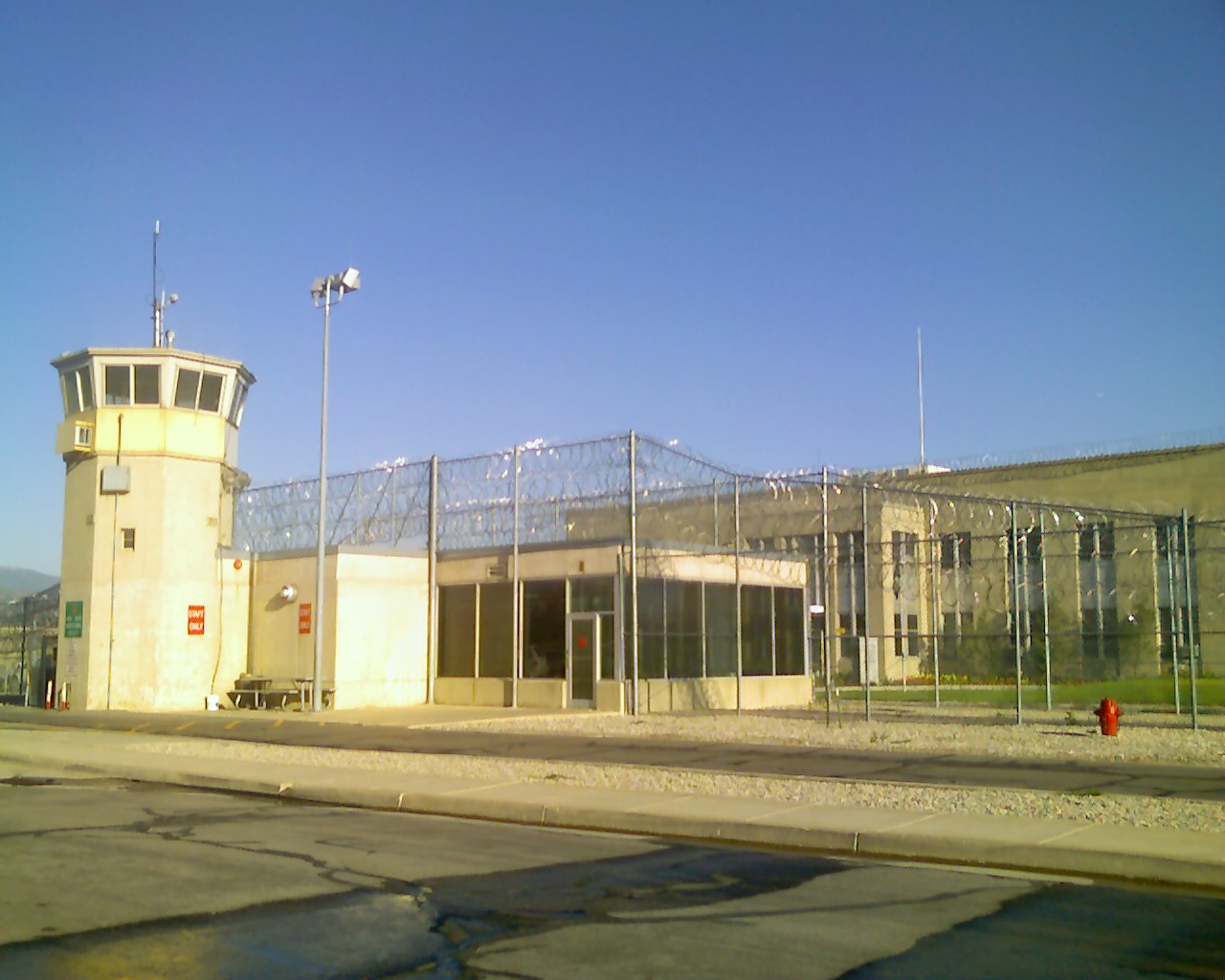
Utah State Prison (USP) was one of two prisons managed by the Utah Department of Corrections' Division of Institutional Operations.[1] It was located in Draper, Utah, United States, about 20 miles (32 km) southwest of Salt Lake City.[2] It was replaced by the Utah State Correctional Facility in July 2022.
History
[edit]The prison was built to replace Sugar House Prison, which closed in 1951.[3] Its location was once remote and the nearby communities were rural. Since the prison's erection, business parks and residential neighborhoods have developed the once rural area into a suburban one. Seeking the ability to offer better treatment option state legislature initiated a process to build a new prison, deciding it was best to relocate elsewhere. Several sites were under consideration.[4] An episode of Touched by an Angel was filmed here in 2001. A study was completed in 2005 by Wikstrom Economic & Planning Consultants, Inc., to determine if moving the prison would be feasible. The test of feasibility was whether or not the value of the real estate of the current location could support the cost of relocation. It was determined that the cost of relocating the prison far exceeded the value that could be realized from the sale of the Draper prison site.[5] However, on August 19, 2015, a special session of the state legislature voted to move the prison to the west side of Salt Lake City.[6] The prison is now closed.
Facility
[edit]
The large prison complex housed both male and female prisoners in separate units. The prison had a capacity of over 4,000 inmates.[2] The Draper site was located near Point of the Mountain along the Traverse Ridge and consists of several units named after surrounding mountains and mountain ranges. These units range from minimum security to supermax. The Uintas housed maximum security units for male inmates and included a supermax facility and execution chamber. Wasatch and Oquirrhs housed the medium security male inmates. Promontory was a medium security therapeutic community designed to treat drug abusers. Timpanogos housed female inmates and Olympus was the mental health unit. Lone Peak was a minimum security unit.
Scott P. Evans Architect & Associates designed the five buildings of the evaluation facility. The same company performed a reroof and a seismic upgrade of the SSD building.[7]
Notable inmates
[edit]- Michael Anthony Archuleta, convicted in the 1988 murder of Gordon Church. He has chosen to be executed by lethal injection.
- Ted Bundy, serial killer, was sentenced to 15 years in the Utah State Prison in 1976, but was extradited to Colorado to face other murder charges.
- Nick Clatterbuck, convicted of the February 28, 1984 murders of his foster parents.
- Ray Dempsey Gardner, serial killer, executed in 1951.
- Ronnie Lee Gardner, convicted in 1985 of murder and executed by firing squad on June 18, 2010.
- Gary Gilmore was executed by firing squad at the Utah State Prison in 1977. He was the first prisoner legally put to death in the United States since a U.S. Supreme Court ruling that ended a 1972 moratorium on capital punishment.[8]
- Thomas Arthur Green, a convicted bigamist and noted practicing polygamist, served his sentences here. He was released in the summer of 2007.[9]
- Mark Hofmann, convicted for murder and forgery, is currently incarcerated at the Central Utah Correctional Facility in Gunnison.[10]
- Warren Jeffs, president of the Fundamentalist Church of Jesus Christ of Latter Day Saints, was incarcerated at the Utah State Prison.[11] However, he is now serving a life sentence for sex crimes in Texas.[12]
- Wanda Barzee, one of Elizabeth Smart's kidnappers transferred from Federal Medical Center, Carswell in 2016, released in 2018.
- Troy Kell, convicted for murder after stabbing an inmate 67 times in the Central Utah Correctional Facility in 1994 and sentenced to death. He has chosen to be executed by firing squad.
- Barton Kay Kirkham, convicted of murder and the last inmate to be executed by hanging in the state of Utah, in 1958.[13]
- Nathan Martinez, convicted of the October 1994 murder of his stepmother and half-sister. Paroled in 2018.[14]
- Ralph Leroy Menzies, convicted in 1988 of the 1986 robbery-murder of Maurine Hunsaker. He has chosen to be executed by firing squad.[15]
- James W. Rodgers, convicted for murder and the last inmate to be executed by firing squad in the United States in 1960, before a de facto national moratorium on capital punishment was enacted with the U.S. Supreme Court decision of Furman v. Georgia.[16]
- Frances Schreuder, convicted in 1983 of first degree murder in the 1978 death of her father, Franklin Bradshaw, using her son Marc.
- Marc Schreuder, convicted in 1982 of second degree murder in the 1978 death of his grandfather, Franklin Bradshaw, whom his mother, Frances Schreuder, induced him to kill. Marc served 12 years until his release in 1994.
- John Albert Taylor, executed by firing squad in 1996 for the 1988 rape and strangulation of an 11-year-old girl.[17]
- Dale Selby Pierre and William Andrews, the Hi-Fi murderers.[18][19][20]
- Megan Huntsman, serial killer, who murdered six of her own infant children and was sentenced to 5 years-to-life in prison on six counts, with three counts to be served consecutively, and three counts to be served concurrently.[21][22][23]
See also
[edit]References
[edit]- ^ "Utah Department of Corrections Facilities". cr.ex.state.ut.us. Utah Department of Corrections. Archived from the original on July 5, 2007. Retrieved March 31, 2007 – via Wayback Machine.
- ^ a b Utah Department of Corrections. (2006, December 19). Utah State Prison. Retrieved March 31, 2007, from http://www.cr.ex.state.ut.us/corrections/facilities/usp.html Archived 2007-02-04 at the Wayback Machine
- ^ Anissa O. Taylor (February 2003). "State Prison Agency History #790". Utah Department of Administrative Services, Division of Archives & Records Service. Retrieved 1 April 2016.
- ^ Canham, Matt. "Utah prison relocation meeting comes back to, 'Why leave Draper?'". The Salt Lake Tribune. Retrieved 2024-06-13.
- ^ Wikstrom Economic & Planning Consultants, Inc. (2005). Evaluation of the Feasibility of Relocating the Utah State Prison. Wikstrom Economic & Planning Consultants, Inc.
- ^ Winsolow, Ben (August 19, 2015). "Utah State Legislature votes to move prison to SLC". Retrieved August 20, 2015.
- ^ "Justice/Correctional Archived 2011-02-10 at the Wayback Machine." Scott P. Evans Architect & Associates. Retrieved on August 26, 2010.
- ^ "Organs donated, body cremated — Gary Gilmore saga over". Associated Press. Salt Lake City. January 18, 1977. Retrieved April 14, 2011.
- ^ Coalition for Religious Freedom and Tolerance. (2002, March 11). LATEST NEWS ON TOM GREEN AND FAMILY. Retrieved March 31, 2007, from http://www.religious-freedoms.org/latest_news_on_tom_green_and_fam.htm Archived 2007-09-30 at the Wayback Machine
- ^ Gurrister, T. (2005, October 9). Hofmann case revisited. Standard-Examiner.
- ^ Winslow, B. (2007, November 22). Jeffs has been an inmate at Utah State Prison. Deseret Morning News. Retrieved November 29, 2007, from [1]
- ^ "Texas, feds wait turns in polygamist leader cases". Associated Press. 2010-07-28. Retrieved 2010-08-09.[dead link]
- ^ Metcalf Jr., Dan (2010-06-17). "History of Utah executions". KTVX. Archived from the original on 2010-06-22. Retrieved 2010-10-04.
- ^ "Bluffdale teen pleads guilty to '94 slayings". Deseret News. Salt Lake City, Utah. November 15, 1995. Archived from the original on January 10, 2018.
- ^ "Before he's executed, Ralph Menzies needs a competency review. His attorneys argue it won't be fair". Utah News Dispatch. October 16, 2024.
- ^ Beecham, Bill (November 11, 1976). "Convicted Killer Gets His Wish: Firing Squad Monday". The Telegraph (Nashua). Associated Press. p. 22. Retrieved October 28, 2010.
- ^ "Firing Squad Executes Killer". The New York Times. 1996-01-27. Retrieved 2008-06-16.
- ^ Douglas, John E.; Olshaker, Mark (11 August 1999). The Anatomy of Motive: The Fbis Legendary Mindhunter Explores the Key to Understanding and Catching Vi. Simon and Schuster. ISBN 9780684857794.
- ^ "The Deseret News - Google News Archive Search".
- ^ "Daily News - Google News Archive Search".
- ^ "Woman serving 15 to life for killing 6 babies ineligible for parole until 2064". ksl.com. May 29, 2015.
- ^ "Utah woman who killed six of her newborns sentenced to prison". April 21, 2015.
- ^ Reavy, Pat (29 May 2015). "Mother who killed 6 babies won't get chance at parole until 2064". Deseret News. Retrieved 21 August 2022.
Further reading
[edit]- "2020 CENSUS - CENSUS BLOCK MAP: Draper city, UT" (PDF). U.S. Census Bureau. pp. 1, 3 (PDF pp. 2, 4/5).
Utah State Prison
- Indicates location of former prison
External links
[edit]
 Utah Department of Corrections prisons Utah Department of Corrections prisons | |
|---|---|
| State prisons |
|
| International | |
|---|---|
| National | |
| Other | |

Utah State Prison
View on GrokipediaThe Utah Department of Corrections operates two state prisons for adult male inmates: the Utah State Correctional Facility (USCF), the primary facility located at 1480 N. 8000 W. in Salt Lake City, Utah, and the Central Utah Correctional Facility in Gunnison, Utah.[1][2] USCF opened in July 2022, serving as a state-of-the-art replacement for the previous Utah State Prison at Point of the Mountain, which had operated since 1951 in the same general area.[1] With a designed capacity of 3,600 beds, USCF houses general population, restricted housing, and specialized units in buildings named after Utah waterways, such as Bear for general male inmates and Antelope for restricted housing.[1] The facility's development addressed longstanding issues with the prior prison's infrastructure, emphasizing modern security, rehabilitation programs, and operational efficiency amid Utah's incarceration needs.[1] Utah's correctional system, including USCF, manages an average daily prison population that has grown with the state's demographics, focusing on evidence-based practices for offender management rather than expansive ideological reforms.[3] Historically, Utah's penal system traces back to the Utah Territorial Penitentiary established in 1855 in Sugar House, Salt Lake City, which transitioned to state control in 1896 and relocated to Draper for geographic and security advantages.[4] While the new USCF incorporates advanced design for containment and program delivery, it continues Utah's approach to corrections prioritizing public safety and recidivism reduction through structured environments over lenient or experimental models.[1]
Historical Development
Founding and Early Operations (1850s–1900)
The Utah Territorial Penitentiary, predecessor to the modern Utah State Prison, originated amid the establishment of penal institutions in the Utah Territory following Mormon pioneer settlements in [Salt Lake Valley](/page/Salt Lake Valley) beginning in 1847. The territorial legislature, recognizing the need for a dedicated facility beyond temporary jails, petitioned the U.S. Congress in January 1852 for a $60,000 appropriation to construct a penitentiary, reflecting federal oversight of territorial governance.[5] Site selection occurred in the Sugar House area southeast of Salt Lake City, chosen by territorial governor Brigham Young for its isolation from urban centers, approximately six miles from the city limits, on land previously used for a sugar processing operation. Construction commenced in 1854 using adobe materials, yielding a basic structure that opened to inmates in 1855 under federal administration, as Utah lacked statehood until 1896. The initial setup featured sixteen underground cells with earthen floors, walls, and ceilings, furnished only with straw mattresses, underscoring the austere and improvised nature of early confinement in a frontier territory.[6][7][8] Operations in the 1850s emphasized containment over rehabilitation, with inmates primarily comprising individuals convicted of theft, counterfeiting, and other property crimes prevalent in the expanding settler economy; the facility housed a modest population, often fewer than 50 at a time, managed by a small staff including a warden appointed by territorial authorities. Security challenges were acute due to the rudimentary design—lacking robust perimeter walls initially—and frequent escape attempts; records indicate that of 240 convicts processed between 1855 and 1878, 47 successfully escaped, while 12 died in failed efforts, highlighting vulnerabilities in an era of limited resources and porous enforcement. Labor programs emerged early, assigning prisoners to tasks like brick-making, farming on adjacent lands, and basic manufacturing to offset costs and promote territorial self-reliance, though outputs remained limited by the prison's scale.[9][7] By the 1860s and 1870s, incremental expansions added cell blocks and workshops, but the core adobe compound persisted, accommodating growing territorial populations amid events like the Utah War of 1857–1858, which temporarily strained resources without directly altering prison functions. Federal marshals enforced sentences, often for terms of one to ten years, with pardons occasionally granted by the territorial governor for good behavior or community petitions, reflecting a pragmatic approach to justice in a theocratic society. Discipline relied on corporal methods and isolation, absent modern reforms, while health conditions were poor, exacerbated by inadequate sanitation and exposure to elements.[9][8] Upon Utah's admission as a state on January 4, 1896, the penitentiary transitioned to state control, with its buildings and lands deeded from federal to Utah ownership, marking the end of territorial operations while continuity in site and methods persisted into the early 20th century; this shift formalized inmate management under the new state board of corrections, though early state-era records show no immediate structural overhauls.[5][7]Expansion and Key Incidents (1900–1950)
In the early decades of the 20th century, the Utah State Prison at Sugar House experienced steady operational pressures from population growth, though specific annual inmate counts remain sparsely documented in state records. By the late 1940s, the facility was described as "bulging with prisoners," reflecting broader national trends in incarceration increases during and after the Great Depression and World War II eras.[7][10] To address overcrowding and outdated infrastructure, Utah's legislature in 1937 authorized $100,000 for acquiring a new site, purchasing 1,009 acres near Point of the Mountain (present-day Draper) for relocation.[7] Construction began in November 1940, with the initial phase—a basic structure—completed in 1941 for $292,000, but wartime shortages of materials and labor halted further progress until July 1948.[7] These efforts marked the prison's primary expansion initiative in the period, driven by the Sugar House site's encroachment by urban development and inadequate capacity for the era's inmate volumes, which approached 575 by the time of the 1951 transfer.[7][8] Inmate labor programs expanded during this time to support self-sufficiency and state needs, including farming on adjacent lands and industrial work; from 1923 to 1934, a prison factory produced goods for public sale, such as furniture and textiles, until a state law banned such commercial convict labor to protect free-market jobs.[11][12] These activities aligned with national prison industry models, where inmates contributed to agriculture (26% of labor nationally in 1940), manufacturing, and construction, though Utah-specific outputs focused on institutional maintenance and limited external contracts.[12] Key incidents included several escapes, continuing a pattern from earlier years, though fewer than the 47 recorded between 1855 and 1878; no large-scale riots occurred, unlike later events in the 1950s.[9] Executions by firing squad, Utah's preferred method until the 20th century's end, took place at the prison, with at least 14 documented during its Sugar House tenure overall.[11] A prominent case was the November 19, 1915, execution of Swedish immigrant and Industrial Workers of the World organizer Joel Emmanuel Hägglund (known as Joe Hill), convicted of murdering grocer John G. Morrison and his son in Salt Lake City; Hill maintained his innocence, claiming framing amid anti-labor tensions, and his death inspired global protests and songs decrying the verdict as politically motivated.[13] The trial's reliance on circumstantial evidence and witness recantations fueled ongoing debates about judicial fairness in labor-related cases.Post-War Challenges and Reforms (1950–2000)
Following the transfer of 575 inmates to the newly constructed Utah State Prison at Point of the Mountain on March 12, 1951, the facility encountered immediate operational difficulties, including a major riot on May 20, 1951, involving approximately 260 prisoners who overpowered guards and took four hostages.[7][14] This uprising, quelled after several hours with minimal injuries, highlighted vulnerabilities in the transition from the outdated Sugar House facility, such as inadequate initial staffing and procedural lapses amid the excitement of the new site.[14] A second significant disturbance occurred on February 6, 1957, when around 500 inmates staged an 11-hour riot, seizing weapons, holding additional hostages, and damaging property before surrendering unconditionally; the event drew national media attention and underscored ongoing tensions over conditions and discipline.[15] Inmate population growth exacerbated these security issues throughout the period, with Utah's prison census rising steadily due to broader criminal justice trends, though exact figures for the Draper facility remain sparsely documented prior to the late 1970s.[10] Expansions at the site, initiated soon after 1951 and continuing intermittently, aimed to address capacity strains by adding cell blocks and support structures, but reactive construction often lagged behind demand.[4] Persistent escape attempts, including notable cases in the 1980s—such as Lyndal Dale Ritterbush's 1985 breakout while performing off-site work and Robert Leon Jackson's evasion during the same decade—revealed gaps in perimeter controls and supervised labor programs.[16] Reforms in the 1970s introduced modern security protocols, including enhanced perimeter fencing, electronic surveillance precursors, and stricter classification systems to segregate high-risk inmates, responding to riot aftermaths and escape data.[17] These measures, coupled with administrative oversight by the state Board of Corrections, sought to shift from reliance on physical barriers to layered internal controls, though implementation was gradual amid fiscal constraints.[18] By the 1990s, evaluations indicated modest improvements in containment, but overcrowding persisted, prompting further debates on sentencing policies without major overhauls until the next century.[19]Relocation and Transition to New Facilities (2000–Present)
In the early 2000s, the aging infrastructure of the Utah State Prison at Point of the Mountain in Draper prompted discussions on modernization, though substantive relocation planning accelerated after 2014 when the Utah Legislature established the Prison Relocation Commission to evaluate sites and costs for a replacement facility.[20] The commission's analysis highlighted seismic vulnerabilities, overcrowding exceeding 4,000 inmates against outdated capacity, and opportunities for economic redevelopment of the 600-acre site.[21] In 2015, legislators voted to relocate operations to a new site west of Salt Lake City, selecting a location near Magna for improved access to transportation infrastructure and reduced urban encroachment risks.[22] Construction of the Utah State Correctional Facility (USCF) commenced shortly thereafter, designed as a 200-acre, state-of-the-art complex with 3,600 beds emphasizing enhanced security through advanced perimeter fencing, surveillance technology, and modular housing units to facilitate rehabilitation programs.[1] The project, costing over $1 billion, incorporated evidence-based design principles to lower recidivism via expanded vocational training and mental health services, contrasting the original facility's 1951-era concrete structures prone to maintenance failures.[23] Operations at USCF began in July 2022, with the full transition executed on July 15, 2022, when over 2,400 inmates were convoyed from Draper in a coordinated operation involving phased movements to minimize disruptions.[24] The Draper facility's closure marked the end of its role as Utah's primary maximum-security prison after 71 years, enabling demolition that started in November 2022 with the symbolic razing of a 50-year-old guard tower, followed by systematic dismantling of barracks and administrative buildings.[25] By August 2023, demolition was nearly complete, clearing the site for "The Point," a planned mixed-use development projected to generate economic benefits through commercial, residential, and life sciences hubs.[26] Groundbreaking for The Point occurred in December 2024, underscoring the relocation's dual aims of correctional reform and land reutilization, though critics noted potential taxpayer burdens from infrastructure timelines extending into the late 2020s.[27] Post-transition, USCF reported stable operations with a population of approximately 3,059 inmates as of early 2024, focusing on data-driven inmate classification to support reduced violence incidents compared to the legacy site.[28]Physical Infrastructure and Security
Original Point of the Mountain Complex
The Original Point of the Mountain Complex, situated in Draper, Utah, approximately 20 miles southwest of Salt Lake City near the Traverse Ridge, functioned as the primary incarceration site for the Utah State Prison from its opening in 1951 until operations ceased in 2022.[7] The site spans about 600 acres and was selected in 1937 following evaluations for a new facility to replace the aging Sugar House prison.[7] Construction concluded in early 1951, enabling the transfer of inmates from the previous location; on May 12, 1951, 444 male prisoners were relocated to the new complex.[29] Designed initially for a maximum of 500 inmates, the complex featured a traditional correctional architecture with a perimeter enclosed by high stone walls and multiple guard towers for security oversight.[30] Overcrowding emerged rapidly due to rising incarceration rates, prompting continuous expansions that divided the facility into North Point and South Point areas by the late 20th century.[5] Capacity grew substantially, eventually accommodating over 4,000 inmates across various security levels, including maximum-security units like the Uintas, which housed a supermax section and execution chamber.[7] Key structures included the Chapel by the Wayside, constructed between 1958 and 1961, which served religious and rehabilitative purposes.[31][32] The complex's layout comprised specialized units such as the Wasatch Facility for medium-security housing and the Promontory Unit, alongside evaluation and minimum-security buildings designed by firms like Scott P. Evans Architect & Associates.[7] Security protocols relied on physical barriers, including 19-foot walls in earlier expansions, though the aging infrastructure led to inefficiencies and safety concerns by the 2010s.[33] In 2015, the Utah Legislature approved relocation to a new site in Salt Lake City to address overcrowding, modernization needs, and the high-value real estate potential of the Draper location, which overlooked valuable development land.[22] Following the transition to the Utah State Correctional Facility in July 2022, demolition of the complex commenced in November 2022, with guard towers toppled first and the majority of structures razed by August 2023 to prepare for redevelopment as "The Point," a mixed-use urban hub.[34][35] Select elements, such as portions of the chapel, were preserved for historical significance amid the site's transformation.[32]Current Utah State Correctional Facility
The Utah State Correctional Facility (USCF), located at 1480 N. 8000 W. in Salt Lake City, Utah, serves as the primary maximum-security prison for the state, housing male and female inmates across various security levels.[1] This 200-acre complex, situated approximately five miles west of the Salt Lake City International Airport, opened in July 2022, fully replacing the aging Utah State Prison at Point of the Mountain in Draper, which closed on July 15, 2022, after transferring over 2,400 inmates.[1] [24] The facility spans 1.3 million square feet across 35 buildings, with an initial design capacity of 3,600 beds, expandable to accommodate the state's total prison population needs.[36] [1] The design emphasizes rehabilitation alongside security, incorporating a centralized layout to facilitate access to education, job training, medical care, and therapy programs directly within housing units.[1] Key architectural features include floor-to-ceiling windows providing natural light and views of surrounding mountains, aiming to create a less oppressive environment compared to traditional prison designs.[1] Buildings are named after Utah waterways, such as Currant for specialized medical and mental health housing, which includes a full-scale infirmary.[1] The structure prioritizes staff and inmate safety through improved sightlines, tamper-resistant lighting fixtures (nearly 1,700 units), and integrated power systems.[37] [38] Housing is organized into specialized units to classify inmates by security needs and treatment requirements:- Antelope Unit: Male maximum-security and restricted housing.
- Bear Unit: Male general population.
- Currant Unit: Geriatric, ADA-compliant, medical, and mental health inmates.
- Dell Unit: Female general population.
- Emerald Unit: Female maximum-security.
- Fremont Unit: Intake and processing.
- Green Unit: Sex offender treatment and substance use programs.[1]
Operational Protocols and Technology
The Utah State Correctional Facility (USCF), operational since July 2022, employs a classification system to assign inmates to appropriate housing units and security levels based on risk assessments, needs evaluations, and Case Action Plans (CAPs) that tailor access to education, treatment, and work programs.[42] Inmates undergo intake processing in the Fremont building, including medical, mental health, and safety screenings, followed by placement in specialized units such as Antelope for male maximum security or Emerald for female maximum security.[1] Daily routines mandate cell inspections at 9:00 a.m., with beds made by 8:00 a.m. and maintenance of clean living areas; formal counts occur at specified intervals (0000, 0200, 0400, 1200, 1700, 2100 hours), including twice-daily stand-up counts.[42] Disciplinary protocols for infractions, categorized by severity (e.g., "A" and "B" codes for major violations), require due process including written notice, hearings, rights to present evidence and witnesses, and appeals; sanctions may include fines, restitution, privilege restrictions, or segregation.[43] [42] Visitation operates under a privilege matrix tied to inmate behavior, with in-person visits limited to Fridays through Sundays (arrival 30 minutes early) and video visits Monday through Thursday (arrival 15 minutes early); up to three visitors per session, subject to background checks, consent forms, body and vehicle searches, and conservative dress codes prohibiting items like sheer clothing, gang attire, or hoods.[44] [45] Emergency procedures include loudspeaker announcements for evacuations or "rack in" lockdowns, with siren signals requiring inmates to lie face-down during disturbances.[42] Security technology at USCF integrates extensive surveillance via cameras positioned around every corner, tamper-proof lighting (nearly 1,700 fixtures), fire alarms, and smoke management systems to enable internal monitoring and rapid response.[37] [46] Access control and electronic locking systems support movement detection and containment, complemented by facial recognition for inmate identification during intake and routine checks.[42] Inmate-facing technologies include tablets and kiosks for commissary orders, account management, and program participation, alongside telemedicine for specialty care via video interfaces and secure virtual legal visits using video conferencing to maintain confidentiality.[42] [47] Staff training incorporates virtual reality headsets, one of the first such implementations in U.S. correctional facilities, simulating scenarios to enhance operational readiness.[48]Administration and Inmate Management
Oversight by Utah Department of Corrections
The Utah Department of Corrections (UDC) administers the Utah State Correctional Facility (USCF), the primary state prison housing maximum-, medium-, and minimum-security inmates, through its Division of Prison Operations, which oversees general security, incarceration protocols, and operations at both state prisons and contracted county jails.[3] This division ensures compliance with Utah Correctional Standards, which mandate safe, secure, and humane conditions for facilities holding state inmates, including requirements for staffing ratios, emergency procedures, and inmate classification systems.[49] UDC's oversight extends to policy development, such as visitation protocols, financial account management for inmates, and integration of rehabilitation initiatives, all aligned with the department's mission to protect communities while facilitating offender transformation.[50] Statutorily, under Utah Code § 64-13-10, UDC must establish and maintain correctional facilities, provide for the custody, care, discipline, training, and reformation of inmates, and coordinate with the Utah Board of Pardons and Parole for release decisions. The department employs nearly 2,300 staff to supervise approximately 6,300 incarcerated individuals statewide, with USCF—operational since July 2022—serving as the central hub for high-security confinement and programs like vocational training and substance abuse treatment.[50] Executive Director Jared Garcia, confirmed by the Utah Senate on April 15, 2025, leads oversight efforts, supported by deputy directors handling institutional operations, administrative services, and community supervision divisions.[51] UDC's oversight mechanisms include internal audits, public policy protocols (e.g., for officer-involved incidents), and collaboration with external entities like treatment providers and law enforcement, though state legislative audits have periodically identified gaps, such as inadequate monitoring of inmate placements in county jails as of 2020.[52] In response to healthcare deficiencies noted in 2021 and 2023 audits— including delays in treatment and chronic care management—oversight of medical and mental health services within prisons shifted to the Department of Health and Human Services in December 2022, while UDC retains custodial and operational authority.[53][54] These reforms aim to enhance accountability, with ongoing legislative reviews tracking progress as of June 2025.[55]Classification, Discipline, and Daily Operations
Inmates at the Utah State Correctional Facility undergo an initial classification process upon entry to determine their custody level, which is based on objective criteria including criminal history, behavior, and security risks to ensure staff safety, inmate security, and community protection.[56] This assessment, conducted by the Classification Office, assigns housing, program access, and movement privileges, with periodic reclassifications to monitor adjustment and update designations; overrides by housing captains require written justification for security or management needs.[56] [57] Classification also incorporates risk-needs-responsivity tools such as LS/RNR for program needs, alongside assessments like CASAS for education and ASAM for substance abuse, informing case action plans developed with case managers.[42] Disciplinary procedures address violations through a tiered system of A and B codes, where A codes represent serious infractions requiring the strongest sanctions, such as attempts at violence or escapes, while B codes involve lesser misconduct like minor assaults or property damage.[43] Charges are screened by supervisors, with A codes mandating formal disciplinary hearings and B codes potentially referred to Offender Management Review; inmates receive written notice at least 24 hours prior, can present a defense before a Discipline Hearing Officer, and face a "some evidence" standard of proof without attorney representation.[43] Sanctions include fines (minimum $150 for A codes, $20 for B codes) and restrictions on privileges like phone, visits, or recreation for up to 30 days, with appeals available within 20 working days on grounds of procedural error, insufficient evidence, or excessive punishment, reviewed up to the departmental level.[43] Major infractions trigger due process, including rights to notice and appeal, while minor issues may result in informal "C-notes" or restrictions without full hearings.[42] Daily operations follow structured routines emphasizing security and accountability, with formal counts including stand-up counts at 1200 hours and 2100 hours, plus skin counts at 0000, 0200, 0400, and 1700 hours to verify inmate presence.[42] Cells are inspected daily at 0900 hours, beds must be made by 0800 hours, and inmates are expected to maintain clean housing units free of clutter, with work assignments encouraged for eligible individuals—Level III inmates limited to inside-perimeter jobs and Level IV requiring approval for outside work.[42] [58] Meals consist of a balanced diet from four food groups providing nutritional standards, with religious or medical diets approved via request forms; recreation access varies by classification and privilege level, potentially restricted during sanctions, and commissary distribution follows unit schedules.[42] [58] Emergency protocols, announced via loudspeakers, may require immediate "rack in" confinement or evacuation.[42]Rehabilitation Programs and Recidivism Outcomes
The Utah Department of Corrections (UDOC) administers a range of rehabilitation programs at the Utah State Correctional Facility, formerly known as Utah State Prison, aimed at addressing criminogenic needs such as substance abuse, education deficits, and behavioral patterns to facilitate reentry. Key offerings include the Con-Quest substance use disorder treatment program, which accommodates up to 400 inmates in the Promontory Facility and emphasizes cognitive-behavioral interventions.[59] The Sex Offense Treatment Program (SOTP), housed primarily at the facility, spans 15-24 months and targets risk reduction through structured therapy.[60] Educational partnerships with institutions like Davis Technical College and Snow College provide technical certificates in vocational fields, while the SOLID initiative, launched in 2024, enables peer mentoring among inmates to foster personal development under staff oversight.[61][62] Earned time credit programs incentivize participation by reducing sentences for completing evidence-based interventions designed to lower recidivism risks.[63] These efforts align with the Justice Reinvestment Initiative (JRI), implemented since 2014 to prioritize targeted rehabilitation over mere incarceration, including reentry services that connect inmates to community resources, housing via Community Correctional Centers, and post-release supervision through Treatment Resource Centers.[64][65][66] Participation is individualized based on risk assessments, with programs like the HOPE unit focusing on sobriety maintenance for up to 288 residents in a community-oriented model.[67] UDOC reports synchronize these interventions to match inmate needs, though independent evaluations of program fidelity and dosage remain limited, potentially affecting outcomes amid institutional pressures to demonstrate efficacy.[68] UDOC's three-year recidivism rate, measured as reincarceration for any reason, declined from 35% for the 2008 prison release cohort to 27% for the 2019 cohort, coinciding with expanded JRI-driven programming.[69] For the 2018 release cohort, reoffense rates were notably low at 2.2% for new sex crimes among treated individuals, attributed in part to SOTP completion.[3] Broader state estimates place Utah's overall recidivism at approximately 46%, though this encompasses probation violations and lacks granular program-specific controls.[70] While UDOC credits rehabilitative investments for the downward trend, causal attribution is complicated by concurrent policy shifts like sentencing reforms and external factors such as economic conditions; general research on similar programs indicates modest reductions (e.g., 10-20% lower reoffense odds for completers in education or treatment), but Utah-specific longitudinal studies are scarce, underscoring the need for rigorous controls to isolate program effects from selection biases.[64][69]Notable Events and Incidents
Riots and Internal Disturbances
On May 21, 1951, over 400 inmates at the newly opened Point of the Mountain facility seized control of the prison for five hours in a riot led by death row prisoners protesting perceived unfair treatment by four officials; the disturbance ended peacefully after the state Corrections Board pledged an investigation.[71] A second riot occurred in August 1951, during which inmates took the warden and three officials hostage.[72] These early disturbances highlighted security vulnerabilities in the incomplete infrastructure shortly after the facility's transition from the older Salt Lake City prison.[73] The most prominent historical riot took place on February 7, 1957, when approximately 500 inmates, during a church basketball game in the gymnasium, overpowered guards, took 27 hostages including the visiting team, and held much of the facility for 11 hours; the event drew national media attention and ended with the release of all hostages and surrender of makeshift weapons after negotiations.[74][15] Inmates damaged the recreation room and other areas, contributing to post-riot reforms in physical plant completion and administrative practices.[75] In the current Utah State Correctional Facility in Draper, operational since 2020, internal disturbances have centered on gang-related violence triggered by a policy shift ending long-term segregation of rival groups like Sureños and Norteños without adequate safeguards.[76] On January 6-7, 2020, a brawl involving eight members of opposing gangs erupted, injuring multiple inmates and prompting family protests outside Department of Corrections offices on January 11 over the mingling policy's risks.[77][78] Further escalation occurred on November 22, 2020, when two inmates, intoxicated on homemade alcohol, locked two corrections officers in a cell and ignited a fire outside it, leading to charges of aggravated kidnapping and rioting.[79] These incidents, alongside a reported surge in over 20 assaults on officers in the facility's early years, have resulted in multiple lockdowns and calls for enhanced security protocols, though no large-scale riots comparable to the 1950s events have been recorded.[80]Escapes and External Security Breaches
One of the most significant escape incidents at the Utah State Prison occurred on November 15, 1968, when nine inmates, including death row prisoners Myron Lance and Walter Kelbach, broke out from the newly constructed maximum-security facility at Point of the Mountain in Draper. The group utilized ventilator tunnels to access the perimeter before scaling the fence; among them were Delbert Garrett, Jon Ranson Ridge, James Ray Gill, Richard Davis Gill, Walter Williams, Michael Jones, and Frank Lopez. All were recaptured within three days: Lance, Kelbach, and Garrett in Burley, Idaho, on November 16; Ridge and the Gill brothers in a nearby culvert; Williams shortly after; and Jones and Lopez after surrendering in a Provo salvage yard on November 18.[81] A prolonged escape took place on April 9, 1985, when inmate Lyndal Dale Ritterbush, convicted of child molestation, walked away from the Draper facility while performing authorized mechanical repairs on motorized carts outside the main gates. Ritterbush evaded recapture for 22 years, living under an assumed identity until his arrest in Salem, Oregon, in November 2007 on identity theft charges, after which he was extradited to Utah. This incident highlighted vulnerabilities in supervised external work details, though such opportunities were subsequently curtailed. Another long-term fugitive from the era, Robert Leon Jackson, escaped in the 1980s and remained at large as of 2007, contributing to a short list of unresolved cases from that decade.[82][16] External security breaches at the facility have primarily involved attempted aerial incursions rather than successful perimeter penetrations. In July and August 2015, multiple drone sightings over recreation yards at the Draper prison prompted immediate lockdowns, yard closures, and sweeps for potential contraband drops, though none were confirmed. These events, reported by corrections staff, raised alarms about unauthorized drone use for smuggling drugs or weapons, leading to enhanced monitoring protocols and legislative proposals for drone-free zones around Utah prisons. No major successful external smuggling breaches via drones or other means have been publicly documented in recent years.[83][84][85]Executions and Capital Punishment Implementation
Utah resumed capital punishment following the U.S. Supreme Court's ruling in Gregg v. Georgia (1976), with the Utah State Prison at Point of the Mountain serving as the execution site for the state's first post-reinstatement death penalty implementation on January 17, 1977, when Gary Gilmore was executed by firing squad. This event positioned Utah as the initial state to carry out an execution after the national moratorium, as Gilmore had waived appeals and demanded the sentence be fulfilled. Since 1977, the prison has hosted eight executions—three via firing squad and five by lethal injection—with the most recent being Taberon Honie on August 8, 2024, by lethal injection, concluding a 14-year pause since Ronnie Lee Gardner's 2010 firing squad execution.[86][87] Under Utah Code § 77-18-113, lethal intravenous injection constitutes the default execution method for convictions of capital felony aggravated murder, administered by personnel selected by the executive director of the Utah Department of Corrections, who must possess requisite qualifications for intravenous procedures. Inmates may elect firing squad as an alternative, a choice exercised in the cases of Gilmore, John Albert Taylor (1996), and Gardner; this option persists as a fallback if injection is deemed unconstitutional, unavailable due to drug procurement issues, or otherwise impracticable, reflecting Utah's retention of historical methods amid national shifts toward injection.[88][89][90] Firing squad execution entails five volunteer correctional officers positioned about 25 feet from the inmate, each armed with a .30-30 caliber Winchester rifle aimed at a cloth target placed over the heart; four rifles contain live rounds, while one is loaded with a blank to prevent any single participant from knowing they fired the lethal shot. The procedure emphasizes swiftness and reliability, with Utah officials defending its constitutionality against challenges alleging cruelty, citing empirical outcomes of rapid unconsciousness and death compared to potential complications in injection protocols.[91][92] The Department of Corrections manages all aspects of implementation, including competency evaluations prior to warrants, witness arrangements limited to officials, media, victims' representatives, and the condemned's counsel, and post-execution reviews for procedural adherence. Following the prison's relocation to the Utah State Correctional Facility in Salt Lake City in 2022, death row and execution capabilities transferred seamlessly, enabling continuity as evidenced by Honie's execution there. Pending cases, such as Ralph Menzies' anticipated firing squad implementation, underscore sustained operational readiness despite ongoing litigation questioning method efficacy under the Utah Constitution's prohibition on cruel or unusually rigorous punishment.[93][94][91]| Execution Method | Number Since 1977 | Notable Instances |
|---|---|---|
| Firing Squad | 3 | Gary Gilmore (1977), John Albert Taylor (1996), Ronnie Lee Gardner (2010)[86][92] |
| Lethal Injection | 5 | Including Taberon Honie (2024)[87] |