


Community hub
Recent from talks
Contribute something
Nothing was collected or created yet.
William English Walling
View on Wikipedia
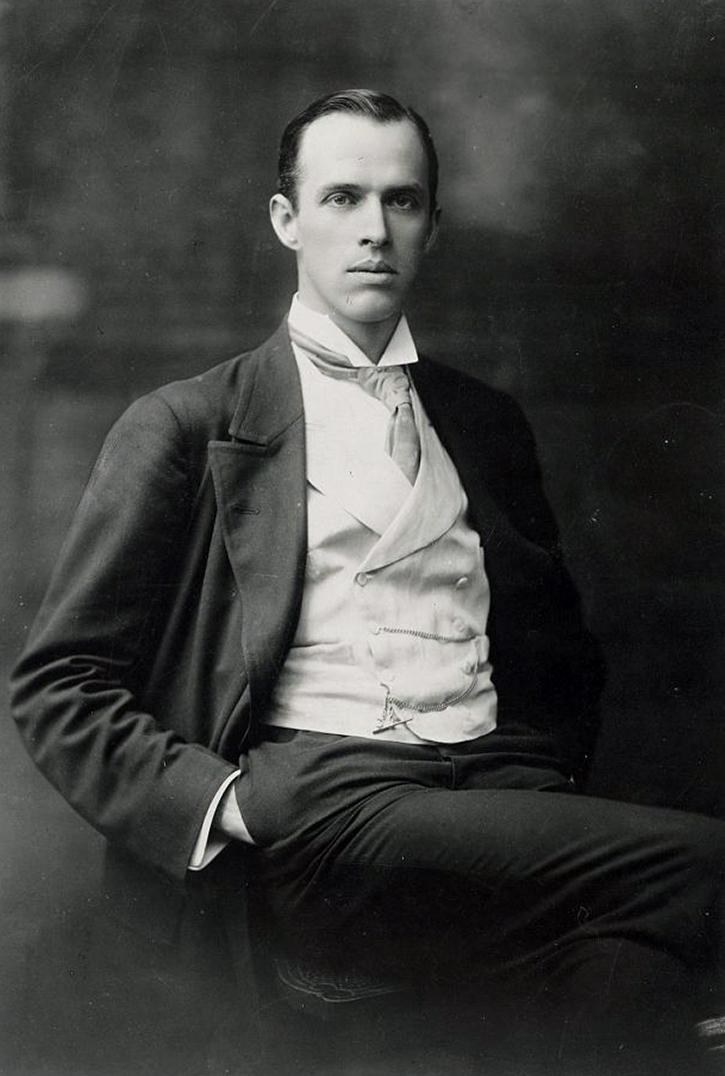
William English Walling (March 18, 1877 – September 12, 1936)[1] (known as "English" to friends and family) was an American labor reformer and Socialist Republican born into a wealthy family in Louisville, Kentucky. He founded the National Women's Trade Union League in 1903. Moved by his investigation of the Springfield Race Riot of 1908 in the state capital of Illinois, he was among the co-founders of the National Association for the Advancement of Colored People (NAACP) in 1909.[2]
Key Information


He wrote three books on socialism in the early 20th century. He left the Socialist Party because of its anti-war policy, as he believed United States participation in the Great War was needed to defeat the Central Powers.
Early life and education
[edit]William English Walling was born into wealth in Louisville, Kentucky, the son of Willoughby Walling, a physician who had inherited much real estate, and Rosalinda (née English) Walling.[1] He had an older brother, Willoughby George Walling. His father's family were planters who had held slaves before the American Civil War. The boys' maternal grandfather was William Hayden English, a successful businessman in Indiana and the Democratic nominee for vice president in 1880.
Walling was educated at a private school in Louisville, and at the University of Chicago and Harvard Law School.[3] After his grandfather English died while Walling was in college, the young man inherited a private income. He became a socialist. After moving to New York in 1900, he became active in state social movements and politics.
Career
[edit]Walling became involved in labor and political movements, first working at Hull House in Chicago, an early settlement house and University Settlement Society of New York.[4] He vowed to live on the equivalent of a worker's wage. Moving to New York City in 1900, Walling worked as a factory inspector. In 1903, he founded the National Women's Trade Union League.
In 1906, following a lengthy trip to Russia to report on the abortive Russian Revolution of 1905, he married Anna Strunsky, a Jewish immigrant and an aspiring novelist from San Francisco, who had lived as a child with her family on New York's Lower East Side before they moved to California.[5] They had four children together: Rosamond, Anna, Georgia and Hayden.
In 1908, Walling published Russia's Message, a book inspired by the social unrest that he and his wife had observed in Russia.[6] He joined the Socialist Party (1910–17), but resigned several years later at the time of the Great War because of its anti-war stance. Walling became convinced that United States intervention in the war was needed to defeat the Central Powers. His marriage to Anna Strunsky ended at this time, in part due to their disagreement over the United States' role in the conflict.[5]
In 1908, Walling and his wife Anna went to Springfield, Illinois, to investigate a race riot that occurred on August 14. Ethnic whites had attacked blacks, with physical conflict arising out of job competition at the lowest levels and rapid social change in the developing city. Walling wrote an article, "The Race War in the North", for the September 3 issue of The Independent (New York), in which he said that "the spirit of the abolitionists, of Lincoln and Lovejoy, must be revived and we must come to treat the negro on a plane of absolute political and capitalist equality, or Vardaman and Tillman will soon have transferred the race war to the North."[7] He appealed for a "large and powerful body of citizens to come to their aid."[7]
Mary White Ovington wrote to him in support. She was one among a number of people, white and black, Christians and Jews, who were moved to create a new organization to work for civil rights.[8] Walling was among the white founders of the NAACP; founding black members included such leaders as W.E.B. Du Bois from the Niagara Movement; founding Jewish members included such leaders as Henry Moskowitz, Joel and Arthur Spingarn, Lillian Wald, Walter E. Sachs, and others. They had some of their first meetings in Walling's New York apartment.[8] Walling served initially as chairman of the NAACP Executive Committee (1910–1911).[8]
Walling later worked full-time for the American Federation of Labor.[3]
Works
[edit]Books
[edit]- Russia's Message: The People Against the Czar (1908)
- Socialism As It Is – A Survey of The World-Wide Revolutionary Movement (1912/1918)
- The Larger Aspects of Socialism (1913)
- Progressivism and After (1914)
- The Socialists and the War (1915)
- Sovietism: The ABC of Russian Bolshevism—According to the Bolshevists (1920)
Selected articles
[edit]- "The New Unionism—The Problem of the Unskilled Worker". The Annals of the American Academy of Political and Social Science. 24: 12–31. September 1904. JSTOR 1010084.
- "Fifteen Reasons Why a 'Labor Party' Is Undesirable" (PDF). International Socialist Review. Vol. X, no. 7. January 1910. pp. 607–08.
- "Industrialism or Revolutionary Unionism" (PDF). The New Review. Vol. 1, no. 2. January 1913. pp. 45–51.
Footnotes
[edit]- ^ a b "William English Walling" at ancestry.com.
- ^ Boylan, James. Revolutionary Lives: Anna Strunsky & William English Walling, Amherst: University of Massachusetts Press, 1998. viii, 334 pp.
- ^ a b "William English Walling Biography (1877–1936)". Biography.com. Retrieved October 17, 2006.
{{cite web}}:|archive-url=is malformed: timestamp (help)CS1 maint: url-status (link) - ^ "America's First Settlement House". www.tenement.org. Tenement Museum. July 29, 2020. Retrieved June 7, 2022.
William English Walling, a socialist writer and one of the white founding members of the NAACP, worked at University Settlement at the turn of the 20th century, and offered some advice to his colleagues: "[M]ake friends with these settlement people and listen, listen all the time. They've got a lot to teach us boys, so for the love [of] Jesus Christ don't let's be uplifters here."
- ^ a b Greenberg, David (February 21, 1999). "Comrades in Love". The New York Times. Retrieved October 17, 2006.
- ^ Walling, William English Russia's Message: The True World Import of the Revolution (New York: Doubleday, Page & Company, 1908).
- ^ a b Walling, William English. "The Race War in the North", The Independent (New York), 65 (September 3, 1908): 529–534.
- ^ a b c William English Walling Archived November 18, 2010, at the Wayback Machine, Exhibition: NAACP: A Century in the Fight for Freedom 1909–2009, Library of Congress
Further reading
[edit]- James Boylan, Revolutionary Lives: Anna Strunsky and William English Walling. Amherst, MA: University of Massachusetts Press, 1998.
- Berry Craig, "William English Walling: Kentucky's Unknown Civil Rights Hero", The Register of the Kentucky Historical Society, vol. 96, no. 4 (Autumn 1998), pp. 351–376. In JSTOR
- Richard Schneirov, "The Odyssey of William English Walling: Revisionism, Social Democracy, and Evolutionary Pragmatism", The Journal of the Gilded Age and Progressive Era, vol. 2, no. 4 (October 2003), pp. 403–430. In JSTOR
External links
[edit]
- "William English Walling", Spartacus website
- Works by William English Walling at Project Gutenberg
- Works by or about William English Walling at the Internet Archive

William English Walling
View on GrokipediaWilliam English Walling (March 14, 1877 – February 1936) was an American socialist journalist, author, and labor activist renowned for his investigative reporting on racial violence and his role as a co-founder of the National Association for the Advancement of Colored People (NAACP).[1] Born into a prosperous Kentucky family descended from slaveholders, Walling pursued studies at the University of Chicago before immersing himself in social reform efforts, including work at Chicago's Hull-House settlement.[2] His seminal 1908 article "Race War in the North," detailing the Springfield, Illinois, race riot, galvanized a coalition of activists to form the NAACP in 1909, marking a pivotal effort to combat lynching and discrimination through organized advocacy.[3] Walling's activism extended to labor organizing, where he helped establish the National Women's Trade Union League in 1903 to advance women's industrial rights and co-founded the Intercollegiate Socialist Society to propagate socialist ideas among students.[1] A prolific writer, he authored works critiquing capitalism and racial injustice, while engaging in intra-socialist debates, often aligning against more moderate party figures like Victor Berger.[4] His personal life intertwined with reform circles; married to fellow socialist Anna Strunsky, he traveled extensively, lecturing on social issues until his death from a brief illness in Amsterdam.[5] Though celebrated for bridging labor and civil rights movements, Walling faced criticism within leftist ranks for endorsing the Espionage Act of 1917, which curtailed wartime dissent and conflicted with anti-militarist socialists, highlighting tensions between his reformist zeal and evolving political priorities.[3] His archives, preserved at institutions like the Wisconsin Historical Society, reveal a commitment to empirical social analysis amid early 20th-century upheavals.[6]