Hubbry Logo
William WitheringWilliam WitheringMain
Open search
William Withering
Community hub
William Withering
logo
8 pages, 0 posts
0 subscribers
Be the first to start a discussion here.
William Withering
William Withering
from Wikipedia

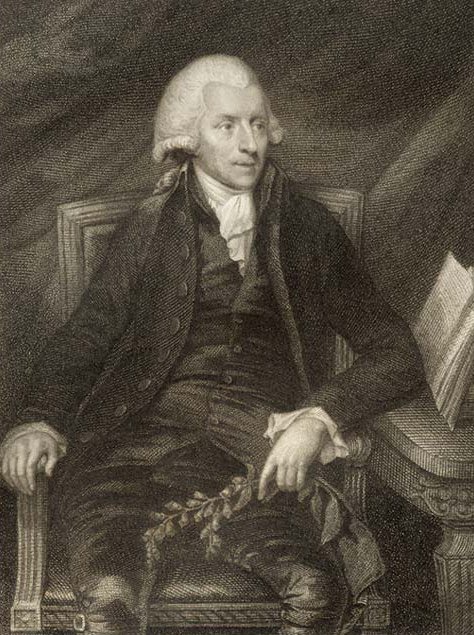
William Withering FRS (17 March 1741 – 6 October 1799) was an English botanist, geologist, chemist, physician and first systematic investigator of the bioactivity of digitalis.

Key Information

Withering was born in Wellington, Shropshire, the son of a surgeon.[1] He trained as a physician and studied medicine at the University of Edinburgh Medical School. He worked at Birmingham General Hospital from 1779. The story is that he noticed a person with dropsy (swelling from congestive heart failure) improve remarkably after taking a traditional herbal remedy; Withering became famous for recognising that the active ingredient in the mixture came from the foxglove plant.[2] The active ingredient is now known as digoxin, after the plant's scientific name. In 1785, Withering published An Account of the Foxglove and some of its Medical Uses, which contained reports on clinical trials and notes on digitalis's effects and toxicity.[3]

Biography

[edit]
Edgbaston Hall

Born in England, Withering attended Edinburgh Medical School from 1762 to 1766. In 1767 he started as a consultant at Stafford Royal Infirmary. He married Helena Cookes (an amateur botanical illustrator, and a former patient of his) in 1772; they had three children (the first, Helena was born in 1775 but died a few days later, William was born in 1776, and Charlotte in 1778). In 1775 he was appointed physician to Birmingham General Hospital (at the suggestion of Erasmus Darwin, a physician and founder member of the Lunar Society), but in 1783 he diagnosed himself as having pulmonary tuberculosis and went twice to Portugal hoping the better winter climate would improve his health; it did not. On the way home from his second trip there, the ship he was in was chased by pirates. In 1785 he was elected a Fellow of the prestigious Royal Society and also published his Account of the Foxglove (see below). The following year he leased Edgbaston Hall, in Birmingham. He was one of the members of the Lunar Society.[4] During the Birmingham riots of 1791 (in which Joseph Priestley's home was demolished) he prepared to flee from Edgbaston Hall, but his staff kept the rioters at bay until the military arrived. In 1799 he decided that he could not tolerate another winter in the cold and draughty Hall, so he bought "The Larches" in the nearby Sparkbrook area; his wife did not feel up to the move and remained at Edgbaston Hall. After moving to The Larches on 28 September, he died on 6 October 1799.

Botany

[edit]
Illustration from An Account of the Foxglove
Pocket microscope by Withering

In 1776, he published The botanical arrangement of all the vegetables naturally growing in Great Britain,[5][6] an early and influential British Flora. It was the first in English based on the then new Linnaean taxonomy — a classification of all living things — devised by the Swedish botanist and physician Carl Linnaeus (1707–1778). At the time he was criticised for having produced a bowdlerised version of Linnaeus, deliberately omitting any references to sexual reproduction, out of a desire to protect 'female modesty', notably by 'A Botanical Society, at Lichfield' - almost always incorrectly named as The Botanical Society of Lichfield or the Lichfield Botanical Society. Withering explained on the title page and his introduction that he avoided being explicit to allow his book to be used without any problems by a wider audience and in particular women.[7][notes 1] However he found support for his position, and botany was considered a subject suitable for many women during the next century.[8][9] A talented illustrator herself, his wife, Helena, sketched plants he collected.[10]

Withering wrote two more editions of this work in 1787 and 1792, in collaboration with fellow Lunar Society member Jonathan Stokes, and after his death his son (also William) published four more. It continued being published under various authors until 1877. Withering senior also carried out pioneering work into the identification of fungi and invented a folding pocket microscope for use on botanical field trips. He also introduced to the general audience the screw down plant press and the vasculum.[11] In 1787 he was elected a Fellow of the Linnaean Society in recognition of his contribution to botany. Subsequently, the plant Witheringia solanacea was named in his honour, and he became known on the continent of Europe as "The English Linnaeus". The William Withering Chair in Medicine at the University of Birmingham Medical School is named after him, as is the medical school's annual William Withering Lecture.

Discovery of digitalis

[edit]

Allegedly, Withering first learned of the use of digitalis in treating "dropsy" (œdema) from "Mother Hutton", an old woman who practised as a folk herbalist in Shropshire, who used the plant as part of a polyherbal formulation containing over 20 different ingredients to successfully treat this condition.[13][14][15] Withering deduced that digitalis was the active ingredient in the formulation, and over the ensuing nine years he carefully tried out different preparations of various parts of the plant (collected in different seasons) documenting 156 cases where he had employed digitalis, and describing the effects and the best - and safest - way of using it. At least one of these cases was a patient for whom Erasmus Darwin had asked Withering for his second opinion. In January 1785 Darwin submitted a paper entitled "An Account of the Successful Use of Foxglove in Some Dropsies and in Pulmonary Consumption" to the College of Physicians in London;[16] it was presented by Darwin in March of that year. A postscript[17] at the end of the published volume of transactions containing Darwin's paper states that "Whilst the last pages of this volume were in the press, Dr Withering of Birmingham... published a numerous collection of cases in which foxglove has been given, and frequently with good success". After this, Darwin and Withering became increasingly estranged, and eventually an argument broke out apparently resulting from Robert Darwin having accused Withering of unprofessional behaviour by effectively poaching patients. This is a very early example of medical academic plagiarism.

"William Withering and Mother Hutton"; illustration by William Meade Prince (1928)

In reality "Mother Hutton" was created in 1928 in an illustration by William Meade Prince as part of an advertising campaign by Parke-Davis who marketed digitalis preparations. There is no mention of a Mother Hutton in Withering's works or anyone else's and no mention of him meeting any old woman directly. In his account he states that he is merely asked to comment on a family recipe that was originally an old woman's receipt or recipe (that she had long kept secret) by a colleague. Since 1928, Mother Hutton's status has grown from being an image in an advertising poster to an acclaimed wise woman, herbalist, pharmacist and medical practitioner in Shropshire who was cheated out of her true recognition by Dr. Withering's unscrupulous methods. The story often written around this is also totally apocryphal. Withering was in fact informed of the Brasenose College, Oxford case by one of his medical colleagues Dr. Ash at Birmingham Hospital and the Dean was treated with digitalis root not leaves. The myth of Mother Hutton and how Withering chased her around Shropshire has been created by authors not going back to primary sources but instead copying and then embellishing the unreferenced work of others. See "Withering and The Foxglove; the making of a myth" by D.M. Krikler (British Heart Journal, 1985, 54: 256–257). In Withering's Account of the Foxglove printed in 1785 Withering mentions seven different occasions when foxglove was brought to his attention. Recognising that foxglove was the active ingredient in a family recipe (that was long kept secret by an old woman in Shropshire) would not have been difficult with his expert botanical knowledge. Withering had first published his Botanical Arrangement in 1776 and in it suggested foxglove deserved looking at in more detail. Erasmus Darwin tried to take the credit for foxglove and failed. Erasmus Darwin then attempted to try and discredit Withering behind the scenes with the unwitting help of his son Robert having earlier used the thesis of his dead son Charles to try and establish priority. Charles Darwin in fact had been friendly with Withering (as had Robert) and had talked in Edinburgh University about Withering's experiments with foxglove. Erasmus Darwin was probably jealous that Withering had become the most famous and sought-after doctor outside London and that Withering's English Botanical Arrangement became the standard reference source and far exceeded the botanical publications of Erasmus (all published semi-anonymously) in popularity. Withering's Botanical Arrangement, although now almost forgotten, became the standard reference for English Botany for almost the next 100 years.

Chemistry and geology

[edit]
Withering analysing thermal waters at Caldas da Rainha

Withering was an enthusiastic chemist and geologist. He conducted a series of experiments on Terra Ponderosa, a heavy ore from Cumberland, England. He deduced that it contained a hitherto undescribed element which he was unable to characterise. It was later shown to be barium carbonate and in 1789 the German geologist Abraham Gottlob Werner named the mineral Witherite in his honour.[18] The Matthew Boulton mineral collection of Birmingham Museum and Art Gallery may contain one of the earliest known specimens of witherite. A label in Boulton's handwriting records; "No. 2 Terra Ponderosa Aerata, given me by Dr. Withering"[19]

Withering also undertook analyses of the mineral content of a number of spa waters in England and abroad, notably at the medicinal spa at Caldas da Rainha in Portugal. This latter undertaking occurred during the winter of 1793–4, and he was subsequently elected to the Fellowship of the Royal Academy of Sciences of Portugal.

Memorials

[edit]
William Withering's memorial plaque inside St Bartholomew's Church, Edgbaston

He was buried on 10 October 1799 in Edgbaston Old Church next to Edgbaston Hall, Birmingham, although the exact site of his grave is unknown. The memorial stone, now moved inside the church, has foxgloves and Witheringia solanaceae carved upon it to commemorate his discovery and his wider contribution to botany. He is also remembered by one of the Lunar Society Moonstones in Birmingham and by a blue plaque at Edgbaston Hall.[20] Birmingham University School of Medicine[21] established a Chair of Medicine post in his honour, named after him.[22]

In July 2011 a J D Wetherspoon public house opened in Withering's birthplace, Wellington, and has been named after him.[23]

Publications

[edit]
Plaque reads 'William Withering M.D., F.R.S. 1741-1799 Physician and Botanist lived here' and 'Birmingham Civic Society 1988'
Blue plaque at Edgbaston Hall

This list is drawn from Sheldon, 2004:[24]

  • 1766 Dissertation on angina gangrenosa
  • 1773 "Experiments on different kinds of Marle found in Staffordshire" Phil Trans. 63: 161-2
  • Withering, William (1776a). A Botanical Arrangement of All the Vegetables Naturally Growing in Great Britain: With Descriptions of the Genera and Species, According to the System of the Celebrated Linnaeus. Being an Attempt to Render Them Familiar to Those who are Unacquainted with the Learned Languages. vol i. Birmingham: Swinney. Retrieved 24 February 2015.
  • Withering, William (1776b). A Botanical Arrangement of All the Vegetables Naturally Growing in Great Britain: With Descriptions of the Genera and Species, According to the System of the Celebrated Linnaeus. Being an Attempt to Render Them Familiar to Those who are Unacquainted with the Learned Languages. vol ii. Birmingham: Swinney. Retrieved 24 February 2015.
  • 1779 "An account of the scarlet fever and sore throat, or scarlatina; particularly as it appeared at Birmingham in the year 1778" Publ Cadell London
  • 1782 "An analysis of two mineral substance, vz. the Rowley rag-stone and the toad stone" Phil Trans 72: 327-36
  • 1783 "Outlines of mineralogy" Publ Cadell, London (a translation of Bergmann's Latin original)
  • 1784 "Experiments and observations on the terra ponderosa" Phil trans 74: 293-311
  • 1785 "An account of the foxglove and some of its medical uses; with practical remarks on the dropsy, and some other diseases" Publ Swinney, Birmingham
  • 1787 "A botanical arrangement of British plants..." 2nd ed. Publ Swinney, London
  • 1788 Letter to Joseph Priestley on the principle of acidity, the decomposition of water. Phil Trans 78: 319-330
  • 1790 "An account of some extraordinary effects of lightning" Phil Trans 80: 293-5
  • 1793 "An account of the scarlet fever and sore throat..." 2nd ed Publ Robinson, London
  • 1793 "A chemical analysis of waters at Caldas" extract from Actas da Academica real das Sciencias
  • 1794 "A new method for preserving fungi, ascertained by chymical experiments" Trans Linnean Soc 2: 263-6
  • 1795 "Analyse chimica da aqua das Caldas da Rainha" Lisbon (a chemical analysis of the water of Caldas da Rainha)
  • 1796 "Observations on the pneumatic medicine" Ann Med 1: 392-3
  • 1796 "An arrangement of British plants..." 3rd ed. Publ Swinney, London
  • 1799 "An account of a convenient method of inhaling the vapour of volatile substances" Ann Med 3: 47-51

Notes

[edit]

References

[edit]

Further reading

[edit]
[edit]
Revisions and contributorsEdit on WikipediaRead on Wikipedia
from Grokipedia
William Withering (1741–1799) was an English physician, , , and best known for his systematic investigation and introduction of , an extract from the foxglove plant (Digitalis purpurea), into medical practice as a treatment for dropsy () linked to heart failure. His seminal 1785 publication, An Account of the Foxglove, and Some of Its Medical Uses, detailed observations from over 150 patients, establishing dosing guidelines, recognizing therapeutic benefits on the heart, and identifying side effects such as and visual disturbances, thereby laying foundational principles for evidence-based therapeutics. Born on March 17, 1741, in , to a family of medical practitioners—his father was an and —Withering received early training through a four-year apprenticeship to a local surgeon before enrolling at the in 1762. There, he studied under prominent figures like William Cullen and , earning his MD in 1766 with a thesis on gangrenous angina. He began his career in private practice and as a physician at Stafford Infirmary in 1767, later moving to Birmingham in 1775, where he became a leading consultant and co-founded the Birmingham General Hospital in 1779, treating thousands of patients annually while maintaining one of the largest practices outside . Withering's interest in digitalis stemmed from a 1775 folk remedy reported by an old woman in , prompting a decade-long clinical study that culminated in his book, which emphasized careful observation, precise measurement, and ethical reporting—principles that influenced modern clinical trials. Beyond medicine, he advanced with A Botanical Arrangement of All the Vegetables Naturally Growing in (1776), the first English using Linnaean classification, and contributed to by identifying () and analyzing mineral waters. A member of the influential Lunar Society and elected in , Withering retired in 1792 due to chronic respiratory illness and died on October 6, 1799, from likely or , at age 58 in near Birmingham. His work on remains a cornerstone of , with derivatives like still in use today.

Early Life and Education

Birth and Family Background

William Withering was born on 17 March 1741 in , , the second child and only son of Withering, a local , and Sarah Hector, sister of the prominent Lichfield physician Brooke Hector. The family occupied a respectable middle-class position in the , where 's profession as an involved compounding medicines and serving the community's health needs, fostering an environment steeped in practical medical knowledge. From a young age, Withering received private education under the Reverend at High Ercall, but his early exposure to came directly from observing and assisting in his 's work, which sparked his lifelong interest in healing arts. Withering had at least one sister, though family dynamics emphasized his role as the sole , with medical influences from both paternal and maternal lines shaping his early worldview. His , , died in 1769 at Cheswardine, by which point Withering had established his own professional path, though the loss underscored the family's reliance on his emerging career for stability. This upbringing in a modest yet intellectually stimulating household propelled him toward formal medical studies in shortly thereafter.

Medical Training and Early Interests

William Withering began his formal medical education in 1762 at the , then renowned as one of Europe's premier institutions for medical studies. He enrolled at the age of 21, following an initial apprenticeship to a local medical practitioner in his hometown of , which provided him with foundational practical knowledge in and work. Over the next four years, Withering immersed himself in a rigorous curriculum that included anatomy, chemistry, and , culminating in his graduation with an MD degree in 1766. His doctoral thesis, titled De Angina Gangraenosa, focused on the pathology and treatment of malignant putrid , demonstrating his early engagement with clinical observation and therapeutic reasoning. During his time at Edinburgh, Withering studied under influential figures who shaped his scientific outlook, including the physician and chemist William Cullen, whose lectures on the theory and practice of medicine emphasized systematic classification and empirical methods, and John Hope, professor of and , whose courses on plant-based remedies sparked Withering's lifelong passion for . These experiences, combined with hands-on dissections and laboratory work, fostered Withering's early interests in and chemistry, fields he explored through the collection of plant specimens and chemical analyses of natural substances around the Edinburgh region. Although no formal publications emerged from his student notes on local flora, these pursuits laid the groundwork for his later systematic botanical studies, blending observational precision with medical application. Upon completing his degree, Withering returned to and established a medical practice in in 1767, where he also contributed to the founding of the Stafford Infirmary as one of its initial physicians. This transitional phase allowed him to integrate his Edinburgh-acquired knowledge of natural sciences into practical healthcare, examining local minerals and plants in parallel with patient care, thus bridging theoretical training with real-world application.

Professional Career

Practice in Staffordshire

In 1767, following his medical training in , William Withering established a private medical practice in , the county town of , where he also served as a physician at the newly founded Stafford Infirmary. This rural setting allowed him to build a focused on the health needs of the local community, though the modest population limited his initial patient base. On 12 September 1772, Withering married Helena Cooke, the daughter of a local gentleman and an accomplished botanical artist whom he had treated as a since 1768. Their shared interest in began to influence Withering's pursuits during this period. Withering's practice involved treating prevalent local ailments, such as (then known as consumption), for which he later noted the ineffectiveness of in his 1785 publication. His growing curiosity in mineral waters contributed to his early explorations in . Despite his dedication, Withering sought greater opportunities by 1775 due to the limitations of rural practice. He integrated well socially, earning respect as a physician at the infirmary and forming connections within the local medical community.

Appointment in Birmingham

In 1775, following his established practice in , William Withering relocated to Birmingham at the suggestion of to enter into a partnership with the prominent physician John Ash. This move positioned him within Birmingham's burgeoning medical and intellectual community during the . Withering's collaboration with Ash extended to the founding of the Birmingham General Hospital, which opened in 1779, where he was appointed as a physician. In this role, he contributed to the institution's early operations, serving patients from diverse socioeconomic backgrounds in an urban setting that contrasted with his prior rural experiences. Upon arriving in Birmingham, Withering joined the Lunar Society, an influential group of intellectuals that met monthly near the full moon to discuss advancements in science, industry, and . His interactions with key members, including and , fostered interdisciplinary exchanges that enriched his approach to medical practice and research. These gatherings encouraged the integration of botanical, chemical, and mechanical insights, broadening Withering's perspective beyond traditional clinical boundaries. At the Birmingham , Withering's duties included conducting a daily for impoverished , attending to approximately 10 individuals per day and up to 3,000 annually, all provided free of charge. This demanding workload exposed him to a wide array of conditions among a varied , including those with heart-related ailments, prompting him to develop systematic methods of observation and documentation to track disease patterns and treatment responses. Such practices laid the groundwork for his later contributions to in an era of expanding urban healthcare needs.

Botanical Contributions

Major Botanical Works

William Withering's most significant botanical publication was A Botanical Arrangement of All the Vegetables Naturally Growing in Great Britain, first issued in 1776 in two volumes. This work adapted the Linnaean system of classification for an English-speaking audience, providing systematic descriptions of British flora in a manner accessible to both scholars and lay enthusiasts. It emphasized practical utility, particularly for physicians, by detailing the medicinal, dietary, economic, and artistic applications of each plant, thereby bridging botany with applied sciences. The book included 12 engraved plates to aid visual identification and covered more than 1,400 , offering concise keys and Latin binomials alongside English common names to facilitate fieldwork. Withering's approach prioritized ease of use, with an introductory section explaining Linnaean principles without overwhelming technicality, making it a foundational text for British botany. Subsequent revisions expanded its scope: the second edition, published between and in three volumes, incorporated updates from recent discoveries and featured enhanced illustrations. Withering collaborated closely with Jonathan Stokes, a young botanist and his protégé, on the revisions; Stokes contributed illustrations and textual expansions, particularly on cryptogams in the third volume. In recognition of this work's influence, Withering was elected a of the Linnean Society in 1789.

Innovations and Recognition in Botany

In 1776, William Withering invented a portable simple designed specifically for botanical field work, consisting of a single biconvex lens in a sliding frame that allowed for adjustable focus on specimens, which could be collapsed into a compact case for easy transport. This instrument, later known as the Withering , enabled detailed dissections of flowers and other parts during excursions, as detailed in the introductory sections of the second edition of his A Botanical Arrangement of All the Vegetables Naturally Growing in (1787–1792). Complementing this, Withering introduced a screw-down press to the broader botanical community, allowing specimens to be flattened and dried between sheets of for preservation and study. He described its construction and application in the same work, emphasizing its utility for field collectors in maintaining specimen integrity without relying on cumbersome alternatives. Withering's innovations facilitated more efficient systematic observation of British plants, aligning with his adoption of Carl Linnaeus's . He engaged with the works of leading European botanists, including translating Linnaeus's classification system, contributing to bridging continental and British botanical traditions. In recognition of his contributions, Withering was elected a Fellow of the in 1789, the world's oldest society dedicated to , founded just a year prior. His Botanical Arrangement served as the first comprehensive English guide to British flora using the Linnaean system, classifying over 1,400 with descriptions, habitats, and practical uses, thereby making advanced accessible to English-speaking audiences beyond Latin scholars. This work laid a foundational framework for subsequent British floras, promoting standardized and field-based study.

Medical Discoveries

Investigation of Digitalis

In 1775, William Withering was consulted regarding a secret family remedy for dropsy, a condition characterized by edema, which had been employed by an old woman from Shropshire. This remedy consisted of a tea prepared from more than twenty different herbs, but Withering's botanical expertise enabled him to discern that the purple foxglove (Digitalis purpurea) was the primary active component responsible for its efficacy. To verify the remedy's value, Withering initiated patient trials in 1776, beginning with indigent patients under his care. He prepared infusions and decoctions from the dried leaves of the foxglove and systematically observed their effects, noting pronounced properties that promoted excretion and alleviated swelling in dropsy cases without reliance on induced or . Withering focused on isolating the plant's active principles by harvesting leaves during the flowering stage and drying them meticulously to ensure consistency, thereby standardizing dosages—typically starting with small amounts of powder or to gauge individual tolerance. He explicitly rejected apocryphal surrounding herbal cures, prioritizing derived from controlled observations over unverified traditional claims. Among early hospital cases, Withering recorded instances where foxglove administration led to notable cardiac benefits, such as the regularization and slowing of the pulse, which suggested its potential in managing heart-related symptoms associated with dropsy.

Clinical Trials and Therapeutic Insights

In 1785, William Withering published An Account of the Foxglove and Some of Its Medical Uses: With Practical Remarks on Dropsy and Other Diseases, a seminal work that systematically documented his clinical observations of digitalis therapy over a decade. The monograph detailed 163 cases from his practice, primarily involving patients with dropsy (edema) often linked to heart failure, where the remedy proved effective in many instances by promoting diuresis and alleviating symptoms such as breathlessness and swelling. Withering's approach emphasized careful patient selection, noting success primarily in those exhibiting a feeble or irregular pulse, pale complexion, and dependent edema, while failures occurred in cases of advanced organic heart disease or unrelated conditions like nephritis. Withering meticulously identified key side effects of , including , , visual disturbances (such as seeing objects tinged or ), , and a dangerously slowed , which he observed in overdosed patients and used as signals to adjust treatment. For administration, he advocated using dried foxglove leaves () prepared as an infusion (e.g., one scruple of leaves to eight ounces of water) or fine powder, preferring these over decoctions or tinctures to preserve potency. Dosing was tailored to the patient's age, strength, and condition—typically starting with one twice daily for adults, halved for children or the elderly, and increased gradually until mild or increased urine output indicated the therapeutic threshold, after which it was reduced or suspended. Central to Withering's therapeutic insights was the principle of individualized dosing, recognizing that sensitivity to varied widely among patients, necessitating close monitoring of pulse rate and symptoms to avoid . He issued stark warnings against overuse, reporting instances where excessive doses led to severe purging, syncope, or even , and cautioned practitioners to abandon the remedy if no benefit emerged after a fair trial. This rigorous, case-based methodology—recording successes, failures, and variables like concurrent treatments—anticipated modern by prioritizing empirical observation and patient-specific application over anecdotal use.

Contributions to Chemistry and Geology

Chemical Analyses

William Withering conducted pioneering chemical analyses of mineral substances, focusing on heavy earths and spa waters during the late . In 1784, he published detailed experiments on "terra ponderosa," a dense ore sourced from lead mines in , , which he identified as a novel substance distinct from known spars. Through systematic testing, Withering determined its specific gravity to range between 4.300 and 4.338, noting its when treated with dilute acids and its resistance to certain solvents, which differentiated it from barytes (). He named it terra ponderosa aerata (aerated heavy earth), recognizing it as , later honored as in his name, and concluded it represented a previously undescribed earth element. Withering's investigations involved precipitation tests and reactions with acids and alkalis to isolate components, revealing the mineral's crystalline forms, including globular masses and radiating structures, often coated in ochreous crusts. He collaborated with fellow Lunar Society member , who aided in experiments on its gaseous properties and referenced Withering's findings in his own work on airs, confirming the substance's unique chemical behavior. These analyses established witherite's distinction from barytes, contributing to early understandings of compounds and their separation in mineral deposits. From the 1770s to the 1780s, Withering examined medicinal waters from English spas, including , employing methods to identify contents such as sulfates and carbonates. His tests involved adding reagents like vitriolic acid and alkalis to detect fixed air and metallic salts, providing insights into the therapeutic compositions of these waters. These efforts extended to foreign spas, notably his 1793–1794 analysis of waters in , where he quantified elastic fluids and impurities via similar techniques at the request of the court. For this work, Withering was elected a member of the Royal Academy of Sciences at in 1794. Withering's work on barytes advanced its recognition as a mineral in lead and deposits, highlighting its role in British orefields like those in the Northern . He noted potential industrial applications, including its use in glazes for enhanced gloss and in early production, foreshadowing broader 19th-century uses in glassmaking and paints. By linking to barytes through chemical parallels, Withering's analyses facilitated extraction techniques and economic exploitation of resources.

Mineralogical and Geological Studies

Withering developed a keen interest in and alongside his medical practice, conducting fieldwork in regions such as and during the 1770s. His observations focused on local and geological formations linked to economic activities like , particularly in areas rich in lead deposits. These studies highlighted the distribution of resources and their practical implications for industry in the English . In 1782, Withering published an analysis of two notable British mineral substances: the Rowley rag-stone, a durable siliceous from quarries used in and milling, and the toad-stone, a fossil-like basaltic formation often found in association with lead ores in mines. This work demonstrated his systematic approach to describing and classifying native s, emphasizing their physical properties and geological context without relying solely on chemical testing. Withering's mineralogical contributions extended to the identification of as a distinct species, later named in his honor by in 1789; he first described it from specimens in lead mining districts. His cataloging efforts included over 100 British specimens, which advanced classificatory methods in early and influenced subsequent collectors. The following year, he translated and annotated Torbern Bergman's Sciagraphia regni mineralis as Outlines of Mineralogy, incorporating observations from his British collections to enhance its applicability to local . In 1785, he was elected a for these mineralogical achievements.

Personal Life and Legacy

Family and Later Years

William Withering married Helena Cookes, the daughter of a Stafford town clerk and an amateur botanical illustrator who provided sketches for some of his works, on September 12, 1772. The couple had three children, though only two survived infancy: a son, William, born in 1776, who later pursued a in , and a , Charlotte, born in 1778. In 1786, the family relocated to Edgbaston Hall, a spacious estate near Birmingham surrounded by a park that Withering transformed into a where he cultivated plants and bred Newfoundland dogs and French cattle. This domestic setting reflected his deep interest in gardening, which intertwined with his botanical pursuits and provided a serene environment for family life amid his growing health challenges. Family correspondence from this period, preserved in memoirs, highlights Withering's personal resilience, as he balanced professional demands with affectionate letters to his children and wife, often discussing home improvements and shared natural observations. From the 1780s onward, Withering battled progressive , a condition that prompted multiple attempts at to manage his frail health. In December 1792, he traveled to , , with his son William, seeking the milder climate's benefits, and returned in June 1793; a second trip followed from October 1793 to 1794, though these excursions offered only temporary relief. Despite his illness, Withering maintained an active household at Hall, employing professional collectors and fostering a supportive dynamic that sustained his intellectual and domestic pursuits until his condition necessitated further withdrawal from public life.

Death and Memorials

William Withering died on 6 October 1799 at the age of 58 from complications of pulmonary at his residence in , Birmingham. His long battle with the disease, which began around 1783, had forced his retirement from active practice several years earlier. He was buried on 10 October 1799 at Edgbaston Old Church in Birmingham, with the funeral procession drawing several thousand mourners in tribute to his esteemed reputation. His gravestone, now a inside the church, features a bust of Withering along with carvings of the foxglove , symbolizing his seminal contributions to , and was inscribed with an composed by his close friend and fellow Lunar member, . Contemporary accounts, including this and reports of the funeral, lauded Withering's pioneering investigations into as a transformative advancement in treating conditions like dropsy. In the 20th century, the University of Birmingham established the William Withering Chair of Medicine in 1948 to honor his legacy in clinical research and therapeutics. Other memorials include a blue plaque erected by the Birmingham Civic Society in 1988 at Edgbaston Golf Club, the site of his former home at Edgbaston Hall, recognizing his work as a physician and botanist. A pub named The William Withering in his birthplace of Wellington, Shropshire, further commemorates his life and discoveries.

Influence on Modern Science

William Withering's investigations into laid the foundation for , a purified that remains a of modern . In the , the isolation of from the woolly foxglove plant (Digitalis lanata) in 1930 by confirmed Withering's empirical observations on its therapeutic effects, particularly in managing and heart conditions associated with irregular rhythms. Today, continues to be prescribed for rate control in , especially in patients with , where it enhances cardiac contractility and reduces ventricular response rates, as evidenced by clinical guidelines and studies showing its efficacy in selected cases. As of 2025, related cardiac glycosides like have demonstrated benefits in reducing hospitalization risks for with reduced , as shown in the DIGIT-HF trial. Withering's systematic approach to evaluating digitalis through detailed patient observations and dose adjustments has earned recognition in the history of pharmacology as an early exemplar of methodology. Modern reviews, such as a 2006 analysis in the British Journal of Clinical Pharmacology, validate his trial methods—emphasizing controlled dosing, side effect monitoring, and patient selection—as precursors to contemporary evidence-based practices, highlighting their relevance in pharmacoepidemiology and individualized therapy. These insights underscore gaps in historical coverage, where Withering's emphasis on variability in drug response anticipates today's focus on and . Beyond medicine, Withering's chemical analyses contributed to the understanding of compounds, which have practical applications in diagnostic imaging. His 1784 identification of () advanced mineralogical knowledge, facilitating later developments in , an insoluble compound now widely used as a radiopaque in procedures to visualize the . Additionally, his botanical publications, including the 1776 Botanical Arrangement of British Plants, documented native in detail, influencing subsequent conservation efforts by providing baseline data on plant distributions and habitats that informed 19th- and 20th-century preservation initiatives in the UK. This work addresses overlooked aspects of his legacy, bridging with .

Publications

Botanical Publications

William Withering's primary contribution to botanical literature was his systematic classification of British flora using the Linnaean system, adapted for English-speaking audiences. His seminal work, A Botanical Arrangement of All the Vegetables Naturally Growing in Great Britain, published in two volumes in 1776 by M. Swinney in Birmingham, provided the first comprehensive English-language guide to native British plants arranged according to Carl Linnaeus's binomial nomenclature and sexual classification. This text described over 1,400 species, emphasizing identification through detailed generic and specific characteristics, and marked a significant advancement in making continental botanical taxonomy accessible to British readers unfamiliar with Latin. Subsequent editions expanded and refined Withering's original framework, incorporating updates to the Linnaean system and additional practical details, in collaboration with Jonathan Stokes. The 1787 edition, titled A Botanical Arrangement of British Plants and published in three volumes, printed by M. Swinney for G.G.J. & J. Robinson, introduced appendices detailing the medicinal, dietary, economic, and artistic uses of each species, thereby bridging with applied sciences for a broader readership including enthusiasts and practitioners. Further revisions appeared in 1792 and 1796 as An Arrangement of British Plants: According to the Latest Improvements of the Linnaean System, comprising the third edition issued in four volumes, with the final volumes under Withering's supervision featuring copper-plate illustrations and an introductory guide to tailored for young learners, particularly women, to facilitate self-study of the subject. Withering also played an editorial role in disseminating Linnaean principles through these works, simplifying complex Latin terminology into English equivalents and prioritizing user-friendly descriptions over exhaustive scholarly detail, which helped popularize systematic in Britain. While his shorter contributions to periodicals like the Philosophical Transactions of the Royal Society focused more on chemical analyses, his botanical efforts remained centered on these major publications, which influenced subsequent floras by emphasizing and practical utility.

Medical and Scientific Publications

Withering's seminal medical publication, An Account of the Foxglove and Some of Its Medical Uses: With Practical Remarks on Dropsy and Other Diseases, appeared in 1785 and represented a pioneering clinical trial of digitalis derived from the foxglove plant (Digitalis purpurea). Drawing on his botanical expertise, Withering documented 163 cases spanning a decade of practice, plus additional observations from colleagues, demonstrating the drug's efficacy in treating dropsy (edema) linked to cardiac insufficiency, while cautioning against its use in phthisis and other unsuitable conditions; the text includes detailed case histories, dosage protocols, and two appendices compiling further observations from colleagues. In chemistry, Withering advanced mineralogical knowledge through his 1784 paper "Experiments and Observations on the Terra Ponderosa," published in the Philosophical Transactions of the Royal Society. This study analyzed the heavy earth from lead mines near Matlock, distinguishing barium carbonate (later named witherite in his honor) from barytes through solubility tests, calcination, and reactions with acids, thereby contributing to the classification of alkaline earth metals. Withering also applied his chemical skills to therapeutic contexts by analyzing mineral waters at various spas, with a notable example being his 1795 report A Chemical Analysis of the Water at Caldas da Rainha, commissioned by the Portuguese Royal Academy of Sciences. The analysis quantified components such as sulfate of lime, magnesia, and iron, evaluating the water's potential in treating rheumatic and cutaneous disorders, and included methods for replicating similar analyses elsewhere. During the 1790s, amid his own struggles with pulmonary , Withering contributed miscellaneous essays on medical topics, including spa therapies and the management of consumptive diseases, as compiled posthumously in The Miscellaneous Tracts of the Late William Withering (1822); these pieces reflected on environmental factors and dietary interventions for lung ailments, informed by his travels to European spas for health reasons.

References

Add your contribution
Related Hubs
User Avatar
No comments yet.