
Recent from talks
Worship in Hinduism
Knowledge base stats:
Talk channels stats:
Members stats:
Worship in Hinduism
Worship in Hinduism is an act of religious devotion, usually directed to one or more Hindu deities, that invokes a sense of bhakti (devotional love). The concept of bhakti is central in Hinduism, though a direct translation from the Sanskrit to English is difficult. Worship in Hinduism takes many forms, and its expressions vary depending on geographical, linguistic, and cultural factors. Hindu worship is not limited to a particular place, and may be performed in temples and within the home. It often incorporates personal reflection, music, dance, poetry, rituals, and ceremonies. It serves various purposes, including seeking blessings, guidance, or specific outcomes, as well as fostering a sense of inner peace and spiritual growth. It can also be an expression of devotion (bhakti) to the deity. The aim of Hindu worship is to lead a pure life in order to progress spiritually and eventually attain liberation (moksha) from the cycle of rebirth (samsara).
Within Hinduism many personal gods (ishvaras or ishtadevas) are worshipped as murtis (sacred images). These beings are either aspects of the supreme Brahman, avatars of the supreme being, or significantly powerful entities known as devas. The exact nature of belief in regard to each deity varies between differing Hindu denominations and philosophies. Often, these beings are depicted in humanoid or partially humanoid forms, complete with a set of unique and complex iconography in each case. These deities may be different, but they are generally all considered forms of the one god (Brahman). These deities and their pujas (religious rituals) provide one of the ways to communicate with this one divinity.
In Hinduism, a murti is an embodiment of the divine, the Ultimate Reality or Brahman. In a religious context, murtis are found in Hindu temples or homes, where they may be treated as a beloved guest and serve as a participant of puja rituals. A murti is installed by priests in Hindu temples through the Prana Pratishtha ceremony. There is also an utsava murti ("mobile image of god") which is used for processions and various festive celebrations. Unlike the installed, main image of the deity in Hindu temples, these murtis can be taken out of the temple and paraded during special occasions, processions, and festivals. Devotional (bhakti) practices centered on cultivating a deep and personal bond of love with God often include veneration of murtis. Acts of devotion can include awakening the murti in the morning and making sure that it "is scrubbed, clothed, and garlanded." Furthermore, the building of a temple for the murti is considered the highest act of devotion.
Pūjā (Sanskrit: पूजा, meaning reverence, honour, adoration, or worship), sometimes spelt 'pooja', is a religious ritual performed by Hindus as an offering to various deities, distinguished persons, or special guests. It is performed on a variety of occasions and settings, from daily puja done in the home, to temple ceremonies and large festivals, or to begin a new venture. A priest determines the timing of puja by consulting the pancanga (ritual calendar), which indicates auspicious dates and times for religious ceremonies. Puja rituals range from simple offerings of water, flowers, and incense in domestic shrines to the elaborate 16 upacharas in temples. Physical expressions of humility, like the namaste gesture, bending, or full prostration, accompany puja. Many Hindus equate it with prayer in English, but puja is distinct, involving tangible offerings to deity images. The puja concludes with aarti. The offerings given during puja, like food and flowers, are returned to worshippers as prasada, believed to carry the deity's blessings. This prasada is often shared with others, extending the puja's benefits.
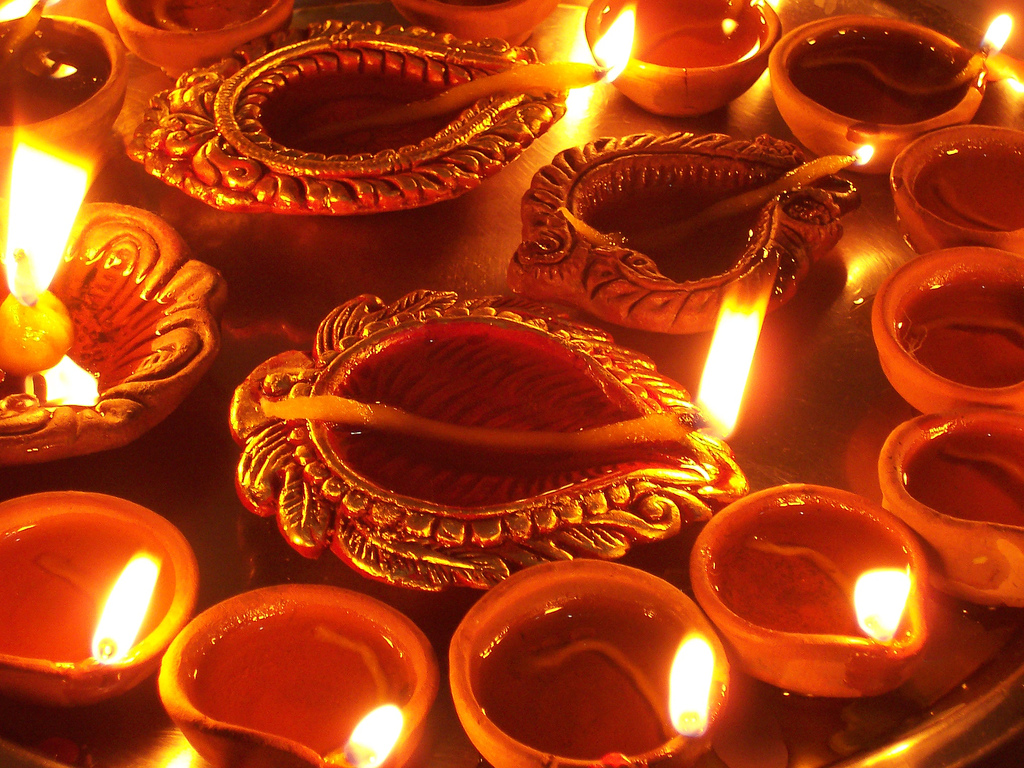
Arti is a Hindu ritual of worship, a part of puja, in which light from a flame (e.g. wicks fuelled by ghee (purified butter) or camphor) is offered to one or more deities. Arti is generally performed one to five times a day, and usually at the end of a puja (in South India) or bhajan session (in North India). It is performed during almost all Hindu ceremonies and occasions. During the arti, light from the flame (usually in the form of an arti plate or lamp) is circulated around a person or deity. It is generally accompanied by the singing of songs in praise of that deity or person. Many versions of such hymns exist, and they are also known as arti. Hindus believe that, in doing so, the flame of the arti acquires the power and grace of the deity. After this, the priest circulates the flame, contained in the plate or lamp, to those present during the ritual. The participants first cup their down-turned hands over the flame and then raise their fingers to their eyes—the purificatory blessing, passed from the deity's image to the flame, has now been passed to the devotee.
Darśana or Darshan is a Sanskrit term meaning "sight" (seeing or beholding;), vision, apparition, or glimpse. It is most commonly used for theophany - "manifestation / visions of the divine" in Hindu worship, e.g. of a deity (especially in image form), or a very holy person or artifact. One could also "receive" darshana or a glimpse of the deity in the temple, or from a great saintly person, such as a great guru.
Homa (also known as homam or havan) is a Sanskrit word which refers to any ritual in which making offerings into a consecrated fire is the primary action. At present, the words homa/homam and havan are interchangeable with the word Yagna.
Yagya is a ritual of sacrifice derived from the practice of Vedic times. It is performed to please the gods or to attain certain wishes. An essential element is the sacrificial fire - the divine Agni - into which oblations are poured, as everything that is offered into the fire is believed to reach the gods. A Vedic (Śrauta) yajna is typically performed by an adhvaryu priest reciting Vedic verses. Usually, there will be one or three fires in the centre of the offering ground. Among the items offered as oblations in the yajna include large quantities of ghee, milk, grains, cakes or soma. The duration of a yajna depends on the type; some can last a few minutes, hours or days and some even last for years. Some yajnas are performed privately, others with many people in attendance.
Hub AI
Worship in Hinduism AI simulator
(@Worship in Hinduism_simulator)
Worship in Hinduism
Worship in Hinduism is an act of religious devotion, usually directed to one or more Hindu deities, that invokes a sense of bhakti (devotional love). The concept of bhakti is central in Hinduism, though a direct translation from the Sanskrit to English is difficult. Worship in Hinduism takes many forms, and its expressions vary depending on geographical, linguistic, and cultural factors. Hindu worship is not limited to a particular place, and may be performed in temples and within the home. It often incorporates personal reflection, music, dance, poetry, rituals, and ceremonies. It serves various purposes, including seeking blessings, guidance, or specific outcomes, as well as fostering a sense of inner peace and spiritual growth. It can also be an expression of devotion (bhakti) to the deity. The aim of Hindu worship is to lead a pure life in order to progress spiritually and eventually attain liberation (moksha) from the cycle of rebirth (samsara).
Within Hinduism many personal gods (ishvaras or ishtadevas) are worshipped as murtis (sacred images). These beings are either aspects of the supreme Brahman, avatars of the supreme being, or significantly powerful entities known as devas. The exact nature of belief in regard to each deity varies between differing Hindu denominations and philosophies. Often, these beings are depicted in humanoid or partially humanoid forms, complete with a set of unique and complex iconography in each case. These deities may be different, but they are generally all considered forms of the one god (Brahman). These deities and their pujas (religious rituals) provide one of the ways to communicate with this one divinity.
In Hinduism, a murti is an embodiment of the divine, the Ultimate Reality or Brahman. In a religious context, murtis are found in Hindu temples or homes, where they may be treated as a beloved guest and serve as a participant of puja rituals. A murti is installed by priests in Hindu temples through the Prana Pratishtha ceremony. There is also an utsava murti ("mobile image of god") which is used for processions and various festive celebrations. Unlike the installed, main image of the deity in Hindu temples, these murtis can be taken out of the temple and paraded during special occasions, processions, and festivals. Devotional (bhakti) practices centered on cultivating a deep and personal bond of love with God often include veneration of murtis. Acts of devotion can include awakening the murti in the morning and making sure that it "is scrubbed, clothed, and garlanded." Furthermore, the building of a temple for the murti is considered the highest act of devotion.
Pūjā (Sanskrit: पूजा, meaning reverence, honour, adoration, or worship), sometimes spelt 'pooja', is a religious ritual performed by Hindus as an offering to various deities, distinguished persons, or special guests. It is performed on a variety of occasions and settings, from daily puja done in the home, to temple ceremonies and large festivals, or to begin a new venture. A priest determines the timing of puja by consulting the pancanga (ritual calendar), which indicates auspicious dates and times for religious ceremonies. Puja rituals range from simple offerings of water, flowers, and incense in domestic shrines to the elaborate 16 upacharas in temples. Physical expressions of humility, like the namaste gesture, bending, or full prostration, accompany puja. Many Hindus equate it with prayer in English, but puja is distinct, involving tangible offerings to deity images. The puja concludes with aarti. The offerings given during puja, like food and flowers, are returned to worshippers as prasada, believed to carry the deity's blessings. This prasada is often shared with others, extending the puja's benefits.
Arti is a Hindu ritual of worship, a part of puja, in which light from a flame (e.g. wicks fuelled by ghee (purified butter) or camphor) is offered to one or more deities. Arti is generally performed one to five times a day, and usually at the end of a puja (in South India) or bhajan session (in North India). It is performed during almost all Hindu ceremonies and occasions. During the arti, light from the flame (usually in the form of an arti plate or lamp) is circulated around a person or deity. It is generally accompanied by the singing of songs in praise of that deity or person. Many versions of such hymns exist, and they are also known as arti. Hindus believe that, in doing so, the flame of the arti acquires the power and grace of the deity. After this, the priest circulates the flame, contained in the plate or lamp, to those present during the ritual. The participants first cup their down-turned hands over the flame and then raise their fingers to their eyes—the purificatory blessing, passed from the deity's image to the flame, has now been passed to the devotee.
Darśana or Darshan is a Sanskrit term meaning "sight" (seeing or beholding;), vision, apparition, or glimpse. It is most commonly used for theophany - "manifestation / visions of the divine" in Hindu worship, e.g. of a deity (especially in image form), or a very holy person or artifact. One could also "receive" darshana or a glimpse of the deity in the temple, or from a great saintly person, such as a great guru.
Homa (also known as homam or havan) is a Sanskrit word which refers to any ritual in which making offerings into a consecrated fire is the primary action. At present, the words homa/homam and havan are interchangeable with the word Yagna.
Yagya is a ritual of sacrifice derived from the practice of Vedic times. It is performed to please the gods or to attain certain wishes. An essential element is the sacrificial fire - the divine Agni - into which oblations are poured, as everything that is offered into the fire is believed to reach the gods. A Vedic (Śrauta) yajna is typically performed by an adhvaryu priest reciting Vedic verses. Usually, there will be one or three fires in the centre of the offering ground. Among the items offered as oblations in the yajna include large quantities of ghee, milk, grains, cakes or soma. The duration of a yajna depends on the type; some can last a few minutes, hours or days and some even last for years. Some yajnas are performed privately, others with many people in attendance.
Recent media