Hubbry Logo
search
logo
2065925

Xavier Suarez

logo
Community Hub0 Subscribers
Read side by side
from Wikipedia

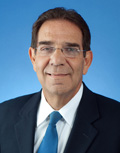
Xavier Louis Suarez (born May 21, 1949) is an American politician who twice served as Mayor of Miami (1985–1993 and 1997–1998). He was the first Cuban-born individual to serve as the city's mayor. Suarez latter served as a Miami-Dade county commissioner (2011–2020). He was an unsuccessful candidate in the 1996 Dade County mayoral election, 2020 Miami-Dade County mayoral election, and the 2025 Miami mayoral election.

Key Information

Early life and education

[edit]

Suarez was born on May 21, 1949, in Las Villas, Cuba.[1] His father was a college professor.[2] Suarez moved to Florida and attended the Colegio de Belén, but graduated from St. Anselm's Abbey School in 1967.[3][4][5] He earned a bachelor's in mechanical engineering from Villanova University in 1971, followed by a Master of Public Policy and Juris Doctor from Harvard University.[6][7]

After completing his education, Suarez returned to Miami.

Early political career

[edit]

Suarez ran twice unsuccessfully for seats on the Miami City Commission. Believing incumbent mayor Maurice Ferré to be vulnerable to a challenge, Suarez ran in the 1983 Miami mayoral election. Despite substantial financial backing from wealthy car dealer Norman Braman, Suarez was unsuccessful in unseating the mayor.[2]

Mayoralties

[edit]

First mayoralty (1985–1993)

[edit]

Suarez was first elected Mayor of Miami after running again in 1985, unseating Ferré. Suarez was re-elected in 1987 (fending off challenges from Ferré and Marvin Dunn).[2] He was elected for a third term in 1989, with this third election being for a four-year term.[8]

Suarez was sworn in as mayor on November 13, 1985,[citation needed] succeeding Ferré. He was the first Cuban-born individual serve as the city's mayor.[9]

As mayor, Suarez was famous for keeping blue slips of paper in an office binder on which he recorded neighborhood concerns that had been brought to his attention by individual residents. This included concerns as small and local as an individual pothole. A joke arose in Miami politics that, as mayor, Suarez was more akin to a great public works director.[2]

Suarez (at the time a political independent) endorsed the successful 1986 gubernatorial campaign of endorsed Bob Martinez (a Republican). His endorsement of Martinez came prior to the 1986 Republican gubernatorial primary, with Suarez actively campaigning for him.[10]

Suarez received attention for refusing to greet South African President Nelson Mandela during his 1990 tour of the United States which included a stop in Miami. Suarez was in disagreement with Mandela's comments where he referred to Cuban President Fidel Castro as a "comrade in arms" due to Castro's support for the African National Congress. This led to a boycott by the local African American community of all Miami tourist and convention facilities until Mandela received an official greeting. However, all efforts to resolve the dispute failed for months, resulting in an estimated loss of over US$10 million in tourism revenue.[11] On October 7, 1990, Suarez issued a proclamation declaring "Yahweh ben Yahweh Day" in honor of the leader of the Nation of Yahweh, a religious sect based in Miami. A month later, the group's founder was indicted on charges of conspiracy to commit murder.[12]

According to a March 30, 1993 article in The Miami Herald, "In 1989, [Suarez] won national admiration when he waded through hostile crowds in Overtown during civil disturbances to try to make peace." Suarez cited the construction of 1,500 affordable homes as one of his "proudest achievements" during his tenure. He was also given the name "pothole Mayor" for his attention to City neighborhoods. In 1993 Suarez got the Latin Builder's Association to donate $150,000 to rebuild the only Catholic elementary school in Overtown.

Having spent eight years as mayor, and perhaps grown momentarily bored with politics, Suarez opted against seeking re-election in in 1993 in order to dedicate more time to his legal practice and his family.[2]

During his first tenure as mayor, some observers speculated that Suarez had a major future in politics ahead of him. In 1996, Florida International University political science professor Christopher Warren opined that Suarez, however, had failed to demonstrate a strong political drive during his first tenure, remarking, "Suarez never showed himself to be a particularly aggressive leader. He was never someone who had a strong agenda."[2]

Second mayoralty (1997–1998)

[edit]

After leaving office as mayor, Suarez returned to practice law in Miami[citation needed] before he decided to run again for mayor in 1997, challenging incumbent Joe Carollo. Suárez was initially returned to the office, appearing to have won the runoff election by a narrow margin. He was initially returned to the office after the November 1997 election. However, his opponent, Joe Carollo, challenged the election in court. Following a wide-ranging investigation into allegations of election fraud pertaining to absentee ballots, the judge presiding over the case decided to throw out all absentee ballots, effectively handing the election to Carollo and overturning Suárez's victory.[13] The judge found "a pattern of fraudulent, intentional and criminal conduct" involving nearly 400 fraudulent absentee ballots, including votes cast in the names of deceased individuals and felons. While Suárez was not personally implicated, several individuals connected to his campaign were convicted, including campaign volunteer Miguel Amador and supporter Alberto Russi.[14] In total, 55 individuals were charged and 54 were convicted in connection with the fraud, including a city commissioner, his chief of staff, and the staffer's father.[15] A federal appeals court ultimately invalidated the election and declared Carollo the winner without a new vote.

During his brief return to office in 1997, Suarez attracted controversy for erratic conduct that drew widespread media attention and earned him the nickname “Mayor Loco.”[16] His actions included threatening to cut off city advertising to local media outlets, attempting to fire the police chief without proper authority, and making unannounced visits to constituents' homes late at night.[17] A judge eventually barred him from making personnel decisions, citing violations of the city charter. Though never criminally charged, the chaotic period contributed to the perception of instability in city leadership.

Miami-Dade County Commissioner (2011–2020)

[edit]

Suarez was elected as a Miami-Dade County Commissioner for District 7 on May 24, 2011 and was re-elected by a 44 point margin on August 30, 2016. During his tenure as Commissioner, Suarez continued to advocate for affordable housing, as well as workforce development programs and funding for public transit.

County mayoral campaigns

[edit]

1996

[edit]

In 1996, between his two terms as city mayor, Suarez ran unsuccessfully for county mayor. His campaign focused on criticizing the current county commission of misconduct, hoping to tap into voter discontent. However, he received criticism for failing to articulate new solutions to county problems.[2]

2020

[edit]

Suarez was an unsuccessful candidate in the 2020 election for Mayor of Miami-Dade County. In the first round, Suarez placed fourth with 10.5% of the vote.[18]

2025 Miami mayoral campaign

[edit]

In July 2025, Suarez confirmed that he would run again for mayor in the 2025 Miami mayoral election.[19][20] Suarez was at the time, either an Independent or a Republican.[21][22] He was considered one of the six leading candidates in the thirteen-candidate field, but was eliminated in the primary after receiving only 4.9% of the vote.[23][24]

His main policies included supporting an expansion of the Miami-Dade Transit "trolley" service;[23] support for a state freeze of property taxes for residences in Miami under the county's median value of $575,000 (a proposal introduced by State Rep. Vicki Lopez);[23][25] and support for a state takeover of disaster insurance for new affordable housing projects.[23] Suarez also proposed making public transit in Miami fare free. Suarez voiced support for a proposal to amend the city charter to expand the Miami Commission from five seats to nine seats and to move city elections from off-years to even years (coinciding with federal elections).[25]

Family

[edit]

He was the ninth child and second son of 14 children of Manuel Suarez-Carreno, the first Dean of the School of Engineering at the Universidad Católica de Santo Tomás de Villanueva (St. Thomas of Villanova Catholic University), and Eloisa Gaston. He is married to Rita and they have four children: Francis Xavier Suarez, who became Mayor of Miami in 2017, Olga Marie Vieira, Anna Teresita, and Carolina Suarez.[5] His sister, Lala, is the mother of former U.S. Congressman Alex Mooney of West Virginia.[26]

See also

[edit]

References

[edit]
[edit]
Revisions and contributorsEdit on WikipediaRead on Wikipedia
from Grokipedia
Xavier Louis Suarez (born May 21, 1949) is a Cuban-American attorney and politician who served as Mayor of Miami from 1985 to 1993 and briefly from 1997 to 1998, becoming the first Cuban-born individual to hold the office.[1][2] His elections symbolized the rising political influence of Cuban exiles in Miami following waves of immigration and amid the city's demographic shifts toward a Hispanic majority.[3] During his initial tenure, Suarez navigated post-riot recovery efforts, promoting cultural integration between Anglo, Black, and Latino communities after the 1980 Liberty City unrest.[4] Born in Las Villas Province, Cuba, Suarez immigrated to the United States as a child and attended Jesuit schools before earning a bachelor's degree in mechanical engineering from Villanova University in 1971, followed by joint Master of Public Policy and Juris Doctor degrees from Harvard University.[1][5] He established a legal practice in Miami's Little Havana neighborhood, building support among the Cuban diaspora that propelled his 1985 mayoral victory over incumbent Maurice Ferré.[4] Suarez later served as a Miami-Dade County commissioner from 2011 to 2020, focusing on infrastructure and regional governance issues.[1] Suarez's career includes significant controversies, particularly his 1997 reelection, which a court invalidated due to a scheme of absentee ballot fraud centered in one district and executed by his campaign supporters, resulting in his ouster and reinstatement of rival Joe Carollo.[6][7][8] He is the father of Francis Suarez, Miami's mayor from 2017 to 2025, reflecting a family dynasty in local politics.[1][5]

Early life and education

Immigration from Cuba and family background

Xavier Louis Suárez was born on May 21, 1949, in Las Villas, Cuba, as the ninth of fourteen children in a middle-class family that practiced observant Roman Catholicism.[4] Suárez's family immigrated to the United States when he was twelve years old, around 1961, during the initial exodus of Cubans following Fidel Castro's 1959 revolution.[3][9] This migration aligned with the broader pattern of middle-class professionals and families departing Cuba amid nationalization of industries and suppression of private enterprise under the new communist regime.[9] Upon arrival in Florida, the family settled in the Miami area, where Suárez attended local schools, including the Colegio de Belén, reflecting the concentration of Cuban exiles in South Florida during that era.[9] The Suárez household emphasized education and assimilation, with his parents fostering a strong work ethic rooted in their pre-revolutionary Cuban values, though specific parental professions remain undocumented in primary accounts.[4]

Academic and early professional training

Suarez earned a Bachelor of Science degree in mechanical engineering from Villanova University in 1971.[1][10] He subsequently pursued advanced studies at Harvard University, obtaining a Juris Doctor from Harvard Law School and a Master of Public Policy from the John F. Kennedy School of Government in 1975.[11][12] Following graduation, Suarez relocated to Miami, Florida, and joined a local law firm, where he quickly immersed himself in legal work amid a demanding caseload.[4] By the mid-1970s, senior partners noted his office setup, which featured stacks of files requiring visitors to navigate around multiple filing cabinets, reflecting early intensity in his professional training.[4] This period marked his foundational experience in litigation, laying groundwork for subsequent expertise in real estate, corporate matters, and public policy applications of law.[12]

Pre-political career

Suarez received his Juris Doctor from Harvard Law School in 1975 and was admitted to the Florida Bar on October 23, 1975.[13][14] He then relocated to Miami, where he joined a local law firm and immersed himself in the Cuban exile community by residing in Little Havana, an uncommon choice for young attorneys at the time.[4] By the mid-1970s, Suarez had developed a high-volume practice, as evidenced by senior partners visiting his office and navigating stacks of files scattered across the floor and furniture, indicative of intensive caseload management.[4] His work focused on litigation, real estate, corporate matters, and international law, areas aligned with Miami's growing Cuban-American business and immigrant needs.[12] He maintained this private practice for approximately a decade until entering politics with his successful 1985 mayoral campaign.[1]

Community involvement

Prior to his election to public office, Xavier Suarez contributed to the Cuban exile community through extensive pro bono legal representation of political prisoners detained by the Cuban government. In the mid-1970s, while working as a junior associate at a Miami law firm, Suarez maintained five filing cabinets filled with documentation on these cases—a volume that reportedly dwarfed the typical five-to-ten-file workload of his contemporaries and underscored his commitment to advocating for dissidents in Cuba.[4] Suarez also participated in local education initiatives amid Miami-Dade County's efforts to address school desegregation. He served as the second plaintiff, following civil rights advocate Carrie Meek, in a lawsuit that prompted the establishment of the county's magnet school system as an alternative to mandatory busing, aiming to promote integration through voluntary enrollment in specialized programs.[15]

Political career

City commissioner and entry into mayoral politics

Suarez first sought elected office in Miami through unsuccessful campaigns for the City Commission in 1979 and 1981.[16] These defeats did not deter his political ambitions, as he transitioned to challenging the incumbent mayor.[17] In 1983, Suarez entered mayoral politics by running against long-serving Mayor Maurice A. Ferré, a Puerto Rican-born politician who had held the office since 1973.[18] Suarez advanced to a runoff election but was defeated by Ferré, who secured a sixth term with strong support from Black voters amid tensions following the 1980 Miami riots.[19][20] At age 34, Suarez positioned himself as a representative of Miami's growing Cuban-American community, criticizing Ferré's administration for neglecting Little Havana.[20] Suarez ran for mayor again in 1985, capitalizing on demographic shifts and dissatisfaction with Ferré's leadership.[4] He won the nonpartisan primary and faced Raul Masvidal, another Cuban-American candidate, in the runoff on November 12. Suarez emerged victorious, becoming Miami's first Cuban-born mayor at age 36.[21][22] His election reflected the rising political influence of Cuban exiles in the city, following waves of migration after the 1959 Cuban Revolution and the 1980 Mariel boatlift.[21]

First mayoral term (1985–1993)

Suarez was elected mayor of Miami on November 12, 1985, defeating three-term incumbent Maurice A. Ferré by a margin of 42% to 35% in the general election, marking him as the city's first Cuban-born mayor and symbolizing the rising political influence of the Cuban exile community.[21] His early administration prioritized municipal infrastructure repairs, particularly addressing widespread potholes and street maintenance neglected under prior leadership, which earned him the local moniker of the "pothole mayor" for emphasizing tangible, everyday governance improvements amid the city's post-1980 riot recovery and economic strains from the Mariel boatlift influx.[23] Re-elected decisively in 1989, Suarez continued focusing on basic service delivery while navigating Miami's ethnic transitions, as evidenced by emerging cooperation between Hispanic immigrants—primarily Cubans—and longstanding Anglo and Black residents, who began sharing economic and cultural spaces after years of segregation and tension.[24] [3] His tenure saw incremental urban revitalization efforts, including advocacy for downtown projects like the Omni area, though these were constrained by commission disruptions and fiscal limits from the era's crack epidemic and refugee-related service demands.[25] The term was punctuated by racial violence, notably the January 1989 riots in Overtown and Liberty City triggered by a white police officer's fatal shooting of black motorcyclist Alejandro Lorenzo during a traffic stop, resulting in one death, multiple shootings, arson, and over 200 arrests across two nights of unrest that exposed persistent Black-Hispanic-police frictions.[26] [27] Suarez's on-scene intervention, including urging crowds to disperse, escalated tensions and drew backlash from police unions for perceived interference; he later publicly apologized on January 19, 1989, expressing regret for his handling of the incident while committing to better inter-community dialogue.[28] Similar flare-ups occurred in December 1990 after another police shooting, with rioters—many juveniles—causing localized damage before swift police response restored order, underscoring ongoing challenges in policing amid demographic shifts.[29] Suarez's administration maintained a pragmatic approach to governance, avoiding major policy overhauls but stabilizing city operations through commission management despite internal conflicts, as he later reflected on pervasive disruptions hindering bolder initiatives.[25] He left office in November 1993 after two terms, succeeded by Stephen P. Clark following the 1993 election.[30]

Inter-term roles and elections

Following the conclusion of his first mayoral term on November 9, 1993, Xavier Suarez did not hold elected office for the subsequent four years. During this interval, he primarily engaged in private legal practice, leveraging his background as an attorney admitted to the Florida Bar in 1975.[31] In 1996, Suarez sought public office again by entering the inaugural election for Miami-Dade County Mayor, a position created by voter-approved charter amendments establishing a "strong mayor" system for the metropolitan area. The primary election occurred on September 3, 1996, with Suarez among a field of candidates that included state Senator Alex Penelas, attorney Arthur Teele Jr., and former Miami Mayor Maurice Ferre. Suarez garnered approximately 12% of the vote, insufficient to advance to the October 1 runoff between Penelas (who received 28%) and Teele (22%). Penelas ultimately won the runoff with 58% of the vote, becoming the county's first elected mayor at age 34.[32] Undeterred, Suarez announced his candidacy for a return to the Miami mayoralty in 1997, challenging incumbent Joe Carollo. The nonpartisan election featured a primary on October 7, 1997, where Suarez placed first with 42% of the vote, followed by Carollo at 35%, advancing both to a November 11 runoff. Suarez narrowly prevailed in the runoff, securing 50.1% (8,186 votes) to Carollo's 49.9% (8,151 votes), a margin of just 35 votes amid reports of over 1,000 absentee ballots requested in the race's final days. He was sworn in as mayor on November 14, 1997, resuming leadership of the city commission.[33][34]

Second mayoral term and ouster (1997–1998)

Suarez returned to the Miami mayoralty following the November 4, 1997, general election, defeating incumbent Joe Carollo by a margin of 11 votes after absentee ballots were counted, in a contest marked by intense competition between the two Cuban-American politicians.[6] Carollo, who had initially led on election night, immediately contested the results, alleging irregularities in the absentee voting process, particularly in City Commission District 3 under Commissioner Willy Hernandez.[7] Suarez was sworn in as mayor on November 24, 1997, resuming leadership amid ongoing legal disputes.[35] The legal challenge proceeded to trial in the Circuit Court of the Eleventh Judicial Circuit, where evidence emerged of systematic manipulation of absentee ballots, including false witness signatures and coerced voting, centered in District 3 as "the center of a massive, well-conceived and well-orchestrated absentee ballot voter fraud scheme."[6] Judge Thomas Wilson Jr. reviewed testimony and documentation revealing a pattern of "fraudulent, intentional and criminal conduct" that affected the outcome, with fraudulent ballots disproportionately benefiting Suarez.[7][36] On March 4, 1998, Wilson voided the election results and ordered a new mayoral election within 60 days, effectively ousting Suarez from office.[7][6] Suarez appealed the ruling, arguing that it subverted the electorate's will in favor of judicial intervention, but higher courts upheld the decision, reinstating Carollo pending the special election.[37] In October 1998, Florida authorities arrested 18 individuals on charges related to falsifying absentee ballots in the 1997 election, including acting as false witnesses, underscoring the criminal scope of the fraud.[38] The episode highlighted vulnerabilities in Miami's absentee voting procedures at the time, though Suarez maintained no personal involvement in the irregularities.[35]

Miami-Dade County commissioner service (2011–2022)

Suarez was elected to represent District 7 on the Miami-Dade County Commission in a special election on May 24, 2011, following the resignation of the previous commissioner, and was sworn in on June 6, 2011.[39][11] District 7 encompasses areas including Coral Gables, South Miami, West Miami, and portions of unincorporated Miami-Dade County west of the city. He secured re-election in subsequent cycles, including a primary victory on August 30, 2016, by a 44-point margin, serving continuously until term limits concluded his tenure in 2022.[31] During his commission service, Suarez prioritized transportation infrastructure and policy reforms. As vice chair of the county's Regional Transportation Committee, he advocated for expanded public transit options, including criticism of Mayor Carlos Giménez's budget priorities in 2015 for lacking leadership on transit expansion.[40][41] In December 2019, he proposed eliminating fares for all Miami-Dade Transit services to modernize the system and increase ridership, arguing it would align the county with 21st-century standards.[42] He also engaged in regional discussions on South Dade rail and corridor improvements, emphasizing connectivity for underserved areas.[43] Suarez focused on district-specific development, including land-use planning along corridors like the Ludlam Trail, where he supported studies for linear parks, mixed-use zoning, and compatibility with existing residential patterns to balance growth and neighborhood preservation.[44] He secured funding for summer youth employment programs, affordable housing units, and infrastructure rehabilitation projects in District 7, aiming to address economic disparities and urban decay in west Miami-Dade communities.[31] His tenure included several ethics inquiries by the Miami-Dade Commission on Ethics and Public Trust, such as a 2018 complaint from Mayor Giménez alleging misuse of county resources and a 2019 probe stemming from public allegations, but investigations typically resulted in no probable cause findings or advisory opinions on procedural matters like voting conflicts and social media use under Sunshine Law requirements.[45][46][47] In 2019, Suarez announced a bid for county mayor but withdrew to focus on his commission role before pursuing other offices. He did not seek re-election in 2022 due to term limits restricting consecutive service.[48]

2025 Miami mayoral campaign

Xavier Suarez, Miami's first Cuban-born mayor, announced his candidacy for the 2025 Miami mayoral election on July 21, 2025, stating his intention to file paperwork the following day at City Hall.[2][49] The announcement came hours after a Miami-Dade circuit judge ruled that the city's attempt to postpone the election to 2026 without voter approval was invalid, reinstating the original November 4, 2025, date.[50] At 76 years old, Suarez positioned his campaign around his prior experience revitalizing the city during his 1985–1993 tenure, emphasizing service to "all the neighborhoods" through proven leadership and community-focused solutions.[51][52] Suarez's bid marks a notable family dynamic, as he seeks to succeed his son, incumbent Mayor Francis Suarez, who is term-limited after two terms.[53] Francis Suarez has expressed support for his father's campaign without a formal endorsement, highlighting Xavier's historical role in the city's governance.[53] Among 13 candidates vying for the nonpartisan position, Suarez faces competition from figures including former City Manager Emilio T. González, Miami Commissioner Joe Carollo, and former County Commissioner Ken Russell.[5][54] During the campaign, Suarez has advocated for hands-on management, describing himself as a "micromanager" committed to addressing corruption and inefficiencies.[55] In a September 30, 2025, debate among six leading candidates, he rated his son's mayoral performance an "A plus plus," crediting Francis with advancements in economic development while pledging to build on that foundation with his own detailed oversight.[56] Suarez's platform stresses innovative problem-solving for Miami's diverse communities, drawing on his prior roles as city commissioner and Miami-Dade County commissioner.[5][57] The election, open to all Miami voters, will determine the city's next leader following Francis Suarez's tenure, which emphasized business-friendly policies and international outreach.[5]

Political positions and ideology

Stance on Cuba and immigration

Suarez, who fled Cuba with his family in 1961 at age 12 following the Castro revolution, has maintained a hardline stance against the Cuban communist regime, advocating for its isolation pending a democratic transition. In February 1990, as mayor of Miami, he publicly stated that expectations among Cuban exiles were for Fidel Castro's fall and the emergence of a democratic government in Cuba, reflecting optimism tied to global shifts away from communism.[58] He aligned with prominent exile leaders such as Jorge Mas Canosa, joining the Cuban American Committee of the South Florida to counter perceived media biases against exiles and implicitly backing efforts to tighten the U.S. economic embargo on Cuba, in opposition to editorial stances like that of The Miami Herald.[59] This position extended to vocal criticism of international figures associating with Castro; in June 1990, Suarez denounced Nelson Mandela's embrace of the Cuban leader during Mandela's U.S. tour, a move that escalated tensions with Miami's Black community and contributed to a boycott of the city's tourism industry.[59] His evolving alignment with exile hardliners—described in contemporary analyses as his "Cubanization"—prioritized advocacy for regime change and embargo enforcement over broader diplomatic engagement, consistent with the dominant views of Miami's Cuban-American population during his tenure.[59] Regarding immigration, Suarez has consistently identified as pro-immigrant, drawing from his own experience as a refugee. In July 2025, he opposed the proposed "Alligator Alcatraz" detention center in Florida's Everglades, citing its inhumane conditions amid alligator-infested swamps and environmental risks, while affirming, "I’ve always been pro-immigration. I am an immigrant, how could I not be?"[60] During his 2020 campaign for Miami-Dade mayor, he pledged policies supportive of immigrants, emphasizing integration and community benefits in a city shaped by waves of Latin American arrivals.[61] His views favor legal pathways and humane treatment, particularly for those fleeing oppression like Cubans under special adjustment provisions, without endorsing unrestricted borders.

Economic and governance policies

During his first term as mayor from 1985 to 1993, Suarez prioritized fiscal conservatism by reducing the city's property tax millage rate, which provided direct relief to property owners amid Miami's post-1980 riot recovery.[51] This approach aligned with efforts to stimulate private-sector economic growth through incentives for business development, helping to stabilize the local economy strained by the crack cocaine epidemic and related violence.[51] Infrastructure investments, including extensive street paving projects, supported urban renewal and improved mobility, contributing to broader economic revitalization.[62] Suarez also advanced affordable housing initiatives, overseeing the construction of approximately 1,500 units to address shortages exacerbated by immigration-driven population growth and urban decay.[62] [15] These measures maintained City Hall's financial discipline, avoiding deficits during a period of municipal strain, though critics later questioned the long-term sustainability amid rising service demands.[62] In governance, Suarez emphasized hands-on administration to enforce public order and safety, establishing mechanisms for stronger inter-agency coordination that reduced disruptions from ethnic conflicts and crime spikes.[51] His model favored direct oversight of city operations, a style he described as micromanagement in later campaigns, prioritizing accountability over expansive bureaucracy to align resources with core services like policing and basic infrastructure maintenance.[55] During his brief second term in 1997–1998, similar fiscal vigilance persisted until his ouster, with focus on streamlining expenditures amid ongoing budget pressures.[62]

Views on local ethnic dynamics

Suarez, Miami's first Cuban-born mayor, emphasized the inclusion of African Americans in the city's economic growth amid longstanding ethnic tensions exacerbated by Cuban immigration and historical discrimination against Black residents. In a statement attributed to his tenure, he remarked that such challenges were "problems that modern Miami inherited from the past," for which Hispanics bore no responsibility, while asserting that Hispanic communities were "working hard to include blacks in the city's prosperity."[63] This reflected his view that ethnic dynamics required proactive integration efforts by newcomers, rather than perpetuating prior exclusions, though critics contended it downplayed ongoing disparities in job access and political power between Latinos and Blacks.[63] His administration's handling of inter-ethnic relations often prioritized Cuban exile sensitivities, as seen in the 1990 controversy over Nelson Mandela's visit. Suarez spearheaded the withdrawal of a city proclamation welcoming the South African leader, citing Mandela's praise for Fidel Castro during his U.S. tour stop in Miami, a stance shared by other Cuban-American mayors that underscored solidarity with anti-Castro exiles over broader diplomatic outreach.[64] This decision provoked outrage in Miami's Black community, prompting protests and an economic boycott of local tourism led by figures like H.T. Smith, who condemned it as an ethnic snub prioritizing Cuban politics at the expense of African American interests.[65][63] Suarez later joined Black leaders in issuing a joint statement regretting the unrest but maintained his position on Mandela's Castro ties.[66] On Haitian refugee issues, Suarez advocated for humanitarian measures amid disparities in U.S. policy favoring Cubans over Haitians, calling in January 1993 for the parole of hunger-striking detainees into community custody rather than deportation, aligning with local church and family networks.[67] During the 1986 fall of Haiti's Duvalier regime, he appeared in Little Haiti to celebrate with residents and urge calm, signaling support for the community's stability within Miami's ethnic mosaic.[68] However, broader critiques portrayed his governance as increasingly "Cubanized," with alignments to exile leaders like Jorge Mas Canosa alienating non-Hispanic groups by emphasizing Cuban media defenses and voter priorities over coalition-building with Blacks.[59] Suarez also pursued structural reforms to address ethnic underrepresentation, serving as a plaintiff in a 1991 federal lawsuit alongside Black activists Darryl Reaves and Rev. Richard Dunn III to convert Dade County School Board elections to single-member districts, aiming to boost Hispanic and African American electoral influence in education policy.[63] This action demonstrated a pragmatic recognition of competitive ethnic politics, where fragmented representation perpetuated divides, though it occurred against a backdrop of mayoral races framed along Hispanic versus non-Hispanic lines.[69] Overall, his views framed local ethnic dynamics as a legacy burden navigable through Hispanic-led inclusion and policy advocacy, tempered by ideological commitments to Cuban anti-communism that occasionally intensified group frictions.

Controversies

1997 mayoral election and voter fraud allegations

In the November 4, 1997, primary election for mayor of Miami, incumbent Joe Carollo received the most votes but failed to secure a majority, advancing to a runoff against former mayor Xavier Suarez, who finished second.[33] The runoff occurred on November 13, 1997, with Suarez defeating Carollo in a close contest marked by high turnout and immediate post-election disputes over absentee ballots.[33] Carollo, alleging irregularities, filed a formal protest challenging the results, prompting an investigation by the Miami-Dade State Attorney's Office into claims of absentee ballot tampering, including forged signatures and coerced voting.[7] Circuit Judge Philip W. Wilson presided over the election contest trial, which revealed extensive evidence of absentee ballot fraud concentrated in Miami's District 3, an area with significant support for Suarez.[6] Witnesses testified to schemes involving the sale of ballots, false notarizations, and organized harvesting by political operatives, with over 1,000 questionable absentee votes identified as potentially decisive in the runoff.[70] On March 4, 1998, Judge Wilson ruled that the election was tainted by "a pattern of fraudulent, intentional and criminal conduct," invalidating Suarez's victory and ordering a new election within 60 days.[7] [6] The Florida Third District Court of Appeal upheld the finding of massive fraud but initially debated the remedy, ultimately affirming the voiding of the entire election rather than a partial recount.[36] Suarez maintained that the fraud allegations were politically motivated by opponents seeking to reverse his legitimate win, though he was not personally charged with wrongdoing.[71] The ruling led to Suarez's ouster as mayor, with Carollo temporarily reinstated on March 12, 1998, pending the special election.[72] In the subsequent special election on April 14, 1998, Carollo defeated Suarez, securing a decisive victory amid heightened scrutiny of absentee voting procedures. Follow-up investigations culminated in October 1998 with the arrest of 18 individuals, including poll workers and operatives, on charges of acting as false witnesses for absentee ballots cast in the 1997 election; three others were sought.[38] The scandal highlighted vulnerabilities in Miami's absentee ballot system, particularly in districts with dense ethnic communities prone to machine-style politicking, and prompted reforms to enhance verification processes.[71] Court records emphasized that the fraud was not isolated but part of a "well-conceived and well-orchestrated" operation that undermined electoral integrity without evidence of direct oversight by candidates.[6] This episode remains one of the most prominent instances of documented voter fraud in modern U.S. municipal elections, substantiated by judicial findings rather than mere allegations.[70]

Conflicts with media and political opponents

Suarez engaged in a protracted rivalry with Joe Carollo, a fellow Cuban-American politician who served as Miami mayor from 1996 to 1997 and 1998 to 2001. In the November 1997 mayoral runoff, Suarez defeated the incumbent Carollo amid widespread allegations of absentee ballot irregularities favoring Suarez, which opponents including Carollo contested in court; a federal judge later invalidated the election results in March 1998, citing fraud that "literally and figuratively" undermined the vote.[73][33] The animosity persisted, culminating in Carollo's leadership of a successful March 1998 recall effort against Suarez, which removed him from office by a 5,541-vote margin after opponents mobilized on claims of administrative chaos and ethnic divisiveness under Suarez's brief second term. This feud echoed Cuban exile community tensions, where Carollo positioned himself as a hardliner against Suarez's perceived moderation on local governance issues.[74] Suarez also clashed with other political figures during his Miami-Dade County commissioner tenure (2011–2022), including Mayor Carlos Giménez, who in August 2018 publicly criticized Suarez's push for a county helicopter procurement plan as wasteful amid budget debates.[75] Opponents accused Suarez of micromanagement and favoritism toward Cuban-American interests, labeling him the "pothole mayor" for prioritizing infrastructure fixes over broader strategic vision—a moniker Suarez embraced as evidence of his hands-on style but which critics used to portray him as parochial.[76][59] Relations with the media soured during Suarez's 1997–1998 term, particularly with the Miami Herald, which published columns decrying his leadership as erratic and the city as "out-of-control."[77] In January 1998, Suarez left a voicemail threatening to withhold approximately $200,000 in city advertising from the paper unless its coverage became "nicer" to him, a move decried by press advocates as retaliation against critical reporting on his administration's turmoil.[78] This incident reflected broader friction in Miami's Cuban exile-dominated politics, where the Herald faced accusations from hardline groups of insufficient antagonism toward Castro's Cuba, potentially amplifying scrutiny of Suarez when he diverged from exile orthodoxies.[79] Suarez later wrote to Herald publisher David Lawrence protesting perceived bias, though the paper maintained its editorial independence.[80]

Criticisms of ethnic favoritism in policy-making

Critics have accused Suarez of appealing to ethnic bloc voting during his 1983 mayoral campaign against incumbent Maurice Ferre by distributing palm cards urging "Cubans vote Cuban," a tactic viewed as fostering division along ethnic lines to consolidate Cuban-American support at the expense of broader coalition-building.[16] This approach, combined with Spanish-language flyers promoting crime reforms tailored to resonate with Cuban voters, drew charges of pandering and undermining non-partisan governance, as noted by political consultant Phil Hamersmith, who argued it insulted the intelligence of Cuban-American constituents while prioritizing ethnic loyalty over policy substance.[16] During his first mayoral term, Suarez faced backlash for decisions perceived as prioritizing Cuban exile sensitivities in foreign policy-related matters, notably the city's refusal to extend an official welcome to Nelson Mandela in June 1990—the only such denial among eight U.S. cities Mandela visited—due to Mandela's prior praise for Fidel Castro.[81] Suarez, alongside other Cuban-American officials, publicly denounced Mandela, prompting a boycott of Miami tourism by black South Africans and U.S. black leaders, which inflicted economic damage estimated in millions on the city's convention and hotel sectors.[59] Boycott organizer H.T. Smith criticized Suarez for alienating the black community, stating, "He’s alienating himself from the black community. It’s not the right thing to do, not the fair thing to do, not the responsible thing to do," while a Miami Times editorial faulted his alignment with anti-Castro exile leader Jorge Mas Canosa as abandoning diverse constituencies in favor of narrow ethnic advocacy.[59] Suarez's involvement in the Cuban American Committee Against Defamation in late January 1992, formed to challenge media coverage of Cuba, further fueled perceptions of ethnic bias influencing public policy stances, as opponents argued it diverted municipal focus toward exile group grievances rather than equitable city governance for all residents, including non-Cuban Hispanics and blacks.[59] These episodes, while rooted in Suarez's anti-communist background as a Cuban refugee, were cited by detractors as evidence of policy decisions that embedded ethnic favoritism, exacerbating Miami's intergroup tensions despite Suarez's later efforts to support Haitian refugees in 1992.[82]

Personal life

Family and relationships

Xavier Suárez has been married to Rita Suárez, a teacher, since the early years of his political career in Miami.[31] The couple resided modestly with their family during his initial tenure as mayor in the 1980s.[4] By 2025, their marriage had lasted 48 years.[52] They have four children: a son, Francis Xavier Suárez, who served as Mayor of Miami from 2017 to 2025; and three daughters, Olga Marie, Anna Teresita (also known as Annie), and Carolina.[11][83] Suárez is also a grandfather to at least 11 grandchildren.[83] No public records indicate additional marriages, divorces, or significant relational controversies involving Suárez. His family life has been characterized by stability, with his son following in his footsteps in Miami politics.[74]

Later years and public persona

Following the end of his second mayoral term in 1998, Suarez transitioned to other roles in public service, including a stint as a Miami-Dade County commissioner representing District 7, where he addressed issues such as transportation infrastructure and neighborhood revitalization.[5] In August 2019, at age 70, he launched a campaign for Miami-Dade County mayor in the 2020 election, emphasizing his decades of executive experience to tackle regional growth and fiscal management challenges.[84] Suarez remained engaged in local governance discussions after that unsuccessful bid, critiquing disruptions in city commissions reminiscent of his earlier tenure.[25] On July 22, 2025, he filed candidacy paperwork for the Miami mayoral election scheduled for November 4, 2025, positioning his run as a return to proactive leadership amid his son Francis Suarez's term limits.[2] At 76 years old, Suarez rebutted concerns about his age in a July 29, 2025, opinion piece, arguing that maturity equips leaders to avoid impulsive errors and deliver steady results.[85] He pledged a detail-oriented approach, describing himself as a "micromanager" committed to direct oversight of city operations.[55] Suarez's public persona reflects a durable fixture in Miami's political landscape, characterized by persistence and a hands-on style forged from his Cuban exile roots and early breakthroughs as the city's first Cuban-born mayor in 1985.[53] Often portrayed as a neighborhood-focused advocate with a proven record across four decades, he leverages family ties—most notably as father to the incumbent mayor—to underscore generational continuity in civic stewardship.[52] Supporters highlight his resilience against electoral defeats and personal setbacks, viewing him as an embodiment of Miami's merit-based immigrant ethos, while detractors occasionally question his suitability given longevity in a field prone to entrenched dynamics.[15]

References

User Avatar
No comments yet.