
Recent from talks
Xinjiang under Qing rule
Knowledge base stats:
Talk channels stats:
Members stats:
Xinjiang under Qing rule
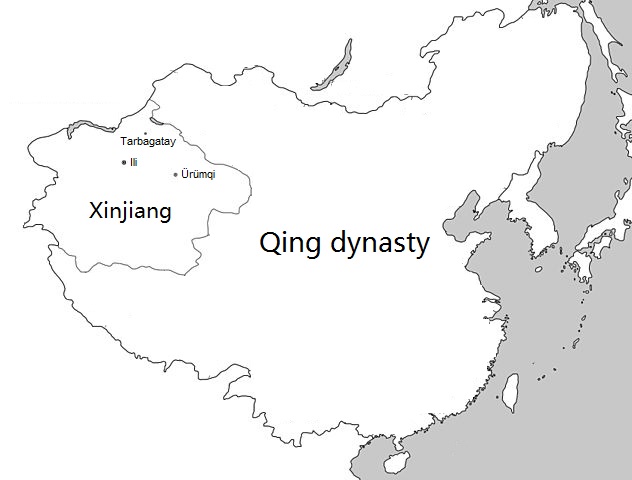
The Manchu-led Qing dynasty of China ruled over Xinjiang from the late 1750s to 1912. In the history of Xinjiang, the Qing rule was established in the final phase of the Dzungar–Qing Wars when the Dzungar Khanate was conquered by the Qing dynasty, and lasted until the fall of the Qing dynasty in 1912. The post of General of Ili was established to govern the whole of Xinjiang and reported to the Lifan Yuan, a Qing government agency that oversaw the empire's frontier regions. Xinjiang was turned into a province in 1884.
The name "Xinjiang" (Chinese: 新疆; pinyin: Xīnjiāng; lit. 'new frontier') was introduced during the reign of the Qianlong Emperor (r. 1735–1796) as "Xiyu Xinjiang" (Chinese: 西域新疆; pinyin: Xīyù Xīnjiāng; lit. 'new frontier of the Western Regions'). Xinjiang became the common designation for the region under the General of Ili Songyun in the late 18th century. It was split between Zhunbu (Dzungaria) in the north, also known as Tianshan Beilu (Northern March), Huibu (Muslim Region) in the south, also known as Tianshan Nanlu (Southern March) or Huijiang (Muslim frontier), and Tianshan Donglu (Eastern March) in the east, also known as "Little Suzhou-Hangzhou" for its large number of merchants. In European and Central Asian sources, southern Xinjiang has been called the Tarim Basin (after the river), Chinese Turkestan, Bukharia, Little Bukharia, Kashgaria, and East Turkestan. The Uyghur word for southern Xinjiang is Altishahr, which means "six cities", but "four cities" (Dorben shahr) or "seven cities" (Yeti shahr) have also been used.
There was no unified ethnonym for the people now known as the Uyghurs during the Qing period. Prior to the Qing, the term "Uyghur" had been used to refer to non-Muslim inhabitants of Qocho, mainly Buddhists, who resisted conversion to Islam until the 16th century. The term fell out of use afterward and was not used to refer to the modern Uyghur people until 1921. Prior to this, the oasis inhabitants of Xinjiang were called Sart by both Chinese and foreigners. Sart originally meant "merchant" and was used by Turkic and Mongolic speaking groups to refer to Iranian people they ruled over. In the post-Mongol Empire Central Asia, Sart meant sedentary. Foreigners also called them Tartars. The Chinese called the oasis peoples chantou, meaning "turban head," but this was used for the modern Hui people (Dungan people) in Xinjiang as well. Huihu (Uyghur) was used in 1779 by the Qing to refer to rebel leaders in Xinjiang. However the Qing did not draw any specific connection between the Huihu and oasis peoples but with Chinese-speaking Muslims and Xinjiang Muslims in general, both of whom were called Hui. In northern Xinjiang they were known as Taranchi, a Mongolian term for "farmer", because they were relocated from the oases to northern Xinjiang by the Dzungar Khanate as bondservants.
The locals identified as inhabitants of their cities, such as Kashgaris, Khotanese, Kucheans, and so on. They used Musulman to distinguish themselves from the non-Muslim population and the Dungans. They were also often referred as Chagatayan, due to the fact that these people were descended from the Chagatai Khanate and wrote the language from such. Muslim oasis dwellers could also refer to anyone Muslim as locals.
Chinese-speaking Muslims in the northwest were called the Dungans, transcribed as Tungan, Dungan, or Donggan. They were also called hanhui in Qing documents; the Oghuz-speaking Salars were also sometimes referred as Dungans. The oasis peoples of Xinjiang referred to themselves as Musulman to distinguish themselves from the Dungans.
Prior to Qing rule, Xinjiang was ruled by the Oirat Mongols of the Dzungar Khanate based in northern Xinjiang, an area known as Dzungaria. The Dzungars lived in an area from the west end of the Great Wall of China to present-day eastern Kazakhstan and from present-day northern Kyrgyzstan to southern Siberia (most of which is located in present-day Xinjiang). They were the last nomadic empire to threaten China, waging war on the Qing dynasty and their subjects in the middle of the 18th century.
In 1680, the Dzungars conquered the Tarim Basin, then ruled by the Yarkent Khanate under the influence of the Muslim Khojas. In 1690, the Dzungars attacked the Qing dynasty at the Battle of Ulan Butung and were forced to retreat. In 1696, the Dzungar ruler Galdan Khan was defeated by the Qing at the Battle of Jao Modo. From 1693 to 1696, the Tarim Basin khans rebelled against the Dzungars, resulting in the defection of Abdullah Tarkhan Beg of Hami to the Qing. In 1717, the Dzungars invaded Tibet, then under the control of a Qing ally, Lha-bzang Khan of the Khoshut Khanate. The Qing retaliated the next year with an invasion force but was defeated at the Battle of the Salween River. A second and larger Qing expedition was sent in 1720 and successfully defeated the Dzungars, expelling them from Tibet. The people of Turpan and Pichan took advantage of the situation to rebel under a local chief, Emin Khoja, and defected to the Qing. The Dzungars then attacked the Khalka Mongols subject to the Qing, resulting in another Qing expedition that was defeated by the Dzungars near Khoton Lake. In 1730, the Dzungars attacked Turpan, forcing Emin Khoja to retreat and settle in Guazhou. A succession dispute in 1745 caused widespread rebellion in the Dzungar Khanate. While the Dzungar nobles Dawachi and Amursana fought for control over the khanate, the Dörbet and Bayad defected to the Qing in 1753. The next year, Amursana also defected while the rulers in Khotan and Aksu rebelled against Dzungar rule. In 1755, a Qing army invaded the Dzungar Khanate and met with practically no resistance, ending Dzungar rule in the span of a hundred days. Dawachi attempted to flee but was captured by Khojis, the beg of Uchturpan, and delivered to the Qing.
After defeating the Dzungar Khanate, the Qing planned to install khans for each of the four Oirat tribes, but Amursana wanted to rule over all the Oirats. Instead the Qianlong Emperor made him only khan of the Khoid. In the summer, Amursana and another Mongol leader, Chingünjav, led a revolt against the Qing. Unable to defeat the Qing, Amursana fled north to seek refuge with the Russians two years later and died of smallpox in Russian lands. In the spring of 1762 his frozen body was brought to Kyakhta for the Manchu to see. The Russians then buried it, refusing the Manchu request that it be handed over for posthumous punishment.
Hub AI
Xinjiang under Qing rule AI simulator
(@Xinjiang under Qing rule_simulator)
Xinjiang under Qing rule
The Manchu-led Qing dynasty of China ruled over Xinjiang from the late 1750s to 1912. In the history of Xinjiang, the Qing rule was established in the final phase of the Dzungar–Qing Wars when the Dzungar Khanate was conquered by the Qing dynasty, and lasted until the fall of the Qing dynasty in 1912. The post of General of Ili was established to govern the whole of Xinjiang and reported to the Lifan Yuan, a Qing government agency that oversaw the empire's frontier regions. Xinjiang was turned into a province in 1884.
The name "Xinjiang" (Chinese: 新疆; pinyin: Xīnjiāng; lit. 'new frontier') was introduced during the reign of the Qianlong Emperor (r. 1735–1796) as "Xiyu Xinjiang" (Chinese: 西域新疆; pinyin: Xīyù Xīnjiāng; lit. 'new frontier of the Western Regions'). Xinjiang became the common designation for the region under the General of Ili Songyun in the late 18th century. It was split between Zhunbu (Dzungaria) in the north, also known as Tianshan Beilu (Northern March), Huibu (Muslim Region) in the south, also known as Tianshan Nanlu (Southern March) or Huijiang (Muslim frontier), and Tianshan Donglu (Eastern March) in the east, also known as "Little Suzhou-Hangzhou" for its large number of merchants. In European and Central Asian sources, southern Xinjiang has been called the Tarim Basin (after the river), Chinese Turkestan, Bukharia, Little Bukharia, Kashgaria, and East Turkestan. The Uyghur word for southern Xinjiang is Altishahr, which means "six cities", but "four cities" (Dorben shahr) or "seven cities" (Yeti shahr) have also been used.
There was no unified ethnonym for the people now known as the Uyghurs during the Qing period. Prior to the Qing, the term "Uyghur" had been used to refer to non-Muslim inhabitants of Qocho, mainly Buddhists, who resisted conversion to Islam until the 16th century. The term fell out of use afterward and was not used to refer to the modern Uyghur people until 1921. Prior to this, the oasis inhabitants of Xinjiang were called Sart by both Chinese and foreigners. Sart originally meant "merchant" and was used by Turkic and Mongolic speaking groups to refer to Iranian people they ruled over. In the post-Mongol Empire Central Asia, Sart meant sedentary. Foreigners also called them Tartars. The Chinese called the oasis peoples chantou, meaning "turban head," but this was used for the modern Hui people (Dungan people) in Xinjiang as well. Huihu (Uyghur) was used in 1779 by the Qing to refer to rebel leaders in Xinjiang. However the Qing did not draw any specific connection between the Huihu and oasis peoples but with Chinese-speaking Muslims and Xinjiang Muslims in general, both of whom were called Hui. In northern Xinjiang they were known as Taranchi, a Mongolian term for "farmer", because they were relocated from the oases to northern Xinjiang by the Dzungar Khanate as bondservants.
The locals identified as inhabitants of their cities, such as Kashgaris, Khotanese, Kucheans, and so on. They used Musulman to distinguish themselves from the non-Muslim population and the Dungans. They were also often referred as Chagatayan, due to the fact that these people were descended from the Chagatai Khanate and wrote the language from such. Muslim oasis dwellers could also refer to anyone Muslim as locals.
Chinese-speaking Muslims in the northwest were called the Dungans, transcribed as Tungan, Dungan, or Donggan. They were also called hanhui in Qing documents; the Oghuz-speaking Salars were also sometimes referred as Dungans. The oasis peoples of Xinjiang referred to themselves as Musulman to distinguish themselves from the Dungans.
Prior to Qing rule, Xinjiang was ruled by the Oirat Mongols of the Dzungar Khanate based in northern Xinjiang, an area known as Dzungaria. The Dzungars lived in an area from the west end of the Great Wall of China to present-day eastern Kazakhstan and from present-day northern Kyrgyzstan to southern Siberia (most of which is located in present-day Xinjiang). They were the last nomadic empire to threaten China, waging war on the Qing dynasty and their subjects in the middle of the 18th century.
In 1680, the Dzungars conquered the Tarim Basin, then ruled by the Yarkent Khanate under the influence of the Muslim Khojas. In 1690, the Dzungars attacked the Qing dynasty at the Battle of Ulan Butung and were forced to retreat. In 1696, the Dzungar ruler Galdan Khan was defeated by the Qing at the Battle of Jao Modo. From 1693 to 1696, the Tarim Basin khans rebelled against the Dzungars, resulting in the defection of Abdullah Tarkhan Beg of Hami to the Qing. In 1717, the Dzungars invaded Tibet, then under the control of a Qing ally, Lha-bzang Khan of the Khoshut Khanate. The Qing retaliated the next year with an invasion force but was defeated at the Battle of the Salween River. A second and larger Qing expedition was sent in 1720 and successfully defeated the Dzungars, expelling them from Tibet. The people of Turpan and Pichan took advantage of the situation to rebel under a local chief, Emin Khoja, and defected to the Qing. The Dzungars then attacked the Khalka Mongols subject to the Qing, resulting in another Qing expedition that was defeated by the Dzungars near Khoton Lake. In 1730, the Dzungars attacked Turpan, forcing Emin Khoja to retreat and settle in Guazhou. A succession dispute in 1745 caused widespread rebellion in the Dzungar Khanate. While the Dzungar nobles Dawachi and Amursana fought for control over the khanate, the Dörbet and Bayad defected to the Qing in 1753. The next year, Amursana also defected while the rulers in Khotan and Aksu rebelled against Dzungar rule. In 1755, a Qing army invaded the Dzungar Khanate and met with practically no resistance, ending Dzungar rule in the span of a hundred days. Dawachi attempted to flee but was captured by Khojis, the beg of Uchturpan, and delivered to the Qing.
After defeating the Dzungar Khanate, the Qing planned to install khans for each of the four Oirat tribes, but Amursana wanted to rule over all the Oirats. Instead the Qianlong Emperor made him only khan of the Khoid. In the summer, Amursana and another Mongol leader, Chingünjav, led a revolt against the Qing. Unable to defeat the Qing, Amursana fled north to seek refuge with the Russians two years later and died of smallpox in Russian lands. In the spring of 1762 his frozen body was brought to Kyakhta for the Manchu to see. The Russians then buried it, refusing the Manchu request that it be handed over for posthumous punishment.
Recent media