Hubbry Logo
Yagoona, New South WalesYagoona, New South WalesMain
Open search
Yagoona, New South Wales
Community hub
Yagoona, New South Wales
logo
8 pages, 0 posts
0 subscribers
Be the first to start a discussion here.
Yagoona, New South Wales
from Wikipedia

Yagoona, a suburb of the local government area City of Canterbury-Bankstown, is located 20 kilometres south-west of the Sydney central business district, in the state of New South Wales, Australia. It is a part of the South-western Sydney region. Yagoona is an Aboriginal word meaning 'now' or 'today'.[2]

Key Information

History

[edit]

The area now known as Yagoona—Bass Hill, and north Bankstown—was once known as Irish Town, due to the high concentration of Irish rebels transported here from Ireland in the late 1700s. Land grants were issued to Irish families and finally the suburb of Yagoona was created in 1927.[3] St Matthew's Anglican Church was built on Liverpool Road (now Hume Highway) in 1861 to cater for the Protestants of the district as well as to function as a school.[3]

Commercial area

[edit]
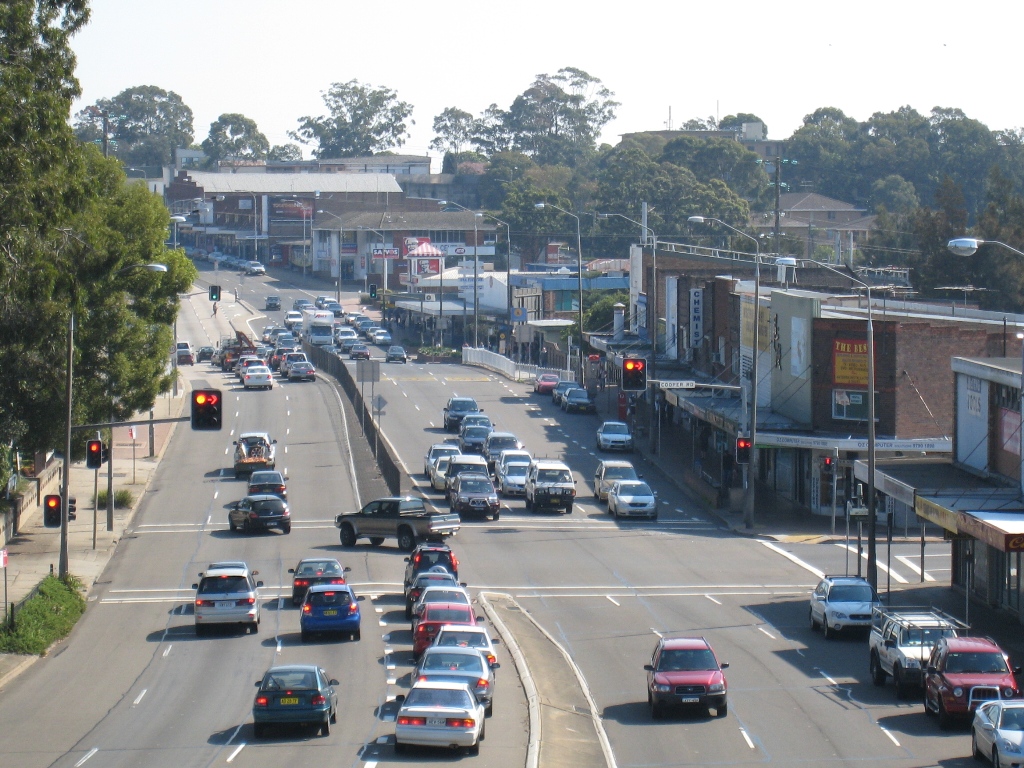
Entering Yagoona from Bankstown along the Hume Highway

The main commercial area is located on the Hume Highway (Liverpool Road), near Yagoona railway station. In 1963,[4] the Westfield Group built a supermarket on a vacant lot on the highway; the store opened as Coles New World, later became Franklins, and then an IGA.[5] Yagoona was home to the first McDonald's restaurant in Australia, opened in 1971,[6] but it closed in 1994.[7][8] In July 2021, it was confirmed that a new McDonalds restaurant will open on the very same site as the first restaurant in Australia, coinciding with the franchise's 50th anniversary celebrations in the country. The restaurant opened on 17 December 2021.[9]

Over recent years[when?], this shopping strip has been in economic decline as a consequence of major banks (Commonwealth, National Australia and Westpac) and retailers leaving. Residents now find it more convenient to shop at nearby Bass Hill Plaza or further away at Bankstown Central or Westfield Parramatta. There have been some plans to rejuvenate the town centre in Yagoona in recent years by Bankstown City Council. "Initial suggestions, already supported by residents and visitors, include a larger supermarket, a new community centre, improved shopping environment, and a variation in housing."[10]

The head office of RSPCA NSW, plus a shelter,[11] is located along Rookwood Road in this suburb.

Transport

[edit]
Yagoona railway station

Yagoona railway station is on the Bankstown line of the Sydney Trains network. A number of bus services link Yagoona to Bankstown and Parramatta. Yagoona is located some 5 – 10 minutes from Bankstown Central Business District and about 10 – 15 minutes from Parramatta CBD.

The Hume Highway cuts through Yagoona and is the main road access for Yagoona to Liverpool and Sydney City; and Rookwood Road connects south to Stacey Street/Fairford Road (Entrance to the M5), and north to Silverwater Road (Access to the M4). A 30-metre pedestrian bridge costing A$2.3 million[12] linking the side footpaths of Hume Highway was built in 2006, primarily to ensure easy and safe access travel in this area for the students of Yagoona Primary School. Lifts are located at each end to ensure easy access for those with disabilities. The construction of the bridge was funded by the Government of New South Wales. The bridge will also help streamline Hume Highway traffic by removing the previous set of traffic lights.[13]

Schools

[edit]

There are three Primary Schools in Yagoona:

  • Yagoona Public School[14]
  • Christ the King Catholic School[15]
  • Al Sadiq College is an Alawite Muslim School (Kindergarten and Years 1 to 4)[16] that was recently built close to Yagoona's Town Centre, at 178 Cooper Road, to cater for the growing Alawite population.

There are no high schools in the suburb. Most students attend high schools in adjoining suburbs, normally Birrong, Bass Hill, Bankstown, Condell Park or Sefton.

Parks

[edit]

Yagoona is home to Gazzard Park, George Green Oval, Gillman Reserve, Middleton Park, Graf Park and O'Neill Park. All the parks contain various sporting facilities and play equipment.[17]

Churches

[edit]

Yagoona has seven places of worship. These include:[3][18][19]

  • Yagoona Anglican Church[20]
  • Yagoona Baptist Church which is now Graceway Church
  • Christ the King Catholic Church[15]
  • Yagoona Christadelphian Ecclesia[21]
  • Prayer on Wheels Yagoona
  • Lutheran Church of Australia
  • Christian Mission Fellowship

Demographics

[edit]

In the 2021 Census, there were 19,651 people in Yagoona. 49.6% of people were born in Australia. The next most common countries of birth were Vietnam 12.1%, Lebanon 8.4%, China 2.0%, North Macedonia 1.8% and Syria 1.5%. 27.9% of people spoke only English at home. Other languages spoken at home included Arabic 27.2%, Vietnamese 15.8%, Macedonian 3.0%, Cantonese 2.6% and Urdu 1.8%. The most common responses for religion were Islam 31.1%, Catholic 21.6% and No Religion 12.1%.[1]

Culture

[edit]

Yagoona Autumn Fair

[edit]

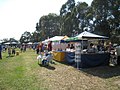
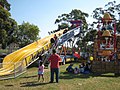
Each year an Autumn Fair was hosted in Yagoona's Gazzard Park, designed to allow the community to express their aims and objectives, as well as to raise funds for community projects and work.[22] Its final year was around 2009. Events include a ticket raffle, Yagoona Scouts $1 sausage sizzle, free rides, a non-stop stage show, face painting and more. On at least one occasion, the fair was held in the Spring rather than Autumn.[23][24]

2007 Autumn Fair Pictures

[edit]

Footy Legends, written by Khoa and Anh Do, directed by the former and starring the latter, is a drama movie set in Yagoona. It makes references to the social issues in the area and revolves around an amateur rugby league team consisting of socially disaffected people.[7]

Sport

[edit]

The local sports team is the Yagoona Lions football team, a member of the Bankstown District Amateur Football Association.[25] The Lions' home-ground is at O'Neill Park.[26]

The Yagoona Schooners (Rugby league).

Notable people

[edit]

References

[edit]
Revisions and contributorsEdit on WikipediaRead on Wikipedia
from Grokipedia
Yagoona is a residential located approximately 20 kilometres south-west of the in the local government area of the City of Canterbury-Bankstown, , . The area covers about 4.62 square kilometres and is traditionally the of the Darug , who are recognised as the Aboriginal custodians of the Canterbury-Bankstown region. The suburb's name derives from an Aboriginal word meaning "now" or "today." Yagoona developed primarily as a residential area from the 1950s onward, attracting migrant families and growing into a culturally diverse . As of the 2021 , the suburb had a population of 19,651 residents, with a age of 34 years and a of around 4,250 people per . It features a mix of medium- and high-density housing, with 35.3% of dwellings being such types, and a weekly of $1,438. The is notably multicultural, with the top ancestries reported as Lebanese (21.7%), Vietnamese (15.3%), and Australian (12.4%) in 2021; Islam is the largest religious affiliation at 31.1% of the population. One of Yagoona's notable landmarks is its historical significance in Australian retail history, as the site of the first restaurant to open in the country in December 1971, located on the . The suburb is well-served by , including Yagoona railway station on the T3 Bankstown Line, and offers community facilities such as parks, a , and local schools. Recent estimates indicate continued growth, reaching 20,426 residents by June 2024, reflecting ongoing urban development in Sydney's south-western corridor.

Geography

Location and boundaries

Yagoona is a located approximately 20 kilometres southwest of the , within the City of Canterbury-Bankstown . The suburb lies at coordinates 33°54′28″S 151°01′30″E, has the postal code 2199, and encompasses a total area of 4.62 km². Yagoona's administrative boundaries are generally defined by the to the north, to the east, the lands associated with the former Bankstown Aerodrome to the south, and the residential suburbs of Birrong and Sefton to the west. It is situated in close proximity to key landmarks including Bankstown Hospital, approximately 3 km to the south, and the Bankstown campus of , about 4 km away.

Physical features

Yagoona features a gently undulating topography with an average elevation of approximately 45 meters above sea level. The suburb's terrain rises and falls modestly, ranging from about 28 meters to 76 meters, contributing to a varied but generally level landscape suitable for suburban development. The area lacks major rivers but includes minor creeks and waterways that form part of the Cooks River catchment. Portions of the Duck River, which has been channelized, traverse the suburb from Sefton to Yagoona, supporting local drainage into the broader estuarine system. Soils in Yagoona are predominantly clay-based, derived from the sedimentary formations of the , particularly Wianamatta Shale. These heavy clay soils influence drainage patterns, leading to occasional flooding risks in low-lying areas during heavy rainfall, as the impermeable nature of the clay slows water infiltration. The is predominantly residential, characterized by low-density housing with many single-story homes constructed during the period from the 1950s to 1970s, often featuring fibro and brick veneer designs. Commercial strips line the , while newer multi-story apartments have emerged in commercial zones, and small industrial pockets exist near the Yagoona railway station. Green spaces are limited, though urban tree cover is increasing through local greening initiatives aimed at enhancing canopy in built-up areas.

History

Early settlement

The area now known as Yagoona lies on the traditional lands of the people, the Aboriginal custodians of much of the Cumberland Plain in western , where they maintained a deep connection to the landscape through hunting, gathering, and cultural practices for thousands of years. The name "Yagoona" derives from a word meaning "now" or "today," reflecting the linguistic heritage of the local Indigenous communities. European colonization began impacting the region in the late following the establishment of the British penal colony at in 1788, with land grants issued from the 1790s onward to support agricultural production for the growing settlement. The area, part of larger grants along the road southwest from , became known as "Irish Town" due to the significant presence of Irish convict settlers who were transported to and allocated portions of land for farming. These settlers, many of whom were political prisoners or common convicts from , established small-scale operations focused on orchards and market gardens, contributing to the colony's food supply amid the fertile soils of the Cumberland Plain. By the mid-19th century, land use in Yagoona remained predominantly agricultural, characterized by small family farms producing fruits, vegetables, and other crops for local markets in . The establishment of St Matthew's Anglican Church in 1861 marked the first permanent structure in the area, serving as a central community hub for the Protestant settlers and facilitating religious and social gatherings amid the scattered farmsteads. Nearby, the opening of in 1867, just to the north near Haslem's Creek, occupied extensive previously available for settlement or farming, influencing the pattern of rural development in the vicinity.

Suburban growth and recent developments

Yagoona transitioned from rural agricultural land to a recognized suburb in 1927, marking the beginning of its urban development amid Sydney's expanding metropolitan footprint. The suburb's growth accelerated significantly after World War II, driven by the influx of European migrants who purchased affordable housing in the area during the 1950s economic boom. This period saw a surge in residential construction, transforming Yagoona into a densely populated working-class enclave as part of broader post-war suburbanization efforts in western Sydney. Key infrastructure milestones supported this expansion, including the opening of Yagoona railway station on 16 July 1928, which facilitated commuter access and spurred further settlement along the Bankstown line. In 1971, Yagoona hosted Australia's first restaurant at 1098 , symbolizing the suburb's integration into modern consumer culture; the original outlet operated until 1994 before reopening in a redeveloped form in 2021. These developments reflected Yagoona's evolving role as a hub for everyday suburban life, with population growth continuing through the late 20th century to reach approximately 19,651 residents by 2021. (Note: ABS data provides the 2021 figure, with historical growth inferred from regional trends showing a doubling in western Sydney populations from the onward.) Recent years have brought targeted projects to address ongoing needs. Under the NSW Government's $769 million plan to build 100 public preschools by 2027, a new facility at Yagoona Public School—featuring two rooms for up to 40 children—was announced in 2024, with construction underway and expected completion by early 2027. In June 2025, Canterbury-Bankstown Council approved Development Application DA-1339/2024 for a six-storey mixed-use building at 143-145 Highland Avenue, incorporating residential apartments, retail spaces, and parking to support denser, sustainable housing. Additionally, pedestrian safety enhancements at the Church Road-Hume Highway intersection, part of the council's Liveable Centres program, include a new refuge island, kerb ramps, and landscaping, completed between February and June 2024 to improve accessibility for local residents. Despite these advances, Yagoona faced economic challenges in the and , with socio-economic deprivation exacerbated by retail shifts toward larger regional centres like , leading to localized decline in small-scale commercial vitality. High and low incomes, as indicated by a General Deprivation Index score of 0.3871 in 2006, underscored vulnerabilities tied to post-industrial restructuring in western . In response, Canterbury-Bankstown Council has pursued revitalization through initiatives like the North East Local Area Plan and Liveable Centres, aiming to enhance public spaces, connectivity, and mixed-use developments for more vibrant, inclusive communities.

Demographics

Yagoona's population has exhibited steady growth in recent decades, reflecting broader suburban expansion in Sydney's southwest. The recorded 18,013 residents in the , a figure that rose to 19,651 by the 2021 , marking a 9.1% increase over the five-year period. The estimated resident population reached 20,426 as of June 2024. Demographic data from the 2021 Census highlights a relatively young , with a age of 34 years. Children aged 0-4 years comprised 7.6% of residents (1,495 individuals), while the 0-9 years group formed the predominant age cohort at 15.0% (2,953 individuals). The average household size was 3.2 persons, underscoring a family-oriented structure. Spanning approximately 4.62 km², Yagoona has a of 4,425 persons per km² (2024 estimate). Recent trends indicate sustained family-focused development, including a rise in multi-generational households influenced by cultural norms and escalating costs in the region. Historically, Yagoona saw slow population growth prior to the as a semi-rural area, followed by rapid expansion after driven by postwar migration and suburban housing booms in , before stabilizing in the post-2000s amid maturing development patterns. Projections for the broader Yagoona-Birrong Statistical Area Level 2 (SA2) suggest continued population rise, with estimates reaching 23,415 residents as of August 2025, supported by ongoing natural increase and net migration.

Ethnic and cultural composition

Yagoona exhibits a multicultural shaped by significant migration, with 49.6% of residents born in according to the 2021 census. The top overseas countries of birth include at 12.1%, at 8.4%, and other nations contributing to the suburb's diverse origins. In terms of ancestry, Lebanese heritage is prominent at 21.6%, followed by Vietnamese at 15.3% and Australian at 12.4%, highlighting the strong cultural influences from these groups. Linguistic diversity is a key feature of Yagoona, where only 27.9% of residents speak English at home. The most common non-English languages are , spoken by 27.2% of the population, and Vietnamese at 15.8%, with other languages such as Macedonian also present among a notable portion of households. This multilingual environment underscores the suburb's role as a hub for non-English speaking communities. Religious affiliations further reflect Yagoona's ethnic makeup, with being the largest group at 31.1%, followed by Catholicism at 21.6%. A significant proportion, 12.1%, reported no religion, indicating a mix of secular and faith-based identities among residents. The high level of in Yagoona fosters community integration through events and local amenities that celebrate its multicultural fabric. For instance, the annual Canterbury-Bankstown Children's Festival, held at locations including Gazzard Park in Yagoona, promotes cultural exchange among families via performances and activities highlighting various heritages.

Economy and commercial area

Retail and business precinct

The primary retail and business precinct in Yagoona is centered along the , adjacent to Yagoona railway station, forming a bustling strip shopping area that serves daily needs for locals. This vibrant corridor features a mix of supermarkets such as the IGA and Yagoona West Supermarket, multiple pharmacies, and diverse eateries reflecting the suburb's multicultural fabric, including Vietnamese pho restaurants like Banh Cuon Kim Thanh and Lebanese bakeries such as Yagoona Lebanese Bakery. A notable landmark in this precinct is the original McDonald's restaurant site, which opened in December 1971 as Australia's first outlet and operated until 1994 before closing due to urban changes. The site reopened in 2021, redesigned to honor its heritage with nostalgic decor while functioning as a modern fast-food outlet. Complementing these are local markets like the Yagoona Fruit Market and Chapel Road Market, alongside numerous small businesses that form the backbone of community commerce and provide . Yagoona's retail landscape has evolved from 1960s-era supermarkets like Coles on the , which catered to suburban growth, to contemporary convenience stores and fast-food outlets. Recent developments in 2025, including approved mixed-use projects such as the six-storey building at 143-145 Highland Avenue with ground-floor retail spaces, continue this progression by integrating commercial amenities into residential expansions. This precinct functions as a key neighborhood hub within the City of Canterbury-Bankstown , drawing residents from surrounding suburbs for everyday shopping and dining.

Economic challenges and revitalization

Yagoona's economy has faced significant challenges, particularly in the retail sector during the 2000s and 2010s, where local businesses experienced decline due to competition from larger regional malls such as Central. This competition contributed to higher in the suburb, with the rate reaching 8.4% in 2021, exceeding the average of 5.0% for that year. The exacerbated these issues, disproportionately affecting small businesses in western suburbs like Yagoona through lockdowns and reduced consumer spending, leading to greater economic scarring compared to inner-city areas. Employment in Yagoona is concentrated in service-oriented sectors, with retail trade accounting for a substantial portion of local jobs, alongside and social assistance, and . Approximately 11% of residents are employed in retail trade, 11% in and social assistance, and 10% in , reflecting the suburb's historical industrial base and proximity to commercial hubs. Many workers commute to the Sydney CBD for employment opportunities, with 41.9% driving to work and a notable reliance on for longer distances. As of June 2025, the rate in the City of Canterbury-Bankstown was 6.4%, indicating some improvement from 2021 levels. To address these challenges, the Canterbury-Bankstown Council has implemented revitalization strategies through its 2022-2025 Delivery Program, focusing on upgrades in Yagoona to enhance economic vitality. Key initiatives in 2024-2025 include the Liveable Centres project at Church Road and the intersection, which aims to improve pedestrian safety and flow with features like refuge islands, brick feature walls, and landscaping to create a more inviting public domain and attract new businesses. These efforts have yielded positive outcomes, including rising property values that signal growing investor confidence, with the median house price in Yagoona reaching $1,360,000 by October 2025, up 9.7% from the previous year. Ongoing developments, such as station upgrades and retail village enhancements, are expected to boost local jobs by supporting small business growth and improving accessibility.

Transport

Public transport

Yagoona railway station is a key stop on the T6 Lidcombe & Bankstown line of the Sydney Trains network, providing essential rail services for local commuters traveling to and from central Sydney, Lidcombe, and Bankstown. As of June 2025, the T6 line resumed normal rail services as a shuttle between Lidcombe and Bankstown during the ongoing Sydney Metro City & Southwest conversion works. The station underwent a major upgrade as part of the Transport Access Program, introducing facilities such as a hands-free lift connecting the concourse to the platform, new stairs, an upgraded station building, accessible parking spaces, a kiss and ride area, bike racks, and family-accessible toilets to improve accessibility and passenger experience. These enhancements support daily operations amid growing demand on the line. Bus services complement rail connectivity, with multiple routes operated under the Sydney Buses network serving the area, including route 911 from Yagoona to Auburn via and route 925 from to , both integrating with the contactless ticketing system for seamless fares across modes. All Sydney Buses routes accept cards, allowing passengers to tap on and off for integrated travel. The station is briefly accessible via road connections from the nearby . Public transport plays a significant role in local commutes, with approximately 20% of Yagoona residents using or bus to travel to work based on 2021 Census data. Peak-hour services on the T6 line often experience crowding, though recent timetable adjustments aim to provide more space for passengers. Looking ahead, while the project (phased from 2024 to the 2030s) will convert the Sydenham to section to metro operations, the future of rail services on the Birrong-Yagoona segment remains uncertain, as has declined to confirm its long-term retention in strategy documents as of 2025.

Road infrastructure

Yagoona's road network is dominated by the Hume Highway, a major north-south arterial route that carries significant traffic volumes through the suburb as part of Sydney's key freight and commuter corridor. This highway experiences frequent slowdowns, with travel speeds often dropping below 30 km/h due to parked vehicles and peak-hour demand. Complementing this, Rookwood Road serves as an important east-west link, featuring six lanes that handle substantial volumes of traffic connecting Yagoona to surrounding western and northern suburbs. Church Road functions as a local connector road, facilitating access to residential and commercial areas, with recent upgrades enhancing its role in the local grid. Traffic management in Yagoona focuses on mitigating congestion, particularly at the busy -Church Road intersection, where high volumes lead to delays for motorists. Commuters from Yagoona typically face an average driving time of about 30 minutes to the Sydney CBD under normal conditions, though this can extend during peak hours due to regional bottlenecks. In 2024, pedestrian-focused improvements at the Church Road- intersection were completed, including a new refuge island, restored road pavement, upgraded footpaths, and kerb ramps to improve crossing safety amid ongoing traffic flows. Alternative transport modes are supported through shared paths and safety enhancements aligned with the City of Canterbury-Bankstown's Active Transport Action Plan, which promotes connected walking and networks across the area. These include shared and cyclist paths near corridors, with 2024 council initiatives introducing additional crossings, lighting, and permeable connections to reduce barriers posed by rail lines and busy roads. Vehicle ownership remains high, with an average of 1.8 motor vehicles per household recorded in the 2021 , contributing to reliance on personal cars for local travel. Parking in commercial precincts presents ongoing challenges, exacerbated by restrictions on arterials like the that limit on-street options during peak times. Bus services briefly utilize these roads for routes connecting Yagoona to broader networks.

Education

Primary schools

Yagoona Public School is a government-operated co-educational primary school catering to students from Kindergarten to Year 6, established in 1952 to serve the growing local community. The school currently enrolls 577 students across 24 mainstream classes and 10 support classes, reflecting its role as a key educational hub in a diverse suburb. Facilities include specialist support for learning and English as an additional language or dialect (EALD) programs, alongside a school canteen. In response to increasing demand, a new public preschool accommodating up to 40 children daily is under construction, with completion anticipated for Term 1 2027 following ongoing construction starting in late 2025. Christ the King Catholic Primary School, located at 2 Cantrell Street, is an independent Catholic institution offering to with a strong emphasis on faith-based learning integrated into the curriculum. Founded in 1957 by the , the school partners with parents and the local parish to foster students' spiritual and academic growth in a supportive environment. It enrolls approximately 186 students, maintaining small class sizes with a teacher-to-student ratio of about 1:16 to enable personalized instruction. Al Sadiq College operates as an independent Islamic school in the Alawite tradition, providing co-educational K-12 education across campuses in Yagoona and Greenacre, with the Yagoona site at 178 Cooper Road focusing on primary levels ( to Year 3). Established in 2003 by the Muslim Alawite Society, the college enrolls around 412 primary students overall and prioritizes a curriculum that includes language development and , such as Quranic principles, alongside the syllabus. Primary school enrollment in Yagoona reflects high demand driven by the suburb's youthful demographics, including a age of 34 and a significant proportion of families with children under 15 as per the 2021 census. results at these institutions align closely with state averages, supporting effective literacy and numeracy outcomes in a multicultural context.

Access to secondary and higher education

Yagoona lacks dedicated secondary schools within its suburb boundaries, requiring residents to access education at nearby institutions. Female students commonly attend Birrong Girls High School, while male students often attend the adjacent Birrong Boys High School, both located approximately 2 kilometers away in the adjacent suburb of Birrong. Other options include the Greenacre campus of Al Sadiq College, which provides co-educational Islamic schooling for Years 7 to 12 and is situated directly bordering Yagoona. For students with medical needs, Bankstown Hospital School offers specialized K-12 education within the pediatric ward of Bankstown-Lidcombe Hospital, roughly 3 kilometers from Yagoona. Public transport supports access to these secondary schools, with Yagoona railway station on the T6 Lidcombe & Line providing direct connections to and beyond, complemented by local bus routes such as those operated by . Approximately 70 percent of secondary students from the broader Canterbury-Bankstown area, including Yagoona, commute outside their immediate suburb, reflecting the regional distribution of high schools. Higher education opportunities are accessible due to Yagoona's proximity to key institutions, including the Bankstown City Campus in , about 3 kilometers away, which offers undergraduate and postgraduate programs in fields like business, health, and education. The Bankstown campus, located 2 kilometers distant in central , delivers vocational courses ranging from certificates to diplomas in areas such as and community services. Tertiary participation in the City of Canterbury Bankstown stands at approximately 13.1% of the population aged 15 years and over attending TAFE or university, as of the 2021 census, underscoring moderate but growing engagement with post-secondary education. Local support includes scholarships through the City of Canterbury Bankstown's Children and Youth Awards, which recognize outstanding young people aged 12 to 18 and provide financial aid for educational pursuits. In 2025, council initiatives such as the Youth Action Plan 2025-2029 and the Youth Futures Pathways Expo emphasize seamless transitions from preschool through secondary education, offering career guidance and training pathways to enhance access for local youth.

Community facilities

Parks and recreation areas

Yagoona features several public parks and reserves managed by the City of Canterbury Bankstown, providing green spaces for leisure, sports, and community activities. These areas contribute to the suburb's recreational offerings, with tree canopy cover ranging from 10-20% across the locality, supporting local and urban cooling. Key sites include Gazzard Park, O'Neill Park, Gillman Reserve, and Graf Park, each equipped with facilities for families and active users. Gazzard Park, located on Cooper Road, is an accessible green space with a playground designed for all abilities, playing fields, picnic areas, and barbecue facilities. The park offers wheelchair-friendly paths, ample parking, and open areas suitable for community gatherings, emphasizing inclusivity and maintenance of its grassy fields. Adjacent to the Yagoona Community Centre, it serves as a hub for local events and relaxation. O'Neill Park, at the corner of Cooper Road and Nobbs Road, provides a large open grassy area with fields, a , fitness equipment, and car parking. It supports community and passive , though some paths may present minor challenges due to uneven surfaces. Gillman Reserve on Heather Street includes a and playing fields, catering to children's play and informal . It offers basic amenities for local families seeking outdoor activities. Graf Park, encompassing George Green Oval on George Street, features facilities, a playing field for soccer and other sports, an all-abilities , and areas, fountains, toilets, and a bike repair station. Recent enhancements, including upgraded and public amenities, have improved its appeal for training and matches by local clubs. The site includes open spaces, seating, and a raingarden for environmental management. These parks are popular for family , walks, and casual events, with fields often used by nearby sports groups for practice.

Religious institutions

Yagoona's religious institutions encompass a diverse array of places of worship that serve the suburb's multicultural residents, including Christian, Muslim, and other faith communities. The oldest among them is St Matthew's Anglican Church, constructed in 1861 on Liverpool Road (now part of the ), which originally catered to Protestant settlers and remains a heritage-listed site blending Gothic Revival elements with local sandstone architecture. Christ the King Catholic Church, established as a parish in 1955 with its initial church and hall completed in 1956, stands as one of the largest Catholic parishes in the area, accommodating a broad congregation through English and Vietnamese masses, including a Saturday vigil at 6:15 p.m. for the Vietnamese community; the modern brick structure includes a presbytery and attached school, emphasizing community outreach with attached halls for gatherings. The Al Sadiq College in Yagoona functions as a key Islamic center within the Alawite Muslim tradition, offering prayer facilities alongside K-3 education on its campus adjacent to Yagoona railway station; founded to support the local Muslim population, it features contemporary buildings designed for communal worship and learning. Additional prominent sites include the Al Madinah Centre at 151 Highland Avenue, a providing daily prayers and community programs near Yagoona station, and the Fitya Centre on , which hosts spiritual gatherings and brotherhood events for men in a welcoming modern space with parking facilities. The Yagoona Anglican Church at 213 Auburn Road offers multicultural services, such as Vietnamese-language worship, in a contemporary setting that includes a main and small hall for diverse congregational needs. These institutions collectively showcase a blend of heritage and modern architectural styles, with many incorporating community halls for social and educational activities, reflecting Yagoona's religious landscape where accounts for 42.2% and 31.1% of the population per the 2021 census.

Culture and events

Cultural diversity and festivals

Yagoona exhibits significant cultural diversity, reflecting the broader multicultural fabric of the City of Canterbury-Bankstown. According to the 2021 Census, 50.4% of Yagoona residents were born overseas, with the largest ancestry groups being Lebanese (21.6%), Vietnamese (15.3%), and Australian (12.4%), alongside substantial communities of Chinese (5.8%), Iraqi, and Syrian descent. This diversity is supported by local migrant resource centres, such as the one in Condell Park repurposed from the former clinic, which provides settlement services, community programs, and heritage promotion for newly arrived families in the area. Community festivals play a vital role in celebrating this multiculturalism, drawing residents from Yagoona to nearby venues in the Canterbury-Bankstown . The annual Lunar New Year Festival, for example held on 18 January 2025 at Griffith Park and Olympic Parade, highlights Vietnamese traditions with lion dancing, dragon parades, firecrackers, and cultural performances by groups like the Vietnamese Cultural Preservation Group, alongside Asian cuisines and family activities; it attracted over 13,000 attendees in 2024. Similarly, annual Diwali celebrations occur at Lakemba Library, featuring vibrant music, dances, and traditional sweets to mark the festival of lights for the Indian community, such as the event on 22 October 2025. Eid festivities emphasize Islamic heritage, with the annual Eid lights competition encouraging decorated homes across Canterbury-Bankstown, including Yagoona, to illuminate neighborhoods during , as in 2024. Preceding this, annual Ramadan Nights in Lakemba transform the area into a global food from sunset to late night over the holy month, offering cuisines, live entertainment, and markets that promote interfaith harmony and draw diverse crowds for communal iftars, such as during 2025. These events, often supported by the council's Cultural Diversity Plan, enhance social cohesion by providing platforms for cultural exchange and community building in this ethnically varied suburb.

Representation in media

Yagoona has been depicted in Australian cinema as a symbol of working-class resilience amid multicultural challenges, most notably in the 2006 film , directed by . This semi-autobiographical drama follows Luc Vu, a young Vietnamese-Australian man in Yagoona, who reunites his former high school team to prevent his sister from entering , highlighting themes of family bonds, , and community spirit in Sydney's western suburbs. The movie was filmed on location in Yagoona, including local ovals and streets, capturing the suburb's everyday landscapes of modest homes and public spaces. In television and documentaries, Yagoona features in coverage of migrant experiences, particularly the Vietnamese community's integration and stories of perseverance in the . Recent news reports have spotlighted local incidents, such as the September 2025 house fire on Sutherland Street that claimed the life of a 60-year-old man, emphasizing emergency responses in the suburb's residential areas. Coverage of developments, including pedestrian safety upgrades at the Church Road and , has highlighted Yagoona's ongoing efforts. Literature offers glimpses of Yagoona's multicultural fabric through urban novels like Shirley Le's 2023 debut Funny Ethnics, which centers on Sylvia Nguyen, a young Vietnamese-Australian woman grappling with family expectations and personal aspirations in the . The narrative vividly renders Yagoona as a vibrant yet overlooked enclave of immigrant life, blending humor with critiques of generational divides. In music, local hip-hop artists from Sydney's southwest, including those influenced by Yagoona's diverse demographics, reference the area's multicultural energy in their , celebrating resilience in tracks that echo community pride and urban grit. Overall, media portrayals consistently frame Yagoona as a resilient working-class .

Sport

Local clubs and facilities

Yagoona Lions FC, a prominent soccer club in the suburb, was established in 1956 as Yagoona Districts Soccer Club and has since grown into a community-focused competing in the District Amateur Football Association leagues under . The club fields teams across various age groups and skill levels, emphasizing family-friendly participation and community spirit, with home games primarily at O'Neill Park and additional use of George Green Oval. In , the Bass Hill Broncos Junior Rugby League Football Club serves the local area, having been founded in 2013 and competing in the Canterbury-Bankstown District Junior Rugby League with a strong focus on youth development for players aged 6 to 18. The club trains and plays at Middleton Park in Yagoona, promoting skill-building and teamwork among junior athletes from the surrounding diverse communities. Local sports facilities supporting these clubs include shared ovals such as O'Neill Park, George Green Oval, and Middleton Park, many equipped with floodlighting for evening training and matches. These venues, often used as public parks, facilitate club activities while accommodating broader community use. In 2025, upgrades at Graf Park included new . Teams reflect Yagoona's multicultural population through diverse player rosters.

Community participation

In Yagoona, a within the City of Canterbury Bankstown known for its multicultural population including significant Vietnamese and Lebanese communities, adult participation in organized sports aligns with national trends, where approximately 26% of adults participated as of the 2025 AusPlay survey. Participation is particularly high in soccer and , reflecting cultural affinities; for instance, soccer resonates strongly with Vietnamese-Australian families through community clubs and initiatives that foster inclusion, while draws substantial involvement from Lebanese-Australian residents due to longstanding connections to the sport in Sydney's western suburbs. The Canterbury Bankstown Council supports community sports through funded programs such as junior academies and school-club partnerships, exemplified by the ' Future Bulldogs initiative, which integrates with local schools to develop young talent from U5 to U13 levels. Women's and disability-inclusive initiatives have seen expansions in 2024-2025, including free female football clinics for girls aged 5-12 in the area and targeted programs by Disability Sports Australia offering accessible activities for residents with . These efforts, often backed by local grants exceeding $1.2 million annually from organizations like Sports Club, aim to broaden access and promote equitable engagement across demographics. Sports participation in Yagoona contributes to addressing elevated rates of and among youth in the area, where historical data as of 2017 indicated around 28% of children were overweight or obese—higher than the average of 24% at that time for ages 5-16—with the current state rate at 21% as of 2024. Such carnivals, held at venues like The Crest Sporting Complex, provide inclusive opportunities for students from local schools including Yagoona Public, helping to mitigate health risks associated with sedentary lifestyles in diverse, urban communities. Recent trends indicate growing female involvement in Yagoona's scene, supported by initiatives like the Bulldogs' female pathways development programs and investments in female-friendly facilities, alongside a post-COVID recovery marked by a 20% rise in junior registrations for 2025 compared to the previous year. This resurgence reflects broader efforts to sustain momentum in organized sports amid economic pressures, with clubs like Lions FC briefly noting increased community sign-ups in line with these patterns.

Notable people

Sports figures

Yagoona has produced several notable rugby league players who rose to prominence in the (NRL), particularly through their affiliations with the , a club deeply rooted in the local area. Steve Mortimer, born in Yagoona on 15 July 1956, is widely regarded as one of Australia's greatest halfbacks. He debuted for the in 1975 and played 272 first-grade games for the club between 1976 and 1989, captaining them to four premiership victories in 1980, 1984, 1985, and contributing to appearances in 1978, 1979, and 1986. Mortimer represented in 16 matches, captaining the to their first series win in 1984, and earned eight caps for the Australian , including tours to and the . His leadership and skill earned him induction into the NRL Hall of Fame in 2010 and recognition as one of Australia's 100 greatest players. Post-retirement, Mortimer served as a director of the Canterbury Leagues Club, supporting community sports initiatives in the Canterbury-Bankstown region, including Yagoona. Peter Mortimer, Steve's younger brother, was also born in Yagoona on 22 December 1957 and followed a similar path in . He played 190 first-grade games for the Bulldogs from 1977 to 1986, featuring in the 1980 premiership win and the 1979 . Known for his versatility as a centre and winger, Peter represented in nine matches, including three games, and played one Test for in 1981. After retiring, he joined the Bulldogs' board in 2019, contributing to the club's governance and youth development programs that benefit local juniors in suburbs like Yagoona. Don , another Yagoona native born on 4 April 1954, emerged as a versatile backline player for the Bulldogs in the 1970s. He appeared in 49 first-grade games between 1973 and 1978, known for his goal-kicking and positional flexibility across wing, centre, , halfback, and fullback. began his career in local junior competitions, including stints with Sports, before progressing to representative levels. His early success at Yagoona highlighted his talent, where he excelled in multiple sports, paving the way for his professional career. These figures exemplify Yagoona's grassroots heritage, with their achievements inspiring local participation despite the suburb's modest size limiting the number of high-profile talents. The brothers and collectively played over 500 games for the Bulldogs, fostering a strong community connection through the club's junior pathways.

Arts and entertainment

(born 2 June 1977 in ), a Vietnamese Australian comedian, actor, author, and painter, grew up in Yagoona after his family settled there as refugees. He has hosted television shows such as and Anh Does Vietnam, and authored the WeirDo children's book series, which has sold over three million copies. Do's work often draws on his experiences in Sydney's western suburbs, including Yagoona. Khoa Do, Anh's brother and a filmmaker, director, and screenwriter, also grew up in Yagoona. He directed the award-winning film Footy Legends (2006), set in the suburb and reflecting Vietnamese Australian experiences in the area. Khoa has received an Australian Film Institute Award and contributed to youth arts programs in the Canterbury-Bankstown region.

Community leaders and others

Rachelle Harika, a lifelong resident of Yagoona, has served as a Labour councillor for the Bass Hill Ward in the City of Canterbury Bankstown since 2017, representing areas including Yagoona. Elected unopposed as Deputy Mayor in September 2025, she focuses on community priorities such as local services and infrastructure improvements for residents. Her work reflects the suburb's multicultural fabric, particularly its Lebanese community, through advocacy for cultural preservation and inclusive local governance. Grant Lee, a prominent community figure connected to Yagoona through his early involvement with the Yagoona Lions Football Club, served as a North Ward councillor in the former from 1991 to 2010 and as from 1995 to 1996. He dedicated decades to civic service, including community development and Labor Party activities in the area, earning recognition as a lifelong before his passing in September 2025 at age 60. Lee's contributions emphasized engagement in diverse suburbs like Yagoona, supporting migrant integration and local initiatives. Mohammed Naanouh, an educator at Al Sadiq College in Yagoona, serves as Head of House and HSC Biology teacher, fostering student well-being and academic excellence in a multicultural environment. Recognized as a 2018 Rising Star by The Educator for his emerging leadership in education, Naanouh contributes to the suburb's Vietnamese and Lebanese communities by promoting inclusive teaching practices that draw on students' diverse backgrounds. These leaders exemplify Yagoona's growing recognition of in civic roles, with achievements including awards for service and campaigns for local upgrades like pedestrian safety enhancements in the . Their efforts highlight contributions from migrant advocates and professionals, such as those preserving amid suburban revitalization.

References

Add your contribution
Related Hubs
User Avatar
No comments yet.