Hubbry Logo
ZografouZografouMain
Open search
Zografou
Community hub
Zografou
logo
8 pages, 0 posts
0 subscribers
Be the first to start a discussion here.
Zografou
Zografou
from Wikipedia

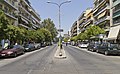
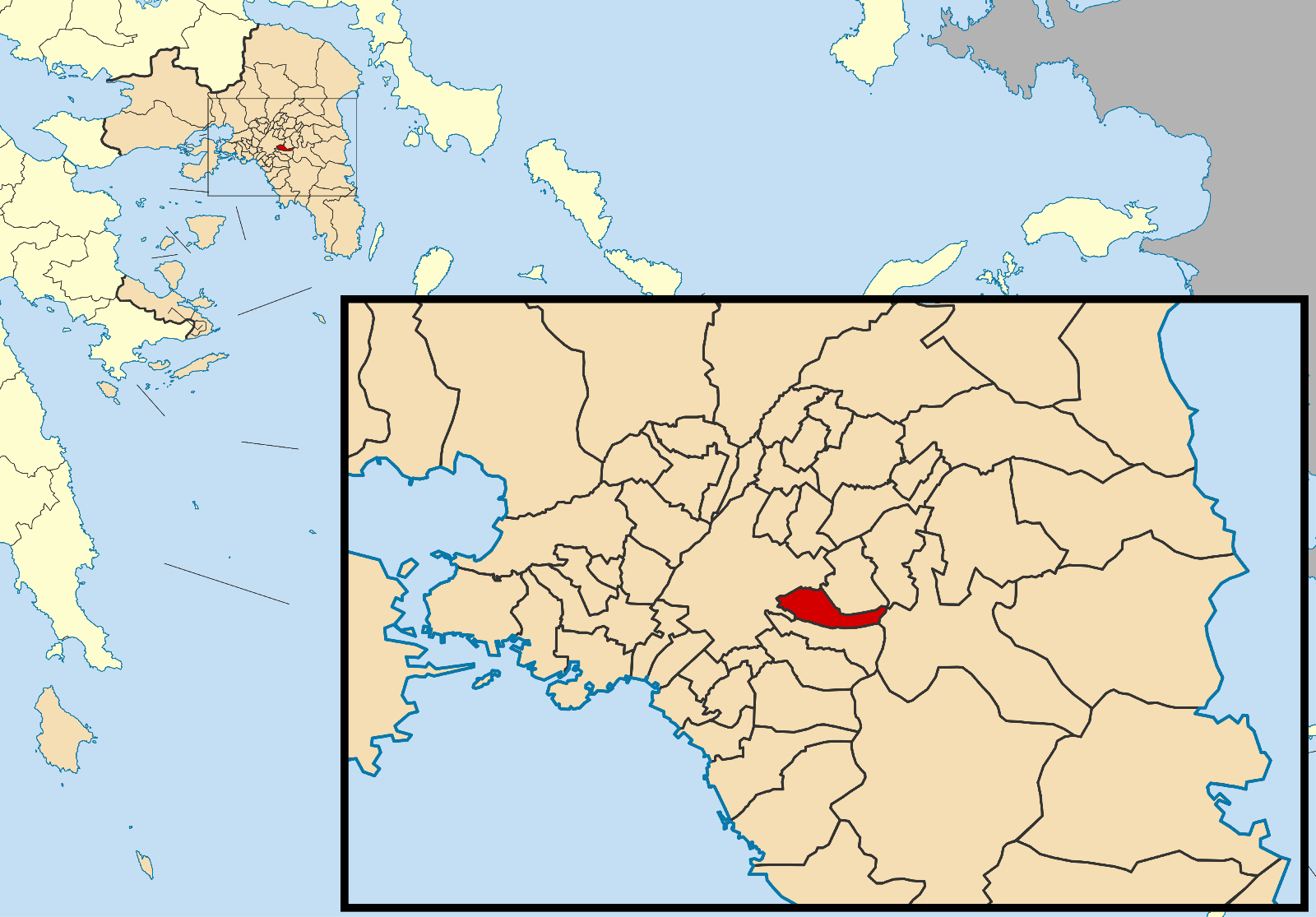
Zografou (Greek: Ζωγράφου, romanizedZōgráfou) is a suburban town of approximately 70,000 inhabitants in the eastern part of the Athens agglomeration, Greece. It was named after the Greek politician Ioannis Zografos. To the east of Zografou lies mount Hymettus. The area, being close to the centre of Athens, developed similar urban sprawl characteristics, with high-rise buildings of even 10 stories tall being the norm. The municipality is also home to the National and Kapodistrian University of Athens and the National Technical University of Athens campuses and a significant percentage of the local population are students, faculty, and employees of both institutions. Zografou includes the smaller areas of Ilissia and Goudi.

Key Information

Geography

[edit]

Zografou is a landlocked suburb of Athens, located about 4 km east of Athens city centre. The municipality has an area of 8.517 km2.[3] Towards the east the municipality extends to the forested Hymettus mountain. The built-up area of Zografou is continuous with that of municipality of Athens. A large campus of the National and Kapodistrian University of Athens is situated in Ano Ilisia, the easternmost quarter of Zografou. Ano Ilisia derived its name from the river Ilisos, which starts at St Eleousa, now in the University campus.[4][5] Another quarter of Zografou is Goudi, in the northwestern part of the municipality. The main church of Zografou is consecrated to Agios Therapontas (Greek: Άγιος Θεράποντας). With Zografou having been built on the hills of Hymettus, a common sight around the suburb are some very steep uphill streets.

Climate

[edit]

Zografou has a hot-summer Mediterranean climate (Csa in the Köppen climate classification). It has hot dry summers and relatively mild winters.

Climate data for Zografou 219 m a.s.l. (1993-2025)
Month Jan Feb Mar Apr May Jun Jul Aug Sep Oct Nov Dec Year
Record high °C (°F) 22.6
(72.7)
22.0
(71.6)
30.3
(86.5)
29.9
(85.8)
38.4
(101.1)
42.6
(108.7)
42.5
(108.5)
43.4
(110.1)
38.3
(100.9)
32.9
(91.2)
27.1
(80.8)
23.6
(74.5)
43.4
(110.1)
Mean daily maximum °C (°F) 12.4
(54.3)
13.0
(55.4)
15.5
(59.9)
19.4
(66.9)
25.0
(77.0)
29.9
(85.8)
32.6
(90.7)
32.2
(90.0)
27.8
(82.0)
22.6
(72.7)
18.0
(64.4)
13.9
(57.0)
21.9
(71.3)
Daily mean °C (°F) 9.4
(48.9)
9.7
(49.5)
11.7
(53.1)
15.1
(59.2)
20.3
(68.5)
25.1
(77.2)
28.0
(82.4)
27.8
(82.0)
23.5
(74.3)
18.9
(66.0)
14.7
(58.5)
11.0
(51.8)
17.9
(64.3)
Mean daily minimum °C (°F) 6.3
(43.3)
6.3
(43.3)
7.9
(46.2)
10.8
(51.4)
15.5
(59.9)
20.3
(68.5)
23.4
(74.1)
23.3
(73.9)
19.2
(66.6)
15.1
(59.2)
11.4
(52.5)
8.1
(46.6)
14.0
(57.1)
Record low °C (°F) −4.3
(24.3)
−7.1
(19.2)
−2.3
(27.9)
2.4
(36.3)
8.7
(47.7)
11.4
(52.5)
16.8
(62.2)
17.0
(62.6)
11.9
(53.4)
6.2
(43.2)
−0.3
(31.5)
−1.9
(28.6)
−7.1
(19.2)
Average rainfall mm (inches) 70.2
(2.76)
47.1
(1.85)
49.1
(1.93)
24.8
(0.98)
25.3
(1.00)
16.0
(0.63)
12.2
(0.48)
8.5
(0.33)
25.3
(1.00)
43.7
(1.72)
80.0
(3.15)
85.8
(3.38)
488
(19.21)
Source: National Technical University of Athens (Oct 1993- May 2025). [6]

Transport

[edit]

Zografou is served by bus lines 140 (Polygono - Glyfada), 220 (Ano Ilisia - Akadimia), 221 (Panepistimioupoli - Akadimia), 230 (Akropoli - Zografou), 235 (Zografou - Akadimia), 250 (Panepistimioupoli - Evangelismos station), 608 (Galatsi - Akadimia - Nekr. Zografou), 622 (Goudi - Ano Galatsi) and 815 (Goudi - Tavros).[7] The A62 Hymettus Ring Road (formerly the A64 until 2024) passes through the municipality.

At summer of 2029, Zografou will have 3 metro stations at Ilissia, Zografou (Gardenia Place) and Goudi.

History

[edit]

After the departure of the Ottomans from the area in the 1830s, the area came into the ownership of Ioannis Koniaris, mayor of Athens from 1851 to 1854, and Leonidas Vournazos.

In 1902, Eleni Vournazos, widow of Leonidas, sold 1,250 stremmata (1 stremma equal to 1000 square meters ) of the Kouponia/Goudi area to Ioannis Zografos (died 1927), a Member of Parliament for the Nationalist Party and university professor. Dividing it into plots, he sold them for installments of 112 drachma per month. The first houses were erected in 1919. Within ten years, 100 had been built. At this time, the foundations of the Church of St. Therapon were erected.

In 1929, the area, now known as Zografou, was split from the municipality of Athens and became an independent community. It was elevated to a municipality in 1947,[8] its first president being Sotirios Zografos, the son of Ioannis. In 1935, the area of Kouponia (now Ano Ilisia) was incorporated into the community.

Scientific Centers, Museums and others

[edit]

Sports

[edit]

Zografou hosts the local sport teams Asteras Zografou, a football club founded in 1965 and EFAO Zografou B.C. (formerly Filathlitikos B.C.), a basketball club founded in 1986. In addition, the sport club Ilisiakos, founded in 1927, is based in Ilisia a district that is shared between Municipalities of Athens and Zografou.

Sport clubs based in Zografou
Club Founded Sports Achievements
Asteras Zografou 1965 Football Earlier presence in Beta Ethniki
EFAO Zografou 1986 Basketball Earlier presence in Greek A2 League basketball

Historical population

[edit]
Historical population
YearPop.±%
1981 84,548—    
1991 80,490−4.8%
2001 76,115−5.4%
2011 71,026−6.7%
2021 69,874−1.6%

Notable people

[edit]
[edit]

See also

[edit]

References

[edit]
[edit]
Revisions and contributorsEdit on WikipediaRead on Wikipedia
from Grokipedia
Zografou is a suburban located in the eastern part of the urban agglomeration in , with a of approximately (69,872 as of the 2021 census). It serves as a residential and educational hub, prominently featuring the main campus of the National and Kapodistrian University of Athens, which contributes to its vibrant, youthful atmosphere. The area is known for its dense urban development, with a of approximately 28,880 people per square kilometer reported in 2018, placing it among Europe's most densely populated neighborhoods. The municipality's name derives from Ioannis Zografos, an early 20th-century Greek politician and landowner who owned significant properties in the region. Originally encompassing ancient sites and rural lands, Zografou evolved into a modern suburb through post-independence settlement and urban expansion, officially becoming a municipality in 1947–1948, at which time it incorporated the districts of Goudi and Ano Ilissia. Historically tied to the broader Attica region, the area has roots in Byzantine and Ottoman eras, with nearby landmarks like the Kaisariani Monastery reflecting its cultural heritage. Today, Zografou balances residential living with academic and recreational facilities, including museums such as the G. Gounaropoulos Museum and green spaces like the Kaisariani Forest, attracting both locals and visitors to its eastern setting. Its proximity to central —about 5 kilometers away—facilitates easy access via , while the area's student population fosters a dynamic with shops, cafes, and cultural events along key streets. Zografou remains a vital part of the greater , home to over 3 million residents.

Geography

Location and Topography

Zografou is a landlocked located approximately 4 km east of central , integrated into the eastern sector of the Athens metropolitan agglomeration. The municipality encompasses an area of 8.5 km², characterized by its urban continuity with adjacent districts. The municipality shares borders with to the west, Papagou-Cholargos to the north, Paiania to the east, and Kaisariani and Vyronas to the south. It maintains close proximity to the southwestern slopes of Mount Hymettus, which forms part of its eastern boundary and rises prominently from the surrounding terrain, while the area lies within the broader River valley. Topographically, Zografou features an average elevation of 130 m above , with the landscape gradually ascending eastward toward the higher elevations of Mount , reaching up to 1,000 m or more. The terrain includes varied elevations from around 110 m in the central urban zones to steeper, forested hills near the mountain, contributing to a mix of flat valley floors and rising slopes. The urban layout is dominated by high-rise residential and institutional buildings, reflecting intensive development in a compact setting, and incorporates neighborhoods such as Ano Ilissia. campuses serve as prominent landmarks influencing the and . As of the 2021 census, Zografou has a population density of 8,201 inhabitants per km².

Climate

Zografou features a hot-summer Mediterranean climate (Köppen classification Csa), marked by prolonged hot and dry summers followed by mild and wet winters. This regime is typical of the broader Athens region, where seasonal contrasts drive environmental patterns, with minimal temperature fluctuations year-round but pronounced differences in precipitation distribution. Average high temperatures during the summer months of through range from 32°C to 35°C, while winter lows from to February typically fall between 5°C and 8°C. Annual averages approximately 400 mm, with the majority occurring between and , often in short, intense events that contribute to seasonal flooding risks in urban areas. Data from the (NTUA) meteorological station in Zografou, operational since the early 1990s, records these patterns over the 1993–2025 period, including extreme highs up to 42°C during heatwaves and lows reaching -2°C in rare cold snaps. The supports a mix of shrubs and coniferous trees on the slopes of nearby , such as pines and maquis vegetation, which thrive in the dry summers and rely on winter rains for regeneration. However, Zografou's high urban density exacerbates the effect, elevating local temperatures by 2–5°C above surrounding rural areas during summer nights compared to the basin average. The topographical influence of also moderates local winds, providing occasional cooling breezes that mitigate peak heat in the municipality.

Demographics

The population of Zografou has exhibited a consistent decline since the early 1980s, reflecting broader demographic shifts in the . According to census data from the Hellenic Statistical Authority (ELSTAT), the resident population peaked at 84,548 in 1981, driven by a post-World War II influx of rural migrants seeking urban opportunities in the expanding suburbs. Subsequent decades saw steady decreases, with the figure dropping to 80,492 by 1991 (a -4.8% change), 76,115 in 2001 (-5.4%), 71,026 in 2011 (-6.7%), and 69,872 in 2021 (-1.6%). Projections indicate further reduction, with an estimated population of approximately 64,468 by 2025, underscoring ongoing challenges in retaining permanent residents.
YearPopulationChange (%)
198184,548-
199180,492-4.8
200176,115-5.4
201171,026-6.7
202169,872-1.6
This downward trend is attributed to several interconnected factors, including outward urban migration to peripheral areas, an aging with low birth rates, and high turnover among transient residents such as university students who do not establish . A brief influx of students temporarily elevates daily numbers, particularly around academic institutions, but does not offset the net loss in the official resident count. Population in Zografou has evolved in parallel with these changes, decreasing from higher levels in the mid-20th century to about 8,201 inhabitants per square kilometer in 2021 across its 8.52 km² area, which remains below the average of approximately 16,500 per km² but indicative of compact suburban development. The post-WWII rural-to-urban migration initially boosted through informal settlements and expansion, contributing to Zografou's growth as an educational hub, though recent declines have moderated this pressure.

Socioeconomic Profile

Zografou exhibits a demographic makeup characterized by a significant concentration of young adults, particularly in the 20–34 age group, attributable to its status as a hub for higher education institutions such as the . According to the 2021 Population-Housing Census, individuals aged 20–29 comprise approximately 15.8% of the population (11,025 residents), while those aged 30–39 account for 14.6% (10,213 residents), resulting in over 30% of residents falling within the 20–39 range and underscoring the area's appeal to students and young professionals. The municipality also features a notable proportion of foreign-born residents, exceeding the national average of 11.3% due to international students and expatriates drawn to educational opportunities; this aligns with broader trends where foreign citizens represented 10.5% of the population in 2011. Birth rates remain low, mirroring Greece's national fertility rate of around 1.3 children per woman, influenced by economic pressures and an aging population structure. The local economy is predominantly driven by the education sector and related services, with universities contributing substantially to and economic activity through academic, administrative, and support roles. Retail outlets, cafes, and small-scale services catering to the population form a key component, while industrial activity is minimal, reflecting Zografou's residential and educational focus rather than . Unemployment stands at approximately 8.1% as of August 2025, closely aligned with the region's rate and indicative of broader recovery trends in the following economic challenges. Housing in Zografou consists primarily of a mix of multi-story apartments and high-rise buildings, emblematic of the typical in eastern suburbs, with proximity to the city center facilitating dense development. Inequality metrics, such as Greece's national of 31.8%, highlight moderate disparities, exacerbated locally by the transient student demographic facing affordability constraints in rental markets. Socially, Zografou embodies a youthful and dynamic atmosphere, fueled by its large student contingent that fosters vibrant interactions and a of transience. Multicultural influences are prominent, stemming from international students who introduce diverse cultural elements through events, local eateries, and shared living spaces, enhancing the suburb's cosmopolitan character despite its primarily Greek-resident base.

History

Origins and Early Settlement

The area encompassing modern Zografou exhibits evidence of human activity dating back to prehistoric times, with Neolithic tools discovered on nearby , indicating early exploitation of the region's natural resources such as marble quarries and forests. During antiquity, the vicinity along the , which originates from Hymettus and flows through the eastern outskirts of , supported settlements and religious sites, including shrines dedicated to deities like the Muses and Dionysos; the river itself was revered as sacred in classical and literature. Possible links exist to ancient Pelasgian communities on Hymettus, which evolved into organized demes under the Athenian system, though specific identifications with demes in the broader Attic countryside near the Ilisos remain subjects of historical interpretation based on classical references. Under Ottoman rule, from the 15th to early 19th centuries, the Zografou area experienced sparse habitation, primarily serving as agricultural land divided into lots (known as "Kouponia" or "Kapounia" in 1793 records, possibly referring to subdivided estates or a nautical term evoking the terrain's wavy landscape). The population remained low, with the region functioning as peripheral farmland to the diminished town of , which had declined significantly during Ottoman administration. Following Greek independence in 1832, settlement in Zografou began modestly as expanded outward from its core, with large tracts of land acquired from Ottoman owners by prominent figures and institutions. The area retained a rural character through the mid-19th century, dominated by vineyards, groves, and small farms that supplied the growing capital, reflecting the gradual of Attica's eastern periphery. This initial development laid the foundation for later growth, though formal community formation occurred in the early . The name Zografou is etymologically tied to Ioannis Zografos (1844–1927), an economist, professor, and who purchased extensive lands in the area around 1902 and promoted settlement by subdividing and selling plots to approximately 100 families, fostering the area's transition from rural estate to organized neighborhood. Alternative origins suggest connections to the Zografos family surname, meaning "painter" or "iconographer" in Greek, potentially alluding to historical artisan traditions, while earlier designations like Kouponia persisted into the 19th century.

Modern Development

In 1929, Zografou gained as a separate community from the Municipality of , marking a pivotal administrative milestone in its evolution from a small settlement of around 100 houses to a burgeoning . This separation was facilitated by land acquisitions initiated in 1902 by Ioannis Zografos, who developed the area through plot sales following , laying the groundwork for residential expansion. By 1948, Zografou was elevated to full municipal status, with Sotiris Zografos, son of Ioannis, serving as its first mayor, which enabled greater local governance and development. Following and the Greek Civil War, Zografou experienced significant population growth driven by an influx of refugees and internal migrants seeking opportunities in the , contributing to 's overall demographic boom from approximately 500,000 residents in 1940 to over 1 million by 1961. This period spurred initial urban development, but the most intense building boom occurred between the 1960s and 1980s, characterized by rapid construction of residential high-rises and public facilities amid Greece's economic modernization. The establishment and expansion of the National and Kapodistrian University of Athens (NKUA) campus in Zografou, beginning with foundational buildings in 1969 as part of the Panepistimioupoli complex, played a central role in this transformation, attracting students, faculty, and related services that drove demand for housing and elevated the area's socioeconomic profile. Although NKUA traces its origins to , the relocation and scaling of faculties—particularly in sciences and —to the Zografou site during the 1980s and 1990s accelerated high-rise development and integrated the suburb into 's academic ecosystem. In the 2010s, Zografou, like much of , faced challenges from the sovereign debt crisis and ensuing measures, which constrained municipal budgets, slowed projects, and exacerbated socioeconomic pressures amid rising and reduced public services. These effects were part of a broader national impact, with policies leading to a contraction in local economies and heightened inequality in urban peripheries such as Zografou. More recently, efforts to revitalize the area include the 2025 approval of a €9.2 million project by the Region of to redevelop Villa Zografou and its surrounding 26 acres into a enhanced cultural hub, featuring upgrades to historic structures and green spaces for artistic, social, and community events, with completion targeted for mid-2027. This initiative builds on the site's existing role as home to the Municipal Conservatory and aims to foster sustainable .

Education and Research

Major Universities

Zografou serves as a prominent hub for higher education in , primarily anchored by the (NTUA) and the Zografou campus of the National and Kapodistrian University of Athens (NKUA). These institutions form the backbone of the area's academic landscape, fostering , , and a vibrant that shapes the suburb's identity. The , established in as Greece's oldest technical institution, maintains its main campus in Zografou, where eight of its nine schools are housed. Specializing in , , and applied sciences, NTUA emphasizes practical and theoretical training in fields such as , , electrical and , and . The university enrolls approximately 13,700 s, including over 800 international participants, supporting a range of postgraduate and doctoral programs that promote interdisciplinary collaboration and technological advancement. The National and Kapodistrian University of Athens, founded in 1837 as the first university in the state, expanded to Zografou in the mid-20th century, with significant development of its main campus in the area during the 1980s to accommodate growing faculties in and sciences. Located in Ano Ilissia within Zografou, this campus hosts key schools including , sciences, and political sciences, and , offering undergraduate and over 200 postgraduate programs. NKUA's total enrollment exceeds 68,000 students university-wide as of 2024, with a significant portion at the Zografou campus contributing to broad academic offerings in areas like history, , physics, and . The university actively engages in international initiatives, such as the CIVIS European University Alliance and Erasmus+ partnerships with over 380 institutions across 40 countries, enhancing global academic exchange. The Zografou campuses of NTUA and NKUA together host tens of thousands of students, driving educational excellence and research output that bolsters Zografou's role as an academic center. These universities offer numerous international programs, including joint master's degrees and exchange opportunities, attracting diverse talent and promoting cross-cultural learning. The substantial student presence notably influences local demographics, increasing the proportion of young residents and supporting community vitality through academic events and cultural activities.

Scientific and Research Centers

Zografou serves as a hub for specialized research facilities affiliated with its major academic institutions, focusing on , environmental sciences, and biological technologies. The (NTUA), located on the Zografou Campus, hosts the Institute of Communications and Computer Systems (ICCS), a leading research unit established in 1989 that conducts interdisciplinary studies in , , and computer systems, contributing to over 1,000 publications and numerous EU-funded projects in areas like networks and cybersecurity. Similarly, NTUA's Research Lab of Advanced, Composite, Nano Materials and Nanotechnology (R-NANO) specializes in for and biomedical applications, developing innovative composites through collaborations with industry partners and securing patents in sustainable materials . In , NTUA's Laboratory (SEL) and Laboratory of and play pivotal roles in addressing urban water management and pollution control, with SEL pioneering anaerobic membrane bioreactor technologies for , as demonstrated in pilot-scale implementations that achieve over 90% organic matter removal efficiency. These labs have contributed to more than 200 peer-reviewed papers on hydraulic modeling and , often in partnership with European initiatives like the program. The Unit (EPU-NTUA) further supports tools for sustainable urban development, integrating GIS and modeling for environmental impact assessments in Greek municipalities. The National and Kapodistrian University of Athens (NKUA), with its Zografou campus, features the University of Athens Observatory (UOAO), equipped with a 0.4-meter robotic Cassegrain for astronomical research, including detection and stellar , and has facilitated international observations since its 1999 inauguration. In biotechnology, NKUA's Laboratory of Pharmaceutical (Demetzos Lab) within the Department of advances systems using lipid nanoparticles, yielding high-impact studies on targeted therapies for cancer and infectious diseases, with outputs cited in over 500 global publications. The Section of and in NKUA's Department of Biology conducts research on and , contributing to biotech advancements through gene editing techniques and collaborations with EU biotech consortia. Zografou's research ecosystem emphasizes green technologies, with NTUA's Sustainable NTUA initiative promoting carbon footprint reduction strategies, including a 2025 Blended Intensive Programme on renewable energy and life-cycle assessments that trained over 100 researchers in low-emission technologies. NKUA's labs have participated in EU projects yielding practical innovations, such as biotech solutions for environmental remediation, underscoring Zografou's role in Greece's transition to sustainable practices through high-impact patents and interdisciplinary outputs.

Culture and Landmarks

Museums and Historical Sites

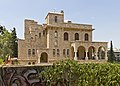
Zografou preserves several notable museums and historical sites that highlight its , spanning 20th-century architecture, religious landmarks, and ancient remnants. The G. Gounaropoulos Museum, situated in the former home and workshop of the avant-garde painter Giorgos Gounaropoulos in the Ano Ilisia neighborhood, features a collection focused on 20th-century , including over 40 oil paintings and drawings by the artist, alongside his personal equipment, photographs, books, and other items. Founded in 1979 following a 1978 donation to the Municipality of Zografou by Gounaropoulos's son , the museum serves as a dedicated space to showcase and promote the painter's contributions to artistic expression. The Anthousa Tower, a square-structured edifice of unknown construction date known locally as "Koula" located on the slopes of Mount Hymettus near the Asteriou in Zografou's eastern periphery. Nearby, the Villa Zografou exemplifies neoclassical from the , originally constructed as a three-story mansion on a 14-acre estate and declared public property in 1974; it currently hosts the Municipal Conservatory and functions as a venue for cultural activities. As of September 2025, the villa is undergoing a €9.2 million funded by the Region of to establish it as a sustainable green cultural hub, incorporating enhancements such as an upgraded open-air theater, , , rest areas, and , with completion targeted for mid-2027. This initiative reflects ties to Zografou's modern development history by revitalizing historic structures for contemporary community use. Adjacent to Zografou, the Kaisariani Monastery, a Byzantine foundation from the , serves as a key cultural landmark with well-preserved frescoes and architecture, influencing the area's heritage. Religious sites form a core of Zografou's heritage, with the Agios Therapontas Church serving as the primary parish in the municipal center; its construction commenced in 1816 and concluded in 1880, embodying neoclassical influences amid the post-Ottoman era. Complementing these, remnants of the ancient Ilissos River persist in Zografou, notably within a 4,500 m² ecological zone at the municipal borders with and Papagou, safeguarding fragments of high architectural and natural value from antiquity.

Cultural and Community Life

Zografou's cultural landscape is predominantly shaped by its large student population, primarily from the (NTUA) and other nearby institutions, fostering a lively scene of cafes and bars that serve as social hubs for young residents and visitors. Establishments like Psi Cafe Bar and Junction in the Yard offer cozy spaces for coffee, light meals, and casual gatherings, reflecting the area's youthful energy and affordability. This student-driven atmosphere extends to outdoor venues such as the open-air Cine Zografou, a municipal cinema that hosts summer screenings under the stars, drawing crowds for classic and contemporary movies in a relaxed setting. Annual festivals and university arts weeks further animate the community, with events organized by NTUA highlighting creative expression among students. For instance, the European Researchers' Night transforms the Zografou campus into a of , , and interactive exhibits, while the Displaced Artists features concerts, readings, and performances that blend global perspectives with local talent. These gatherings, often held in and , promote and attract both locals and international attendees, emphasizing Zografou's role as an educational and creative epicenter. Community life revolves around accessible green spaces and inclusive events, enhanced by the proximity to Mount Hymettus' trails, where parks and aesthetic forests provide venues for and outdoor activities. The ESN NTUA organizes regular Hymettus hikes, encouraging social bonds among diverse groups, while multicultural events stem from the influx of international students, including orientation days and folk-inspired performances that celebrate global heritages. In 2025, green initiatives gained momentum with the €9.2 million redevelopment of Villa Zografou, transforming the historic site into a sustainable cultural hub with expanded parks, pedestrian paths, and eco-friendly features, set for completion by mid-2027. The arts scene thrives through local theaters and music venues, where high population density—driven by student housing and urban compactness—encourages the use of shared communal spaces for performances and gatherings. The Zografou Open-Air Municipal Theater, located within the Villa Zografou grounds, hosts plays, concerts, and community shows, adapting to the area's dense layout by prioritizing multifunctional outdoor areas that facilitate spontaneous cultural interactions. This density influences the vibrancy of smaller spots in cafes and bars, which often feature live sessions, turning everyday locales into extensions of the artistic community without requiring large-scale infrastructure.

Sports

Football and Multi-Sport Clubs

Asteras Zografou FC is a prominent football club in Zografou, established in 1966 through the merger of the historic Asteras Athinon—founded in 1923—and A.O. Zografou, which dated back to 1947, after the former relocated from Gyzi to Zografou in 1965. The club quickly rose in the ranks, securing the title in the 1966-67 season, though a promotion to the Beta Ethniki was blocked by political circumstances under the . Over the years, it has earned two Football Clubs Association (EPS Athens) championships in 1972-73 and 1997-98, along with the EPS Athens Cup in 1998-99, highlighting its regional prowess. Today, Asteras Zografou competes in the lower divisions of Greek football, such as the B' EPS Athens regional league (as of 2025), fostering local talent through community-based programs. Ilisiakos A.C., founded on July 1, 1927, operates as a multi-sport organization with dedicated sections in football and athletics, contributing to Zografou's sporting heritage since its inception. The football team, known as the "Canaries," has competed across various tiers of Greek football, including stints in the Football League (second division) and currently in the Gamma Ethniki (third division), where it has demonstrated consistent regional competitiveness through promotions and cup runs. Notable regional successes include multiple participations in the Athens FCA leagues and advancements in the Greek Cup, such as reaching the quarter-finals in earlier editions. The athletics section supports track and field events, aligning with the club's emphasis on broad athletic development. Ilisiakos plays a key role in nurturing youth athletes, integrating sports into the local community's fabric. Zografou's sports infrastructure bolsters these clubs through well-maintained municipal facilities designed for both elite and amateur use. The Grigoris Lambrakis Municipal Stadium, located at Agiou Therapontos and Orionos streets, features a 105x68.5-meter with natural grass, a 400-meter six-lane , and seating for 2,700 spectators, serving as the primary home ground for local teams like Ilisiakos and hosting youth academies that emphasize student involvement from nearby universities and schools. Complementing this is the Goudi Athletic Center in Goudi Park, which includes a 105x46.85-meter football field with fourth-generation , accommodating around 400 athletes daily from clubs and educational institutions, and promoting multi-sport activities including training sessions tied to regional youth programs. These venues ensure accessible opportunities for budding talents, with ongoing upgrades enhancing safety and usability for community .

Basketball and Other Activities

EFAO Zografou B.C., established in 1986 as Filathlitikos A.O. Zografou, serves as a key club in the Zografou area, competing in the Greek National League 2 for its men's team and the B Basket League for women. The club emphasizes grassroots development, offering structured programs that nurture local talent from an early age, including academies and age-group teams that integrate community members into competitive play; notable former players include NBA star , who began his career there. These initiatives focus on skill-building and physical fitness, drawing participants primarily from Zografou's neighborhoods and nearby university students. Beyond , Zografou supports a range of recreational activities through multi-sport organizations like Ilisiakos, which maintains active sections in and . The Ilisiakos team, competing in national divisions, hosts training sessions and matches that promote team sports among residents, while its programs include events tailored for youth and adults. These offerings overlap with broader club structures but highlight Zografou's emphasis on accessible, non-professional pursuits. Complementing organized club sports, the nearby mountain provides extensive trails, such as the 5-mile loop from Zografou through the Aesthetic Forest to Kaisariani Monastery, ideal for outdoor activities like and nature walks that engage locals in low-impact exercise. Sports in Zografou foster strong community ties, with annual events including student tournaments organized by institutions like the (NTUA), where thousands of participants engage in , , and other activities each year. These gatherings, such as indoor championships and competitions, not only build athletic skills but also enhance social cohesion among residents and students, contributing to the area's vibrant recreational landscape.

Transport

Road Infrastructure

Zografou's road network is anchored by the A62 , a key motorway that bypasses the municipal center and links Zografou to southeastern suburbs, , Argyroupoli, and the . This 8-kilometer extension, featuring 5.5 kilometers of tunnels and three lanes per direction, connects via the Katehaki interchange and alleviates pressure on inner-city routes by diverting through-traffic away from residential areas. Mesogeion Avenue serves as a vital arterial connection, providing direct access from Zografou to central and handling substantial daily vehicular flow as a six-lane corridor flanked by mid-rise buildings. The municipality's internal road grid, characterized by a high density of narrow streets—66.4% of which are 5-7 meters wide—supports local movement but intensifies traffic in commercial hubs like Papagou Avenue, where volumes peak during peak hours. Post-2004 Athens Olympics infrastructure upgrades significantly enhanced Zografou's connectivity within the broader Attica region, with approximately 90 kilometers of new roads constructed and 120 kilometers widened to improve flow and capacity. These developments, including optimizations to the Hymettus Ring Road, integrated computerized traffic management systems to monitor and direct vehicles more efficiently. In 2025, initiatives like the International Symposium on Traffic Management in Athens advanced discussions on deploying smart systems, such as real-time monitoring and incident response technologies, to Attica's motorways including those serving Zografou. Persistent challenges include heavy congestion stemming from student commuting to the , which overloads local roads and contributes to and delays. Parking shortages compound these issues, with only 5,913 legal spaces available after adjustments for sidewalk compliance, resulting in saturation in central areas and spillover into residential streets—equating to roughly one space per four residents based on municipal data. The road infrastructure briefly intersects with public transit corridors to support hybrid travel options.

Public Transit Systems

Zografou's public transit system primarily relies on bus services operated by the Athens Urban Transport Organisation (OASA), providing essential connectivity to central and surrounding areas. Key routes include line 220, which runs from Akademia to Ano Ilissia, line 230 from Akropolis to Zografou, and line 608 from Galatsi via Akademia to Zografou Cemetery, among others such as 221 and 242 that directly serve the university campuses. These lines facilitate frequent access for residents and students, with approximately 20 routes operating in the area to support the dense concentration of educational institutions. Future enhancements include the extension of Line 4, which will introduce three stations in Zografou as part of its 15-station route from Alsos Veikou to Goudi. Construction began in 2021, with completion now expected no earlier than 2031 following significant delays; as of late 2024, tunnel boring is advancing, with key sections targeted for completion by 2026. This will promise improved links to the broader metro network, including Line 3 for access to and southern suburbs via interchanges at stations like Evangelismos. Alternative mobility options emphasize non-motorized transport, with a limited network of bike lanes totaling around 10 km, including a dedicated 4 km path within the Zografou University Campus. Pedestrian paths offer scenic routes to Mount Hymettus, such as trails through the Kaisariani Aesthetic Forest starting from neighborhood edges.

Notable People

Academics and Politicians

Ioannis Zografos (1844–1927) was a prominent Greek economist, politician, and university professor whose contributions shaped the early development of the Zografou area. Serving as a , he acquired significant land in the region around 1902, which he later donated to facilitate settlement and urban growth, earning the suburb its name in his honor. As a professor at the University of Athens, Zografos influenced and education during the late 19th and early 20th centuries. His son, Sotirios Zografos, continued the family's legacy in local governance as the first of Zografou following its elevation to municipality status in 1947. During his tenure, he oversaw initial infrastructure expansions amid post-war . Subsequent mayors, such as Dimitris Beis (1964–1967), focused on community stabilization and basic services in the emerging suburb. In more recent decades, figures like Vasilis Thodas, mayor from 2014 to 2023 and a Zografou native, advanced municipal projects including green spaces and educational facilities, reflecting the area's ties to the . The current mayor, Tina Kafatsaki, elected in 2023 and serving as of 2025, has prioritized cultural preservation and , such as the redevelopment of historic Villa Zografou into a green hub. Athanassia Zografou, a contemporary scholar, serves as Professor of at the , specializing in , sacrificial practices, and magic. Holding a BA in from and a PhD from the in , her work includes influential studies on ritual texts and polytheism, such as analyses of Hecate's role in .

Artists and Public Figures

Zografou, a suburb of , has been home to several prominent figures in , particularly through residences, studios, and cultural institutions that highlight their legacies. The area hosts two significant museums dedicated to artists who had strong ties to the neighborhood, underscoring its role in preserving Greek artistic heritage. One of the most iconic figures associated with Zografou is the actress Marika Kotopouli (1887–1954), a trailblazing performer in Greek theater during the early . Kotopouli, renowned for her tragic roles and contributions to modern Greek drama, constructed a neoclassical summer villa in Zografou in 1926, which served as her holiday residence amid the area's then-rural landscape. This building, one of the earliest structures in the emerging settlement, now operates as the Marika Kotopouli Museum, housing personal artifacts, theatrical memorabilia, and collections that reflect her influence on Greek performing arts. During , the villa was requisitioned by occupying forces, but it was restored post-war to honor her legacy. Actor Nikos Kourkoulos (1934–2007) grew up in Zografou, where his early life in the working-class district shaped his grounded approach to theater and film. A leading figure in post-war Greek cinema and stage, Kourkoulos starred in over 50 films, including international productions, and served as artistic director of the National Theatre of from 1992 to 2002, promoting contemporary Greek plays. His childhood passion for football in Zografou's local clubs influenced his athletic on-screen personas, blending physicality with dramatic depth in roles that earned him acclaim across . The painter Giorgos Gounaropoulos (1889–1977), a key member of Greece's Generation of the '30s, maintained his house-studio in Zografou's Ano Ilisia neighborhood, where he developed his distinctive line-art style inspired by ancient Greek pottery and Byzantine icons. After relocating from to in 1906, Gounaropoulos spent much of his later career in this space, producing dreamlike landscapes and female figures that bridged and tradition. In 1979, his family donated the property to the Municipality of Zografou, establishing the G. Gounaropoulos Museum, which displays over 40 oil paintings, drawings, and personal items, making it a cornerstone of the area's artistic identity. Musician and actor Giannis Savvidakis (born 1963), born in Zografou to a municipal worker father and teacher mother, emerged as a versatile performer in Greek pop and music. Starting his career in the , Savvidakis gained fame through television acting and songwriting, releasing hits that blended traditional Greek melodies with contemporary rhythms; he represented at the 1989 . His early exposure to Zografou's community life informed his relatable, emotive style, contributing to his enduring popularity in Hellenic entertainment.

References

Add your contribution
Related Hubs
User Avatar
No comments yet.