Hubbry Logo
549549Main
Open search
549
Community hub
549
logo
8 pages, 0 posts
0 subscribers
Be the first to start a discussion here.
549
549
from Wikipedia

549 in various calendars
Gregorian calendar549
DXLIX
Ab urbe condita1302
Assyrian calendar5299
Balinese saka calendar470–471
Bengali calendar−45 – −44
Berber calendar1499
Buddhist calendar1093
Burmese calendar−89
Byzantine calendar6057–6058
Chinese calendar戊辰年 (Earth Dragon)
3246 or 3039
    — to —
己巳年 (Earth Snake)
3247 or 3040
Coptic calendar265–266
Discordian calendar1715
Ethiopian calendar541–542
Hebrew calendar4309–4310
Hindu calendars
 - Vikram Samvat605–606
 - Shaka Samvat470–471
 - Kali Yuga3649–3650
Holocene calendar10549
Iranian calendar73 BP – 72 BP
Islamic calendar75 BH – 74 BH
Javanese calendar437–438
Julian calendar549
DXLIX
Korean calendar2882
Minguo calendar1363 before ROC
民前1363年
Nanakshahi calendar−919
Seleucid era860/861 AG
Thai solar calendar1091–1092
Tibetan calendarས་ཕོ་འབྲུག་ལོ་
(male Earth-Dragon)
675 or 294 or −478
    — to —
ས་མོ་སྦྲུལ་ལོ་
(female Earth-Snake)
676 or 295 or −477
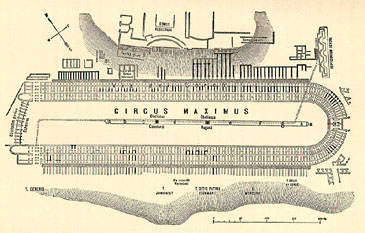
The Circus Maximus in Rome (1911)


Year 549 (DXLIX) was a common year starting on Friday of the Julian calendar. The denomination 549 for this year has been used since the early medieval period, when the Anno Domini calendar era became the prevalent method in Europe for naming years.

Events

[edit]

By place

[edit]

Byzantine Empire

[edit]

Europe

[edit]

Persia

[edit]

Asia

[edit]

By topic

[edit]

Religion

[edit]


Births

[edit]

Deaths

[edit]

References

[edit]
Revisions and contributorsEdit on WikipediaRead on Wikipedia
from Grokipedia
Year 549 (DXLIX) was a common year of the , marked principally by military developments in the Gothic War between the and the . Ostrogothic king , having previously lost to Byzantine forces under in 547, laid siege to the city once more and retook it in late 549 through betrayal by some of the defenders, who opened the gates to his army. To restore normalcy and bolster morale, Totila organized chariot races at the , the last documented such event at the venue after nearly a millennium of use. Concurrently, the initiated the against the Sassanid Persians by besieging the fortress of in , a conflict that would endure until 556. In Iberia, Visigothic king Theudigisel was assassinated and succeeded by Agila amid internal strife.

Events

Byzantine Empire and Mediterranean Conflicts

In 549, the under Emperor faced intensified pressures in the , particularly in , where Ostrogothic forces under King renewed their assault on Roman-held territories. , having consolidated Gothic control over much of the peninsula, besieged for a third time that year, targeting the city recaptured by Byzantine general in 547 after its prior fall in 546. The siege exploited Byzantine overextension and logistical strains, with Totila's forces encircling the city and blockading its aqueducts, leading to severe shortages within its walls. Byzantine defenders, numbering around 3,000–5,000 under commanders like , mounted a vigorous resistance, repelling initial assaults and relying on the city's fortifications, though and desertions eroded their position. 's strategy emphasized , offering clemency to defectors while avoiding total destruction to preserve Rome's symbolic value for potential negotiation with Justinian. The emperor, distracted by eastern fronts and fiscal exhaustion from prolonged campaigns—estimated at over 200,000 pounds of gold expended—delayed reinforcements, recalling from earlier that year amid mutual suspicions and court intrigues. This hesitation allowed to breach the defenses through treachery in late 549 or early 550, sacking the city and reducing its population drastically, with contemporary accounts noting the demolition of key structures like the and aqueducts to hinder future sieges. Mediterranean theaters beyond saw relative stability for , with the reconquered Vandal provinces in secured against Berber revolts through localized campaigns, though and tribal incursions persisted along coastal routes. Justinian's naval dominance ensured supply lines from to Sicilian bases, but the Italian stalemate diverted resources, weakening Byzantine projection into the western Mediterranean against emerging Frankish and Lombard threats. The year's conflicts underscored the empire's strategic overreach, as Gothic resilience prolonged devastation across , depopulating regions and fostering economic collapse amid ongoing plague aftermaths.

Western Europe

In , the experienced significant political upheaval in 549. King Theudigisel, who had been elected in 548 following the assassination of his predecessor , was murdered during a feast in after a of approximately one year. records this event as indicative of the instability plaguing Visigothic successions, often marked by violence among the . Agila I was elected king later in 549 to succeed Theudigisel, as noted by chroniclers including Iordanes. His accession did not stabilize the realm; opposition from regional elites, particularly in the south, quickly emerged, setting the stage for a that persisted through his reign until 554. This conflict, exacerbated by a rebellion in in 550 where Agila lost royal treasures and his son was killed, weakened Visigothic control and prompted rival claimant to seek Byzantine military aid from Emperor , leading to the establishment of a Byzantine foothold in southeastern . In the Frankish kingdoms of , the Merovingian rulers—divided among brothers including Chlotar I, , and —maintained relative continuity without documented major upheavals in 549, amid ongoing consolidation of authority over former Roman territories. The period reflected the fragmented yet expanding nature of Frankish power, with no recorded battles or successions that year.

Persia and Near East

In 549, the Sassanid Empire under King continued its military efforts in the against the , focusing on securing control over (modern western Georgia), a strategic region providing access to trade routes and Caucasian passes. A Persian expeditionary force commanded by General Phabrizus advanced into Lazica to reinforce the garrison at the fortress of , which had been captured by Sassanid forces earlier in the war. However, magister militum , allied with Lazic King Gubazes II, intercepted the Persians along the Phasis River (modern River), where the invaders' army was decisively defeated in a surprise engagement, suffering heavy casualties and forcing Phabrizus to retreat. Emboldened by the victory at Phasis, Dagisthaeus and Gubazes marched on , initiating a against its Sassanid defenders in late 549. The fortress, perched on a steep cliff and well-supplied, withstood the assault despite Byzantine numerical superiority; harsh winter conditions, inadequate siege equipment, and logistical strains—including shortages of food and fodder for the army's horses—compelled the attackers to abandon the effort after several months, withdrawing without capturing the stronghold. This failed operation marked a temporary setback for Byzantine ambitions in but highlighted the Sassanid Empire's resilient frontier defenses, prolonging the conflict into subsequent years amid ongoing border skirmishes in and Iberia. No major internal upheavals or administrative reforms in the Sassanid heartland—centered in and —are recorded for 549, with prioritizing stabilization after the Plague of Justinian's earlier devastations and focusing resources on the western fronts. The year's events underscored the Sassanid strategy of projecting power into the Near Eastern highlands to counter Byzantine influence, though the Phasis defeat temporarily disrupted Persian momentum in the .

Asia and Beyond

In southern , the faced existential crisis amid the Hou Jing rebellion, which had erupted in 548 when the general Hou Jing—initially a defector from the —turned against Emperor Wu (r. 502–549) after failed negotiations for greater autonomy. By early 549, rebel forces had breached the defenses of the capital (modern ), leading to widespread famine and chaos as Hou Jing's troops looted granaries and massacred officials. Emperor Wu, Xiao Yan, who had devoutly patronized and implemented policies favoring monastic institutions, retreated to a Buddhist but refused food in a display of , dying of starvation on June 7 at age 85. His death triggered succession disputes among imperial princes, fragmenting Liang authority and enabling Hou Jing to install puppets while northern powers exploited the vacuum. In the north, the (534–550), effectively controlled by regent Gao Huan, maintained fragile stability amid rivalries with the , but no major recorded battles or shifts occurred precisely in 549; the period's endemic warfare persisted without decisive resolution until Gao Huan's death in 547 had already set the stage for his son Gao Yang's usurpation in 550, founding the . Further east, the Korean kingdoms of , Baekje, and continued territorial consolidations without documented events tied to 549, while Japan's Yamato polity under the Imperial House focused on internal clan alliances and early Buddhist introductions from the continent, predating significant state-level conflicts. In India, the post-Gupta saw ongoing fragmentation with regional powers like the Vakatakas waning and Chalukya precursors emerging in the Deccan around mid-century, but Hephthalite (Huna) incursions had peaked earlier under (r. c. 515–534), leaving no verified upheavals specific to 549.

Epidemics and Environmental Factors

Plague of Justinian and Its Conclusion

The , identified through analysis as caused by the bacterium , emerged in 541 CE near in and disseminated via maritime trade routes across the and beyond. Eyewitness accounts from the Byzantine historian describe its arrival in in early 542 CE, where it inflicted severe mortality, with reported daily deaths escalating to 10,000 during the peak months of to October. Symptoms included sudden fever, , swollen lymph nodes (buboes), and frequently fatal septicemia or pneumonic complications, contributing to an estimated exceeding 40% in untreated populations. The epidemic's initial wave ravaged the Mediterranean Basin, claiming an estimated 25–50 million lives across the affected regions, equivalent to roughly half the Byzantine Empire's population and severely impairing , tax revenues, and urban administration. In alone, noted the exhaustion of burial capacity, leading to mass cremations and shallow graves outside city walls, while Emperor himself contracted but survived the disease in 542 CE. Recurrences struck intermittently, including documented outbreaks in in 546 CE, 547 CE, and notably in 549 CE, when the plague reemerged in the spring, prolonging societal disruption amid ongoing wars with Persia and reconquests in the West. By late 549 CE, the intensity of the primary outbreak had waned in core Byzantine territories, marking the subsidence of the most acute phase, though Y. pestis persisted in rodent reservoirs, triggering at least 18 subsequent waves across , the , and until approximately 750 CE. This prolonged endemicity, rather than a definitive eradication, underscores the plague's role as a structural shock to , exacerbating depopulation, labor shortages, and fiscal strain without evidence of acquired or effective interventions beyond rudimentary attempts. Modern genomic studies affirm the pathogen's continuity with later strains like those of the , rejecting alternative diagnoses such as or hemorrhagic fever based on inconsistent symptom profiles in primary sources.

Religion and Cultural Developments

Religious Events and Figures

In 549, the Three Chapters Controversy intensified within the Chalcedonian Church, as Western bishops reacted strongly against Pope Vigilius' Judicatum of 548, which partially endorsed Emperor Justinian I's condemnation of writings by Theodore of Mopsuestia, Theodoret of Cyrrhus, and Ibas of Edessa. Bishops in Illyricum convened a synod to reject the Judicatum, viewing it as a compromise with Monophysite positions that undermined the Council of Chalcedon's (451) affirmations. Similarly, North African bishops, led by figures like Victor of Tunnuna, formally excommunicated Vigilius for this stance, exacerbating schisms between Rome and Constantinople amid Justinian's efforts to unify Christological doctrine across the empire. These regional condemnations highlighted deepening theological divides, with Western clergy prioritizing defense of Chalcedonian orthodoxy against perceived imperial overreach in doctrinal matters. Key figures included (r. 537–555), who navigated intense pressure from Justinian after his 545 relocation to , issuing the Judicatum under duress but facing backlash that isolated him from Latin sees. Vigilius' vacillations—initial resistance followed by partial acquiescence—drew criticism from rigorist defenders like Facundus of Hermiane, whose later Pro Defensione Trium Capitolorum (c. 550s) articulated Western opposition, arguing the chapters' condemnation risked reopening Nestorian debates settled at . In , under Byzantine reconquest, Bishop Maximian consecrated the on May 5, 549, a structure exemplifying imperial Orthodox patronage with mosaics emphasizing Chalcedonian themes amid disruptions. Missionary activity extended eastward, with reports of Christian conversions among the White Huns (Hephthalites) around 549, potentially linked to Nestorian efforts from Persian or Central Asian communities, though details remain sparse and tied to broader 6th-century expansions beyond imperial borders. These events underscored the era's tensions between imperial unification drives, regional autonomies, and doctrinal purity, presaging the Second Council of (553).

Notable Individuals

Births

Jizang (549–623 CE), a Chinese Buddhist and exegete of Parthian descent, was born in 549 CE in Jinling (modern ). He systematized the Sanlun (Three-Treatise) school, drawing on Nāgārjuna's and other foundational texts to emphasize the doctrine of (śūnyatā) and the reconciliation of provisional and ultimate truth. Jizang's key contributions include commentaries like the Erdi yi (Treatise on the Two Truths), which employed dialectical methods to resolve apparent contradictions in scriptures, influencing later East Asian Buddhist thought during the Sui and early Tang dynasties. He received patronage from rulers across the Chen, Sui, and Tang regimes, establishing major monasteries such as Huiri si in . Historical records, including Tang-era biographies, confirm his birth year through temple and dynastic annals, though exact day and month remain undocumented. No other births of comparably documented historical figures are attested for 549 CE in primary sources from Byzantine, European, Persian, or other contemporary regions.

Deaths

Theudigisel, king of the since early 548 following the assassination of his predecessor , was murdered by his own men at a banquet in after reigning for about one year. records that Theudigisel's followers killed him during the feast, reportedly due to his perceived arrogance and favoritism toward slaves and former enemies in his administration. His death led to the succession of Agila I as king.

References

Add your contribution
Related Hubs
User Avatar
No comments yet.