
AC Monza
View on Wikipedia
Associazione Calcio Monza (Italian pronunciation: [ˈmontsa] ⓘ), commonly referred to as Monza, is a professional football club based in Monza, Lombardy, Italy. The team plays in the Serie B, the second tier of Italian football, following relegation from Serie A in the 2024–25 season.
Key Information

.svg)


Founded in 1912 as Monza FBC, the club spent much of its history in the lower divisions, narrowly missing promotion to the Serie A on several occasions in the 1970s. Monza faced financial difficulties in the early 21st century, resulting in bankruptcy in 2004 and 2015. After being acquired by Silvio Berlusconi in 2018, the club returned to the Serie B in 2020 after a 19-year absence and secured its first-ever promotion to Serie A in 2022. Before that, Monza held the record for most Serie B seasons (40) without a top-flight appearance.
Monza have won the Coppa Italia Serie C a record four times, the Serie C championship four times, and an Anglo-Italian Cup. The club originally wore blue and white, but adopted their current red and white colours in 1932; as a result, the team are nicknamed i biancorossi (the white and reds). Since 1988, Monza have played home matches at the Stadio Brianteo. The club's main rivals include Como, Pro Sesto and Pisa.
History
[edit]Foundation and first tournaments (1912–1927)
[edit]
Monza Foot-Ball Club was founded on 1 September 1912[1] in the Cappello Vecchio trattoria,[2] following the merger of the Monza-based clubs Pro Italia and Pro Monza.[3] The new club established their first headquarters in the Roma coffeehouse located on the similarly named town square in Monza;[1] the team initially wore a blue and white kit.[3] Monza's first recorded game was against a team from Milan,[4] while their first win came on 20 September 1912 when they beat Juventus Italia 2–1 in Triante.[5] The club won their first trophy, the Coppa Colli, in early 1913 after beating Saronno 3–2 in the final.[6]
In November 1913, Monza FBC merged with Juventus FBC (a group of athletes formerly part of the Forti e Liberi sports club)[7] to form Associazione Calcio Monza.[8] Monza first participated in the Terza Categoria (third level) in the 1913–14 season; they played their first match on 4 January 1914,[9] losing 3–1 at home against Fanfulla.[10] The following season, Monza took part in the Promozione (second level),[11] finishing fourth in their group of six.[12] Despite the outbreak of World War I, when conscription forced teams to send their adult players to war, Monza were able to continue their sporting activity with young players.[13]
Between 1915 and 1918, the war interrupted official tournaments.[14] Upon the resumption of football in 1919,[14] Monza took part in the 1919–20 Promozione (second level).[15] Having finished first in their group,[16] Monza played the promotion finals against Trevigliese, losing 2–1.[17] The Italian Football Federation, however, decided to promote Monza via repechage,[17] and the team were allocated to the Prima Categoria, the top tier of Italian football.[18] In 1919, Monza hosted the Czechoslovakia military national team[19] for a friendly game at Grazie Vecchie field that ended in a 1–1 draw.[20]
Monza were grouped with Milan, Cremonese and Pro Patria in their qualifying group for the Prima Categoria.[20] Their first game was played on 24 October 1920, a 4–1 home defeat to Milan; Francesco Mandelli scored Monza's lone goal.[21] They finished the 1920–21 season with no points and in last place in their group.[22] The following season, Monza finished second in their group, missing out on the final stage by one position.[23] Due to a restructuring of the league system, Monza were moved to the Seconda Divisione (second level) for the 1922–23 season;[24] they avoided relegation by beating Chiasso and Canottieri Lecco in the play-offs.[25] In 1926–27, after beating Ponziana 3–2 in the final, Monza were declared champions of the Seconda Divisione Lega Nord (third level) and were promoted to the Prima Divisione (second level).[26]
Biancorossi and Serie B promotion (1932–1953)
[edit]
During the 1930s and 1940s Monza played in the Prima Divisione (third level), which became the Serie C in 1935.[27] In September 1932, ahead of the 1932–33 season, Monza changed their shirt colours to red and white, which they have worn ever since.[28] They became nicknamed "i biancorossi" (the white and reds) following the colour change.[28] Monza finished in first place the following season and played a round-robin tournament with three other teams for promotion to the Serie B (second level); they finished fourth and failed to move up to the second level.[29] On 23 April 1939, the club reached the Coppa Italia quarter-finals, losing 2–1 to Serie A side Genoa.[30][31] They became the first Serie C team to reach the quarter-finals of the competition.[32]
Between 1942 and 1945, World War II interrupted football in Italy.[33] Following the war, Monza were placed in the Serie C (third level), finishing eighth in the 1945–46 season.[34] They came close to promotion the following season, finishing third in the promotion play-offs.[35] In 1947, Peppino Borghi became president of Monza.[36] Monza, who were coached by Annibale Frossi, headed into the 1950–51 Serie C with a strong transfer campaign.[37] On 4 June 1951, Monza played away to Omegna in the season's second-to-last match; Carlo Colombetti of Monza scored the match's only goal with a penalty kick,[38] giving Monza their first promotion into the Serie B.[39]
Monza debuted in the Serie B on 9 September 1951, drawing to Siracusa 1–1 away from home.[40] The team only avoided relegation on the last matchday with a 2–1 home win against Piombino.[41] Against most experts' pre-season expectations, Monza finished the 1952–53 Serie B in fourth position, three points behind automatic promotion in second place.[42]
Simmenthal merger and aftermath (1955–1967)
[edit]In July 1955, ahead of the 1955–56 season, Monza merged with Prima Divisione (sixth level) side GS Simmenthal, the football club of the Simmenthal food company.[43] AC Monza was renamed AC Simmenthal-Monza, and was headed by Simmenthal owner Claudio Sada.[44] The merger helped fund subsequent transfer campaigns.[43] The match between Monza and Verona on 8 October 1955 was the first free-to-air televised match in Italy.[45] Monza's first season under the new management was positive, finishing the season in third place.[46] In the following years, until the end of their merger in 1964, Monza alternated positive seasons (fourth and fifth place in 1958 and 1961, respectively) with negative ones (16th and 15th in 1960 and 1964).[47] On 14 July 1964, Simmenthal ceased to sponsor Monza and the club reverted to its former name.[48]
Despite Monza's stable financial situation,[b] no one was interested in purchasing the club; Sada decided to remain president for the following season.[50] While Monza barely avoided relegation in the 1964–65 season,[51] the same could not be said about the next season: following 15 years of second-tier football, Monza were relegated to the Serie C in the last matchday of the season,[52] drawing 0–0 away to Mantova on 19 June 1966.[53] After winning the 1966–67 play-off game against Como 1–0, thanks to a lone goal by Gianluigi Maggioni in the 32nd minute, Monza were promoted back to the Serie B after one year.[54]
Serie A promotion attempts (1969–1979)
[edit]
Three years after their Serie B promotion, Monza came close to reaching the Serie A for the first time in the 1969–70 Serie B under coach Luigi Radice; they needed an away win against first-placed Varese to keep their promotion chances alive on the second-to-last matchday.[55] On 7 June 1970, after just two minutes of play, Monza took the lead through Roberto Caremi; in the sixth minute, Giampaolo Lanzetti failed to double the lead, wasting a clear chance in front of the goal.[56] Varese won 2–1, preventing Monza from gaining promotion.[56]
In mid-1972, Giovanni Cappelletti became president of the club.[57] In his first year in charge, Monza were relegated to the Serie C after losing the last match of the 1972–73 season away to Bari 3–1.[58] Despite their relegation, Monza saw success in the Coppa Italia Semiprofessionisti, reaching the finals in 1974, 1975 and 1976, winning the first two over Lecce and Sorrento, and losing the third in a repeat of the first final.[59] Five matches before the end of the 1975–76 season, Monza were promoted back to the Serie B;[60] they also won an Anglo-Italian Cup on 19 June 1976, beating Wimbledon 1–0 in the final through a Francesco Casagrande goal.[61]
During the late 1970s, Monza came close to gaining promotion to the Serie A on multiple occasions.[62] The first time was as a newly promoted team in the 1976–77 season, when they lost the season's final match 2–1 against Modena through an 81st-minute own goal.[63] The following season went in a similar fashion for Monza, losing out to direct promotion in the second-to-last matchday against Pistoiese.[64][65] In the 1978–79 Serie B season Monza again missed out on promotion in the final matches, being defeated by already-relegated Lecce in the second-to-last match.[66] Monza tied with Pescara on points for third place and the two sides played a promotion tie-breaker, which Monza lost 2–0.[67] In Cappelletti's last season as president, in 1979–80, Monza failed to gain promotion to the top flight for the fourth consecutive year. Four games from the end of the season, Monza were in third place in a spot for direct promotion; decisive defeats against Cesena and Brescia meant that Monza finished in fifth place, three points from Serie A promotion.[68]
Valentino Giambelli presidency (1980–1999)
[edit]
Valentino Giambelli became the club president in 1980,[69] succeeding Cappelletti, and the club was renamed Calcio Monza.[70] In the 1980–81 Serie B, Monza played in a championship with historical sides Milan and Lazio;[71] both of whom had been relegated from the Serie A following the 1980 Totonero scandal.[72] Monza finished in last place and were relegated to the Serie C1 (third level),[69][73] but were promoted back one season later.[74][75] They remained in the Serie B for a further four seasons before being relegated in 1986.[76]
In the 1986–87 Serie C1, players such as Alessandro Costacurta, Francesco Antonioli and Pierluigi Casiraghi, who later became established names in Italian football, made their professional debuts with Monza.[62] Captained by Pierluigi Frosio, Monza gained promotion to the Serie B in the 1987–88 season,[77] and also won their third Coppa Italia Serie C,[c] beating Palermo 2–1 at home following a goalless draw away.[79] The second leg, which was played on 11 June 1988, was Monza's last game in the Stadio Gino Alfonso Sada, after which the team moved to the newly constructed Stadio Brianteo.[80] The first match was played at the new stadium on 28 August 1988, when over 10,000 spectators attended Monza's Coppa Italia game against Serie A club Roma; against expectations, Monza won 2–1 with goals by Casiraghi and Carmelo Mancuso.[81]
After having closely avoided relegation in 1988–89 on goal difference,[82] Monza lost the 1989–90 Serie B relegation play-off against Messina on 7 June 1990, and were relegated to the Serie C1.[83][84] On 13 June 1991, Monza won a record fourth Coppa Italia Serie C, beating Palermo in the final.[85][86] They gained promotion to the Serie B in the 1991–92 season[87][88] but two years later, Monza finished the 1993–94 season in last place and returned to the third tier.[89]
In March 1997, Giambelli signed a collaboration agreement with Milan and Monza became a satellite team of the Rossoneri,[90] the first of its kind in Italy.[91] In June 1997, Monza returned to the Serie B after defeating Carpi 3–2 in the promotion play-off final; they were coached by Luigi Radice, who had also helped them to promotion 30 years prior.[92] The following season, newly promoted Monza changed most of their roster, introducing young players, many of whom came from Milan's youth sector.[93] The team closed the season having been on the verge of relegation.[94]
Financial instability (1999–2018)
[edit]
In April 1999,[91] after 19 years of presidency, Giambelli left the club amid criticism from fans concerning Monza's close connection with Milan and their CEO Adriano Galliani.[95] With Giambelli's departure, Monza ceased to be Milan's satellite team.[91] The club entered a period of instability, changing owners twice in five years. Monza were relegated to the Serie C1 in 2001[96] and then, for the first time, to the Serie C2 (fourth level) in 2002.[97][98] Amid Monza's financial troubles, on 31 December 2003 the comune of Monza cut the supply of water and gas of Stadio Brianteo after the club was unable to pay the bills;[99] Monza was forced to play home games at Stadio Breda in neighbouring Sesto San Giovanni.[98]
On 18 March 2004, Monza was declared bankrupt.[100] On 3 June the same year, the club was acquired by Atalanta vice-president Gian Battista Begnini,[101] who renamed it AC Monza Brianza 1912.[102] Monza took part in the 2004–05 Serie C2; despite being eliminated in the promotion play-off semi-finals, they were admitted into the Serie C1 via repechage.[103] Monza twice came close to promotion to the Serie B, losing two consecutive play-off finals. In the 2005–06 season, after having lost at home 2–0, Monza won the away leg to Genoa 1–0, having missed many chances to score further goals.[104] The 2006–07 season was even more dramatic: in the first leg at home, Monza beat Pisa thanks to a 74th-minute penalty.[105] In the second leg, a first-half goal by Pisa forced the game into extra time, and Pisa scored again to secure promotion at Monza's expense.[106]
On 13 July 2009, Begnini sold the club to the PaSport holding company, headed by former Milan player Clarence Seedorf.[107] The new ownership did not last long: in 2012 the club was relegated to the Serie C2 and, on 12 May 2013, was sold to Anthony Armstrong Emery.[108] Following broken promises regarding an increase in finances in the club, Monza was sold again, on 12 December 2014, to Dennis Bingham for €1.[109] The new president was contested straight away by fans for not paying the players' salaries.[110]
Following the club's sale to Piero Montaquila in March 2015,[111] Monza won the 2014–15 Lega Pro relegation play-offs against Pordenone, and were due to remain in the third level the following season.[112] However, Monza were declared bankrupt on 27 May.[113] The club was acquired by Nicola Colombo on 2 July that year and was renamed SSD Monza 1912.[114] Monza registered to the Serie D (fourth level) on 31 July[109] and finished the 2015–16 season mid-table.[115] In May 2016, the club changed its name to SS Monza 1912 and achieved promotion back to the Serie C under coach Marco Zaffaroni in 2017.[116] Having won Group B of the Serie D, the team took part in the competition's poule scudetto (a post-season competition to determine the best non-professional Italian team); they won the Scudetto Serie D trophy after defeating Ravenna 2–1 in the final.[117]
Berlusconi presidency (2018–2025)
[edit]On 28 September 2018, the holding company Fininvest, which was headed by former Milan president Silvio Berlusconi, announced its acquisition of Monza for approximately €3 milion;[118] Monza-born Adriano Galliani, formerly CEO of Milan, also became part of the board of directors.[119] The Berlusconi–Galliani duo had been one of the most successful leaderships in football history, having won 29 trophies with Milan between 1986 and 2016.[120] According to Forbes's 2021 ranking, Berlusconi was the richest owner of a football club in Italy, and ninth worldwide, with his fortune being valued at $7.6 billion.[121]
In the first season under the new leadership, Monza finished the 2018–19 Serie C in fifth place with Cristian Brocchi as coach,[122] and lost to Viterbese in the final minute of the Coppa Italia Serie C final.[123] On 1 July 2019, the club returned to its historical name AC Monza.[124] Aiming for direct promotion to the Serie B, Monza reinforced their squad with players with Serie A experience to prepare for the 2019–20 season.[125] In March 2020, Monza held first position with a 16 point-lead over second-placed Carrarese.[126] The same month, the Lega Pro committee announced the suspension of the league due to the COVID-19 pandemic.[127] On 8 June, the Italian Football Federation formally declared Monza champions and the team were promoted to the Serie B after a 19-year absence from the competition.[128]
Monza headed into the 2020–21 Serie B as the club most likely to finish in first place, according to most bookmakers.[129] Having finished the first half of the season in second place,[130] in a spot for direct promotion, Monza dropped one position at the end of the season and took part in the promotion play-offs;[131] they lost to Cittadella 3–2 on aggregate in the semi-finals.[132] Brocchi was dismissed at the end of the season, and was replaced by Giovanni Stroppa as head coach.[133]
In the 2021–22 season, Monza lost to Perugia and missed out on direct Serie A promotion in the last matchday.[134] Having finished in fourth place,[135] Monza played the play-off semi-finals where they defeated Brescia and reached the final against Pisa.[136] Monza won the first leg at home 2–1, while Pisa won the second leg 3–2.[137] Two goals in extra time by Monza won them the encounter 4–3 (6–4 on aggregate), to earn promotion to the 2022–23 Serie A for the first time.[138] Prior to their promotion, Monza had competed in 40 Serie B seasons, the most of any Italian club without ever being promoted to the first division.[139] Christian Gytkjær was key to helping Monza to promotion, scoring five goals in the playoffs.[140]
Serie A (2022–2025)
[edit]
Monza began their Serie A season on 13 August 2022, with a 2–1 home defeat to Torino; Dany Mota's goal in stoppage time was Monza's first in the Italian top flight.[141] After consecutive defeats in the opening five games, Monza earned their first point in a 1–1 draw to Lecce on 11 September.[142] Sitting in last place with only one point in six games, Monza replaced Stroppa with under-19s head coach Raffaele Palladino.[143] He guided them to their first historic win on 18 September, in an upset 1–0 win against giants Juventus at home thanks to a goal by Gytkjær.[144] In their first top-flight season, Monza mathematically avoided relegation six matchdays in advance; no other team had done so on their Serie A debut.[d][145] Monza eventually finished the season in 11th place with 52 points under Palladino,[146] the highest point tally among newly promoted teams in Europe's top five leagues,[147] and the second-highest point tally for a Serie A debuttee in history.[e][148]
In their second Serie A campaign, Monza again impressed under Raffaele Palladino. Despite the departure of several key players, and the death of owner Silvio Berlusconi in June 2023, the team remained competitive and briefly fought for a European spot. Though the push for eighth place fell short, Monza secured a solid 12th-place finish in the 2023–24 season, confirming their top-flight status.[149]
However, the following season marked a sharp downturn. After Palladino's departure, the club appointed Alessandro Nesta as head coach.[150] Monza endured a poor start, collecting just 10 points from the opening 17 matches, including a single victory.[151] Nesta was replaced by Salvatore Bocchetti, but results failed to improve, with only one win in seven matches.[152] The club then turned back to Nesta, though the change did not bring a turnaround. Monza's relegation was confirmed three matchdays before the end of the season after a 4–0 home defeat to Atalanta.[153] They ended the 2024–25 season in 20th place, returning to Serie B after three consecutive seasons in the top flight.[154] With just 18 points, Monza narrowly avoided matching Salernitana's all-time low tally of 17 points in a 20-team Serie A,[f] recorded the previous season.[155]
Post-Berlusconi era and American ownership (2025–present)
[edit]On 1 July 2025, Fininvest announced an agreement to sell AC Monza to the American investment firm Beckett Layne Ventures in a deal reported at around €45 million, including the club's debts.[118] The agreement provided for the transfer of 80% of the shares during summer 2025, with the remaining 20% to be sold by June 2026.[156] The first closing, giving BLV control with an 80% stake, was completed on 25 September 2025.[157]
Colours and identity
[edit]Colours
[edit]Upon their formation in September 1912, Monza's team wore long-sleeved, blue shirts with a white collar and cuffs.[3] The choice of blue was "forced"; a local cloth dealer, who was a football fan, gave the newly founded club a piece of blue cloth he had not been able to sell for years.[3] Following World War I, in the 1919–20 Promozione, the countless washes faded the shirts' colours from blue to white, and they were replaced with new, half-white and half-blue shirts with matching sleeves.[20]
The club continued to wear the blue-and-white colours for 20 years until September 1932, when Monza changed their colours to red and white, which they have worn ever since.[28] The change came as a result of professor Giuseppe Riva's report addressed to the comune of Monza in May 1923, in which he discovered that the city's historical colours were red and white.[g][159] Monza debuted with their new colours in the Coppa del ventennio (Two-decades cup), a friendly tournament to mark Monza's 20-year anniversary.[160] The kit was a white shirt with a red vertical stripe in the middle and black shorts.[160] The team's away kit was the inverse of the home one; on occasions when Monza were to face a team also wearing red and white, they wore a blue kit.[160] Ever since, the home kit has been red and the away kit white;[161] prior to 1971, the home shirt was generally solid red and the away shirt white.[160] In the 1937–38 and 1961–62 seasons, Monza's home shirt was striped red-and-white.[160]
.jpg)
During the 1950s, the shorts were usually white and rarely black.[162] Goalkeepers wore black or grey kits.[160] In 1971, Monza's home kit underwent a slight but significant change: a vertical white band was added on the left-hand side, running through the length of the red shirt.[162] The band was red for the white away shirt.[162] The following year, the vertical band extended to the shorts and the kit numbers were displayed on the sleeves.[163] The Corona Ferrea (Iron Crown) was used as a logo at the top of the stripe on the chest.[164] In the seasons following Monza's Coppa Italia Serie C wins in 1974, 1975, 1988 and 1991, the cockade of Italy replaced the crown.[164] On 22 August 1979, during a 1979–80 Coppa Italia game against Milan, Monza displayed the players' names on top of the numbers on the back, a novelty at the time dubbed "all'Americana" (American style); the Italian Football Federation did not approve of the change and fined the club.[165] Monza first displayed a sponsor on their shirt in 1982, showing the text "Ponteggi Dalmine".[165]
From 1981, the lateral white stripe was removed from the kit, making way for different forms of full-red shirts; the stripe returned sporadically for short periods in 1992, 2000, 2014[166] and since 2018.[167] In 2019, following the club's name change back to AC Monza, new Lotto shirts that included a small Autodromo logo on the back of the collar in reference to the Monza Circuit were unveiled.[168] On their 110th anniversary on 1 September 2022, Monza introduced a light blue kit as their third colours for the 2022–23 season in honour of the club's first shirt.[169]







Badge
[edit]
Monza's first crest was designed in 1920:[170] it depicted a blue shield with a red border, with a golden Corona Ferrea inside.[171] The text "AC Monza" was written in black inside a white horizontal band on top of the shield.[171] The crest remained in use until 1932, when Monza's colours changed to red and white.[171] In 1933, the badge became circular and was vertically divided into red and white halves, and included golden initials ACM with the crown at the bottom.[172] During the 1937–38 season, the badge's shape was changed from a circle to an oval, keeping the same details.[172] It stayed the same until 1945, following World War II, when it changed to a rectangular shape that was divided into red and white halves.[172] The white half on the left featured the club's name and the founding year, while the crown was placed in the red half.[173]
Following Monza's promotion to the Serie B in 1951, the crest again became oval shaped and the text's orientation was changed from vertical to horizontal.[174] This design lasted five years until Monza's merger with Simmenthal, when the logo became more detailed; the badge was shaped like an ox head, including the horns.[174] The colours were placed diagonally, similarly to the 1951 crest, with the letters S (for Simmenthal) and M (Monza) being placed on top of each other in the badge's centre.[174] The crown was placed above the letters.[174] After the end of the merger in 1966, the badge became a stylised golden Corona Ferrea with red details.[174] The epigraph of the club's name was placed in the inner circle.[174] In 1984, Monza's logo went back to a rectangular shape.[175] A white inverted chevron was placed inside, with the words "Calcio" and "Monza" placed on each side of the chevron.[175] A vertical sword, a reference to Estorre Visconti,[176] was placed inside the downwards-pointing triangle formed by the chevron.[175] The crown formed the hilt of the sword.[177]

In 2000,[178] the logo changed to a rounded-bottom shield; a red crown was placed in the top third on a white background, while the bottom two-thirds contained the words "Calcio Monza 1912" written in white on a red background.[179] The logo remained until 2004, when a new crest was introduced: it was a more rounded red shield with white details; "AC Monza Brianza" was written on top, and a depiction of a sword "cutting through" a crown – both drawn in a minimalist style – was placed on the bottom.[178] Monza celebrated their 100th anniversary in the 2012–13 season. A modified version of the logo was announced to mark the occasion: a gold crown with red and white gems was placed on top of the crest. "MB" (standing for Monza Brianza) written in red was placed below the crest, surrounded by "2012" to the left, "1912" to the right and "100" on the bottom, all written in gold.[180]
Starting from the 2013–14 season, Monza's logo included a red shield with the club's name ("AC Monza Brianza") in white capital letters inside.[176] The Corona Ferrea was placed above the shield and two white "Visconti" crossed swords were included inside the shield.[176] The logo underwent a minor redesign in 2015, when the two crossed swords were replaced with a vertical sword, and the text on top changed to "SSD Monza", to reflect the club's name change.[181] In 2016 and 2019, the text in the badge was changed to "Monza" and "AC Monza", respectively.[178][124] In 2021, a thin red outline was added to the logo, enclosing the already present white border surrounding the red shield.[182] The same year, Monza published a brand manual, including information about the geometrical construction of the badge, the fonts used by the club, and their colour dubbed "Rosso Monza" (Monza Red; hex: #E4032E).[182]
Anthem
[edit]Since 2006, the club's official anthem has been the song "Monza Alè", which was written and composed by the band Amusia, whose leader was former Monza player Michele Magrin.[176]
Stadiums
[edit]First grounds
[edit]
Pro Monza and Pro Italia, the clubs that merged to form Monza in 1912, played in the Boschetti Reali in front of the Royal Villa of Monza.[3] After the merger, Monza first played in the district of Triante;[3] the field was called "fuori porta" (outside the door) because it was located outside the city of Monza.[183] Small stands were built for a cost of ITL3,000 (€14,000 as of 2025[h]).[185] The opening match at the field was played between Milan and Chiasso on 13 May 1912, which ended in a 5–2 win for Milan.[185]
Monza's first city-based stadium was the Grazie Vecchie, which was inaugurated on 13 May 1915 with a 1–0 win over Juventus Italia.[186] The stadium also played host to a friendly match between Monza and the Czechoslovakia military national team in 1919,[19] which ended in a 1–1 draw.[20]
In late 1923,[187] Monza relocated to their newly constructed stadium in Via Ghilini (Ghilini Street), which cost almost ITL70,000 (€80,000[h]).[188] The stadium was inaugurated in early 1924 with a friendly against Gloria from the city of Fiume, following the city's recent annexation to Italy,[i] which Monza won 2–1.[188] The Via Ghilini field continued operating until 1939 when World War II made it impractical.[189]
Stadio Gino Alfonso Sada
[edit].jpg)
In 1945, following the war, a new playing field was built on the parade ground of the former Gioventù Italiana del Littorio (GIL), and was called the San Gregorio field.[190] It was inaugurated on 21 October with Monza's 2–0 friendly win over Pavia.[191] Following Monza's promotion to the Serie B in 1951, a grandstand and stands were built, and the stadium was renamed Stadio Città di Monza; the supporters, however, continued using its traditional name.[190]
In 1965, the stadium was renamed Stadio Gino Alfonso Sada in honour of the deceased former president of Monza.[192] The club's last match at the "Sada" was played on 11 June 1988; it was the away match of the 1987–88 Coppa Italia Serie C final against Palermo, which Monza won 2–1.[80]
Stadio Brianteo
[edit]
On 28 May 1979, plans for the construction of a new stadium, which were approved by the Extraordinary Commissioner Alfio Licandro, began.[193] Construction of the new Stadio Brianteo began on 13 November 1982 and ended in 1986.[194] In the initial project, the stadium's capacity was expected to be around 30,000; for security reasons, however, the capacity was lowered to just under 20,000.[195] Monza played their first game at the "Brianteo" on 28 August 1988, when they hosted Serie A side Roma in the Coppa Italia; Monza won their first match in their new stadium 2–1.[81]
On 4 September 2020, the stadium was renamed U-Power Stadium, following a sponsorship deal with footwear and workwear company U-Power.[196] Monza re-opened the east stand – which had been closed for 20 years – ahead of the 2022–23 Serie A season,[197] bringing the maximum seating capacity from 10,000 to about 17,000.[198]
Monza inaugurated their training ground, Centro Sportivo Monzello, on 3 November 1986.[199] It was renamed "Centro sportivo Silvio e Luigi Berlusconi – Monzello" on 12 June 2024, in honour of owner Silvio Berlusconi and honorary president Paolo Berlusconi's late father.[200]
Supporters
[edit]
The first signs of organised support emerged in the early-1970s with the founding of the ultras groups Commandos in 1971 and Club Ultras Monza in 1972.[201] Eagles Monza emerged in the early 1980s.[201] After Monza's move to the new Stadio Brianteo in 1988, several ultras groups began to fold; Eagles was abandoned in 1992.[201] In 1993, Gioventù Brianzola was formed, and became the driving force of the Curva Sud; the group adopted the eagle as their symbol as a tribute to the defunct group.[201] In 1994, Sempre Al Bar (S.A.B.) was formed.[201] With the dissolution of other groups in 2001, S.A.B. became the main group of the curva.[201]
Following Berlusconi's takeover of the club in 2018, attendance figures started to rise and new supporter groups began to emerge.[201] On 31 March 2022, Monza formed the AC Monza Club, a project that is aimed at uniting official Monza fan clubs by organising meetings, rallies and sporting events.[202]
The Curva Sud of the Brianteo is also called "Curva Davide Pieri" in memory of a young fan who died in 1998.[203] The press stand – part of the west stand – was named in memory of Claudio Parma, a journalist and biancorosso fan who died in 2008,[204] while the entire west stand bears the name of the historic fan Angelo Scotti, who died in 2018.[205]
Rivalries
[edit]Monza's main rivalry is with fellow Lombardy club Como; it has been defined as the "hottest derby in Serie B".[206] The two clubs first played each other in Como on 19 November 1922, with the match ending in a goalless draw.[206] The rivalry began on 4 June 1967, when Monza beat Como 1–0 in the decisive promotion play-off match of the Serie B.[54] It became more intense on 13 April 1980; with Monza leading 3–1, Como equalised in the last minute with a penalty. The 3–3 draw ended Monza's chances of promotion to the Serie A.[206]
Another important rivalry is the one with Pro Sesto, which is based in the adjacent city Sesto San Giovanni.[207] Historically, the two sides have had a tradition of beating the other away from home.[208] Monza also have a more recent rivalry with Pisa; in 2007, the two sides played in the Serie C promotion play-off final.[106] Pisa won in extra time, and opposing supporters began attacking each other.[209] In 2022, the two sides met once again in a decisive promotion play-off final, this time for the Serie A: Monza won in extra time, and reached the first division for the first time in their history.[138]
In the media
[edit]During the 1955–56 Serie B, Monza's first season after their merger with Simmenthal,[44] Monza's San Gregorio stadium hosted the first free-to-air televised football match in Italy.[45] The match was broadcast by RAI and commentated upon by Nicolò Carosio,[210] and was played on 8 October 1955 between Monza and Verona.[45] The match ended in a goalless draw.[210] Monza earned ITL700,000 (€13,000[h]) from the broadcast.[210] Only 1,500 spectators attended the game because most fans were watching it on television in local bars.[210]
Italian actor Renato Pozzetto, in the 1979 film The Finzi Detective Agency, played a private investigator Riccardo Finzi, a supporter of Monza who said: "Io sono del Monza, non riusciremo mai a venire in Serie A" (I support Monza, we will never be able to reach the Serie A).[211] The line became a part of local culture and was used in a fan chant: "Il nostro Calcio Monza è in C1, e non andremo mai in Serie A. Ma io non mollerò, questa è la mia mentalità. Segui anche tu la squadra della tua città" (Our Calcio Monza is in [Serie] C1, and we will never make it to Serie A. But I will not give up, this is my mentality. You should follow your hometown team too).[212]
Esports
[edit]In September 2019, Monza launched their esports team to compete in FIFA games.[213] They reached the 2021 FIFA eClub World Cup Europe semi-finals and were ranked 12th in the overall rankings.[214] In January 2022, Monza were awarded the "OIES Badge" by the Osservatorio Italiano Esports.[215]
Players
[edit]First-team squad
[edit]- As of 2 September 2025[216]
Note: Flags indicate national team as defined under FIFA eligibility rules; some limited exceptions apply. Players may hold more than one non-FIFA nationality.
|
|


Youth Sector
[edit]- As of 19 September 2025[217]
Note: Flags indicate national team as defined under FIFA eligibility rules; some limited exceptions apply. Players may hold more than one non-FIFA nationality.
|
|
Out on loan
[edit]- As of 2 September 2025
Note: Flags indicate national team as defined under FIFA eligibility rules; some limited exceptions apply. Players may hold more than one non-FIFA nationality.
|
|
Club officials
[edit]Management
[edit]| Position | Staff |
|---|---|
| President |  Lauren Crampsie Lauren Crampsie
|
| CEO |  Mauro Baldissoni Mauro Baldissoni
|
| Sporting director |  Nicolás Burdisso Nicolás Burdisso
|
| Technical area coordinator | Francesco Vallone
|
| Chief operating officer | Daniela Gozzi
|
| Chief sales officer | Fabio Guido Aureli
|
| Chief marketing officer | Francesco Bevilacqua
|
| Team manager | Carmine Russo
|
| Chief communication officer | Daria Nicoli
|
| Press officer | Enrico Cerruti
|
| Head of youth academy | Francesco Panzerini
|
| Supporter liaison officer | Marco Ravasi
|
Last updated: 29 September 2025
Source: [218]
Technical staff
[edit].jpg)
| Position | Staff |
|---|---|
| Head coach | Paolo Bianco
|
| Assistant coach | Filippo Pensalfini
|
| Technical assistant | Salvatore Bruno Pedro Cavalcanti Riccardo Terrinoni
|
| Goalkeepers' coach | Valerio Fiori
|
| Goalkeepers' technical assistant | Gian Mario Petrelli
|
| Athletic trainer | Stefano Taparelli
|
| Athletic trainer's technical assistant | Marco Vago Gianni Bulgarini Agostino Crocco
|
| Match analyst | Carlo Francesco Rimoldi
|
| Team doctor | Fabio Francese
|
| Club doctor | Attilio Cosentini
|
| Club doctor – Orthopedic surgeon | Francesco Paolo Santamaria
|
| Head of healthcare professionals | Francesco Lo Moro
|
| Healthcare professional | Dario Lorenzo Dameno Alberto Santorelli Davide Antonini Gabriele Piovera
|
Last updated: 1 July 2025
Source: [219]
Managerial history
[edit]The following is a list of Monza managers throughout history.[220][221][222]
- Technical committee (1912–1927)
 Cesare Lovati (1928–1929)
- Ettore Reynaudi (1929–1930)
- Technical committee (1930–1935)
- Leopoldo Conti (1935–1936)
- Silvio Stritzel (1936–1937)
- Angelo Albertoni (1937–1938)
- Leopoldo Conti (1938–1939)
- Alessandro Scarioni (1939–1940)
- Angelo Piffarerio (1940–1942)
- Mario Antonioli (1942–1943)
 Angelo Piffarerio (1945–1947)
- Luigi Bonizzoni (1947–1948)
- Oreste Barale (1948–1949)
- Annibale Frossi (1949–1953)
- Fioravante Baldi (1953–1954)
- Carlo Alberto Quario (1954–1955)
- Pietro Rava (1955–1956)
- Eraldo Monzeglio (1956)
- Bruno Arcari (1956–1958)
- Pietro Rava (1958–1959)
- Manlio Cipolla (1959)
- Attilio Kossovel (1959–1960)
 Hugo Lamanna (1960–1964)
- Vittorio Malagoli (1964–1965)
- Vincenzo Rigamonti (1965–1966)
- Bruno Dazzi (1966)
- Luigi Radice (1966–1968)
- Bruno Dazzi (1968)
 Nils Liedholm (1968–1969)
- Luigi Radice (1969–1971)
- Franco Viviani (1971–1973)
- Gino Pivatelli (1973)
- Mario David (1973–1975)
- Alfredo Magni (1975–1980)
- Sergio Carpanesi (1980)
- Lamberto Giorgis (1980–1981)
- Franco Fontana (1981–1982)
- Guido Mazzetti (1982–1983)
- Alfredo Magni (1983–1986)
- Paolo Carosi (1986)
- Antonio Pasinato (1986–1987)
- Pierluigi Frosio (1987–1990)
- Franco Varrella (1990–1991)
- Giovanni Trainini (1991–1993)
- Nedo Sonetti (1993–1994)
- Simone Boldini (1994–1996)
- Giorgio Rumignani (1996–1997)
- Luigi Radice (1997)
- Bruno Bolchi (1997–1998)
- Pierluigi Frosio (1998–2000)
- Roberto Antonelli (2000–2001)
- Gaetano Salvemini (2001)
- Simone Boldini (2001)
- Romano Cazzaniga (2001)
- Roberto Antonelli (2001–2002)
- Romano Cazzaniga (2002)
- Simone Boldini (2002)
- Oscar Piantoni (2002–2003)
- Massimo Pedrazzini (2003–2004)
- Giovanni Trainini (2004–2005)
- Antonio Sala (2005)
- Giuliano Sonzogni (2005–2007)
- Giovanni Pagliari (2007–2008)
- Dario Marcolin (2008)
- Giuliano Sonzogni (2008–2009)
- Roberto Cevoli (2009–2010)
- Alessio De Petrillo (2010)
- Corrado Verdelli (2010–2011)
- Gianfranco Motta (2011–2012)
- Antonino Asta (2012–2014)
- Fulvio Pea (2014–2015)
- Alessio Delpiano (2015–2016)
- Sandro Salvioni (2016)
- Alessio Delpiano (2016)
- Marco Zaffaroni (2016–2018)
- Cristian Brocchi (2018–2021)
- Giovanni Stroppa (2021–2022)
- Raffaele Palladino (2022–2024)
- Alessandro Nesta (2024)
- Salvatore Bocchetti (2024–2025)
- Alessandro Nesta (2025)
- Paolo Bianco (2025–present)

Hall of Fame
[edit]The following is a list of players and head coaches who are part of the Hall of Fame on the club's official website. All entries are players unless noted otherwise.[223]
- Francesco Antonioli (1986–1988)
- Evaristo Beccalossi (1985–1986)
- Ariedo Braida[j] (1975–1977)
- Marco Branca (2000–2001)
- Ruben Buriani (1974–1977)
- Pierluigi Casiraghi[k] (1985–1989)
- Luciano Castellini (1965–1970)
- Alessandro Costacurta (1986–1987)
- Walter De Vecchi (1975–1978)
- Luigi Di Biagio (1989–1992)
 Patrice Evra (1999–2000)
- Maurizio Ganz (1988–1989)
 Jean-François Gillet (1999–2000)
- Nils Liedholm[l] (1968–1969)
- Daniele Massaro (1978–1981)
- Paolo Monelli (1978–1981)
- Emiliano Mondonico (1970–1971)
- Giulio Nuciari (1988–1989)
- Davide Pinato (1983–1988)
- Felice Pulici (1977–1978)
- Luigi Radice[l] (1969–1970)
- Anselmo Robbiati (1987–1993, 2004–2005)
- Fulvio Saini[k] (1980–1998)
- Claudio Sala (1965–1967)
- Patrizio Sala[k] (1973–1975)
- Giovanni Stroppa[m] (1987–1989)
- Giuliano Terraneo (1974–1977)
- Marco Zaffaroni[m] (2004–2008)


Honours
[edit]The following is a list of honours and achievements Monza have attained throughout their history.[224]
League
[edit]- Serie C (Level 3)
- Seconda Divisione (Level 3)
- Winners (1): 1926–27
- Serie D (Level 4)
- Winners (1): 2016–17 (Group B)
- Scudetto Serie D (Level 4)
- Winners (1): 2016–17
Cup
[edit]International
[edit]- Anglo-Italian Cup
- Winners (1): 1976
Other achievements
[edit].jpg)
- Serie B (Level 2)
- Play-off winners (1): 2021–22
- Serie C (Level 3)
- Prima Divisione Lombardia (Level 4)
- Runners-up (1): 1941–42 (Group C)
- Coppa Italia Serie C[c]
- Anglo-Italian Semiprofessional Cup
- Runners-up (1): 1975
Notes
[edit]- ^ In Brianzöö dialect
- ^ In 1964, Monza and Serie A club Bologna were the only Italian teams to have positive balances in the first two divisions.[49]
- ^ a b c The Coppa Italia Semiprofessionisti changed its name to Coppa Italia Serie C in 1981.[78]
- ^ Since the 2004–05 Serie A season, when the Serie A became a 20-team league.[145]
- ^ Only ChievoVerona totaled more points in the three-point era (since 1994–95), having finished the 2001–02 Serie A season with 54 points.[148]
- ^ In the three-point era (since 1994–95), only four teams earned fewer points than Monza in 2024–25: Brescia (12, 1994–95), Napoli (14, 1997–98), and Ancona (13, 2003–04) all in 18-team leagues; and Salernitana (17, 2023–24).[154]
- ^ The comune of Monza adopted blue and white as its colours in March 1916, after mayor Ezio Riboldi had (erroneously) found that the city's first historical coat of arms was a red sun on a blue background.[158] However, in 1923 professor Giuseppe Riva discovered that the background of the coat of arms was not blue, but white. This is confirmed by Bonincontro Morigia, a 14th-century historian from Monza, who described his city's crest as "a white flag with a red moon in the middle".[159]
- ^ a b c Historical conversion from Italian lira to Euro according to the Italian National Institute of Statistics online calculator.[184] Euro figures refer to May 2025.
- ^ Fiume (today known as Rijeka) was part of Italy between 1924 and 1945, when it became part of Yugoslavia. Following the breakup of Yugoslavia, Rijeka has been part of Croatia since 1991. The club became NK Rijeka in 1954, and has been known as HNK Rijeka since 1995.
- ^ Player and sporting director
- ^ a b c Player and youth head coach
- ^ a b Head coach
- ^ a b Player and head coach
- ^ a b Coppa Italia Semiprofessionisti
- ^ a b c d Serie C1
References
[edit]- ^ a b "Sport: Foot-Ball". Il Cittadino (Rivista di Monza e del Circondario) (in Italian). 26 September 1912. p. 3. Archived from the original on 17 April 2022. Retrieved 14 January 2022.
Si è costituita a Monza, dal primo settembre, una nuova società per l'incremento del gioco del calcio, sotto il nome di Monza F.B.C. La nuova società ha fissato la sua sede presso il Caffè-passticceria Roma, sulla piazza omonima.
- ^ "Trentanni di attività dell'Associazione Calcio Monza". Il Popolo di Monza (in Italian). 6 May 1943. p. 4. Archived from the original on 20 September 2022. Retrieved 15 January 2022.
Fu nel lontano 1912, di questi giorni, che nella saletta terrena della Trattoria Cappello Vecchio, si diedero convegno i... plenipotenziari della Juventus F.B.C. [e] del Monza F.B.C. per concordare la fusione delle due associazioni e stendere l'atto di nascita della nuova Società.
- ^ a b c d e f Camesasca 1962, p. 15.
- ^ Bonati & Radaelli 1992, p. 80.
- ^ Rocca & Vegetti 1977, p. 22.
- ^ Rocca & Vegetti 1977, p. 23.
- ^ "Il Monza tornerà a chiamarsi AC Monza. Ecco anche il nuovo logo". MBNews (in Italian). 27 June 2019. Archived from the original on 1 October 2019. Retrieved 15 January 2022.
- ^ "Sport". Il Cittadino (Rivista di Monza e del Circondario) (in Italian). 13 November 1913. p. 2. Archived from the original on 16 January 2022. Retrieved 16 January 2022.
L'Associazione Calcio Monza risultante dalla fusione del Monza F.B.C. con la Juventus F.B.C. [...]
- ^ "Associazione Calcio". Il Cittadino (Rivista di Monza e del Circondario) (in Italian). 1 January 1914. p. 3. Archived from the original on 20 September 2022. Retrieved 16 January 2022.
Domenica p.v. per l'anzidetta I squadra, si apre un periodo di operosità, iniziandosi i campionati di III categoria ai quali l'A.C.M. è regolarmente iscritta. Il primo match avrà luogo contro la "Fanfulla di Lodi".
- ^ "Associazione Calcio". Il Cittadino (Rivista di Monza e del Circondario) (in Italian). 5 February 1914. p. 4. Archived from the original on 20 September 2022. Retrieved 16 January 2022.
La prima squadra del "Fanfulla di Lodi" aveva la ragione dei Monzesi 3 a 1.
- ^ "Associazione Calcio". Il Cittadino (Rivista di Monza e del Circondario) (in Italian). 19 November 1914. p. 4. Archived from the original on 20 September 2022. Retrieved 16 January 2022.
Domenica 8 corr. si sono inziate le partite per il campionato di promozione.
- ^ Rocca & Vegetti 1977, p. XXIV.
- ^ "Associazione Calcio Monza". Il Cittadino (Rivista di Monza e del Circondario) (in Italian). 21 October 1915. p. 3. Archived from the original on 20 September 2022. Retrieved 16 January 2022.
L'Associazione Calcio Monza – che ha visto le sue file non indifferentemente assot[t]igliate per la mobilitazione, – non ha cessato però la sua attività sportiva. Rimpiazzati i vuoti con ottimi giovanili elementi [...]
- ^ a b Sbetti, Nicola (23 March 2020). "Quando il calcio si fermò per la prima volta". l'Ultimo Uomo (in Italian). Archived from the original on 29 March 2020. Retrieved 16 January 2022.
- ^ "Campionato Italiano di promozione. A.C. Monza batte Vigor 2–1". Il Cittadino (Rivista di Monza e del Circondario) (in Italian). 1 January 1920. p. 4. Archived from the original on 18 January 2022. Retrieved 16 January 2022.
- ^ "Campionato Italiano di Promozione. A.C. Monza batte Vigor 1 a 0". Il Cittadino (Rivista di Monza e del Circondario) (in Italian). 5 February 1920. p. 3. Archived from the original on 18 January 2022. Retrieved 16 January 2022.
Con questa vittoria la squadra cittadina vince il proprio girone ed entra in finale.
- ^ a b Rocca & Vegetti 1977, p. 27.
- ^ "Divertimenti e Sport". Il Cittadino (Rivista di Monza e del Circondario) (in Italian). 14 October 1920. p. 3. Archived from the original on 18 January 2022. Retrieved 16 January 2022.
L'Associazione Calcio Monza, promossa ai campionati di I Categoria [...]
- ^ a b Bonati & Radaelli 1992, p. 81.
- ^ a b c d Camesasca 1962, p. 16.
- ^ "Milano F.B.C. b.tte A.C. Monza 4–1". Corriere di Monza e della Brianza (in Italian). 31 October 1920. p. 3. Archived from the original on 18 January 2022. Retrieved 16 January 2022.
Il goal del Monza fu seguito dalla mezz'ala sinistra Mandelli.
- ^ "Le classifiche". Corriere della Sera (in Italian). 6 December 1920. p. 2. Archived from the original on 18 January 2022. Retrieved 16 January 2022.
Gruppo lombardo: Girone B. Milan punti 11 – Pro Patria p. 8 – U.S. Cremonese p. 5 – Monza p. 0.
- ^ "L'A.C. Monza conquista il secondo posto in classifica dopo il risultato pari con l'Enotria". Corriere di Monza e della Brianza (in Italian). 24 November 1921. p. 3. Archived from the original on 20 September 2022. Retrieved 16 January 2022.
- ^ "Il campionato 1922–1923 della 1ª Divisione B". La Cronaca Sportiva (in Italian). 7 July 1922. pp. 2–3. Archived from the original on 20 September 2022. Retrieved 16 January 2022.
- ^ "L'Assoc. Calcio Monza resta in II. Divis. A.C.M. batte Canottieri Lecco 1–0". Il Cittadino (Rivista di Monza e del Circondario) (in Italian). 9 August 1923. p. 3. Archived from the original on 18 January 2022. Retrieved 16 January 2022.
Con questa vittoria l'A.C.M. ha conquistato il diritto di rimanere in II. divisione [...]
- ^ Camesasca 1962, p. 19.
- ^ Rocca & Vegetti 1977, pp. 13–14.
- ^ a b c "La prima uscita dell'A.C. Monza sotto i nuovi colori". Il Popolo di Monza (in Italian). 7 September 1932. p. 2. Archived from the original on 18 January 2022. Retrieved 16 January 2022.
La notizia che l'A.C. Monza ha abbandonata la pur gloriosa maglia bianco celeste per vestirne una bianco rossa, avrà stupito coloro che non sono al corrente con la scoperta del compianto prof. cav. Giuseppe Riva, che annullando quella precedente del prof. Ezio Riboldi, stabiliva per la "Bandiera communis Modoetie" i colori bianco rossi.
- ^ Rocca & Vegetti 1977, p. 38.
- ^ "Il Capolavoro dell'A.C. Monza. Genova – Monza 2–1". Il Cittadino (Rivista di Monza e del Circondario) (in Italian). 27 April 1939. p. 4. Archived from the original on 16 January 2022. Retrieved 14 January 2022.
- ^ Abbink, Dinant. "Coppa Italia 1938/39". RSSSF. Archived from the original on 26 June 2003. Retrieved 16 April 2019.
- ^ Rocca & Vegetti 1977, p. 41.
- ^ Rocca & Vegetti 1977, p. 13.
- ^ Rocca & Vegetti 1977, pp. 42–43.
- ^ Rocca & Vegetti 1977, p. 44.
- ^ Camesasca 1962, p. 21.
- ^ Rocca & Vegetti 1977, p. 49.
- ^ Fossati (14 June 1951). "Con la vittoria sull'Omegna (1–0) il Monza è stato promosso alla Serie B". Il Cittadino (in Italian). p. 4. Archived from the original on 14 January 2022. Retrieved 14 January 2022.
[...], ma il minimo di vantaggio acquisito prima, al 38', col rigore di Colombetti [...]
- ^ Rocca & Vegetti 1977, p. 52.
- ^ Rocca & Vegetti 1977, p. 55.
- ^ Rocca & Vegetti 1977, pp. 55–56.
- ^ Rocca & Vegetti 1977, p. 56.
- ^ a b Rocca & Vegetti 1977, p. 59.
- ^ a b "È nata l'A.C. Simmenthal-Monza". Il Cittadino (in Italian). 28 July 1955. p. 8. Archived from the original on 20 September 2022. Retrieved 15 January 2022.
Il campionato 1955–56 sarà disputato sotto la denominazione "Associazione Calcio Simmenthal-Monza". Presidente della società l'industriale Claudio Sada proprietario della ditta abbinata, il quale durerà in carica un anno.
- ^ a b c Dutto & Vegetti 1992, p. 254.
- ^ Rocca & Vegetti 1977, p. 60.
- ^ Rocca & Vegetti 1977, pp. 60–71.
- ^ "Auguri all'A.C. Monza". Il Cittadino (in Italian). 16 July 1964. p. 7. Archived from the original on 18 January 2022. Retrieved 14 January 2022.
Dopo nove anni di abbinamento sportivo-industriale è giunto il momento di cessare questo connubio [...] La Simmenthal-Monza A.S. lascia alla ricostituenda A.C. Monza l'eredità gloriosa di due lustri di attività.
- ^ Rocca & Vegetti 1977, p. 72.
- ^ Rocca & Vegetti 1977, p. 73.
- ^ Rocca & Vegetti 1977, p. 78.
- ^ Fossati, Giovanni (16 June 1966). "Per non retrocedere il Monza deve battere il Mantova!". Il Cittadino (in Italian). p. 7. Archived from the original on 20 September 2022. Retrieved 15 January 2022.
- ^ Fossati, Giovanni (23 June 1966). "Per il Monza inizia ora la nuova e rischiosa avventura della "C"". Il Cittadino (in Italian). p. 7. Archived from the original on 20 September 2022. Retrieved 15 January 2022.
Infatti il Monza non è riuscito a vincere a Mantova pur disputando la sua migliore partita di questi ultimi due mesi.
- ^ a b Fossati, Giovanni (8 June 1967). "Superpromozione per il Monza–Super". Il Cittadino (in Italian). p. 9. Archived from the original on 20 September 2022. Retrieved 15 January 2022.
Marcatore: Maggioni al 32' del primo tempo.
- ^ Fossati, Giovanni (4 June 1970). "Il Monza a Varese per la resa dei conti". Il Cittadino (in Italian). p. 10. Archived from the original on 20 September 2022. Retrieved 15 January 2022.
Solo l'exploit di un successo contro la squadra di Liedholm potrebbe ancora spianare la strada della Serie A ai biancorossi
- ^ a b Fossati, Giovanni (20 June 1970). "Caduta a Varese l'ultima illusione del Monza". Il Cittadino (in Italian). p. 10. Archived from the original on 20 September 2022. Retrieved 15 January 2022.
[...] la palla perveniva a Caremi il cui tiro alla Mortensen batteva imparabilmente Carmignani. Al sesto minuto di gioco [...] Lanzetti falliva il facilissimo gol.
- ^ Mauri, Enzo (24 February 2016). "Giovanni Cappelletti, ricordo del grande Pres biancorosso". BrianzaPiù (in Italian). Archived from the original on 3 August 2020. Retrieved 16 January 2022.
- ^ Fossati, Giovanni (21 June 1972). "L'ingloriosa retrocessione del Monza". Il Cittadino (in Italian). p. 10. Archived from the original on 20 September 2022. Retrieved 16 January 2022.
- ^ Di Maggio, Roberto; Kramarsic, Igor; Davide, Rota. "Italy – Coppa Italia di Serie C". RSSSF. Archived from the original on 14 July 2003. Retrieved 12 January 2022.
- ^ "Per i biancorossi è già serie B". Il Cittadino (in Italian). 6 May 1976. p. 11. Archived from the original on 20 September 2022. Retrieved 16 January 2022.
A cinque giornate dal termine del campionato, la squadra di Magni ha definitivamente stroncato la concorrenza con un vantaggio record salito a 13 punti.
- ^ "Per il Monza anche una coppa da oltre Manica". Il Cittadino (in Italian). 24 June 1976. p. 11. Archived from the original on 20 September 2022. Retrieved 16 January 2022.
- ^ a b Palmieri, Lorenzo (18 March 2015). "Monza, cento anni senza Serie A e lo spettro di un altro fallimento". Contrataque (in Italian). Archived from the original on 3 June 2017. Retrieved 12 January 2022.
- ^ Montrasio, Pierantonio (23 June 1977). "L'incredibile esclusione del Monza dalla serie A". Il Cittadino (in Italian). p. 10. Archived from the original on 20 September 2022. Retrieved 16 January 2022.
A nove minuti dal termine il gol che condanna il Monza: [...] una deviazione di piede di Michelazzi spiazza nettamente Terraneo che nulla può per evitare la marcatura.
- ^ Montrasio, Pierantonio (8 June 1978). "Il Monza può solamente sperare negli spareggi". Il Cittadino (in Italian). p. 12. Archived from the original on 20 September 2022. Retrieved 17 January 2022.
- ^ Fossati, Giovanni (15 June 1978). "Monza: primo dei non eletti". Il Cittadino (in Italian). p. 12. Archived from the original on 20 September 2022. Retrieved 17 January 2022.
- ^ Fossati, Giovanni (21 June 1979). "Il Monza si gioca a Pistoia la serie A". Il Cittadino (in Italian). p. 10. Archived from the original on 20 September 2022. Retrieved 17 January 2022.
- ^ Fossati, Giovanni (5 July 1979). "Un Monza complessato battuto nello spareggio". Il Cittadino (in Italian). p. 10. Archived from the original on 20 September 2022. Retrieved 17 January 2022.
Col meritato successo del Pescara, il sogno della promozione in serie A è svanito per la terza volta.
- ^ Livraghi, Giuseppe (16 September 2020). "Quel "Turbo Monza" di fine anni Settanta (quarta parte)". Tutto Monza (in Italian). Archived from the original on 25 November 2020. Retrieved 23 May 2022.
- ^ a b Dutto & Vegetti 1992, p. 180.
- ^ Bonati, Mario (24 June 2015). "Chi ha fatto la storia del Calcio Monza: dal 1945 a Seedorf, Armstrong e al nuovo fallimento". Il Cittadino di Monza e Brianza (in Italian). Archived from the original on 27 June 2015. Retrieved 16 January 2022.
- ^ Dutto & Vegetti 1992, p. 192.
- ^ Vernazza, Sebastiano (23 March 2020). "Totonero, Milan–Lazio 1980, la partita dello scandalo". La Gazzetta dello Sport (in Italian). Archived from the original on 24 March 2020. Retrieved 5 August 2022.
- ^ Mariani, Maurizio. "Italy Championship 1980/81". RSSSF. Archived from the original on 2 April 2003. Retrieved 17 January 2022.
- ^ Dutto & Vegetti 1992, p. 186.
- ^ Mariani, Maurizio. "Italy Championship 1981/82". RSSSF. Archived from the original on 26 June 2003. Retrieved 17 January 2022.
- ^ Concari, Silvano (5 June 1986). "L'incontro col Pescara è stato ancora esiziale ai biancorossi". Il Cittadino (in Italian). p. 21. Archived from the original on 20 September 2022. Retrieved 17 January 2022.
Sette anni or sono gli abruzzesi negarono la promozione al Monza, ora ne hanno decretato la matematica retrocessione.
- ^ Bonati, Mario (9 June 1988). "Il Monza torna tra i cadetti del calcio nazionale". Il Cittadino (in Italian). p. 13. Archived from the original on 20 September 2022. Retrieved 17 January 2022.
- ^ "Finale Coppa Italia Südtirol–Padova, Numeri Statistiche Curiosità". Calcio Padova (in Italian). 6 April 2022. Archived from the original on 6 July 2022. Retrieved 27 July 2022.
Dal 1981 [la Coppa Italia Semiprofessionisti] mutò nel nome attuale [Coppa Italia Serie C] intervallandolo per alcuni anni in Coppa Italia di Lega Pro.
- ^ Concari, Silvano (16 June 1988). "I biancorossi brindano in Coppa alla risalita in "B"". Il Cittadino (in Italian). p. 11. Archived from the original on 20 September 2022. Retrieved 17 January 2022.
- ^ a b Dutto & Vegetti 1992, p. 222.
- ^ a b Concari, Silvano (1 September 1988). ""Brianteo" indimenticabile battesimo. Casiraghi e Mancuso affossano la Roma". Il Cittadino (in Italian). p. 18. Archived from the original on 20 September 2022. Retrieved 17 January 2022.
- ^ Concari, Silvano (22 June 1989). "Monza, cala il sipario". Il Cittadino (in Italian). p. 25. Archived from the original on 18 January 2022. Retrieved 17 January 2022.
- ^ Dutto & Vegetti 1992, p. 234.
- ^ "Artesani: "quei maledetti spareggi"". Monza-News (in Italian). 8 June 2011. Archived from the original on 17 January 2022. Retrieved 17 January 2022.
- ^ Dutto & Vegetti 1992, p. 240.
- ^ Picone, Enrico (21 August 2021). "Il Palermo e la Coppa Italia di C: 28 anni fa il trionfo dei rosa di Orazi". Stadionews24 (in Italian). Archived from the original on 29 August 2021. Retrieved 17 January 2022.
- ^ Dutto & Vegetti 1992, p. 246.
- ^ Mariani, Maurizio. "Italy Championship 1991/92". RSSSF. Archived from the original on 3 April 2003. Retrieved 17 January 2022.
- ^ Concari, Silvano (12 May 1994). "Biancorossi, eutanasia di una squadra". Il Cittadino (in Italian). p. 28. Archived from the original on 20 September 2022. Retrieved 17 January 2022.
- ^ "Il Milan 2 esce dai box". La Gazzetta dello Sport (in Italian). 28 March 1997. Archived from the original on 15 January 2022. Retrieved 15 January 2022.
- ^ a b c "S'interrompe il rapporto Milan e Monza. La società brianzola a tre imprenditori". La Gazzetta dello Sport (in Italian). 21 April 1999. Archived from the original on 15 January 2022. Retrieved 15 January 2022.
- ^ "Monza regala il bis a Radice". La Gazzetta dello Sport (in Italian). 16 June 1997. Archived from the original on 15 January 2022. Retrieved 15 January 2022.
- ^ Paolo, Corbetta (1 October 1997). "Il Monza resta all'antica". La Gazzetta dello Sport (in Italian). Archived from the original on 3 March 2014. Retrieved 15 January 2022.
- ^ Ezio, Fanticini (8 June 1998). "Reggiana scialba, Campolonghi e' il simbolo del Monza felice". La Gazzetta dello Sport (in Italian). Archived from the original on 15 January 2022. Retrieved 15 January 2022.
- ^ Artesani, Giulio (26 December 2014). "Bingham, legga qui e capirà perchè a Monza siamo diffidenti e… arrabbiati". Monza-News (in Italian). Archived from the original on 5 August 2022. Retrieved 3 May 2022.
- ^ "Il Venezia subito in A dopo un anno di penitenza". La Repubblica (in Italian). 3 June 2001. Archived from the original on 9 June 2001. Retrieved 15 January 2022.
- ^ "Scongiuri a parte il Livorno è in B Monza: fallimento". La Gazzetta dello Sport (in Italian). 29 April 2002. Archived from the original on 15 January 2022. Retrieved 15 January 2022.
- ^ a b Crippa, Dario (24 September 2020). "L'ex calciatore Cidimar: "Non mi pagarono, ma Monza merita la A"". Il Giorno (in Italian). Archived from the original on 12 January 2022. Retrieved 12 January 2022.
- ^ "Calcio Monza in crisi Tagliati gas e luce allo stadio Brianteo". Corriere della Sera (in Italian). 31 December 2003. p. 55. Archived from the original on 23 June 2009. Retrieved 20 July 2022.
- ^ "Il Monza ha fatto crac". La Gazzetta dello Sport (in Italian). 19 March 2004. Archived from the original on 10 August 2017. Retrieved 15 January 2022.
- ^ "Il Monza trova un padrone". La Gazzetta dello Sport (in Italian). 4 June 2004. Archived from the original on 4 March 2016. Retrieved 15 January 2022.
- ^ "Un abbraccio al nostro ex presidente!". Monza-News (in Italian). 13 September 2013. Archived from the original on 12 January 2022. Retrieved 12 January 2022.
- ^ ""Chi va dal giudice verrà punito"". La Gazzetta dello Sport (in Italian). 17 August 2005. Archived from the original on 15 January 2022. Retrieved 15 January 2022.
- ^ "Rimpianti Monza e vittoria inutile". La Gazzetta dello Sport (in Italian). 19 June 2006. Archived from the original on 15 January 2022. Retrieved 15 January 2022.
- ^ "Monza, rigore d'oro. La rabbia è del Pisa". La Gazzetta dello Sport (in Italian). 11 June 2007. Archived from the original on 15 January 2022. Retrieved 15 January 2022.
- ^ a b "Il Pisa ritrova la B dopo 13 anni". La Gazzetta dello Sport (in Italian). 18 June 2007. Archived from the original on 15 January 2022. Retrieved 15 January 2022.
- ^ "Presentati presidente e staff Seedorf e Bergomi tra i tecnici". Il Giorno (in Italian). 13 July 2009. Archived from the original on 12 January 2022. Retrieved 12 January 2022.
- ^ "Il Monza è di Armstrong! Seedorf ha venduto tutto il Monza". Monza-News (in Italian). 12 May 2013. Archived from the original on 16 April 2019. Retrieved 12 January 2022.
- ^ a b "Monza 1912, la serie D è ufficiale! Ecco il comunicato della FIGC". Monza-News (in Italian). 4 August 2015. Archived from the original on 12 January 2022. Retrieved 12 January 2022.
- ^ "Monza, presidente contestato dai tifosi non paga i giocatori | Nuova Brianza". Nuova Brianza (in Italian). 17 December 2014. Archived from the original on 20 February 2015. Retrieved 12 January 2022.
- ^ Chiarino, Camillo (19 March 2015). "La nuova Ac Monza si è presentata, Montaquila: "Ricapitalizzato per 1,18 milioni di euro"". MBNews (in Italian). Archived from the original on 8 July 2015. Retrieved 12 January 2022.
- ^ Chiarino, Camillo (31 May 2015). "Monza–Pordenone 6–3. Biancorossi salvi sul campo. La palla passa in Tribunale". MBNews (in Italian). Archived from the original on 20 September 2022. Retrieved 21 July 2022.
- ^ "Calcio, il tribunale ha deciso: il Monza è fallito". Il Cittadino di Monza e Brianza (in Italian). 27 May 2015. Archived from the original on 2 February 2022. Retrieved 2 February 2022.
- ^ Rossetti, Paolo (2 July 2015). "Il Calcio Monza è di Nicola Colombo: nasce il Monza 1912". Il Cittadino di Monza e Brianza (in Italian). Archived from the original on 4 July 2015. Retrieved 12 January 2022.
- ^ Chiarino, Camillo (9 May 2016). "Seregno–Monza 1–1. Delpiano a ruota libera in sala stampa". MBNews (in Italian). Archived from the original on 10 May 2016. Retrieved 17 January 2022.
- ^ Chiarino, Camillo (24 April 2017). "Promozione del Monza, tutti i commenti. Elogi per il "pres"". MBNews (in Italian). Archived from the original on 25 April 2017. Retrieved 12 January 2022.
- ^ "Monza-Ravenna 2–1. Biancorossi campioni d'Italia dilettanti!". MBNews (in Italian). 2 June 2017. Archived from the original on 28 May 2023. Retrieved 28 May 2023.
- ^ a b "Italy's Berlusconi family sells Monza to U.S-based fund Beckett Layne". Reuters. 1 July 2025. Retrieved 2 July 2025.
- ^ "Monza Calcio, Berlusconi è il nuovo proprietario: Fininvest acquisisce il 100% della società. Adriano Galliani sarà l'ad". Il Fatto Quotidiano (in Italian). 28 September 2018. Archived from the original on 28 September 2018. Retrieved 12 January 2022.
- ^ "Berlusconi–Galliani story: tutte le vittorie insieme al Milan. E ora il Monza". Sky Sport (in Italian). 9 September 2018. Archived from the original on 20 September 2022. Retrieved 5 May 2022.
- ^ "I proprietari di calcio più ricchi in Italia: la classifica di Forbes". Sky Sport (in Italian). 7 April 2021. Archived from the original on 5 May 2022. Retrieved 5 May 2022.
- ^ "Coppa Italia Serie C, che succede se vince il Monza o la Viterbese". Goal (in Italian). 7 May 2019. Archived from the original on 7 May 2019. Retrieved 12 January 2022.
- ^ "Calcio: il Monza cade al 92', la Viterbese vince la Coppa Italia di serie C". Il Cittadino di Monza e Brianza (in Italian). 8 May 2019. Archived from the original on 27 November 2020. Retrieved 12 January 2022.
- ^ a b "Dal 1 Luglio 2019 Lotto sarà il nuovo sponsor tecnico del Monza". AC Monza (in Italian). 15 April 2019. Archived from the original on 12 January 2022. Retrieved 12 January 2022.
- ^ "Monza scatenato: Berlusconi e Galliani hanno preso 23 giocatori in 7 mesi! E non è finita..." CalcioMercato.com (in Italian). 5 August 2019. Archived from the original on 20 September 2022. Retrieved 12 January 2022.
- ^ "Promosse Monza, Vicenza e Reggina: la Serie B ritrova tre piazze storiche. Ma Berlusconi già pensa all A..." Il Messaggero (in Italian). 8 June 2020. Archived from the original on 20 September 2022. Retrieved 6 May 2022.
- ^ "Coronavirus, tutti gli eventi sportivi sospesi o rinviati". Sky Sport (in Italian). 24 March 2020. Archived from the original on 27 July 2020. Retrieved 12 January 2022.
- ^ "Monza in B, la B è in Brianza!". AC Monza (in Italian). 8 June 2020. Archived from the original on 20 January 2022. Retrieved 9 June 2020.
- ^ "Serie B, il Monza la squadra da battere nella corsa promozione: le quote dei bookmakers". Today (in Italian). 16 September 2020. Archived from the original on 20 September 2022. Retrieved 6 May 2022.
- ^ "Il Monza ora sogna in grande: vince a Brescia ed è secondo". La Gazzetta dello Sport (in Italian). 25 January 2021. Archived from the original on 26 January 2021. Retrieved 16 January 2022.
- ^ "Serie B: la Salernitana vince a Pescara e centra la promozione, Monza ko e costretto ai playoff". Sportmediaset (in Italian). 10 May 2021. Archived from the original on 10 May 2021. Retrieved 16 January 2022.
- ^ "Monza–Cittadella 2–0: Balotelli e D'Alessandro non bastano, veneti in finale". Sky Sport (in Italian). 20 May 2021. Archived from the original on 20 May 2021. Retrieved 24 July 2021.
- ^ "Welcome back Giovanni Stroppa!". AC Monza. 28 May 2021. Archived from the original on 10 June 2021. Retrieved 28 May 2021.
- ^ Crippa, Dario (3 May 2022). "Monza, l'esercito dei 1.200 verso Perugia: partita decisiva per la serie A". Il Giorno (in Italian). Archived from the original on 20 September 2022. Retrieved 30 May 2022.
- ^ "Il Monza deve ancora sognare, la serie A si gioca ai playoff". MonzaToday (in Italian). 6 May 2022. Archived from the original on 20 September 2022. Retrieved 30 May 2022.
- ^ "Playoff B, il Monza batte il Brescia 2–1 e va in finale con il Pisa". RaiNews (in Italian). 22 May 2022. Archived from the original on 20 September 2022. Retrieved 30 May 2022.
- ^ Lignelli, Matteo (26 May 2022). "Il Monza vola, ma Berra al 93' fa 2–1. La promozione in A si decide domenica a Pisa". La Gazzetta dello Sport (in Italian). Archived from the original on 30 May 2022. Retrieved 30 May 2022.
- ^ a b Steel, Andrew (30 May 2022). "Monza earn promotion to Serie A for first time as Berlusconi-owned club beat Pisa in play-off final". Goal. Archived from the original on 2 June 2022. Retrieved 30 May 2022.
- ^ Benson, Ryan (30 May 2022). "Berlusconi-owned Monza promoted to Serie A for first time in 110-year history". Stadium Astro. Archived from the original on 20 September 2022. Retrieved 30 May 2022.
- ^ "A Gytkjær il Trofeo MVP dei Playoff". Lega Serie B (in Italian). 1 June 2022. Archived from the original on 20 September 2022. Retrieved 18 September 2022.
- ^ Papaccio Napoletano, Andrea (15 August 2022). "Dany Mota nella storia del Monza: è suo il primo gol dei Bagai in Serie A". Monza-News (in Italian). Archived from the original on 20 September 2022. Retrieved 16 August 2022.
- ^ "1–1 col Lecce, primo punto Monza". ANSA (in Italian). 11 September 2022. Archived from the original on 20 September 2022. Retrieved 18 September 2022.
- ^ "Comunicato Ufficiale: Palladino Nuovo Allenatore Della Prima Squadra". AC Monza (in Italian). 13 September 2022. Archived from the original on 13 September 2022. Retrieved 13 September 2022.
- ^ "Monza 1–0 Juventus: Hosts claim first ever Serie A victory". BBC Sport. 18 September 2022. Archived from the original on 20 September 2022. Retrieved 18 September 2022.
- ^ a b "Il Monza esulta: "Nessuna squadra alla prima partecipazione in A si è salvata con sei giornate di anticipo"". Calcio News 24 (in Italian). 1 May 2023. Archived from the original on 11 May 2023. Retrieved 10 May 2023.
- ^ Sorrentino, Antonio (4 June 2023). "Serie A, i risultati della 38^: la classifica finale. Verona e Spezia vanno allo spareggio, il Monza chiude 11^". Monza-News (in Italian). Archived from the original on 4 June 2023. Retrieved 4 June 2023.
- ^ "Grazie ragazzi!". AC Monza (in Italian). 5 June 2023. Archived from the original on 5 June 2023. Retrieved 5 June 2023.
- ^ a b "Monza a un passo dal record: le migliori "esordienti" in Serie A". GianlucaDiMarzio.com (in Italian). 20 May 2023. Archived from the original on 4 June 2023. Retrieved 4 June 2023.
- ^ Maresca, Omar (4 May 2025). "Monza, l'ascesa e la caduta: dalla scommessa di Berlusconi al ritorno in B". La Gazzetta dello Sport (in Italian). Retrieved 2 July 2025.
- ^ "Italy legend Nesta appointed at Monza after Palladino move to Fiorentina". beIN Sports. 12 June 2024. Retrieved 2 July 2025.
- ^ Bettoni, Lorenzo (23 December 2024). "Official: Monza hire Bocchetti to replace fired Nesta". Football Italia. Retrieved 2 July 2025.
- ^ Ajello, Andrea (10 February 2025). "Tra Bocchetti e il Monza è già finita: solo una vittoria per il tecnico, ruolino di marcia da incubo in Serie A". Goal (in Italian). Retrieved 2 July 2025.
- ^ "Calcio: ko 4–0 con Atalanta, Monza retrocesso in Serie B". Agenzia Nazionale Stampa Associata (in Italian). 4 May 2025. Retrieved 2 July 2025.
- ^ a b Di Chiaro, Michael (24 May 2025). "Il triste finale del Monza: chiude il campionato di Serie A a 18 punti e Nesta ufficializza l'addio". Goal (in Italian). Retrieved 2 July 2025.
- ^ Conflitti, Gabriele (11 May 2025). "Scampato pericolo: il Monza evita il record negativo di punti". Goal (in Italian). Retrieved 2 July 2025.
- ^ "AC Monza: Fininvest e Beckett Layne Ventures firmano un accordo per la cessione del club" (PDF) (in Italian). Fininvest. 1 July 2025. Retrieved 3 July 2025.
- ^ "Beckett Layrne Ventures finalizza l'acquisizione di AC Monza" (in Italian). AC Monza. 25 September 2025. Retrieved 25 September 2025.
- ^ Riboldi, Ezio (1916). Per la bandiera del comune (Report) (in Italian). Monza. Retrieved 20 April 2022.
- ^ a b Riva, Giuseppe (10 May 1923). Banderia communis modoetie (Report) (in Italian). Monza. Retrieved 20 April 2022.
- ^ a b c d e f Dutto & Vegetti 1992, p. 105.
- ^ "Calcio: il Monza spiega le maglie per la Serie A". Il Cittadino di Monza e Brianza (in Italian). 9 July 2022. Archived from the original on 20 September 2022. Retrieved 23 July 2022.
- ^ a b c Dutto & Vegetti 1992, p. 106.
- ^ Dutto & Vegetti 1992, pp. 106–107.
- ^ a b Dutto & Vegetti 1992, p. 107.
- ^ a b Dutto & Vegetti 1992, p. 108.
- ^ "La storia – Maglia a "banda larga"? 85 anni fa fu la prima bianca e rossa..." Monza-News (in Italian). 26 July 2017. Archived from the original on 29 January 2022. Retrieved 29 January 2022.
- ^ "Monza Calcio, presentate le nuove maglie e la campagna abbonamenti". Prima Monza (in Italian). 28 June 2018. Archived from the original on 29 January 2022. Retrieved 29 January 2022.
- ^ "Con la nuova maglia Lotto torna il nome AC Monza. Partner anche l'Autodromo". MBNews (in Italian). 16 April 2019. Archived from the original on 29 January 2022. Retrieved 29 January 2022.
- ^ "Monza, la terza maglia celebra i 110 anni di storia". Sport Mediaset (in Italian). 1 September 2022. Archived from the original on 11 September 2022. Retrieved 11 September 2022.
- ^ Rocca & Vegetti 1977, p. 226.
- ^ a b c Rocca & Vegetti 1977, p. 227.
- ^ a b c Rocca & Vegetti 1977, p. 228.
- ^ Rocca & Vegetti 1977, pp. 228–229.
- ^ a b c d e f Rocca & Vegetti 1977, p. 229.
- ^ a b c Dutto & Vegetti 1992, pp. 110–111.
- ^ a b c d "Da Casiraghi a Pozzetto, 10 cose da sapere sul Monza". Sky Sport (in Italian). 23 December 2013. Archived from the original on 13 January 2022. Retrieved 12 January 2022.
- ^ Dutto & Vegetti 1992, p. 111.
- ^ a b c "AC Monza – Team Profile". Global Sports Archive. Archived from the original on 9 May 2022. Retrieved 9 May 2022.
- ^ "Il declino e il dramma del fallimento". AC Monza (in Italian). Archived from the original on 20 September 2022. Retrieved 9 May 2022.
- ^ "Monza, countdown per il Centenario: meno cento giorni". Tutto C (in Italian). 24 May 2012. Archived from the original on 9 May 2022. Retrieved 9 May 2022.
- ^ "Monza calcio, ecco il nuovo logo: restano la corona e la spada". MonzaToday (in Italian). 11 July 2015. Archived from the original on 24 March 2017. Retrieved 13 January 2022.
- ^ a b "AC Monza logo restyle 2021". AC Monza (in Italian). 24 August 2021. Archived from the original on 25 August 2021. Retrieved 13 January 2022.
- ^ "La nostra storia". AC Monza (in Italian). Archived from the original on 10 April 2021. Retrieved 12 January 2022.
- ^ "Istat – Rivaluta". Italian National Institute of Statistics (in Italian). Archived from the original on 6 July 2022. Retrieved 19 July 2022.
- ^ a b Rocca & Vegetti 1977, p. 220.
- ^ "Inaugurazione del campo di giuoco dell''Associazione Calcio Monza'". Il Cittadino (Rivista di Monza e del Circondario) (in Italian). 20 May 1915. p. 5. Archived from the original on 20 September 2022. Retrieved 16 January 2022.
- ^ Rocca & Vegetti 1977, p. 28.
- ^ a b Camesasca 1962, p. 17.
- ^ Rocca & Vegetti 1977, p. 222.
- ^ a b Camesasca 1962, p. 22.
- ^ Rocca & Vegetti 1977, p. 223.
- ^ "Finanziamenti per i lavori allo storico stadio Sada". Il Giorno (in Italian). 3 April 2021. Archived from the original on 19 January 2022. Retrieved 19 January 2022.
- ^ Dutto & Vegetti 1992, p. 52.
- ^ Dutto & Vegetti 1992, p. 53.
- ^ Dutto & Vegetti 1992, p. 56.
- ^ Crippa, Daniele (9 September 2020). "Monza, il rudere diventa un super stadio". Il Giorno (in Italian). Archived from the original on 20 September 2022. Retrieved 24 June 2022.
- ^ Vivaldi, Stefano (3 August 2022). "Il Monza riapre la tribuna est: era chiusa da 20 anni". Calcio e Finanza (in Italian). Archived from the original on 7 August 2022. Retrieved 8 August 2022.
- ^ Galvani, Marco (4 August 2022). "Stadio di Monza, lavori finiti. E oggi parte la campagna abbonamenti". Il Giorno (in Italian). Archived from the original on 8 August 2022. Retrieved 8 August 2022.
- ^ Bonati, Mario (5 May 1994). "Monzello: vantaggio o palla al piede?". Il Cittadino (in Italian). p. 26. Archived from the original on 20 September 2022. Retrieved 17 January 2022.
- ^ "Monzello diventa Centro sportivo Silvio e Luigi Berlusconi – Monzello". AC Monza (in Italian). 12 June 2024. Archived from the original on 8 October 2022. Retrieved 12 June 2024.
- ^ a b c d e f g "Curva Ospiti | I tifosi del Monza". PianetaEmpoli (in Italian). 2 October 2020. Archived from the original on 20 October 2020. Retrieved 13 January 2022.
- ^ "Ecco l'AC Monza Club: tifare Monza insieme è più bello!". AC Monza (in Italian). 31 March 2022. Archived from the original on 31 March 2022. Retrieved 31 March 2022.
- ^ Coppola, Sandro (3 November 2020). "Il tifoso Davide Pieri avrebbe compiuto oggi 50 anni: il ricordo della Curva e di Fausto Marchetti". Monza-News (in Italian). Archived from the original on 20 September 2022. Retrieved 5 August 2022.
- ^ "Tu sei sempre qui con noi: Ciao Claudio!". Monza-News (in Italian). Archived from the original on 15 May 2016. Retrieved 26 January 2020.
- ^ "Calcio: il Monza dedica la tribuna del Brianteo al super tifoso Angelo Scotti". Il Cittadino di Monza e Brianza (in Italian). 25 September 2018. Archived from the original on 20 September 2022. Retrieved 9 May 2022.
- ^ a b c Artesani, Giulio (14 November 2021). "Derby Monza – Como, perché i lariani ci stanno tanto antipatici." Monza-News (in Italian). Archived from the original on 18 January 2022. Retrieved 18 January 2022.
- ^ "C'è Pro Sesto–Monza. Il derby si riscopre con i confini allargati". La Gazzetta dello Sport (in Italian). 10 September 2005. Archived from the original on 15 January 2022. Retrieved 15 January 2022.
- ^ "Pro Sesto – Monza, il derby dell'anno". MBNews (in Italian). 7 December 2007. Archived from the original on 13 January 2022. Retrieved 13 January 2022.
- ^ Poli, Valerio (28 January 2018). "Pisa – Monza, Serie C: Conoscere il passato per capire il presente". Sport People (in Italian). Archived from the original on 27 November 2020. Retrieved 13 January 2022.
- ^ a b c d "Accadde oggi: 7 ottobre 2007 Monza – Cremonese 3–0". Monza-News (in Italian). 7 October 2011. Archived from the original on 28 January 2022. Retrieved 28 January 2022.
- ^ "Calcio, anche il Monza fa gli auguri a Renato Pozzetto che compie 80 anni: con un suo film e una frecciatina". Il Cittadino di Monza e Brianza (in Italian). 14 July 2020. Archived from the original on 28 January 2022. Retrieved 28 January 2022.
- ^ "Novara in A e Monza nell'ex C2: avrebbe potuto essere il contrario..." MBNews (in Italian). 30 June 2011. Archived from the original on 28 January 2022. Retrieved 28 January 2022.
- ^ "Il Monza entra nel mondo degli eSports: il programma del weekend". AC Monza (in Italian). 12 September 2019. Archived from the original on 28 January 2022. Retrieved 28 January 2022.
- ^ Edwards, Harry (19 March 2021). "Top five European football clubs with FIFA eSports teams: "The next Messi in the world of eSports"". Squawka. Archived from the original on 30 January 2022. Retrieved 30 January 2022.
- ^ "OIES Badge: l'Osservatorio Italiano Esports annuncia i primi operatori qualificati nel settore Esports e Gaming". OIES | Osservatorio Italiano Esports (in Italian). 28 January 2022. Archived from the original on 28 January 2022. Retrieved 28 January 2022.
- ^ "First team". AC Monza. Archived from the original on 28 June 2022. Retrieved 2 August 2023.
- ^ "AC Monza U19". Global Sports Archive. Retrieved 5 May 2025.
- ^ "Organizational chart". AC Monza. Archived from the original on 4 August 2022. Retrieved 29 September 2025.
- ^ "Management". AC Monza. Archived from the original on 20 September 2022. Retrieved 17 October 2022.
- ^ Rocca & Vegetti 1977, p. 182.
- ^ Dutto & Vegetti 1992, p. 60.
- ^ Mondadori 2022, p. 160–161.
- ^ "Hall of Fame Monza". AC Monza (in Italian). Archived from the original on 17 April 2022. Retrieved 8 May 2021.
- ^ Mondadori 2022, p. 162.
Bibliography
[edit]- Camesasca, Enrico (July–August 1962). "Sulla "corte" in camicia azzurra nasceva 50 anni fa il calcio monzese" [Football in Monza was born 50 years ago on the "court" in a blue shirt]. La città di Monza (in Italian). No. 22. Retrieved 19 January 2022.
- Rocca, Lino; Vegetti, Giorgio (1977). Bianco su rosso: la storia del calcio monza [White on red: the history of Calcio Monza] (in Italian). Monza: Officina Grafica Brasca.
- Bonati, Mario; Radaelli, Roberto (1992). 100 anni di sport a Monza [100 years of sport in Monza] (in Italian). Monza: Tipografica sociale Monza.
- Dutto, Massimo; Vegetti, Giorgio (1992). 80 anni di Monza [80 years of Monza] (in Italian). Monza: Grafica Sipiel.
- AC Monza: 110 anni di calcio [AC Monza: 110 years of football] (in Italian) (Illustrated ed.). Mondadori Electa. 2022. ISBN 9788891835987.
Further reading
[edit]- "Articolo celebrativo del 50º di fondazione del Simmenthal-Monza" [Article celebrating the 50th anniversary of the foundation of Simmenthal-Monza]. Calcio (in Italian). 1961–62. Lega Nazionale Professionisti: 5. 1962.
- Fontanelli, Carlo; Delbue, Matteo; Peduzzi, Stefano (2012). E non andremo mai in Serie A... 100 anni di Monza. Almanacco biancorosso 1912–2012 [And we will never go to the Serie A... 100 years of Monza. 1912–2012 red and white almanac] (in Italian). Empoli: Geo Edizioni. ISBN 9788869990267.
- Artesani, Giulio; Peduzzi, Stefano (2022). Monza. Destinazione Serie A. 110 anni di storia nella voce dei suoi protagonisti [Monza. Destination Serie A. 110 years of history in the voice of their protagonists] (in Italian). Diarkos. ISBN 9788836161140.
External links
[edit]
- Official website
 (in English and Italian)
 - Profile at Lega Serie A. Archived 1 September 2022 at the Wayback Machine (in English and Italian).


| Grounds |
|
|---|---|
| Rivalries | |
| Other teams |
|
| Related articles |
|

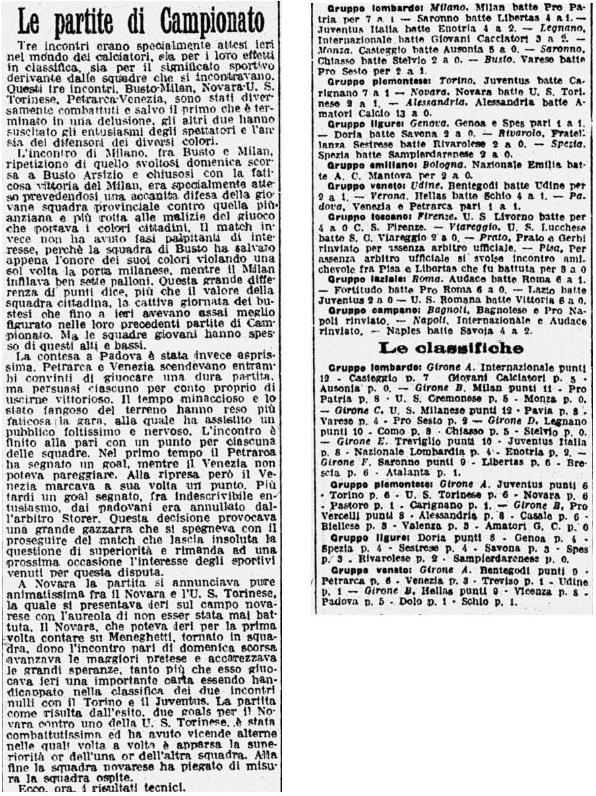

AC Monza
View on GrokipediaHistory
Foundation and Initial Tournaments (1912–1927)
Associazione Calcio Monza originated on 1 September 1912 through the merger of two local clubs, Pro Monza and Pro Italia, establishing Monza Foot-Ball Club in Monza, Italy.[8][9][10] This formation reflected grassroots enthusiasm among local athletes amid the growing popularity of association football in Lombardy, without significant financial backing or professional facilities. The club's initial headquarters were modest, underscoring its amateur foundations in a period when Italian football remained regionally fragmented under the Federazione Italiana Giuoco Calcio (FIGC). The team commenced competitive activities with friendly and regional matches against Milanese opponents, securing its first recorded victory on 20 September 1912 against Juve Italia.[1] By the 1913–14 season, it entered the Terza Categoria Lombarda, the third tier of FIGC-affiliated leagues, competing in Lombardy-based tournaments that emphasized local rivalries and basic organizational structures.[1] In early 1913, Monza claimed its inaugural trophy, the Coppa Colli, prevailing 3–2 over Saronno in the final after earlier successes like a 3–1 win in an official match against the same club.[8] These achievements highlighted emerging competitiveness despite reliance on volunteer efforts and sparse resources, typical of early 20th-century Italian lower-division play. Italy's entry into World War I in May 1915 disrupted national football, yet Monza persisted with reduced squads comprising younger, non-mobilized players, avoiding full dissolution common among resource-poor clubs. Post-war resumption in 1919 saw continued participation in regional divisions like the Promozione, though promotions proved elusive amid postwar economic strains and amateur constraints. By 1927, the club maintained its third-tier status, embodying persistent local commitment without infrastructural advancements that would characterize later professionalization.[1]Rebranding and Serie B Promotion (1932–1953)
In September 1932, ahead of the 1932–33 season, AC Monza adopted red and white striped kits, establishing the biancorossi identity that symbolized local Lombard pride and distinguished the club from its prior blue-and-white colors.[1] This shift coincided with organizational efforts to professionalize amid Italy's fascist-era football regulations, which emphasized structured regional leagues like the Prima Divisione (third tier, reorganized as Serie C in 1935). Under early leadership, including figures focused on stability, Monza competed consistently in these divisions through the 1930s and 1940s, achieving mid-table finishes without major breakthroughs.[1] Football activities were suspended nationwide from 1942 to 1945 due to World War II, halting Monza's participation and contributing to infrastructural strain in the region. Post-war reorganization placed the club in Serie C for the 1945–46 season, where they finished eighth, reflecting gradual recovery amid economic challenges and player shortages. By 1947, Peppino Borghi assumed presidency, initiating targeted investments that bolstered squad depth and tactical discipline.[1] Under Borghi's guidance from 1949, Monza mounted a promotion push in Serie C's 1950–51 campaign, led by coach Annibale Frossi, whose emphasis on defensive solidity and counter-attacks adapted to the era's physical style. Key contributions came from captain Carlo Colombetti, whose penalty secured a 1–0 victory over Omegna on June 3, 1951, clinching first place in Girone A and earning historic elevation to Serie B on June 3. This marked Monza's debut in national second-tier competition, ending nearly four decades in lower divisions.[11][1]Merger with Simmenthal and Subsequent Struggles (1955–1967)
In July 1955, following a third-place finish in the 1954–55 Serie B season, AC Monza entered into a merger with GS Simmenthal, the works team of the Simmenthal food company owned by Dr. Claudio Sada, who assumed the club presidency.[1][12] This arrangement renamed the club Associazione Sportiva Simmenthal-Monza and introduced corporate sponsorship, including branding on kits, aimed at bolstering competitiveness in Serie B with the goal of promotion to Serie A.[12] However, the partnership failed to deliver sustained success, as the club remained mired in mid-table Serie B finishes without achieving promotion, highlighting a mismatch between sponsorship inflows and the operational costs of maintaining professional standards amid inconsistent on-field results.[1] Simmenthal's sponsorship continued until May 28, 1964, when the company withdrew support, prompting the club to revert to its original name on July 14, 1964.[1] The loss of this backing exacerbated underlying vulnerabilities, including leadership transitions—Sada departed on June 30, 1965, after municipal intervention by Mayor Giovanni Centemero in 1964 to stabilize his tenure—and contributed to declining performance.[1] In the 1964–65 Serie B season, Monza narrowly avoided relegation, but the following year marked the end of a 19-year uninterrupted stint in the second tier, as they finished in the relegation zone due to poor results, including key losses that exposed tactical and squad deficiencies.[1] Relegated to Serie C at the conclusion of the 1965–66 campaign, the club faced an identity crisis rooted in the failed corporate integration, where initial financial injections from Simmenthal proved insufficient against rising expenses and unfulfilled promotion ambitions, leading to internal strains without evident debt accumulation or attendance metrics in records.[1] Monza responded by securing immediate promotion back to Serie B in the 1966–67 season via playoff victory over Como, demonstrating resilience but underscoring the causal link between sponsorship dependency and vulnerability to demotion when expectations outpaced empirical achievements.[1]Repeated Serie A Promotion Efforts (1969–1979)
Following promotion to Serie B in 1967, AC Monza mounted a serious challenge for Serie A in the 1969–70 season, securing 15 victories but ultimately falling short after a key defeat to league champions Varese that derailed their promotion hopes.[1] Under coach Luigi Radice, the team demonstrated offensive promise with consistent scoring, yet tactical inconsistencies prevented a top-two finish required for direct ascent, exposing gaps in sustaining performance against stronger Serie B sides.[13] This near-miss highlighted administrative challenges, including limited investment in high-caliber transfers compared to rivals, relying instead on local Lombard talent that struggled against national competition's depth. Efforts persisted into the early 1970s, with Monza maintaining mid-table competitiveness through 1971–72, but defensive frailties—conceding in critical fixtures—undermined promotion aspirations, culminating in relegation from Serie B at the end of the 1972–73 season via a 3–1 loss to Bari on the final matchday.[1] Managerial changes, including transitions amid president Giovanni Cappelletti's tenure starting in 1972, failed to address these vulnerabilities, as the squad's goal differential reflected chronic lapses in backline organization despite modest investments in youth prospects from the Monza region.[1] Relegated to Serie C, the club faced further setbacks in 1973–75 promotion playoffs, where narrow losses underscored persistent tactical shortcomings against more cohesive opponents, though fan attendance grew amid local loyalty.[14] Immediate recovery followed, with Monza clinching Serie C Group A in 1975–76 by five matches, returning to Serie B alongside an Anglo-Italian Cup triumph over Wimbledon on June 19, 1976.[1] Back in the second tier, renewed Serie A bids faltered again by 1978–79, as defeats in the closing fixtures—including to relegated Lecce—squandered a potential top placement, revealing ongoing administrative hesitancy in bolstering squad depth against promotion contenders.[1] These decade-long exertions yielded no Serie A entry, attributable to defensive exposures averaging over 1.0 goals conceded per game in key campaigns and insufficient adaptation to Serie B's escalating competitiveness, despite rising supporter engagement.[15]Giambelli Presidency and Relative Stability (1980–1999)
Valentino Giambelli, a local construction entrepreneur, assumed the presidency of AC Monza in 1980, succeeding Giovanni Cappelletti amid the club's ongoing challenges in Serie B.[1] His early tenure faced immediate adversity, as Monza finished last in the 1980–81 Serie B season and suffered relegation to Serie C1.[1] Despite this setback, Giambelli prioritized financial prudence and youth development, integrating promising talents such as a young Franco Baresi, Alessandro Costacurta, and Pierluigi Casiraghi, who gained experience at Monza before transferring to AC Milan.[1] This approach fostered relative operational stability, avoiding the bankruptcies that plagued the club in later decades, through balanced budgeting and local sponsorships rather than high-risk investments.[16] Under Giambelli's leadership, Monza achieved three promotions to Serie B during the period, reflecting consistent competitiveness in lower divisions without aggressive spending. In the 1987–88 Serie C1 season, the team secured promotion to Serie B while also winning their third Coppa Italia Serie C against rivals, marking a highlight of disciplined squad building.[1] The club relocated to the newly constructed Stadio Brianteo in 1988—personally overseen by Giambelli via his construction firm—enhancing infrastructure and fan engagement, with the inaugural match a 2–1 victory over Roma.[1][17] However, Serie B stints proved volatile; relegation followed in 1990 via play-out defeat to Messina, though Monza rebounded by claiming their fourth Coppa Italia Serie C in 1991 against Palermo and earning promotion again in 1992 through playoffs against Chievo Verona.[1] The mid-1990s saw further mid-table consolidation in Serie C1 interspersed with brief Serie B returns, exemplified by the 1997 promotion via playoffs against Carpi (3–2 aggregate), bolstered by a youth collaboration agreement with AC Milan.[1] Giambelli also developed the Centro Sportivo Monzello training facility, investing in long-term youth infrastructure to support sustainable growth.[17] Critics, including some fans, faulted his conservative strategy for repeatedly falling short of Serie A contention despite near-misses, arguing it prioritized survival over ambition and limited market investments post-Bosman ruling in 1995.[18][19] Nonetheless, this era's record of four Coppa Italia Serie C titles overall (two under Giambelli) and avoidance of fiscal collapse underscored a phase of relative stability, contrasting with the ownership turbulence after his 1999 departure to Piero Fazzolari.[1][18]Periods of Financial Distress and League Volatility (1999–2018)
Following the relative stability under Giambelli's presidency, AC Monza encountered escalating financial pressures starting in the late 1990s, culminating in a court-declared bankruptcy on March 18, 2004, due to insurmountable debts and operational insolvency.[1] The club was subsequently acquired on June 3, 2004, by businessman Gian Battista Begnini, vice-president of Atalanta, who restructured it as FC Monza Brianza and restarted operations in Serie C2, the fourth tier. Despite initial competitive efforts, including a third-place finish in Serie C2 during the 2004–05 season, persistent mismanagement—characterized by inadequate revenue generation relative to expenditures on player acquisitions and operations—exacerbated vulnerabilities, as evidenced by the club's inability to sustain higher-league ambitions without recurring fiscal shortfalls.[1] League performance mirrored this instability, with Monza suffering relegation to Serie C1 in 2001 and further to Serie C2 in 2002 amid declining results and ownership transitions. Begnini's tenure provided temporary continuity, but the club was sold again on July 13, 2009, to a new group, signaling ongoing ownership flux that undermined long-term planning. By 2012, Monza faced another demotion to Serie C2 following poor on-field results, compounded by financial strain from over-reliance on short-term loans and player sales that failed to build enduring income streams, such as through sustained fan engagement or sponsorship growth.[20] This pattern of yo-yo status between third and fourth tiers reflected causal failures in fiscal discipline, rather than isolated economic downturns, as similar lower-division clubs navigated the period without equivalent collapses. The cycle intensified with the 2013 sale to British businessman Anthony Armstrong Emery on May 12, followed by a transfer to Piero Montaquila in March 2015; however, unfulfilled financial commitments led to a second bankruptcy declaration on May 27, 2015, forcing a restart in Serie D under new local ownership by Nicola Colombo, who renamed it SSD Monza 1912 on July 2.[1] Post-restart, the club achieved rapid promotion back to Serie C by 2016 and secured the Coppa Italia Serie C on April 23, 2017—only two years after insolvency—demonstrating short-lived operational resilience under consortium funding. Yet, despite finishing fifth in Serie C Group A in 2017–18 and playoff contention, Monza remained mired in the third tier, with volatility sustained by dependence on ad-hoc investor infusions and limited revenue diversification, highlighting systemic mismanagement in balancing ambitious signings against modest attendance and commercial returns.[1]Berlusconi Acquisition and Rapid Ascent (2018–2022)
In September 2018, Fininvest, the investment holding company controlled by Silvio Berlusconi, acquired 100% ownership of Associazione Calcio Monza from its previous shareholders for approximately €3 million, marking Berlusconi's return to professional football ownership following the sale of A.C. Milan in 2017.[21] [22] Adriano Galliani, Berlusconi's longtime associate from their A.C. Milan tenure, was appointed as the club's chief executive officer, overseeing operational and transfer strategies.[6] This acquisition injected stability into a club that had endured repeated financial distress and league demotions in prior decades, with Fininvest committing substantial private capital to rebuild the squad and infrastructure. The ownership change facilitated aggressive squad investments, with Berlusconi's group reportedly allocating over €70 million by mid-2022 toward player acquisitions, wages, and facilities, enabling Monza to compete effectively in Serie C.[22] High-profile signings, leveraging Galliani's industry connections, included experienced Serie A talents such as striker Christian Gytkjær and defender Andrea Gasparri, bolstering a team that had narrowly missed promotion in the 2018–19 playoffs.[23] These resources directly contributed to Monza winning Serie C Group A in the 2019–20 season, clinching the title on June 8, 2020—formally declared by the Italian Football Federation amid COVID-19 disruptions—and earning promotion to Serie B after a 19-year absence from the second tier.[1] The campaign yielded 70 points from 26 matches, reflecting a marked improvement in performance driven by enhanced talent depth rather than organic development alone. Building on this momentum, Monza achieved consecutive promotion in the 2021–22 Serie B season, finishing fourth with 75 points from 42 matches before triumphing in the playoffs: a 4–3 aggregate win over Brescia in the semis, followed by a 2–0 aggregate over Alessandria in the quarters, and a decisive 4–3 extra-time victory against Pisa in the final on May 29, 2022, securing Serie A entry for the first time in club history.[24] [25] This ascent from Serie C to Serie A in under four years stemmed primarily from Fininvest's financial backing, which offset historical volatility but introduced dependency on sustained owner funding, as evidenced by the club's prior struggles without such external capital. Berlusconi's media interests, including Mediaset, amplified Monza's visibility through increased coverage, aiding talent attraction and fan engagement without relying on public subsidies.[23]Serie A Participation and Challenges (2022–2025)
AC Monza secured promotion to Serie A for the 2022–23 season after finishing second in Serie B, marking their return to the top flight for the first time since 1951.[26] In their debut campaign, the team achieved a respectable 11th-place finish with 14 wins, 10 draws, and 14 losses, accumulating 52 points.[27] This mid-table position was underpinned by defensive organization under manager Raffaele Palladino, who emphasized compact formations that limited opponents' scoring opportunities, though offensive output remained modest at 45 goals scored across 38 matches.[27] The club's outsider status, bolstered by Silvio Berlusconi's investments in high-profile signings like Stefano Sensi and Andrea Petagna, allowed Monza to challenge the dominance of established powers, injecting competition into a league often criticized for its oligopolistic structure.[28] The 2023–24 season saw Monza maintain competitiveness, ending 12th with 11 wins, 12 draws, and 15 losses for 45 points, despite the sudden death of owner Silvio Berlusconi on June 12, 2023.[29][30] Berlusconi's passing introduced immediate uncertainty, as his family grappled with the club's operations amid ongoing financial losses exceeding €60 million in the prior fiscal year, prompting delays in squad reinforcements and strategic planning.[31] Palladino's tenure continued to yield results through tactical pragmatism, but reliance on aging or loaned players highlighted a lack of integrated youth development, with academy graduates contributing minimally to first-team minutes. Critics noted that while star acquisitions provided short-term boosts, the absence of a robust pipeline exposed vulnerabilities in long-term sustainability.[28] Monza's Serie A tenure concluded disastrously in 2024–25, with direct relegation confirmed on May 4, 2025, following a 0–4 home defeat to Atalanta that left them 12 points from safety.[32] The team recorded just 3 wins, 9 draws, and 26 losses, totaling 18 points and a win rate under 8%, the lowest in club history at the top level.[33] Performance metrics revealed a sharp decline, including the league's worst goals-per-match average (0.74) and defensive frailties, exacerbated by stalled investments post-Berlusconi and an increasingly aged squad averaging over 28 years old in key starters.[33] Ownership limbo, culminating in the Berlusconi family's sale to U.S.-based Beckett Layne Ventures later that year, further hampered transfer activity and morale, underscoring the challenges of transitioning from patronage-driven funding to stable governance without compromising competitive edge.[6] Despite earlier accolades for upending Serie A's entrenched hierarchy, Monza's rapid descent illustrated the perils of over-dependence on external capital absent systemic reforms in talent cultivation and fiscal prudence.[31]Relegation, Ownership Transition, and Serie B Return (2025–present)
AC Monza suffered relegation from Serie A at the conclusion of the 2024–25 season, becoming the first team mathematically demoted after a 0–4 home defeat to Atalanta on May 4, 2025, with only 15 points accumulated from 35 matches.[34][35] This marked the end of their three-year stint in the top flight, following promotion in 2022, amid a campaign plagued by defensive frailties and failure to win sufficiently to avoid the drop.[36][37] In response to the relegation, the Berlusconi family, through holding company Fininvest, initiated divestment from the club, announcing on July 1, 2025, the sale of AC Monza to U.S.-based investment firm Beckett Layne Ventures (BLV).[4][7] The transaction, valued at €24 million for an initial 80% stake, closed its first phase on September 25, 2025, with Fininvest retaining a 20% minority interest to be transferred by June 2026.[38][39] Adriano Galliani, who had served as CEO since the Berlusconi acquisition in 2018, departed the club and declined an offered presidency under the new ownership.[6][40] BLV, founded by investor Brandon Berger, emphasized a strategy of financial stabilization and sustainable growth in Serie B, including cost reductions to address prior overspending in Serie A.[41][42] Upon returning to Serie B for the 2025–26 campaign, Monza adopted a pragmatic approach focused on promotion contention through targeted transfers and squad rebuilding. The club prioritized retaining core players while offloading high-wage Serie A signings, resulting in a net transfer spend reduction; notable departures included loans and sales to balance the wage bill, estimated at over €30 million annually pre-relegation.[2] By October 2025, after eight matches, Monza occupied fourth place in the Serie B standings with 14 points, including a recent 1–0 away victory over Frosinone on October 18, 2025, underscoring early adaptation under interim management.[43][44] Average home attendance at U-Power Stadium hovered around 8,000 spectators per match, reflecting cautious fan turnout amid ownership uncertainty, though promotion aspirations remain central to BLV's vision without guaranteed short-term success.[45][46] The transition introduces risks of prolonged mid-table stagnation if investment falters, given Serie B's competitive parity and historical precedents of American-backed clubs facing adaptation challenges in lower divisions.[47]Club Identity and Symbolism
Colours and Kit History
AC Monza was founded in 1912 with white and blue as its official colours, reflecting early design choices common among Italian clubs of the era. In 1928, the club adopted red and white, establishing the biancorossi identity that has persisted as its core visual scheme.[1] Home kits transitioned to feature a red base with white vertical accents, often in the form of a prominent stripe or banding along the left side, symbolizing the shift toward a more distinctive local aesthetic aligned with Lombardy regional motifs.[48] From the 1933–34 season onward, red-and-white kits became standard, with variations limited primarily to material and minor patterning adjustments amid resource constraints of the interwar and postwar periods. The 1955 merger with GS Simmenthal, renaming the club AC Simmenthal-Monza until 1967, introduced sponsor-specific elements into the kit design, such as integrated branding from the meat processing company under president Claudio Sada, marking an early instance of commercial influence on the traditional palette without altering the fundamental colours.[1] White shorts predominated in the 1950s, complementing the jersey's red dominance for practical visibility on fields.[48] In 1971, the home kit underwent a refinement with the addition of a vertical white band on the left side of the red shirt, enhancing contrast and becoming a recurring motif in subsequent designs. Following Silvio Berlusconi's 2018 acquisition, kit production shifted to Lotto Sport Italia, yielding annual releases from 2020–21 onward that preserve the biancorossi stripes while prominently displaying sponsors like Investfarma (until 2023) and Motorola thereafter.[49] [50] These evolutions prioritize functional durability and revenue generation, with Lotto's involvement extending into the 2025–26 season amid the club's Serie B return.[51]Badge Evolution
The badge of Associazione Calcio Monza has undergone several redesigns since the club's founding in 1912, typically aligning with significant milestones such as promotions, rebrandings, or ownership changes, while retaining core symbols like the Iron Crown of Monza (Corona Ferrea), a historical artifact representing Lombard kingship and local identity. The earliest documented logo featured a blue shield with a red border enclosing the Iron Crown, emphasizing Monza's monarchical heritage rather than football-specific motifs. [52] In 1951, following promotion to Serie B, the club adopted a new badge: an ancile (ancient shield) divided diagonally in white and red, the club's colors since 1932, which simplified the design for broader recognition during a period of competitive ascent. [53] Later iterations in the late 20th century incorporated the Visconti sword—a medieval symbol of regional power—alongside the Iron Crown, often within a red shield; for instance, by the 1980s, a vertical sword replaced earlier crossed swords, evoking strength amid the Giambelli presidency's stability era (1980–1999). The 2004 rebranding to AC Monza Brianza 1912 introduced text reflecting the expanded name after financial restructuring, featuring the Iron Crown prominently in a red shield to underscore territorial ties. [54] In 2015, amid amateur league status, the logo shifted to "SSD Monza" nomenclature with a single vertical sword, denoting the society's dilettantistica structure. [55] Following Silvio Berlusconi's 2018 acquisition and the 2019 reversion to AC Monza, the badge updated text to "AC Monza," maintaining traditional elements without radical overhaul, though shirt collars added subtle Autodromo references to Monza's racing legacy separately from the crest. A minor 2021 restyle added a thin red outline enclosing the shield, as announced by the club to refine visibility without altering symbolic content, coinciding with Serie A ambitions. [56] These evolutions prioritized functional updates over aesthetic experimentation, with no public records of fan consultations in redesign processes; frequent nomenclature-driven changes (e.g., 2004, 2015, 2019) have occasionally diluted instant recognition in lower divisions, though empirical branding data from similar Italian clubs suggests such adaptations correlate with sponsorship gains during ownership transitions. [57]Anthem and Cultural Traditions
AC Monza lacks a singular, universally recognized official anthem akin to those of larger Italian clubs, but supporter-driven songs and chants form a core part of matchday rituals. The youth sector adopted "Monza Is My Destiny," composed by Giorgio Vanni and Max Longhi in 2023, drawing inspiration from the duo's earlier work on anime themes like Dragon Ball to instill club pride among young players and fans.[58] Independently produced tracks such as "Monza Alè," written and performed by former player Michele Magrin, have gained traction among older supporters as an unofficial emblem of loyalty, reflecting personal narratives of club attachment.[59] Communal practices center on tifoseria chants in the Curva Sud—renamed Curva Davide Pieri in homage to a deceased fan—which emphasize rhythmic, collective vocal support during games, fostering a sense of Brianza regional identity tied to resilience amid the club's historical league fluctuations. These traditions persist despite periods of lower attendance in Serie B eras, with spikes noted during promotional successes under recent ownership, though empirical data on anthem-specific engagement remains anecdotal rather than systematically tracked. Preservation advocates among fans argue for maintaining these organic expressions against corporate influences post-2018 acquisition, viewing them as bulwarks of authentic local culture, while critics of modernization highlight diluted communal fervor in favor of commercial spectacle.[60] No formalized pre-match parades or automotive-linked rituals are documented, though Monza's proximity to the Autodromo Nazionale Monza infuses broader fan discourse with motifs of velocity and competition, echoing the city's motorsport heritage without direct integration into football observances.Stadiums and Facilities
Early Venues
AC Monza began its activities on local fields shortly after its founding on 1 September 1912, utilizing the rudimentary pitch in the Triante area at the junction of Via Vittorio Veneto and Via Duca d'Aosta for initial training and matches.[61] This venue offered basic facilities amid the club's formative years in regional competitions.[18] By 1915, the club transitioned to the Grazie Vecchie pitch near the Santuario della Madonna delle Grazie, which was inaugurated on 13 May 1915 with a 1–0 victory over Juventus Italia.[61] In 1923, responding to increasing attendance and the need for improved infrastructure, AC Monza opened the Campo di via Ghilini as its new primary venue; this field served as the home ground through the interwar period until World War II damage rendered it unusable around 1939.[61][62] These successive shifts reflected the logistical constraints of modest urban pitches, which lacked enclosed stands and permanent amenities, prompting relocations driven by spatial limitations and municipal development in growing Monza.[62]Stadio Brianteo (U-Power Stadium)
The Stadio Brianteo, constructed in the late 1980s at a cost of 18 billion Italian lire, was inaugurated on 28 August 1988 with a Coppa Italia match between AC Monza and Roma, which Monza won 2-1.[62] Designed primarily for football, the venue features a multi-tiered structure with covered stands and has a current capacity of approximately 18,000 spectators following subsequent modifications.[63] Initially built to host Serie B and lower-division games, it provided Monza with a dedicated municipal facility amid the club's ambitions for professional stability. In September 2020, the stadium was renamed U-Power Stadium under a sponsorship agreement with the Italian footwear and workwear company U-Power.[61] Following Silvio Berlusconi's acquisition of AC Monza in 2018 and the club's promotion to Serie A in 2022, significant upgrades were implemented to meet top-flight licensing standards, including the reopening of the east stand and improvements to seating, lighting, and safety features.[64] These enhancements, timed for the 2022-23 season start, increased usable capacity and addressed prior deficiencies in infrastructure, though the venue remains modest in scale compared to facilities of Italy's larger clubs. Operationally, the stadium has hosted varying attendance levels reflective of Monza's league status, averaging over 12,000 spectators per home match during the 2022-23 Serie A season and around 11,100 in 2024-25 before relegation.[65] In Serie B campaigns, figures typically drop below 7,000 on average, underscoring the venue's reliance on top-tier competition for fuller utilization.[65] Maintenance challenges have persisted, with reports of technical failures from inadequate upkeep straining municipal and club resources, though specific annual costs remain undisclosed in public records.[61] Safety concerns have been minimal but notable, including a January 2024 incident during a Serie A match against Sassuolo where a 25-year-old visiting fan fell from a suspended area, sustaining a head injury but remaining conscious and non-seriously harmed.[66] Critics, including local observers, argue the stadium's aging framework—despite Berlusconi-era investments—lags behind Serie A peers in modern amenities like advanced VAR integration and premium seating, a gap attributable to Monza's regional economic scale rather than neglect.[61] These limitations highlight causal trade-offs in funding priorities for a club historically operating outside Italy's elite financial tier.Supporters and Fandom
Fan Demographics and Loyalty
The supporter base of AC Monza primarily consists of local residents from the Lombardy region, centered in Monza and the surrounding Brianza province, an area known for its industrial heritage and proximity to Milan. This regional concentration aligns with the club's historical identity as a community fixture rather than a national powerhouse, drawing fans from nearby urban and suburban communities without significant expansion beyond northern Italy.[67] Attendance data underscores a loyal core of supporters, with average home league crowds stabilizing around 12,400 during the 2022–23 Serie A season and approximately 12,200 in 2023–24, representing about 70–80% capacity utilization at the U-Power Stadium despite the novelty of top-flight status.[65] Season ticket sales in the inaugural Serie A campaign filled the dedicated home end (Curva Davide Pieri) and reached roughly 80% of available seats overall, indicating strong initial retention among established followers.[12] The acquisition by Silvio Berlusconi's Fininvest in September 2018 catalyzed fan base expansion through promotion to Serie A in June 2022, boosting visibility via the owner's media connections and prior AC Milan success, though sustained growth correlated more directly with on-pitch achievements than isolated marketing efforts.[28] Post-relegation to Serie B on May 4, 2025, after a dismal 15-point Serie A campaign, loyalty faced pressure, with club initiatives like the AC Monza Club project launched to foster aggregation and mitigate attrition among provincial fans. Specific retention metrics, such as season ticket renewals for the 2025–26 Serie B season, highlight ongoing phases reserved for prior holders to reallocate seats, signaling efforts to preserve the base amid tier downgrade.[68]Ultras Groups and Incidents
The principal ultras group supporting AC Monza operates from the Curva Sud under the banner of Ultras Monza, with banners and displays documented in official security reports.[69] Additional organized fan collectives include Monza 1912, Ultras Cederna 2019, and smaller subgroups such as Gruppo Pollakis and Eagles Monza.[70] These groups contribute to vocal matchday atmospheres through choreography and chants, though their activities have periodically intersected with regulatory scrutiny over potential choreography violations.[69] Monza ultras have faced multiple Daspo bans—Italy's stadium exclusion orders—for involvement in post-match clashes with rival supporters. Following the April 7, 2024, Serie A fixture against Napoli at Stadio Brianteo, skirmishes erupted involving Monza fans, injuring five police officers and prompting authorities to issue Daspo to 20 local ultras for durations of one to five years.[71] In November 2024, Florence police imposed Daspo on 50 Monza supporters ahead of a league match, citing prior violent conduct and organized travel risks.[72] Separate incidents include brawls at highway service areas, such as January 21, 2024, confrontations with SPAL fans en route to away games, where mutual assaults with improvised weapons led to arrests and further bans, though Monza supporters were sometimes positioned as targets.[73] [74] Such episodes have resulted in heightened policing and club-imposed restrictions, with causal links in reports attributing escalations to alcohol consumption, territorial rivalries, and premeditated group coordination rather than isolated match frustrations.[75] While ultras maintain they enhance stadium intensity, critics, including local authorities, highlight reputational harm and safety deterrents for non-partisan families, evidenced by partial sector closures and elevated absenteeism during high-risk fixtures.[73] No large-scale club fines exceeding €100,000 tied directly to ultras actions were recorded in recent seasons, though cumulative Daspo enforcement reflects broader Italian efforts to curb organized fan violence.[71]Rivalries
Primary Rivals
AC Monza's primary rivals are the nearby Lombardian clubs Como 1907, AC Milan, and Inter Milan, with competitions arising from geographical proximity within the Milan metropolitan area and broader regional pride in Lombardy.[76] The Derby di Lombardia against Como, originating in the post-World War II era and intensifying after a 1967 promotion playoff where Monza defeated Como, represents the most heated local antagonism, characterized by competition for regional dominance rather than urban class divides.[77] Historical head-to-head records underscore Monza's underdog position against the Milanese giants. Against AC Milan, Monza has secured just 1 victory in 10 competitive meetings, with Milan claiming 9 wins and no draws, reflecting the disparity in resources and Serie A longevity between the clubs.[78] Versus Inter Milan, Monza has 1 win in 7 encounters, alongside 3 losses and 3 draws, yielding a win rate below 15 percent and highlighting sustained competitive imbalance.[79] In contrast, matches with Como show greater parity, with Monza holding 5 wins to Como's 4 across 14 games since 2009, though overall historical tallies indicate 23 Monza victories against Como's 26 in over 75 fixtures, fostering a rivalry of near equals within Lombardy.[80]Notable Derby Encounters
One of the earliest defining encounters in the Derby Lariano occurred on 4 June 1967, when AC Monza defeated Como 1–0 in a Serie B promotion play-off match, securing Monza's ascent to Serie A while intensifying local animosities rooted in geographic proximity and historical competition for regional dominance. This victory marked the rivalry's ignition, with Monza capitalizing on Como's defensive lapses in a high-stakes fixture attended by thousands, though exact figures remain undocumented in primary records; the outcome underscored Monza's tactical edge in knockout scenarios during the era.[81] The rivalry escalated further on 13 April 1980, during a Serie C1 clash where Como prevailed amid reports of heightened fan tensions, contributing to a pattern of matches that drew significant crowds but also led to disciplinary actions against both clubs for crowd disturbances, fines totaling thousands of lire that strained lower-division budgets without proportionally boosting long-term revenue. Such incidents highlighted causal risks: while derbies spiked attendance—often exceeding 10,000 in compatible venues—they amplified financial vulnerabilities through repeated sanctions, as evidenced by league records of suspensions and penalties across decades.[82] In the modern era, post-2022 Serie A derbies have exposed competitiveness disparities, with Monza, as an established top-flight side, facing a resurgent Como newly promoted in 2024. A 1–1 draw on 30 November 2024 at Stadio Giuseppe Sinigaglia saw both teams trade goals in a tense affair, reflecting balanced play but Monza's struggle for consistency; attendance neared 12,000, bolstering short-term gate receipts yet underscoring revenue dependencies on rivalry hype amid broader financial pressures.[83] [84] Como's 3–1 victory over Monza on 5 April 2025 further illustrated gaps, as the visitors exploited Monza's defensive frailties for an emphatic win, impacting Monza's relegation fight while validating Como's rapid adaptation; no referee controversies were prominently reported, though general Serie A scrutiny persists.[85] [86] Overall, these encounters have yielded mixed head-to-head results—Monza with 5 wins, Como 4, and 5 draws in 14 meetings since 2009—driving fan engagement but exposing fiscal risks from fines without sustained economic uplift.[80]Media and Digital Presence
Traditional Media Coverage
Prior to the 2018 acquisition by Silvio Berlusconi and Adriano Galliani, AC Monza's media coverage was predominantly regional, centered on local Lombardian outlets such as Il Cittadino di Monza e Brianza and broadcasts limited to Serie C matches with minimal national interest. This reflected the club's lower-division status, where exposure was confined to match reports and community-focused stories rather than in-depth analysis.[18] Following the ownership change, national visibility surged, amplified by Berlusconi's prominence and ties to Mediaset, which featured extensive coverage of the club's promotions through channels like Sport Mediaset, including interviews with Berlusconi on programs such as Quarta Repubblica.[87] The 2022 promotion to Serie A further elevated broadcast exposure, integrating Monza into nationwide TV packages under DAZN and Sky Italia deals, yielding approximately €35 million in annual TV rights revenue for mid-table clubs like Monza.[88][89] Italian traditional media, including major dailies like Gazzetta dello Sport, has faced critiques for favoring the "big three" clubs—Juventus, AC Milan, and Inter—with disproportionate airtime and resources allocated to their matches and narratives, often sidelining smaller teams despite Serie A's collective TV agreements.[90] This structural bias stems from historical dominance and commercial priorities, where coverage of emerging clubs like Monza remains secondary, focusing more on upsets against giants than routine performances.[91] Such disparities persist even as Serie A rights distributions aim for equity, with observers noting that analytical segments and pre-match hype rarely extend proportionally to non-traditional powerhouses.[92]Esports and Online Initiatives
AC Monza established its esports division, AC Monza Team eSports, in September 2019 to compete in FIFA and subsequent EA Sports FC leagues, targeting younger demographics through virtual football simulations.[93] The team has participated in various online tournaments, leveraging the club's branding to build a presence in competitive gaming circuits, though it has not achieved sustained activity in major official competitions as of 2025.[94] This initiative aligns with broader trends in European football clubs adopting esports to extend fan engagement beyond physical matches, with Monza's efforts including player rosters and event streams on platforms like YouTube.[95] Complementing esports, AC Monza has pursued online initiatives to enhance digital accessibility, including the launch of an interactive digital match program in October 2025, which provides pre-game stats, quizzes, and multimedia content via the club's website and app.[96] Social media growth has accelerated under post-2018 ownership strategies, with the official Instagram account reaching approximately 300,000 followers by early October 2025, driven by content on matches, player highlights, and behind-the-scenes footage.[97] These efforts, including partnerships for process digitization like the 2021 Iterpro deal, aim to streamline operations and foster virtual community building, though empirical data on return on investment—such as direct correlations to sponsorship revenue or attendance uplift—remains limited, with gains primarily in online metrics rather than transforming core, stadium-based fandom.[98] Proponents of these digital extensions highlight their role in youth retention and global reach, citing esports as a low-cost entry for emerging markets, while skeptics argue they represent a resource diversion from on-pitch infrastructure needs, given Monza's fluctuating Serie A performance and modest esports tournament outcomes.[93] Overall, the initiatives reflect a pragmatic adaptation to digital consumption patterns, but causal links to sustained fan loyalty or financial gains require further longitudinal tracking beyond surface-level follower counts.Youth Development
Academy Structure
The AC Monza youth academy maintains a structured, tiered organization divided into grassroots and competitive sectors to foster player development from early ages through elite youth levels. The grassroots division includes teams from Under-10 (soccer school) to Under-13, coordinated by coaches such as Andrea Biffi for the soccer school, Beniamino Calderoli for Under-11, and Daniele Erba for Under-13. The competitive sector spans Under-14 to Under-20 (Primavera 1), with dedicated coaches including Luca Enrico for Under-14, Alessandro Tonani for Under-15, Michele Magrin for Under-16, Riccardo Monguzzi for Under-17, and Davide Brivio for Under-18, culminating in Oscar Brevi leading the Under-20 team in the Primavera 1 championship.[99] Overall leadership rests with head Francesco Panzerini and methodology manager Alberto Giacomini, emphasizing technical and personal growth aligned with first-team integration goals.[99] Training and operations are centralized at the Silvio and Luigi Berlusconi Sports Center (Monzello), a 100,000 square meter facility uniquely equipped in Serie A to accommodate all youth academy activities alongside first-team and women's teams on one site. Key infrastructure includes eight pitches (four with synthetic turf), three gyms for high-intensity and specialized training, a dedicated goalkeeper zone, 20 changing rooms segmented by age group, and support areas like video analysis rooms and administrative offices, enabling over 500 weekly participants and eight weekend matches.[100] Financial commitment to the youth sector reached €4.9 million in 2023, a 35% increase from 2022, supporting scouting, coaching, and infrastructure amid the club's post-Serie A relegation to Serie B.[101] Scouting prioritizes local Lombardy talent pools to build a sustainable pipeline, supplemented by broader European networks for competitive depth.[102] Following Silvio Berlusconi's death in June 2023, operations have shifted toward efficient resource allocation, focusing on high-potential promotions while maintaining Primavera 1 status achieved in 2023.Notable Alumni
Pierluigi Casiraghi emerged from AC Monza's youth ranks, making his professional debut with the club in 1985 and accumulating 124 appearances with 31 goals by 1989. After transferring to Juventus for a reported 5 billion lire fee that provided crucial funding amid Monza's lower-division struggles, he scored 27 goals in 105 Serie A matches before joining Lazio, where he netted 52 goals in 140 league games; Casiraghi earned 22 caps for Italy between 1994 and 1997, scoring 6 goals including one at UEFA Euro 1996. His success exemplifies the academy's early development value, though such exports often stemmed from financial pressures rather than first-team retention. Luca Antonelli began in Monza's youth system in 2003, featuring briefly in the senior setup before moving to AC Milan's academy in 2004.[103] Post-Monza, he amassed 215 Serie A appearances across Milan, Genoa, Parma, and Inter Milan, contributing to promotions and earning 13 Italy caps from 2011 to 2016 with 1 assist in national team play. Antonelli's trajectory highlights the academy's role in nurturing versatile defenders, yet transfers like his underscore a pattern of talent outflow to elite clubs, funding Monza's operations but limiting domestic breakthroughs amid promotion-oriented strategies. Francesco Antonioli debuted professionally for Monza in 1986 at age 16, playing 58 matches before returning to AC Milan's youth and senior sides. He later secured a Scudetto with Roma in 2000–01, logging over 300 Serie A appearances across Bologna, Perugia, and Cesena, with notable saves in high-stakes fixtures. While these alumni achieved empirical success—collective national team exposure and major trophies—the academy's output reflects underutilization in Monza's first team, as financial instability and Serie C/B focus prioritized squad reinforcements over youth integration, resulting in a net talent drain that sustained the club short-term but constrained long-term competitiveness.[104]Current Personnel
Management and Ownership
As of September 25, 2025, Beckett Layne Ventures (BLV), a U.S.-based investment firm, holds an 80% controlling stake in Associazione Calcio Monza S.p.A., following the finalization of its acquisition from Fininvest S.p.A., the holding company of the Berlusconi family.[105] Fininvest retains a 20% minority stake, scheduled for transfer to BLV by June 2026, marking the complete exit of the prior Italian ownership structure that had controlled the club since 2018.[105] This transaction, valued at approximately €24 million for the initial 80% share, shifts Monza toward a model reliant on foreign capital infusion, potentially enhancing financial resources for competitiveness but diminishing local stakeholder influence in strategic decisions.[39] BLV has articulated goals of club growth, including initiatives to elevate performance and return to Serie A, leveraging international expertise amid Monza's current Serie B status post-relegation.[105] Post-acquisition, the shareholders' meeting on September 29, 2025, appointed a new Board of Directors comprising Lauren Crampsie, Mauro Baldissoni, Brandon Gabriel Berger, Kirk Galiani, Rocco Strazzella, Gianluca Iuliano, and Fabrizio Ferrara. Lauren Crampsie, a BLV partner with prior executive roles at Chelsea FC as Chief Marketing Officer and at Ogilvy as President, serves as President, overseeing overall direction.[106] Mauro Baldissoni, former general manager of AS Roma from 2010 to 2020, was named Chief Executive Officer, responsible for operational and administrative functions.[106] This leadership emphasizes professionalization through experienced executives from global football operations, contrasting with the family-influenced prior regime under Adriano Galliani, who departed as CEO concurrent with the ownership change.[6] Financial filings indicate BLV's strategy prioritizes sustainable investments, though transparency on detailed capital commitments remains limited to public announcements.[105]Coaching Staff
The coaching staff of AC Monza, as of October 2025, is led by head coach Paolo Bianco, who was appointed on July 1, 2025, under a contract extending to June 30, 2027.[107][108] A former defensive midfielder with over 200 appearances for Hellas Verona in Serie A, Bianco's coaching career includes stints at Modena, Frosinone, and earlier youth roles, emphasizing defensive solidity and transitional play often within a 3-4-2-1 formation that adapts to wing-back exploitation for counter-attacks.[108] Supporting Bianco is assistant coach Filippo Pensalfini, a longtime collaborator who focuses on tactical preparation and player integration, having previously worked with him at lower-tier clubs.[109][110] The technical team includes Salvatore Bruno as technical assistant, leveraging his experience as a former striker in Serie B to aid attacking drills, alongside Pedro Cavalcanti in a similar role for specialized training.[109] Goalkeeping duties are handled by Valerio Fiori and Gian Mario Petrelli, with Fiori bringing veteran Serie A coaching expertise from prior roles at Inter Milan and the Italy national team.[109][110] Monza's coaching staff has seen elevated turnover in recent seasons, with four head coaches since the 2022–23 Serie A promotion under Raffaele Palladino: Palladino's successor, followed by Alessandro Nesta (starting circa early 2024), Salvatore Bocchetti (December 2024), and now Bianco amid the 2024–25 relegation to Serie B.[111] This instability correlates with performance volatility, including a strong 2022 promotion (finishing second in Serie B) but subsequent mid-to-lower table struggles in Serie A, where defensive lapses and failure to adapt tactics contributed to only 31 points in the 2024–25 season before dismissal cycles.[111] Such frequent changes reflect ownership's reactive strategy to immediate results over long-term continuity, though Bianco's appointment aims to stabilize with a defensively oriented philosophy suited to Serie B promotion pushes.[107]First-Team Squad Overview
As of October 2025, AC Monza's first-team squad in Serie B comprises 29 players with a total market value of €53.4 million, reflecting a balanced roster averaging 26.3 years old and featuring 19 Italians alongside 10 foreigners from nations including Sweden, Croatia, Senegal, and Equatorial Guinea.[112] [113] The composition emphasizes defensive solidity with experienced centre-backs like Armando Izzo (Italy, 33) and Andrea Carboni (Italy, 25), while midfield pivots such as Pedro Obiang (Equatorial Guinea, 33) and Gianluca Caprari (Italy, 32) provide tactical versatility suited to Serie B's physical demands. Forward lines rely on proven goal threats including Mirko Marić (Croatia, 30) and Agustín Álvarez Martínez (Uruguay, 24), whose multi-year contracts through 2026 or later underscore efforts to maintain continuity amid adaptation to the second tier.[112] Goalkeeping duties are shared among Semuel Pizzignacco (Italy, 23), Demba Thiam (Senegal, 25), and Alessandro Sorrentino (Italy, 23), with the unit posting clean sheets in early matches to support a 4-2-2 record and fourth-place standing after eight games.[114] [115] Full-backs like Arvid Brorsson (Sweden, 24) and Samuele Birindelli (Italy, 26) contribute overlapping runs, aiding transitions that have generated eight goals from open play. Álvarez Martínez leads in scoring with three goals, complemented by assists from wingers and midfielders, as the squad leverages Serie A veterans' know-how for compact defending and counter-attacks typical of promotion-chasing sides.[116] [117] Sustainability drives squad building, evidenced by a €15 million net transfer profit in summer 2025 from outgoing sales that funded reinforcements without inflating wage burdens, aligning with financial fair play in Serie B.[118] This approach prioritizes players with expiring or mid-term deals, fostering competitiveness while mitigating risks of over-reliance on loans or unproven youth integrations.[112]Managerial History
Key Managers and Tenures
Luigi Radice managed AC Monza across multiple spells in the late 1960s and early 1970s, including from July 1, 1966, to February 18, 1968 (59 matches, 1.75 points per match), and July 1, 1969, to June 30, 1971 (86 matches, 1.40 points per match), establishing early stability and contributing to the club's ascent from lower divisions through disciplined organization that laid foundations for defensive solidity.[119][120] His approach emphasized tactical discipline, which contrasted with prevailing defensive norms and foreshadowed his later innovations elsewhere, though at Monza it prioritized survival over flair, evident in consistent mid-table finishes post-promotion rather than dominant campaigns. Alfredo Magni held one of the longest continuous tenures from January 20, 1975, to June 30, 1980, overseeing five seasons of relative consistency in Serie B and C amid financial constraints, with his pragmatic tactics focusing on counter-attacks that mitigated squad limitations but failed to secure higher promotions, as seen in repeated playoff misses due to key-match underperformance against stronger sides.[120] In the modern era, Giovanni Stroppa guided Monza from July 1, 2021, to September 12, 2022, achieving historic promotion to Serie A via playoffs in the 2021–22 Serie B season, employing a flexible 3-5-2 formation that balanced defensive resilience with transitional speed, though early Serie A struggles led to his dismissal after defensive lapses in high-stakes fixtures exposed over-reliance on set-piece scoring.[120] Raffaele Palladino succeeded him from September 13, 2022, to June 30, 2024 (73 matches, 1.36 points per match), introducing a possession-oriented 3-4-2-1 system that enhanced midfield control and attacking fluidity, enabling mid-table Serie A survival in 2022–23 and 2023–24 by adapting to superior opponents through high pressing, yet faltering in crucial away games where tactical rigidity contributed to dropped points against relegation rivals.[121][122]| Manager | Tenure | Matches | PPM | Key Impact |
|---|---|---|---|---|
| Luigi Radice | 1966–1968, 1969–1971 | 145 | 1.53 | Divisional ascent, defensive base |
| Alfredo Magni | 1975–1980 | N/A | N/A | Mid-table stability in lower tiers |
| Giovanni Stroppa | 2021–2022 | N/A | N/A | Serie A promotion via playoffs |
| Raffaele Palladino | 2022–2024 | 73 | 1.36 | Serie A consolidation, tactical shift to possession |