Recent from talks
Nothing was collected or created yet.
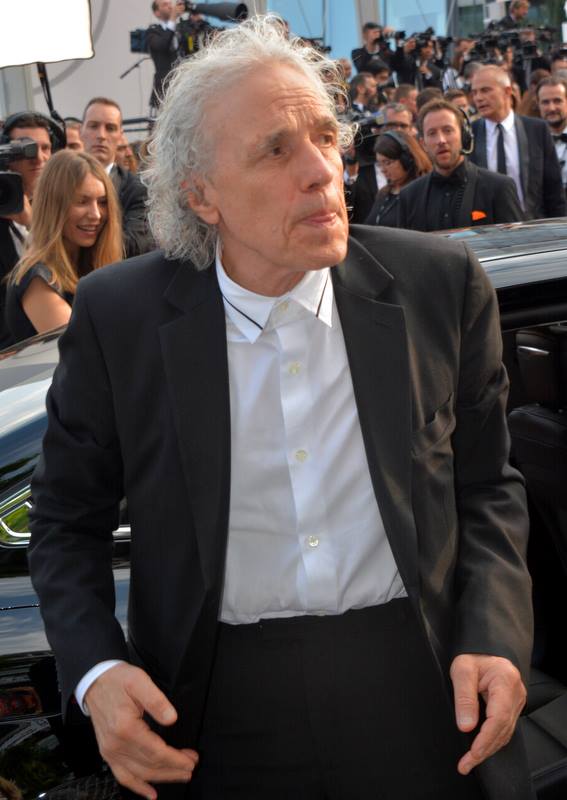
Abel Ferrara
View on Wikipedia
Abel Ferrara (Italian: [ferˈraːra]; born July 19, 1951)[1] is an American filmmaker. He is best known for the provocative and often controversial content in his movies and his use and redefinition of neo-noir imagery. A long-time independent filmmaker, some of his best known movies include the New York-set, gritty crime thrillers The Driller Killer (1979), Ms .45 (1981), King of New York (1990), Bad Lieutenant (1992), and The Funeral (1996), chronicling violent crime in urban settings with spiritual overtones.
Key Information
Ferrara also worked in a wide array of genres, including the sci-fi remake Body Snatchers (1993), cyberpunk thriller New Rose Hotel (1998), the religious drama Mary (2005), the black comedy Go Go Tales (2007), and the biopic Pasolini (2014), as well as in several documentary filmmaking projects.
Early life
[edit]Ferrara was born in the Bronx of Italian and Irish descent.[2] He was raised Catholic, which influenced much of his work.[3] At 8 years old, he moved to Peekskill in Westchester County, New York and he started making movies at Rockland Community College.[4] Later, he attended the film conservatory at SUNY Purchase, where he directed several short films.[5]
Career
[edit]Early work 1971-1981
[edit]
Ferrara studied at the San Francisco Art Institute; one of his teachers and influences there was the famous avant-garde director Rosa von Praunheim.[6] In the early 1970s, while still in art school, Ferrara directed a number of independently produced short films which included The Hold Up and Could This Be Love. Finding himself out of work after leaving film school in 1976, Ferrara directed his first feature: a pornographic film titled 9 Lives of a Wet Pussy, using a pseudonym.[7] Starring with his then-girlfriend, he recalled having to step in front of the camera for one scene to perform in a hardcore sex scene: "It's bad enough paying a guy $200 to fuck your girlfriend, then he can't get it up."[8]
Ferrara first drew a cult following with his second feature film, an exploitation movie titled The Driller Killer (1979), an urban slasher film about an artist (played by the director himself) who goes on a killing spree with a power drill. In the United Kingdom, the movie made it on a list of "video nasties" created by moral crusaders that led to prosecutions under the Obscene Publications Act 1959 and to the passing of new legislation which forced all video releases to appear before the British Board of Film Classification for rating.[9]
The director's next feature was Ms .45 (1981), a "rape revenge" movie about a mute garment worker turned vigilante (Zoë Tamerlis). Reviewers called it "a provocative, disreputable movie, well worth seeing".[10]
Rise to international fame 1984–1998
[edit]In 1984, Ferrara was hired to direct Fear City, starring Melanie Griffith, Billy Dee Williams, Rae Dawn Chong and María Conchita Alonso. When a "kung fu slasher" stalks and murders young women who work in a seedy Times Square strip club, a disgraced boxer portrayed by Tom Berenger uses his fighting skills to defeat the killer.[11]
Ferrara worked on two Michael Mann-produced television series, directing the two-hour pilot for Crime Story (aired September 18, 1986), starring Dennis Farina,[12] and two episodes of the series Miami Vice.[13]
King of New York (1990) stars Christopher Walken as gangster Frank White, Laurence Fishburne, Wesley Snipes, David Caruso and Giancarlo Esposito. The movie received overall mixed reviews, but Ferrara was praised for his strong command of mood and style. Critic Roger Ebert wrote, "What Ferrara needs for his next film is a sound screenplay."[14]
Bad Lieutenant (1992) credits Ferrara and actress Zoë Tamerlis, who plays the woman who helps the Lieutenant freebase heroin in the movie, as co-writers of the script, but Tamerlis claimed that she wrote it alone.[15][16] Bad Lieutenant received Spirit Awards nominations for Best Director and Best Actor, and despite its controversial content, the movie was lauded by critics. Director Martin Scorsese named it one of his top 10 films of the 1990s.[17]
In 1993, Ferrara was hired for two Hollywood studio movies: another remake of Invasion of the Body Snatchers, titled Body Snatchers (1993), for Warner Bros.; and Dangerous Game (1993), starring Keitel and Madonna, for MGM.
In the mid-1990s Ferrara directed two well-received independent movies: The Addiction (1995),[18] photographed in black-and-white, stars Lili Taylor as a philosophy student who succumbs to a vampire as she studies the problem of evil and philosophical pedagogy, represented by the most violent events of the 20th century. The movie also features Christopher Walken, Annabella Sciorra, Edie Falco, Kathryn Erbe and Michael Imperioli. It was co-produced by Russell Simmons.
The Funeral (1996),[19] starring Walken, Sciorra, Chris Penn, Isabella Rossellini, Benicio del Toro, Vincent Gallo and Gretchen Mol, was nominated for five Independent Spirit Awards including Best Director.
Following the success of The Funeral, Ferrara had an infamous interview with Conan O'Brien on October 23, 1996. Ferrara was believed to be intoxicated and struggled through the interview, often slurring and covering his face as well as waving around a cigarette. O'Brien would later state that Ferrara was his "worst guest ever".[20] Eventually, O'Brien revealed to Ferrara's frequent collaborator Willem Dafoe that Ferrara "ran away" and that the segment producer had to "run down the street" to catch him and bring him back to the set. Dafoe said to O'Brien, "You did your best ... and so did he!"
After making The Blackout (1997) with Matthew Modine and Dennis Hopper, he contributed to the omnibus television movie Subway Stories. Ferrara then made New Rose Hotel (1998), which reunited him with Christopher Walken.

Move to Europe 2001 – present
[edit]Ferrara returned three years later with 'R Xmas (2001), which starred Drea de Matteo and Ice-T. He recorded commentaries for Driller Killer[21] and King of New York[22] and made Mary (2005), a religious-themed multi-plot movie starring Juliette Binoche, Matthew Modine, Forest Whitaker, Heather Graham, Marion Cotillard, and Stefania Rocca. Mary premiered at the Venice Film Festival in 2005. It swept the awards ceremony, garnering the Grand Jury Prize, SIGNIS Award and two others. It was shown at the Toronto International Film Festival.[23]
In 2007, Ferrara directed Go Go Tales a comedy with Modine, Bob Hoskins and Willem Dafoe that premiered at the Cannes Film Festival but was not shown in the United States until a special screening at the Anthology Film Archives in 2011.[24]
In 2009, Jekyll and Hyde was set to star Forest Whitaker and 50 Cent. After disagreements with Warner Bros., the movie was shelved in 2010.[8]
In 2009, Napoli, Napoli, Napoli premiered out of competition at the 66th Venice International Film Festival.[25] The docudrama received little attention and poor reviews but Werner Herzog's reboot Bad Lieutenant: Port of Call New Orleans was selected for competition at the prestigious festival. Asked about the Herzog film, Ferrara was quoted widely saying "I wish these people die in hell".[26]
In September 2011, 4:44 Last Day on Earth, starring Willem Dafoe and Shanyn Leigh, premiered at the main competition of the 68th Venice International Film Festival.[27]
Ferrara's Welcome to New York, a fictionalized version of the Dominique Strauss-Kahn sexual assault case starring Gérard Depardieu and Jacqueline Bisset, was released on video on demand in 2014.[28][29] Ferrara's Pasolini (2014) about the titular Italian director stars Willem Dafoe.[30]
After a 4-year long hiatus, Ferrara came back in 2019 with Tommaso, a new feature starring Dafoe and set in Rome. The film had its world premiere at the 72nd Cannes Film Festival on 20 May 2019. It was released in the United States by Kino Lorber.
The following year, with Siberia (2020), Ferrara and Dafoe collaborated for the sixth time. Inspired by Carl Jung's The Red Book, the script was written by Ferrara and Chris Zois.[31][32] The film had its world premiere at the main competition of the 70th Berlin International Film Festival, on 24 February 2020. It was released in the United States by Lionsgate in 2021. Shortly after Ferrara directed the documentary Sportin' Life, about the beginning of quarantine measures in Europe a few days after the Berlinale premiere of Siberia, during the start of the COVID-19 pandemic.[33] The documentary had its world premiere at the 77th Venice Film Festival on 4 September 2020.
Since 2020 he has interpreted Gabriele Tinti's poetry giving voice to the masterpieces in the Galleria Nazionale d'Arte Antica, Pinacoteca di Brera, Museo Nazionale di San Marco, Ca' d'Oro, Musée Jacquemart-André and Museo Nazionale Romano[34][35]
In August 2021, Zeros and Ones, starring Ethan Hawke, had its world premiere at the main competition of the 74th Locarno Film Festival, during the festival Ferrara won the Best Direction Award.[36] The film was released in limited theaters and on demand by Lionsgate on November 19, 2021.
In 2022, Ferrara's Padre Pio, starring Shia LaBeouf and Asia Argento, premiered at the "Giornate degli Autori" section of the 79th Venice Film Festival on September 2, 2022. The film was released in the United States by Gravitas Ventures on June 2, 2023. During the film's production, LeBeouf notably converted to Catholicism.
Personal life
[edit]Ferrara is married to actress Cristina Chiriac, who is more than 40 years younger than him, and they have a daughter, Anna.[37][38] He was previously married to Nancy Ferrara.[39] Ferrara has two adopted children: Endira and Lucy.[40][41] He was also in a romantic relationship with actress Shanyn Leigh.[42][43]
Ferrara lives in Rome, Italy.[44] He moved there following the 9/11 attacks because it was easier for him to find financing for his movies in Europe.[45]
Raised Catholic, Ferrara started describing himself as Buddhist in 2007.[46] When asked if he had converted, Ferrara responded,
It’s not a conversion, you’re not a card-carrying Catholic, you’re brought up Italian, so you’re brought up with those images. All the great art is financed by the Church so they have a monopoly on the paintings, and they’re powerful images, the whole nine yards of it. But Jesus was a living man, and so were Buddha and Muhammad. These three guys changed the fucking world, with their passion and love of other human beings. All these guys had was their word, and they came from fucking nowhere. I’m not saying Nazareth is nowhere – I’m sure Jesus came from a very cool neighbourhood.
— Abel Ferrara[47]
Ferrara said in 2020 that Buddhism "is a practice for me, not a religion".[48] In 2022, he stated he considered Padre Pio his "spirituality model".[49]
Influences
[edit]Influences on Ferrara's work include "the Stones and Dylan ... DaVinci, Stanley Kubrick, Woody Allen and all of the great New York film makers".[50] He has also credited Pier Paolo Pasolini and Rainer Werner Fassbinder as influences.[51][52][53]
Filmography
[edit]Short film
[edit]| Year | Title | Director | Writer | Actor | Notes |
|---|---|---|---|---|---|
| 1971 | Nicky's Film | Yes | Yes | ||
| 1972 | The Hold Up | Yes | Yes | Yes | |
| 1973 | Could This Be Love | Yes | Yes | ||
| 2010 | 42 One Dream Rush | Yes | Segment "Dream Piece" | ||
| 2012 | No Saints | Yes | |||
| My Big-Assed Mother | Yes | Role: Charles Bukowski | |||
| 2017 | Hans | Yes | Yes |
Feature films
[edit]| Year | Title | Director | Writer | Notes |
|---|---|---|---|---|
| 1976 | 9 Lives of a Wet Pussy | Yes | Pornographic film Credited as Jimmy Boy L. | |
| 1979 | The Driller Killer | Yes | ||
| 1981 | Ms .45 | Yes | ||
| 1984 | Fear City | Yes | ||
| 1987 | China Girl | Yes | ||
| 1989 | Cat Chaser | Yes | ||
| 1990 | King of New York | Yes | ||
| 1992 | Bad Lieutenant | Yes | Yes | |
| 1993 | Body Snatchers | Yes | ||
| Dangerous Game | Yes | |||
| 1995 | The Addiction | Yes | ||
| 1996 | The Funeral | Yes | ||
| 1997 | The Blackout | Yes | Yes | |
| 1998 | New Rose Hotel | Yes | Yes | |
| 2001 | 'R Xmas | Yes | Yes | |
| 2005 | Mary | Yes | Yes | |
| 2007 | Go Go Tales | Yes | Yes | |
| 2011 | 4:44 Last Day on Earth | Yes | Yes | |
| 2014 | Welcome to New York | Yes | Yes | |
| Pasolini | Yes | Yes | [54] | |
| 2019 | Tommaso | Yes | Yes | |
| 2020 | Siberia | Yes | Yes | |
| 2021 | Zeros and Ones | Yes | Yes | |
| 2022 | Padre Pio | Yes | Yes |
Acting roles
| Year | Title | Role | Notes |
|---|---|---|---|
| 1976 | 9 Lives of a Wet Pussy | Old Man | |
| 1979 | The Driller Killer | Reno | Credited as "Jimmy Laine" |
| 1981 | Ms .45 | 1st rapist | |
| 1993 | Body Snatchers | ||
| 2006 | Exes | Cain | |
| 2009 | Daddy Longlegs | Robber | |
| 2014 | Don Peyote | Taxi cab driver | |
| 2016 | Sculpt | ||
| 2017 | Black Butterfly | Pat | |
| 2018 | Buon Lavoro | [55] | |
| 2025 | Marty Supreme | Ezra Mauser | Post-production |
Documentary films
[edit]| Year | Title | Director | Writer | Himself | Notes | Ref. |
|---|---|---|---|---|---|---|
| 1977 | Not Guilty: For Keith Richards | Yes | Short | |||
| 2008 | Chelsea on the Rocks | Yes | Yes | |||
| 2009 | Napoli Napoli Napoli | Yes | Yes | |||
| 2010 | Mulberry St. | Yes | ||||
| 2017 | Alive in France | Yes | Yes | Yes | ||
| Piazza Vittorio | Yes | Yes | [56] | |||
| 2018 | Talking with the Vampires | Yes | Yes | Yes | Short | [57] |
| 2019 | The Projectionist | Yes | Yes | [58] | ||
| 2020 | Sportin' Life | Yes | Yes | Yes | [59] | |
| 2024 | Turn in the Wound | Yes |
Television
[edit]| Year | Title | Notes |
|---|---|---|
| 1985 | Miami Vice | "The Home Invaders", "The Dutch Oven" |
| 1986 | Crime Story | Pilot episode |
| 2012 | Pizza Connection | Web series |
TV movies
| Year | Title | Notes |
|---|---|---|
| 1986 | The Gladiator | |
| 1988 | The Loner | |
| 1997 | Subway Stories: Tales from the Underground | Segment "Love on the A Train" |
Music video
[edit]| Year | Title | Director | Writer |
|---|---|---|---|
| 1996 | Mylène Farmer: California | Yes | |
| 1999 | Ben Folds Five: Don't Change Your Plans | Yes | |
| 2004 | Abenaa: "Rain" | Yes | Yes |
Recurring collaborators
[edit]Ferrara has recast many of the same actors in his movies, most notably Christopher Walken, Harvey Keitel and Willem Dafoe.[60] Other actors he has recast include Annabella Sciorra and Matthew Modine as well as character actors such as Victor Argo, Paul Calderón and Giancarlo Esposito.[61] David Caruso is another one of Ferrara's frequent film collaborators.[62] Ms .45 (1981) star Zoë Lund collaborated with Ferrara again on Bad Lieutenant (1992), which she co-wrote.[63] Gretchen Mol has worked with Ferrara twice.[64] Forest Whitaker starred in Ferrara's movies Mary (2005) and Body Snatchers (1993).[65]
Work Actor
|
1979 | 1981 | 1986 | 1987 | 1990 | 1992 | 1993 | 1993 | 1995 | 1996 | 1997 | 1998 | 2001 | 2005 | 2007 | 2008 | 2009 | 2011 | 2014 | 2014 | 2019 | 2020 | 2021 | 2022 |
|---|---|---|---|---|---|---|---|---|---|---|---|---|---|---|---|---|---|---|---|---|---|---|---|---|
| Asia Argento | ||||||||||||||||||||||||
| Victor Argo | ||||||||||||||||||||||||
| Paul Calderón | ||||||||||||||||||||||||
| David Caruso | ||||||||||||||||||||||||
| Cristina Chiriac | ||||||||||||||||||||||||
| Willem Dafoe | ||||||||||||||||||||||||
| Giancarlo Esposito | ||||||||||||||||||||||||
| Abel Ferrara | ||||||||||||||||||||||||
| Anna Ferrara | ||||||||||||||||||||||||
| Ethan Hawke | ||||||||||||||||||||||||
| Paul Hipp | ||||||||||||||||||||||||
| Dennis Hopper | ||||||||||||||||||||||||
| Harvey Keitel | ||||||||||||||||||||||||
| Shanyn Leigh | ||||||||||||||||||||||||
| Zoë Lund | ||||||||||||||||||||||||
| Matthew Modine | ||||||||||||||||||||||||
| Gretchen Mol | ||||||||||||||||||||||||
| James Russo | ||||||||||||||||||||||||
| Riccardo Scamarcio | ||||||||||||||||||||||||
| Annabella Sciorra | ||||||||||||||||||||||||
| Christopher Walken | ||||||||||||||||||||||||
| Forest Whitaker |
Beginning with The Driller Killer in 1979 through The Projectionist in 2019, Ferrara most frequently worked with Ken Kelsch as his cinematographer.[66]
Awards and nominations
[edit]| Year | Nominated work | Award | Result | Ref. |
|---|---|---|---|---|
| 1993 | Bad Lieutenant | Independent Spirit Award for Best Director | Nominated | |
| 1993 | Body Snatchers | Palme d'Or | Nominated | |
| 1995 | The Addiction | Golden Berlin Bear | Nominated | |
| 1996 | The Funeral | Independent Spirit Award for Best Director | Nominated | |
| 1998 | The Blackout | Worst Director − Yoga Awards | Won | [67] |
References
[edit]- ^ Nicole Brenez, Abel Ferrara, University of Illinois Press, 2007 page 2
- ^ Goldstein, Patrick (October 28, 1990). "MOVIES The Prince of Darkness Director Abel Ferrara practices a kind of gonzo filmmaking, and his violent vision isn't a particularly popular one in Hollywood". Los Angeles Times. Archived from the original on July 24, 2012. Retrieved November 21, 2009.
- ^ Lim, Dennis (October 12, 2008). "Struggling With Faith and Gentrification". The New York Times. Retrieved April 23, 2010.
- ^ "'Bad Lieutenant' filmmaker Abel Ferrara got his start at Rockland Community College". lohud.com. Retrieved December 4, 2019.
- ^ Dawson, Nick (October 18, 2008). "Abel Ferrara, Mary". Filmmaker Magazine. Retrieved December 4, 2019.
- ^ "Seven nights with Abel Ferrara". American Cinematheque. Retrieved May 17, 2023.
- ^ Paszylk, Bartlomiej (March 9, 2009). "The Driller Killer". The Pleasure and Pain of Cult Horror Films: An Historical Survey. McFarland. p. 153. ISBN 978-0-7864-3695-8.
- ^ a b "Abel Ferrara: 'I made Scarface look like Mary Poppins'". The Guardian (Interview). Interviewed by Andrew Purcell. August 5, 2010. ISSN 0261-3077.
- ^ "Video Nasties". bbfc.co.uk. British Board of Film Classification. Archived from the original on March 14, 2013. Retrieved September 9, 2019.
- ^ "Ms .45 (2015), directed by Abel Ferrara | Film review". timeout.com. August 22, 2015. Archived from the original on August 22, 2015. Retrieved September 9, 2019.
- ^ "Fear City (1984)", Rotten Tomatoes, retrieved December 4, 2019
- ^ "Crime Story. 1986. Directed by Abel Ferrara". MOMA.org. Retrieved September 9, 2019.
- ^ "Abel Ferrara Interview". artinterviews.com. Retrieved September 9, 2019.
- ^ Ebert, Roger. "King Of New York Movie Review (1990)". RogerEbert.com. Retrieved September 9, 2019.
- ^ Zoe Tamerlis on the script of "Bad Lieutenant", April 30, 2009, archived from the original on December 12, 2021, retrieved September 9, 2019 – via YouTube
- ^ "13 Great Facts About Bad Lieutenant". mentalfloss.com. November 20, 2017. Retrieved September 9, 2019.
- ^ Roger Ebert & The Movies (show #1426), 26 February 2000 Archived April 14, 2010, at the Wayback Machine. Rogerebert.suntimes.com. Retrieved on 2012-04-15.
- ^ "The Addiction (1995): Awards". Allmovie.com. Retrieved February 9, 2014.
- ^ "The Funeral (1996)". Allmovie.com. Retrieved February 9, 2014.
- ^ "Conan O'Brien Names Director Abel Ferrara His Worst Guest in 25 Years — Here's Why". December 3, 2018.
- ^ Righelato, Rowan (November 30, 2016). "The Driller Killer and the humanist behind the blood and sickening crunch". The Guardian. Retrieved March 24, 2022.
- ^ Mackie, Rob (September 18, 2008). "DVD review: King of New York SE". The Guardian. Retrieved March 24, 2022.
- ^ "2005 TIFF Archives (10 posts)". bombippy.com. Retrieved May 10, 2015.
- ^ Dargis, Manohla (January 6, 2011). "'Go Go Tales' With Willem Dafoe − Review". The New York Times. ISSN 0362-4331. Retrieved December 4, 2019.
- ^ "Werner Herzog's Bad Lieutenant joins Venice film festival contenders". the Guardian. July 30, 2009. Retrieved December 4, 2019.
- ^ Brown, Mark (July 30, 2009). "Werner Herzog's Bad Lieutenant joins Venice film festival contenders". The Guardian. ISSN 0261-3077. Retrieved December 4, 2019.
- ^ "Venezia 68: International competition of feature films". Venice. Archived from the original on September 27, 2011. Retrieved August 28, 2011.
- ^ Donadio, Rachel (May 18, 2014). "Cannes Film Festival: Strauss-Kahn Film Under Fire". The New York Times. Retrieved June 15, 2014.
- ^ Child, Ben (February 6, 2012). "Gerard Depardieu to star in film inspired by Dominique Strauss-Kahn". The Guardian. London. Retrieved April 17, 2012.
- ^ "Director Abel Ferrara on Mysterious 1975 Death of Pier Paolo Pasolini: 'I Know Who Killed Him'". The Hollywood Reporter. March 28, 2014. Retrieved June 15, 2014.
- ^ Fleming, Mike Jr. (May 14, 2015). "He's Back! Abel Ferrara To Launch Willem Dafoe-Starrer 'Siberia' On Croisette". Deadline Hollywood. Retrieved June 20, 2015.
- ^ Rife, Katie (May 14, 2015). "Get Involved, Internet: Help Abel Ferrara and Willem Dafoe make a movie about dreams". The A.V. Club. Retrieved June 20, 2015.
- ^ Encinias, Joshua (June 4, 2020). "Abel Ferrara on Filmmaking in Quarantine and the Spiritual Quest of Tommaso". Retrieved June 12, 2023.
- ^ "Abel Ferrara reads Gabriele Tinti's poems at the Pinacoteca di Brera, Milan". February 11, 2021. Retrieved September 7, 2023.
- ^ "Abel Ferrara reads Gabriele Tinti's poems". Retrieved September 7, 2023.
- ^ Kiang, Jessica (August 14, 2021). "Golden Leopard Winner 'Vengeance is Mine, All Others Pay Cash' Heads Impressive Slate Of Locarno Awards". Variety. Retrieved June 12, 2023.
- ^ Vlessing, Etan (January 21, 2020). "Abel Ferrara's 'Tommaso,' 'The Projectionist' Land at Kino Lorber (Exclusive)". The Hollywood Reporter. Retrieved February 29, 2020.
- ^ Shoard, Catherine (May 18, 2015). "Abel Ferrera turns to Kickstarter: 'I'm gonna hurt people with this film'". The Guardian. Retrieved July 25, 2016.
- ^ Maslin, Janet (November 19, 1993). "Review/Film; A Movie Within a Movie, With a Demure Madonna". The New York Times. Retrieved July 25, 2016.
- ^ "Abel Ferrara Biography (1952?-)". Film Reference. Retrieved December 20, 2016.
- ^ Hoban, Phoebe (February 1, 1993). "Raising Cain". New York. Retrieved December 23, 2016.
- ^ Macnab, Geoffrey (March 3, 2012). "Willem Dafoe: 'I have a charmed life'". The Independent. Archived from the original on March 5, 2012. Retrieved August 20, 2017.
- ^ Hoberman, J. (March 19, 2012). "Home for the End of Days". New York. Retrieved August 20, 2017.
- ^ Righelato, Rowan (September 11, 2015). "Abel Ferrara: 'Pasolini's death is not some kind of fictional event'". The Guardian. Retrieved July 25, 2016.
- ^ Lim, Dennis (October 10, 2008). "Struggling With Faith and Gentrification". The New York Times. Retrieved July 25, 2016.
- ^ Shoard, Catherine (May 23, 2014). "Abel Ferrara at Cannes: 'You gotta be careful what you say ... but I'm not'". The Guardian. Retrieved July 25, 2016.
- ^ Gray, Carmen (November 12, 2014). "The spiritual side of Abel Ferrara". Dazed.
- ^ Bukuras, Joe (August 30, 2022). "From porn to 'Padre Pio': Meet the director who felt drawn to tell the saint's story". Catholic News Agency. Retrieved September 23, 2022.
- ^ Solero, Elettra (November 18, 2022). "Abel Ferrara: Padre Pio è il mio modello di spiritualità". Dipiù (in Italian). No. 46. pp. 69–70.
- ^ "Abel Ferrara Interview". www.artinterviews.com. Retrieved September 9, 2019.
- ^ cryptekeeper (December 3, 2012). "Cryptekeeper 041 Abel Ferrara/4H44 dernier jour sur terre". Archived from the original on December 12, 2021 – via YouTube.
- ^ Kasman, Daniel (June 7, 2014). "The Pursuit of Freedom: Abel Ferrara Discusses "Welcome to New York"". Retrieved October 6, 2015.
- ^ Carli, Vittorio. "Abel Ferrara Interview". Retrieved October 6, 2015.
- ^ Hopewell, John (August 16, 2013). "Ferrara, Dafoe Re-team for 'Pasolini'". Variety. Retrieved June 15, 2014.
- ^ "Homepage". Buon Lavoro − Il film.
- ^ Cox, Gordon (August 23, 2017). "Vanessa Redgrave, Alex Gibney, Griffin Dunne Documentaries Join New York Film Festival Slate (EXCLUSIVE)".
- ^ Murthi, Vikram (December 19, 2016). "Isabelle Huppert, Nicolas Cage and Willem Dafoe Star in Abel Ferrara's New Film 'Siberia'". IndieWire. Retrieved January 7, 2017.
- ^ Bramesco, Charles (April 23, 2019). "The Projectionist review – Abel Ferrara's wistful, indulgent ode to cinema". The Guardian. Retrieved November 9, 2020.
- ^ Tartaglione, Nancy (July 28, 2020). "Venice Film Festival 2020: Competition Light On Studios, Strong On Global Arthouse & Women Directors – Full List". Deadline Hollywood. Retrieved August 1, 2020.
- ^ Ruilova, Aïda (February 13, 2013). "Abel Ferrara". Interview.
- ^ Dee, Jake (January 7, 2014). "Dissecting Director Abel Ferrara!".
- ^ "Indie Filmmaker Abel Ferrara Will Bring Short Eyes Back to Broadway". February 24, 2010.
- ^ Vestby, Ethan (December 9, 2013). "Abel Ferrara On Artistic Freedom, Collaboration, 'Ms. 45,' Pier Paolo Pasolini & More". thefilmstage.com.
- ^ Hillis, Aaron (February 26, 2009). "Gretchen Mol Indulges in "An American Affair"". Ifc.com.
- ^ Nastasi, Alison (19 November 2009). "Abel Ferrara's 'Jekyll and Hyde' Coming Soon From Warner Bros". Moviefone. Archived from the original on 10 December 2014. Retrieved 6 December 2014.
- ^ Louison, Evan (May 22, 2019). ""Filmmaking is Like Combat — 90% Boredom, 5% Panic and 5% Terror": Ken Kelsch on Four Decades as a Cinematographer". Filmmaker Magazine. Retrieved January 24, 2020.
- ^ "1998 (novena edición) : Los Catacric y los YoGa". Retrieved September 9, 2019.
External links
[edit]
Media related to Abel Ferrara at Wikimedia Commons- Abel Ferrara at IMDb
- Guardian interview, 5 August 2010
- Nicky's Film sound design and remix contest
Abel Ferrara
View on GrokipediaEarly Life
Childhood and Family Background
Abel Ferrara was born on July 19, 1951, in the Bronx borough of New York City to an Italian father and Irish mother of working-class background. Raised in a devout Roman Catholic household amid the predominantly Italian-American neighborhoods of the Bronx, Ferrara experienced the dense urban environment of mid-20th-century New York from an early age, including its associated grit and community dynamics.[9][10][11] His family's southern Italian heritage, combined with his mother's Irish Catholic influence, instilled a strong religious framework, involving regular church attendance and traditional values centered on family and faith. This upbringing occurred against the backdrop of post-World War II immigrant-descended communities navigating economic challenges in the city.[11][9] In pursuit of a more stable suburban setting, Ferrara's father relocated the family to Peekskill in Westchester County when Ferrara was around eight years old, transitioning from Bronx tenements to a rural-adjacent area while maintaining ties to urban New York through frequent visits. This move exposed him to contrasting environments—inner-city intensity versus quieter outskirts—within a tight-knit family structure emphasizing discipline and resilience.[12]Education and Initial Foray into Filmmaking
Ferrara received no formal education in filmmaking, explicitly forgoing programs at institutions such as New York University or the University of California, Los Angeles, and instead pursued a self-taught trajectory shaped by practical immersion.[13] Born on May 19, 1951, in the Bronx to Italian-Sicilian and Irish immigrant parents, he initiated his creative endeavors with amateur Super 8 films during his teenage years, following his family's relocation to upstate New York.[14][15] These initial experiments, numbering in the dozens and often involving early collaborations with writers Nicholas St. John and John McIntyre, emphasized low-cost production techniques amid economic constraints, fostering Ferrara's rejection of conventional career paths in favor of autonomous, guerrilla-style filmmaking.[16][17] By the early 1970s, amid New York's vibrant underground scene, Ferrara transitioned from these rudimentary shorts to more structured independent projects, prioritizing hands-on experience over academic credentials as the causal basis for his enduring outsider approach to cinema.[18]Career
Early Independent Productions (1971–1981)
Ferrara began his filmmaking career with a series of independent short films in the early 1970s, including Nicky's Film (1971), a six-minute silent work depicting a man confronting imagined or real mobster threats over a debt.[19] Other early shorts, such as The Hold Up (1972) and Could This Be Love (1973), explored rudimentary narrative and experimental styles amid his art school pursuits.[20] These low-to-no-budget efforts, often shot on Super 8, honed Ferrara's guerrilla techniques in New York's underbelly.[1] Transitioning to features, Ferrara's debut full-length production was the pornographic film 9 Lives of a Wet Pussy (1976), directed under the pseudonym Jimmy Boy L. and co-written with Nicholas St. John, focusing on episodic erotic adventures of New York socialites.[21] Produced via his nascent Navaron Films company, it reflected the era's underground adult cinema scene but marked a step toward sustaining independent operations through genre work.[22] The Driller Killer (1979) emerged as Ferrara's first horror feature, shot guerrilla-style in Manhattan from 1977 to 1978 on a reported budget of $20,000, with Ferrara starring as the protagonist Reno under the alias Jimmy Laine.[23] The film portrays a bankrupt artist's descent into violence amid squatter-filled tenements and punk venues like Max's Kansas City, embodying 1970s New York fiscal crisis and urban squalor.[24] Released independently on June 15, 1979, it navigated limited distribution as exploitation fare, later achieving cult notoriety via arthouse midnight showings despite initial obscurity and financial strains from self-financing.[25] Ms. 45 (1981), Ferrara's follow-up, shifted to rape-revenge thriller territory, starring newcomer Zoë Lund as Thana, a mute seamstress who methodically eliminates her attackers after repeated assaults.[26] Produced on a similarly modest scale by Navaron, the 80-minute film was scripted by St. John and released through Rochelle Films, blending vigilante justice with character-driven intensity in gritty Lower East Side locales.[27] Though facing grindhouse circuit hurdles and censorship echoes from prior works, it garnered early cult traction at midnight screenings, signaling Ferrara's evolution from shorts to provocative independents amid persistent budgetary constraints.[28]Breakthrough Films and Mainstream Recognition (1984–1998)
Ferrara's breakthrough came with Fear City (1984), a neo-noir thriller depicting a serial killer targeting strippers in New York City's nightlife underworld, starring Tom Berenger as a former boxer-turned-private eye and Billy Dee Williams as a detective.[29] The film, released amid the escalating urban violence of the 1980s crack epidemic—which contributed to a surge in New York gang-related homicides and prostitution-related crimes—highlighted the seedy intersections of pimps, mobsters, and law enforcement in Times Square's declining districts.[30] While commercially modest, earning about $45,000 in its Los Angeles opening week in March 1985, it garnered cult appreciation for its raw portrayal of moral decay, foreshadowing Ferrara's signature style of unflinching urban realism.[29][31] Building on this, China Girl (1987) adapted a Romeo-and-Juliet narrative to the ethnic gang rivalries of Little Italy and Chinatown, with Italian and Chinese factions clashing over territory in a plot driven by star-crossed lovers. Released on September 7, 1987, the film captured the ethnic tensions exacerbated by the crack trade's disruption of traditional mob structures, as immigrant communities vied for control amid rising street-level drug distribution.[32] Critics praised its ultraviolent intensity as a gritty winner, though it received mixed aggregate scores, reflecting Ferrara's growing reputation for provocative indie crime dramas over broad appeal.[33][34] King of New York (1990) marked a critical escalation, featuring Christopher Walken as a newly released drug lord consolidating power through brutal takeovers, set against the peak of New York City's crack-fueled homicide wave, which hit 2,245 murders in 1990 alone. Released September 28, 1990, by Carolco Pictures via New Line Cinema, the film earned indie acclaim for Walken's charismatic menace and its operatic violence, though it faced boos at initial screenings and mixed reviews, with Roger Ebert awarding it two stars for its gritty excess without narrative depth.[35][36] Limited box office reflected its niche status, yet it solidified Ferrara's cult following by causally linking individual ambition to systemic urban collapse.[37] Bad Lieutenant (1992), starring Harvey Keitel as a nameless, cocaine-addicted cop spiraling through corruption, rape, and gambling debts while investigating a nun's assault, premiered at Cannes in 1992 and epitomized Ferrara's raw depiction of law enforcement's moral erosion during the era's police scandals tied to drug enforcement failures.[38] Roger Ebert lauded Keitel's uncompromised performance as a four-star triumph of visceral honesty, and it holds a 77% Rotten Tomatoes score, though its graphic content limited mainstream distribution and earnings.[38][39] Ferrara's collaboration with screenwriter Zoë Lund amplified themes of addiction mirroring the crack epidemic's toll on authority figures.[40] Culminating the period, The Funeral (1996) explored a gangster family's internal fractures after a brother's assassination, with Walken, Benicio del Toro, and others in an ensemble probing ideological clashes amid 1930s-set flashbacks to Prohibition-era roots, evoking Scorsese-like introspection on crime's philosophical undercurrents. Released in 1996, it received positive critical reception, including a 79% on Rotten Tomatoes and three stars from Ebert for its delayed-violence tension, positioning it as Ferrara's peak in nuanced gangster ensemble narratives.[41] Despite acclaim, commercial constraints persisted, underscoring Ferrara's trajectory of artistic breakthroughs in indie crime cinema over Hollywood assimilation, causally rooted in the 1980s-1990s realignment of New York mobs under crack's chaotic influence.[42][43]European Relocation and Later Projects (2001–Present)
In the aftermath of the September 11, 2001 attacks, Ferrara relocated from New York to Europe, citing difficulties in securing U.S. financing and a desire for greater creative freedom abroad, eventually basing himself in Rome, Italy.[14][44] This shift marked a departure from Hollywood constraints, enabling reliance on European producers for low-budget projects amid ongoing independent funding hurdles.[45] Ferrara's immediate post-relocation work included the crime thriller 'R Xmas (2001), which follows a Manhattan couple's desperate efforts to ransom a kidnapped drug dealer husband before Christmas, blending tense realism with themes of urban desperation.[46] By the late 2000s, he turned to documentary hybrids like Napoli, Napoli, Napoli (2009), a raw examination of Naples' poverty, Camorra-organized crime, and social decay through interwoven interviews with residents, prisoners, and staged vignettes highlighting institutional failures.[47] The 2010s saw Ferrara explore speculative and biographical narratives, including the end-times drama 4:44 Last Day on Earth (2011), depicting a New York couple's final hours amid a cosmic catastrophe, starring Willem Dafoe and emphasizing isolation and intimacy.[48] He followed with Pasolini (2014), a fragmented portrait of Italian filmmaker Pier Paolo Pasolini's last day in 1975, blending factual recreation, literary adaptations, and surreal visions, again featuring Dafoe in the lead.[49] In recent years, Ferrara has delved into faith, conflict, and history, directing the biographical drama Padre Pio (2022), which intertwines the stigmata-bearing Capuchin friar's spiritual trials with post-World War I Italian peasant unrest, starring Shia LaBeouf as the titular friar.[50] His 2024 documentary Turn in the Wound confronts the Ukraine war through Patti Smith's poetry and performances, alongside on-the-ground footage of soldiers and civilians, probing cycles of violence and quests for meaning.[51][52] Ferrara announced American Nails in February 2024, a gangster tale drawing from ancient tragedy motifs, starring Willem Dafoe and Asia Argento, with production slated for that summer via international backing.[53] This era reflects a pivot to digital production tools, co-productions across Europe, and experimental forms like war docs, sustaining his output despite indie sector volatility.[54]Artistic Style and Themes
Recurring Motifs of Urban Decay and Moral Ambiguity
Abel Ferrara's oeuvre consistently portrays New York City as a site of profound urban decay, capturing the gritty underbelly of neighborhoods plagued by crime, poverty, and infrastructural neglect during the late 20th century. In films set amid the city's 1970s fiscal crisis and 1980s crack epidemic, Ferrara employs stark visuals of derelict buildings, littered streets, and nocturnal violence to evoke a moral wasteland where societal bonds erode under the weight of unchecked human impulses.[55] [56] This depiction aligns with empirical data on New York's era-specific challenges, including over 2,000 murders annually in the early 1990s and widespread abandonment of public spaces, which Ferrara observed firsthand as a native filmmaker.[55] Central to these portrayals are anti-hero protagonists whose trajectories of self-destruction underscore moral ambiguity, rejecting binary notions of virtue and vice in favor of complex ethical navigation amid systemic failures. Characters driven by addiction, corruption, and unchecked desires—exemplified in Bad Lieutenant (1992)—embody a causal chain wherein personal vices amplify urban entropy, critiquing permissive cultural relativism that prioritizes individual license over absolutist restraints.[57] [58] Ferrara's narratives link such breakdowns to observable societal enablers, including welfare dependencies that foster rather than mitigate cycles of crime and idleness, as inferred from his portrayals of dependency-fueled underworlds in King of New York (1990).[59] This approach stems from Ferrara's interviews decrying consumer-driven moral erosion, where post-war materialism supplants traditional structures, yielding environments ripe for vice.[60] [61] Unlike mainstream Hollywood productions that often impose redemptive arcs or externalize blame to preserve viewer comfort, Ferrara insists on unfiltered realism, deriving from first-hand encounters with New York's raw undercurrents to expose the inexorable pull of human frailty without contrived uplift.[55] His method privileges causal accountability—wherein decay arises from aggregated moral lapses rather than abstract socioeconomic forces—over narratives softened by ideological filters, as evidenced in his resistance to sanitized depictions prevalent in commercial cinema.[61] This fidelity to observed realities, unburdened by political correctness, positions Ferrara's work as a stark counterpoint to escapist tropes, emphasizing empirical patterns of vice in urban milieus.[57]
