Hubbry Logo
search
logo
Acinus
Acinus
current hub
1688113

Acinus

logo
Community Hub0 Subscribers
Read side by side
from Wikipedia
Acinus
Normal histology of the breast, including an acinus in lower image. The terminal duct connected to the magnified acinus is not within this microsection.
Centroacinar cells
Identifiers
THH2.00.02.0.03050
Anatomical terminology

An acinus (/ˈæsɪnəs/; pl.: acini; adjective, acinar /ˈæsɪnər/ or acinous) refers to any cluster of cells that resembles a many-lobed "berry", such as a raspberry (acinus is Latin for "berry"). The berry-shaped termination of an exocrine gland, where the secretion is produced, is acinar in form, as is the alveolar sac containing multiple alveoli in the lungs.

Exocrine glands

[edit]

Acinar exocrine glands are found in many organs, including:

The thyroid follicles can also be considered of acinar formation but in this case the follicles, being part of an endocrine gland, act as a hormonal deposit rather than to facilitate secretion.
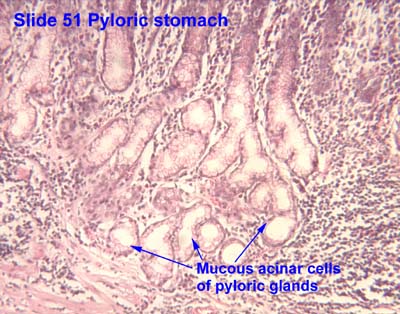
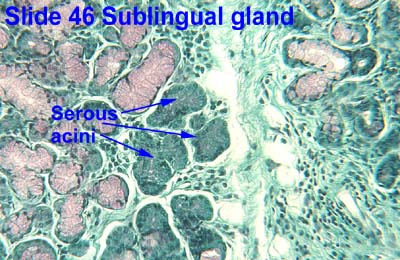
Mucous acini usually stain pale, while serous acini usually stain dark.

Lungs

[edit]

The end of the terminal bronchioles in the lungs mark the beginning of a pulmonary acinus that includes the respiratory bronchioles, alveolar ducts, alveolar sacs, and alveoli.[4]

See also

[edit]

References

[edit]
[edit]
Revisions and contributorsEdit on WikipediaRead on Wikipedia
from Grokipedia
An acinus (plural: acini) is a small, rounded or berry-like cluster of secretory cells that forms the terminal secretory unit of certain exocrine glands in animals, typically consisting of polarized epithelial cells arranged around a central lumen that drains into ducts.[1] The term originates from the Latin acinus, meaning "berry" or "grape," due to the structure's resemblance to a cluster of grapes or a raspberry.[1] These units are essential for the production and secretion of exocrine substances such as digestive enzymes, saliva, bile, or other glandular products, and they vary in structure and function across different organs, such as in the pancreas, salivary glands, and liver.[2] In the pancreas, the acinus is the primary functional unit of the exocrine pancreas, composed of 15–100 pyramidal acinar cells rich in rough endoplasmic reticulum and zymogen granules, which produce and store up to 20 grams of digestive enzyme precursors daily for secretion into the duodenum via exocytosis.[2] These secretions are neutralized by bicarbonate from centroacinar and duct cells to prevent auto-digestion.[2] The acini are organized into grape-like clusters within lobules, separated by connective tissue, with secretions flowing through intercalated, intralobular, and interlobular ducts to the main pancreatic duct.[3] In the lungs, the pulmonary acinus represents the smallest gas-exchange unit distal to the terminal bronchiole, supplied by a first-order respiratory bronchiole (approximately 0.5 mm in diameter) and comprising respiratory bronchioles, alveolar ducts, and approximately 3,000–4,000 alveoli, with approximately 30,000 acini per lung facilitating oxygen and carbon dioxide exchange.[2] These acini are contained within secondary pulmonary lobules and can appear as wedge-like opacities on imaging when affected by disease, such as fluid or cellular filling in infections.[4] In the liver, the hepatic acinus is the functional microcirculatory unit, an irregular ellipsoidal mass of hepatocytes aligned around hepatic arterioles and portal venules that anastomose into sinusoids, divided into three zones based on oxygenation and blood flow from the portal triad (zone 1, closest to the inlet) to the central vein (zone 3).[5] This zonal organization reflects metabolic gradients, with zone 1 hepatocytes handling oxidative functions and toxin exposure first, providing a more physiologically relevant model than the classical lobule for understanding liver pathology like zonal necrosis.[5]

General Overview

Definition and Etymology

The acinus is defined in anatomy as a small, rounded or sac-like cluster of epithelial cells that resembles a berry, typically forming the terminal secretory portion of exocrine glands.[1] This structure functions as the basic unit for secretion in compound glands, consisting of secretory cells arranged around a central lumen.[6] In the lungs, the term denotes a comparable functional unit distal to the terminal bronchiole, encompassing respiratory bronchioles, alveolar ducts, and alveoli for gas exchange.[7] The word "acinus" derives from the Latin acinus, meaning "berry," "grape," or "grape seed," evoking the clustered, berry-like appearance of these cellular units.[1] It entered anatomical terminology through New Latin as glandulosi acini ("glandular berries"), a phrase coined by the 17th-century Italian microscopist Marcello Malpighi to describe the minute glandular structures he observed in organs like the liver and salivary glands.[1] Malpighi's pioneering use of the microscope in the 1660s marked the term's first application in histology, shifting anatomical descriptions from macroscopic to microscopic scales.[8] While the general usage of acinus refers to any berry-like cluster of secretory cells in glandular tissues, it acquires specific connotations in distinct contexts: in exocrine glands, it emphasizes the secretory apparatus, whereas in the pulmonary system, it highlights the gas-exchanging compartment.[9] This dual application underscores the term's versatility in denoting fundamental microstructural units across organ systems.[10]

Basic Anatomical Features

The acinus represents a fundamental structural unit in various glandular tissues, characterized by a rounded or flask-shaped cluster of epithelial cells that enclose a central lumen or alveolus, into which secretions are released. This morphology facilitates the organized production and initial containment of glandular products, with the epithelial cells arranged in a spherical or ovoid configuration around the lumen.[11] Key components of the acinus include acinar cells, which are pyramidal-shaped secretory epithelial cells polarized with their apex facing the lumen and base resting on the basement membrane; in certain exocrine glands such as salivary glands, myoepithelial cells form a contractile basket-like network around the acinar units to aid in the expulsion of secretions, though they are absent in others like the pancreas; and the basal lamina, a thin extracellular matrix layer that anchors the acinus to surrounding connective tissue.[2][12][12] An acinus typically comprises 20 to 100 cells, with overall diameters ranging from 50 to 100 micrometers, allowing for compact yet efficient secretory organization. Acini are situated in close proximity to a rich network of capillaries, which supply essential nutrients and oxygen to support cellular metabolism, while autonomic neural innervation regulates secretory activity through sympathetic and parasympathetic fibers embedded in the surrounding connective tissue.[2][13][11]

Acini in Exocrine Glands

Structure and Cell Composition

The acinus represents the terminal secretory unit of exocrine glands, consisting of a cluster of epithelial cells arranged in a sac-like formation around a central lumen that connects to an initial duct system.[11] This histological organization allows for the production and release of secretions directly into the lumen, with the basal surfaces of the cells resting on a basement membrane and the apical surfaces facing the lumen.[14] Exocrine acini contain distinct cell types specialized for secretion. Serous acinar cells are pyramidal in shape, producing enzyme-rich proteins stored in zymogen granules within their apical cytoplasm, which appears eosinophilic due to these inclusions.[15] Mucous acinar cells, in contrast, feature a more foamy, lightly stained apical cytoplasm filled with mucinogen granules that secrete viscous mucus, resembling goblet cells in their morphology.[11] In pancreatic acini, centroacinar cells, located at the center of the acinus, are pale-staining cuboidal cells that mark the transition to the ductal system, protruding into the lumen as the initial segment of intercalated ducts.[16] Variations in acinar composition occur across glands, reflecting functional adaptations. Pure serous acini, as seen in the pancreas, consist exclusively of serous cells uniformly arranged for protein secretion.[14] Mixed serous-mucous acini, common in salivary glands, combine both cell types, often with serous cells forming crescent-shaped demilune caps over mucous acini to facilitate combined secretion.[17] At the ultrastructural level, acinar cells exhibit features optimized for protein synthesis and packaging. Serous cells contain abundant rough endoplasmic reticulum in the basal region for polypeptide synthesis, a prominent Golgi apparatus in the supranuclear area for modification, and secretory vesicles that accumulate in the apex before exocytosis into the lumen.[15] These organelles ensure efficient production of secretory products, with mucous cells showing similar but less extensive rough ER and larger mucin-filled vesicles.[11]

Secretory Functions and Mechanisms

Exocrine acini primarily employ merocrine secretion, characterized by the exocytosis of secretory vesicles without cellular damage, which is predominant in serous acini containing enzyme-producing cells.[14] In contrast, some mucous acini utilize apocrine secretion, involving the release of apical cytoplasm portions along with the secretory product, though this is less common in typical exocrine contexts.[18] These mechanisms ensure efficient delivery of glandular products while preserving cellular integrity for sustained function. Secretory processes in exocrine acini are governed by stimulus-secretion coupling, where neurotransmitters and hormones trigger intracellular signaling cascades, primarily involving calcium mobilization, to initiate exocytosis. Parasympathetic stimulation via acetylcholine binds to muscarinic receptors on acinar cells, elevating cytosolic calcium and promoting enzyme release, as seen in salivary and pancreatic glands.[19] Similarly, the hormone cholecystokinin activates G-protein-coupled receptors on pancreatic acinar cells, leading to inositol trisphosphate production, calcium release from intracellular stores, and subsequent vesicle fusion with the apical membrane.[20] This coordinated signaling allows rapid response to physiological demands, such as meal ingestion. Key secretory products from exocrine acini include digestive enzymes like amylase and lipase from pancreatic acini, which break down carbohydrates and fats in the duodenum, respectively.[6] Salivary acini produce components such as salivary amylase and mucins for initial food lubrication and starch digestion.[21] Regulation of acinar secretion involves negative feedback mechanisms to prevent overproduction and maintain homeostasis, particularly in digestion. For instance, in the pancreas, duodenal proteases like trypsin inhibit further enzyme release by suppressing cholecystokinin secretion from intestinal I-cells, thus modulating output based on luminal content.[22] This feedback, combined with hormonal and neural inputs, ensures that acinar secretions align with absorptive needs, optimizing nutrient processing without excessive glandular workload.[21]

Pulmonary Acinus

Anatomical Components

The pulmonary acinus represents the fundamental anatomical unit of gas exchange in the lung, defined as the parenchymal portion distal to a terminal bronchiole and supplied by a first-order respiratory bronchiole measuring 4-8 mm in diameter.[23] This structure integrates the terminal segments of the airway tree where conduction transitions to diffusion, encompassing all elements involved in the final stages of air distribution.[24] The acinus comprises a branching network beginning with respiratory bronchioles, which are irregularly lined with scattered alveoli along their walls, followed by alveolar ducts that connect to alveolar sacs.[25] These components culminate in clusters of 2,000 to 10,000 alveoli per acinus, forming a polyhedral arrangement that maximizes surface area for respiratory function.[26] Adjacent acini are delimited by incomplete septa within secondary pulmonary lobules, typically containing 3 to 25 acini each.[23] In the adult human lung, approximately 30,000 acini are distributed bilaterally, with each acinus spanning a diameter of 2-8 mm and occupying a volume of about 0.2 mL.[27] Collectively, these units account for the majority of the lung's parenchymal volume, estimated at 3-5 L in total capacity, underscoring their role in the organ's compact yet efficient architecture.[28] At the microscopic level, the alveoli within the acinus are lined by a simple squamous epithelium primarily composed of type I pneumocytes, which cover 90-95% of the surface and facilitate thin barriers for gas diffusion due to their attenuated morphology.[29] Interspersed among them are cuboidal type II pneumocytes, constituting 5-10% of the lining cells, which produce and secrete pulmonary surfactant via lamellar bodies to reduce surface tension and prevent alveolar collapse.[29] This cellular duality ensures structural integrity and preparatory maintenance for ongoing respiratory demands.

Role in Gas Exchange

The pulmonary acinus functions as the fundamental unit of gas exchange in the lung, where oxygen diffuses from inhaled air into the bloodstream and carbon dioxide diffuses from blood into the alveoli across the thin alveolar-capillary membrane.[30] This diffusion occurs primarily in the alveoli of the acinus, supported by a vast surface area of approximately 70 m² per lung, which maximizes the efficiency of gas transfer between air and blood.[29] The process relies on the short diffusion distance—typically 0.2 to 1 micrometer—across the membrane formed by type I alveolar epithelial cells and endothelial cells.[31] Ventilation to the acinar alveoli begins at the respiratory bronchioles and proceeds through alveolar ducts to the alveoli, following about 16 generations of airway branching from the trachea to the start of the acinar region.[32] This structured pathway delivers fresh air with low resistance in the distal airways, ensuring adequate supply to the gas exchange surfaces while transitioning from convective flow in proximal airways to diffusive mixing within the acinus.[33] Pulmonary surfactant, secreted by type II alveolar cells located within the acinar alveoli, plays a critical role by reducing surface tension at the air-liquid interface, thereby preventing alveolar collapse and facilitating uniform expansion during inhalation.[34] This lipid-protein complex stabilizes the alveoli, maintains optimal geometry for diffusion, and enhances the overall efficiency of gas exchange by counteracting the forces that could lead to atelectasis.[35] Efficient gas exchange in the acinus is further optimized by perfusion matching, where dense capillary networks surround the alveolar walls, aligning blood flow with ventilation to achieve a ventilation-perfusion (V/Q) ratio near 1.[36] These capillaries, forming a continuous sheet-like plexus, ensure that deoxygenated blood is exposed to well-ventilated alveoli, minimizing regional mismatches and supporting the lung's high-capacity oxygen uptake.[37]

Clinical and Pathological Aspects

Disorders Involving Acini

Disorders involving acini encompass a range of pathological conditions that disrupt the structural and functional integrity of these glandular units across various organs, primarily through processes like inflammation, fibrosis, and cellular proliferation. In exocrine glands, such as the pancreas, salivary glands, and liver, acinar damage often manifests as atrophy or destruction, impairing secretory functions. Similarly, in the lungs, pulmonary acini undergo remodeling or obliteration, contributing to respiratory compromise. These disorders highlight the vulnerability of acinar architecture to chronic injury, where initial inflammatory insults can progress to irreversible tissue changes. In the pancreas, chronic pancreatitis is characterized by progressive acinar cell destruction, driven by premature activation of digestive enzymes within the cells, leading to autodigestion and necrosis. This acinar injury triggers a cascade of inflammation and fibrosis, resulting in acinar atrophy and replacement by fibrotic tissue, which disrupts normal exocrine secretion. The prevalence of chronic pancreatitis is estimated at 42–92 per 100,000 adults in the United States, varying by study, with acinar enzyme leakage playing a central role in perpetuating the inflammatory cycle.[38] In salivary glands, sialadenitis involves acute or chronic inflammation of acinar cells, often due to bacterial infection secondary to salivary stasis from ductal obstruction. Recurrent episodes lead to progressive acinar destruction, accompanied by fibrosis and lymphoid infiltration, reducing saliva production and glandular function. Hepatic cirrhosis disrupts the zonal architecture of hepatic acini, where chronic injury causes scarring primarily in zone 3 (pericentral areas), leading to nodular regeneration and altered hepatocyte distribution that impairs metabolic zonation. Pulmonary disorders similarly target the acinar units of the lung. Emphysema, particularly centriacinar forms, involves the destruction of alveolar walls within the pulmonary acinus, resulting in permanent airspace enlargement distal to the terminal bronchioles and loss of elastic recoil. This acinar wall breakdown is mediated by protease-antiprotease imbalance, often from smoking, leading to impaired gas exchange. Bronchiolitis obliterans causes airway blockage in the small bronchioles feeding the acinus, resulting in functional deterioration of acinar ventilation and increased heterogeneity in airflow distribution. In pulmonary fibrosis, such as idiopathic pulmonary fibrosis, acinar remodeling occurs through excessive extracellular matrix deposition and epithelial injury, leading to scarring of the alveolar compartment and distortion of acinar structure. The underlying mechanisms of these acinar disorders commonly involve inflammation, which recruits immune cells and releases cytokines that promote fibrosis and epithelial-mesenchymal transition, ultimately causing acinar atrophy. Fibrosis further exacerbates the process by depositing collagen around acini, compressing and replacing functional tissue. Neoplasia can also affect acini, as seen in acinar cell carcinomas of the pancreas, where hyperplastic proliferation of acinar cells leads to malignant transformation amid chronic inflammatory milieus. Hyperplasia may initially represent a regenerative response to injury but can progress to dysplasia in persistent inflammatory states, as observed in glandular and pulmonary tissues.

Imaging and Diagnostic Relevance

High-resolution computed tomography (HRCT) is a primary imaging modality for assessing pulmonary acini, particularly in detecting emphysema patterns where destruction of acinar walls leads to low-attenuation areas indicative of alveolar space enlargement. In chronic obstructive pulmonary disease, HRCT reveals centrilobular emphysema as focal lucencies centered on the secondary pulmonary lobule, correlating with acinar-level airflow obstruction. Additionally, HRCT can identify regional gas distribution abnormalities at the acinar level using inhaled gases of varying densities, aiding in the diagnosis of ventilation-perfusion mismatches.[39] Ultrasound serves as a key tool for evaluating glandular acini, such as in the pancreas, where alterations in echotexture reflect acinar involvement in inflammatory conditions. In chronic pancreatitis, endoscopic ultrasound (EUS) demonstrates a heterogeneous, hyperechoic parenchyma due to acinar atrophy and fibrosis, with reduced gland size and irregular contours.[40] Normal pancreatic echogenicity increases with age and body fat, but pathological hypoechogenicity or swelling signals acute acinar inflammation.[41] For hepatic acini, magnetic resonance imaging (MRI) indirectly assesses zonal architecture through perfusion patterns in liver diseases, such as centrilobular enhancement defects in zone 3 during acute injury.[42] Diagnostic markers for acinar dysfunction include serum enzyme levels, with elevated amylase and lipase indicating acute pancreatitis due to acinar cell leakage. Lipase is preferred over amylase for its higher specificity and longer elevation window, rising within hours of symptom onset and supporting the Revised Atlanta criteria for diagnosis.[43] In chronic cases, low-normal levels may reflect acinar exhaustion from prior damage.[44] Biopsy histology confirms acinar cell types, revealing serous acinar cells with zymogen granules in normal tissue, while neoplasms show trypsin-positive, basally nucleated cells in acinar cell carcinoma.[45] In infectious diseases, centrilobular nodules on CT signify acinar involvement, appearing as 5-10 mm opacities in the secondary lobule center, often from bronchiolitis or endobronchial spread in bacterial or viral pneumonias.[46] These nodules coalesce into tree-in-bud patterns, highlighting periacinar inflammation without pleural involvement.[47] For chronic conditions like pancreatitis, acinar-ductal metaplasia manifests on imaging as ductal dilatation and parenchymal irregularity, though definitive diagnosis relies on biopsy showing duct-like transformation of acinar cells.[48] As of 2025, AI-enhanced imaging advances acinar quantification in fibrosis, with EUS algorithms reducing interobserver variability in detecting early pancreatic fibrotic changes by analyzing echotexture patterns.[49] In hepatic fibrosis, AI-driven digital pathology quantifies zonal collagen deposition from MRI or histology, improving staging accuracy in metabolic dysfunction-associated steatohepatitis.[50] These tools enable precise measurement of acinar loss, guiding therapeutic interventions in fibrotic disorders.[51]

References

User Avatar
No comments yet.