Hubbry Logo
AkbashAkbashMain
Open search
Akbash
Community hub
Akbash
logo
8 pages, 0 posts
0 subscribers
Be the first to start a discussion here.
Akbash
Akbash
from Wikipedia
Akbash
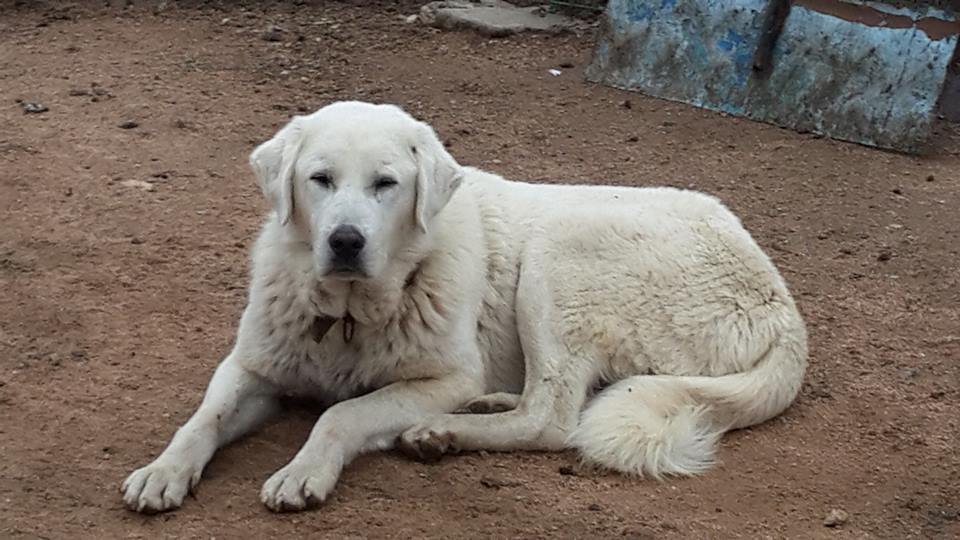
a large white dog sitting
Other namesAkbaş Çoban Köpeği
OriginTurkey
Traits
Height Males
60–85 cm (24–33 in)[1]: 7 
Females
50–75 cm (20–30 in)[1]: 7 
Weight Males
45–65 kg (100–140 lb)[1]: 7 
Females
35–55 kg (80–120 lb)[1]: 7 
Coat double coat[2]: 90 
Colour white[2]: 90 
Notesrecognised by the Ministry of Agriculture and Rural Affairs of Turkey
Dog (domestic dog)
a large white dog sitting among a flock of sheep
Guarding sheep in California

The Akbash (Turkish: Akbaş) is a traditional Turkish breed or type of flock guardian dog from western Anatolia.[3] The word akbaş means 'white head', and thus distinguishes this dog from the Karabaş, or 'black head'.[4]: 33  It was recognised by the Turkish Ministry of Agriculture and Rural Affairs in 2006; it is under the tutelage of the Köpek Irkları ve Kinoloji Federasyonu, the Turkish dog breed society, but is not recognised by the Fédération Cynologique Internationale.[3][5]

History

[edit]

The Akbash is a traditional breed of livestock guardian dog, used to protect flocks from predators in the rugged terrain of western Anatolia.[2]: 90  It is distributed mainly in the provinces of Afyon, Ankara, Eskişehir and Manisa; some are present in the provinces of Ağrı, Konya, Sivas and Tunceli.[1]: 7 [6]: 5 

A standard was published by the Turkish Standards Institution in 2002, and in 2006 the Akbash was recognised by the Ministry of Agriculture and Rural Affairs; it was added to the list of recognised native breeds and types, and the breed standard was published in the Resmi Gazete, the official government gazette.[6]: 5 [7][8]: 8 [9]

Characteristics

[edit]

The Akbash is a flock guardian dog, providing protection from predators to shepherds and to their sheep; it does not have any herding ability.[1]: 7  It is a large and powerful dog:[10]: 406  mean body weight is approximately 45 kg (100 lb), and mean height at the withers just over 75 cm (30 in).[1]: 6 

The coat may be either long or of medium length; it is always double, and is usually white, though there may be some shading towards a biscuit colour.[11]: 70 [10]: 406  As with other white-coated flock guardian dogs, the white coat makes it easy for the shepherd to distinguish between the dog and a predator, even in the dark.[10]: 406  There is considerable feathering behind the legs, and the tail is heavily feathered.[11]: 70 

References

[edit]
Revisions and contributorsEdit on WikipediaRead on Wikipedia
from Grokipedia
The Akbash is a rare, ancient breed of native to western , specifically the mountainous regions of , where it has been used for centuries to protect sheep and goats from predators such as wolves. The name "Akbash" derives from the Turkish words ak (white) and baş (head), reflecting its distinctive all-white coat that serves as among flocks. Standing tall and regal at 28 to 34 inches in height and weighing 80 to 140 pounds, the Akbash is a lean, muscular canine with a double coat—either medium or long—that sheds seasonally, making it adaptable to warmer climates compared to other guardian breeds. Bred as an independent protector rather than a herder, the Akbash exhibits a calm, steady , bonding deeply with its family or while remaining aloof and discerning toward strangers and potential threats. This breed's origins trace back thousands of years, possibly as a blend of mastiff-like guardians and influences, and it gained recognition through imports in the 1970s for predator control programs, earning praise from the USDA for its effectiveness against coyotes and other wildlife. Unlike more aggressive guardians, the Akbash relies on and , patrolling silently and intervening only when necessary, which contributes to its low-energy lifestyle when not on duty. Today, while still primarily working in rural settings, the Akbash is increasingly appreciated as a loyal home companion for those with space and experience, though its slow maturity (up to 3 years) and need for firm underscore the importance of responsible ownership. The breed remains uncommon outside , with organizations like the recognizing it since 1998 to preserve its working heritage.

Etymology and Origins

Name and Meaning

The name "Akbash" is derived from the Turkish words ak, meaning "," and baş, meaning "head," literally translating to "white head." This etymology highlights the breed's distinctive features, a trait emphasized in its traditional role within Turkish communities. In the cultural context of Turkish traditions, the name Akbash distinguishes this livestock guardian from darker-coated regional dogs, such as the Karabash ("black head"), allowing shepherds in western to identify the white variety used for flock protection. These naming conventions reflect the practical needs of nomadic and rural herders who relied on such dogs for centuries to safeguard sheep from predators. Common variations of the name include "Akbash Çoban Köpeği," where çoban köpeği translates to "shepherd dog" in Turkish, underscoring its working heritage.

Historical Roots in Turkey

The Akbash dog traces its origins to the Anatolian region of Turkey, where it has served as a livestock guardian for over 3,000 years, emerging from ancient shepherd dogs employed by nomadic and pastoral societies in the rugged terrains of western and central Anatolia. These early dogs were integral to the migratory lifestyles of ancient and later Turkish tribes, who relied on them to safeguard flocks during seasonal movements across the Anatolian plateau. The breed's ancient origins as a livestock guardian predate the arrival of Turkic peoples in Anatolia around the 11th century AD, with the Akbash continuing to serve in Turkish pastoral societies thereafter. While definitive records are scarce due to the oral traditions of pastoral communities, genetic and historical evidence supports its long-standing role in the region. While treated as a distinct breed by organizations like the , the Akbash is sometimes regarded as a regional or white-coated variant of the broader Anatolian Dog type. In the mountainous landscapes of central and western , such as the provinces of , Afyon, , and , the Akbash played a crucial role in defending livestock from predators including wolves and bears, which posed significant threats to herds in these isolated, elevated areas. Nomadic herders valued the breed's agility and strength, allowing it to patrol vast terrains and confront dangers effectively without herding the animals, a trait honed through generations of in harsh environments. This protective function ensured the survival of sheep and flocks essential to the economic and cultural fabric of Turkish societies. The Akbash's lineage reflects influences from ancient regional breeds, likely including mastiff-like guardians and sighthounds from and the , yet it maintained genetic distinctiveness without documented crossbreeding, owing to the geographic isolation of Anatolian mountain communities. Genetic studies indicate that Akbash dogs share maternal lineages separate from other Turkish shepherds like the , supporting their purity as a localized type evolved in relative seclusion. This isolation preserved the breed's uniform white coat and guardian instincts, distinguishing it as a pure adapted to Turkey's needs.

History

Ancient Development

The origins of the Akbash breed are rooted in the prehistoric and , with archaeological evidence from sites indicating the presence of large, mastiff-like dogs adapted for protective roles. Excavations at Acemhöyük in central (ca. 2800–1700 BCE) uncovered substantial canine remains, comprising 2.8% of the faunal assemblage, including adult specimens with robust skeletal features suggestive of guarding functions alongside livestock management. Similarly, remains from Tell Surezha in northern (Late , ca. 5500–3800 BCE, bridging to contexts) show medium-to-large dogs with molar lengths of 22.5–27.1 mm, implying physical capabilities for deterring predators in pastoral settings. Ancient texts from the Ur III period (ca. 2100 BCE) in further reference dogs provisioned with livestock rations in temple and contexts, pointing to early guardianship duties that likely influenced the evolution of regional breeds like the Akbash. Pastoral communities in the and engaged in of these mastiff-type dogs to enhance traits suited to remote environments, prioritizing to allow autonomous in isolated mountain pastures and low vocalization to avoid alerting predators prematurely or disturbing flocks. This breeding focus produced dogs capable of vigilant patrolling without excessive barking, a behavioral observed in traditional Anatolian shepherding practices where human oversight was minimal. Such selections aligned with the demands of transhumant management, fostering a that integrated seamlessly into nomadic and semi-nomadic societies. Post-2000 genetic analyses have substantiated the Akbash's descent from ancient (LGD) lineages, revealing shared ancestry with other LGDs through extensive linked to historical pastoral migrations. A 2024 genome-wide study of 304 LGDs, including Akbash samples, identified multiple ancestries tracing to Eurasian dogs (e.g., from and , ca. 4.7–7 ky ), highlighting admixture from distinct East Asian and Eurasian lineages. The breed's distinctive white pigmentation, a hallmark for blending with light-colored sheep flocks to enhance guardian , represents a unique selective adaptation not uniformly shared across all LGDs, supported by analyses indicating divergent maternal origins from non-white guardians like the . This genetic profile underscores the Akbash's specialized evolution for visibility and deterrence in flock protection.

Modern Recognition and Export

The Akbash dog gained modern recognition outside Turkey through its export to the United States in the late 1970s, primarily for livestock guardian roles. American diplomats David and Judy Nelson, stationed in Turkey, identified the breed's potential during fieldwork and imported the first Akbash dogs in 1978, including a female named Cybele White Bird (also known as Sheila), to support predator control efforts among American ranchers. These initial imports marked the breed's transition from a traditional Turkish working dog to an internationally utilized guardian, with the U.S. Department of Agriculture incorporating Akbash dogs into its Predator Control Program by 1980, where they demonstrated effectiveness in protecting sheep from coyotes and other threats. The first litter of Akbash puppies born in the United States arrived in 1979, establishing the foundational bloodlines for the breed in North America and enabling broader distribution to farms and ranches. To preserve the breed's purity and promote its use, the Nelsons founded the Akbash Dog Association International (ADAI) in 1978, followed immediately by its North American affiliate, the Akbash Dog Association of America (ADAA), which began registering dogs and developing standards. This organization played a key role in documenting pedigrees and advocating for recognition, facilitating the breed's growth from a handful of imports to established working lines across the U.S. The breed received official recognition from the Turkish Ministry of Agriculture and Rural Affairs in 2006, aiding preservation efforts in its native country. Formal kennel club acknowledgment came with the (UKC) granting full breed recognition to the Akbash on January 1, 1998, allowing participation in conformation, performance events, and other competitions while upholding its guardian heritage. As of 2025, the Akbash remains unrecognized by the (FCI), though ongoing efforts by breed clubs continue to pursue provisional status through standardized documentation and international collaboration. This limited global recognition has kept the Akbash relatively rare outside and the U.S., with exports primarily directed to other English-speaking countries for protection rather than widespread pet or show use.

Physical Characteristics

Appearance and Coat

The Akbash dog is distinguished by its predominantly , which provides effective when guarding white-furred such as sheep. This solid white coloration is the , with solid white preferred to enhance blending with flocks and minimize detection by predators. The coat is double-layered, featuring a dense, soft undercoat for insulation and a weather-resistant outer layer of straight, coarse guard hairs that protect against harsh environmental conditions. The undercoat thickness varies by , becoming heavier in winter to provide warmth in cold regions, while the outer coat remains relatively straight and functional year-round. Coat length is medium to long, typically ranging from 1.6 to 2.8 inches (4 to 7 cm), with both variations acceptable and no preference stated in breed standards; shorter hair appears on the muzzle, ears, and paws, while the tail and back of the legs may show slight feathering proportional to overall length. Minimal markings are permitted, such as light biscuit or gray shading around the ears or along the spine, but any colored patches, black pigmentation on whiskers or eyelashes, or non-white tones are disqualifying faults. The Akbash sheds seasonally, with the undercoat typically molting once or twice annually, often more heavily in spring and fall to adapt to changes. This shedding pattern helps maintain the coat's protective qualities without excessive grooming needs in moderate climates.

Size, Build, and Variations

The Akbash is classified as a large , with males typically standing 28 to 32 inches (71 to 81 cm) at the and weighing 90 to 140 pounds (41 to 64 kg), while females measure 27 to 30 inches (69 to 76 cm) in height and weigh 75 to 110 pounds (34 to 50 kg). These dimensions reflect the breed's role as a guardian, providing sufficient stature for deterrence without excessive bulk that could hinder mobility. According to the Continental Kennel Club , such proportions ensure the dog remains imposing yet functional in rugged terrains. The Akbash exhibits a muscular yet agile build, characterized by a strong bone structure, straight topline, and deep chest that promote endurance and speed. This athletic frame supports the dog's ability to patrol vast areas and respond swiftly to threats, with long legs contributing to an alert, regal posture. The emphasizes that the breed's lean, powerful constitution balances size with , avoiding or frailty that could impair working performance. Variations within the Akbash are minimal, primarily stemming from regional breeding influences. American lines often produce slightly larger specimens due to selections favoring greater and weight for enhanced guardian presence in diverse environments. In contrast, Turkish lines adhere to more uniform standards, with heights typically ranging from 26 to 29 inches (66 to 74 cm) to preserve agility and working efficiency in traditional pastoral settings. The Akbash Dogs notes that extreme sizes are detrimental to the breed's functional type.

Temperament and Behavior

Protective Instincts and Working Traits

The Akbash dog exhibits high territoriality, marking and defending its designated area against intruders such as predators or unfamiliar dogs, while displaying a notably low that prevents it from chasing or harming the it guards. These traits enable the breed to patrol expansive ranges—often covering hillsides or pastures—silently and vigilantly, only engaging when a potential threat is detected, as observed in their historical role protecting flocks in rural . In their working capacity, Akbash dogs demonstrate independent decision-making, assessing situations autonomously without relying on constant direction, which stems from centuries of for self-sufficient guardianship. They form primary bonds with the or family unit they protect, integrating into the group as a member rather than seeking ongoing companionship, thereby prioritizing the safety of their "pack" over personal interaction. Vocalization in Akbash dogs is restrained, typically limited to deep, resonant barks reserved for alerting handlers or to imminent dangers, avoiding unnecessary noise that could scatter flocks. Outside of threats, they maintain a calm and composed demeanor, patiently observing their surroundings without agitation, which enhances their effectiveness as steady guardians. With proper , these protective traits can adapt to family settings, making them suitable companions alongside children or other pets.

Interaction with Humans and Other Animals

The Akbash dog is known for its and toward its members, forming strong, affectionate bonds that make it a devoted companion. It is particularly gentle with children, often displaying a protective and calm demeanor around them when properly from a young age. However, the breed tends to be reserved or aloof with strangers, exhibiting suspicion as part of its natural guardian instincts, which necessitates early and ongoing socialization to help it adapt to new people and environments. In interactions with other animals, Akbash dogs are generally tolerant of other dogs if raised together from puppyhood, though they may remain watchful or assertive toward unfamiliar canines entering their territory. Due to their strong livestock guardian instincts, they can view small pets, such as cats or , as potential prey, leading to possible conflicts unless introduced and socialized early in life. Akbash dogs possess a high level of , which contributes to their independent and sometimes willful nature, making them responsive to that emphasizes firm, consistent rather than harsh methods. Positive and patient guidance are most effective, as the thrives under experienced handlers who establish clear boundaries while respecting its .

Health and Care

Common Health Concerns

The Akbash, being a large guardian , is susceptible to several hereditary and structural issues typical of giant dogs, though its rarity limits extensive breed-specific data. Primary concerns include orthopedic conditions stemming from rapid growth and body size, as well as gastrointestinal and ocular problems. Hip dysplasia is a common orthopedic disorder in the breed, characterized by an abnormal development of the hip that results in joint instability, pain, limping, and progressive . Elbow dysplasia similarly affects the front limbs, leading to malformation of the elbow , lameness, and discomfort during movement. Their large size exacerbates these joint vulnerabilities. Gastric dilatation-volvulus (GDV), or bloat, poses a significant risk due to the breed's deep-chested conformation, where the stomach can fill with gas, expand, and twist, potentially causing shock and death if untreated. Eye conditions such as —in which the eyelid folds inward, irritating the —and multifocal retinal dysplasia, involving abnormal retinal folding that may impair vision, are also reported. To mitigate hereditary risks, is advised for breeding stock, focusing on evaluations for and via radiographic screening, as well as thyroid function and eye examinations through organizations like the Orthopedic Foundation for Animals. The average lifespan of healthy Akbash dogs is 10 to 12 years.

Grooming, Exercise, and Lifespan

The Akbash possesses a thick double coat that is weather-resistant and relatively self-cleaning, necessitating infrequent —typically only two to three times per year or when visibly soiled, using a mild to preserve natural oils. Weekly brushing with a pin or is essential to remove loose undercoat and prevent matting, particularly in areas of feathering around the legs, tail, and chest; during seasonal shedding periods in spring and fall, daily brushing may be required to manage heavy . Additionally, routine maintenance includes trimming nails every 1-2 months, checking ears weekly for debris, and brushing teeth several times a week to support overall . Akbash dogs require moderate to high daily exercise to maintain physical and mental , with recommendations ranging from 30 minutes to 1 hour of activity such as brisk walks, hikes, or light jogging. Mental stimulation is equally important, incorporating puzzle toys or training sessions to prevent , especially for individuals from working guardian lines that exhibit greater energy and patrolling instincts. They thrive in spacious environments where they can roam freely, but off-leash exercise should occur in secure areas due to their independent nature. The typical lifespan of an Akbash is 10 to 12 years, though proper care can optimize longevity. A balanced diet formulated for large breeds, portion-controlled to avoid obesity, combined with regular veterinary check-ups for preventive screenings, significantly influences health outcomes. Environmental factors, such as providing shade and avoiding prolonged exposure to extreme heat due to the insulating coat, also support a longer, healthier life.

Recognition and Use

Kennel Club Status

The Akbash dog is formally recognized by the (UKC) in the Guardian Dog Group, with official acknowledgment dating to January 1, 1998. This recognition supports participation in UKC events, including conformation shows and performance trials suited to its livestock guardian heritage. In , its , the received official status from the Ministry of Agriculture and Rural Affairs in 2006, overseen by the Köpek Irkları ve Kinoloji Federasyonu (), a member of the (FCI). However, as of 2025, the Akbash remains unrecognized by the (AKC), which does not include it in its full registry, Foundation Stock Service, or miscellaneous class. Similarly, it lacks recognition from the FCI, either definitively or provisionally, despite ongoing discussions within the breed community about international standardization. The UKC breed standard prioritizes the Akbash's distinctive , which must be predominantly white with allowable light biscuit or gray shading on the ears or undercoat; disqualifications include any overall non-white coloration, defined spots, black whiskers or eyelashes, or . Size specifications outline males at 30 to 34 inches tall at the with an average weight of 120 pounds, and females at 28 to 32 inches with an average of 90 pounds, emphasizing a lean, muscular build for endurance. Temperament standards highlight a calm, steady demeanor, marked by independence, loyalty, and gentleness toward family while maintaining aloofness and suspicion toward strangers, without structural faults that would disqualify the from its guardian role.

Role in Livestock Guarding and Modern Applications

The Akbash serves primarily as a (LGD) in its native , where it has protected sheep flocks from predators such as wolves and bears for centuries, and , where it is employed on farms and ranches to deter coyotes, foxes, and other threats to small ruminants. Studies evaluating LGD breeds, including the Akbash, demonstrate high effectiveness in reducing predation losses, with U.S. ranchers reporting that 91% of Akbash dogs were rated as very effective (77%) or somewhat effective (14%) in deterring predators, contributing to overall success rates exceeding 90% in controlled evaluations. This efficacy stems from the breed's vigilant patrolling, nocturnal barking, and aggressive responses to intruders while maintaining a non-threatening demeanor toward . In modern applications, Akbash dogs have adapted beyond traditional to roles as guardians, leveraging their territorial instincts to secure rural estates and homesteads against unauthorized intruders and . They also support conservation efforts by enabling non-lethal predator management in multiuse landscapes, such as public rangelands grazed by sheep, where they help minimize conflicts between operations and native carnivores like wolves. Their success in contexts arises from this same protective capability, allowing producers to forgo chemical or lethal deterrents while sustaining predator-vulnerable herds in sustainable systems. Training Akbash dogs for working roles emphasizes early to ensure lifelong commitment to guardianship duties, beginning with supervised exposure to as puppies around 8 weeks of age to foster species-specific attachment and prevent predatory behaviors toward the flock. Puppies are typically raised in enclosed areas with the herd for the first few months, gradually integrating into larger pastures as they mature, which indicates yields higher success rates in operational environments compared to later introductions. This methodical approach aligns with the breed's independent temperament, enabling reliable performance in diverse settings from Turkish highlands to American organic operations.

References

Add your contribution
Related Hubs
User Avatar
No comments yet.