Recent from talks
Nothing was collected or created yet.
Alexander Trepov
View on WikipediaThis article may need to be rewritten to comply with Wikipedia's quality standards. (April 2017) |
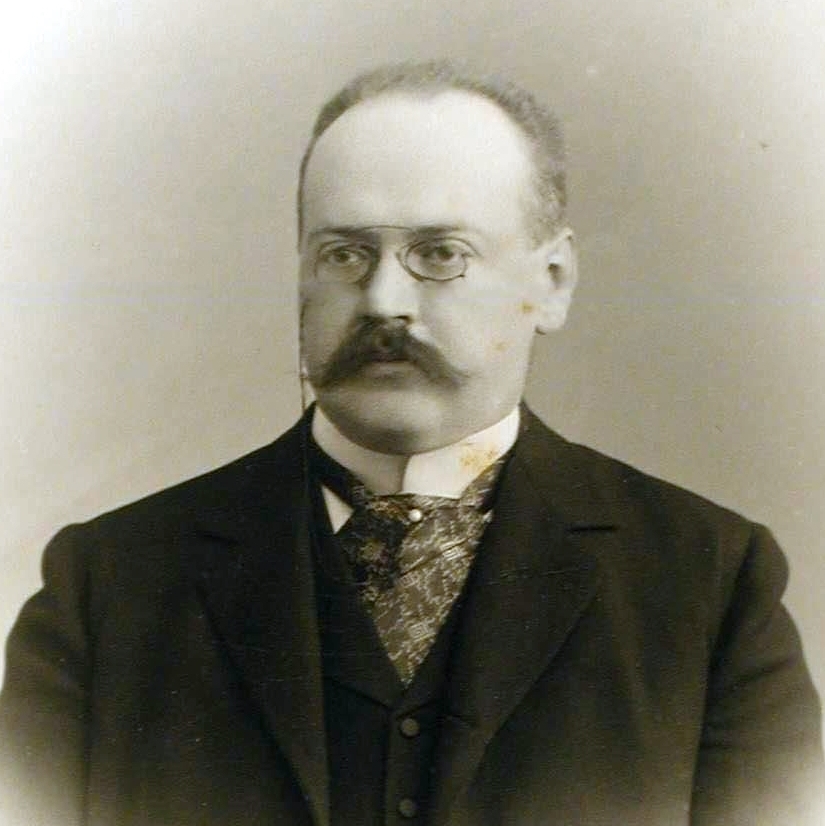
Alexander Fyodorovich Trepov (Russian: Александр Фёдорович Трепов; Ukrainian: Олександр Федорович Трепов; 30 September 1862 – 10 November 1928) was the Prime Minister of the Russian Empire from 23 November 1916 until 9 January 1917. He was conservative, a monarchist, a member of the Russian Assembly, and an advocate of moderate reforms opposed to the influence of Grigori Rasputin.
Key Information
Biography
[edit]Early life
[edit]Alexander was the youngest of the four sons of general Fyodor Trepov, who was involved in the suppression of the January Uprising in 1864 and between 1873 and 1878 served as Governor of St Petersburg. All of his three brothers held senior positions during the reign of Nicholas II. According to MP-nationalist AI Savenko, Alexander was "the most intelligent of the brothers, capable, very determined, with lots of character".[1]
Alexander was educated in His Majesty's Page Corps. He worked in the Ministry of the Interior (1889–1892), was elected Marshal of Nobility of Pereiaslavl Uezd (1892–1895), and assistant State Secretary (1899).
Alexander was appointed as a member of the special commission to draft a plan for a State Duma, according to the rescript of February 18, 1905, and the Manifesto of October 17.[2]
He was the brother of General Dmitri Feodorovich Trepov, who during the Revolution of 1905/1906 served as deputy minister of the interior, played a major role in the repression of unrest[3] and was described as the real ruler of the country.[4]
Trepov became senator in the Governing Senate in 1906. In an unknown year he was sent abroad to study the parliamentary systems of Western Europe.[5] In 1914 he was appointed in the State Council. Trepov was appointed Minister of Transport, Railways and Communication on November 12 (30 October O.S.), 1915, and Grigori Rasputin was grieved.[6] He developed the Kirov Railway, constructed with a number of war prisoners, to improve the transport connections between the ice-free port of Murmansk with the Eastern Front during World War I. The food problem in the big cities was a difficult issue. Aleksandr Naumov suggested to create a special meeting of five Ministers on Military, Internal Affairs, Communications, Agriculture, and Finance. It was headed by Trepov. On 1 January 1916 Trepov became minister of Transport under Ivan Goremykin, who was succeeded shortly after by Boris Stürmer. Trepov had secretly designed a plan of railway construction and introduced it in government. Trepov quickly established himself in office and showed that his ambition went further. Having proven himself to be a competent organizer,[7] Trepov was now willing to become the next prime minister. According to Naumov, Trepov was one of the most temperamental and talkative members of the Council of Ministers,[1] dealing with an almost dictatorial Stürmer as Prime Minister, Interior Minister and Foreign Minister.
Prime minister
[edit]
On 8 November Boris Stürmer (pro-peace) was dismissed as prime minister/minister of foreign affairs, to the rejoicing of the Duma. On 9 November Empress Alexandra proposed to appoint Ivan Shcheglovitov to Foreign Affairs, but he seemed to be unacceptable. On 10 November 1916 the bellicose Trepov was appointed new prime minister,[8] promising to promote a parliamentary system, but keeping his position of transport minister. Trepov's declaration contained promises to urgently reform the municipal government, to enter the rural municipality district council and to remove national and religious restrictions to education.[1] Because of the shortage in food in the big cities Aleksei Aleksandrovich Bobrinsky, the minister of agriculture had to give up his post; he was succeeded by Aleksandr Aleksandrovich Rittikh. On 17 November Nikolai Pokrovsky was appointed to the ministry of foreign affairs.[9] According to Orlando Figes it was the Russian liberals final opportunity to 'make their peace' with the government.[8]
Trepov was a new, 'modern day Stolypin', and was determined to win over the more moderate Duma politicians by making concessions; Pavel Milyukov and Alexander Guchkov were ready to accept his gesture (and possibly a position in his cabinet), but the more radical and socialist Duma members remained determined to bring down the government.[8]
Trepov was supposed to achieve the resignation of four of the most unpopular ministers. On 16 November Trepov informed Alexander Protopopov that he wished him to give up his position in the Ministry of the Interior and take over that of Trade and Industry, but Protopopov refused. Trepov had made the dismissal of Protopopov an indispensable condition of his accepting the presidency of the council,[10] Protopopov being a 'protege of Rasputin'.[11] and supposedly having mental problems. On 19 November Trepov declared full transfer of the food issue at the request of the Duma to the ministry of agriculture.[1]
On 27 November both Protopopov and Alexandra travelled to Stavka. Trepov threatened to resign on the next day. On 29 November/12 December the German Chancellor, Theobald von Bethmann Hollweg, in a speech in the Reichstag, offered to open negotiations with the Entente in a neutral country. On 2 December, on his appearance in the Imperial Duma, Trepov revealed France and Britain promised Russia Constantinople and the Bosporus,[12] but was loudly hissed at by the Socialists.[13] The deputies shouted "down with the Ministers! Down with Protopopov!".[14] Pokrovsky said that Russia would never sign a peace treaty with the Central Powers, which caused a storm of applause. On 7 December the cabinet demanded that Protopopov should go to the emperor and resign, but at the request of the Tsar, his wife, Anna Vyrubova and Rasputin combined[citation needed] the pro-peace Protopopov stayed in his job.[10]
Rasputin
[edit]Trepov having failed to eliminate Protopopov tried to bribe Rasputin.[15] With the help of general A.A. Mosolov,[16] his brother-in-law, Trepov offered a substantial amount of money, a bodyguard and a house to Rasputin, when he would leave politics.[17] Trepov had offered Rasputin 200,000 roubles in cash to return to Siberia and never again involve himself in politics. Rasputin refused the offer and informed Alexandra. The tsar received Trepov on Monday the 12th Dec. On 13 December Rasputin warned against the influence of Trepov.[18] Alexandra reacted with a letter to her husband against Trepov.[18] She hated Trepov and Makarov;[19] the tsarina even wanted Trepov hanged.[8] Fighting the war against Germany had to go on. Woodrow Wilson planned to bring the United States into the war, when the Germans attempted to negotiate peace with the allies.[citation needed] As a result, and in short Alexandra's and Rasputin's standing and prestige in society fell, and led to the final determined conspiracy by Prince Felix Yusupov, and Grand Dukes Grand Duke Dmitry Pavlovich and Grand Duke Nikolai Mikhailovich to have him murdered[10] in the hope stopping Alexandra's interference in politics.
Post-Premier
[edit]On 16 December 1916 the Imperial Duma was closed for Christmas until 28 December (which is 29 December until January 9, 1917 N.S.). On 17 December Rasputin was murdered. On 29 December a hesitating prince Nikolai Golitsyn became the successor of Trepov, who was dismissed on the 27th. Also Pavel Ignatieff, Alexander Makarov and Dmitry Shuvayev were replaced.
In the seventeen months of the `Tsarina's rule', from September 1915 to February 1917, Russia had four Prime Ministers, five Ministers of the Interior, three Foreign Ministers, three War Ministers, two Ministers of Transport and four Ministers of Agriculture. This "ministerial leapfrog", as it came to be known, not only removed competent men from power, but also disorganized the work of government since no one remained long enough in office to master their responsibilities.[20]
According to Bernard Pares Trepov was probably appointed as a curator at the Tsarskoye Selo Lyceum, where he met the tsar on February 1, 1917.[citation needed]
After the October Revolution he was arrested by the Cheka. Trepov collaborated with Count Paul von Benckendorff to protect the imperial family. From autumn 1918 to January 1919 he led in Helsinki the "Special Committee for Russian in Finland". In the 1920s Trepov emigrated to France, from where he supported the White Army. He became president of the "Union des Organisations monarchiques russes". In 1921 he and his brother-in-law Alexander Mosolov participated in the "Congrès monarchiste russe", organized in Bad Reichenhall.
He died in 1928 and was buried at the Russian Orthodox Cemetery, Nice.
References
[edit]- ^ a b c d The PENULTIMATE PRIME Minister of the RUSSIAN EMPIRE A. F. TREPOV by FEDOR ALEKSANDROVICH GAIDA (2012)
- ^ "Features And Figures Of The Past Covernment And Opinion In The Reign Of Nicholas II".
- ^ Montefiore, Simon Sebag (2016). The Romanovs 1613-1918. p. 522. ISBN 978-0-297-85266-7.
- ^ "Full text of "The memoirs of Count Witte"".
- ^ Seeger, p. ?
- ^ Pares, p. 299; Radzinsky, p. 353.
- ^ Montefiore, Simon Sebag (2016). The Romanovs 1613-1918. p. 597. ISBN 978-0-297-85266-7.
- ^ a b c d Figes, p. 288
- ^ "Ведомства иностранных дел России/СССР и их руководители".
- ^ a b c Pipes, p. 261
- ^ Figes, p. 286
- ^ Brenton, Tony (23 June 2016). Historically Inevitable?: Turning Points of the Russian Revolution. Profile Books. ISBN 9781847658593 – via Google Books.
- ^ Pares, p. 396; Spargo, p. 97.
- ^ "Maurice Paléologue. An Ambassador's Memoirs. 1925. Vol. III, Chapter IV".
- ^ Massie, p. ?
- ^ Mosolov, p. ?
- ^ Pares, p. 395; Radzinsky, p. 433
- ^ a b "The tsarina's letters exerting political influence (1915-16)". 10 December 2012.
- ^ Walsh, p. 115, 116 & 297
- ^ Figes, p. 278
Bibliography
[edit]- Figes, Orlando (2014). A People's Tragedy: The Russian Revolution 1891–1924. London: The Bodley Head. ISBN 9781847922915.
- The PENULTIMATE PRIME Minister of the RUSSIAN EMPIRE A. F. TREPOV by FEDOR ALEKSANDROVICH GAIDA (2012)
- Gurko, Vladimir I. (1939). Features And Figures Of The Past Covernment And Opinion In The Reign Of Nicholas II. New York: Russell & Russell.
- Massie, Robert K. (2013). Nicholas and Alexandra: The Tragic, Compelling Story of the Last Tsar and his Family. Head of Zeus. ISBN 9781781850565. Retrieved 27 August 2016.
- Mosolov, Aleksandr (1935). At the court of the last tsar: being the memoirs of A. A. Mossolov, head of the court chancellery, 1900-1916. Methuen. ISBN 978-0-598-66681-9. Retrieved 19 June 2014.
{{cite book}}: ISBN / Date incompatibility (help) - Pares, Bernard. The Fall of the Russian Monarchy
- Pipes, Richard (1991). The Russian Revolution. New York: Vintage Books. ISBN 9780307788573. Retrieved 27 August 2016.
- Radzinsky, Edvard (2010). The Rasputin File. Knopf Doubleday Publishing Group.
- Seeger, Charles Louis (1921). Recollections Of A Foreign Minister. Doubleday Page & Company.
- Spargo, John (1919). Bolshevism: The Enemy of Political and Industrial Democracy. Elamedia Group LLC. ISBN 9781449550752.
{{cite book}}: ISBN / Date incompatibility (help) - Walsh S.J., Edmund A. (2009). The Fall of the Russian Empire: The Story of the Last of the Romanovs and the Coming of the Bolshevik. Wildside Press LLC.
Other
[edit]- An obituary can be found in The Times, Monday, Nov 12, 1928; p. 18 (using the old transliteration Trepoff).
External links
[edit]
Media related to Alexander Trepov at Wikimedia Commons
Alexander Trepov
View on GrokipediaEarly Life and Background
Family and Upbringing
Alexander Fyodorovich Trepov was born on 30 September 1862 in Kiev, then part of the Russian Empire, into the family of General Fyodor Fyodorovich Trepov (1809–1889), a prominent military officer and government administrator from the Poltava nobility, and his wife Vera Vasilievna, née Lukashevich (1821–1866).[5][6] His father had distinguished himself in military campaigns, including the suppression of the Polish January Uprising (1863–1864), which advanced his career through roles such as commander in Warsaw and later positions in St. Petersburg.[7] As the youngest of four sons among nine children, Trepov grew up in a household marked by his father's rigorous service to the autocracy and frequent relocations tied to official postings.[8] His brothers included Dmitry Fyodorovich Trepov (1855–1906), who rose to become a key interior ministry official and palace commandant, as well as Vladimir Fyodorovich Trepov; all three elder brothers eventually occupied senior governmental roles under Tsar Nicholas II.[9] Vera Trepova's death in 1866, when Alexander was four, left the family under his father's sole authority, reinforcing a patriarchal structure centered on imperial loyalty and discipline.[6] The Trepov family's noble heritage, tracing to registered Russian aristocracy despite the father's origins as a natural son of a German officer, provided Alexander with early exposure to elite military and administrative circles, fostering a worldview oriented toward state service amid the Empire's turbulent internal challenges.[5]Education and Initial Influences
Alexander Fyodorovich Trepov was born on 18 September 1862 in Saint Petersburg as the youngest of four sons to Fyodor Fyodorovich Trepov, a high-ranking official who served as Chief of Police of Saint Petersburg from 1866 to 1878 and later as a senator.[10] His father's career, marked by efforts to counter revolutionary unrest, profoundly influenced Trepov's early worldview; the 1878 assassination attempt on Fyodor Fyodorovich by Vera Zasulich, from which he recovered despite severe injury, reinforced the family's staunch monarchism and commitment to autocratic stability amid rising nihilist threats.[10] Trepov pursued education at the Imperial Page Corps, an elite military academy in Saint Petersburg established in 1802 for sons of nobility and intended to prepare cadets for roles in the court, guards, and state service through rigorous instruction in academics, drill, and etiquette.[11] [12] He graduated around 1880, entering active duty in the Imperial Russian Army shortly thereafter.[11] Following graduation, Trepov served in the Leib Guard cavalry regiment from 1880 to 1889, rising to the rank of captain before retiring from military service to transition into civil administration.[11] This period of disciplined routine under the Tsarist regime, combined with his upbringing in a household attuned to the imperatives of imperial governance, fostered his lifelong orientation toward conservative statecraft and infrastructure development as bulwarks against disorder.[10]Pre-War Career
Entry into Civil Service
Trepov graduated from the Imperial Page Corps in 1880 and initially pursued a military career, serving in the Leib-Guard Jaeger Regiment and later the 129th Bessarabian Infantry Regiment before retiring from active duty in 1889.[2] That year, he transitioned to civil service, beginning as the elected marshal of the nobility (predvoditel' dvorianstva) in Skvirsky uezd of Kiev Governorate, a position involving local administrative oversight of noble estates and self-government affairs.[2] [13] From 1889 to 1892, Trepov held roles within the Ministry of Internal Affairs, focusing on administrative duties that aligned with his noble background and provided entry-level bureaucratic experience in imperial governance.[2] This period marked his shift from military obligations to civilian bureaucracy, leveraging family connections—his father was a prominent official—to secure positions in regional nobility leadership and central ministry work.[2] Subsequently, Trepov advanced locally, serving as marshal of the nobility in Pereyaslav uezd, which further honed his skills in zemstvo coordination and rural administration before higher appointments.[2] His early civil service emphasized conservative noble self-management over radical reforms, reflecting the era's emphasis on hereditary privilege in Tsarist administration.[13]Roles in Regional Administration
Following his initial service in the Ministry of the Interior from 1889 to 1892, Trepov entered regional administration through elected positions within the noble assemblies of the Russian Empire.[2] He was first elected Marshal of the Nobility for Skvirsky Uezd in Kyiv Governorate, serving from 1889 to 1892.[2] In this role, he coordinated noble estate management, mediated disputes among landowners, and relayed local concerns to guberniya authorities, functions central to the self-governing structure of the nobility under imperial law. In 1892, Trepov relocated his activities to Poltava Governorate, where he owned 2,922 desyatins of land in Pereiaslavl Uezd, including properties near Borisov and Mortsovka villages.[2] [13] He was elected Marshal of the Nobility for Pereiaslavl Uezd, holding the position from 1892 to 1896.[2] This uyezd-level office entailed presiding over noble elections, administering charitable funds for indigent nobles, and supporting agricultural initiatives amid the guberniya's grain-producing economy.[14] Trepov's influence expanded in 1896 when he was elected Marshal of the Nobility for the entire Poltava Governorate, a post he retained until 1902.[2] At the guberniya level, he chaired the provincial noble assembly, vetted candidates for local offices, and advised on implementation of central decrees, including those related to land reform and peasant relations post-1861 emancipation.[2] His tenure coincided with efforts to stabilize rural administration amid growing zemstvo activism, though specific initiatives under his leadership emphasized noble cohesion rather than broader reforms.[15] These roles solidified Trepov's reputation as a conservative administrator aligned with imperial interests, paving the way for his later central appointments.[2]Ministerial Positions
Minister of Ways of Communication
Alexander Fyodorovich Trepov was appointed acting Minister of Ways of Communication on October 30, 1915 (Old Style), assuming full ministerial responsibilities shortly thereafter amid the escalating demands of World War I.[13][2] In this role, he oversaw the Russian Empire's transport infrastructure, including railways, roads, and waterways, which were critical for mobilizing troops and supplies as German naval forces threatened Baltic and Black Sea routes.[2] Trepov's tenure prioritized enhancing logistical capacity to support the war effort, with a focus on northern access points to evade blockades. He directed the accelerated completion of the Murmansk Railway, a 1,054-kilometer line connecting Petrograd to the ice-free port of Romanov-on-Murman (later Murmansk), constructed in under two years at a cost of approximately 180 million rubles.[2][16] The project utilized extensive labor, including prisoners of war, and reached operational status by November 1916, enabling direct rail delivery of Allied aid and munitions.[2] This development was pivotal for sustaining Russia's northern supply lines, though it strained resources amid broader wartime shortages.[17] In October 1916, Trepov established a dedicated Department of Highway Roads within the ministry to improve overland transport, reflecting efforts to diversify beyond rail dependency.[18] His leadership in these initiatives underscored a pragmatic approach to infrastructure amid crisis, though his term ended with his elevation to Chairman of the Council of Ministers on November 23, 1916 (Old Style).[13]Contributions to Infrastructure
As Minister of Ways of Communication, appointed on November 12, 1915 (October 30 Old Style), Alexander Trepov directed efforts to bolster Russia's transportation network during World War I, with a primary emphasis on railway development to support military supply lines. Under his oversight, the ministry prioritized strategic rail projects, including the completion of lines essential for accessing northern ports amid blockades in the Baltic and Black Seas.[19] Trepov supervised the final phases of the Murman Railway construction, initiated in April 1915 and finished by July 1916, spanning approximately 1,000 kilometers from Petrozavodsk to Romanov-na-Murmane (renamed Murmansk in 1917). This line established a vital ice-free conduit for Allied shipments, circumventing German submarine threats and enabling year-round access to Arctic waters; by late 1916, it facilitated the delivery of munitions and provisions critical to the Eastern Front. In summer 1916, Trepov submitted a report to Emperor Nicholas II detailing the operational setup of this route, underscoring its strategic value.[20] To expedite such wartime infrastructure projects, Trepov's ministry utilized labor from Axis prisoners of war, including on the Murman Railway, where thousands worked under harsh northern conditions to meet accelerated timelines. This approach, while efficient for rapid deployment, drew later scrutiny for its reliance on coerced labor amid labor shortages in Russia.[21] Beyond immediate war needs, Trepov advanced forward-looking railway policy by initiating plans in 1916 for substantial post-war investments in network expansion, aiming to integrate economic recovery with enhanced connectivity across the empire's vast territories. These proposals reflected continuity in pre-war construction strategies but adapted to wartime imperatives, though implementation was curtailed by the 1917 revolutions.[22]Prime Ministership
Appointment Amid Crisis
Boris Vladimirovich Stürmer resigned as Chairman of the Council of Ministers on 23 November 1916, amid intensifying accusations of treason and pro-German sympathies, particularly following Duma leader Pavel Miliukov's speech on 14 November that questioned whether government actions stemmed from "stupidity or treason."[23] These charges were fueled by rumors of secret peace negotiations and Stürmer's dual role as foreign minister, which had eroded confidence in the administration during World War I.[23] Alexander Fyodorovich Trepov, serving as Minister of Transport since January 1916, was appointed Stürmer's successor on the same day by Tsar Nicholas II, marking the third prime ministerial change that year amid escalating governmental instability.[23] Trepov, a conservative bureaucrat with prior experience in regional administration, was selected for his reputed administrative competence and efforts to engage the opposition, as the tsar sought to stabilize the regime without conceding to full parliamentary control.[23] The appointment unfolded against a backdrop of profound crisis: military setbacks, including the loss of Warsaw in August 1915 and stalled advances despite the Brusilov Offensive earlier in 1916, compounded by acute food shortages, inflation, and industrial unrest that peaked in autumn 1916.[23] The Progressive Bloc in the State Duma, representing liberal and moderate conservative factions, had intensified demands for a "responsible ministry" accountable to the legislature, reflecting widespread elite and public discontent with autocratic mismanagement and court intrigues, including the influence of Grigory Rasputin.[23] Trepov's tenure began with attempts to forge a wartime unity government by negotiating with Duma elements and dismissing unpopular figures like Interior Minister Alexander Protopopov, though these efforts were thwarted by tsarist resistance and palace factions.[23] Despite his recognition of the impracticality of ruling without legislative cooperation, Trepov's authority remained subordinate to the tsar, limiting his ability to address the systemic failures driving the empire toward collapse.[24]Domestic Reforms and Duma Relations
Upon assuming the premiership on November 23, 1916, Alexander Trepov sought to stabilize the government by negotiating with the Progressive Bloc in the State Duma, offering concessions on some demands to counter mounting discontent amid wartime strains.[23] His initiatives focused on fostering collaboration rather than sweeping structural overhauls, constrained by Tsar Nicholas II's resistance to ceding authority to parliamentary elements.[23] Trepov aimed to form a more unified cabinet capable of addressing supply shortages and administrative inefficiencies, but these efforts yielded limited domestic policy advancements during his brief tenure.[24] In his December 2, 1916, address to the Duma at the Tauride Palace, Trepov emphasized the government's irrevocable commitment to prosecuting the war to Germany's defeat, while extending an invitation for Duma deputies to cooperate on national objectives, including potential post-war territorial gains like Constantinople and the Straits as per the 1915 allied convention.[24][23] Domestic matters received secondary attention in the speech, with implicit nods to bolstering internal unity through parliamentary input, though the assembly's response was mixed: applause for the war pledge but indifference or hostility toward specifics, underscoring persistent skepticism.[24] Trepov's relations with the Duma were fraught, particularly over the retention of Interior Minister Alexander Protopopov, whose perceived incompetence and erratic behavior—detailed in contemporary diplomatic observations as signs of mental instability—drew fierce opposition from deputies who disrupted sessions and demanded his ouster.[24] Trepov pressed the tsar for Protopopov's dismissal as a precondition for effective governance on November 29, 1916, arguing it impeded loyal administration and alliance obligations, but Nicholas II overruled him, mandating cooperation with the existing ministry.[24] This impasse alienated moderate Duma factions Trepov courted, while right-wing figures like Vladimir Purishkevich voiced criticisms of court influences, further eroding prospects for accord.[24][23] Ultimately, Trepov's overtures to the Duma failed to secure broad support, as Bloc leaders rejected partial concessions amid deeper demands for ministerial responsibility to parliament, reflecting the chasm between conservative executive priorities and legislative aspirations for reform.[23] No major legislative reforms materialized before his replacement on January 9, 1917, highlighting the monarchy's reluctance to integrate Duma input into domestic policy amid escalating crisis.[23]War Effort and Anti-German Stance
Trepov became Prime Minister on 23 November 1916, succeeding Boris Shtyurmer amid widespread suspicions of pro-German leanings in the prior government. His administration prioritized sustaining Russia's commitment to the Entente alliance and prosecuting the war vigorously against Germany, rejecting any notion of a separate peace. Trepov explicitly pledged to continue the conflict "to the bitter end," with no sacrifices spared, aiming to crush Germany as the decisive goal.[24] On 2 December 1916, Trepov addressed the State Duma, outlining the government's program and affirming unyielding resolve by "burn[ing] all its boats" in pursuit of victory. This declaration sought to rally domestic support for the faltering military campaigns, including logistics enhancements from his prior role as Minister of Ways of Communication, which facilitated troop movements and supply lines to the fronts. To unify political factions behind the war effort, he negotiated with the Progressive Bloc, offering limited concessions such as ministerial appointments to moderate Duma figures, though these overtures largely failed to secure broad endorsement.[24][23] Trepov's personal animosity toward Germany was pronounced; he openly loathed the enemy and worked to suppress perceived German intrigues within the Russian court and bureaucracy, viewing them as threats to national resolve. This stance aligned with broader Allied pressures and domestic anti-German sentiment, reinforced by reaffirmations of the 1915 inter-Allied convention promising Russia territorial rewards like Constantinople and the Straits upon victory, intended to bolster troop morale and sustain the coalition.[24][23]Confrontation with Rasputin and Court Influence
Upon his appointment as Prime Minister on November 23, 1916 (November 10 Old Style), Trepov conditioned his acceptance on the dismissal of Interior Minister Alexander Protopopov, whose incompetence and close ties to Rasputin had rendered him untenable in office amid wartime crises.[25] The Tsar, under pressure from Tsarina Alexandra who viewed Protopopov as a Rasputin protégé, refused to remove him, yet Trepov assumed the role regardless, initiating efforts to curb the "dark forces" of court intrigue associated with the monk's sway over appointments and policy.[25] [26] Trepov directly confronted Rasputin's influence by offering him 200,000 roubles—equivalent to a substantial fortune—to retire to Siberia and cease political meddling, a proposal rooted in Trepov's monarchist conservatism and opposition to the peasant healer's undue role in governance.[26] Rasputin rejected the bribe and promptly alerted the Tsarina, who on December 13, 1916, penned a vehement letter to Nicholas II decrying Trepov as an adversary and urging his ouster to preserve Rasputin's counsel.[25] This episode highlighted Trepov's principled stand against the Tsarina's reliance on Rasputin, whom she credited with stabilizing Tsarevich Alexei's hemophilia, though contemporaries increasingly saw the monk's interventions as exacerbating administrative chaos and public disillusionment.[27] Despite these clashes, Nicholas II's ambivalence toward curbing court favorites limited Trepov's success; the Tsar prioritized familial loyalty over Trepov's reformist agenda, allowing Rasputin's shadow to persist until the monk's assassination by nobles on December 30, 1916 (December 17 Old Style).[25] Trepov's maneuvers, including sidelining pro-Rasputin figures where possible, underscored a broader conservative pushback against perceived mystical excesses undermining autocratic efficiency, yet they alienated the imperial couple without resolving the underlying dysfunction.[26] Historians attribute this failure partly to the Tsarina's unyielding defense of Rasputin, informed by her German heritage and isolation at Tsarskoye Selo, which blinded her to the political perils of such patronage.[27]Dismissal and Immediate Aftermath
Resignation and Replacement
Trepov's tenure as Chairman of the Council of Ministers concluded on 27 December 1916 (O.S.), when he submitted his resignation to Tsar Nicholas II, citing irreconcilable differences over cabinet composition, particularly the Tsar's insistence on retaining Interior Minister Alexander Protopopov despite widespread criticism of his handling of internal security amid wartime shortages and strikes.[28] The resignation stemmed from Trepov's unsuccessful efforts to secure the dismissal of several unpopular ministers to broaden governmental support in the State Duma and address the Progressive Bloc's demands for responsibility to the legislature, which the Tsar rejected in favor of maintaining autocratic control.[23] Nicholas II accepted Trepov's resignation promptly, appointing Prince Nikolai Golitsyn, a 78-year-old conservative courtier with no prior ministerial experience, as his successor on 29 December 1916 (O.S.).[29] Golitsyn, initially reluctant and described by contemporaries as indecisive, conditioned his acceptance on Protopopov's removal but withdrew the demand after the Tsar refused, resulting in a cabinet perceived as even less capable of implementing reforms or rallying elite consensus against revolutionary pressures.[28] This transition, occurring just weeks before the February Revolution, underscored the monarchy's deepening isolation, as Golitsyn's government prioritized loyalty over efficacy in prosecuting the war and quelling dissent.[29]Role in Final Months of the Monarchy
Following his dismissal as Prime Minister on 9 January 1917 and replacement by the indecisive Nikolai Golitsyn, Alexander Trepov held no formal position in the Tsarist government during the monarchy's closing weeks.[30] The Golitsyn cabinet, lacking Trepov's administrative vigor and confrontational style toward court influences, proved unable to address mounting economic strains, military disaffection, and urban unrest exacerbated by World War I shortages. Trepov, a committed monarchist, did not join efforts to bolster the regime through emergency decrees or military reinforcements in Petrograd, where strikes began escalating by late January. Trepov nonetheless remained active in elite circles, voicing prescient warnings about systemic collapse. On 1 February 1917, at a luncheon hosted by French Ambassador Maurice Paléologue, he frankly outlined the internal crisis's severity—encompassing supply failures, elite disillusionment, and revolutionary undercurrents—while projecting resolve and suggesting remedial action could still avert disaster.[31] His assessment, delivered with characteristic bluntness, underscored the regime's vulnerability but aligned with his prior advocacy for moderate concessions to secure loyalty from the Duma and officer corps. Paléologue noted Trepov's commanding presence as evoking potential for stabilization, contrasting sharply with the court's paralysis. As demonstrations swelled into the February Revolution by mid-March, Trepov's influence waned amid conservative fragmentation; he neither rallied opposition nor mediated with Tsar Nicholas II, who ignored entreaties for decisive governance. The monarchy's fall on 15 March 1917, via Nicholas's abdication, left Trepov sidelined, his brief tenure retrospectively viewed by contemporaries as the final viable bulwark against disintegration.[32]Exile and Later Life
Emigration and Opposition to Revolution
Following the Bolshevik seizure of power in the October Revolution of 1917, Trepov, a staunch monarchist, rejected the new regime and emigrated to Finland, where White Russian exiles gathered amid the Finnish Civil War and anti-Bolshevik sentiments.[33] In this capacity, he positioned himself as a leader among imperial loyalists seeking to undermine Soviet authority from abroad.[34] In autumn 1918, Trepov helped establish the Special Committee of Russian Affairs in Finland, an anti-Bolshevik entity composed of former imperial officials and aristocrats, including figures like Prince Vladimir Volkonsky and ex-Prime Minister Vladimir Kokovtsov, aimed at coordinating opposition to the revolutionary government. This committee functioned as a provisional Russian authority in exile, with Trepov at its helm, receiving financial support—such as an advance of 500,000 Finnish marks from the Finnish treasury mediated by Carl Gustaf Mannerheim—to sustain operations and potentially back military efforts against the Bolsheviks.[35] The group's activities reflected Trepov's commitment to restoring monarchical legitimacy, viewing the revolution as an illegitimate usurpation that had dismantled Russia's traditional order.[34] Trepov's exile efforts underscored his ideological opposition to the revolution's radical egalitarianism and rejection of autocracy, prioritizing instead conservative restoration through alliances with regional anti-communist forces like those in Finland.[33] Though the committee's influence waned as Bolshevik consolidation progressed and Finnish priorities shifted toward independence, it exemplified early White émigré organizing against Soviet rule.Death and Personal Reflections
Trepov spent his final years in exile in France, having fled Russia after the Bolshevik consolidation of power in 1920. He resided primarily in Nice, where he maintained connections within the émigré Russian community opposed to the Soviet regime.[8][33] He died on 10 November 1928 in Nice at the age of 66, succumbing to natural causes amid the hardships of displacement.[8][5] His remains were interred at the Russian Orthodox Cemetery in Nice, a site that became a resting place for many White Russian exiles.[5][36] No published memoirs or extensive personal writings from Trepov survive, limiting direct insights into his private thoughts on the fall of the monarchy and the Bolshevik triumph. However, his lifelong adherence to conservative monarchism and active role in anti-revolutionary émigré efforts, including brief involvement in a provisional Russian government in exile in Finland around 1918–1919, reflect a steadfast rejection of the revolutionary upheaval he had foreseen and resisted during his premiership.[12][33] Contemporaries described him in exile as resolute in his patriotism, viewing the Soviet state as a catastrophic betrayal of Russia's imperial traditions, though specific utterances remain sparse in available records.[32]Political Ideology
Conservative Monarchism
Alexander Trepov adhered to conservative monarchism, emphasizing the divine-right autocracy of the Russian Tsar as the cornerstone of national stability and order. He viewed the monarchy not merely as a political institution but as an embodiment of Orthodox Christian tradition, Russian national identity, and hierarchical social structure, opposing any dilution of the Tsar's absolute authority through parliamentary supremacy or egalitarian reforms. Trepov's ideology rejected revolutionary ideologies, liberalism, and socialism as existential threats to the empire's organic unity, prioritizing instead the preservation of autocratic governance to maintain internal cohesion amid external pressures like World War I.[37] As a member of the Russian Assembly, a conservative organization founded in 1900 to defend autocracy, Orthodoxy, and the principle of "Russia for the Russians," Trepov aligned with intellectual and noble circles that sought to fortify the monarchy against modernist encroachments. This affiliation underscored his commitment to countering the Progressive Bloc's demands for constitutional limitations on imperial power, which he saw as undermining the Tsar's paternalistic role. While not aligned with more extreme right-wing groups like the Union of the Russian People, Trepov's monarchism was pragmatic, advocating selective administrative efficiencies—such as improved transport infrastructure during wartime—to bolster the regime's resilience without conceding to democratic experiments.[37][23] Trepov's opposition to Grigori Rasputin's influence exemplified his conservative purism, interpreting the starets's sway over the imperial court as a corruption of monarchical dignity rather than a challenge to autocracy itself. He believed that purging such "dark forces" would restore public confidence in the Tsar, enabling a unified front against Bolshevik agitation and Duma intransigence. In practice, this manifested in his brief tenure as Prime Minister (23 November 1916 to 9 January 1917), where he pursued a "responsible ministry" under strict imperial oversight, aiming to co-opt moderate Duma elements to avert collapse while upholding the Tsar's veto power and ultimate sovereignty.[37][24]Views on Reform and Autocracy
Trepov championed the preservation of autocracy as the bedrock of Russian statehood, arguing that the Tsar's unrestricted authority was essential for decisive wartime leadership and national unity amid the strains of World War I. As a longstanding member of conservative circles, including noble assemblies, he opposed any concessions that would subordinate executive power to legislative oversight, viewing such shifts as a direct threat to monarchical prerogative.[24][38] While committed to autocracy, Trepov endorsed limited administrative reforms to mitigate public discontent and bolster the war effort, such as streamlining supply chains and curbing bureaucratic corruption, which he believed could be enacted unilaterally by the Tsar without diluting sovereign control. Appointed Prime Minister on 23 November 1916 following Boris Stürmer's dismissal, he maneuvered to engage moderate Duma factions, presenting a government program on 2 December 1916 that promised practical improvements in transport and provisioning while invoking loyalty to Nicholas II. This initiative aimed to co-opt elements of the Progressive Bloc—whose platform included amnesty, religious tolerance, and labor protections—by addressing peripheral issues, but Trepov explicitly rejected their paramount demand for a "responsible ministry" accountable to the Duma, insisting instead on Tsarist oversight to maintain hierarchical stability.[23][39] Trepov's reformist stance derived from pragmatic conservatism rather than liberal ideology; he drew parallels to Pyotr Stolypin's earlier agrarian and judicial adjustments, which had fortified autocracy by preempting radicalism through top-down modernization. In private communications and policy actions, he emphasized that unchecked court influences, like those of Grigori Rasputin, eroded autocratic legitimacy more than Duma criticisms, advocating their removal to restore efficient imperial rule. This balanced approach—reforms to sustain the system, autocracy uncompromised—earned approbation from right-wing patriots but condemnation from Duma progressives, who decried it as cosmetic and insufficient to avert crisis, culminating in a no-confidence motion against him by early 1917.[40][41]Legacy and Historical Assessment
Achievements in Stabilization Efforts
Trepov served as Minister of Communications from 30 October 1915 (O.S.), overseeing Russia's railway network during a period of intense wartime strain, where transport capacity was essential for supplying the front lines and maintaining logistical stability amid mobilization demands. Under his administration, the railways handled significantly increased loads, transporting 52 percent more freight in 1916 compared to 1914, despite shortages in rolling stock and infrastructure challenges that threatened supply disruptions.[42][43] His opposition to Grigori Rasputin's influence, viewed as a source of administrative corruption and favoritism in appointments, positioned Trepov as a counterweight to destabilizing court intrigues, earning him support among officials seeking to restore competent governance.[24] As prime minister from 23 November 1916, Trepov demonstrated firm anti-German resolve, rejecting any inclination toward a separate peace and reinforcing commitment to the Allied war effort, which contemporaries credited with preventing potential wavering in policy at a critical juncture.[24] Trepov sought political stabilization by attempting to forge an accommodation with the Duma's Progressive Bloc, promising moderate reforms such as restructuring municipal self-government and enhancing zemstvo participation in rural administration to broaden regime support without undermining autocracy.[23] These initiatives, though ultimately thwarted by the tsar's reluctance and his brief tenure until 27 December 1916 (O.S.), represented targeted efforts to mitigate elite discontent and consolidate executive authority amid growing internal pressures.[24]Criticisms and Failures
Trepov's tenure as Minister of Ways of Communication from 1911 to 1916 drew criticism for inadequate management of Russia's railway system amid wartime demands, exacerbating supply shortages that fueled civilian unrest and military setbacks. In a February 1916 address to the Council of Ministers, he insisted there was "no disorder" in freight operations despite mounting evidence of severe congestion, with coal and grain shipments backlog reaching critical levels by late 1915; this denial hindered timely interventions, contributing to food scarcity in urban centers like Petrograd and undermining troop logistics on the Eastern Front.[44] Historians attribute part of the transport collapse—evidenced by over 1.5 million tons of undelivered goods by early 1917—to bureaucratic inertia under his oversight, including reliance on outdated infrastructure unable to handle the war's doubled freight volume.[23] As Prime Minister from 23 November 1916 to 9 January 1917, Trepov faced accusations of political ineffectiveness, with his brief government unable to bridge divides between the Duma, the court, and military leaders. His attempt to install a "responsible ministry" accountable to the Duma—promising moderate concessions like enhanced legislative oversight—met fierce resistance from Tsar Nicholas II's inner circle, including Empress Alexandra, resulting in fragmented cabinet cohesion and no substantive reforms.[24] Upon addressing the Duma shortly after appointment, Trepov encountered immediate uproar from deputies demanding bolder changes, highlighting his perceived weakness in rallying support; contemporary observers noted this debut as emblematic of his administration's instability, lasting mere weeks before dismissal amid escalating strikes and Brusilov Offensive aftershocks.[45] Critics, including Duma progressives, faulted Trepov for prioritizing anti-Rasputin purges—such as dismissing Interior Minister Alexander Protopopov—over systemic economic fixes, failing to mitigate the war's toll that saw inflation soar 400% by 1916 and desertions exceed 1 million soldiers.[24] While some memoirs praise his dismissal of perceived German sympathizers in government, others argue his conservative monarchism precluded decisive action against autocratic rigidities, accelerating the regime's collapse; for instance, diplomatic dispatches describe his successor's appointment as a concession to irreconcilable factions, underscoring Trepov's inability to forge national unity.[46] These shortcomings, compounded by personal overconfidence in ad hoc measures like POW labor on northern railways, are seen by analysts as microcosms of broader Tsarist maladministration, though Trepov's opposition to court intrigues offered fleeting stabilization unmet by structural resolve.[24]Significance in Russian History
Alexander Fyodorovich Trepov's brief tenure as Prime Minister of the Russian Empire, from 23 November 1916 to 9 January 1917, underscored the deepening political crisis that precipitated the collapse of the monarchy. Appointed amid escalating wartime discontent and ministerial instability following Boris Shturmer's resignation, Trepov, previously Minister of Transport, attempted to reconcile the government with the opposition in the State Duma by addressing select demands of the Progressive Bloc.[23] His efforts included disclosing details of the 1915 allied convention promising Russia control over Constantinople and the Straits, a gesture aimed at bolstering national morale and parliamentary support.[23] However, these concessions fell short of the Duma's core requirement for a "responsible ministry" accountable to the legislature rather than solely to Tsar Nicholas II, leading to rejection of his proposals and intensified confrontations, such as Pavel Milyukov's accusations of treason against ministers in late 1916.[23] Trepov's failure to forge a viable compromise highlighted the autocracy's structural rigidity, as the Tsar's unwillingness to devolve power thwarted pragmatic stabilization measures despite Trepov's conservative yet reform-oriented approach. This impasse eroded confidence among moderates and elites, accelerating the regime's isolation from societal forces.[23] In the broader arc of Russian history, Trepov's premiership exemplifies the fatal delays in adapting autocratic governance to modern pressures, including World War I's strains and rising demands for accountability. His ousting in early January 1917, just weeks before the February Revolution, marked the exhaustion of internal reform avenues, paving the way for revolutionary upheaval that dismantled centuries of Romanov rule. Historians view his role as emblematic of the elite's recognition of existential threats—coupled with insufficient resolve or leverage against the Tsar—contributing to the monarchy's downfall and the onset of Bolshevik ascendancy.[23]References
- https://www.wikidata.org/wiki/Q620555
