Hubbry Logo
search
logo
2068110

Ali Shaheed Muhammad

logo
Community Hub0 Subscribers
Read side by side
from Wikipedia

Key Information

Ali Shaheed Muhammad (born August 11, 1970) is an American hip hop DJ, record producer, rapper and bass guitarist, best known as a member of A Tribe Called Quest.[1] With Q-Tip and Phife Dawg (and sometimes Jarobi White), the group released five studio albums from 1990 to 1998 before disbanding; their final album was released in 2016. He was also a member of the R&B group Lucy Pearl, and is known in recent years for his jazz collaborations with producer Adrian Younge.

Early life

[edit]

Muhammad was born in Brooklyn, New York City, and was raised in the Bedford–Stuyvesant neighborhood.[2][1][3] He began to DJ at age eight, and began programming music at age 13.[4] He befriended Q-Tip as a freshman at Murry Bergtraum High School in Manhattan, and in 1985, they began making demos together, using recording equipment provided by Muhammad's uncle.[4][5] Shortly thereafter, Phife Dawg and Jarobi White joined the duo, forming the hip hop group A Tribe Called Quest.[4] Muhammad is a Muslim.[6]

Career

[edit]
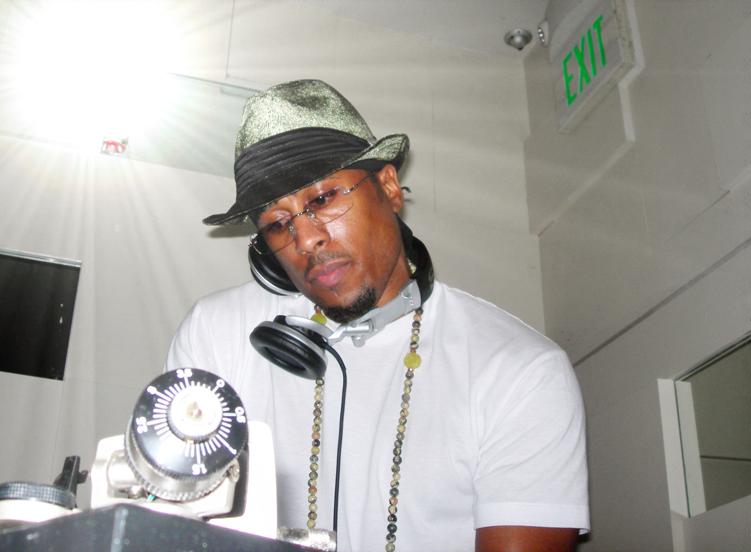
Muhammad speaking at Apple Fifth Avenue in New York City in 2006

Together with Jay Dee and Q-Tip, Muhammad formed the music-production collective the Ummah.[1]

After A Tribe Called Quest disbanded, Muhammad formed the R&B supergroup Lucy Pearl with Dawn Robinson, formerly of En Vogue and Raphael Saadiq, formerly of Tony! Toni! Toné!, releasing one album in 2000.[1] On October 12, 2004, he released his debut solo album, Shaheedullah and Stereotypes.[1]

In 2013, Muhammad moved to Los Angeles to work with producer Adrian Younge on the Souls of Mischief album There Is Only Now, as the album's narrator.[7][8] Since then Muhammad and Younge have collaborated to co-produce the soundtrack for both seasons of the Luke Cage TV series,[9][10] and they have toured together since 2018 as the Midnight Hour, releasing an album by the same name.[11][12]

In 2019, Muhammad contributed to Saadiq's fifth album, Jimmy Lee.[13]

In 2020, Muhammad and Younge launched the Jazz Is Dead album series, in which the two of them collaborate with jazz musicians. Album partners in this series have included Roy Ayers, Marcos Valle, Doug Carn, Gary Bartz, João Donato, and the trio Azymuth.[14][2] Muhammad is the main bass guitarist for the project.

In 2024, Muhammad was inducted into the Rock and Roll Hall of Fame, as a member of A Tribe Called Quest.[15]

Radio show

[edit]

In 2013, Muhammad began co-hosting the Microphone Check radio show, which ran on NPR until 2016,[16] and on Spotify until 2019.[17][18]

Discography

[edit]

Studio albums

[edit]

with Lucy Pearl

[edit]

with Adrian Younge

[edit]
  • Luke Cage (Original Soundtrack Album) (2016)
  • Luke Cage: Season 2 (Original Soundtrack Album) (2018)
  • The Midnight Hour (as The Midnight Hour) (2018)
  • Jazz Is Dead 001 (2020)
  • Roy Ayers JID002 (2020)
  • Marcos Valle JID003 (2020)
  • Azymuth JID004 (2020)
  • Doug Carn JID005 (2020)
  • Gary Bartz JID006 (2021)
  • João Donato JID007 (2021)
  • Brian Jackson JID008 (2021)
  • Instrumentals JID009 (2021)
  • Remixes JID010 (2021)
  • Jazz is Dead 011 (2022)
  • Jean Carne JID012 (2022)
  • Katalyst JID013 (2022)
  • Henry Franklin JID014 (2022)
  • Garret Saracho JID015 (2022)
  • Phil Ranelin and Wendell Harrison JID016 (2023)
  • Lonnie Liston Smith JID017 (2023)
  • Tony Allen JID018 (2023)
  • Instrumentals JID019 (2023)
  • Remixes JID020 (2023)

Selected solo production credits

[edit]
1991
  • "Check the Rhime (Mr. Muhammad's Mix)"
1992

Fu-Schnickens - True Fuschnick 12"

[edit]
  • "True Fuschnick (Shaheed's Fix)"

Boogie Down Productions - We in There 12"

[edit]
  • "We in There (Remix)"
1993

Greg Osby - 3-D Lifestyles

[edit]
  • "Raise"
  • "Hardcopy"
  • "Flow to the Underculture"
  • "Where Ya At?" (feat. Phife Dawg)
  • "We Can Do This"
  • "Foulin'"
  • "Bob Your Head"
  • "Open Up the Door (and Let Me In)"
1994
  • "Don't Give Up"

Ice Cube - What Can I Do? 12"

[edit]
  • "What Can I Do (Eastside Mix)"

Simple E - Colouz Uv Sound

[edit]
  • "Neck Work"
  • "We Run Things (It's Like That)"
1995
  • "You Used to Love Me (Ali Mix)"
  • "Feel Me Flow (Ali Shaheed Muhammad Mix)"

Stepchild - Hangin' Around (Sicka Gettin' Treated) 12"

[edit]
  • "Hangin' Around (Sicka Gettin' Treated) [Remix]"
1997

Jon B. - I Do (Watcha Say Boo) 12"

[edit]
  • "Cool Relax (Remix)"
1998

Various artists - Ride (soundtrack)

[edit]
  • "Never Say Goodbye" - Adriana Evans and Phife Dawg
1999
  • "Bone 2 Pic (With U)"
  • "Lovely Affair"
  • "That's Just My Way"
  • "Lamentation"
  • "Why You Follow Me"

Scritti Politti - Tinseltown to the Boogiedown: The Variations

[edit]
  • "Tinseltown to the Boogiedown (Ali Shaheed Variation)"

Various artists - The PJs (soundtrack)

[edit]
  • "Got"
2000
  • "Keep Your Head Up"
  • "Groovin'"
  • "She's Hurtin'"
2001
  • "What U Dyin' For"
2004
[edit]

Toshinobu Kubota - Time to Share

[edit]
  • "Neva Satisfied"
2013
[edit]

John Legend - Love in the Future

  • "Wanna Be Loved"[19]

2016

[edit]
  • "Sidewalks" {produced with Bobby Raps & Doc McKinney}[20]

See also

[edit]

References

[edit]
[edit]
Revisions and contributorsEdit on WikipediaRead on Wikipedia
from Grokipedia
Ali Shaheed Muhammad (born August 11, 1970) is an American hip hop DJ, record producer, rapper, and composer best known as the founding DJ and co-producer of the influential group A Tribe Called Quest, with whom he created five seminal albums blending jazz, funk, and alternative rap from 1990 to 2016.[1][2][3] Born and raised in Bedford-Stuyvesant, Brooklyn, Muhammad developed a passion for music at an early age, inspired by a transistor radio and house parties where his uncle DJed; he began DJing himself at just eight years old.[4][3] In 1985, while attending high school in Manhattan, he co-founded A Tribe Called Quest alongside Q-Tip and Phife Dawg as part of the Native Tongues collective, which emphasized positive, eclectic hip-hop; the group's debut album, People's Instinctive Travels and the Paths of Rhythm (1990), marked a breakthrough in jazz-rap fusion, followed by classics like The Low End Theory (1991) and Midnight Marauders (1993).[5][6] Muhammad handled much of the group's production and scratching, contributing to their innovative sound that influenced generations of artists including Common and Erykah Badu.[3] Beyond Tribe, Muhammad co-founded the production collective The Ummah with Q-Tip and J Dilla in the mid-1990s, yielding notable credits such as co-producing D'Angelo's hit "Brown Sugar" from the 1995 album of the same name and tracks on Common's Like Water for Chocolate (2000).[1] In 1999, he formed the short-lived R&B/hip-hop supergroup Lucy Pearl with Raphael Saadiq of Tony! Toni! Toné! and Dawn Robinson of En Vogue, releasing the self-titled album Lucy Pearl (2000), which featured the hit "Dance Tonight."[2][3] Muhammad has earned four Grammy Award nominations, including for Best Long Form Music Video for the documentary Beats, Rhymes and Life: The Travels of A Tribe Called Quest (2011).[2] In his solo and collaborative work since the 2010s, Muhammad has focused on jazz-infused projects, notably partnering with composer Adrian Younge to form The Midnight Hour and release the album The Midnight Hour (2018), which sampled Luther Vandross and featured artists like Gregory Porter.[7][8] Together, they co-scored the Netflix series Luke Cage (seasons 1 and 2, 2016–2018) and launched the instrumental album series Jazz Is Dead starting in 2020, collaborating with jazz legends like Roy Ayers and Gary Bartz to explore neo-soul and hip-hop jazz hybrids.[9] A Tribe Called Quest's legacy culminated in their 2024 induction into the Rock & Roll Hall of Fame, where Muhammad's foundational role in pioneering conscious, genre-blending hip-hop was celebrated.[10]

Early life

Childhood in Brooklyn

Ali Shaheed Muhammad, born Ali Jones on August 11, 1970, in Brooklyn, New York, spent his early years in the Bedford-Stuyvesant neighborhood, a dynamic area known for its rich cultural tapestry and community vibrancy.[4][3] This diverse urban environment, marked by the social and economic changes of post-1960s New York City, provided a backdrop of street life and communal gatherings that influenced his worldview during the 1970s and 1980s.[11] Muhammad's family played a central role in his upbringing, fostering an atmosphere of lively social interaction. His mother frequently hosted house parties, which served as key social events in their home, while his uncle Mike acted as the DJ, bringing energy and sounds to these occasions.[3] Growing up on Decatur Street in a close-knit block community, Muhammad was surrounded by peers engaged in local creative pursuits, reflecting the interconnected street culture of Brooklyn at the time.[12] As hip-hop began to emerge from the Bronx in the mid-1970s and spread to Brooklyn's block parties by the early 1980s, Muhammad's childhood immersed him in this evolving urban soundscape through neighborhood events and family gatherings.[11] These experiences in a culturally charged setting helped shape his early creative outlook and laid the groundwork for his later pursuits.[3]

Initial musical influences

Growing up in Brooklyn during the late 1970s, Ali Shaheed Muhammad was immersed in the burgeoning hip-hop scene, discovering the genre through block parties and early mixtapes that featured pioneering DJs and artists shaping the sound of the era.[11] His earliest fascination with music came from toting around a yellow Mickey Mouse transistor radio he received as a gift.[3] This exposure ignited his passion for music, leading him to begin DJing at local parties in his Bedford-Stuyvesant neighborhood at an early age.[11] At around eight years old, Muhammad took control of the mixer and turntables during one of these neighborhood gatherings, self-taught in the basics of scratching and mixing as he played tracks for crowds.[4] By age 13, he expanded his skills to include programming beats and experimenting with sampling equipment, blending hip-hop rhythms with sounds from his record collection to create his own mixes at informal events.[4] Muhammad's musical palette was deeply influenced by jazz legends such as Miles Davis and Cannonball Adderley, whose improvisational styles and harmonic complexity inspired his approach to production and DJing.[13] He also drew from funk and soul traditions, incorporating groovy basslines and rhythmic grooves reminiscent of groups like Parliament-Funkadelic, which he fused with hip-hop elements in his early experiments.[14] In high school at Murry Bergtraum High School in Manhattan, Muhammad participated in informal music crews, where he refined his DJ techniques and shared his growing knowledge of sampling and beatmaking among like-minded peers.[15] These experiences laid the groundwork for his development as a producer, emphasizing a seamless integration of jazz, funk, soul, and hip-hop.[13]

Music career

Formation and role in A Tribe Called Quest

Ali Shaheed Muhammad first connected with Q-Tip (Jonathan Davis) and Phife Dawg (Malik Taylor) around 1985 while attending Murry Bergtraum High School in New York City, where the trio shared a passion for hip-hop, DJing, and innovative music creation amid the burgeoning Native Tongues collective scene. This high school camaraderie laid the groundwork for A Tribe Called Quest, officially forming in 1988 with the addition of Jarobi White as the group's hype man and human beatbox. The ensemble quickly emerged as a cornerstone of alternative hip-hop, emphasizing positive, Afrocentric themes and experimental production that set them apart from gangsta rap contemporaries.[16][17] As the primary DJ and co-producer, Muhammad shaped the group's sonic identity through his adept sampling techniques, drawing from jazz, funk, and soul records to craft laid-back, intellectual grooves that prioritized groove and atmosphere over aggression. On the debut album People's Instinctive Travels and the Paths of Rhythm (1990), he contributed to tracks like "Bonita Applebum" by layering obscure samples and subtle scratches, establishing a bohemian, eclectic aesthetic that earned critical acclaim for its freshness. Muhammad also occasionally rapped and played bass, adding versatility to the group's live performances and recordings. His production on The Low End Theory (1991) refined this approach with minimalist beats and prominent live bass—courtesy of Ron Carter on "Verses from the Abstract"—fusing jazz improvisation with hip-hop rhythm to create what many consider a genre-defining work. Muhammad's influence peaked on Midnight Marauders (1993), where he co-produced the entirety of the album, incorporating jazz-funk fusions, live instrumentation, and seamless sample flips to produce a cohesive, nocturnal vibe exemplified in songs like "Electric Relaxation" and "Award Tour." As A Tribe Called Quest evolved into the mid-1990s, Muhammad maintained his central role on Beats, Rhymes and Life (1996), collaborating with The Ummah collective for a more polished, R&B-tinged sound, and The Love Movement (1998), which leaned further into smooth, uplifting grooves amid internal tensions. The group entered an indefinite hiatus after The Love Movement, prompted by Phife Dawg's deteriorating health from diabetes complications, marking the end of their original run.[18][19]

Solo productions and early collaborations

Ali Shaheed Muhammad began establishing himself as a producer outside of his primary role in A Tribe Called Quest during the early 1990s, contributing to key hip-hop releases that highlighted his knack for blending jazz-inflected beats with lyrical flows. One of his earliest notable credits was co-producing "Check the Rhime" on A Tribe Called Quest's 1991 album The Low End Theory, where he crafted a minimalist, bass-driven track sampling the Average White Band's "Pick Up the Pieces" to underscore the group's playful back-and-forth rhymes.[20] This production exemplified Muhammad's emerging style of sparse, groove-oriented arrangements that became a hallmark of Native Tongues-era hip-hop. Expanding his collaborations, Muhammad mixed several tracks on Fu-Schnickens' debut album F.U. Don't Take It Personal (1992), including "True Fuschnick" and "La Schmoove," while production was credited to A Tribe Called Quest, infusing the fast-paced, humorous rap trio's sound with smooth, sample-heavy backdrops that aligned with the album's energetic vibe.[21] That same year, he remixed Boogie Down Productions' "We in There" from Sex and Violence, transforming KRS-One's conscious anthem into a club-ready version with enhanced percussion and layered scratches, which appeared as a single release.[22] These efforts showcased Muhammad's versatility in adapting his production to different artists' visions within the underground rap scene. By 1993, Muhammad's production work gained broader visibility through diverse projects. He contributed to jazz saxophonist Greg Osby's album 3-D Lifestyles, producing the track "Flow to the Underculture" (featuring pianist Geri Allen) and mixing several others, bridging hip-hop rhythms with avant-garde jazz elements on the Blue Note release.[23] Similarly, he produced "Where Ya At?" (featuring Phife Dawg) on Shaquille O'Neal's debut album Shaq Diesel, delivering a funky, horn-sampled beat that complemented the NBA star's rookie rap efforts.[24] On Young MC's What's the Flavor?, Muhammad co-produced and mixed tracks like "Foulin'," incorporating West Coast G-funk influences with his signature soulful sampling.[25] Muhammad's mid-1990s output further diversified into spoken-word and remix territory. In 1994, he produced "Don't Give Up" on Gil Scott-Heron's comeback album Spirits, providing a laid-back, atmospheric groove that supported the poet's introspective lyrics on perseverance.[26] That year, he also remixed Ice Cube's "What Can I Do?" into the "Eastside Mix" for the single from Lethal Injection, adding smoother, R&B-tinged layers to the West Coast gangsta rap track.[27] As the decade progressed, Muhammad ventured deeper into R&B and soul, co-producing the title track "Brown Sugar" on D'Angelo's 1995 debut album of the same name, where his warm, organic instrumentation—built around live bass and subtle keys—helped create the song's sensual, neo-soul essence that peaked at number 27 on the Billboard Hot 100.[28] Concurrently, he remixed Naughty by Nature's "Feel Me Flow" from Poverty's Paradise, refining the original's reggae-infused bounce into a more polished version that extended the track's crossover appeal on rhythm and blues charts. These productions marked Muhammad's successful pivot toward genre-blending work that influenced the rising neo-soul movement.[29]

Work with Lucy Pearl and other groups

In 1999, Ali Shaheed Muhammad co-founded the R&B supergroup Lucy Pearl alongside Raphael Saadiq of Tony! Toni! Toné! and Dawn Robinson, formerly of En Vogue, aiming to blend neo-soul, hip-hop, and funk elements in a collaborative format.[30][31] The trio's formation marked Muhammad's expansion beyond hip-hop into R&B supergroup dynamics, drawing on his production expertise from A Tribe Called Quest to contribute DJ scratches, beats, and overall sonic texture.[32][12] Lucy Pearl released their self-titled debut album in May 2000 on Pookie Entertainment/Atlantic Records, which showcased a fusion of smooth neo-soul grooves with hip-hop influences, peaking at number 4 on the Billboard R&B/Hip-Hop Albums chart.[31] Muhammad served as a key producer and DJ on tracks like the lead single "Dance Tonight," which reached number 36 on the Billboard Hot 100 and featured his turntable work alongside Saadiq's guitar riffs, and "You" featuring Snoop Dogg and Q-Tip, emphasizing the group's short-lived but vibrant chemistry.[33][34] Internal tensions, including Robinson's departure shortly after the album's release, led to her replacement by Joi Cardwell for limited live performances, but the group disbanded in 2001 amid creative differences and lack of sustained label support.[30][35] Beyond Lucy Pearl, Muhammad contributed to other ensemble projects in the late 1990s and early 2000s, including his role in the production collective The Ummah, formed in 1995 with Q-Tip and J Dilla, which continued providing beats for artists like Busta Rhymes and Common into the early 2000s.[12][36] He also supplied early production beats for soundtracks, notably producing "Never Say Goodbye" featuring Phife Dawg and Adriana Evans for the 1998 film Ride, incorporating his signature hip-hop sampling into the project's urban ensemble vibe.[37] During this period, Muhammad occasionally performed on bass guitar in studio sessions and live settings, drawing from his familial influences to add low-end depth to collaborative tracks and tours.[38][14] These efforts highlighted his versatility in group contexts before transitioning toward radio hosting in the mid-2000s.[15]

Radio and broadcasting

Media appearances and interviews

Ali Shaheed Muhammad has engaged extensively with media outlets through interviews that delve into his production techniques and contributions to hip-hop. In a 2017 interview with Tape Op magazine alongside collaborator Adrian Younge, Muhammad discussed their analog recording processes and the intricacies of crafting beats for projects like the Marvel series Luke Cage, emphasizing a hands-on approach to sound design that blends hip-hop roots with live instrumentation.[39] Similarly, in a reflective piece for Nextbop, he shared insights on the creation of A Tribe Called Quest's The Low End Theory, highlighting how jazz influences shaped the album's minimalist bass lines and rhythmic innovations during the early 1990s hip-hop scene.[14] Muhammad has appeared on various podcasts and television platforms to explore hip-hop history and his evolving role as a producer. On NPR's Microphone Check in 2015, he addressed how his Islamic faith informs his work ethic and music evaluation, drawing connections between spiritual discipline and creative output in groups like A Tribe Called Quest and Lucy Pearl.[13] In 2022 episodes of Talib Kweli's People's Party podcast, Muhammad broke down Q-Tip's visionary approach to The Low End Theory and reflected on Phife Dawg's lyrical impact, while also touching on broader hip-hop evolution from the Native Tongues collective onward.[40] He further appeared on the 2024 Artistic Approach and Film Scoring series, where he detailed transitioning from sampling to orchestral scoring for television, including techniques used in Apple TV's Sugar.[41] His contributions extend to documentaries chronicling hip-hop's development in the 2010s and beyond. Muhammad featured prominently in the 2011 film Beats, Rhymes & Life: The Travels of A Tribe Called Quest, directed by Michael Rapaport, providing personal accounts of the group's internal dynamics and their role in pioneering jazz-rap fusion during the genre's golden era.[42] In discussions surrounding the documentary, he commented on its portrayal of A Tribe Called Quest's rise and challenges, underscoring the cultural shifts in hip-hop production from the late 1980s to the 2010s.[43] In 2025, Muhammad appeared on the Transmissions podcast in February, discussing the Jazz Is Dead label and concert series with Adrian Younge.[44] He also featured in Amoeba Music's "What's In My Bag?" segment in May, sharing his record shopping selections and insights into his influences as a DJ and producer.[45] Muhammad maintains an active presence on Instagram under the handle @alishaheed, where he shares behind-the-scenes glimpses of ongoing projects like Jazz Is Dead releases through 2025, offering fans direct access to his creative process.[11]

Jazz Is Dead and later projects

Partnership with Adrian Younge

Ali Shaheed Muhammad first met producer Adrian Younge around 2012 or 2013, forming an immediate creative bond that led to joint projects, including Younge's work on a Souls of Mischief album.[46] Their partnership deepened over the years, culminating in the co-founding of Jazz Is Dead in 2017 alongside Andrew Lojero and Adam Block, a multimedia company dedicated to honoring jazz's innovative legacy through live concerts, recordings, and apparel.[47] The initiative sought to revive the jazz-hip-hop fusion that had influenced Muhammad's earlier career with A Tribe Called Quest, by bridging veteran jazz artists with contemporary production techniques to create fresh, soulful expressions.[48] The label's inaugural album releases marked a significant milestone, with Jazz Is Dead 001 arriving in March 2020 as a compilation featuring Muhammad and Younge's productions alongside jazz luminaries such as Roy Ayers and Gary Bartz.[49] This was swiftly followed by Jazz Is Dead 002 in June 2020, a collaborative effort centered on vibraphonist Roy Ayers, where Muhammad contributed on electric bass amid live instrumentation that emphasized organic grooves and improvisational energy. Their production methodology centered on analog two-inch tape recordings, utilizing vintage microphones, preamps, and tube compressors to preserve the raw, unpolished humanity of performances, avoiding digital overproduction in favor of a warm, tactile sound.[48] Key collaborations extended this approach, including sessions with vocalist Jean Carne on later volumes, where Muhammad's bass lines intertwined with Younge's arrangements to blend hip-hop rhythms with jazz harmonics.[50] By 2023, Jazz Is Dead had expanded to 18 volumes, prioritizing new original compositions recorded live in the studio while occasionally incorporating reissues to contextualize the evolving jazz tradition. Muhammad's role as bassist and co-producer became integral, fostering a catalog that highlighted intergenerational dialogue and instrumental vitality.[51]

Key releases and expansions through 2025

In 2024, Ali Shaheed Muhammad and Adrian Younge reactivated their Jazz Is Dead label after a hiatus, shifting focus to collaborations with artists from Ghana and Brazil to explore global jazz influences. This revival began with the release of Jazz Is Dead 021 in October 2024, an instrumental album under their own names that introduced the new series with tracks blending samba, bossa nova, and contemporary jazz elements. The project marked a deliberate expansion of the label's scope, emphasizing analog recordings and cultural dialogues across continents.[52][53] The reactivation gained momentum with Ebo Taylor JID022, a 2025 album featuring the 89-year-old Ghanaian highlife pioneer Ebo Taylor, produced by Muhammad and Younge at Linear Labs studio. Recorded with polyrhythmic percussion, fuzzed-out guitars, and psychedelic Afrobeat arrangements, the release honors Taylor's legacy while integrating modern production techniques to highlight Ghanaian rhythms in a jazz context. Accompanying the album, Jazz Is Dead organized Ebo Taylor's live tour across the Americas in 2025, featuring performances that brought the collaborative sound to international audiences.[54][55][56] This was followed by Hyldon JID023 on April 4, 2025, partnering with Brazilian soul and funk artist Hyldon to revisit his classic sound through fresh analog recordings that fuse MPB (Música Popular Brasileira) with jazz improvisation.[57] Furthering the label's 2025 output, Dom Salvador JID024 arrived in July, reuniting the Brazilian jazz composer Dom Salvador with Muhammad and Younge for a collection of revitalized tracks. The album revisits Salvador's pioneering work from the 1970s, fusing jazz improvisation with African-derived Brazilian rhythms in compositions like "Os Ancestrais" and "Nao Podemos o Amor Parar," captured through warm analog sessions that emphasize cultural continuity. This release exemplified Jazz Is Dead's commitment to honoring living legends via fresh interpretations.[58][59][60] Beyond label projects, Muhammad contributed to soundtrack composition with Adrian Younge for Cross: Season 1, the Prime Video series adaptation of James Patterson's novels, released in November 2024. The 27-track score incorporates tense, atmospheric jazz motifs and hip-hop undertones to underscore the thriller's narrative, showcasing Muhammad's versatility in media scoring. By 2025, Jazz Is Dead expanded its live programming with international tours and concerts, including performances by artists like Makaya McCraven and events at festivals such as BRIC JazzFest, solidifying the label's role as a global platform for jazz innovation.[61][62][63]

Discography

Solo and collaborative albums

Ali Shaheed Muhammad released his debut solo album, Shaheedullah and Stereotypes, in 2004, a personal and adventurous project that showcased his production skills alongside emerging artists he mentored, blending hip-hop, soul, and experimental elements.[11] In 2000, Muhammad collaborated with Raphael Saadiq and Dawn Robinson as part of the short-lived R&B group Lucy Pearl, releasing their self-titled debut album, which fused funk, rock, R&B, and hip-hop influences into a cohesive neo-soul sound.[64] Muhammad's partnership with producer Adrian Younge led to the formation of The Midnight Hour, whose self-titled debut album arrived in 2018, featuring a full orchestra and guest vocalists including Estelle, CeeLo Green, and Gregory Porter, while emphasizing neo-soul, jazz, and orchestral arrangements.[65] Through the Jazz Is Dead imprint co-founded with Younge in 2019, Muhammad contributed bass lines and production to a series of collaborative albums up to 2025, reinterpreting works by jazz legends such as Roy Ayers on Jazz Is Dead 001 (2020), Gary Bartz on Jazz Is Dead 006 (2021), Katalyst on Jazz Is Dead 011 (2022), and more recent volumes including Jazz Is Dead 021 (2024, featuring artists like Dom Salvador) and Jazz Is Dead 022 with Ebo Taylor (2025), focusing on analog-recorded fusions of jazz, funk, and soul without delving into individual tracks.[49][66][52][67]

Selected production credits

Ali Shaheed Muhammad's production career extends beyond his group and collaborative albums, showcasing his versatility in crafting beats and arrangements for a wide array of artists and projects across hip-hop, R&B, and soundtracks. His work in the 1990s highlights his early influence in East Coast rap and soulful R&B, where he contributed to tracks that blended jazzy samples with contemporary rhythms. For instance, he remixed Faith Evans' hit single "You Used to Love Me" from her 1995 debut album Faith (as the "Ali Mix"), which peaked at number four on the Billboard Hot 100 and earned a Grammy nomination for Best Female R&B Vocal Performance. In 1999, Muhammad co-produced several tracks on Angie Stone's Black Diamond, such as "Bone 2 Pic (Wit U)," infusing the album with neo-soul grooves that helped it achieve platinum status. That same year, he handled production duties for tracks on Mos Def's critically acclaimed Black on Both Sides, such as "Got," which exemplified his signature sample-heavy style and contributed to the album's enduring legacy in alternative hip-hop. Entering the 2000s, Muhammad continued to diversify his credits, bridging hip-hop with smoother R&B sensibilities. He produced several tracks on Eric Benét's 1999 album A Day in the Life, including "That's Just My Way" and "Why You Follow Me." His collaborations with Common, often as part of the production collective The Ummah, spanned multiple tracks across albums like Like Water for Chocolate (2000) and Electric Circus (2002), enhancing Common's conscious rap with intricate, jazz-inflected production that earned widespread praise. Additionally, Muhammad contributed original music to the soundtrack of the animated series The PJs in 1999, including "What I Am" by Sy Smith, with funky, urban-flavored instrumentals that complemented the show's comedic tone. In the 2010s and 2020s, Muhammad's productions leaned further into jazz fusion and cinematic soundscapes, often in tandem with Adrian Younge. Their joint efforts included additional tracks for various artists. More recently, he provided soundtrack contributions to films including Ride (1998), where his work on "Never Say Goodbye" featuring Adriana Evans and Phife Dawg added atmospheric depth to the drama, and the 2024 action thriller Cross, co-produced with Younge to deliver a blend of orchestral hip-hop elements. This eclectic range—from introspective rap anthems to film scores—underscores Muhammad's adaptability, influencing genres without confining himself to one sound.[68][61]

Legacy and recognition

Awards and inductions

Ali Shaheed Muhammad, as a founding member and producer of A Tribe Called Quest, shared in the group's multiple Grammy Award nominations during the 1990s. In 1997, the group was nominated for Best Rap Album for Beats, Rhymes & Life and for Best Rap Performance by a Duo or Group for the single "1nce Again".[69] In 1999, they received another nomination for Best Rap Album for The Love Movement.[69] These nominations highlighted Muhammad's production contributions to the group's innovative blend of jazz, funk, and hip-hop elements.[70] In recognition of their enduring influence on hip-hop and music, A Tribe Called Quest, including Muhammad, was inducted into the Rock & Roll Hall of Fame in 2024.[71] The induction ceremony featured performances and tributes from artists such as Busta Rhymes, [De La Soul](/page/De La Soul), and The Roots, underscoring the group's pioneering role in the genre.[72] Further honors came in the 2010s and 2020s for both the group's catalog and Muhammad's production work. In 2017, A Tribe Called Quest won the Brit Award for International Group, celebrating their global impact following the release of We Got It from Here... Thank You 4 Your Service.[73] The group's seminal 1991 album The Low End Theory was inducted into the Grammy Hall of Fame in 2021, acknowledging its historical and artistic significance in fusing hip-hop with jazz basslines.[74] In 2023, Muhammad received the NAACP Image Award for Outstanding Jazz Album – Instrumental for Jazz Is Dead 014 (JID014), a collaborative project with Adrian Younge and Henry Franklin that revived classic jazz influences through modern production.[75] In 2025, Muhammad and Younge received a nomination for the Black Reel Award for Outstanding Score for their work on the Prime Video series Cross.[76]

Cultural impact

Ali Shaheed Muhammad's pioneering work in jazz-rap fusion, particularly through A Tribe Called Quest, integrated intricate jazz harmonies, chord progressions, and grooves into hip-hop production, fundamentally broadening the genre's sonic palette and influencing subsequent artists.[14] This innovative approach directly shaped producers like J Dilla, who joined Muhammad and Q-Tip in the production collective The Ummah, where Dilla absorbed and refined these jazz-infused sampling techniques for albums like Beats, Rhymes and Life.[77] Contemporary figures such as Flying Lotus have extended this legacy, blending jazz improvisation with electronic hip-hop elements in a manner traceable to Muhammad's foundational contributions.[78] Muhammad elevated sampling from a mere production tool to a sophisticated art form, emphasizing thoughtful curation of jazz records that enriched hip-hop's texture and depth.[79] This technique profoundly impacted neo-soul, where artists like D'Angelo and Erykah Badu drew inspiration from the organic, layered sounds Muhammad helped popularize, and alternative hip-hop, fostering experimental subgenres that prioritize musicality over aggression.[80] Via the Jazz Is Dead imprint, co-founded with Adrian Younge, Muhammad has advanced musical diversity by prioritizing global collaborations, notably with African artists to bridge hip-hop and traditional sounds. By 2025, this included releases such as Jazz Is Dead 021 (2024), Jazz Is Dead 022 with Ghanaian Afrobeat pioneer Ebo Taylor (January 2025), Jazz Is Dead 023 with Brazilian soul artist Hyldon (early 2025), and Jazz Is Dead 024 with pianist Dom Salvador (July 2025), fusing highlife, psychedelic soul, and jazz traditions with rap aesthetics to highlight underrepresented influences in Western music.[81][57][82] Earlier efforts, such as the posthumous project with Nigerian drummer Tony Allen (JID018, 2023), further underscore this commitment to cross-continental dialogue.[83] Through radio appearances, A&R guidance, and interviews, Muhammad has mentored emerging talents by articulating hip-hop's deep ties to jazz roots, encouraging a holistic view of the genres' shared history and inspiring producers to explore archival sources.[13] His discussions on platforms like NPR's Microphone Check emphasize ethical sampling and cultural reverence, shaping perceptions among younger artists and reinforcing jazz's enduring role in hip-hop evolution.[12]

References

User Avatar
No comments yet.