Hubbry Logo
AmbrotypeAmbrotypeMain
Open search
Ambrotype
Community hub
Ambrotype
logo
8 pages, 0 posts
0 subscribers
Be the first to start a discussion here.
Ambrotype
Ambrotype
from Wikipedia
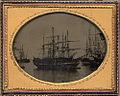
Many ambrotypes were made by unknown photographers, such as this American example of a Union soldier (Sgt. Samuel Smith, 119th USCT[1]) with his family, c. 1863–65. Because of their fragility, ambrotypes were usually kept in folding cases like those used for daguerreotypes. This example is framed for display.

The ambrotype, also known as a collodion positive in the United Kingdom, is a positive photograph on glass made by a variant of the wet plate collodion process. As a cheaper alternative to the French daguerreotype, ambrotypes came to replace them. Like a print on paper, it is viewed by reflected light. Like the daguerreotype or the prints produced by a Polaroid camera, each is a unique original that could only be duplicated by using a camera to copy it.

The ambrotype was introduced in the 1850s. During the 1860s it was superseded by the tintype, a similar photograph on thin black-lacquered iron, hard to distinguish from an ambrotype if under glass.

The term ambrotype comes from Ancient Greek: ἄμβροτος ambrotos, "immortal", and τύπος typos, "impression".

Process

[edit]

One side of a clean glass plate was coated with a thin layer of iodized collodion, then dipped in a silver nitrate solution. The plate was exposed in the camera while still wet. Exposure times varied from five to sixty seconds or more depending on the brightness of the lighting and the speed of the camera lens. The plate was then developed and fixed. The resulting negative, when viewed by reflected light against a black background, appears to be a positive image: the clear areas look black, and the exposed, opaque areas appear relatively light. This effect was integrated by backing the plate with black velvet; by taking the picture on a plate made of dark reddish-colored glass (the result was called a ruby ambrotype); or by coating one side of the plate with black varnish. Either the emulsion side or the bare side could be coated: if the bare side was blackened, the thickness of the glass added a sense of depth to the image. In either case, another plate of glass was put over the fragile emulsion side to protect it, and the whole was mounted in a metal frame and kept in a protective case. In some instances the protective glass was cemented directly to the emulsion, generally with a balsam resin. This protected the image well but tended to darken it. Ambrotypes were sometimes hand-tinted; untinted ambrotypes are monochrome, gray or tan in their lightest areas.

History

[edit]

The ambrotype was based on the wet plate collodion process invented by Frederick Scott Archer. Ambrotypes were deliberately underexposed negatives made by that process and optimized for viewing as positives instead.[2] In the US, ambrotypes first came into use in the early 1850s. In 1854, James Ambrose Cutting of Boston took out several patents relating to the process. Although Cutting, the patent holder, had named the process after himself, it appears the term, "ambrotype" itself may have been first coined in the gallery of Marcus Aurelius Root, a well-known daguerreotypist, as documented in his 1864 book The Camera and the Pencil as follows:[3]

"After considerable improvements, this process was first introduced, in 1854, into various Daguerrean establishments, in the Eastern and Western States, by Cutting & Rehn. In June of this year, Cutting procured patents for the process, though Langdell had already worked it from the printed formulas.

"The process has since been introduced, as a legitimate business, into the leading establishments of our country. The positive branch of it; i.e. a solar impression upon one glass-plate, which is covered by a second hermetically sealed thereto, is entitled the "Ambrotype," (or the "imperishable picture"), a name devised in my gallery.

Root also states (pp. 373): "Isaac Rehn, formerly a successful daguerreotypist, in company with Cutting, of Boston, perfected and introduced through the United States the "Ambrotype," or the positive on glass." What isn't mentioned in the referenced book is the particular year in which the term "ambrotype" was first used.

Ambrotypes were much less expensive to produce than daguerreotypes, the medium that predominated when they were introduced, and did not have the bright mirror-like metallic surface that could make daguerreotypes troublesome to view and which some people disliked. An ambrotype, however, appeared dull and drab when compared with the brilliance of a well-made and properly viewed daguerreotype.

By the late 1850s, the ambrotype was overtaking the daguerreotype in popularity. In 1858, the New York City Police Department, inspired by the pioneering Criminal Investigation Department in Glasgow, Scotland, used ambrotypes to establish a "rogues' gallery", consisting of portraits of wanted criminals and arrested villains.[4] By the mid-1860s, the ambrotype itself was being replaced by the tintype, a similar image on a sturdy black-lacquered thin iron sheet, as well as by photographic albumen paper prints made from glass plate collodion negatives.[5]

[edit]

See also

[edit]

References

[edit]
[edit]
Revisions and contributorsEdit on WikipediaRead on Wikipedia
from Grokipedia
An ambrotype is a direct-positive photographic image produced on a sheet of glass using the wet , where an underexposed negative is created and then backed with a dark material—such as black , , or painted paper—to appear as a positive image with rich tonal contrast. The process originated from the wet collodion technique invented by English sculptor Frederick Scott Archer in 1851, which involved sensitizing a plate with a solution containing salts of or , immersing it in to form light-sensitive halides, exposing it in a camera while still wet, and developing it immediately with chemicals like before fixing and varnishing. This adaptation into the ambrotype format was refined and patented in 1854 by American photographer James Ambrose Cutting of , who introduced sealing the plate with to protect the and coined the term "ambrotype," derived from the Greek words for "immortal" and "image." Ambrotypes gained rapid popularity in the mid-1850s as a more affordable and quicker alternative to daguerreotypes, offering crisp details on non-reflective that could be viewed from multiple angles, often housed in protective cases of , wood, or leather similar to those used for earlier formats, and sometimes hand-colored for added appeal. Their use peaked through the and persisted into the , particularly among itinerant photographers in the United States and , and even longer in until the 1890s, before declining with the introduction of the dry plate process and albumen paper prints that allowed easier production of multiple copies.

Overview

Definition and Characteristics

An ambrotype is a direct-positive photographic image on , created using the wet during the mid-19th century. It functions as an underexposed negative that appears positive when viewed against a dark backing, such as black , fabric, paper, or even dark-tinted . This backing absorbs light transmitted through the translucent , converting the pale negative tones into a visible positive likeness. Ambrotypes are typically produced in standard plate sizes ranging from 1/16 plate (about 1⅜ × 1⅝ inches) to full plate (6½ × 8½ inches), with common formats including sixth plate (2¾ × 3¼ inches) and quarter plate (3¼ × 4¼ inches). The substrate renders them inherently fragile, often necessitating protective cases made of , wood, or metal to prevent breakage. Hand-coloring or tinting with pigments was frequently applied to the surface to add realistic details, such as flesh tones or clothing accents, enhancing the image's lifelike quality. Visually, ambrotypes exhibit subdued gray tones with a soft, low-contrast appearance due to the underexposure. Without the dark backing, the plate reveals its underlying negative image and slight translucency when held to , while the front produces a subtle mirror-like reflection that can obscure details from certain angles. These traits distinguish ambrotypes as a delicate yet reflective medium, often varnished for surface protection. The ambrotype represents a direct application of the wet to supports. The ambrotype emerged as a significant advancement over the , primarily due to its lower production costs and elimination of hazardous materials. While , introduced in , required expensive silver-plated copper plates and a development process involving toxic mercury vapor heated to amplify the , ambrotypes utilized the wet collodion process on inexpensive , avoiding mercury exposure risks altogether. This made ambrotypes a more accessible option for portraiture, with typical costs ranging from 25 cents to $2.50, cheaper than early daguerreotypes (which had often exceeded $5) but competitive with those of the mid-1850s at around $0.50–$2.50. However, ambrotypes offered less sharpness and contrast than the highly detailed, mirror-like daguerreotypes, and their substrate rendered them more prone to breakage. In comparison to the , another -based direct positive process developed around , ambrotypes shared the same wet emulsion but differed in support material: for ambrotypes versus enameled iron sheets for tintypes. This base provided ambrotypes with superior clarity and finer detail, as the transparent medium allowed for better transmission and resolution. Yet tintypes proved more durable and shatter-resistant, appealing for field use, while also being slightly cheaper to produce due to the low cost of iron supports—often under 25 cents—versus the fragility and higher handling care required for ambrotypes. Unlike wet collodion negatives, which were properly exposed to create transparent plates for producing multiple prints via subsequent processes, ambrotypes represented a direct positive adaptation of the same technique, intentionally underexposed and backed with dark material to yield a unique, one-of-a-kind image unsuitable for duplication. The wet , involving the coating of with a solution containing light-sensitive salts, exposure while the plate remained wet, and immediate development, formed the basis for both, but ambrotypes prioritized singular, high-contrast positives for personal keepsakes over the reproducible nature of negatives.
AspectAmbrotypeDaguerreotypeTintypeWet Collodion Negative
SubstrateGlass plateSilver-plated copperEnameled iron sheetGlass plate
Cost (typical)25¢–$2.50$0.50–$2.50 (mid-1850s)Under 25¢Variable, for printing
DurabilityFragile, prone to breakageTarnish-prone but sturdyHighly durable, non-breakableFragile glass, but for multiples
Exposure Time5–60 seconds10–30 seconds (later)5–60 seconds5–60 seconds, adjustable
Image TypeDirect positive (unique)Direct positive (unique)Direct positive (unique)Negative (reproducible)

History

Invention and Early Development

The ambrotype process originated from the wet technique developed by English sculptor and photographer Frederick Scott Archer in 1851. Archer announced his discovery in March 1851 through a publication in The Chemist, describing a method that involved coating glass plates with a solution of (a mixture of nitrocellulose and ether) sensitized with silver halides, exposed while wet, and developed to produce sharp negatives. Unlike earlier processes such as the daguerreotype or calotype, Archer's innovation allowed for greater detail and shorter exposure times, typically 2–20 seconds, and he chose not to patent it, enabling widespread free adoption by photographers. Early experiments with Archer's wet process quickly led to the creation of direct positive images on , forming the basis of the ambrotype. By 1852, photographers in and the began underexposing collodion negatives on and backing them with varnish, , or painted surfaces to convert the dark tones into a positive appearance when viewed against the dark background. This adaptation produced inexpensive, unique portraits on that mimicked the look of daguerreotypes but at a lower cost, with initial adoption occurring in photographic studios across Britain and America around 1852–1853. The process was formalized and patented in the United States by James Ambrose Cutting, a Boston-based inventor and photographer, on July 11, 1854, through three related patents (Nos. 11,213, 11,266, and 11,267). These patents covered improvements such as adding to the for better adhesion, using balsam of fir to seal the glass plates, and a bromide-enhanced formula to shorten exposure times further. Cutting coined the term "ambrotype," derived from the Greek ambrotos meaning "immortal" or "imperishable," reflecting the perceived durability of the glass-based images; he later changed his middle name to in honor of the invention. Although these patents sparked legal controversies among photographers who argued they overly restricted Archer's open process, they helped standardize ambrotype production and accelerated its technical refinement in the mid-1850s.

Peak Popularity and Applications

Following the patenting of the ambrotype process in 1854 by James Ambrose Cutting, the technique experienced a rapid rise in popularity across the and during the mid-1850s to mid-1860s, supplanting the more expensive as the preferred method for . This surge was largely driven by the ambrotype's affordability, with prices typically ranging from 25 cents to $2.50 per image—far lower than the $5 or more charged for —making professional portraits accessible to the growing for the first time. In contrast to the daguerreotype's labor-intensive mirroring process, ambrotypes could also serve as negatives for producing multiple paper prints, further reducing costs and broadening their commercial appeal. Key applications of ambrotypes during this period centered on studio-based portraiture, where they captured formal images of families and individuals, often housed in protective cases for display. Military uses proliferated during the U.S. Civil War (1861–1865), with soldiers commissioning ambrotype portraits in uniform at camps and studios to send home as mementos; the Library of Congress's Liljenquist Family Collection alone preserves nearly 700 ambrotypes and tintypes of Union and Confederate troops. Institutional adoption included , as exemplified by the Police Department's establishment in 1858 of a ""—one of the earliest uses of for criminal identification—featuring ambrotype portraits of arrested individuals and wanted suspects to aid detection and deterrence. The ambrotype's portability facilitated its global spread beyond the U.S., with widespread adoption in Britain (where they were sometimes termed "cheap glass positives"), , and by the late 1850s, enabling itinerant photographers to travel rural areas and produce images on-site for clients without fixed studios. In , early examples from the 1850s–1860s, such as those linked to colonial photographers like William Hetzer, highlight its role in documenting and pastoral life in remote regions. By 1860, the ambrotype's popularity had spurred the establishment of numerous photography studios in major cities across the U.S. and , supporting high-volume production that democratized image-making and contributed to the era's photographic boom.

Decline and Legacy

By the mid-1860s, the ambrotype process began to wane in popularity due to the emergence of more cost-effective and resilient alternatives, including tintypes, which utilized a similar wet emulsion on thin iron sheets for greater durability and lower production costs, and albumen prints mounted on , such as cartes de visite, which allowed for easier reproduction and distribution. The labor-intensive nature of the wet method, requiring immediate exposure and development while the plate remained wet, further contributed to its obsolescence as photographers sought faster workflows. Following the , a notable shift occurred toward card-mounted photographs, which facilitated and postal exchange of images, diminishing the demand for unique glass-based ambrotypes. Commercial use of ambrotypes persisted in isolated instances into the , but the advent of dry plates in the marked the definitive end of the wet plate era, enabling longer storage times and broader accessibility for negative-based . The ambrotype's legacy endures in its pivotal role in advancing portraiture traditions by preserving the sharp detail and tonal depth of earlier daguerreotypes while making such images more attainable to the , thereby democratizing access to personal . As a transitional , it bridged the direct-positive of daguerreotypes to the negative-positive systems of modern film by employing underexposed glass negatives backed for positive viewing, influencing subsequent emulsion-based processes. Today, ambrotypes hold significant archival value, with the Library of Congress's Liljenquist Family Collection preserving over 7,000 Civil War-era portrait photographs, including more than 700 ambrotypes and tintypes, that document historical and social narratives.

Production Process

Materials and Equipment

The production of ambrotypes relied on a set of specialized materials rooted in the wet , which required precise chemical compositions to capture and develop images on glass. The core substrate was clean sheet glass, typically of medium thickness and free from bubbles or coloration, sourced from suppliers like Scovill Manufacturing Company in the 1850s. These plates, often cut to standard sizes such as quarter-plate (3.25 x 4.25 inches) or ninth-plate, were meticulously polished and cleaned using whiting or rottenstone mixed with alcohol to ensure adhesion of the . The began with , a viscous solution of gun cotton (cellulose nitrate) dissolved in and alcohol, iodized for light sensitivity by adding salts such as (typically 6-8 grains per ounce) and bromide of ammonium or (3-5 grains). occurred in a bath of solution, prepared at 40-50 grains per ounce of and iodized with to form light-sensitive halides on the plate. Development employed pyrogallic or ferrous sulfate (protosulphate of iron) mixed with acetic and alcohol, poured over the exposed plate to reveal the within seconds. Fixing stabilized the image using (hyposulphite of soda) in a saturated solution or, less commonly due to , , to remove unexposed silver salts. To achieve the positive appearance from the underexposed negative, ambrotypes required a dark backing applied to the reverse side of the . Common options included black velvet or glazed paper for contrast, a layer of black or painted directly on the , or a secondary painted black sheet sealed behind the . For variants like ruby ambrotypes, red-toned ruby served as the support, eliminating the need for additional backing and producing a distinctive hue in transmitted . Essential equipment facilitated the wet plate workflow, which demanded speed due to the emulsion's short viability. A portable darkroom tent, often canvas-based for field use, provided a light-proof for coating, sensitizing, and processing plates, equipped with trays, beakers, and running water for washing. The camera was typically a wooden or sliding-box model with an to minimize , mounted on a sturdy for exposures of 10-60 seconds. A mercury monitored bath temperatures (ideally 68-78°F) to prevent uneven sensitization, while plate holders—wooden frames sized to the —and polishing tools like buffing cloths ensured flawless surfaces. In the 1850s, materials were sourced from photographic supply firms and apothecaries, with chemicals like and components obtained from dealers such as E. Anthony in New York or general apothecaries handling photographic goods. While exact per-item costs varied, finished quarter-plate ambrotypes retailed for $0.25 to $2.50, reflecting affordable material access that democratized the process compared to daguerreotypes.

Step-by-Step Creation

The creation of an ambrotype follows the wet collodion process, requiring precise timing to maintain the emulsion's sensitivity. The process begins with thorough preparation of the glass plate to ensure a flawless surface. The is cut to the desired size, its edges filed smooth, and the surface meticulously cleaned using a of rotten-stone and alcohol applied with a soft cloth, followed by polishing with a handkerchief to remove any residue or dust; this step is critical to prevent imperfections in the final image. Once cleaned, iodized —a solution of gun cotton dissolved in and alcohol, combined with —is poured evenly onto the center of the plate in a . The plate is tilted in all directions to spread the collodion into a thin, uniform layer, with excess drained off, allowing the film to set for about a minute until it reaches a tacky consistency without being fully dry. The sensitized plate is then immersed in a silver nitrate bath for 3 to 4 minutes, where the silver nitrate reacts with the iodide in the to form light-sensitive crystals on the surface, creating a pale yellowish coating. Excess solution is drained and the back wiped clean before inserting the plate into a light-proof holder for immediate exposure in the camera. Exposure times typically range from 5 to 60 seconds, depending on lighting conditions and the lens used, with the intentionally underexposed to produce a faint negative that will appear as a positive when viewed against a dark background; the removes the lens cap or slide, counts the exposure slowly, and then reseals the holder to protect the wet plate. Development occurs promptly while the plate remains wet, with the developer—often a solution of iron and acetic , or alternatively pyrogallic —poured over the surface to reduce the exposed silver halides and reveal the , monitored visually for proper contrast in shadows, midtones, and highlights. The plate is then rinsed under running to halt development, followed by immersion in a fixing bath of (hypo) to dissolve unexposed silver halides, rendering the image stable; earlier methods used for fixing, but thiosulfate became preferred for safety. Finally, the plate undergoes thorough washing in clean —preferably distilled or rain —to remove residual chemicals, preventing degradation over time. At the core of the process are the chemical reactions involving light-sensitive silver halides. During , silver combines with the halide salts (such as ) in the to form , a compound that darkens upon exposure to light by reducing to metallic silver in proportion to the incident light intensity, thereby creating a of varying silver densities. The developer then amplifies this by further reducing the exposed halides to visible metallic silver grains, while the fixer removes undeveloped halides to prevent further reaction. The wet collodion emulsion imposes strict time constraints, as the and alcohol solvents evaporate quickly, rendering the plate insensitive after about 15 to 20 minutes; thus, all steps from coating through washing must be completed within this window to capture a viable image.

Variations in Technique

One notable adaptation of the ambrotype process involved the use of ruby , a dark red-tinted support that eliminated the need for a separate black backing by inherently providing the contrast required to view the underexposed negative as a positive . This variation, introduced around 1854, produced warmer, reddish tones in the final and was particularly favored for smaller formats like those used in jewelry and brooches due to its cost-effectiveness compared to daguerreotypes. Hand-tinting emerged as a popular post-processing technique to introduce color to the monochromatic ambrotype, typically applied after the image was fixed and varnished using transparent oil paints, watercolors, or inks to enhance realism, such as adding rosy cheeks or detailing . This method allowed photographers to customize portraits for aesthetic appeal, with applications ranging from subtle highlights on jewelry to more elaborate colorations on larger plates. Composite or double-exposure ambrotypes, often referred to in historical contexts as hallotypes or similar bound transparencies, involved creating multiple exposures on separate plates or combining images to produce narrative or stereoscopic effects, such as depth illusion through layered positives with colored backings. These adaptations, developed in the mid-1850s, enabled elements in portraits, like superimposing figures for symbolic compositions, though they required precise registration to avoid misalignment. Practical variations arose between field and studio production, particularly during the , where photographers employed portable darkrooms—often wooden boxes or tented wagons equipped with chemical trays—to process wet plates on location for expedient soldier portraits. In contrast, studio settings accommodated larger formats, up to whole-plate sizes (8x10 inches), for detailed group portraits using fixed equipment and controlled lighting to capture extended family scenes or formal arrangements. Experimental techniques included toning, where a gold chloride solution was applied during or after fixing to shift the silver image toward warmer purple-brown hues and impart a subtle sheen or matte finish, enhancing durability against tarnishing. This method, documented in 19th-century photographic manuals, was selectively used for premium portraits to achieve refined tonal variations beyond the standard sepia.

Identification and Preservation

Distinguishing Features

Ambrotypes are characterized by their support, which provides a smooth, reflective surface that lacks the mirror-like shimmer of daguerreotypes. Visually, the image appears as a positive due to a dark backing, such as black , velvet, or paint, applied behind the emulsion; if the backing is partially removed or visible at the edges, the underlying negative image becomes apparent, distinguishing it from paper prints that use no such backing. The plate is typically flat, though the layer may impart a subtle depth in some examples, and the overall presentation often includes a protective cover sealed with materials like . Tactile examination reveals a cold, smooth substrate that feels fragile and prone to chipping along the edges, with the piece generally lighter in weight compared to tintypes on metal supports. Unlike tintypes, which can be tested with a due to their iron base, ambrotypes have no magnetic properties and exhibit a glossy finish from the coating, often gum mixed with alcohol and . Common imperfections in authentic ambrotypes arise from the wet collodion process and include bubbles or streaks in the from uneven pouring, as well as solarization effects where overexposure causes reversed tones in highlights. Deterioration may manifest as flaking or cracks in the backing, exposing the negative image, particularly under high humidity or temperature fluctuations. These flaws, while defects, confirm the handcrafted nature of the original process. Dating an ambrotype can be aided by its encasement, such as Union cases made of from the 1850s or simpler compressed paper and card housings from the 1860s onward, reflecting the process's peak from 1854 to around 1865. Photographer imprints or hallmarks on the case or plate, often including names and studio locations, provide further chronological clues, as the format largely declined by the 1880s. To differentiate authentic ambrotypes from reproductions or fakes, experts recommend verifying the presence of silver halides in the through chemical analysis, as modern copies may use different sensitizers. Under UV light, genuine examples may show from the original and varnish, while fakes often lack this property or exhibit anachronistic materials; consulting a conservator for support verification is advised to ensure originality.

Conservation Methods

Ambrotypes, as glass-based wet collodion positives, face several degradation risks that necessitate careful conservation. The silver image layer is prone to tarnishing through oxidation or sulfide formation when exposed to atmospheric pollutants like , leading to discoloration and loss of detail. The emulsion can crack or flake due to humidity fluctuations, with high relative humidity above 50% causing and mold growth, while low humidity below 20% results in and brittleness. Additionally, the support is susceptible to breakage from physical impact and may corrode if it contains high sodium content, producing alkaline deposits that further damage the emulsion. Storage guidelines emphasize stable environmental conditions to mitigate these risks. Ambrotypes should be kept at temperatures between 65°F and 68°F (18°C–20°C) with relative humidity of 40–50%, avoiding fluctuations greater than ±4°F daily or ±5% RH to prevent cracking. Low light exposure, limited to under 100 or an annual cumulative of 12,000 lux-hours, helps prevent of the and degradation. They are best stored flat or vertically in acid-free, lignin-free boxes such as Solander boxes with Ethafoam supports or custom matboard enclosures lined with unbleached , using packets for humidity buffering; plastic sleeves should be avoided to prevent static-induced flaking. For transport, individual boxes with lids provide protection against physical damage and flooding. Cleaning protocols must be minimal and non-invasive due to the emulsion's sensitivity. Loose dust can be gently removed using a soft or rubber syringe, brushing from the center outward on varnished surfaces; unvarnished requires even lighter handling to avoid abrasion. Water should never be applied directly to the , as it can cause softening or ; instead, cover glass or frames may be cleaned with a mild solution on swabs, followed by rinsing and air drying. Professional intervention is recommended for removing deteriorated backings, with spot-testing of solvents like mineral spirits required to ensure compatibility. Restoration focuses on stabilization rather than aggressive repair to preserve the original materials. For tarnished silver or flaking , conservators may apply toning with gold or solutions after testing for residual (ideally below 0.020 g/m²), or consolidate losses with reversible adhesives like Acryloid B-72 in non-polar solvents such as . Re-backing damaged plates involves replacing old materials with modern, non-hygroscopic options like black matboard or Mylar to maintain the positive effect without causing slippage. Broken is often stabilized passively in custom sink mats rather than repaired, using inert adhesives if necessary. supports access and preservation by creating high-resolution surrogates, typically scanned at 600 DPI using specialized lighting to capture reflective qualities without handling the original. Institutional standards from organizations like the American Institute for Conservation (AIC) and the Canadian Conservation Institute (CCI) guide these practices, recommending preventive measures such as glove use (cotton or lint-free nylon) during handling to avoid fingerprints and edge damage, and limiting display to short periods in Plexiglas cases at under 1,000 . Cold storage at around -18°C is suitable for unstable examples but requires acclimation (1 hour to 1 day) before access to prevent condensation-induced harm. Conservators are advised to prioritize condition assessments (e.g., categorizing as good, average, or poor) before any intervention.

Cultural Significance

Historical and Social Uses

The introduction of ambrotypes in the mid- democratized portraiture by making high-quality images more affordable than earlier daguerreotypes, enabling working-class families to commission likenesses that preserved personal and familial identities. Previously limited to the , became accessible to laborers and immigrants, with ambrotype sessions costing as little as one dollar by the late , fostering stronger family bonds through tangible mementos of loved ones amid high mortality rates and migration. These portraits often depicted everyday attire and settings, reflecting aspirations for respectability and reinforcing social ties in an era of rapid industrialization. Institutionally, ambrotypes served in and , capturing individuals for identification and analysis. In 1858, the New York Police Department established its , using early photographic processes to document criminals, allowing public viewing to aid in apprehension and marking a shift toward visual surveillance in urban policing. Culturally, ambrotype portraits encoded gender and class dynamics while providing rare visual records for marginalized groups. Women were often shown in domestic poses with accessories symbolizing virtue, such as books or flowers, reinforcing Victorian ideals of femininity across middle- and working-class sitters, while men appeared in professional attire to signify status. Pre-Civil War ambrotypes of , including freed individuals and enslaved people, offered early self-representations that asserted dignity and humanity, as seen in collections from photographers like James P. Ball. Artistically, Mathew Brady's ambrotype studio work, blending photographic precision with painterly composition, provided accurate references for historical and portrait paintings, elevating photography's role in . Globally, ambrotypes adapted to colonial settings, documenting imperial encounters in and . In British India from the mid-1850s, itinerant photographers like F.W. Baker in Calcutta produced ambrotypes of local elites and British officials, capturing hybrid cultural exchanges amid colonial administration. In Latin America, such as and , the process arrived by 1856, used by studios to portray indigenous and subjects alongside European settlers, reflecting power imbalances in post-independence societies.

Modern Revival and Collectibility

The revival of ambrotype photography in the 20th and 21st centuries has been driven by dedicated practitioners and institutions preserving the wet plate process. Since the 1970s, workshops teaching the technique have proliferated, with Mark Osterman emerging as a key figure; as a process historian formerly at the , Osterman began experimenting with ambrotypes in his youth and now leads classes at the Scully & Osterman Studio in , focusing on historical formulations adapted for contemporary use. These efforts have sustained interest among artists and hobbyists, emphasizing hands-on replication of the 19th-century method while addressing practical limitations like chemical handling. As of 2024, active wet plate collodion practitioners continue to innovate, with profiles highlighting over a dozen contemporary artists. Exhibitions such as the Metropolitan Museum of Art's 2025 show on early American photography, featuring ambrotypes alongside daguerreotypes and tintypes, underscore ongoing institutional interest. Contemporary fine art photographers have embraced ambrotypes for their unique tonal depth and tactile quality, integrating them into personal and conceptual series. , for instance, employed the process in her "Upon Reflection" series (2006–2012), creating grids of self-portrait ambrotypes that explore themes of aging and vulnerability, often displayed against black backings to enhance the medium's ethereal effect. Mann's adoption, alongside other artists, has elevated ambrotypes from historical curiosity to a viable tool in modern portfolios, as seen in exhibitions at venues like the Getty Museum. Ambrotypes hold significant collectibility value in the antiques market, with auction prices typically ranging from $100 for common quarter-plate examples in fair condition to $10,000 or more for rare, well-preserved pieces featuring notable subjects or photographers, such as Civil War-era portraits. Factors like image clarity, case integrity, and historical heavily influence worth, as evidenced by sales data from platforms tracking over 7,000 transactions. Major collections, including the Museum's holdings of thousands of ambrotypes—many donated or acquired since the mid-20th century—serve as benchmarks, with items like Mathew B. Brady's works highlighting the medium's enduring appeal to institutions. Modern reproductions of ambrotypes utilize updated wet plate techniques with safer, less toxic chemicals to minimize health risks associated with original formulations like and . Studios such as Battle Born Historical Photography and Hans de Kort offer commissioned pieces on or metal, employing contemporary setups while retaining the one-of-a-kind aesthetic. Reproduction cases made from modern materials, like lightweight plastics mimicking Union cases, further support this revival by providing protective housings compatible with new works. Educationally, ambrotypes feature prominently in photography history curricula and public programs, fostering appreciation through practical instruction. Institutions like the host demonstrations and events, such as their 2015 exhibition on ambrotypes and tintypes, which included original cameras and plates to illustrate the process. Workshops worldwide, including those at Scully & Osterman Studio, teach the full workflow, while festivals like the Tiny Lights Festival incorporate live tintype and ambrotype sessions to engage communities. Online resources, including tutorials from Analog Forever Magazine profiling 13 active wet plate practitioners, extend access to global audiences. Collecting historical ambrotypes presents challenges, including ethical sourcing to ensure avoids looted or misrepresented items from conflict zones, as broader guidelines emphasize verifying origins through institutional records. efforts by museums, while expanding access via high-resolution scans, have somewhat diminished demand for physical originals by offering virtual alternatives, potentially impacting market values for less exceptional pieces.

References

Add your contribution
Related Hubs
User Avatar
No comments yet.