Hubbry Logo
AmnioteAmnioteMain
Open search
Amniote
Community hub
Amniote
logo
8 pages, 0 posts
0 subscribers
Be the first to start a discussion here.
Amniote
Amniote
from Wikipedia

Amniotes
Temporal range: Tournaisian? to present[1]
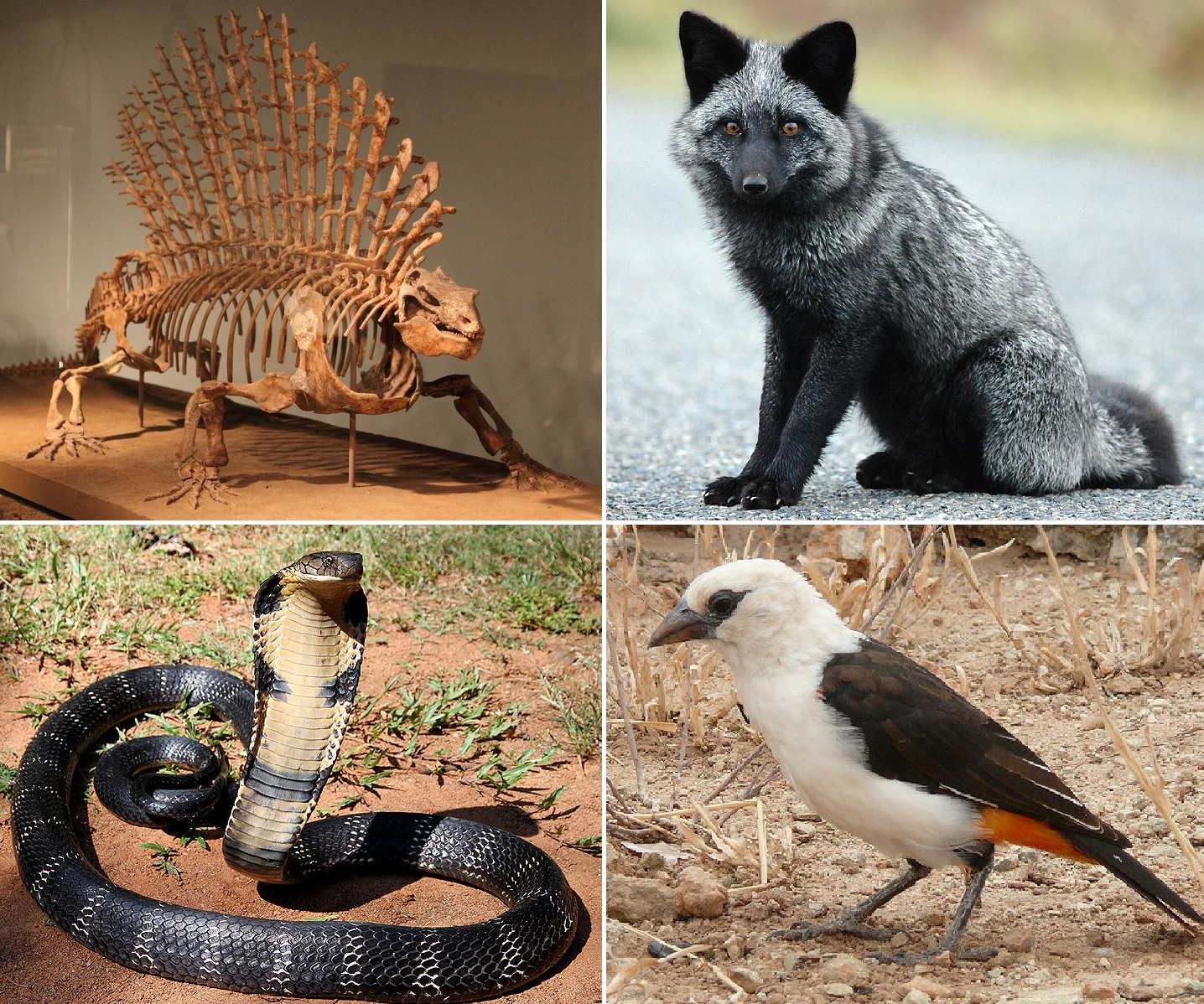
From top to bottom and left to right, examples of amniotes: Edaphosaurus, red fox (two synapsids), king cobra and a white-headed buffalo weaver (two sauropsids).
Scientific classification Edit this classification
Kingdom: Animalia
Phylum: Chordata
Clade: Tetrapoda
Clade: Reptiliomorpha
Clade: Amniota
Haeckel, 1866
Clades

Amniotes are tetrapod vertebrate animals belonging to the clade Amniota, a large group that comprises the vast majority of living terrestrial and semiaquatic vertebrates. Amniotes evolved from amphibious stem tetrapod ancestors during the Carboniferous period. Amniota is defined as the smallest crown clade containing humans, the Greek tortoise, and the Nile crocodile.[6][7]

Amniotes are distinguished from the other living tetrapod clade — the non-amniote lissamphibians (frogs/toads, salamanders/newts and caecilians) — by: the development of three extraembryonic membranes (amnion for embryonic protection, chorion for gas exchange, and allantois for metabolic waste disposal or storage); internal fertilization; thicker and keratinized skin; costal respiration (breathing by expanding/constricting the rib cage); the presence of adrenocortical and chromaffin tissues as a discrete pair of glands near their kidneys; more complex kidneys; the presence of an astragalus for better extremity range of motion; the diminished role of skin breathing; and the complete loss of metamorphosis, gills, and lateral lines.[8][9][10][11][12]: 600 [12]: 552 [13][12]: 694 

The presence of an amniotic buffer, of a water-impermeable skin, and of a robust, air-breathing, respiratory system, allow amniotes to live on land as true terrestrial animals. Amniotes have the ability to procreate without water bodies. Because the amnion and the fluid it secretes shield the embryo from environmental fluctuations, amniotes can reproduce on dry land by either laying shelled eggs (birds, monotremes, and most reptiles), retaining shelled eggs in the mother's body until they hatch (ovoviviparity, in some reptiles), or nurturing fertilized eggs within the mother (viviparity in marsupial and placental mammals). This distinguishes amniotes from anamniotes (fish and amphibians) that have to spawn in aquatic environments. Most amniotes still require regular access to drinking water for rehydration, like the semiaquatic amphibians do.

They have better homeostasis in drier environments, and more efficient non-aquatic gas exchange to power terrestrial locomotion, which is facilitated by their astragalus.

Basal amniotes resembled small lizards and evolved from semiaquatic reptiliomorphs, with fossil evidence suggesting they appeared no later than the earliest Carboniferous or late Devonian period.[1] After the Carboniferous rainforest collapse, amniotes spread around Earth's land and became the dominant land vertebrates.[14]

Until 2025, it was assumed that amniotes originated during the mid-late Carboniferous, as the earliest body fossils of the group dated to this time. However, the discovery of clawed footprints made by a crown group-amniote (potentially a sauropsid) from the earliest Carboniferous-aged Snowy Plains Formation of Australia (358.9 to 354 million years ago) suggests that they likely originated even earlier, probably during the Devonian.[1] After their origins, they almost immediately diverged into two groups, namely the sauropsids (including all reptiles and birds) and synapsids (including mammals and extinct ancestors like "pelycosaurs" and therapsids). Excluding the early fossil footprints, the earliest known crown group amniotes known from body fossils are the sauropsid Hylonomus and the synapsid Asaphestera, both of which are from Nova Scotia during the Bashkirian age of the Late Carboniferous around 318 million years ago.[15]

This basal divergence within Amniota has also been dated by molecular studies at 310–329 Ma,[16] or 312–330 Ma,[17] and by a fossilized birth–death process study at 322–340 Ma.[18] However, the Snowy Plains footprints suggest a minimum divergence of 358.9–354 Ma.[1]

Etymology

[edit]

The term amniote comes from the amnion, which derives from Greek ἀμνίον (amnion), which denoted the membrane that surrounds a fetus. The term originally described a bowl in which the blood of sacrificed animals was caught, and derived from ἀμνός (amnos), meaning "lamb".[19]

Description

[edit]
Anatomy of an amniotic egg.

Zoologists characterize amniotes in part by embryonic development that includes the formation of several extensive membranes, the amnion, chorion, and allantois. Amniotes develop directly into a (typically) terrestrial form with limbs and a thick stratified epithelium (rather than first entering a feeding larval tadpole stage followed by metamorphosis, as amphibians do). In amniotes, the transition from a two-layered periderm to a cornified epithelium is triggered by thyroid hormone during embryonic development, rather than by metamorphosis.[20] The unique embryonic features of amniotes may reflect specializations for eggs to survive drier environments; or the increase in size and yolk content of eggs may have permitted, and coevolved with, direct development of the embryo to a large size.

Adaptation for terrestrial living

[edit]

Features of amniotes evolved for survival on land include a sturdy but porous leathery or hard eggshell and an allantois that facilitates respiration while providing a reservoir for disposal of wastes. Their kidneys (metanephros) and large intestines are also well-suited to water retention. Most mammals do not lay eggs, but corresponding structures develop inside the placenta.

The ancestors of true amniotes, such as Casineria kiddi, which lived about 340 million years ago, evolved from amphibian reptiliomorphs and resembled small lizards. At the late Devonian mass extinction (360 million years ago), all known tetrapods were essentially aquatic and fish-like. Because the reptiliomorphs were already established 20 million years later when all their fishlike relatives were extinct, it appears they separated from the other tetrapods somewhere during Romer's gap, when the adult tetrapods became fully terrestrial (some forms would later become secondarily aquatic).[21] This was confirmed by the discovery of fossil footprints dated to the Gap in 2025.[1]The modest-sized ancestors of the amniotes laid their eggs in moist places, such as depressions under fallen logs or other suitable places in the Carboniferous swamps and forests; and dry conditions probably do not account for the emergence of the soft shell.[22] Indeed, many modern-day amniotes require moisture to keep their eggs from desiccating.[23] Although some modern amphibians lay eggs on land, all amphibians lack advanced traits like an amnion.

The amniotic egg formed through a series of evolutionary steps. After internal fertilization and the habit of laying eggs in terrestrial environments became a reproduction strategy amongst the amniote ancestors, the next major breakthrough appears to have involved a gradual replacement of the gelatinous coating covering the amphibian egg with a fibrous shell membrane. This allowed the egg to increase both its size and in the rate of gas exchange, permitting a larger, metabolically more active embryo to reach full development before hatching. Further developments, like extraembryonic membranes (amnion, chorion, and allantois) and a calcified shell, were not essential and probably evolved later.[24] It has been suggested that shelled terrestrial eggs without extraembryonic membranes could still not have been more than about 1 cm (0.4-inch) in diameter because of diffusion problems, like the inability to get rid of carbon dioxide if the egg was larger. The combination of small eggs and the absence of a larval stage, where posthatching growth occurs in anamniotic tetrapods before turning into juveniles, would limit the size of the adults. This is supported by the fact that extant squamate species that lay eggs less than 1 cm in diameter have adults whose snout-vent length is less than 10 cm. The only way for the eggs to increase in size would be to develop new internal structures specialized for respiration and for waste products. As this happened, it would also affect how much the juveniles could grow before they reached adulthood.[25]

A similar pattern can be seen in modern amphibians. Frogs that have evolved terrestrial reproduction and direct development have both smaller adults and fewer and larger eggs compared to their relatives that still reproduce in water.[26]

An alternative hypothesis is that amniotes evolved as a result of extended embryo retention (EER), where the extraembryonic membranes originated in the oviducts of the fertilized female to control the interaction between the embryos and the female. The eggs in groups like turtles, crocodilians and birds, which are laid at a much earlier developmental stage, would be a secondary evolved trait.[27]

The egg membranes

[edit]

Fish and amphibian eggs have only one inner membrane, the embryonic membrane. Evolution of the amniote egg required increased exchange of gases and wastes between the embryo and the atmosphere. Structures to permit these traits allowed further adaption that increased the feasible size of amniote eggs and enabled breeding in progressively drier habitats. The increased size of eggs permitted increase in size of offspring and consequently of adults. Further growth for the latter, however, was limited by their position in the terrestrial food-chain, which was restricted to level three and below, with only invertebrates occupying level two. Amniotes would eventually experience adaptive radiations when some species evolved the ability to digest plants and new ecological niches opened up, permitting larger body-size for herbivores, omnivores and predators.[citation needed]

Amniote traits

[edit]

While the early amniotes resembled their amphibian ancestors in many respects, a key difference was the lack of an otic notch at the back margin of the skull roof. In their ancestors, this notch held a spiracle, an unnecessary structure in an animal without an aquatic larval stage.[28] There are three main lines of amniotes, which may be distinguished by the structure of the skull and in particular the number of holes behind each eye. In anapsids, the ancestral condition, there are none; in synapsids (mammals and their extinct relatives) there is one; and in diapsids (including birds, crocodilians, squamates, and tuataras), there are two. Turtles have secondarily lost their fenestrae, and were traditionally classified as anapsids because of this. Molecular testing firmly places them in the diapsid line of descent.

Post-cranial remains of amniotes can be identified from their Labyrinthodont ancestors by their having at least two pairs of sacral ribs, a sternum in the pectoral girdle (some amniotes have lost it) and an astragalus bone in the ankle.[29]

Definition and classification

[edit]

Amniota was first formally described by the embryologist Ernst Haeckel in 1866 on the presence of the amnion, hence the name. A problem with this definition is that the trait (apomorphy) in question does not fossilize, and the status of fossil forms has to be inferred from other traits.

Amniotes
Archaeothyris, one of the most basal synapsids, first appears in the fossil records about 306 million years ago.[30]
By the Mesozoic, 150 million years ago, sauropsids included the largest animals anywhere. Shown are some late Jurassic dinosaurs, including the early bird Archaeopteryx perched on a tree stump.

Traditional classification

[edit]

Older classifications of the amniotes traditionally recognised three classes based on major traits and physiology:[31][32][33][34]

This rather orderly scheme is the one most commonly found in popular and basic scientific works. It has come under critique from cladistics, as the class Reptilia is paraphyletic—it has given rise to two other classes not included in Reptilia.

Most species described as microsaurs, formerly grouped in the extinct and prehistoric amphibian group lepospondyls, have been placed in the newer clade Recumbirostra, and share many anatomical features with amniotes, which indicates they were amniotes themselves.[37]

Classification into monophyletic taxa

[edit]

A different approach is adopted by writers who reject paraphyletic groupings. One such classification, by Michael Benton, is presented in simplified form below.[38]

Phylogenetic classification

[edit]

With the advent of cladistics, other researchers have attempted to establish new classes, based on phylogeny, but disregarding the physiological and anatomical unity of the groups. Unlike Benton, for example, Jacques Gauthier and colleagues forwarded a definition of Amniota in 1988 as "the most recent common ancestor of extant mammals and reptiles, and all its descendants".[29] As Gauthier makes use of a crown group definition, Amniota has a slightly different content than the biological amniotes as defined by an apomorphy.[39] Though traditionally considered reptiliomorphs, some recent research has recovered diadectomorphs as the sister group to Synapsida within Amniota, based on inner ear anatomy.[40][41][42]

Cladogram

[edit]

The cladogram presented here illustrates the phylogeny (family tree) of amniotes, and follows a simplified version of the relationships found by Laurin & Reisz (1995),[43] with the exception of turtles, which more recent morphological and molecular phylogenetic studies placed firmly within diapsids.[44][45][46][47][48][49] The cladogram covers the group as defined under Gauthier's definition.

Reptiliomorpha

Diadectomorpha

Amniota

Synapsida (mammals and their extinct relatives)

Sauropsida

Following studies in 2022 and 2023,[50][51] with Drepanosauromorpha placed sister to Weigeltisauridae (Coelurosauravus) in Avicephala based on Senter (2004):[52]

References

[edit]
Revisions and contributorsEdit on WikipediaRead on Wikipedia
from Grokipedia
Amniotes are a monophyletic of vertebrates characterized by the development of an —a fluid-filled membrane that surrounds and protects the during development—enabling independent of standing water. This group encompasses all living reptiles (including birds), mammals, and their extinct relatives, representing the vast majority of terrestrial and vertebrates. The defining innovation of amniotes is the amniotic egg, which evolved approximately 355 million years ago during the early period from amphibian-like ancestors, with recent 2025 fossil track evidence pushing back previous estimates by about 35 million years and marking a pivotal transition to fully terrestrial life cycles. This egg contains four specialized extraembryonic membranes: the (which cushions the in ), the (which facilitates with the external environment), the (which stores metabolic wastes and aids in respiration), and the (which provides nutrients). In oviparous amniotes such as most reptiles and birds (monotremes among mammals), these membranes are enclosed within a leathery or calcified shell that retains water while permitting oxygen intake, allowing eggs to be laid on land. Additional adaptations include lipid-rich, waterproof skin to prevent and rib-based lung ventilation for efficient terrestrial respiration. Phylogenetically, amniotes diverged early into two primary lineages: Synapsida, the mammalian line (including extinct "mammal-like reptiles"), and , comprising reptiles and birds. In viviparous mammals, the amniotic membranes have been co-opted into placental structures for internal gestation, though egg-laying persists in monotremes like the . This evolutionary flexibility has driven the diversification of amniotes into over 30,000 extant species as of 2025, dominating modern faunas across diverse habitats from deserts to oceans.

Etymology and Definition

Etymology

The term "amniote" derives from the Greek amnion (ἀμνίον), referring to the thin membrane enveloping the fetus in utero, which is a diminutive form of amnos (ἀμνός), meaning "lamb," alluding to the membrane's delicate, skin-like texture resembling lambskin. The clade Amniota was formally introduced by German embryologist Ernst Haeckel in his 1866 work Generelle Morphologie der Organismen, where he defined it based on the presence of the amnion as a diagnostic embryonic feature separating these vertebrates from fish and amphibians. This coinage emerged amid 19th-century advances in comparative embryology and Darwinian evolution, as scientists like Haeckel used developmental similarities to propose natural classifications of vertebrates, contrasting with earlier morphology-based systems. In the late 19th and early 20th centuries, the term gained traction in herpetological literature, which initially emphasized adult traits to distinguish reptiles from amphibians, but increasingly incorporated to unify reptiles, birds, and mammals under Amniota. By the mid-20th century, with the rise of phylogenetic , "amniote" evolved into a standard cladistic descriptor in vertebrate biology, denoting a monophyletic group characterized by amniotic development and terrestrial adaptations.

Defining Characteristics

Amniotes are a of vertebrates distinguished by their reproductive adaptations that enable development independent of aquatic environments, primarily through the amniotic egg or derived strategies such as in mammals. This defining feature allows embryos to develop in a self-contained, protected environment, contrasting with the external, water-dependent fertilization and larval stages typical of like and amphibians. The amniotic egg is characterized by four extra-embryonic membranes: the amnion, which surrounds the embryo in a fluid-filled sac for protection and cushioning; the chorion, which facilitates gas exchange with the external environment; the allantois, which handles waste storage and respiration; and the yolk sac, which provides nourishment from the yolk. These membranes collectively enable the egg to be laid on land with a semi-permeable shell that retains moisture while allowing oxygen intake and carbon dioxide expulsion, freeing amniotes from the need for standing water during reproduction. In addition to reproductive traits, amniotes possess a keratinized, waterproof composed of scales, feathers, or , which prevents and reduces reliance on moist habitats. Their primary respiratory organ is a pair of well-developed lungs, ventilated through movements (costal ventilation), unlike the prominent in amphibians. This combination of traits—shelled eggs or internal and efficient pulmonary respiration—marks the amniote condition as a key evolutionary innovation for terrestrial life, setting them apart from whose reproduction and early development remain tied to aquatic settings.

Anatomy and Physiology

Amniotic Egg and Membranes

The amniotic egg represents a pivotal reproductive in amniotes, featuring a robust outer shell that encloses the developing along with a suite of extraembryonic membranes essential for terrestrial development. The shell varies between leathery and flexible in most reptiles or rigid and calcified in birds, serving to shield the internal contents from physical damage, , and microbial invasion while permitting gaseous exchange through microscopic pores. Internally, four key membranes coordinate to support embryogenesis: the forms a thin, fluid-filled sac immediately surrounding the , cushioning it against mechanical stress and maintaining a stable aquatic-like environment that prevents adhesion to surrounding tissues. The , an outermost membrane, adheres to the inner shell surface and facilitates the of oxygen into and out of the egg, enabling aerobic respiration without direct exposure to the external medium. The , a sac-like structure that expands during development, stores nitrogenous wastes such as and, when fused with the to form the chorioallantois, enhances respiratory efficiency by vascularizing the for improved gas transport. Complementing these, the envelops the nutrient-rich mass, absorbing and transferring lipids, proteins, and other essentials to the via vitelline blood vessels until the yolk is depleted. In oviparous amniotes such as reptiles and birds, egg formation proceeds through distinct stages within the female reproductive tract, beginning with and in the , where the enlarges and accumulates reserves to fuel embryonic growth. Following , the ovum enters the for by sperm, after which albumen (for moisture retention) and shell material are sequentially added in the magnum and shell gland regions, respectively, culminating in a fully formed ready for deposition. Embryonic development initiates post-fertilization, with the extraembryonic membranes emerging early from the embryonic somatopleure and splanchnopleure layers during , rapidly enclosing the and forming functional interfaces for uptake, , and protection. This process ensures the embryo can complete development independently on land, with incubation temperatures and durations varying widely by and environmental conditions. Mammals exhibit a derived condition where the shelled egg is absent, yet the core extraembryonic membranes persist in modified form to support or ovoviviparous reproduction within the . In eutherian mammals, the chorioallantoic membrane evolves into the definitive , interfacing with maternal uterine tissues to enable direct exchange of oxygen, nutrients, and wastes, while the continues to enclose the in protective fluid and the assumes ancillary roles in early hematopoiesis before regressing. Monotremes retain a transient shelled with functional membranes, bridging and , whereas marsupials feature a brief choriovitelline supplemented by a pouch for postnatal nourishment. The amniotic egg's integrated structure confers significant evolutionary advantages, primarily by insulating the from terrestrial hazards like , physical trauma, and infectious agents, thereby decoupling from aquatic dependencies that constrained earlier tetrapods. This innovation facilitated amniote diversification across diverse habitats, with the membranes' multifunctional design—combining barrier, respiratory, excretory, and nutritional roles—enhancing embryonic viability and survival rates in variable environments.

Adaptations for Terrestrial Life

Amniotes exhibit a waterproof composed primarily of , a tough, that forms scales in reptiles, feathers in birds, and in mammals, effectively minimizing water loss through and in arid terrestrial environments. This integumental barrier represents a critical departure from the permeable of amphibians, allowing amniotes to inhabit diverse dry habitats without constant access to water bodies. The keratinized , reinforced by in reptiles and birds and in mammals, provides not only hydration retention but also mechanical protection against abrasion and pathogens prevalent on land surfaces. Efficient pulmonary respiration further supports amniote terrestrial success, with lungs that facilitate active ventilation through costal aspiration using rib muscles in reptiles and birds, and a diaphragm in mammals, contrasting the less efficient in amphibians. This system enables higher oxygen uptake rates essential for sustained activity in oxygen-rich but desiccating air, while —achieved via copulatory organs—protects gametes from and predation, decoupling from aquatic media. The amniotic egg complements these traits by permitting embryogenesis on land, though body-wide adaptations like these expanded ecological niches beyond mere reproductive independence. Limb modifications in amniotes evolved to optimize locomotion on varied terrestrial substrates, transitioning from sprawling gaits in early forms, where limbs extended laterally for stability on soft ground, to more upright parasagittal postures in derived lineages like mammals and archosaurs, enhancing speed and energy efficiency. This postural shift involved skeletal rearrangements, such as elongated limb bones and strengthened joints, reducing drag and improving stride length on firm terrain, as evidenced in stem amniotes like Orobates. Behavioral adaptations, including nesting site selection and , emerged in early amniotes to safeguard in terrestrial settings, with reptiles often guarding eggs to regulate and or deter predators. evidence from varanopid synapsids suggests brooding behaviors that maintained optimal incubation conditions, boosting hatchling survival rates in fluctuating environments. These strategies, varying from passive nest burial to active defense, underscore the integrated role of behavior in amniote land colonization.

Key Physiological Traits

Amniotes are characterized by a closed circulatory system that incorporates double circulation, comprising distinct pulmonary and systemic circuits. This arrangement allows for efficient separation of oxygenated and deoxygenated blood, enabling higher oxygen delivery to tissues and supporting active terrestrial lifestyles. In contrast to amphibians, which possess a three-chambered heart with partial mixing of blood, the fully divided four-chambered heart in birds, mammals, and crocodilians among amniotes minimizes such mixing and enhances overall cardiovascular efficiency. Certain amniote lineages, notably synapsids, display elevated metabolic rates that represent precursors to full endothermy. Palaeohistological analyses of fossil tissues indicate that these early synapsids achieved resting metabolic rates intermediate between ectothermic reptiles and endothermic mammals, facilitating sustained activity and potentially contributing to their ecological success during the Permian period. This metabolic advancement is evidenced by rapid bone growth rates and vascularization patterns suggestive of increased aerobic capacity. The in amniotes is notably advanced, featuring that are larger relative to body size compared to those of . This encephalization is particularly pronounced in the expansion of the , including the in mammals and in birds and reptiles, which supports complex behaviors such as enhanced and learning. Such relative brain enlargement correlates with the demands of terrestrial environments, where precise and predation require sophisticated neural integration. Many amniotes, particularly reptiles and birds, excrete nitrogenous waste as , a strategy that promotes essential for terrestrial habitation, while mammals excrete . , being insoluble, can be expelled as a semi-solid paste with minimal loss, differing from the more water-soluble produced by ureotelic amphibians. This uricotelic metabolism evolved as an adaptation to arid conditions, reducing risk while efficiently eliminating toxic derivatives.

Evolutionary History

Origins and Early Evolution

Amniotes first appear in the fossil record during the early period, approximately 356 million years ago, based on trackways from that indicate the presence of crown amniotes, though no body fossils are known from this time. Body fossils of early amniotes emerged during the late period, approximately 312–318 million years ago, evolving from amphibian-like ancestors within the reptiliomorph . These early forms transitioned from the aquatic-dependent reproduction of their anamniote predecessors, marking a pivotal shift in vertebrate evolution toward full terrestrial independence. The defining innovation was the amniotic egg, which enclosed the in protective membranes and a shelled structure, enabling development on land without reliance on external water sources and evolving around 320 million years ago. Key transitional fossils illustrate this origin, including Westlothiana lizziae from the Lower (~333 million years ago), a stem-amniote that displayed skeletal adaptations such as elongate limbs and a lightweight skull suggestive of increased terrestriality. Similarly, Protorothyris from the Early Permian (~290 million years ago) represents an early crown-group amniote with features like a fully ossified and reduced aquatic traits, bridging reptiliomorph ancestors and more derived amniotes. These specimens highlight the gradual acquisition of amniotic apomorphies amid a broader radiation of tetrapods during the . Environmental pressures drove this evolutionary transition, as the Late Carboniferous witnessed climate shifts toward drier conditions, including the onset of Gondwanan glaciation and recession of vast swamp forests. These changes imposed selective pressure on tetrapods, favoring reproductive strategies that minimized vulnerability to fluctuating water availability and predation in increasingly arid habitats. The resulting independence from aquatic breeding sites allowed to exploit new ecological niches beyond riparian zones. Following their origin, amniotes underwent initial diversification into basal groups, notably the captorhinids, which first appeared in Late Carboniferous deposits and proliferated in the Early Permian. These small, lizard-like forms, characterized by robust skulls and multiple tooth rows, exemplified the early of amniotes into herbivorous and insectivorous roles on land. This phase laid the foundation for subsequent amniote lineages, setting the stage for their dominance in and ecosystems.

Fossil Record

The fossil record of amniotes begins in the early period, approximately 356 million years ago, based on trackways from that represent the earliest evidence of fully terrestrial locomotion in these vertebrates, though body fossils are not known from this interval. Body fossils of early amniotes, such as the small lizard-like , appear around 312 million years ago in , marking the transition from amphibian-like ancestors to independent terrestrial life. During the Permian period (299–252 million years ago), amniote diversity expanded rapidly, with synapsids like the sail-backed predator dominating as apex carnivores in North American floodplains, reaching lengths of up to 4 meters and preying on amphibians and smaller reptiles. Herbivorous forms also emerged, exemplified by in the Early Permian, a robust, cow-sized diadectomorph that grazed on vegetation and represents one of the first large terrestrial herbivores, with fossils from showing specialized grinding teeth. The end-Permian mass extinction, around 252 million years ago, devastated amniote communities, wiping out approximately 70% of terrestrial vertebrate species and severely disrupting synapsid and early sauropsid lineages. Survivors, primarily small dicynodont synapsids like , briefly dominated ecosystems, comprising up to 95% of vertebrate fossils in some South African sites, but overall diversity remained low for millions of years. Recovery accelerated in the (around 240 million years ago), with the radiation of archosauromorph sauropsids filling ecological niches vacated by the extinction, leading to the proliferation of crocodile-like pseudosuchians and early dinosaurs. By the , amniotes had rediversified, setting the stage for dominance. Throughout the era (252–66 million years ago), sauropsids, particularly dinosaurs, became the dominant terrestrial vertebrates, with fossils from formations like the Morrison in illustrating their global reach and ecological variety. A key is from the in , dated to about 150 million years ago, which bridges non-avian dinosaurs and birds through features like feathered wings for flight and reptilian teeth and tail. However, the amniote record is incomplete, with significant gaps attributed to preservation biases in terrestrial sediments, where erosion and lack of fine-grained deposition hinder fossilization compared to marine environments. These biases are evident in the sparse record, where only exceptional sites like Mazon Creek preserve soft tissues, underscoring how much early amniote evolution remains undocumented.

Classification and Phylogeny

Traditional Classification

In the early 19th and 20th centuries, traditional taxonomic systems classified amniotes primarily into three distinct classes within the Linnaean : Reptilia (reptiles), Aves (birds), and Mammalia (mammals), emphasizing differences in , locomotion, and metabolic strategies rather than shared developmental traits. This separation treated each group as independent lineages diverging from ancestors, with Reptilia encompassing a broad array of extinct and extant forms like , , and crocodilians. A notable departure came with Ernst Haeckel's introduction of the Amniota in 1866, defined by the presence of the and associated extraembryonic membranes in the , unifying reptiles, birds, and mammals as a monophyletic assemblage distinct from anamniote tetrapods. Building on this, Richard Owen's 1866 work on proposed the subclass Haematothermia to group birds and mammals together based on shared and skeletal features, while excluding reptiles as the cooler-blooded . Owen's framework highlighted comparative cranial and postcranial structures but did not yet formalize fenestration-based subgroups. Within Reptilia, pre-cladistic classifications increasingly relied on skull morphology, particularly the pattern of temporal fenestration, to subdivide the group. Henry Fairfield Osborn's influential scheme categorized reptiles into four subclasses: Anapsida (lacking temporal fenestrae, including early "cotylosaurs" and turtles), Synapsida (one infratemporal fenestra, encompassing mammal-like reptiles), Diapsida (two temporal fenestrae, including lepidosaurs and archosaurs), and (one supratemporal fenestra, for ichthyosaurs and plesiosaurs). This morphology-driven approach, rooted in Owen's earlier emphasis on cranial architecture, aimed to reflect adaptive radiations but often created artificial groupings. These traditional systems, while foundational for organizing fossil and extant forms, suffered from key limitations, including the recognition of paraphyletic assemblages that ignored shared ancestry and convergence in traits like skull openings, leading to misalignments such as placing birds within or near reptiles without resolving their mammalian parallels.

Modern Cladistic Classification

In modern cladistic classification, Amniota is defined as the crown group comprising the most recent common ancestor of living synapsids (including mammals), sauropsids (including reptiles and birds), and all its descendants. This monophyletic clade emphasizes shared ancestry and derived traits, diverging from earlier paraphyletic schemes that separated mammals from "reptiles" without recognizing their common amniote heritage. The primary synapomorphy uniting amniotes is the amniotic egg, characterized by extraembryonic membranes including the , , , and , which enable embryonic development independent of aquatic environments. Amniotes originated as ectotherms, with endothermy evolving independently in the synapsid lineage leading to mammals and in the subgroup of sauropsids leading to birds. Within Amniota, the two major subclades are Synapsida and . Synapsida includes mammals and their extinct relatives, such as therapsids, which exhibit a single in the as a key derived trait. encompasses reptiles and birds; although traditional views subdivided it into Anapsida (e.g., turtles) and Diapsida, modern phylogeny rejects Anapsida as a and places all living sauropsids within Diapsida, further divided into Lepidosauromorpha (squamates and rhynchocephalians) and (turtles, archosaurs including crocodilians, dinosaurs, and birds), the latter marked by two (reduced or hidden in some lineages). Molecular data, particularly from mitochondrial genomes and nuclear sequences, has refined these boundaries by confirming as nested within Diapsida, closer to archosaurs than to lepidosaurs, thus rejecting their isolated status. This integration of genetic evidence with morphological synapomorphies has solidified the of these groups, highlighting amniote diversification from a common terrestrial-adapted ancestor.

Phylogenetic Relationships and Cladogram

The phylogenetic relationships among amniotes form a branching evolutionary tree, or , that reflects shared derived traits confirmed through integrated analyses of morphology and molecular data. At the root, Amniota divides into two sister clades: Synapsida, leading to mammals, and , encompassing all reptiles and birds; this basal divergence is dated to approximately 320 million years ago in the late , marking the common ancestry of avian and mammalian lineages based on the earliest s of both groups. Within , the major subdivision is Diapsida, characterized by two temporal fenestrae in the skull, with Anapsida no longer recognized as a distinct in modern phylogenies. Diapsida further splits into Lepidosauromorpha (including squamates and rhynchocephalians) and the comprising Testudines and (including archosaurs such as crocodilians and birds); this structure is robustly supported by genetic sequences from extant taxa and cranial morphology in fossils. The phylogenetic position of turtles was long debated, with traditional views placing them outside Diapsida as anapsids due to their fused skull lacking visible fenestrae; however, current consensus from molecular, genomic, and evidence places them within Diapsida as the to , with corroboration from hidden diapsid-like features in early turtle skulls. The cladogram can be represented textually as follows, showing the hierarchical relationships (with turtles nested in Diapsida for the consensus view): This topology underscores the of these clades and their divergence driven by adaptations to diverse terrestrial and aerial environments.

Diversity and Distribution

Major Living Groups

Amniotes are divided into two major living clades: Synapsida, represented by mammals, and , encompassing reptiles and birds. These groups exhibit remarkable , with over 30,000 extant collectively dominating terrestrial, aquatic, and aerial ecosystems worldwide.; ; Synapsids are exemplified by mammals, which are endothermic vertebrates distinguished by features such as or for insulation, mammary glands for young, and specialized adapted to varied diets. There are approximately 6,759 living species, spanning diverse orders like , bats, and cetaceans, which range from tiny to massive whales. Mammals play crucial ecological roles as primary consumers, predators, pollinators, and seed dispersers, influencing vegetation dynamics and nutrient cycling across habitats from forests to oceans. Sauropsids comprise reptiles and birds, with reptiles including squamates ( and snakes), turtles, crocodilians, and . Squamates represent the most speciose reptile group, with over 11,991 exhibiting ectothermy, scaly , and adaptations for limbless locomotion or venomous predation. Turtles number about 359 , characterized by their protective bony shells and primarily herbivorous or omnivorous diets in aquatic and terrestrial settings. Crocodilians include 26 of large, predators with powerful jaws and armored , serving as apex consumers in ecosystems. consist of 1 , a unique endemic to with primitive traits bridging and other sauropsids. Birds, numbering around 11,131 , are feathered endotherms with lightweight skeletons and high metabolic rates enabling flight in most taxa. Reptiles and birds fulfill key ecological functions, such as controlling insect populations (e.g., via squamate and avian predation), (by birds and ), and maintaining aquatic food webs (through crocodilians). Amniotes occupy an array of niches, from marine-dwelling sea turtles that migrate across oceans to aerial birds dominating skies and terrestrial mammals shaping landscapes through grazing and burrowing. Conservation challenges are pronounced, with 21% of reptile species threatened by loss and , 27% of mammals at risk from overhunting and fragmentation, and 11.5% of birds facing declines due to and . These trends underscore the vulnerability of amniote despite their adaptive success.

Extinct Amniote Lineages

Pelycosaurs represent one of the earliest major radiations of synapsid amniotes during the Late Carboniferous and Permian periods, characterized by their diverse morphologies and ecological roles as both predators and herbivores. These basal synapsids, often referred to as "mammal-like reptiles" in older literature, included iconic forms like , a sail-backed that served as a top predator in early Permian ecosystems, reaching lengths of up to 4 meters and featuring a distinctive possibly used for or display. Pelycosaurs dominated terrestrial faunas before declining toward the end of the Permian, with all lineages extinct by the period's close, paving the way for more advanced synapsids. Therapsids, emerging in the Middle Permian as successors to pelycosaurs within the synapsid lineage, exhibited increasingly mammalian traits such as differentiated teeth and more efficient jaw mechanics, reflecting adaptations to varied diets and environments. This group diversified extensively during the Late Permian, becoming the dominant amniotes until the Permo- mass severely impacted their diversity, though some survived into the . Among therapsids, cynodonts stand out for their advanced features, including secondary palates and physiologies inferred from bone histology, and they represent the direct ancestral lineage to mammals, with early forms like bridging the gap to true mammals by the . Therapsids' as a broader underscores their role in the evolutionary transition from reptilian to mammalian forms, with non-mammalian lineages vanishing by the end of the . Beyond turtles, extinct anapsid amniotes included parareptiles such as pareiasaurs, robust herbivores that thrived in the Middle to Late Permian across and , attaining sizes up to 3 meters with heavily armored bodies featuring polygonal osteoderms. These stocky, barrel-shaped reptiles, exemplified by genera like and Deltavjatia, adapted to grazing on low with powerful jaws and peg-like teeth, contributing to the herbivorous diversity of Permian ecosystems before their during the end-Permian mass event. Pareiasaurs' phylogenetic position as basal anapsids highlights the early divergence of turtle relatives, with their disappearance marking the loss of a significant non-testiculate anapsid radiation. Within amniotes, dinosaurs and pterosaurs emerged as prominent offshoots during the , with dinosaurs diversifying into a vast array of terrestrial forms that dominated ecosystems for over 160 million years. Non-avian dinosaurs, encompassing saurischians and ornithischians, ranged from small feathered theropods to massive sauropods, but all non-avian lineages, along with pterosaurs—the first s to achieve powered flight—were wiped out at the Cretaceous-Paleogene (K-Pg) boundary approximately 66 million years ago, likely due to the Chicxulub impact and associated environmental catastrophes. This eradicated these iconic groups, leaving birds as the sole surviving dinosaurian amniotes and profoundly reshaping vertebrate evolution.

References

Add your contribution
Related Hubs
User Avatar
No comments yet.